The storybook toadstool, and why it's poisonous
Fly agaric (Amanita muscaria) is the red mushroom with white spots that shows up in fairy tales, garden-gnome scenes and European Christmas decorations. It is poisonous. It contains ibotenic acid and muscimol, which can cause vomiting, confusion and delirium, and it should never be eaten. The white spots are scraps of the universal veil, a skin that wraps the young mushroom and tears as the cap expands; heavy rain can wash them off. The fungus grows in partnership with tree roots, mostly birch, pine and spruce, and fruits from late summer through autumn across the cooler parts of the Northern Hemisphere. Its common name comes from an old European practice of breaking the cap into a dish of milk to kill houseflies. In parts of North America, some populations grow yellow or orange caps instead of red.
From button to parasol: the shapes in this set
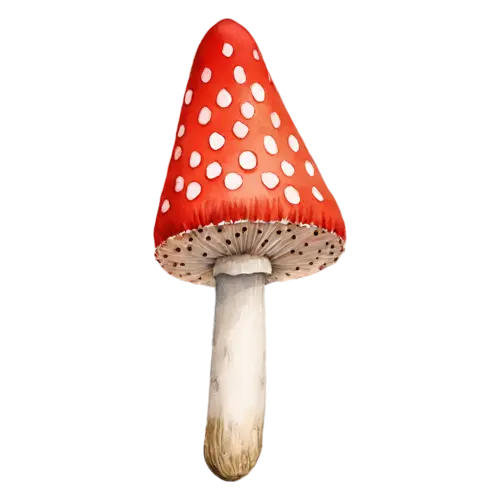
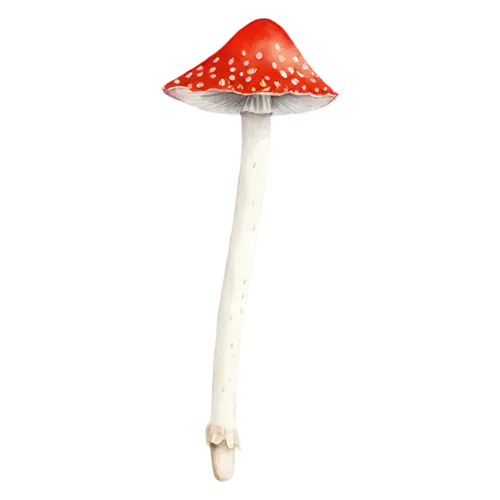
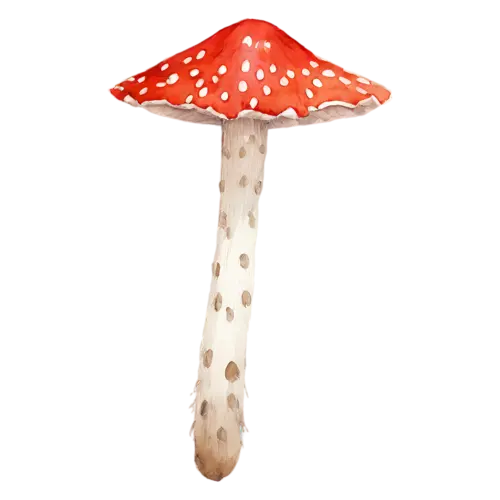
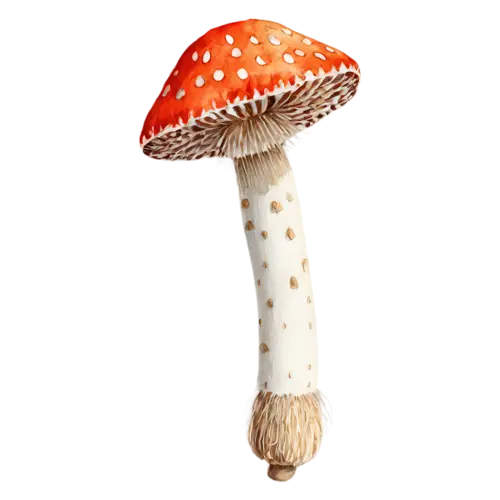
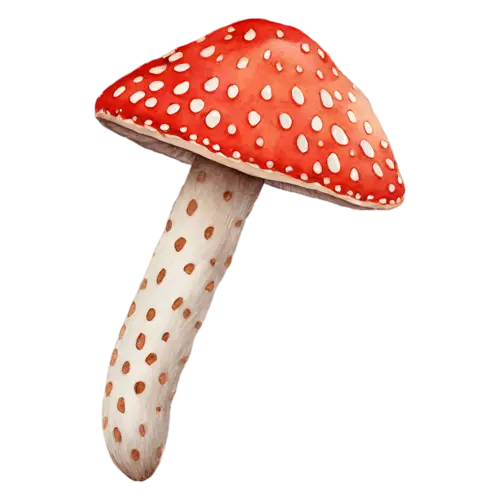
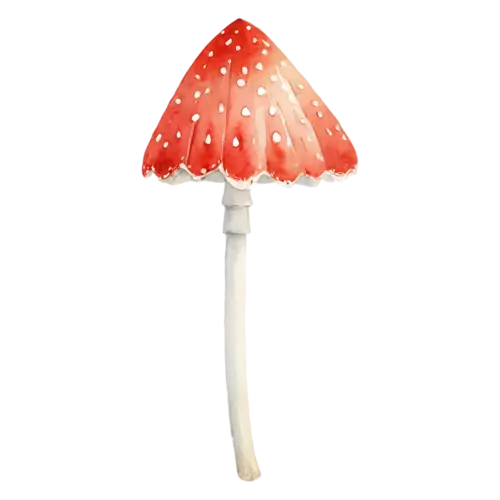
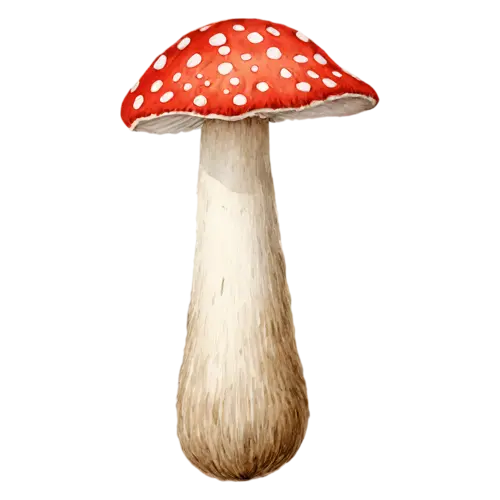
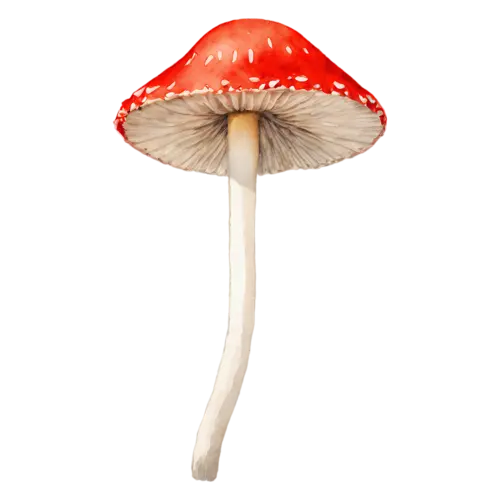
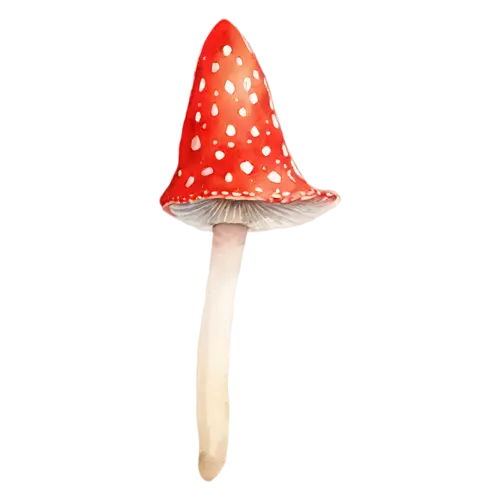
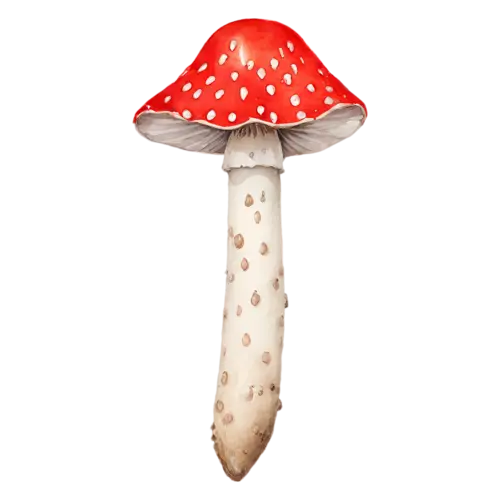
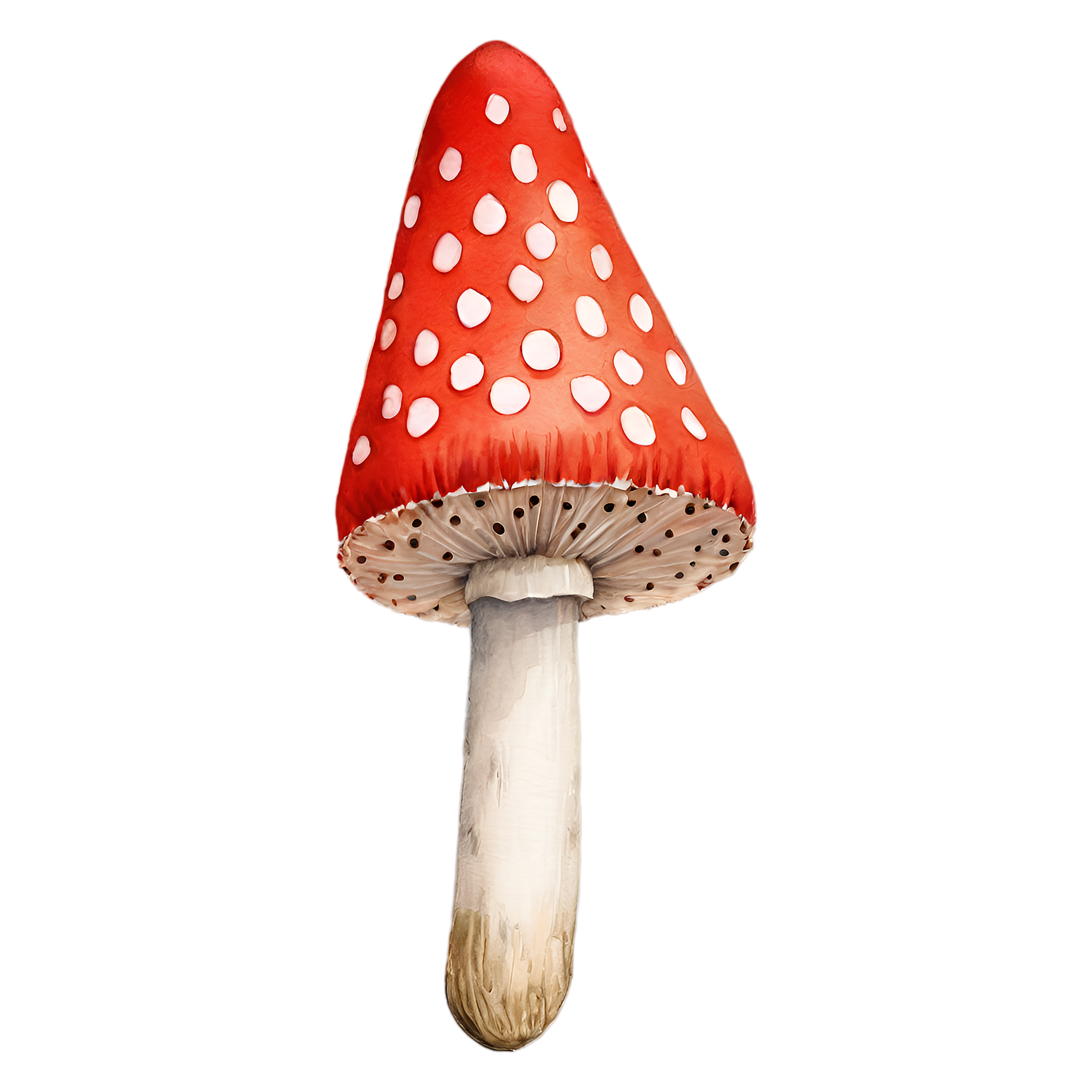
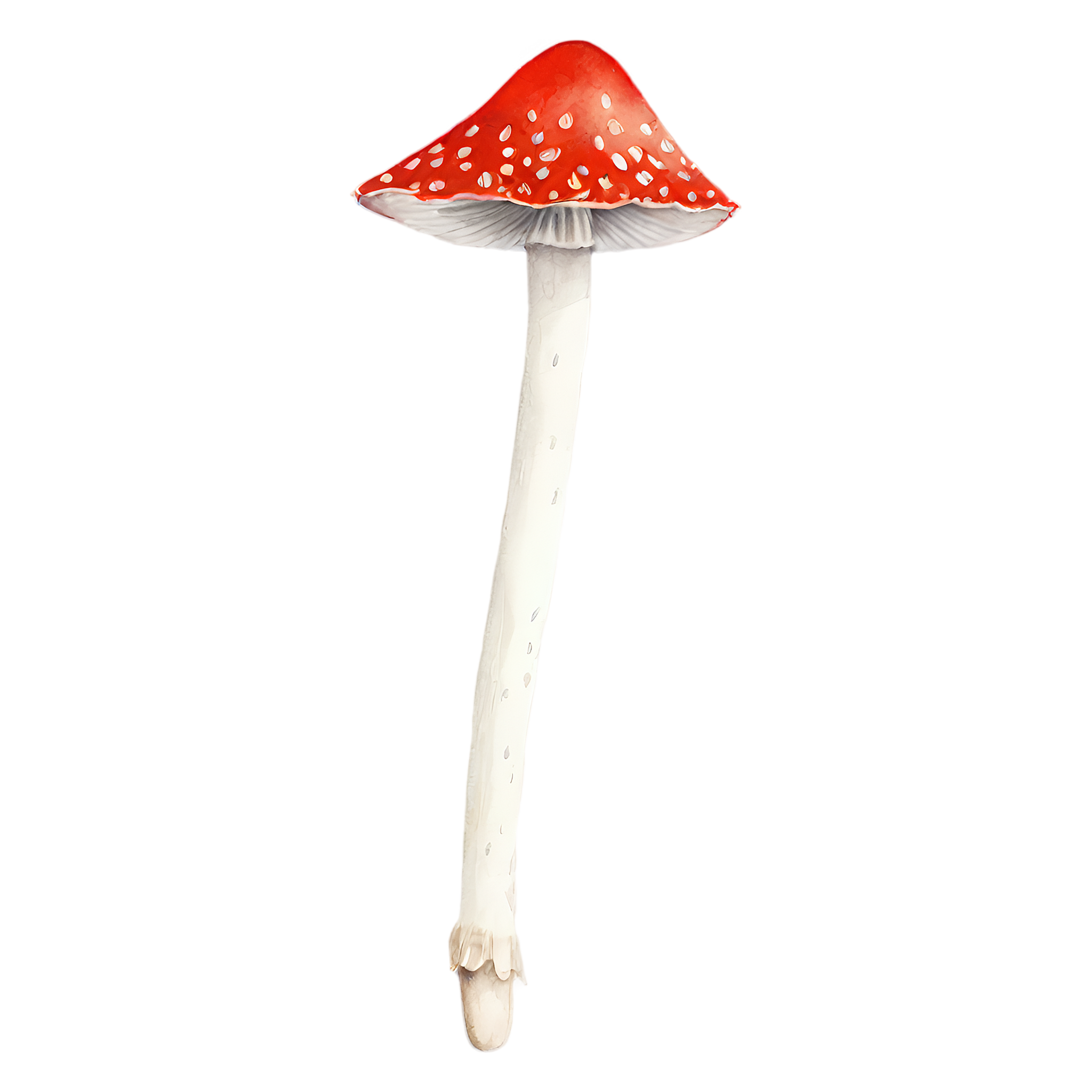
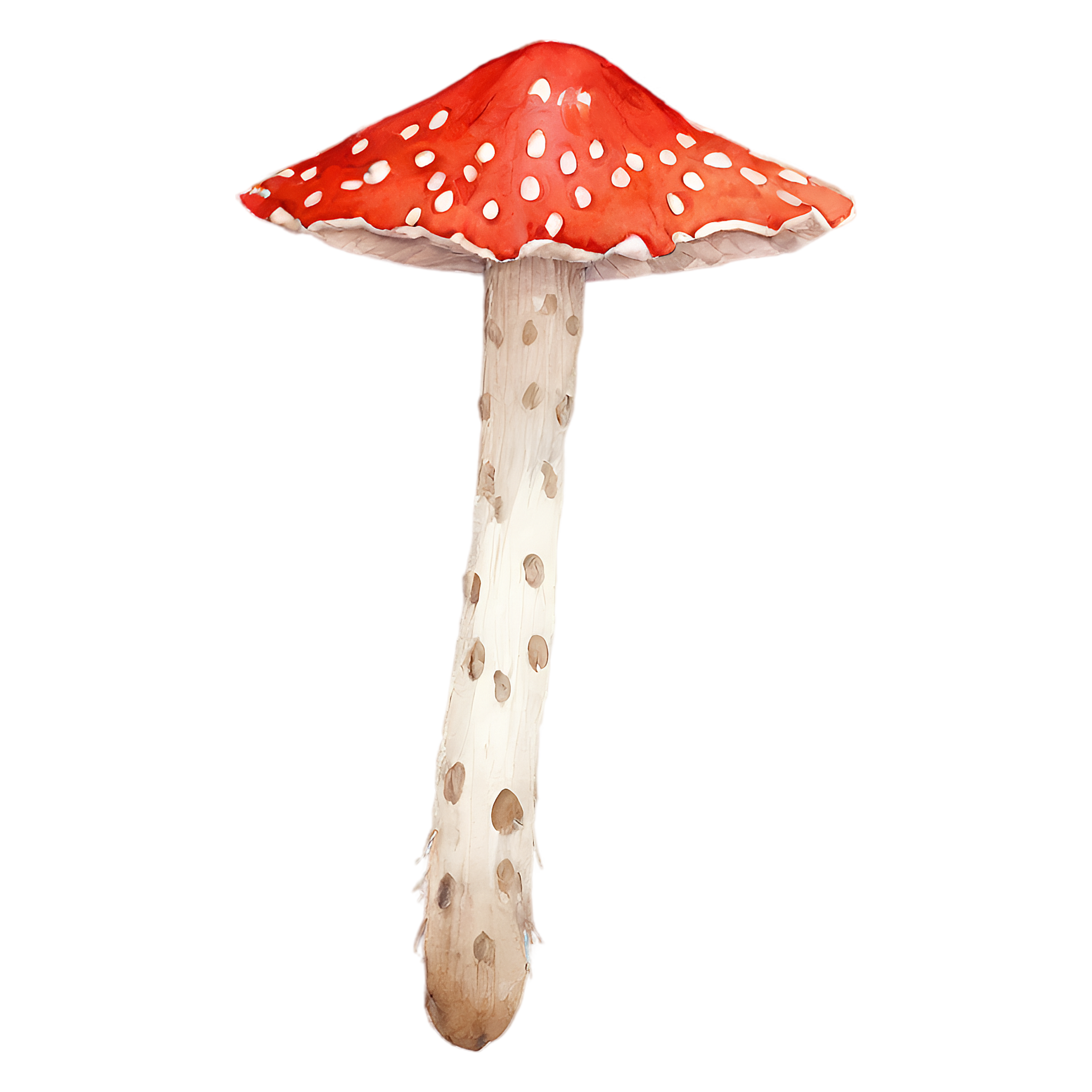
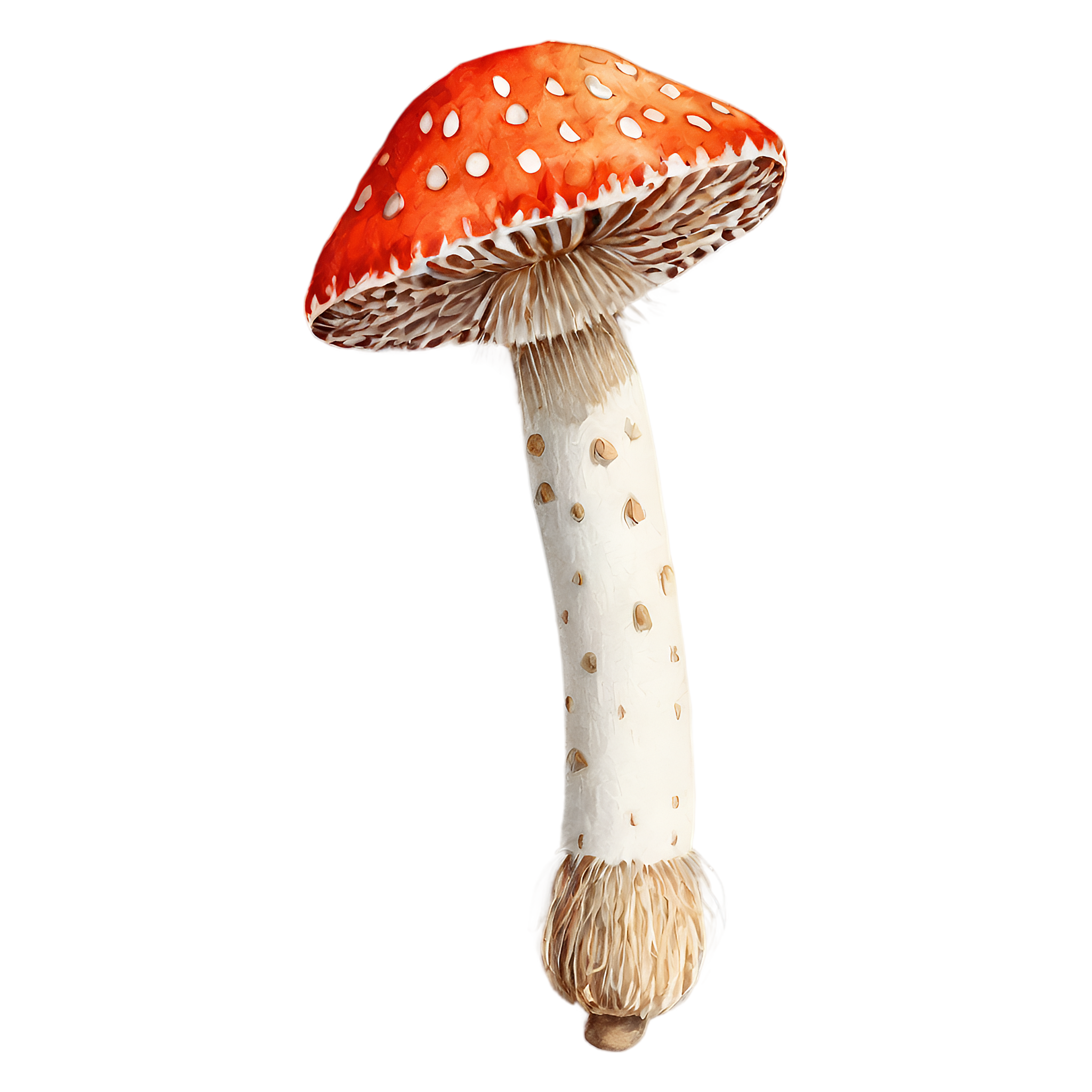
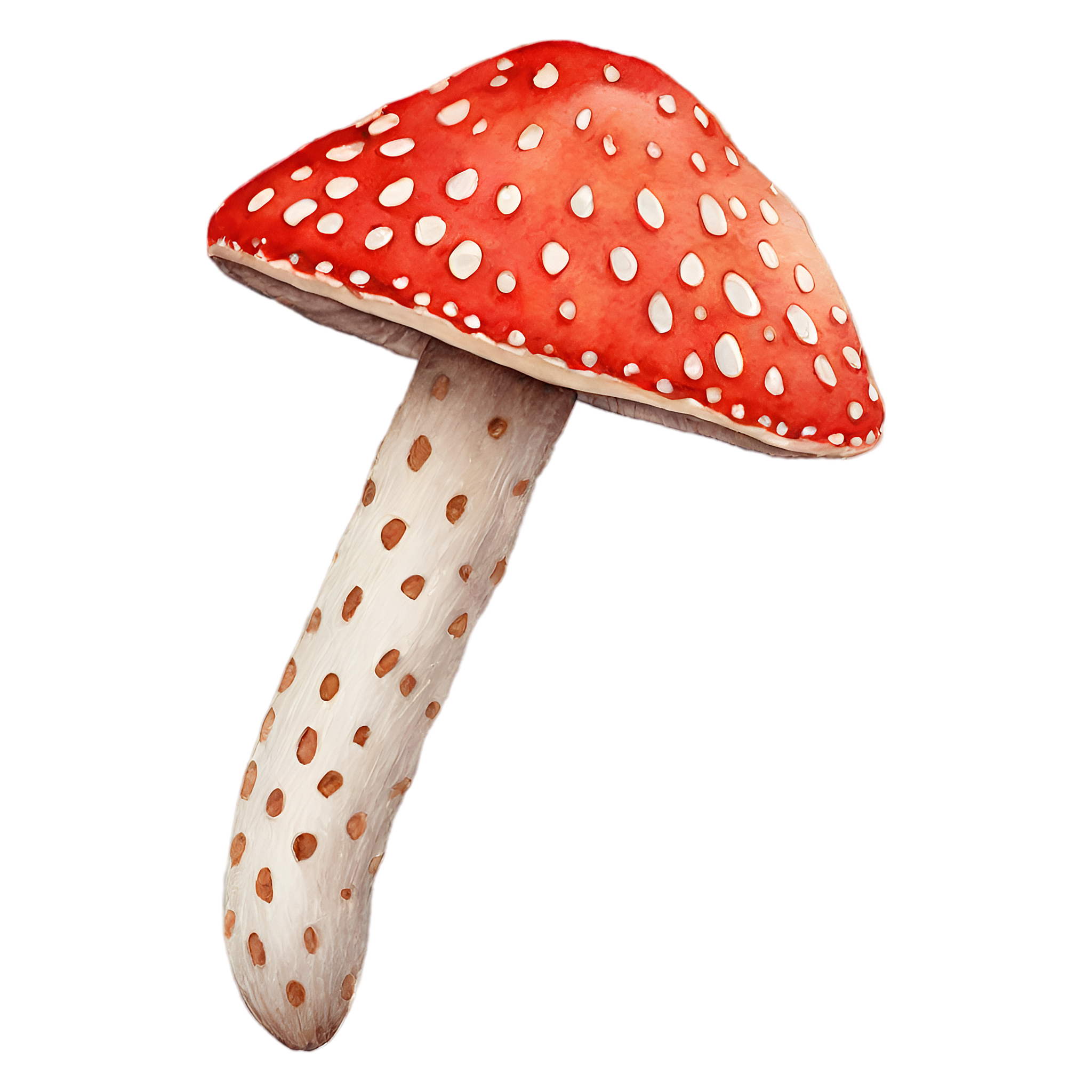
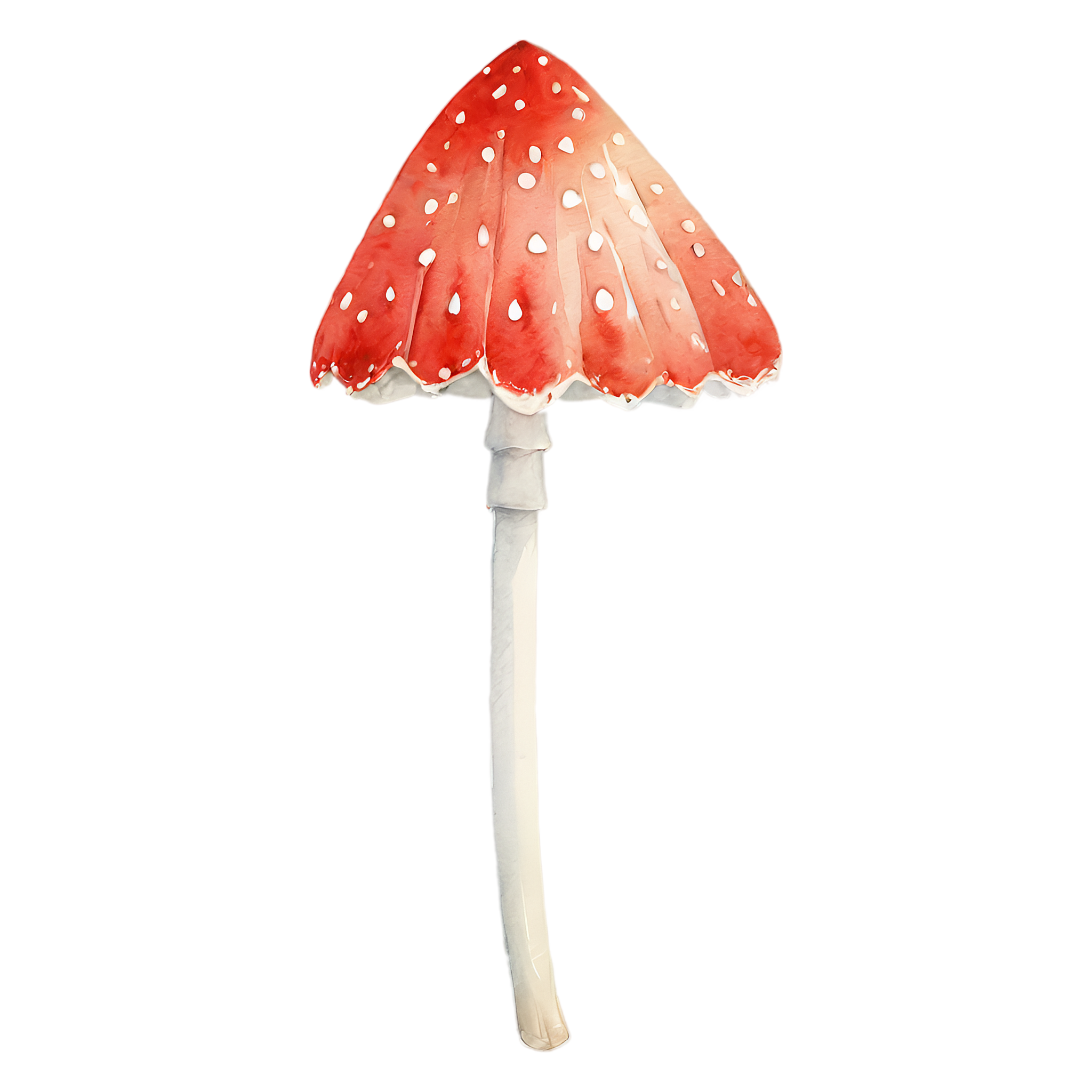
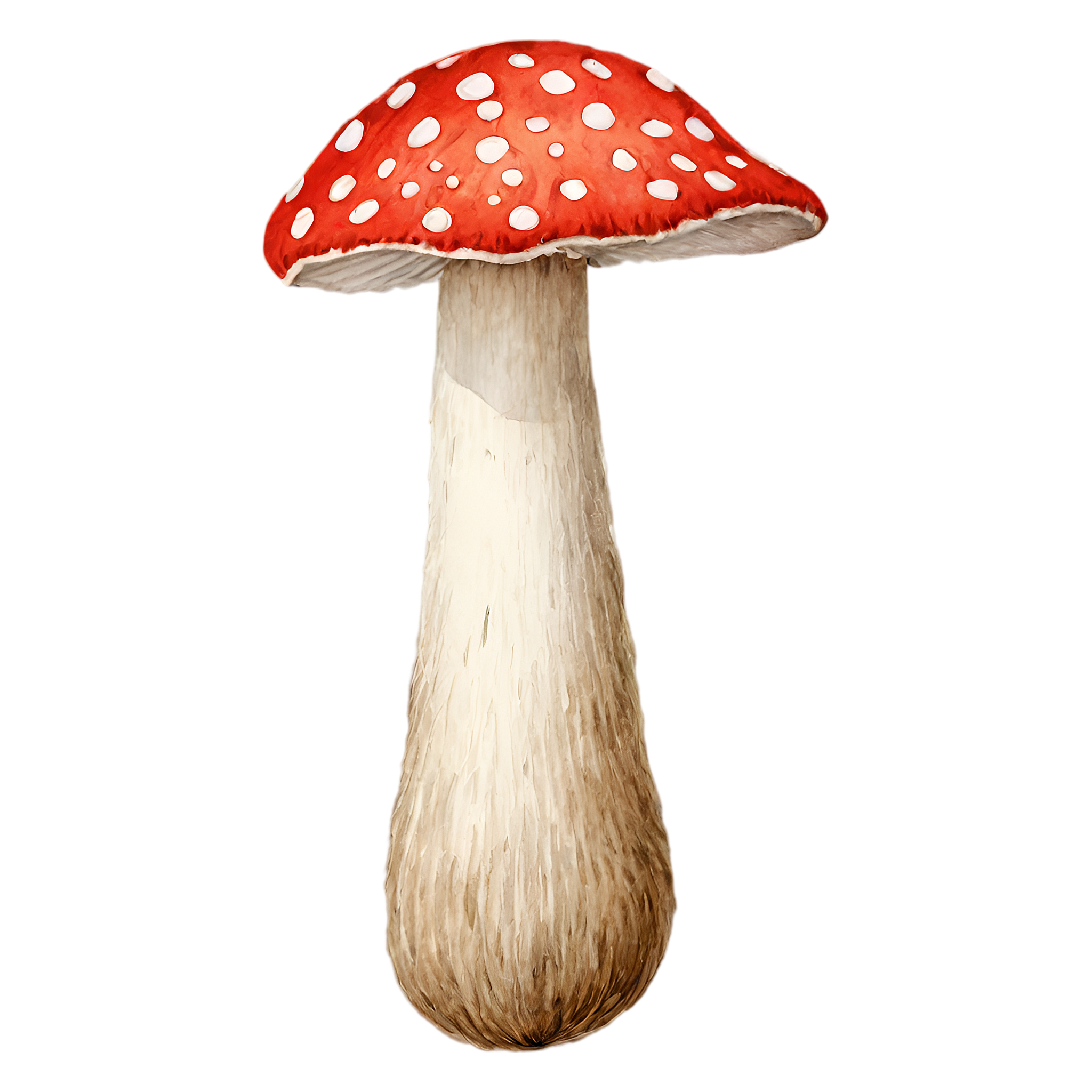
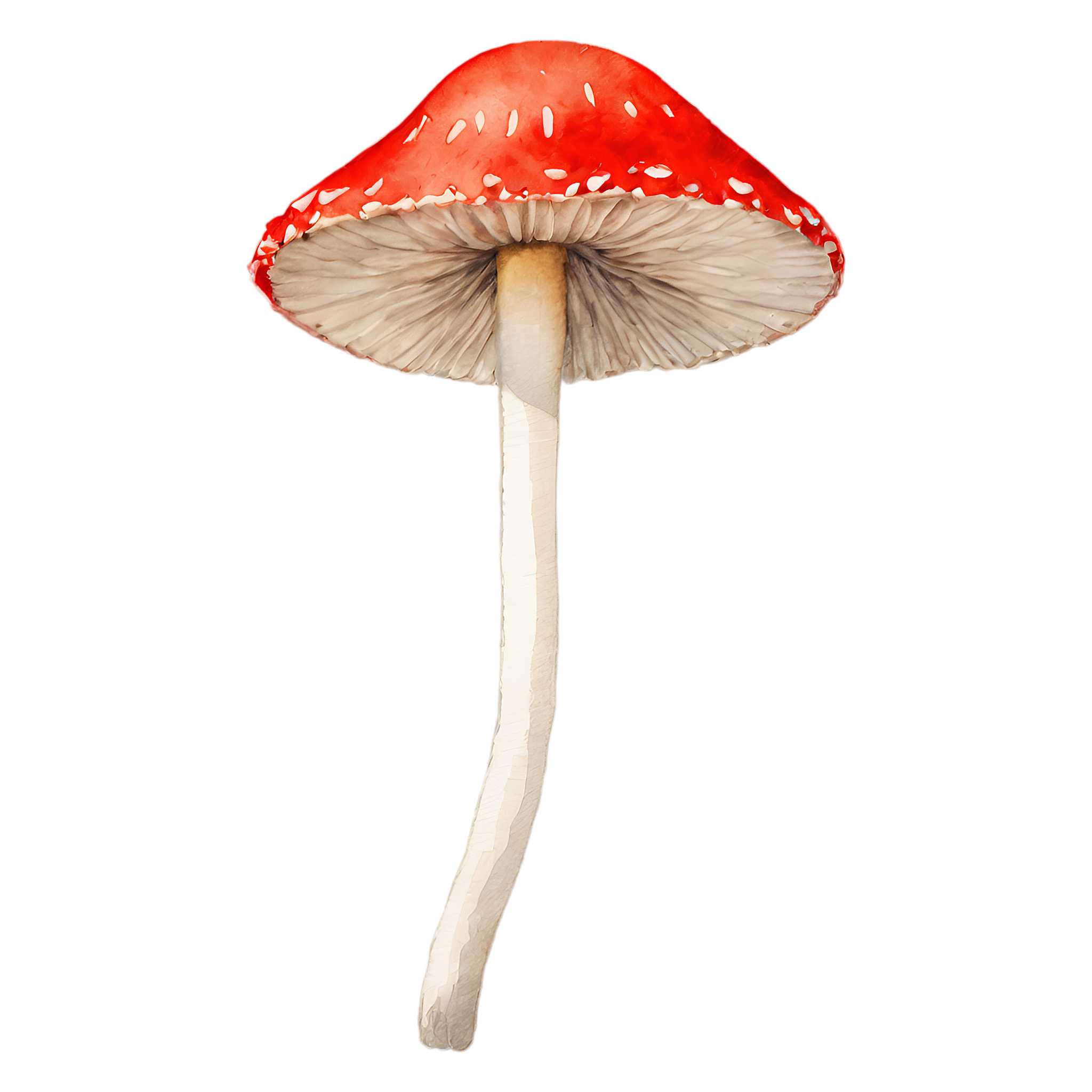
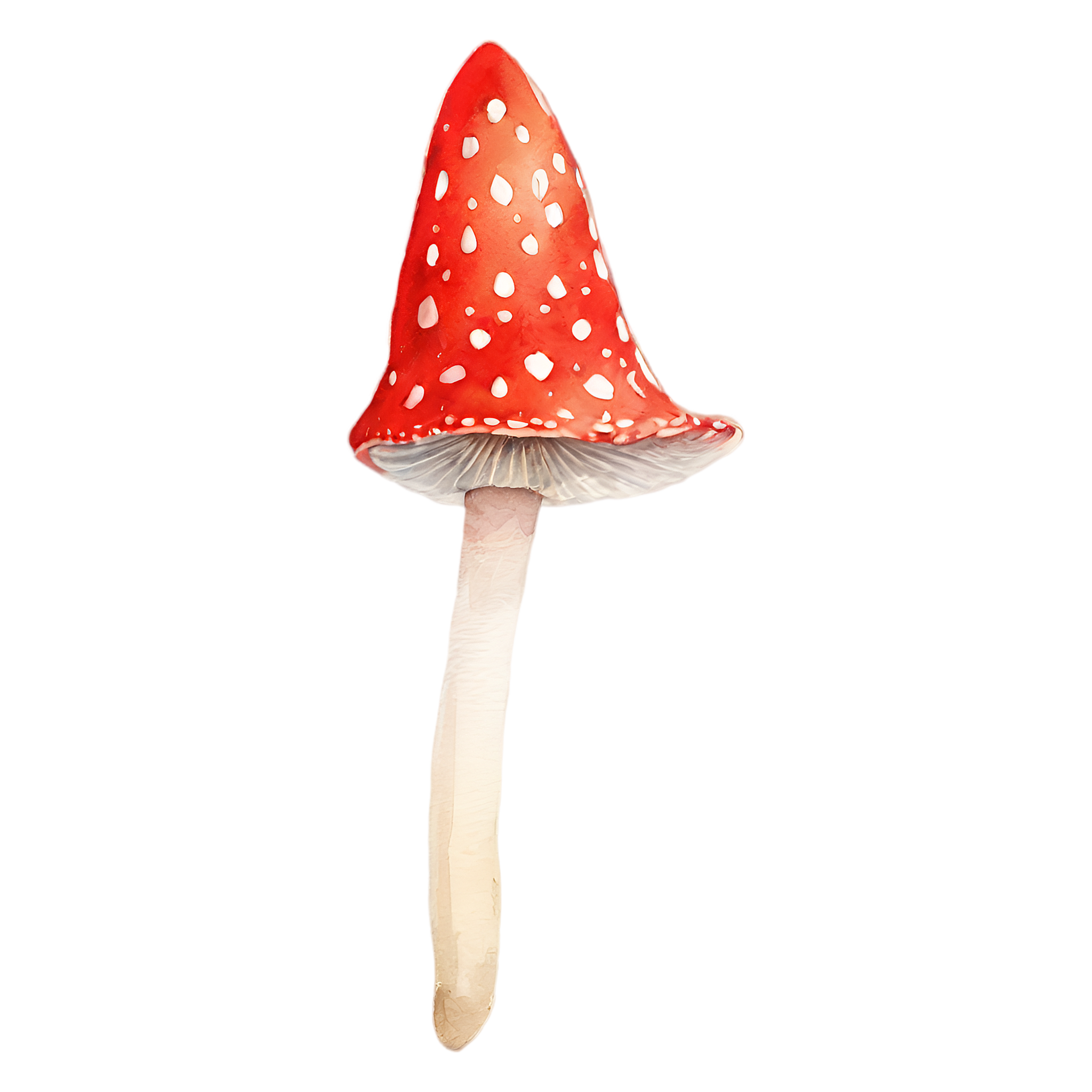
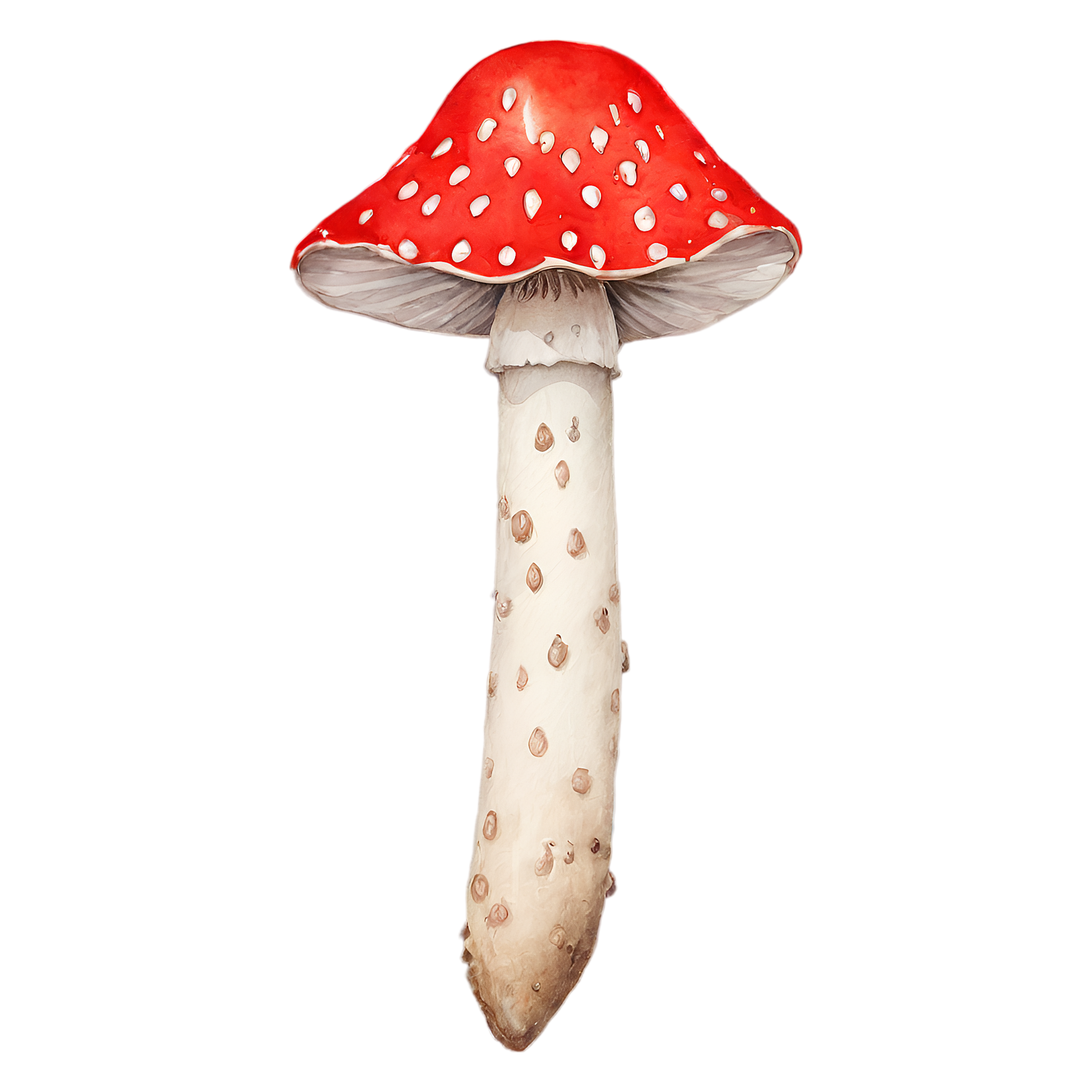
The ten images follow the mushroom through its growth. A rounded young button cap sits low on its stem, then come a tall white stem with a domed scarlet cap, a bell-shaped cap with white spots, and the classic red cap with white flecks. Older forms open into a flat red cap with a ringed stem and a wide parasol cap on a slender stem. The colors vary too: one cap is deep crimson with creamy gills showing underneath, one is orange-red, and one is glossy red with raised white warts. One toadstool tilts to the side, which helps break up a row of upright mushrooms. Every stem carries the skirt-like ring the species is known for.
Fairy gardens, gnome parties and a German good-luck charm
The spotted toadstool is the stock image of cottagecore and woodland design: fairy-garden signs, gnome-themed birthday invitations, storybook nursery prints, enchanted-forest party decor and autumn harvest-market flyers from September through November. In German-speaking countries the fly agaric is a good-luck symbol, and a lucky person is called a Glückspilz, a lucky mushroom. Red-and-white mushroom ornaments hang on Christmas trees there, and the toadstool appears on New Year's cards next to four-leaf clovers and chimney sweeps. That gives the set a second season on holiday ornaments and greeting cards. On anything made for children, treat it as storybook art and keep real mushroom-hunting out of the message.
Scarlet, ecru and forest companions
The palette is scarlet and orange-red caps over ecru and pale mocha stems. The most frequent DMC matches on the page are 606 Orange-Red Bright, 608 Burnt Orange Bright, Ecru and 842 Beige Brown Very Light, with Copic YR09 Chinese Orange and E40 Brick White for markers. Red caps stand out against green and brown, so pair them with ferns for a forest floor, fall leaves for an autumn border, or the mixed forest mushrooms set for variety. The mushrooms hub collects every fungus on the site, and the autumn hub has more fall pieces.
Tip: toadstool stickers and fairy-garden stakes
Each toadstool is a transparent PNG at 2048 by 2048 pixels, about 6.8 inches square at 300 DPI. For a sticker sheet, size the mushrooms between 1.5 and 3 inches and use print-then-cut with a thin white offset; the creamy stems are pale enough to blur into white sticker paper, and the offset outline keeps their edge visible. For a fairy-garden stake, print a single toadstool on waterproof vinyl, laminate it, and stick it to a painted craft stick pushed into a pot. Mixing button, bell and parasol shapes at different heights makes a cluster look natural instead of stamped. For embroidery, stitch the white warts as French knots in white or ecru floss over a satin-stitched red cap.