Plants older than flowers
Ferns grew on Earth long before the first flowering plants, and they still reproduce the old way: by spores instead of seeds. Turn over a mature frond and you will often see rows of small brown dots called sori, which hold the spores. New fronds unroll from a tight coil called a fiddlehead, named for its resemblance to the scroll of a violin. Most ferns prefer shade and moisture, which is why they carpet forest floors and do well in bathrooms as houseplants. The Victorians loved them so much that Britain went through a collecting craze in the mid-1800s known as pteridomania, with fern motifs pressed into pottery, glass and cast iron. Ostrich fern fiddleheads are still foraged and eaten as a cooked spring vegetable in New England and eastern Canada.
Ten varieties, ten leaf shapes
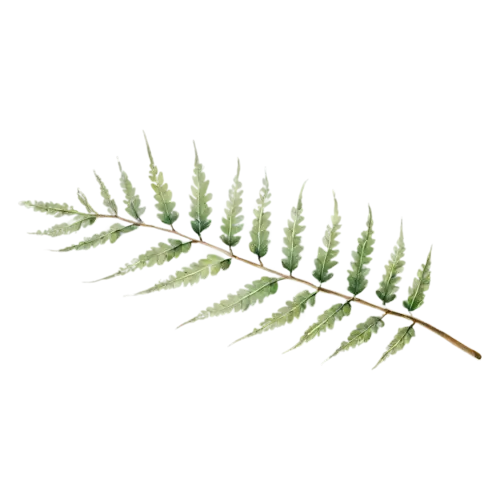
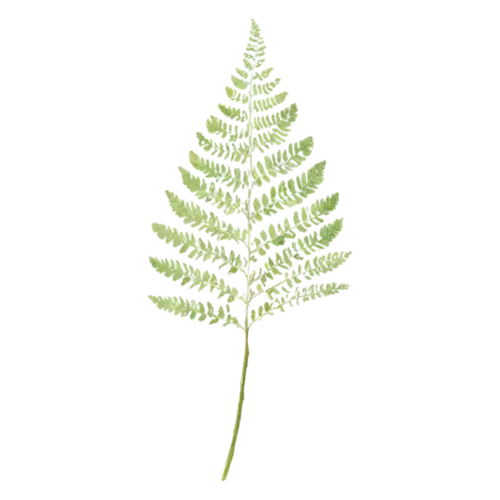
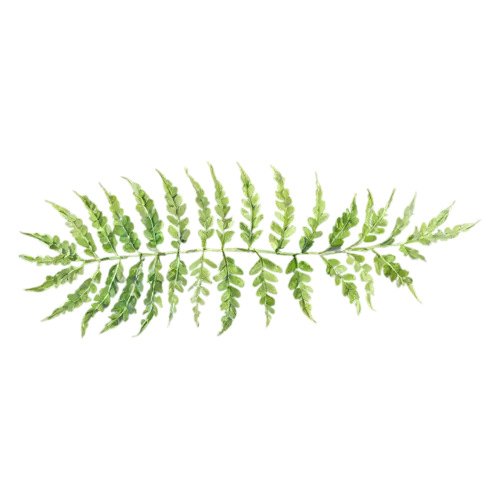
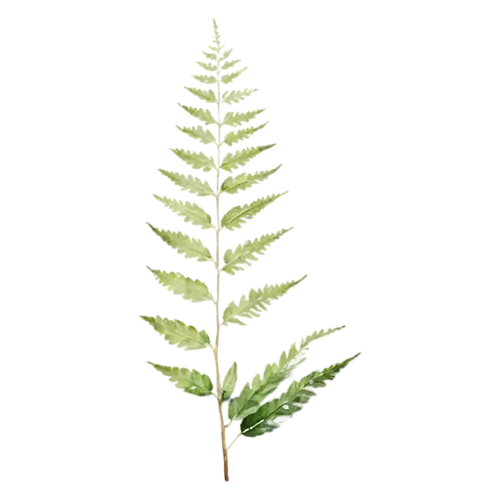
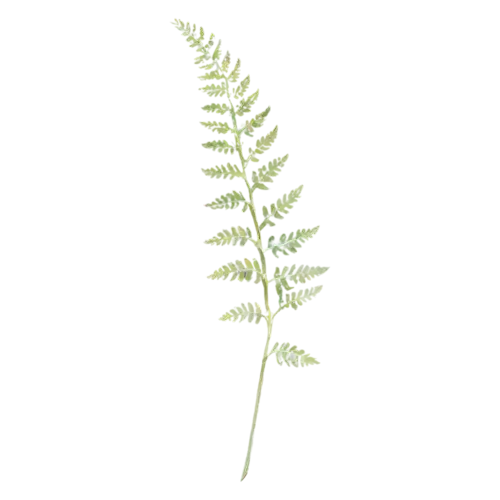
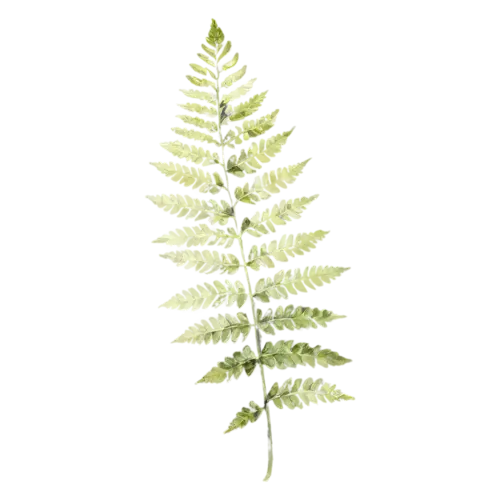
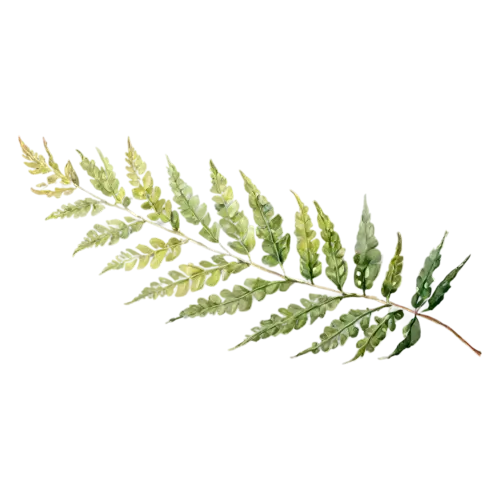
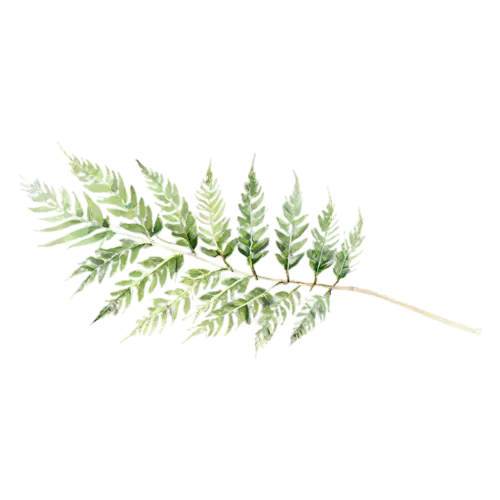
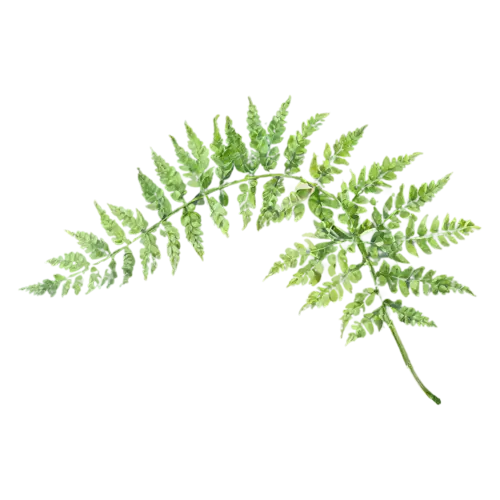
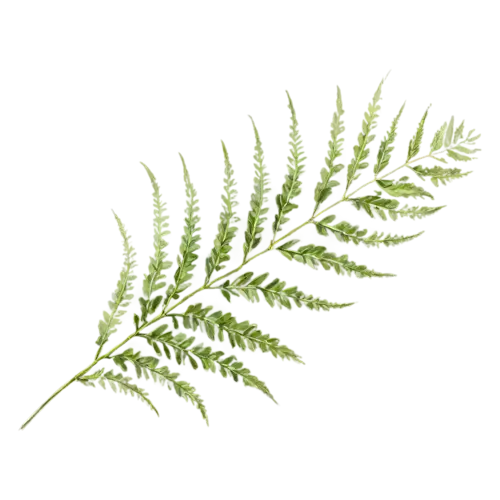
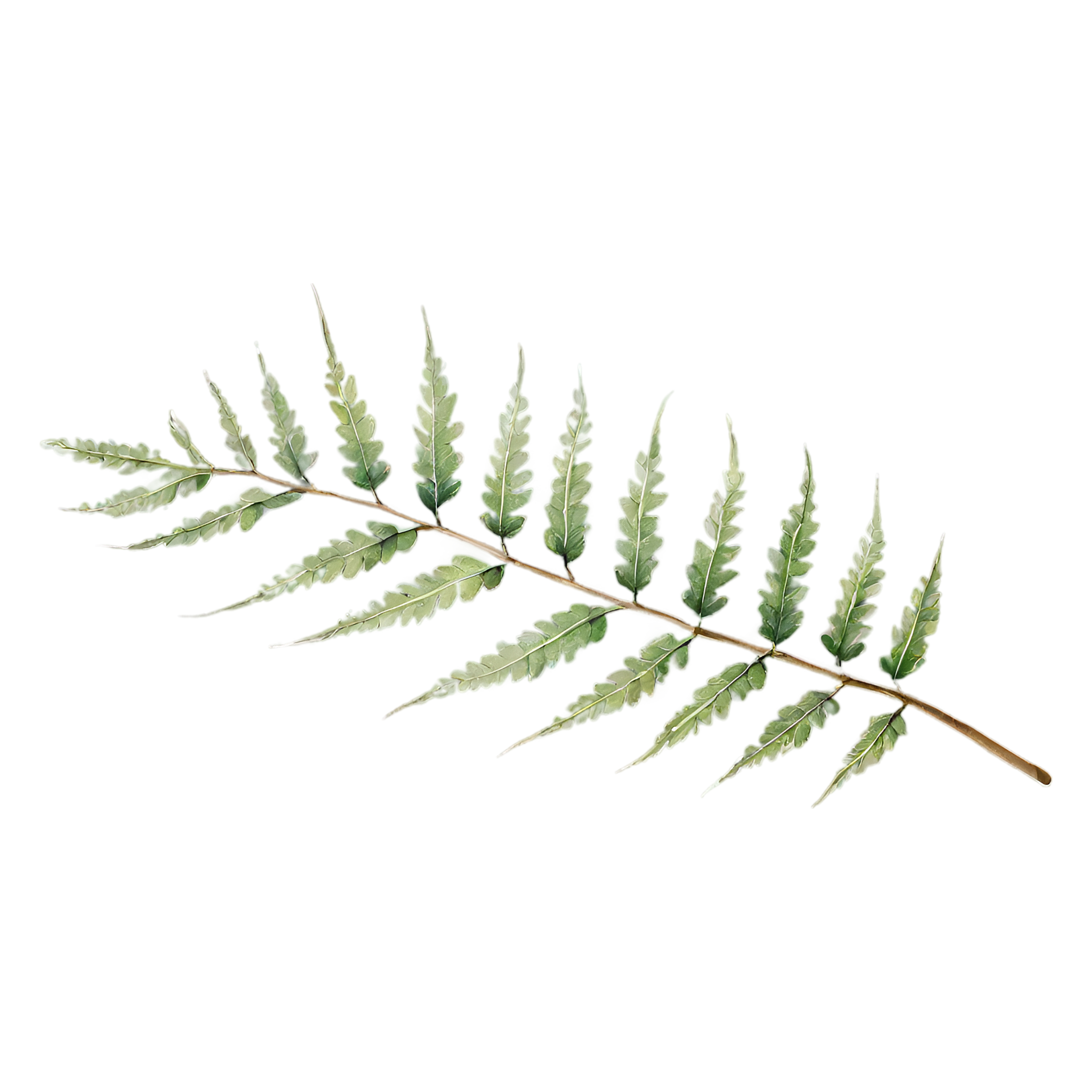
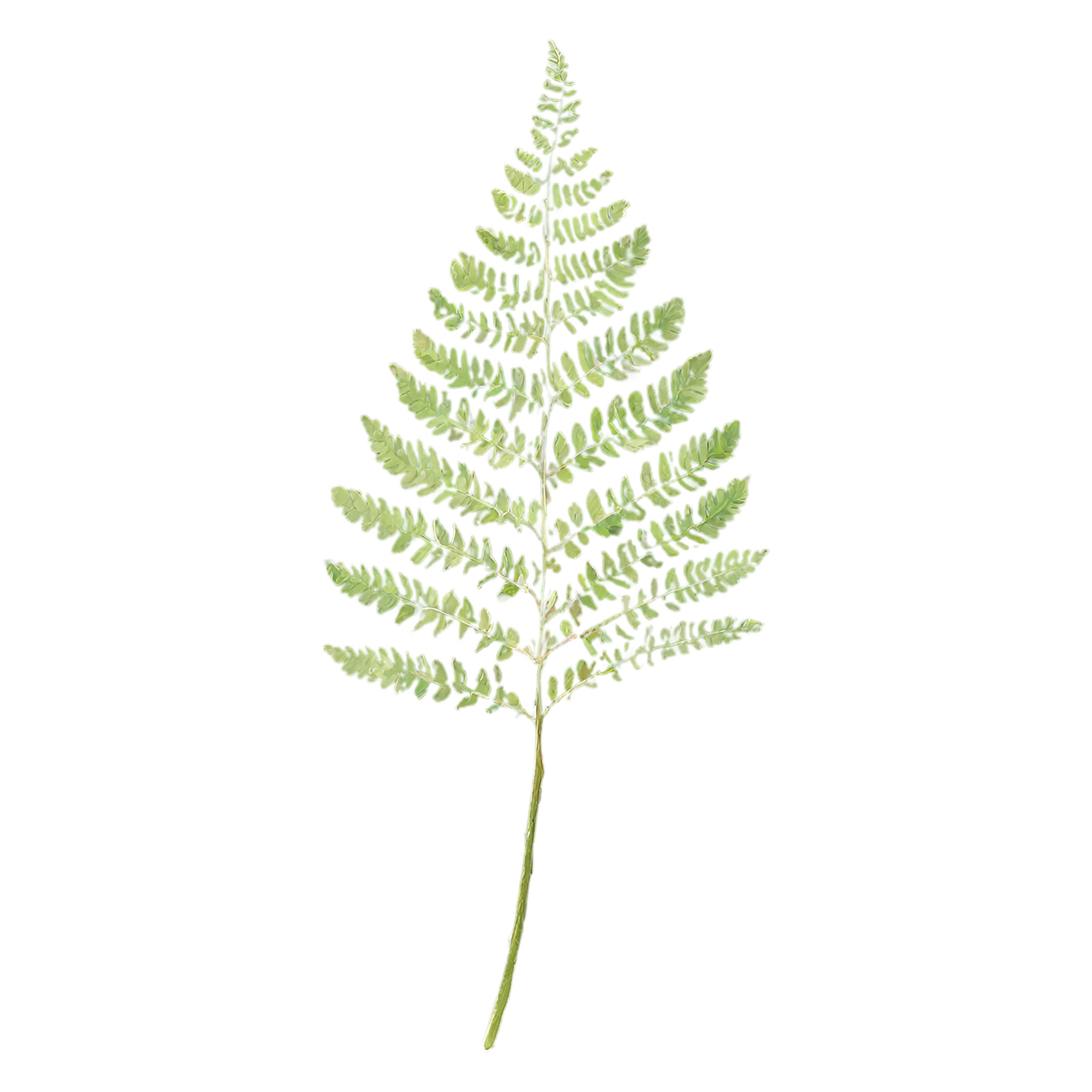
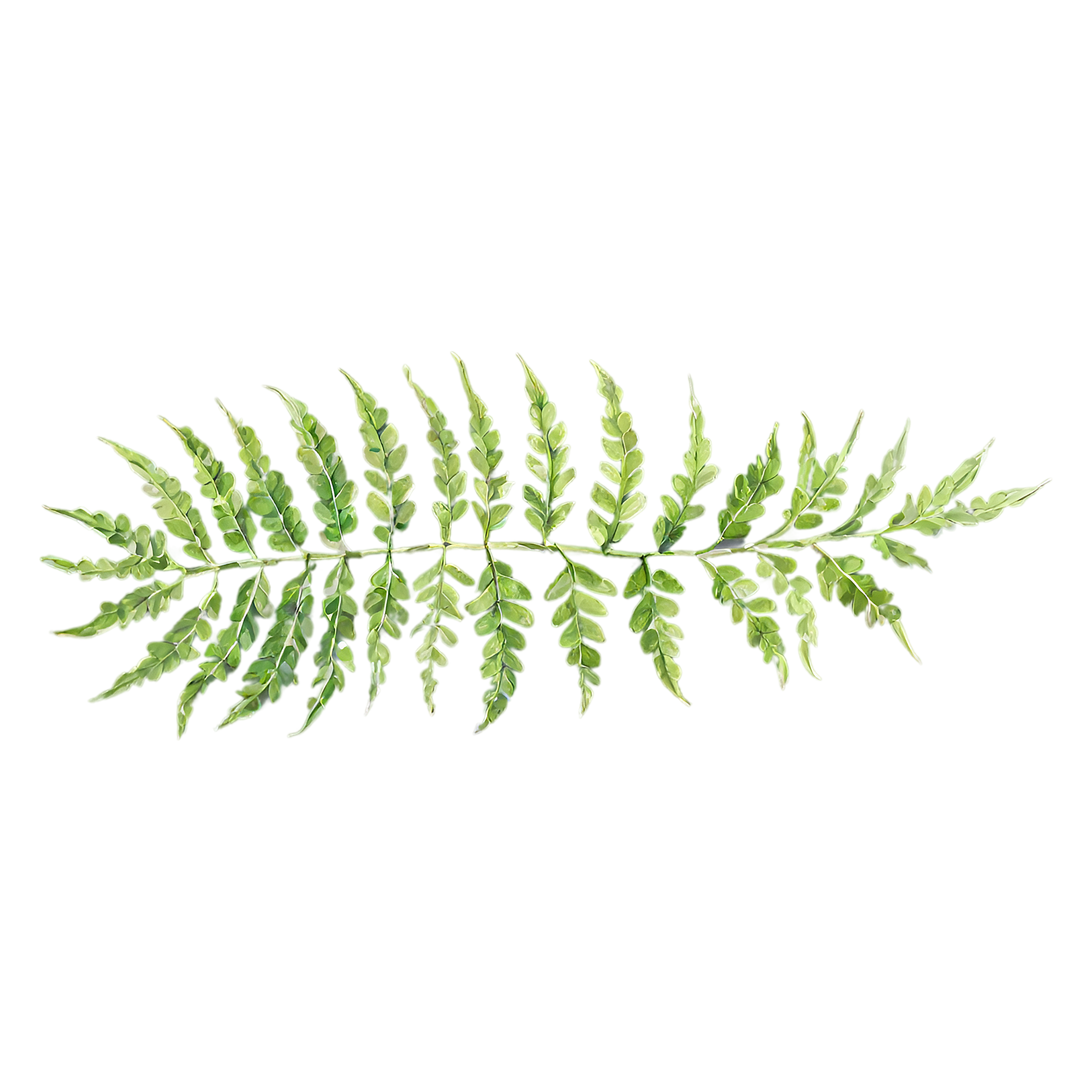
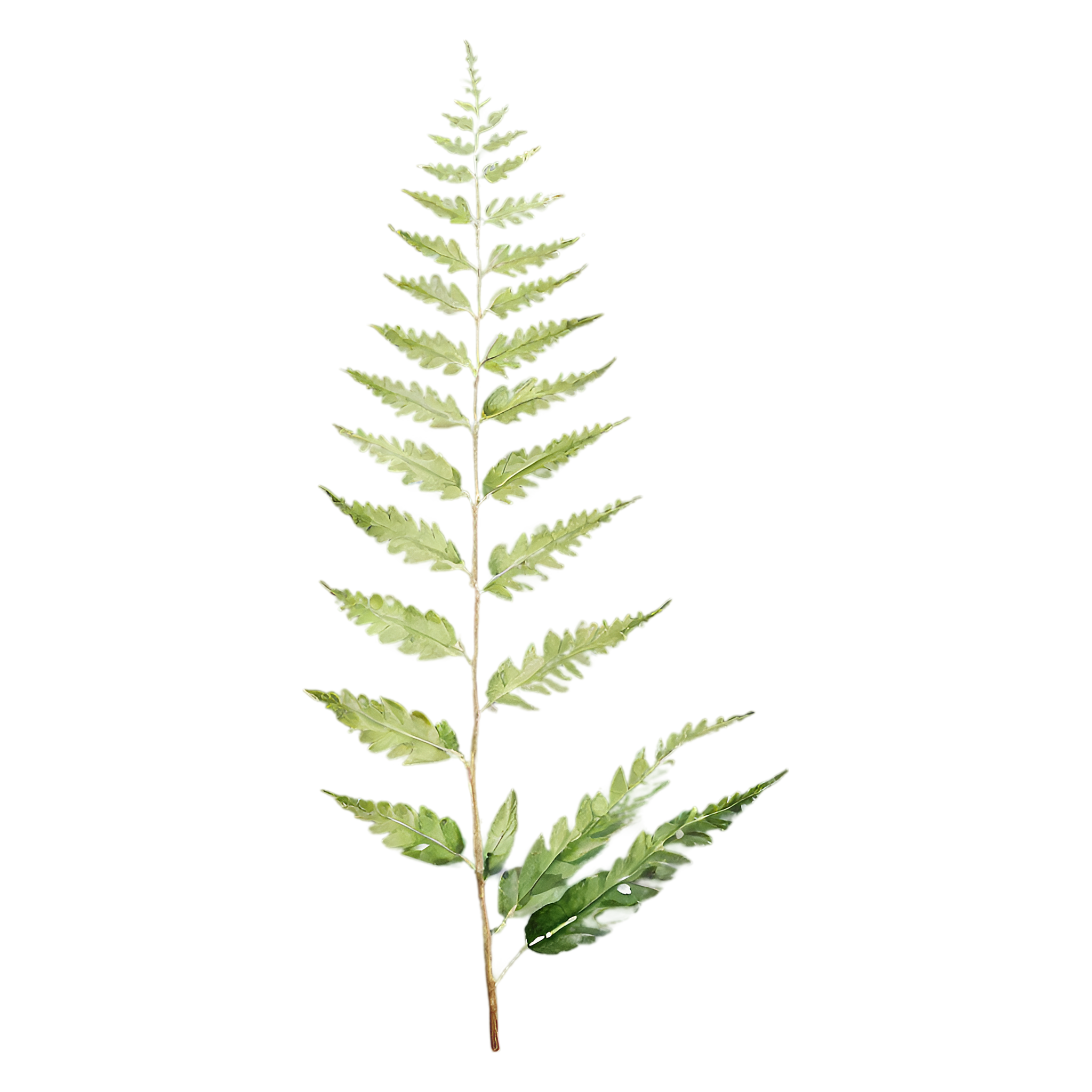
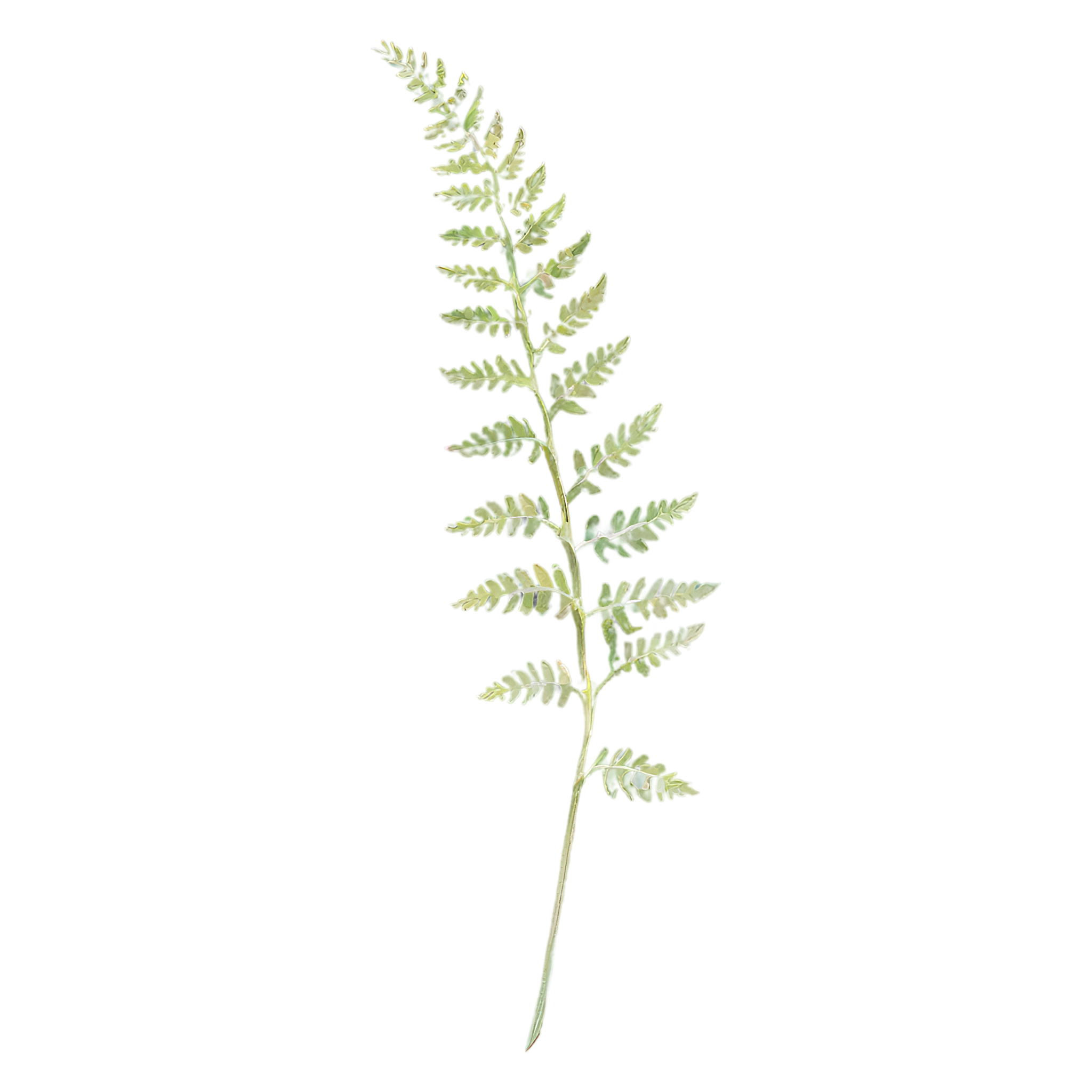
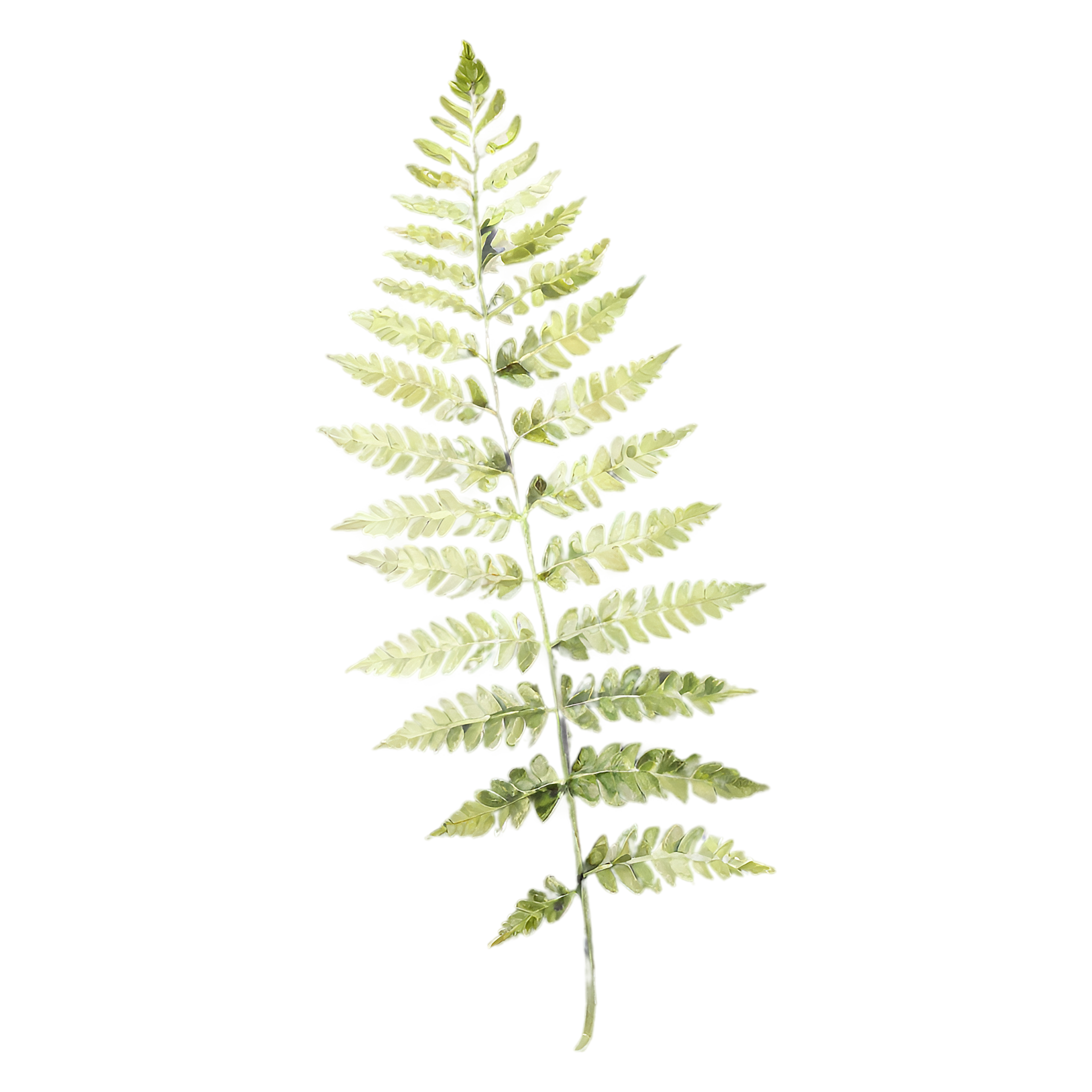
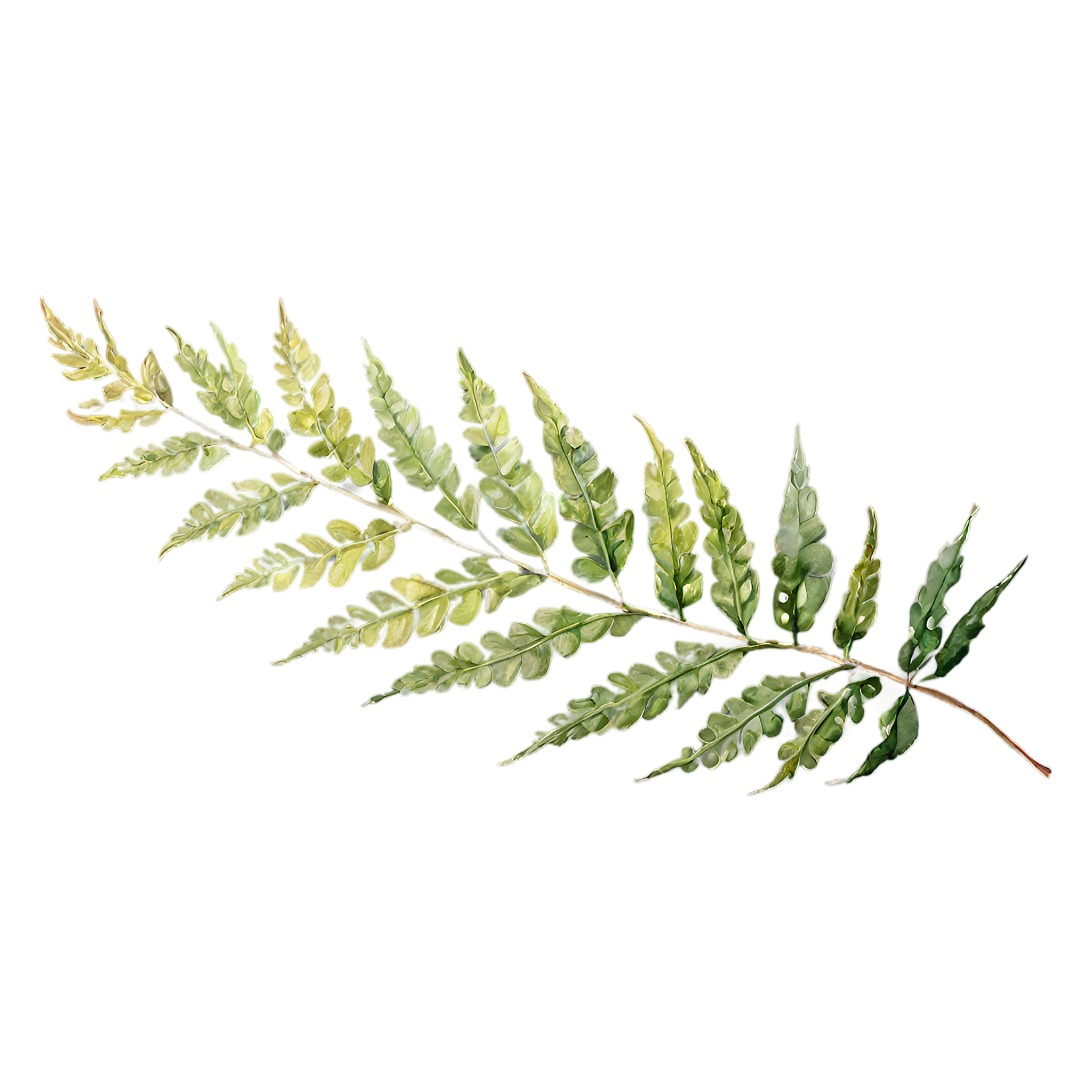
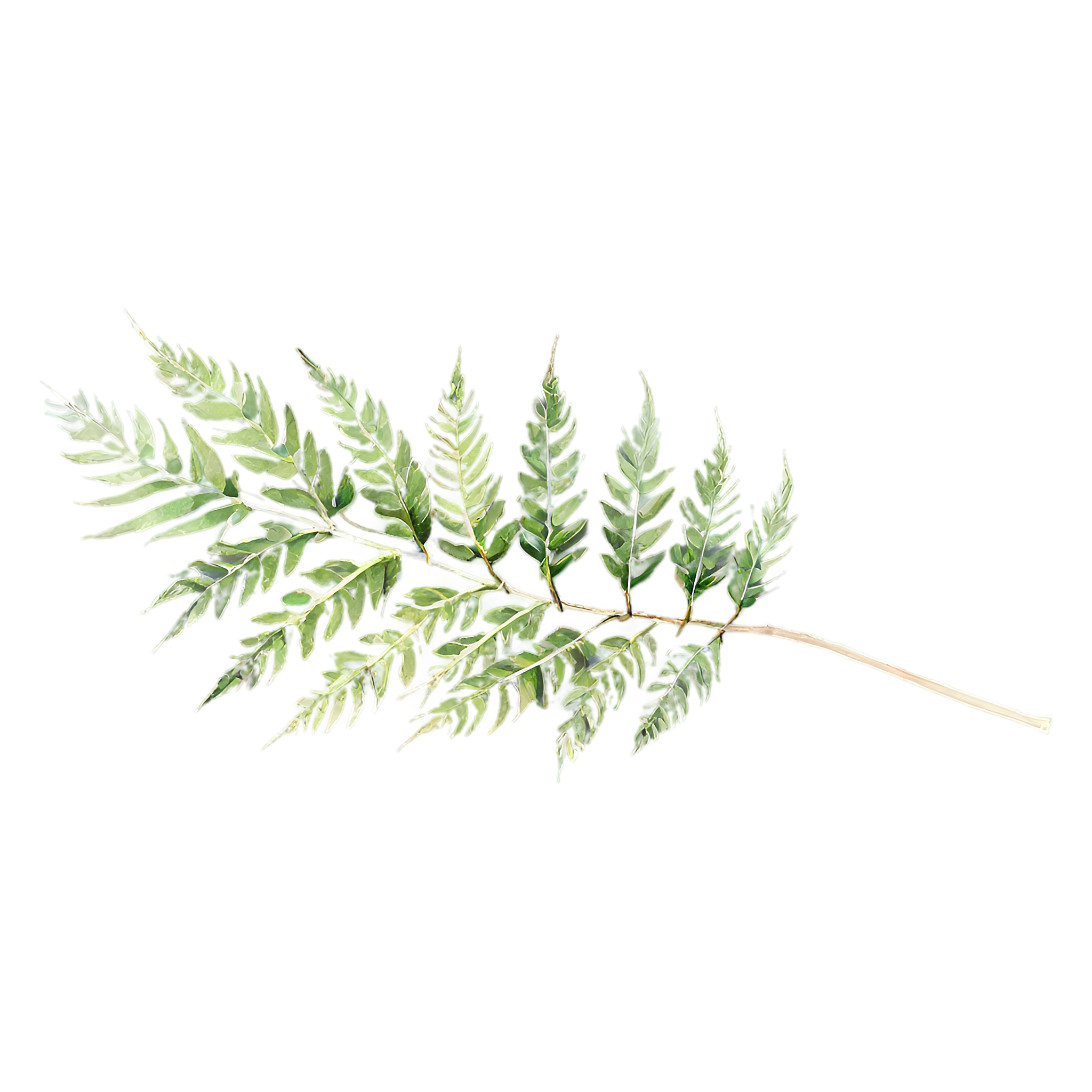
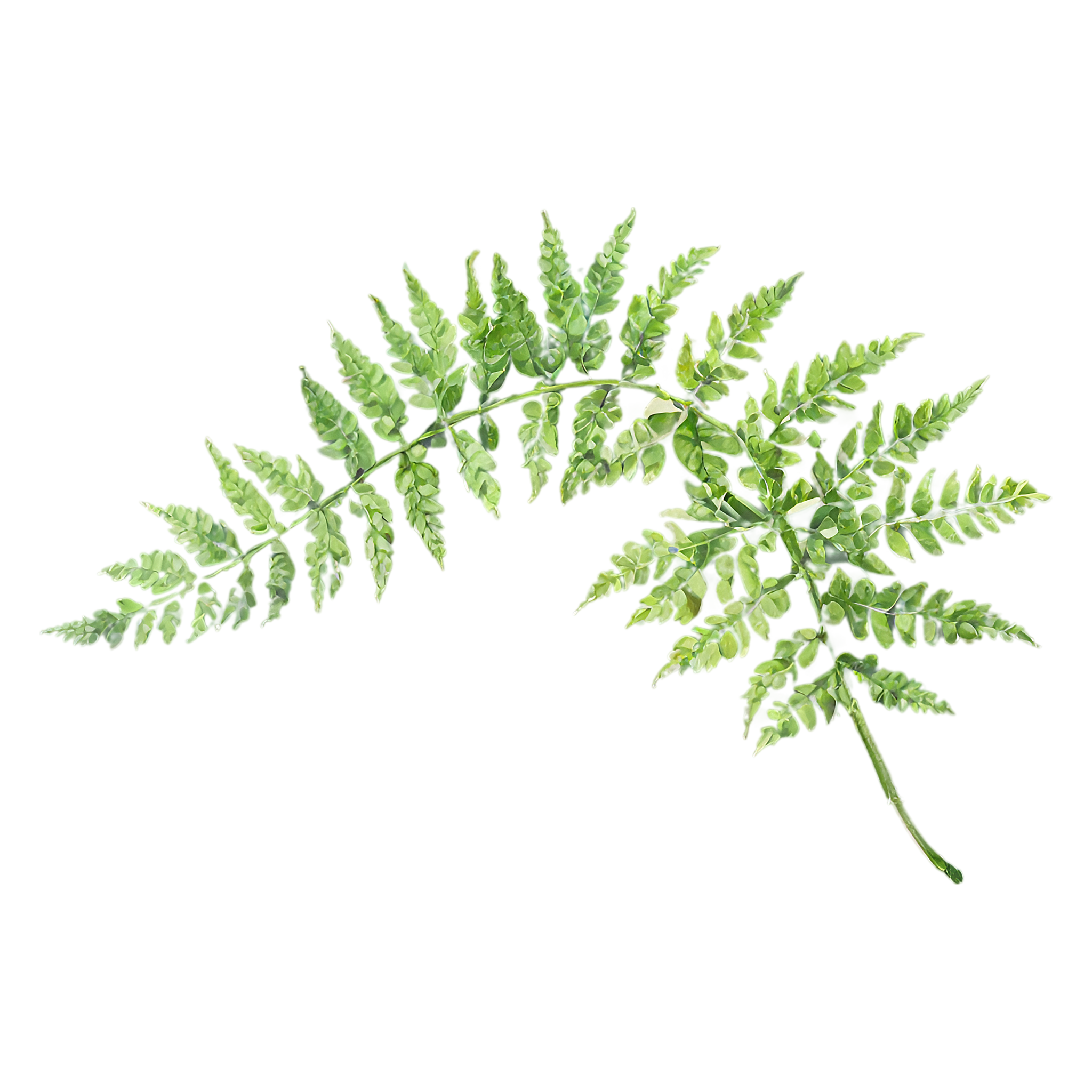
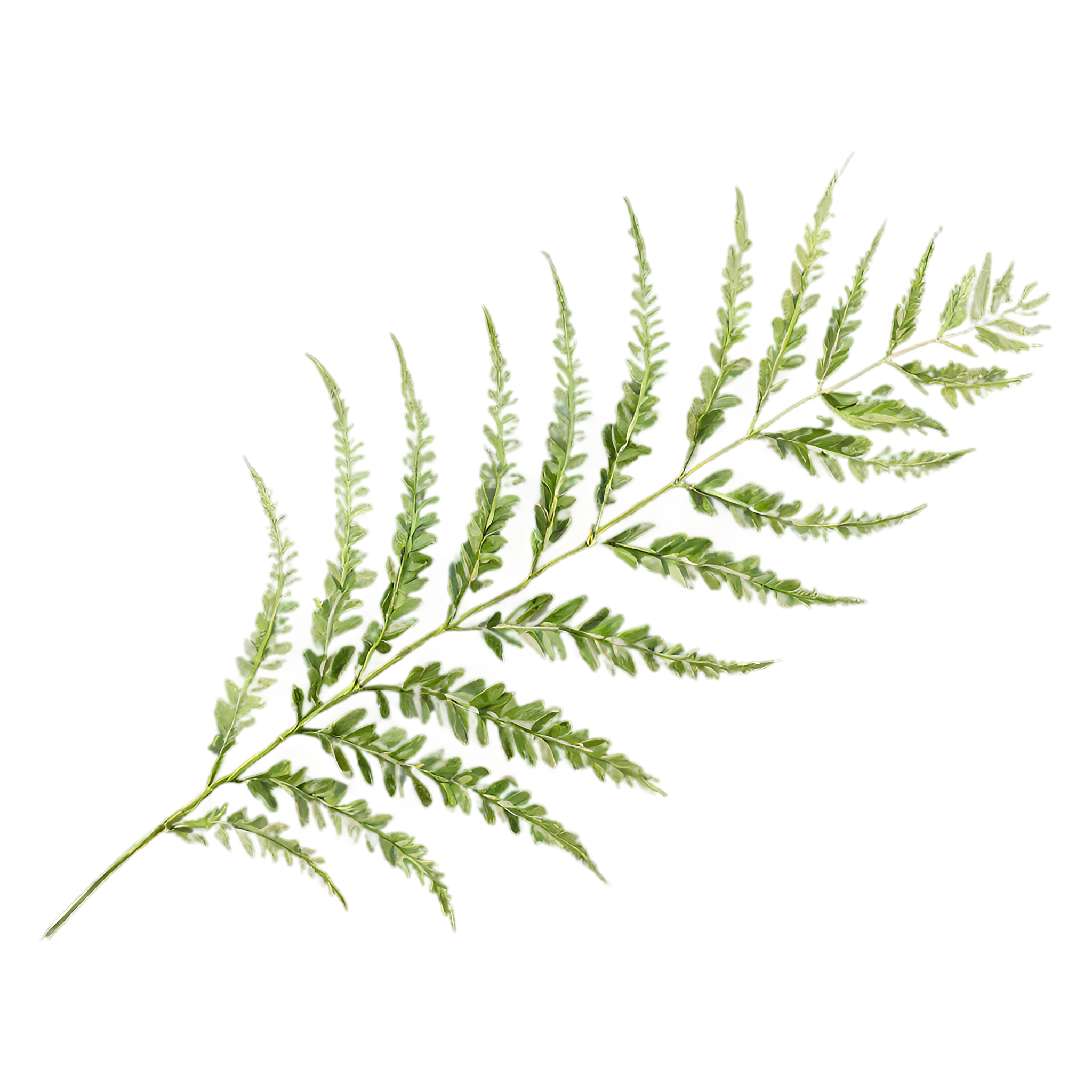
This set is organized by variety, so each image has a different silhouette. The Boston fern has long arching fronds of feathery leaflets, the classic porch-basket plant. Maidenhair is the delicate one, with small fan-shaped leaflets. The lady fern is finely divided and lacy, the ostrich fern tall and plume-like, and the sword fern has narrow, upright leaflets. Leatherleaf has glossy, sturdy divided leaves, the same fern florists tuck into grocery-store bouquets because it lasts. Silver lace is airy, bracken has broad triangular fronds, and the asparagus fern has soft, needle-like foliage, though it is not a true fern at all (it belongs to the asparagus family). The tenth image is a single curling fiddlehead, the young frond before it opens.
Woodland showers, terrariums and greenery invitations
Ferns belong to shady, green, slightly wild themes. They fill out woodland baby shower invitations and forest-animal nursery prints, and they give boho and garden wedding stationery a softer edge than eucalyptus alone. Plant shops can use the Boston and maidenhair fronds on care cards and price tags, and terrarium makers can label kits with the variety that is actually inside. The fiddlehead is a good spring icon for farmers market signs and foraging class flyers. Teachers covering plant life cycles can put the fiddlehead next to an open frond to show how a fern grows, then contrast spores with the seeds of a flowering plant.
Fresh greens and deep forest tones
The palette runs from fresh yellow-green through deep forest green, and the nearest DMC floss matches fall in the Avocado Green, Yellow Green and Forest Green families (471, 3348, 989). Ferns rarely compete for attention, so they pair easily. Combine them with eucalyptus for a mixed greenery bouquet, with forest mushrooms for a woodland floor scene, or with tropical leaves for a lush jungle look. The fern and eucalyptus wreaths in the greenery wreath gallery use similar foliage. More foliage lives in the greenery clipart hub.
Arranging fronds into a border or bouquet
Single fronds are the building blocks for larger pieces. To make a corner spray, rotate two or three fronds so their bases meet at one point and the tips fan outward, putting a broad frond like bracken or Boston at the back and a fine one like maidenhair on top. For a botanical print series, set each variety alone on cream paper with its common name underneath, a format that sells well as a set of four or six. Each file is a transparent PNG at 2048 by 2048 pixels, about 6.8 inches at 300 DPI, so a single frond prints sharply at 8 by 10 when it fills most of the frame. For cross-stitch or embroidery, use the DMC floss matches in each image's palette panel.