Monstera, palms and bananas: where these leaves come from
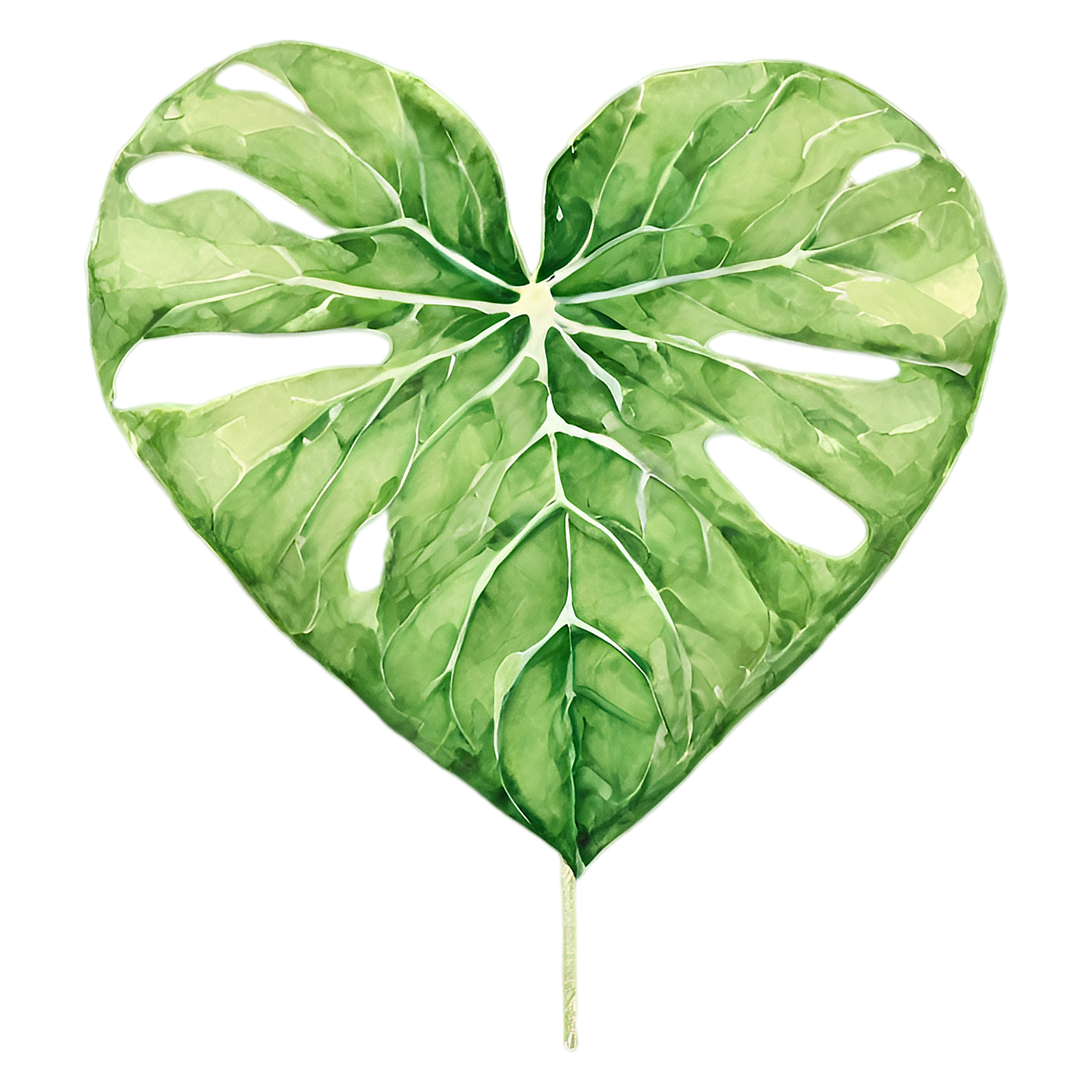
Monstera deliciosa grows in the tropical forests of southern Mexico and Central America, climbing tree trunks with aerial roots. Its leaves start out solid and heart-shaped and develop splits and holes, called fenestrations, as the plant matures. Banana and bird-of-paradise leaves are huge paddles that tear along their parallel veins in the wind, which lets air pass through instead of snapping the leaf. Calatheas belong to the prayer-plant family, and many of them raise their leaves at night and lower them in daylight. Elephant ears, in the genera Colocasia and Alocasia, are grown for heart-shaped leaves that can reach two feet or more. Many of these plants are now common houseplants far from the tropics.
Ten leaves, nine plants
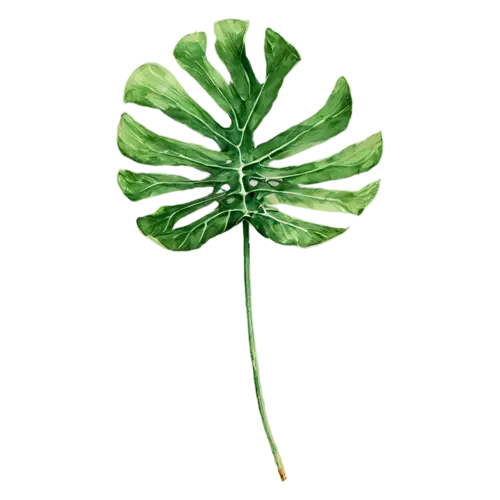
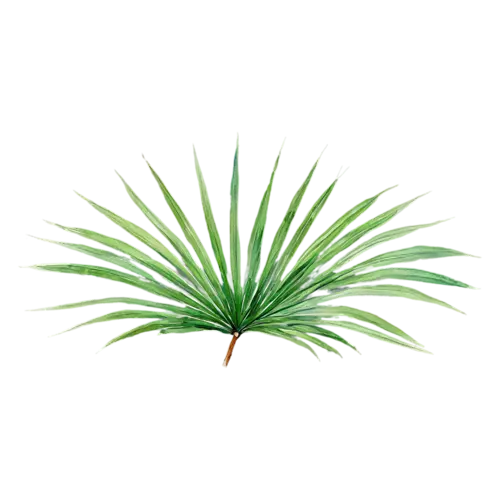
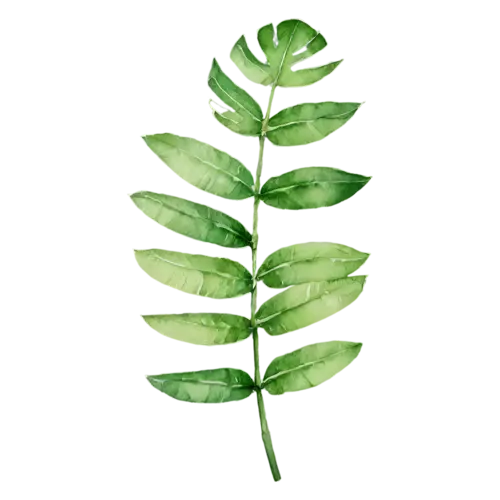
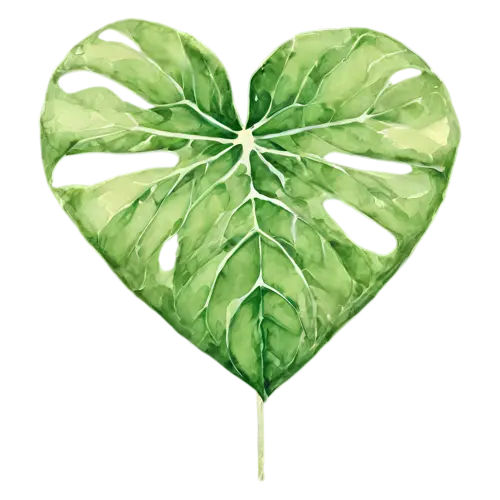
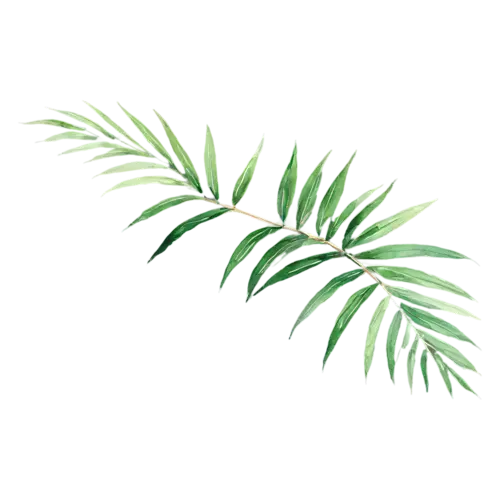
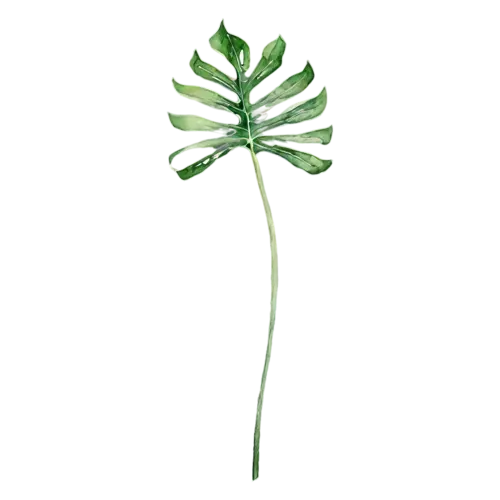
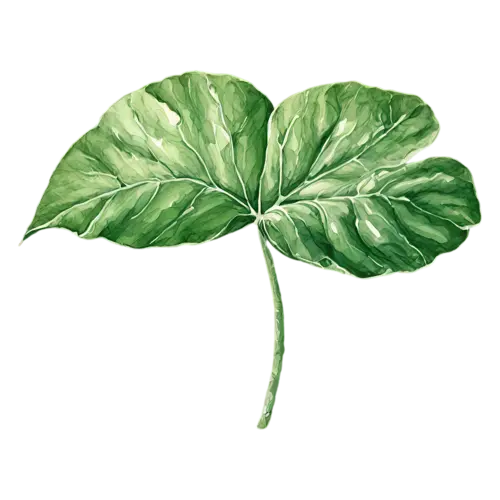
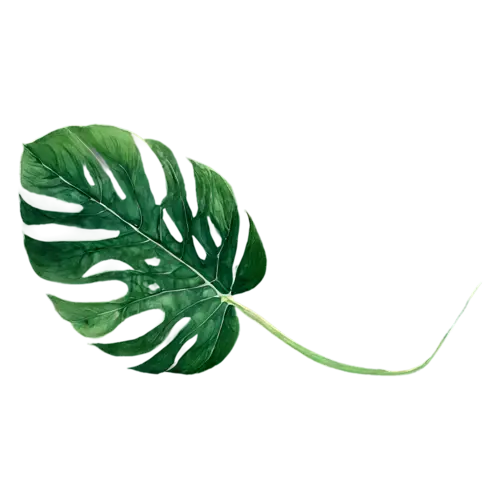
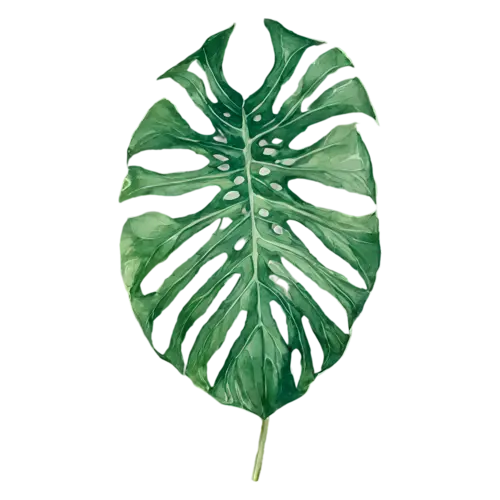
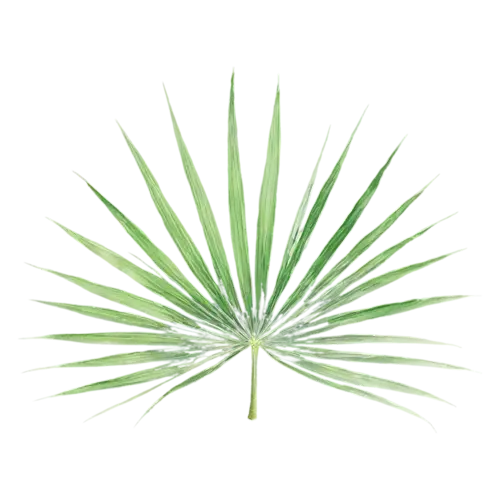
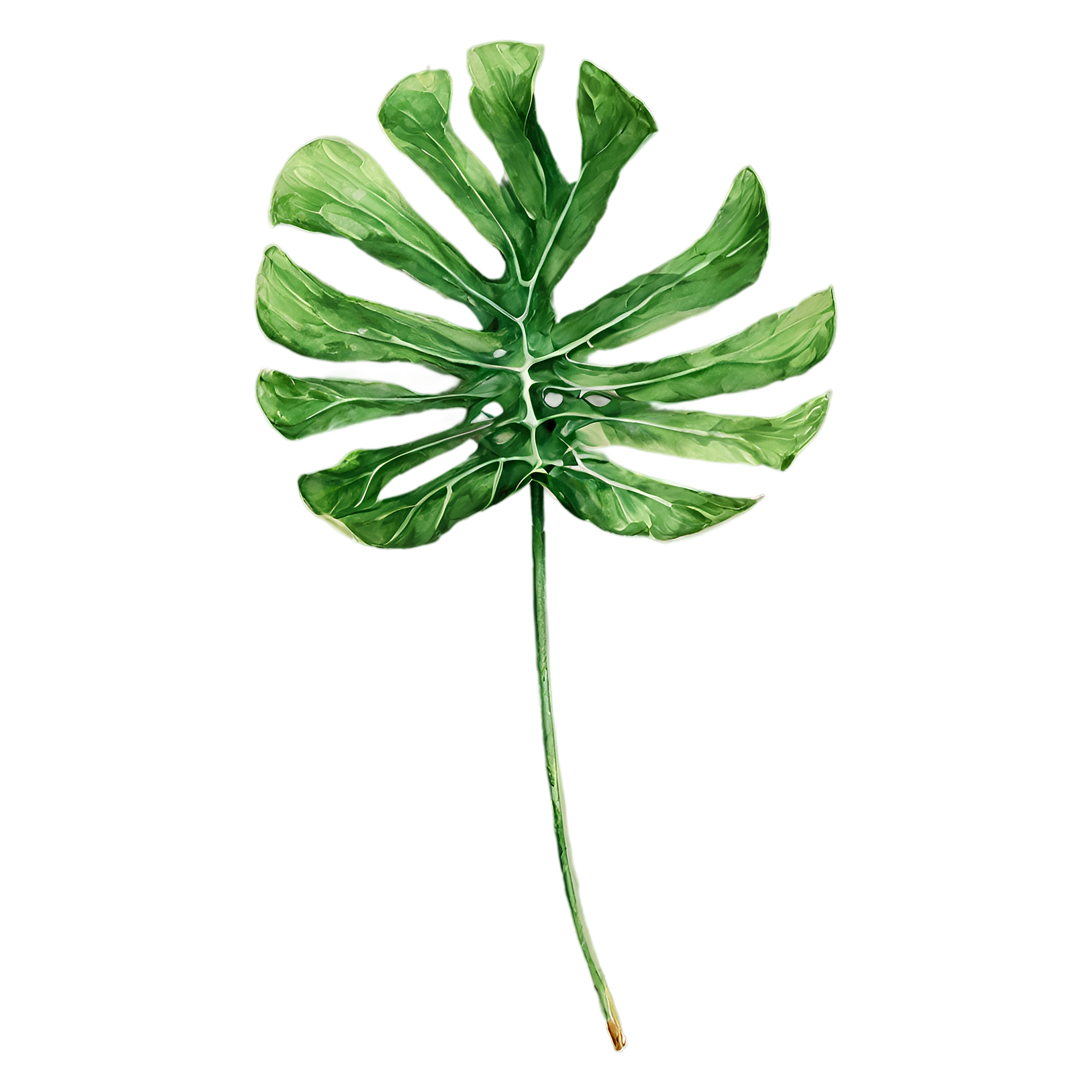
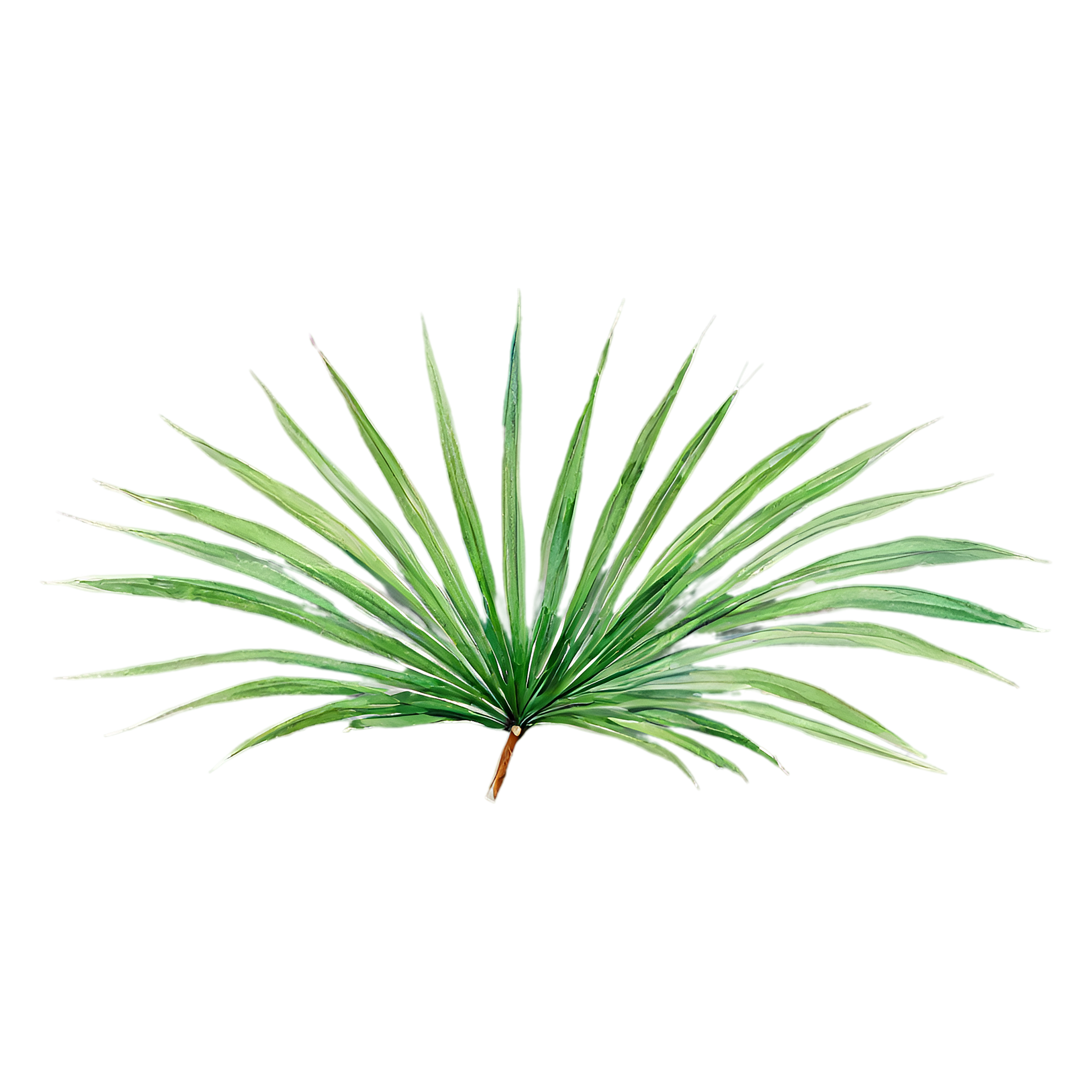
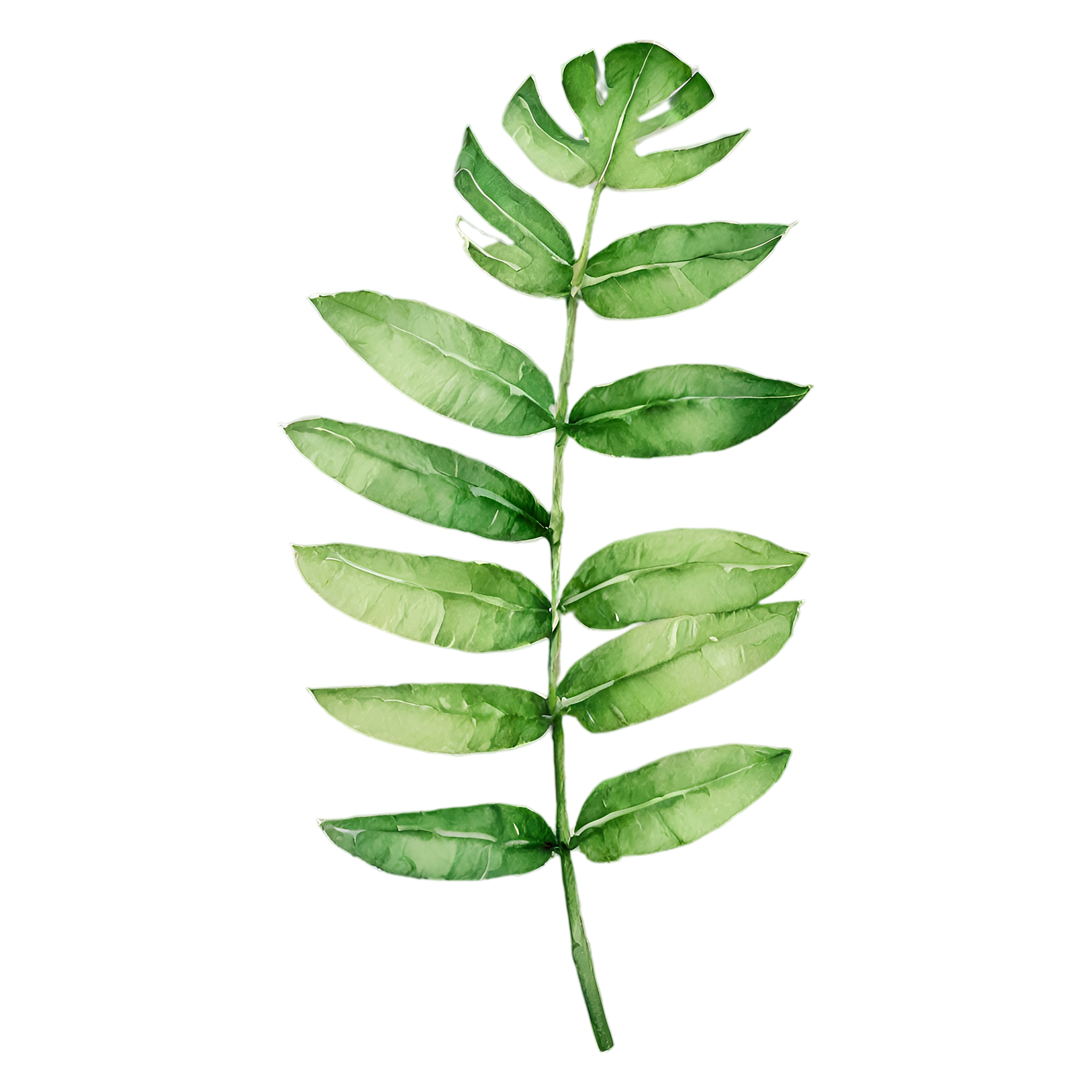
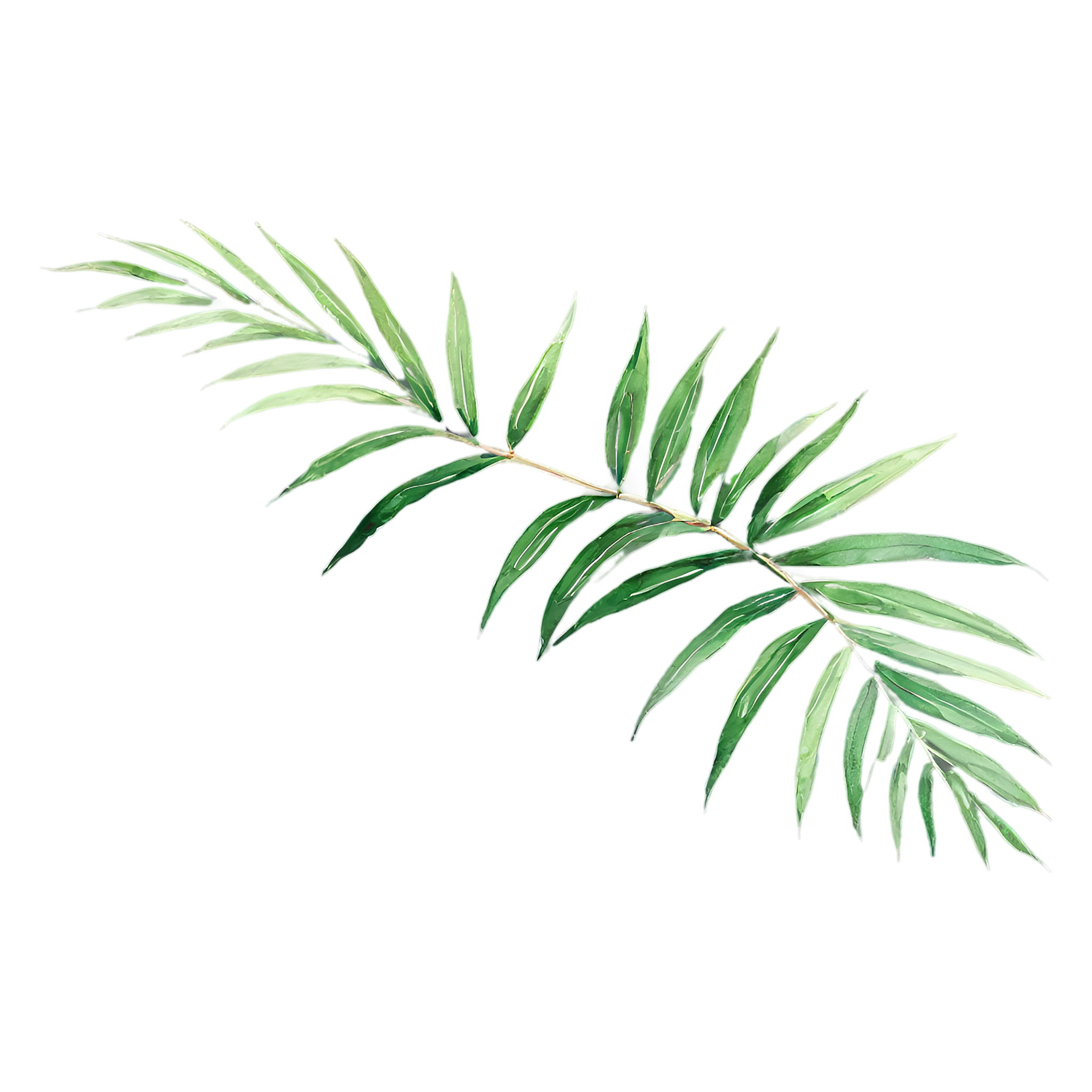
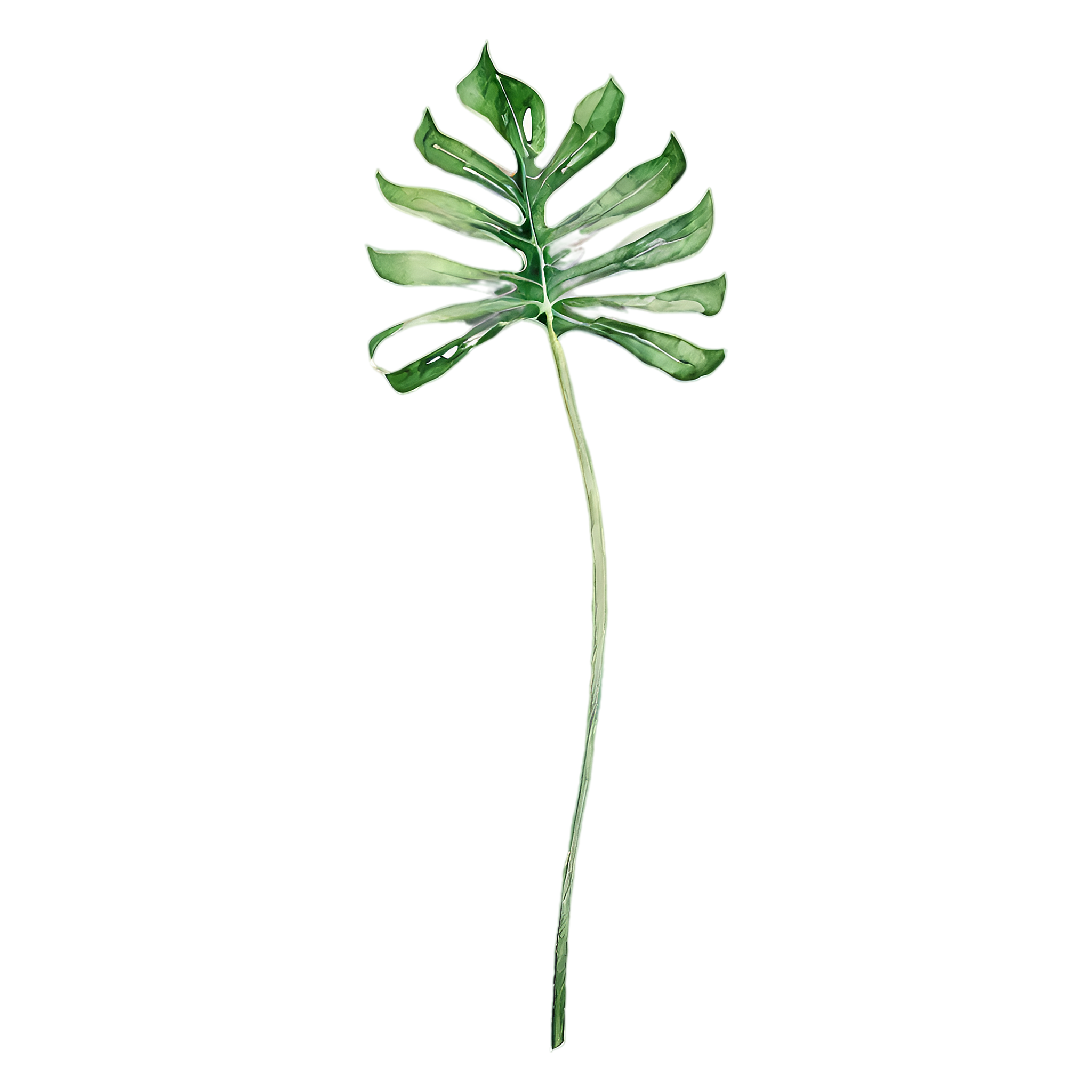
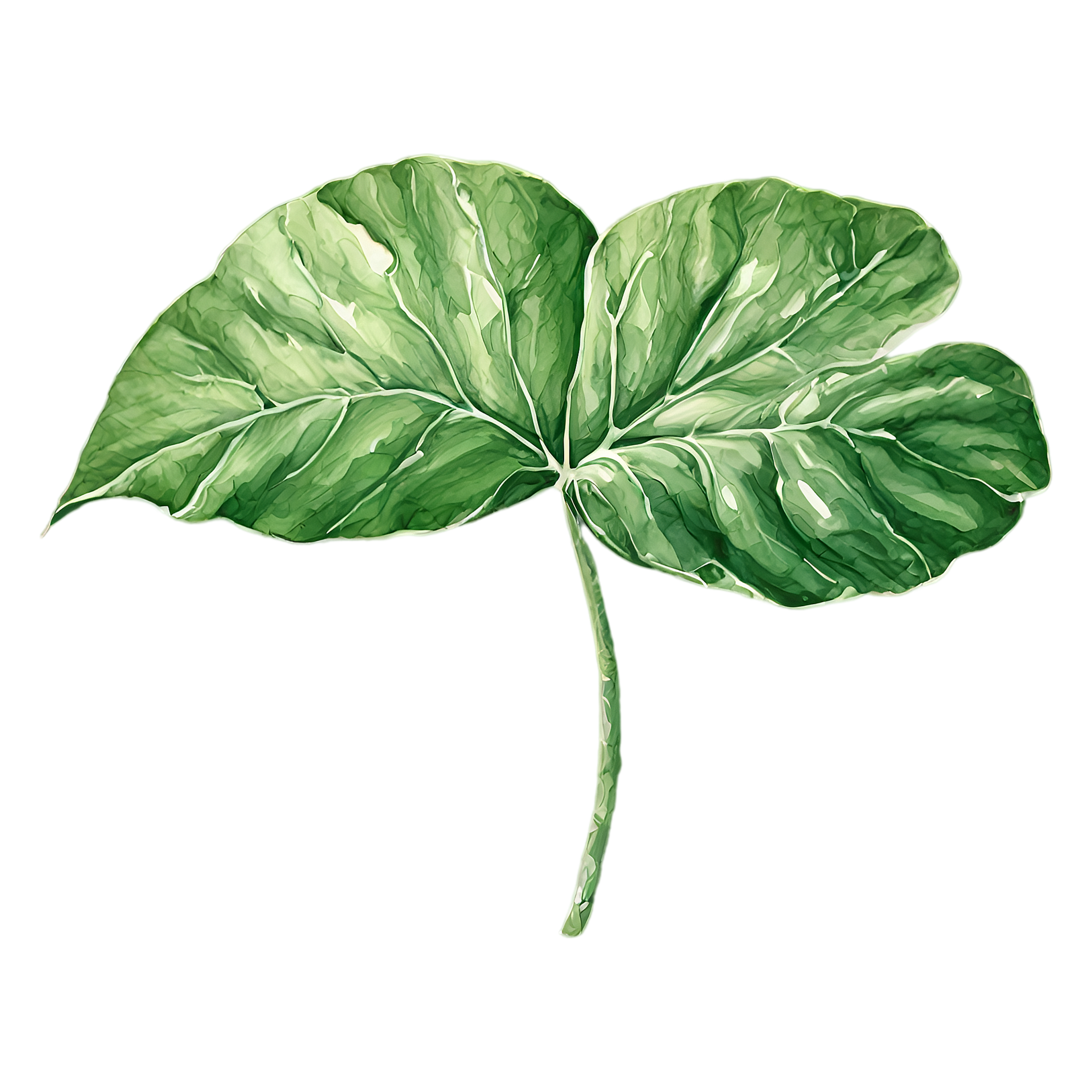
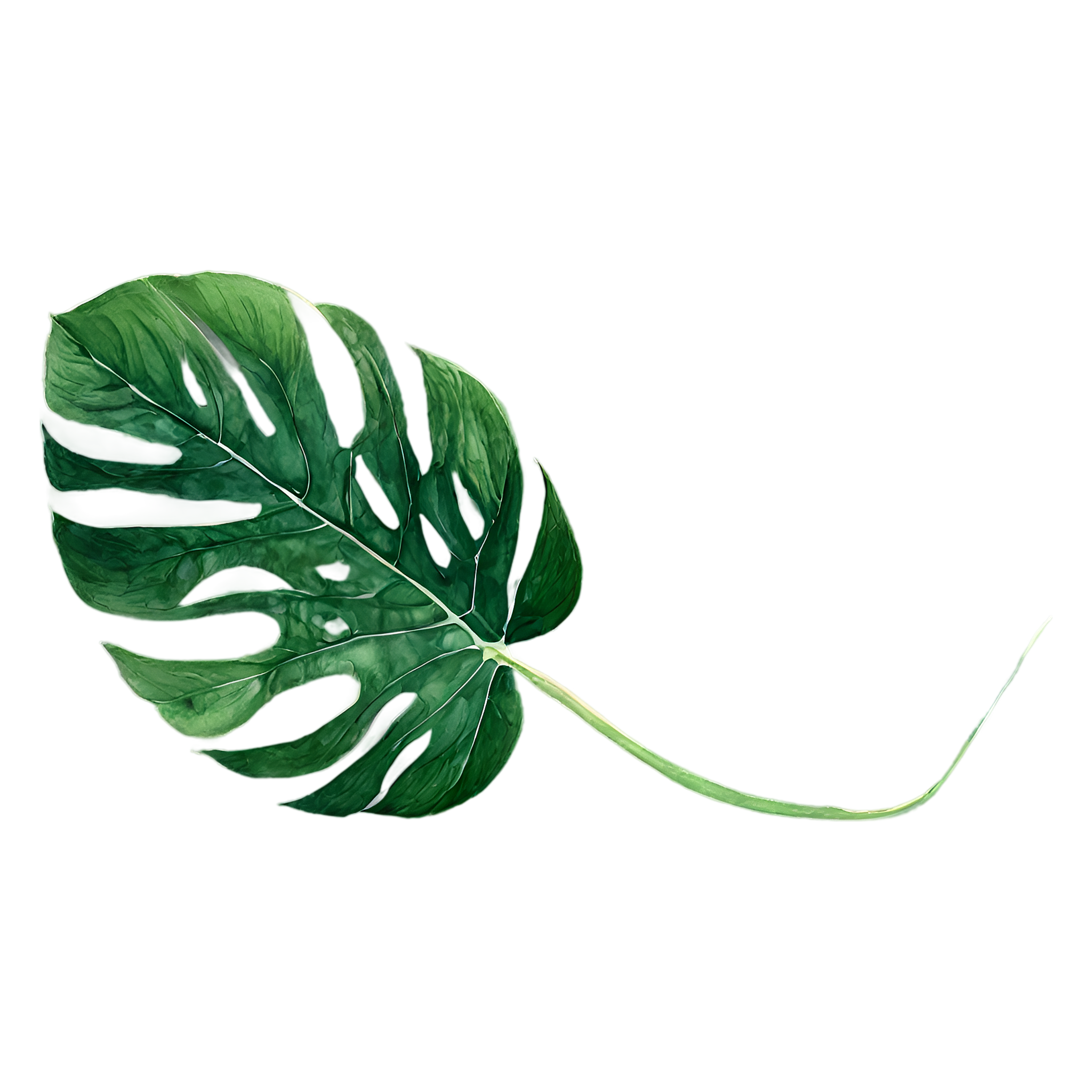
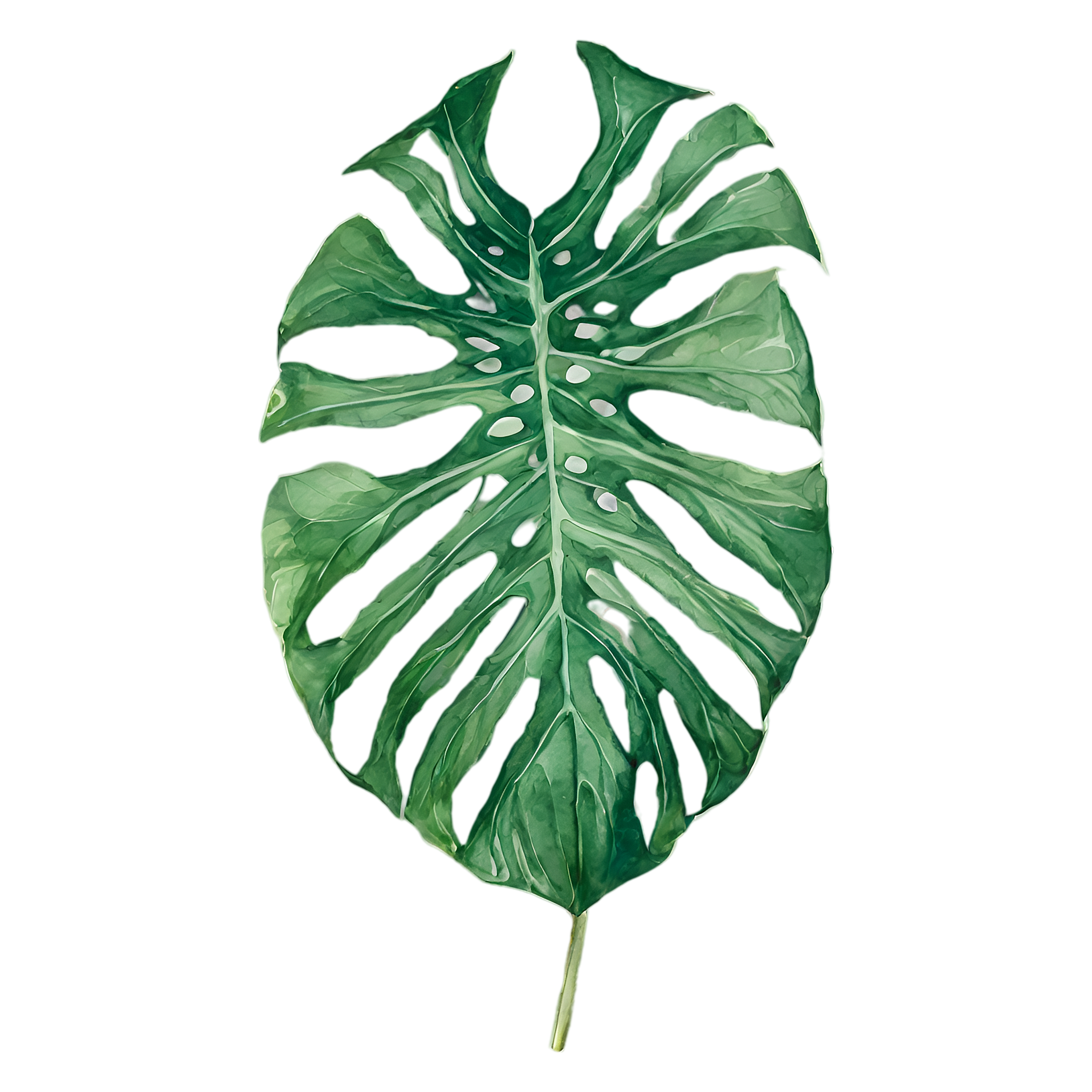
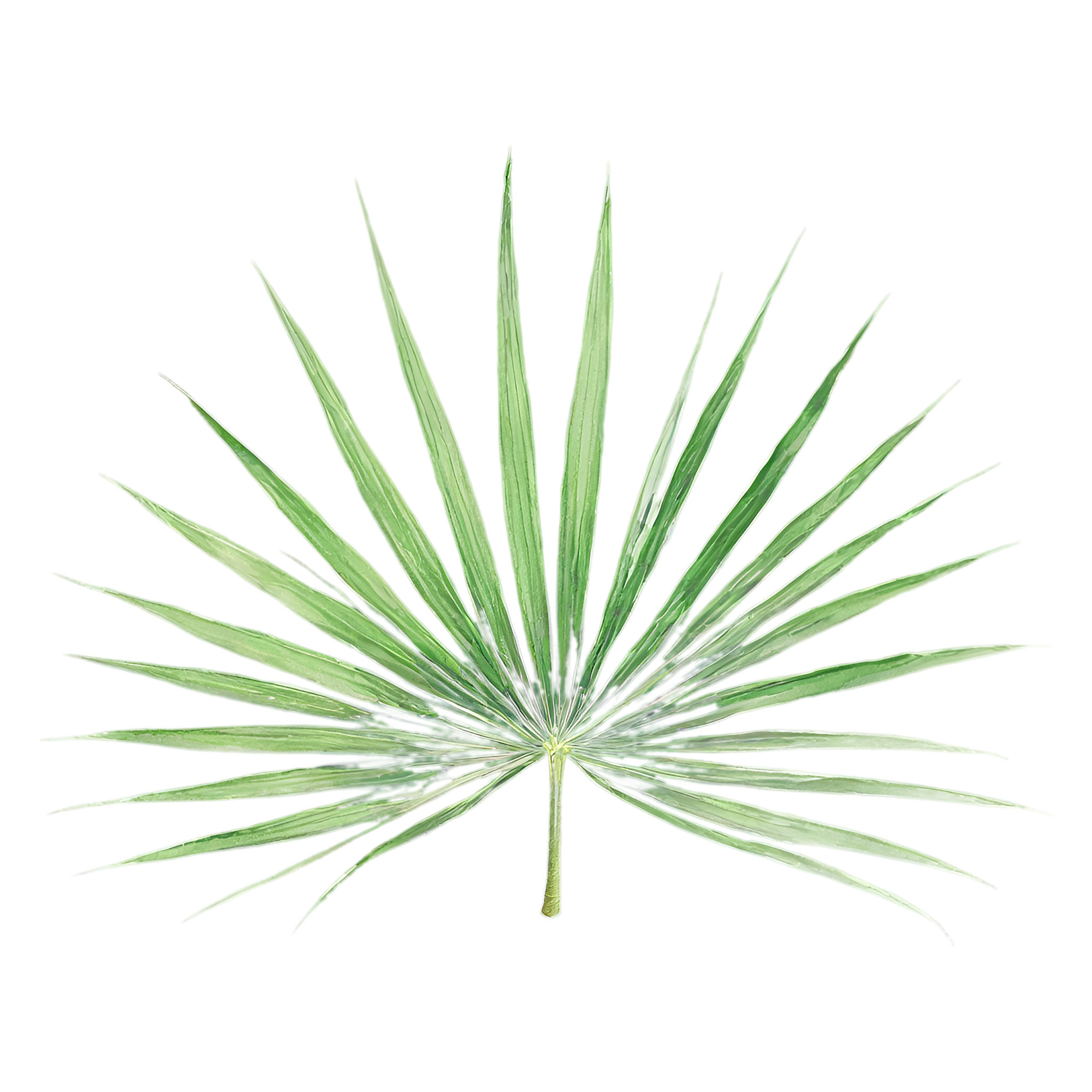
Every image is a single leaf or frond with no pot, so the pieces overlap easily into borders and bouquets. Monstera appears twice: a mature leaf with deep splits and holes, and a young leaf with only small splits, which shows the plant's growth. There is a fan palm with radiating segments, an areca palm frond with slender leaflets, a smooth paddle-shaped banana frond, and a broad bird-of-paradise frond. The philodendrons come as a glossy heart-shaped leaf and a split-leaf type with deep lobes. An elephant ear adds a large heart shape, and a calathea brings patterned markings that break up the solid greens. The banana and bird-of-paradise fronds are the tallest shapes, so they make good vertical anchors for a long menu or a phone-sized story graphic.
Luau invitations, tiki menus and jungle baby showers
Summer is the main season for these leaves, from Memorial Day through Labor Day. They fit luau and Hawaiian-shirt party invitations, pool-party flyers, tiki-bar and smoothie-stand menus, and summer camp signs. Destination weddings in Hawaii, Florida, Mexico and the Caribbean use monstera and palm leaves on save-the-dates, welcome bags and seating charts. Jungle and safari themes for baby showers and first birthdays need exactly this kind of greenery around the animals. Houseplant shops and plant influencers use the monstera and calathea for logos, care cards and repotting-workshop flyers, and travel agencies use palms on beach-vacation promotions.
Jungle greens and how to warm them up
The palette is mostly greens: avocado, chartreuse, Nile green and a deeper olive in the shadows. The most frequent DMC matches on the page are 471 Avocado Green Very Light, 701 Green Light, 703 Chartreuse, 3347 Yellow Green Medium and 913 Nile Green Medium, with Copic YG09 Lettuce Green and G99 Olive for markers. All-green layouts can feel flat, so add a warm accent: coral or hot pink lettering, or a sunset-orange background behind the leaves. For more foliage, combine these leaves with ferns, potted succulents or cactus, and browse the greenery hub and botanical hub.
Tip: building a tropical corner border
Each leaf is a 2048 by 2048 pixel transparent PNG, about 6.8 inches square at 300 DPI. For an invitation corner, layer three or four leaves: put a large dark banana or bird-of-paradise frond at the back, a monstera on top of it, and a slender areca frond or calathea poking out in front. Rotate each leaf to a different angle so the stems point toward the corner, then mirror the whole cluster for the opposite corner. On a 5 by 7 card, leaves of 2 to 3 inches leave enough open space for text. Flipping a leaf horizontally is a quick way to get variety from one file. For a printed luau table runner, scatter single leaves at random angles along the full length rather than in a tidy row.