The golden trumpet with false gills
Chanterelles (Cantharellus) are wild mushrooms shaped like a shallow funnel or trumpet, usually egg-yolk yellow to orange-gold, with a cap edge that waves and curls as it ages. Their underside is the detail illustrators and mycologists both look at: instead of sharp, separate blade-like gills, chanterelles have blunt, forked ridges that run down the stem, often called false gills. They grow on the ground in partnership with tree roots, so they appear in woods rather than on logs, mostly from summer into fall. That root partnership is also why they are gathered from the wild rather than farmed. Cooks prize them in European cuisine, and they go by girolle in French and Pfifferling in German, names that show up on autumn restaurant menus.
Ten single mushrooms, from vase to funnel
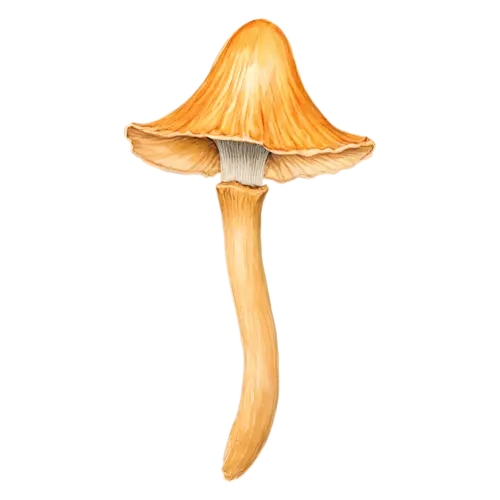
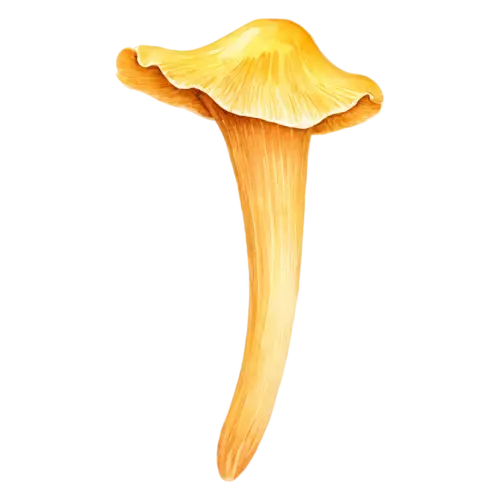
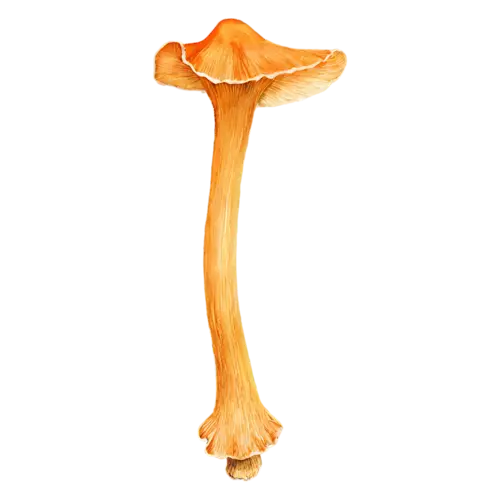
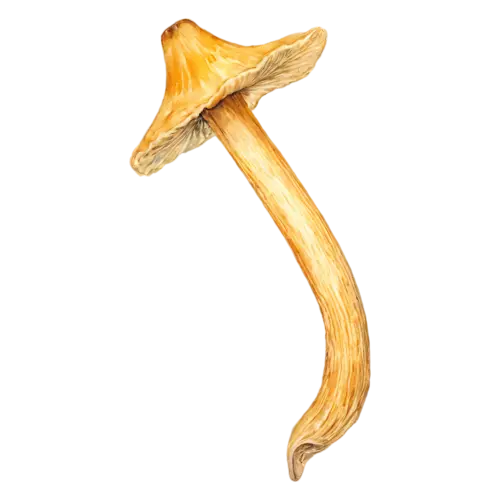
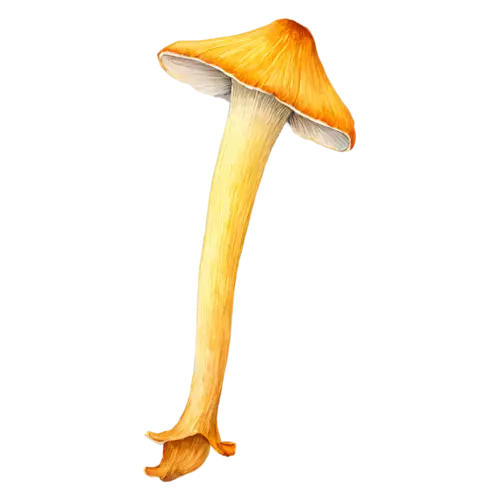
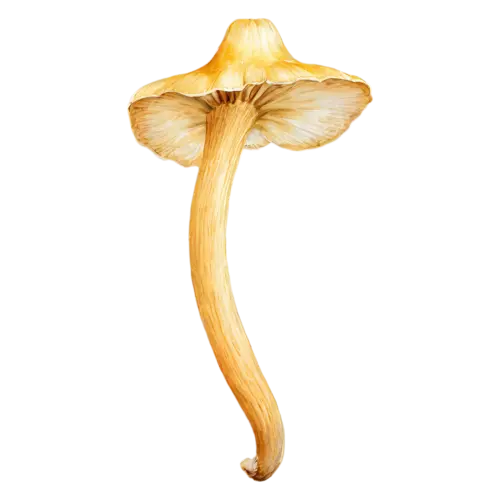
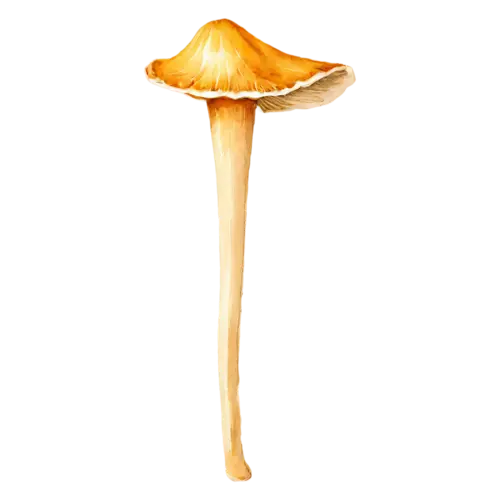
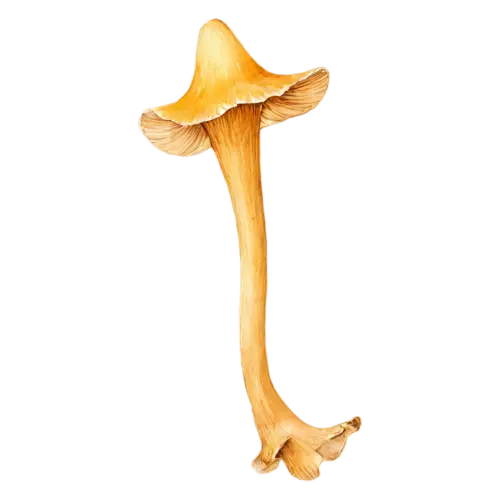
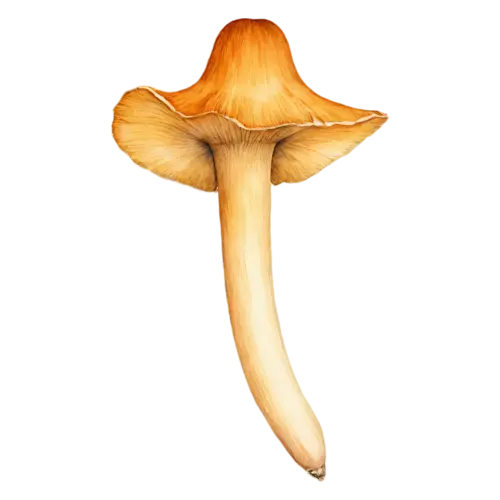
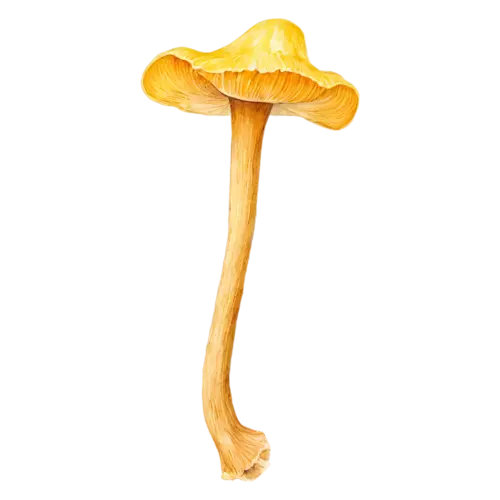
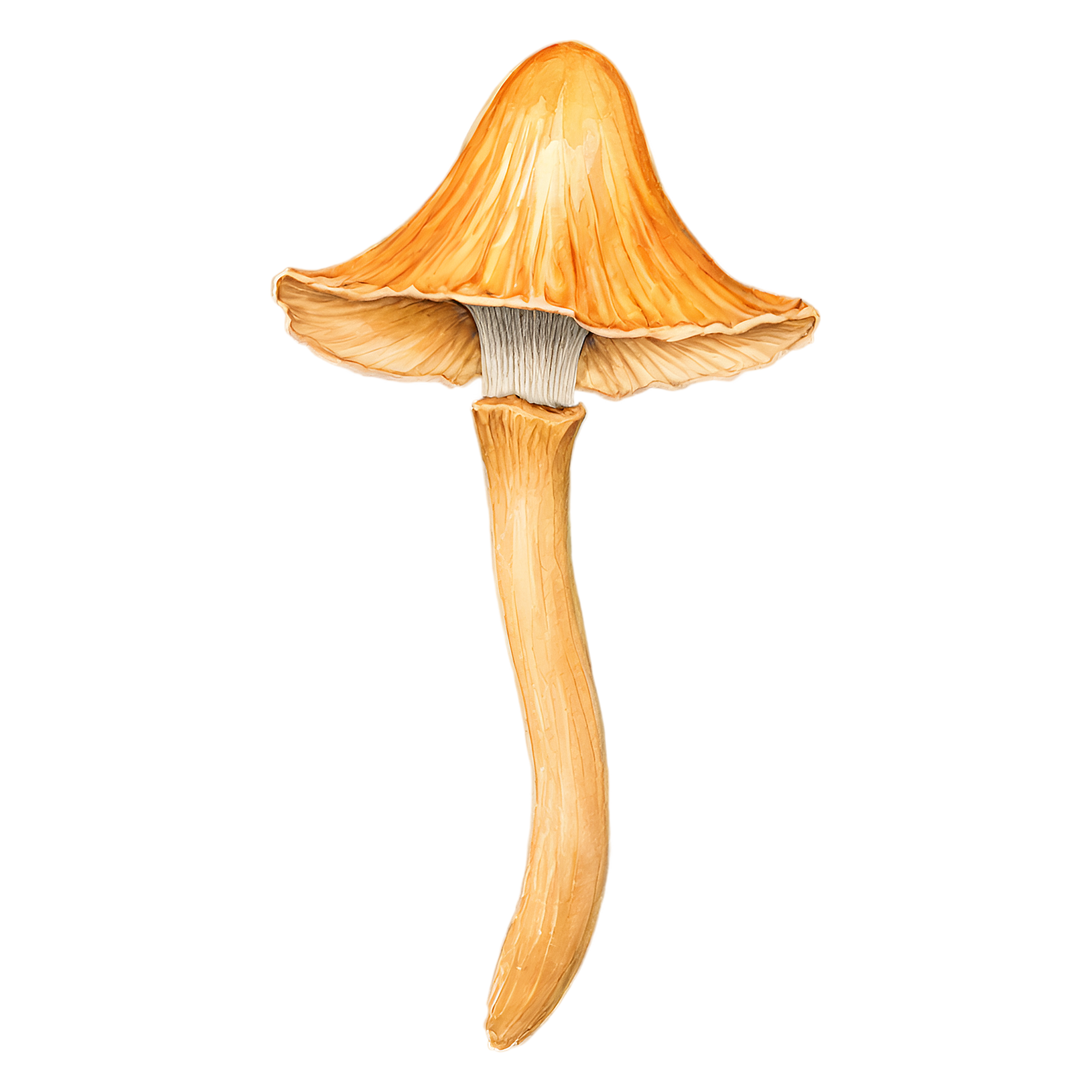
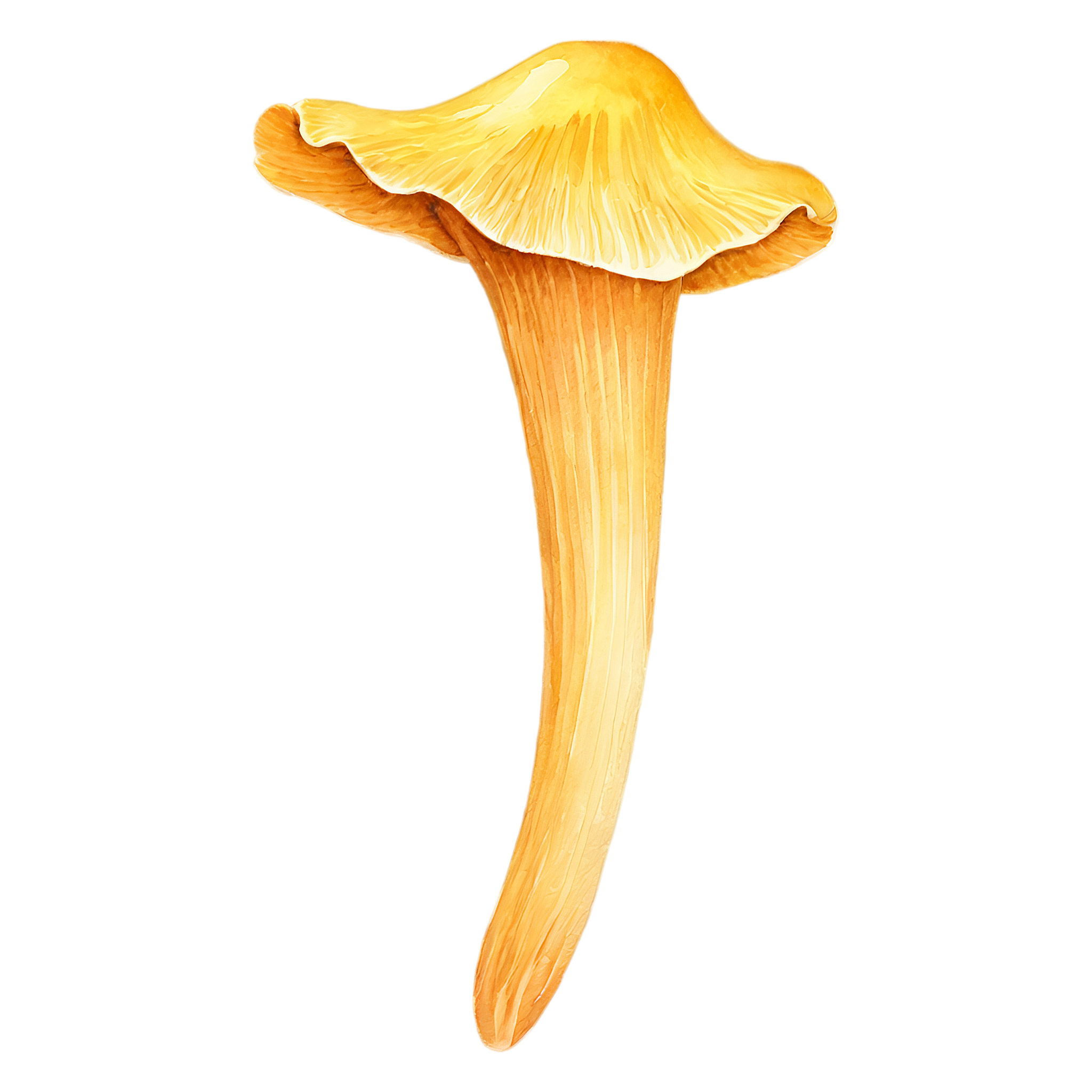
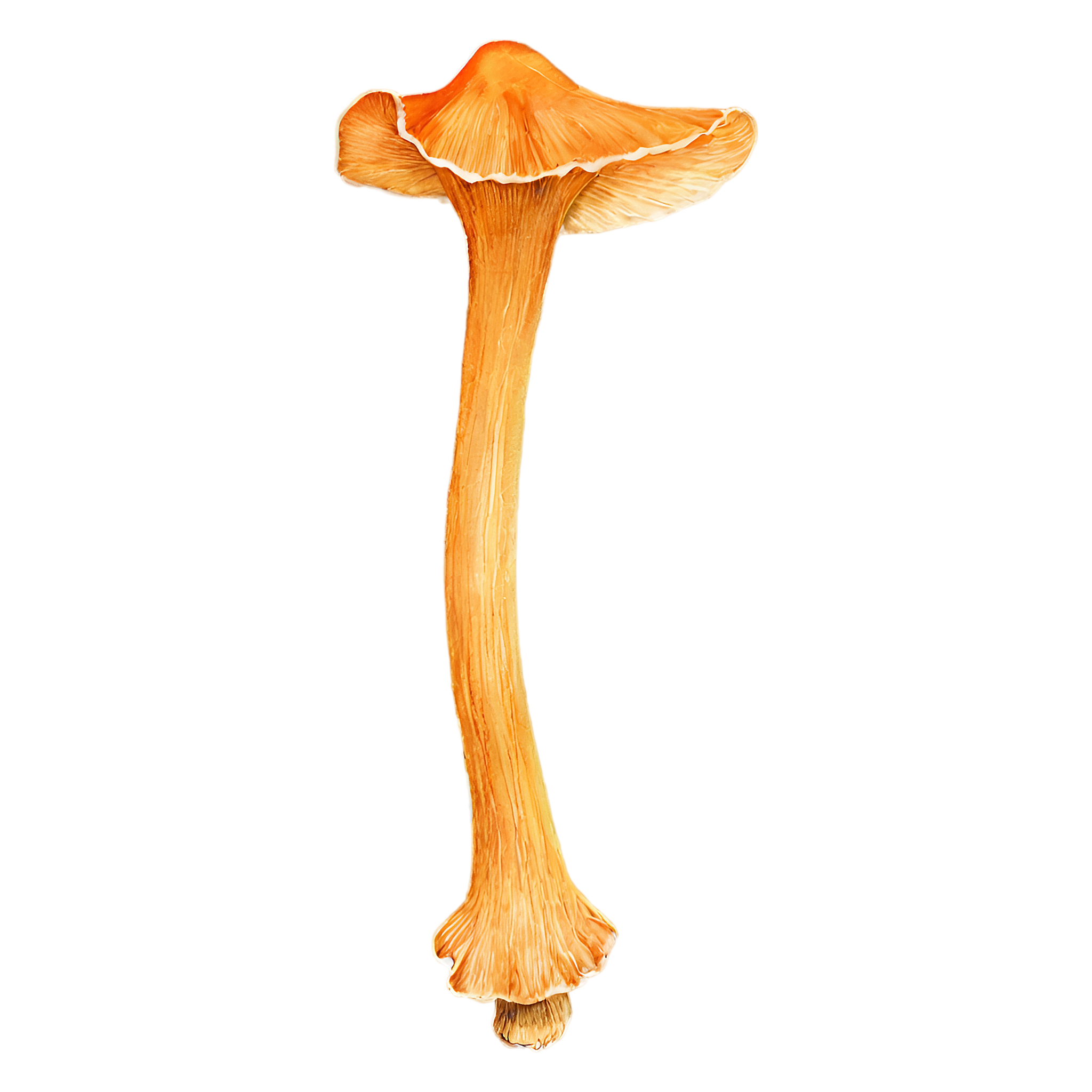
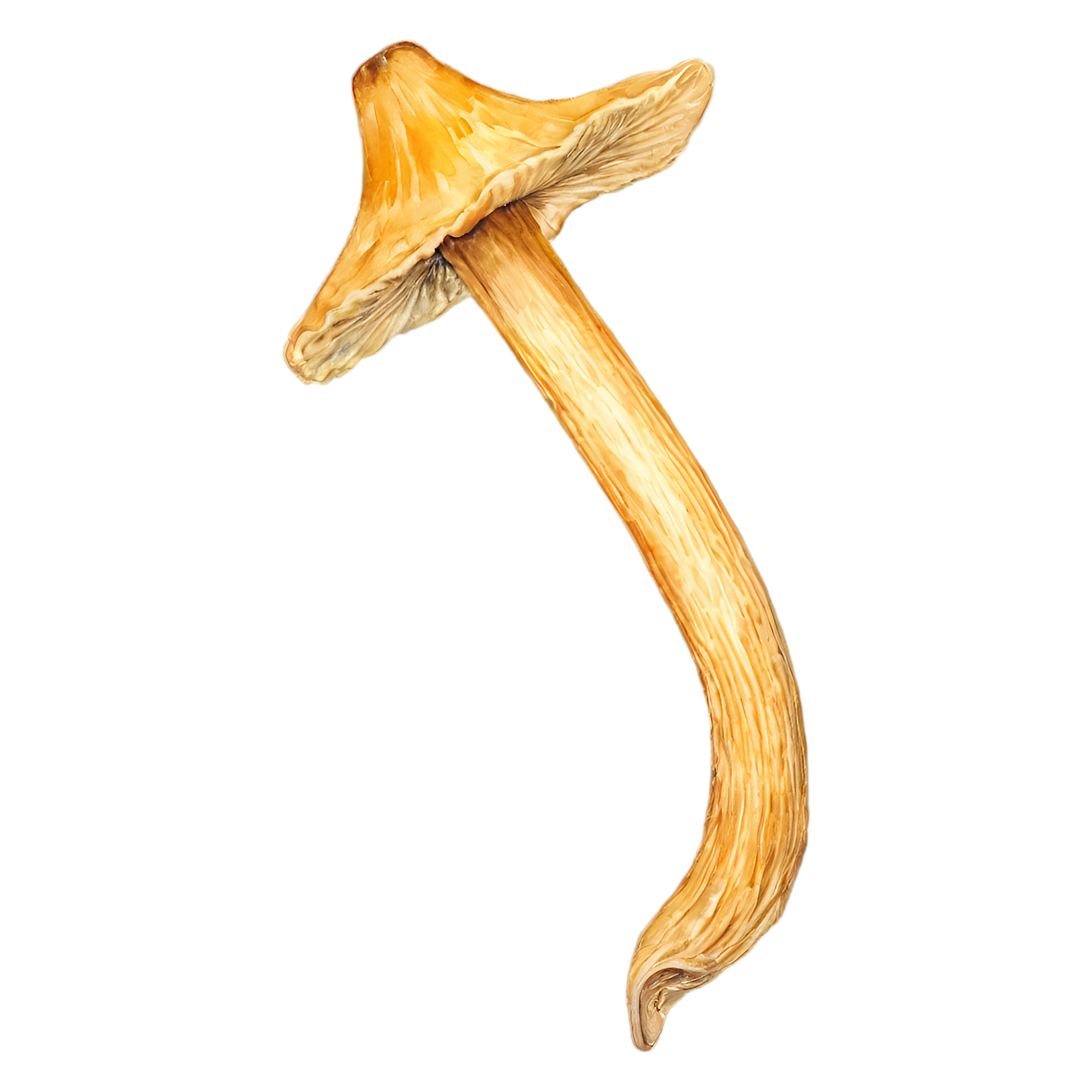
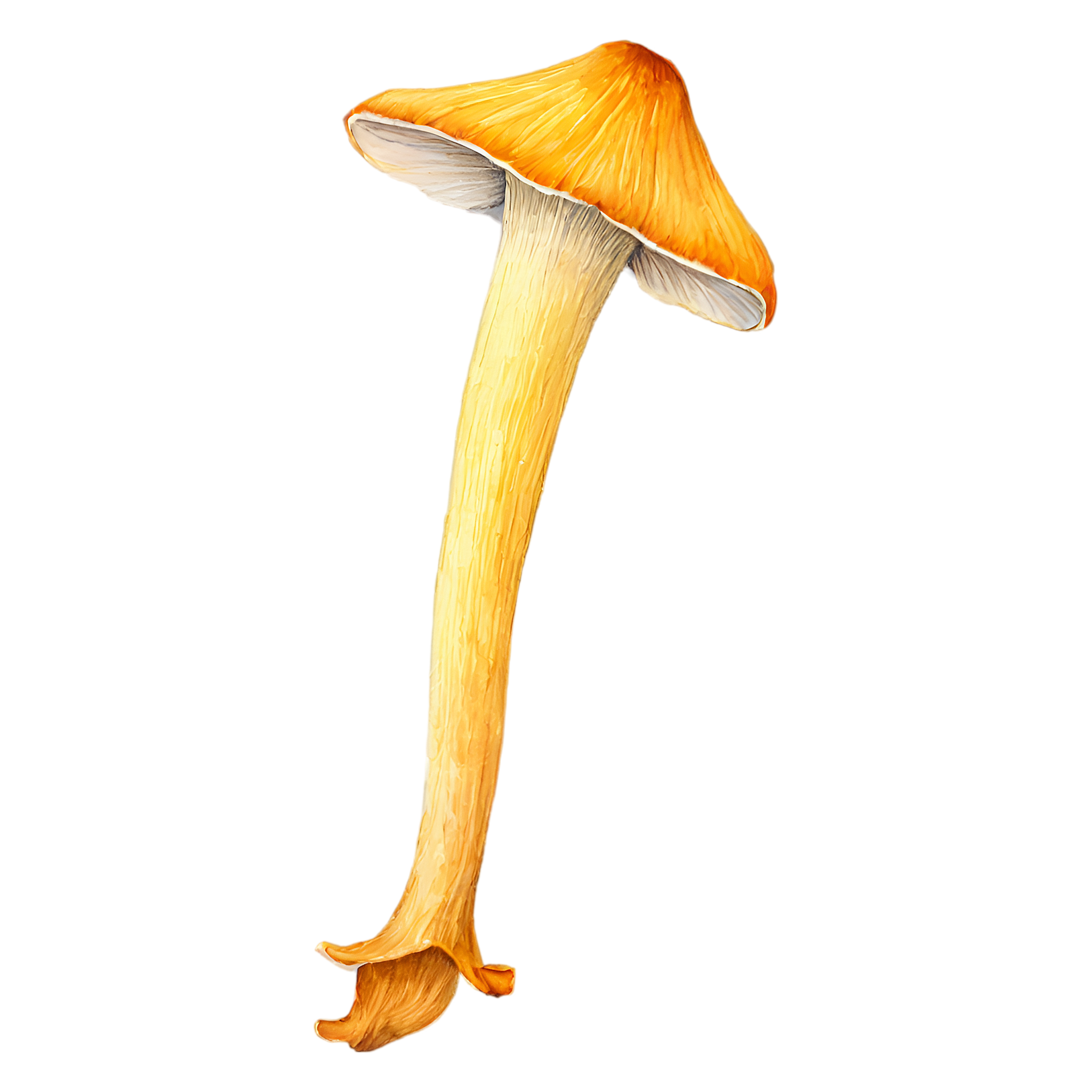
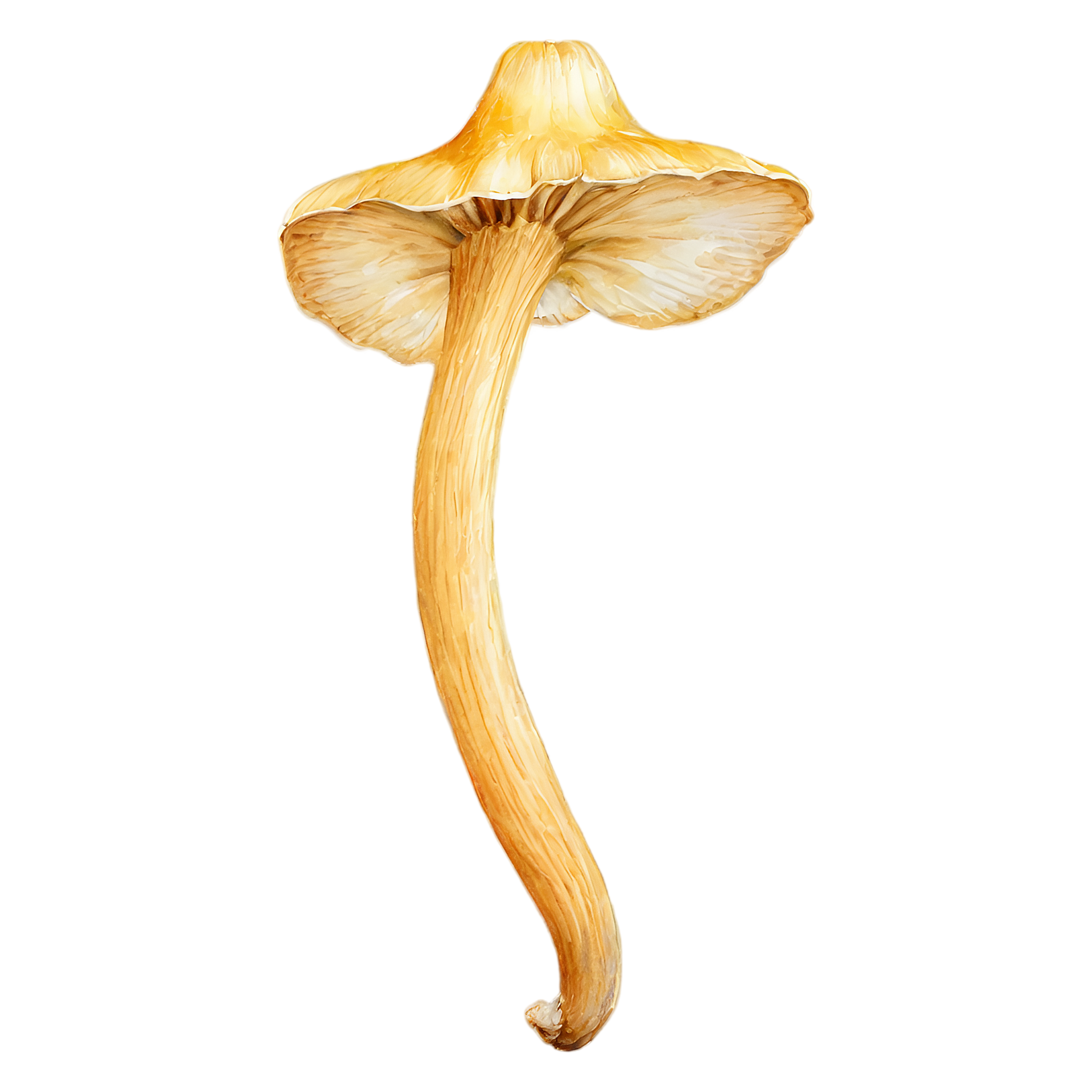
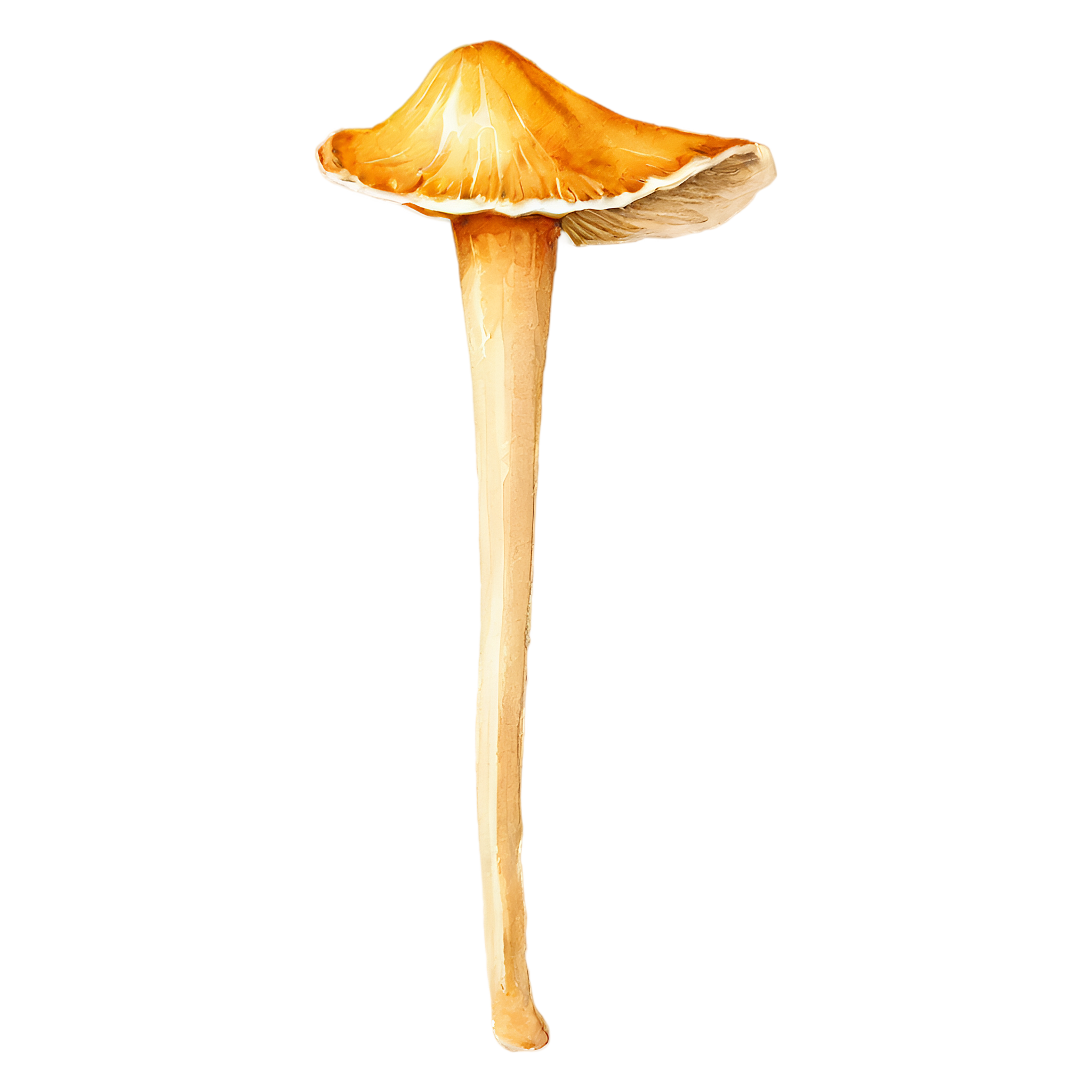
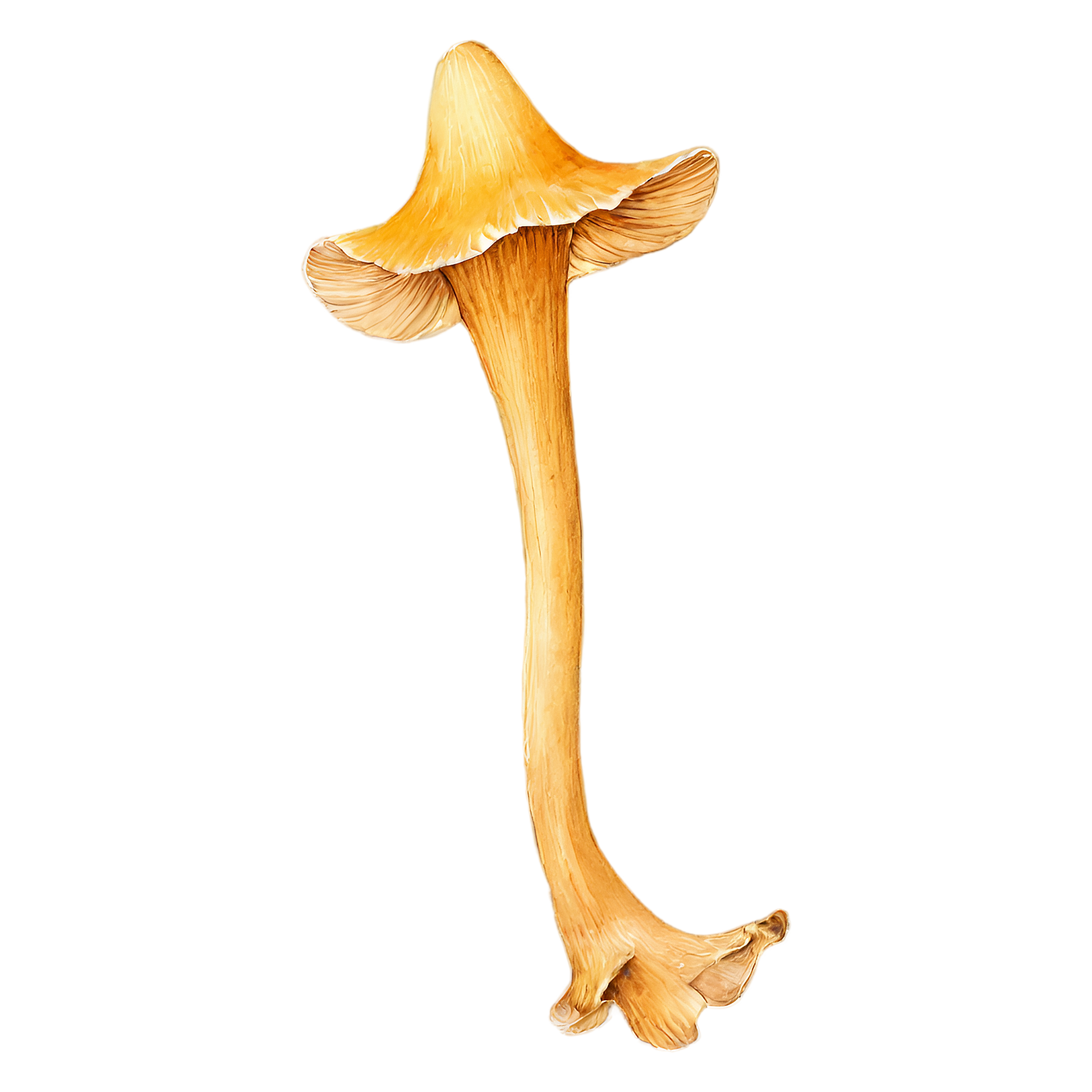
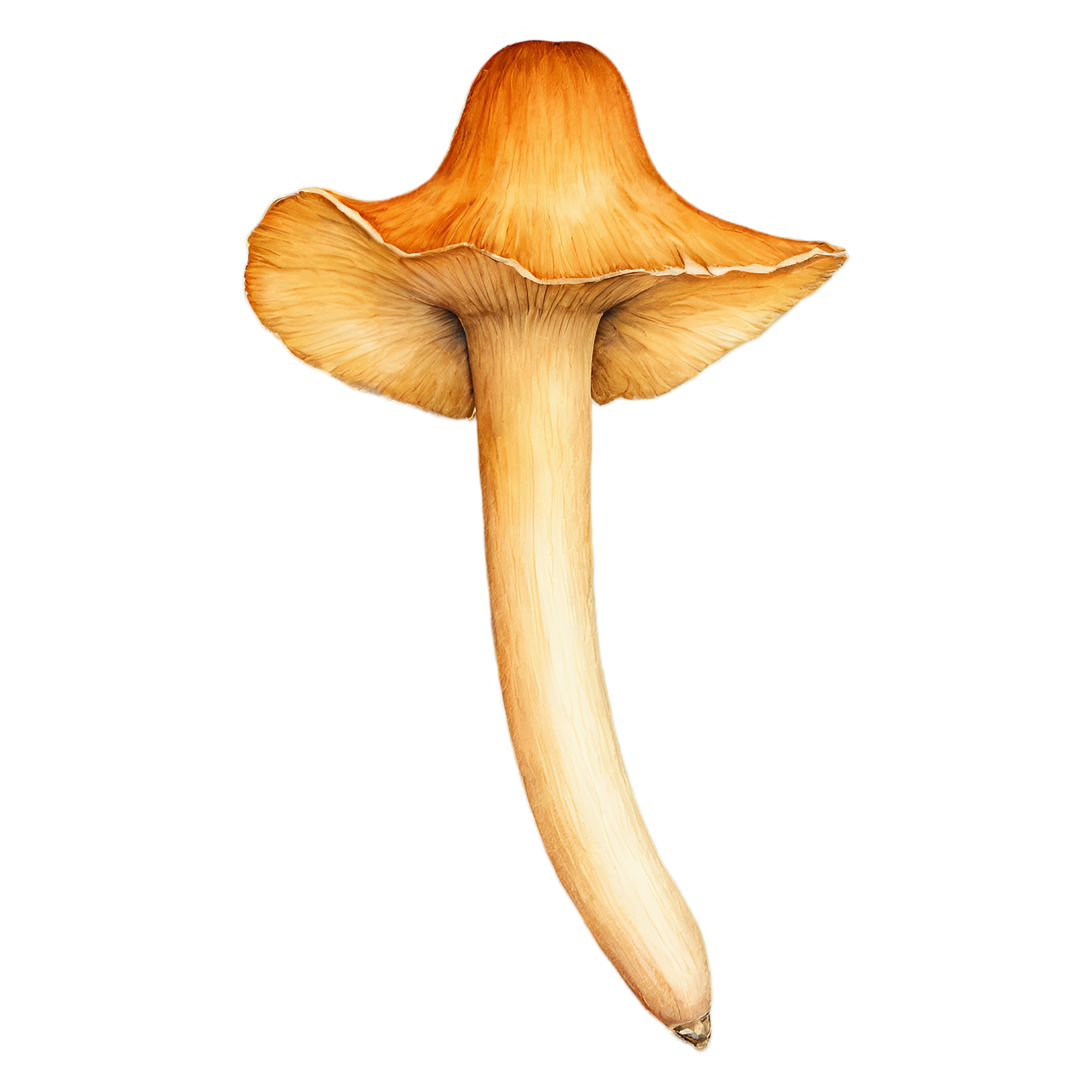
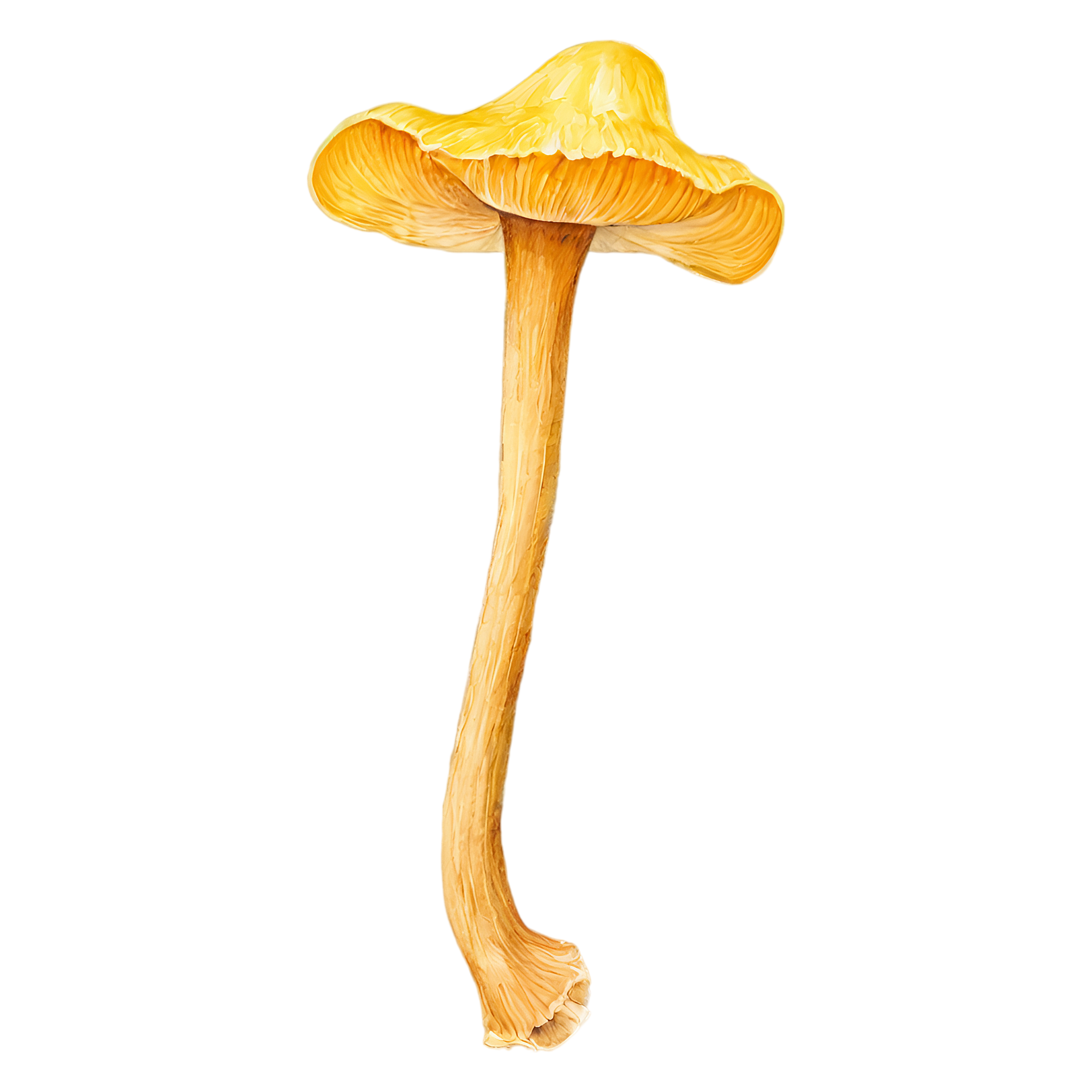
Every image is one chanterelle on its own, with no soil or moss. The shapes and colors vary: a golden trumpet cap (01), a wavy egg-yellow cap with a ridged stem (02), a funnel-shaped amber cap (03), a cap with a curling golden edge (04), a deep yellow vase shape (05), a flared apricot-gold cap (06), a rippled cap on a tapering stem (07), a bright marigold trumpet (08), a soft yellow cap showing forked ridges (09) and a honey-gold funnel (10). Because the ridges run down several of the stems, the set reads as chanterelles at a glance and not as a generic toadstool.
Autumn menus, market stalls and woodland stationery
Chanterelle season lines up with fall menus, so this set suits restaurant specials boards, farm-to-table dinner invitations, cooking-class flyers, risotto and omelet recipe cards, and labels for jarred sauces or dried-mushroom gift tags. Farmers market vendors and specialty grocers can use one on a price sign or a chalkboard-style social post. Cottagecore and woodland stationery sellers get a warm gold mushroom that balances the red of fly agaric in a sticker sheet. Nature centers can use it on a fungi-walk poster, with the identification caution below kept on the poster too.
Apricot gold with the rest of the forest floor
The palette is warm and narrow: tangerine, pumpkin and apricot in the caps, copper in the shadows, and straw in the highlights. On-page thread matches include DMC 741 Tangerine Med, 742 Tangerine Light and 970 Pumpkin Light. For a forest-floor scene, combine chanterelles with the red-and-white fly agaric, the honeycomb morel and the mixed forest mushrooms set, then add fall leaves around the base. The gallery belongs to the mushrooms hub. On paper, these golds read richest on cream or kraft stock, and they sit well against deep forest green, rust and charcoal. Avoid pairing them with a bright lemon yellow background, which flattens the apricot tones in the caps. For a culinary layout, a dark slate or wood-grain backdrop sets off the warm color the way a cutting board does in food photography.
Illustration, not identification
Each PNG is 2048x2048 pixels with a transparent background, about 6.8 inches square at 300 DPI, which is large enough for a full recipe-card header or a menu panel. If you print these on a foraging or nature-walk handout, add a plain note that a drawing cannot identify a wild mushroom. Several orange lookalikes, including the poisonous jack-o'-lantern mushroom, can be mistaken for chanterelles, and anyone gathering wild mushrooms needs a local expert or a regional field guide. For sticker sheets, the wavy cap edges cut cleanly with a small offset in Cricut Print Then Cut.