Why maples turn red, and which states claim them
Maples (genus Acer) are known by their lobed leaves and winged seeds, the helicopter-like samaras that spin to the ground. In fall, as days shorten and chlorophyll breaks down, yellow and orange pigments called carotenoids, present in the leaf all summer, start to show. The reds are different: maples make new red pigments, anthocyanins, in autumn, and sunny days with cool nights tend to give the brightest color. The sugar maple, the main source of maple syrup, is the state tree of New York, Vermont, West Virginia and Wisconsin, and it takes roughly 40 gallons of sap to boil down to one gallon of syrup. The red maple is Rhode Island's state tree, and a stylized maple leaf has been on Canada's flag since 1965.
Ten trees across the turn of the season
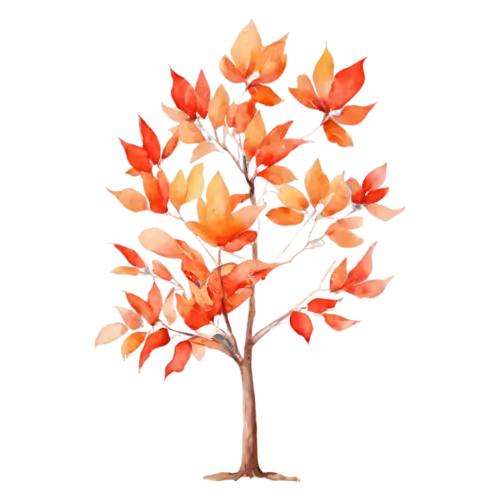
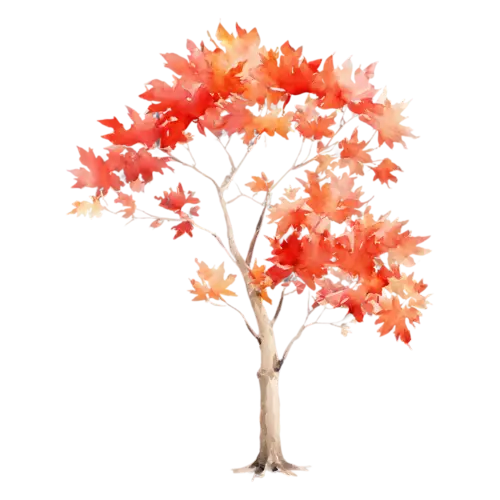
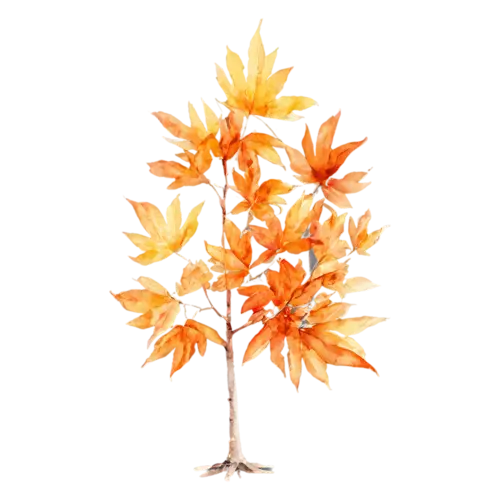
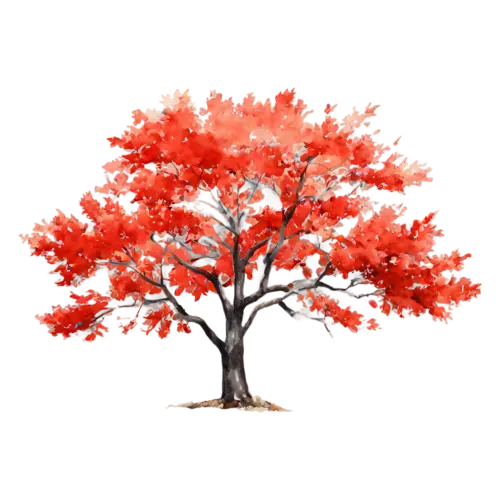
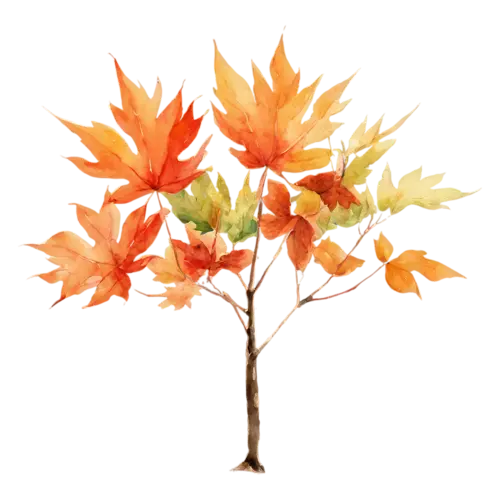
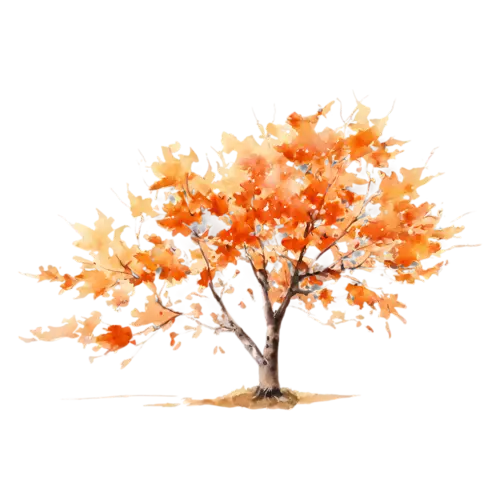
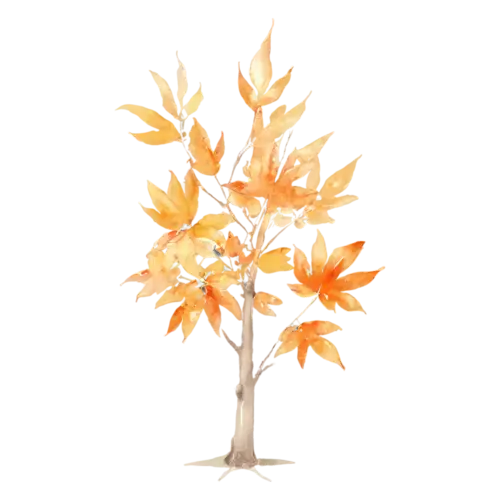
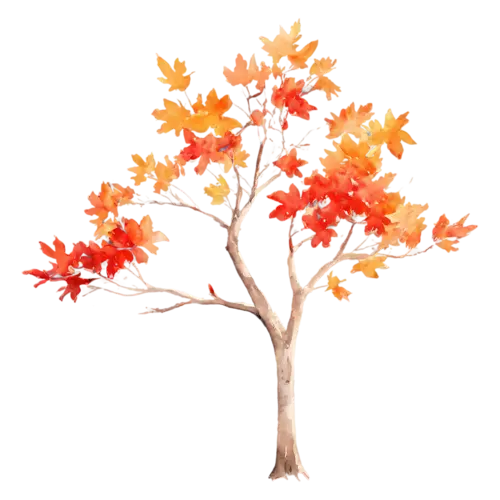
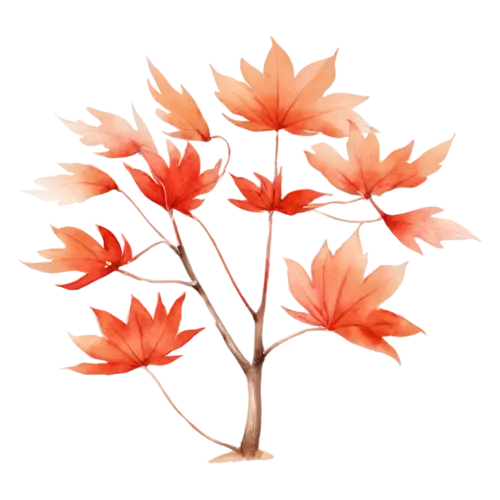
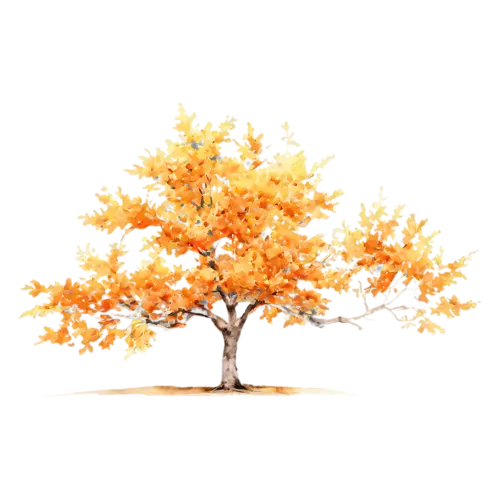
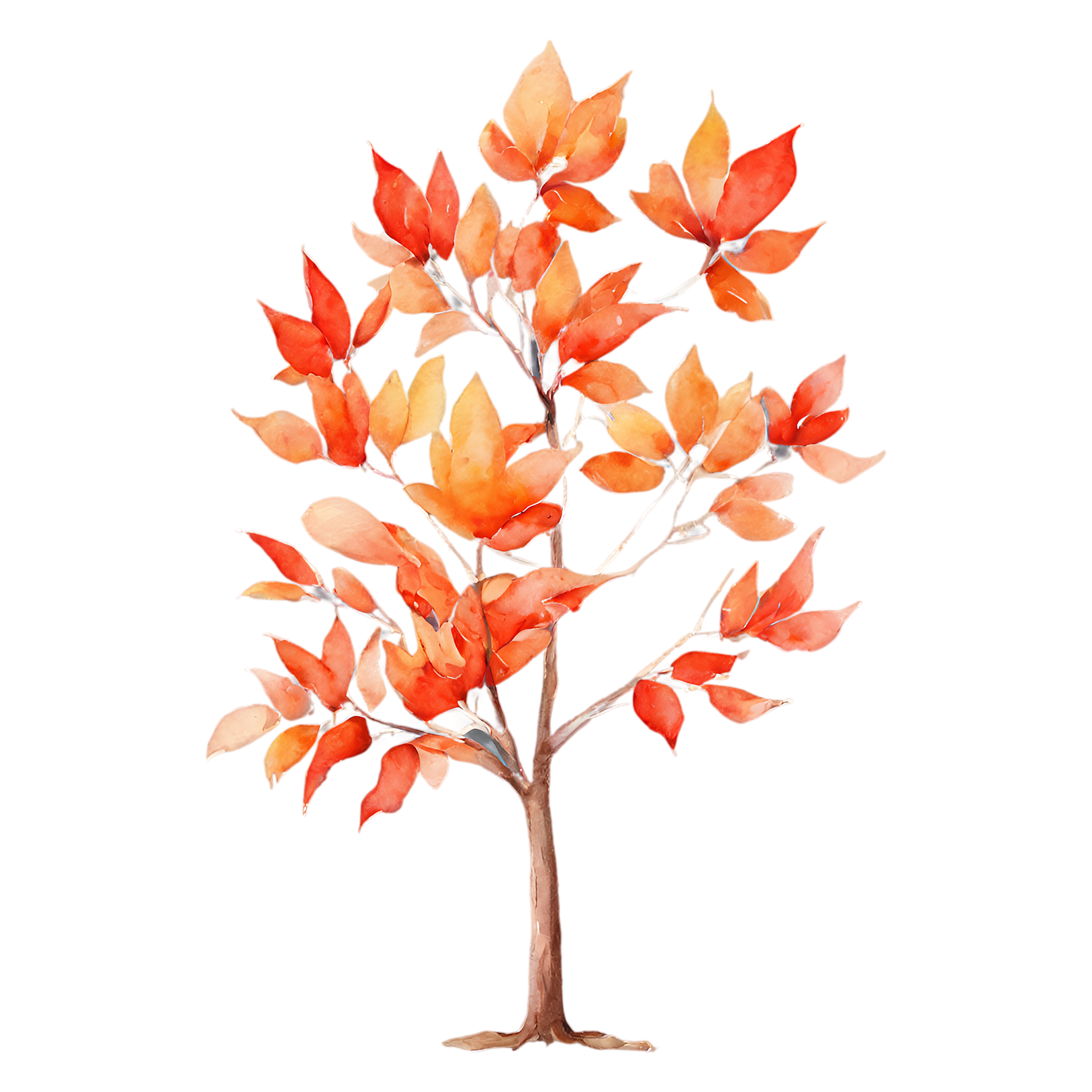
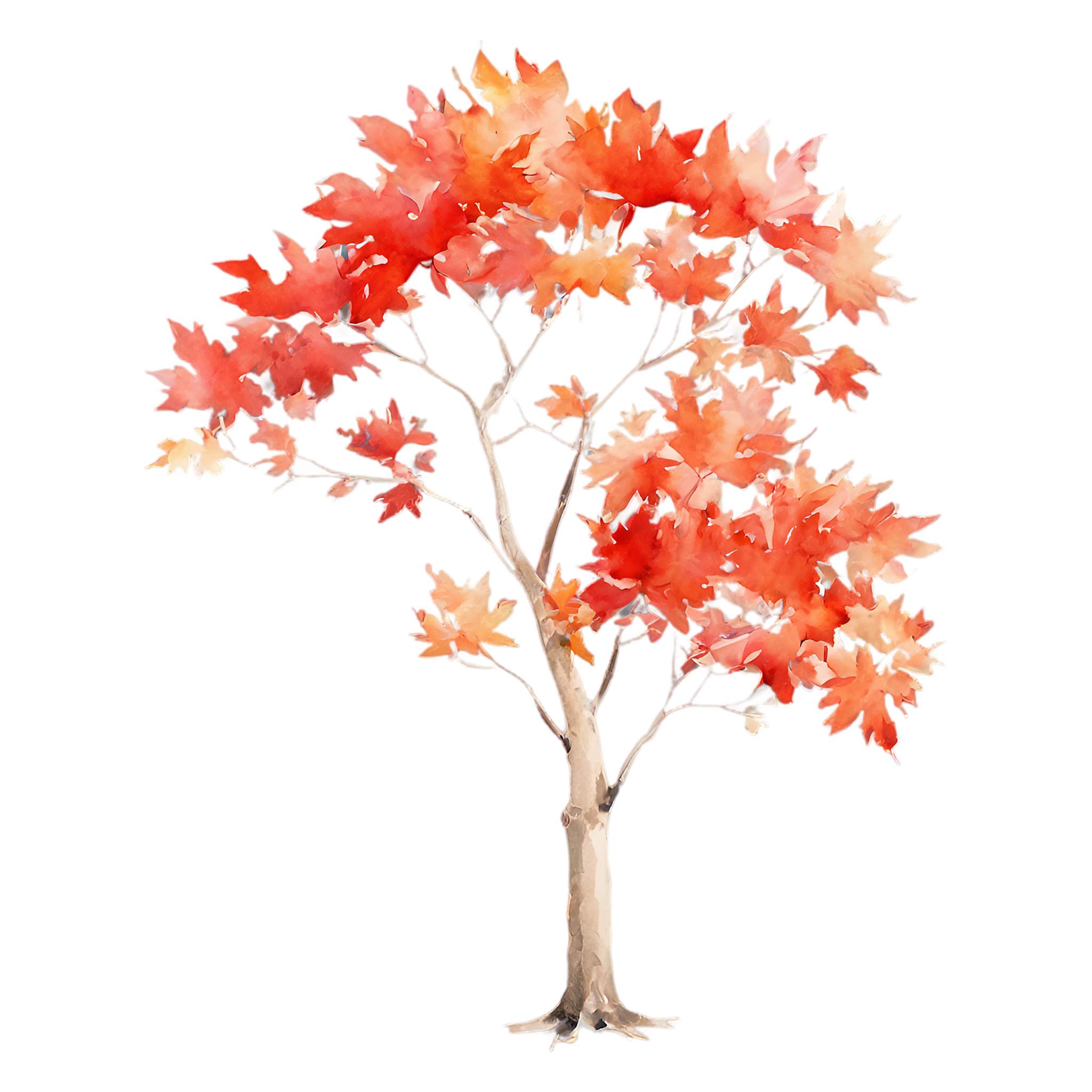
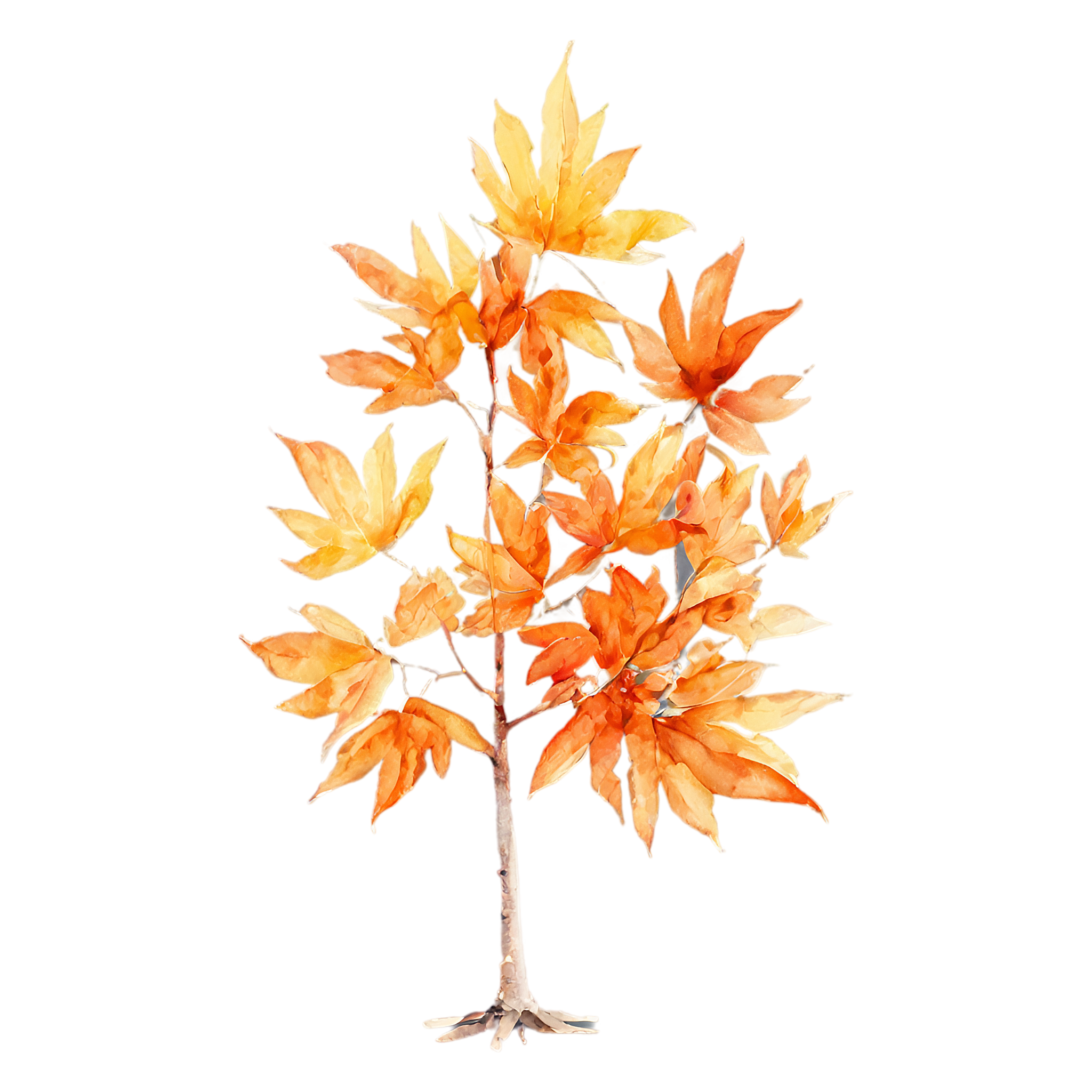
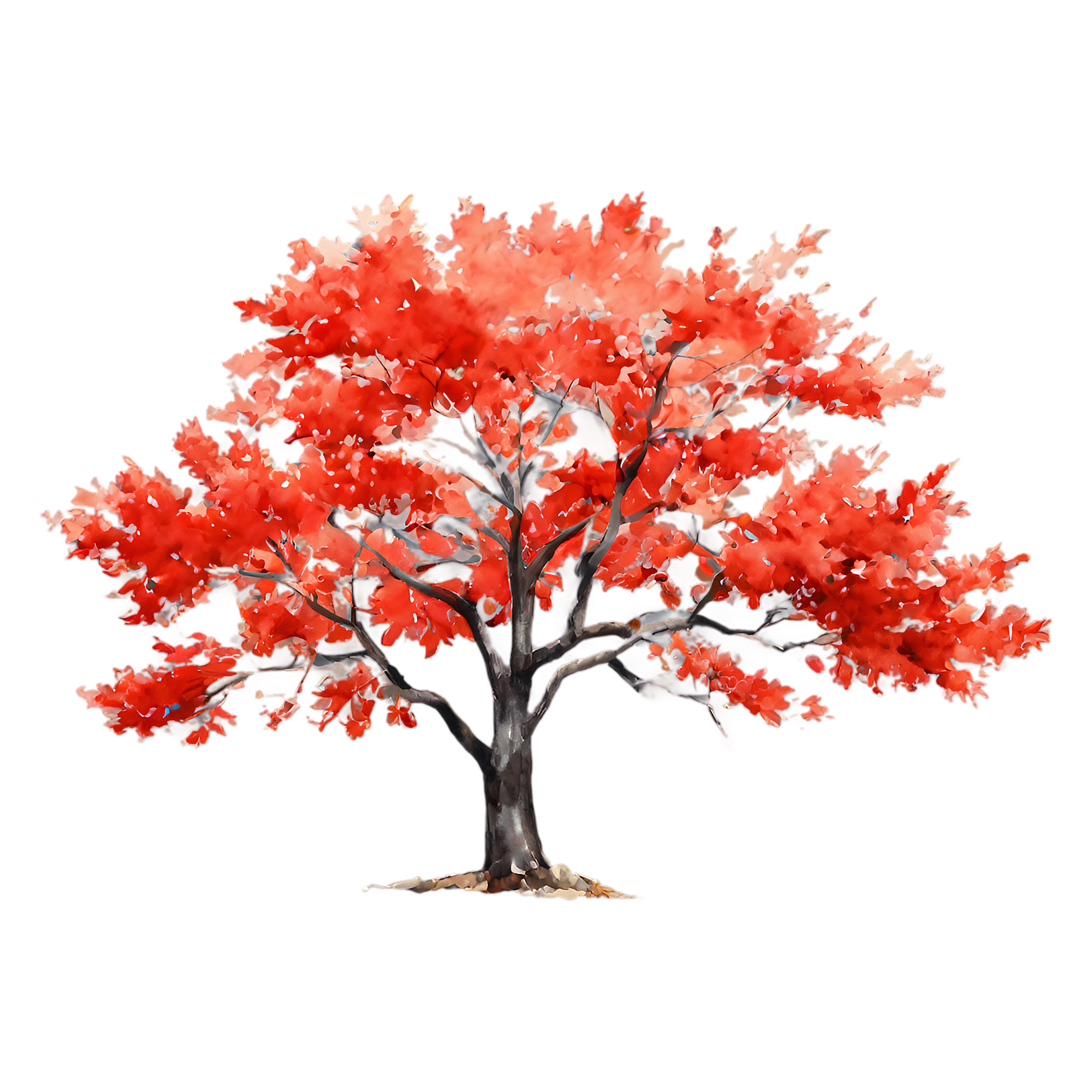
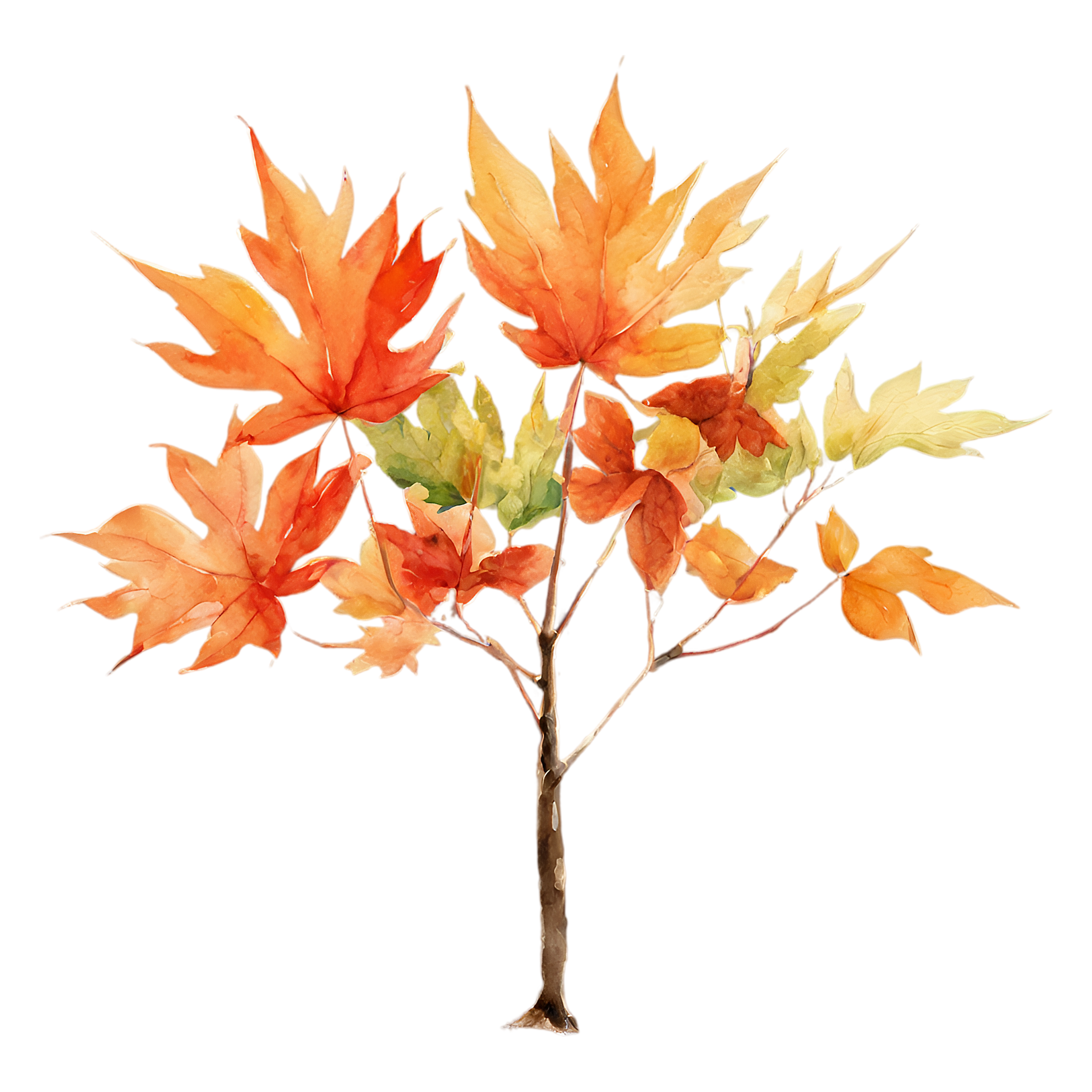
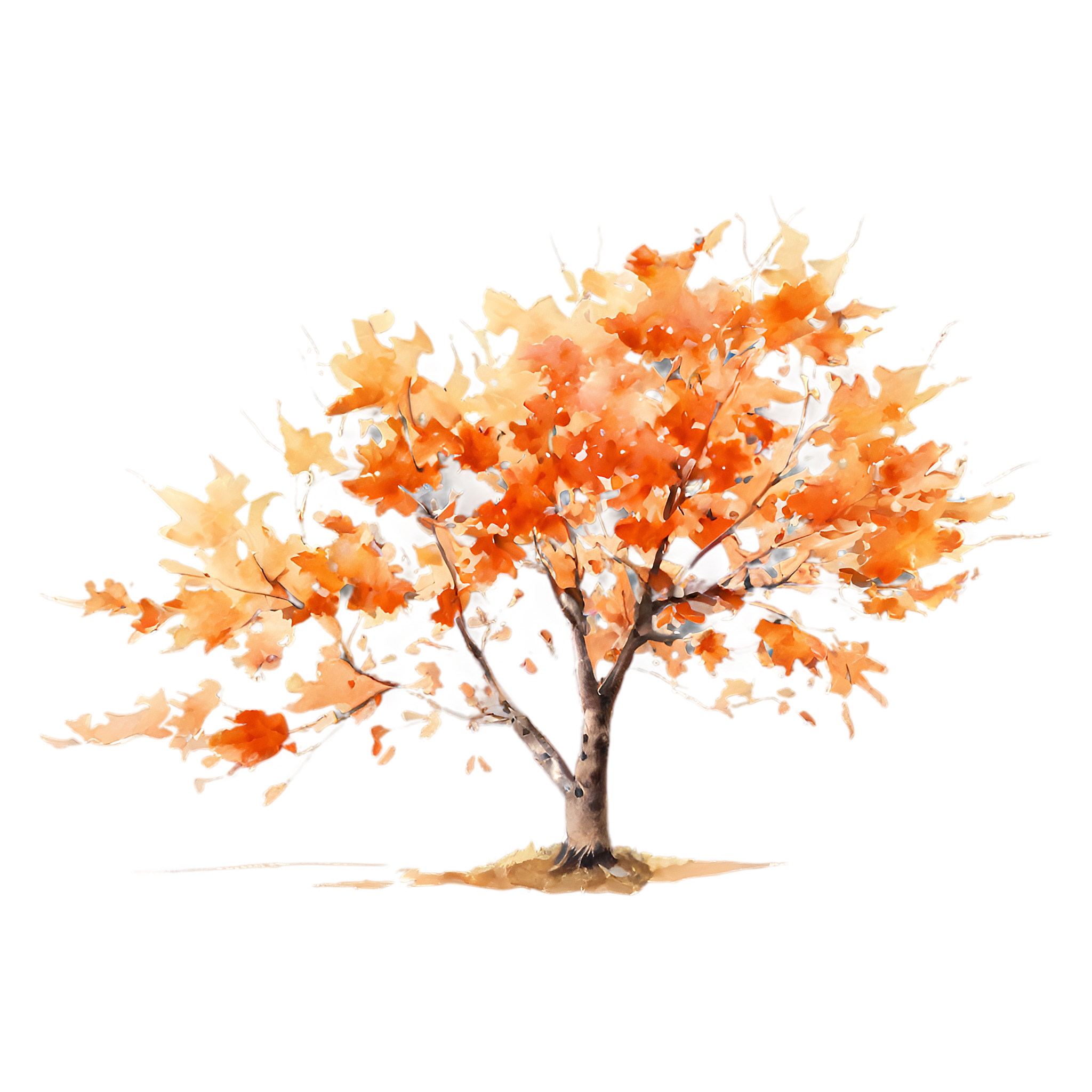
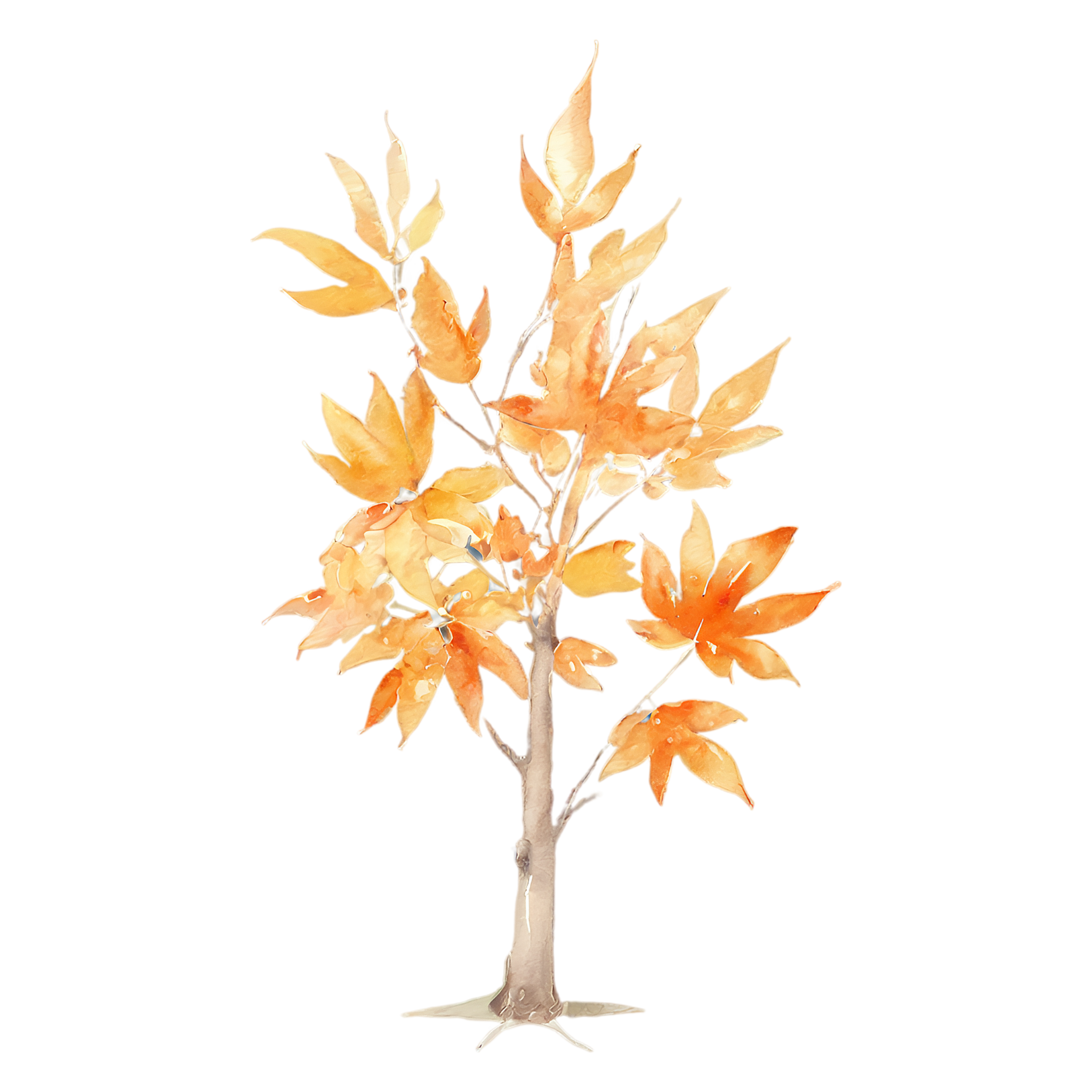
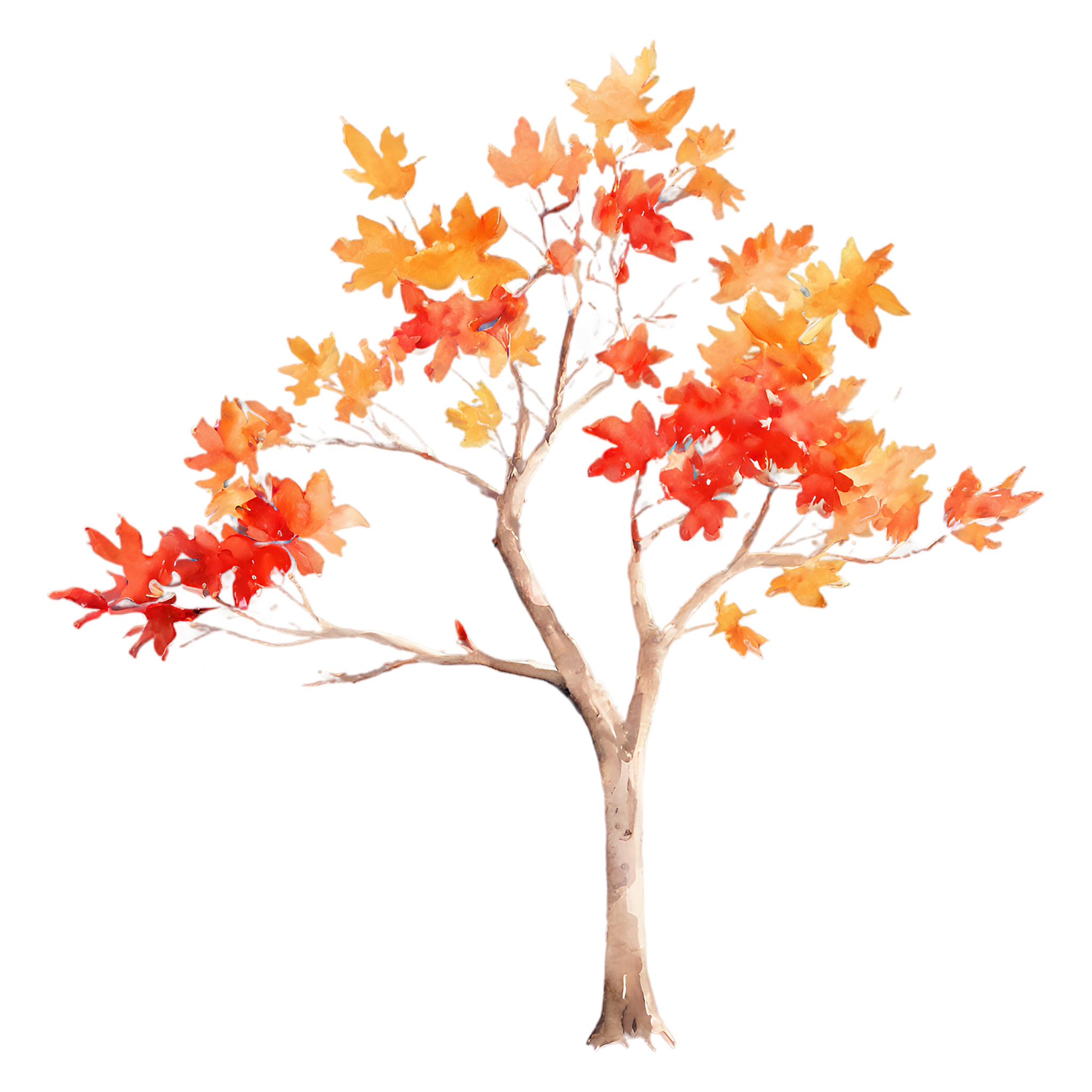
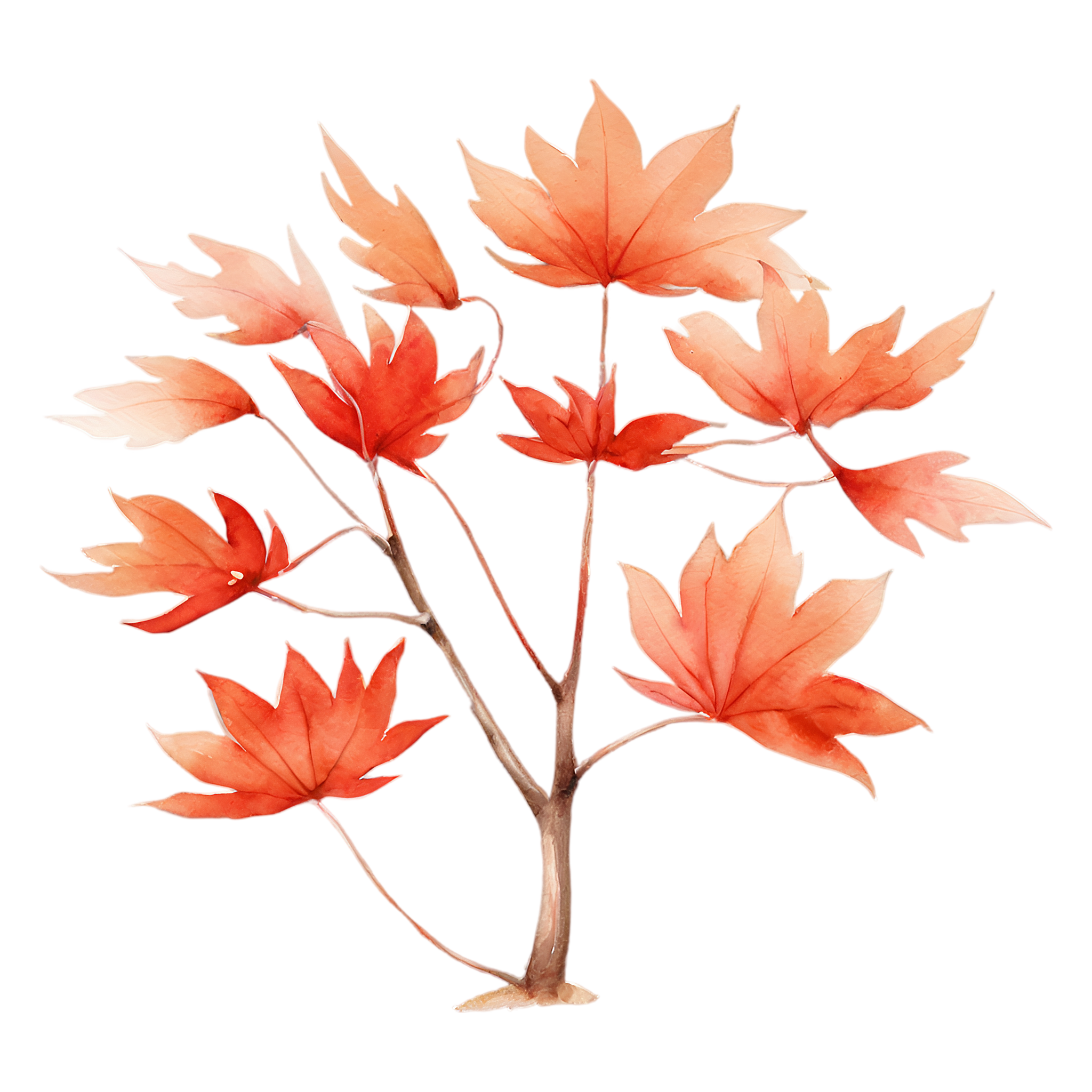
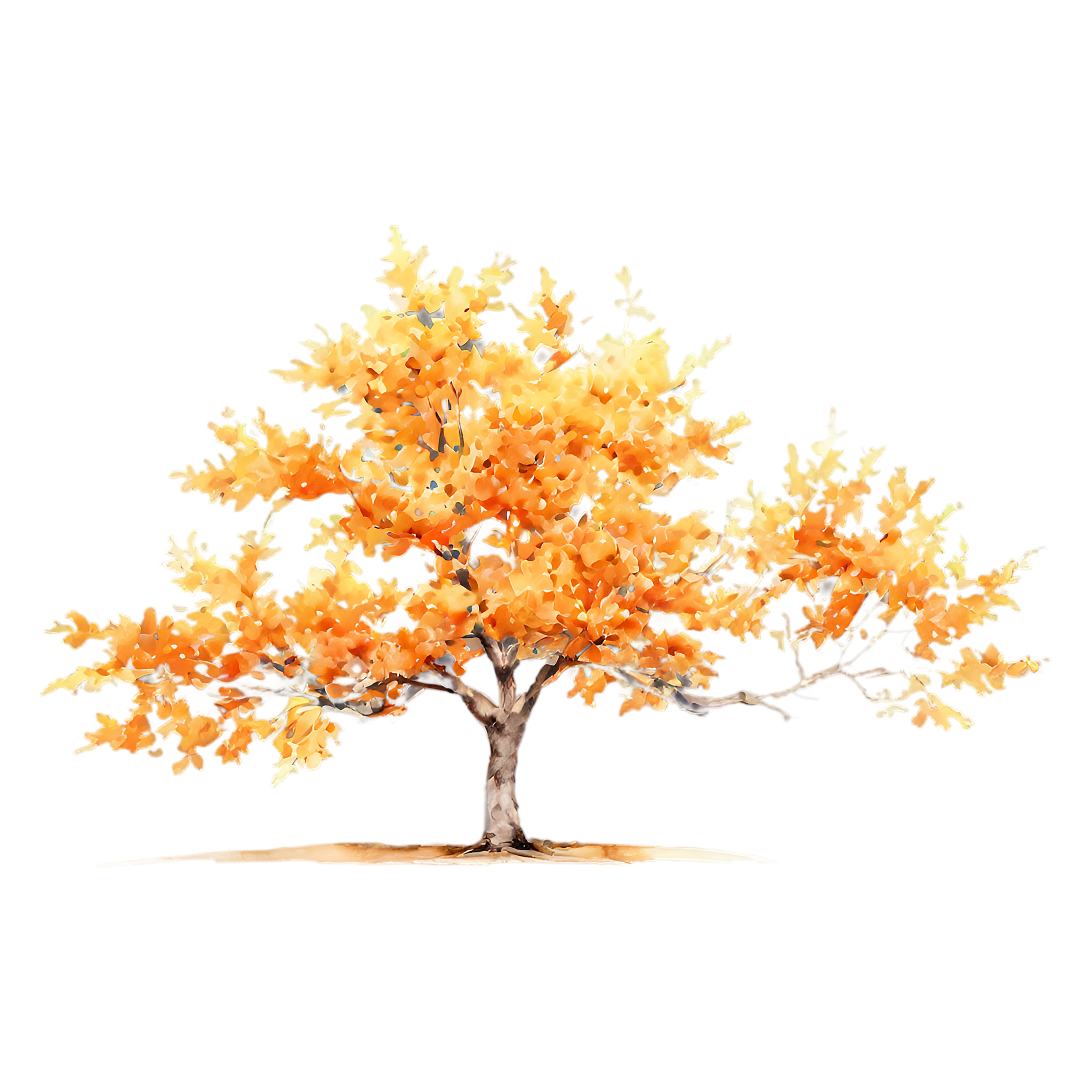
Each image is a whole tree with trunk and canopy, rather than a single leaf. Several are in full color: one with brilliant red and orange leaves, one with a broad rounded canopy of fiery red, one with a wide spreading canopy in scarlet, and a compact tree in vivid red and amber. Others lean warmer: a tall tree with mixed orange and yellow leaves, and one with golden-orange foliage on a thick trunk. A deep crimson maple has a few leaves drifting down, and one tree still shows green leaves turning red, which suits early-autumn designs. A young slender sapling in bright orange and a windswept tree with leaves blowing to one side round out the set. Since the trees vary in height and spread, a row of them never looks like one file pasted several times.
Thanksgiving tables, fall weddings and leaf-peeping season
Maple color runs from late September into October in the northern states and Canada, a little later farther south, and that window lines up with fall weddings, harvest festivals, school fall-fest flyers and Canadian Thanksgiving on the second Monday of October. American Thanksgiving in November keeps the trees in use for invitations, menus, place cards and gratitude-tree classroom projects. Inns, orchards and tourism boards in New England and the Great Lakes states use maple art on leaf-peeping maps and fall-foliage promotions. Maple syrup producers use the trees on labels and sugarhouse signs, and teachers use the green-to-red tree for lessons on why leaves change color.
Red, orange and gold, with other fall trees
The palette is warm from top to bottom: tangerine, burnt orange and orange-red canopies, with golden brown in the trunks and branches. The most frequent DMC matches on the page are 742 Tangerine Light, 608 Burnt Orange Bright, 606 Orange-Red Bright and 3853 Autumn Gold Dark, with Copic YR65 Atoll and YR68 Orange for markers. Build a fall woodland by mixing the maple with an oak tree, a birch tree and golden aspen, then add pumpkins at ground level. The autumn hub collects more seasonal pieces.
Tip: building a fall landscape with depth
Each tree is a 2048 by 2048 pixel transparent PNG, about 6.8 inches square at 300 DPI, so a single maple can fill the front of a 5 by 7 card. For a landscape, draw a soft horizon line and place two or three trees along it at different sizes: the full-color maples large in front, the sapling at about 40 percent scale behind them to suggest distance, and the green-turning tree farthest back. Use the windswept maple to set the wind direction, and flip any tree that faces the wrong way so every canopy leans the same direction. A few falling leaves cropped from the crimson tree can scatter across the sky.