Acorns, lobed leaves and leaves that hang on
Oaks are the genus Quercus, several hundred species of trees and shrubs across the Northern Hemisphere, all bearing acorns. North American oaks fall into two broad groups you can tell apart by the leaf: white oaks have rounded lobes, while red oaks have pointed lobes tipped with tiny bristles. Fall color tends toward russet, bronze and brown rather than the bright reds of maples, and many oaks, especially young ones, keep their dry brown leaves on the branches through winter, a habit called marcescence. In 2004 the oak was named the national tree of the United States, and it is the state tree of Illinois, Iowa, Maryland and Connecticut among others. The proverb about great oaks growing from little acorns has made it a symbol of patience, strength and long life.
Ten oaks from sapling to old giant
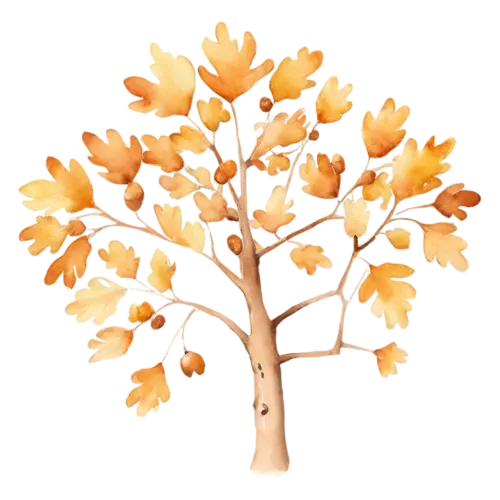
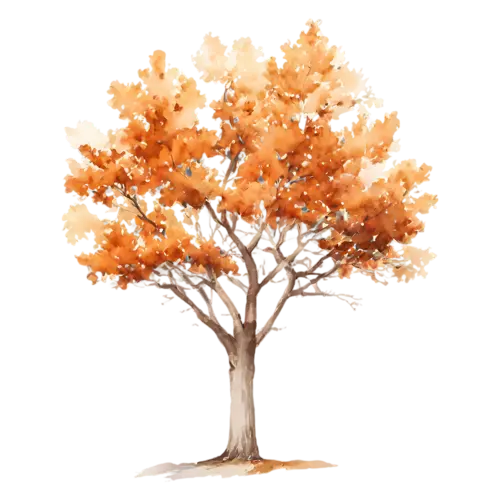
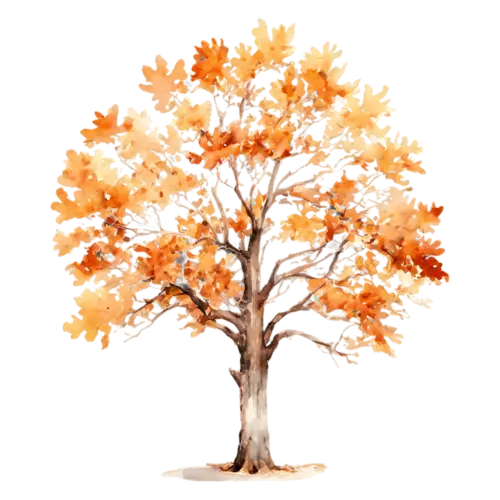
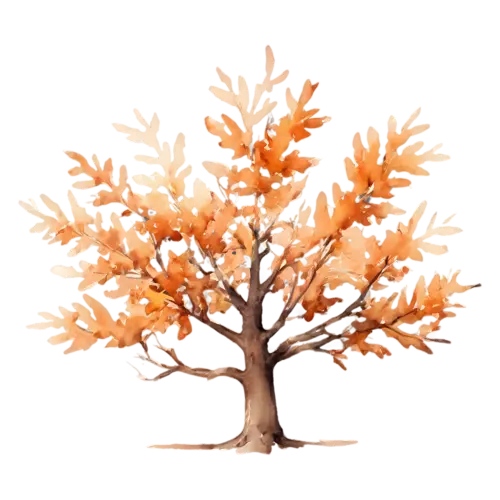
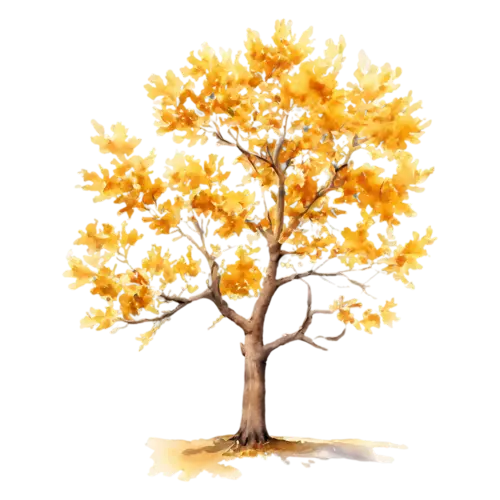
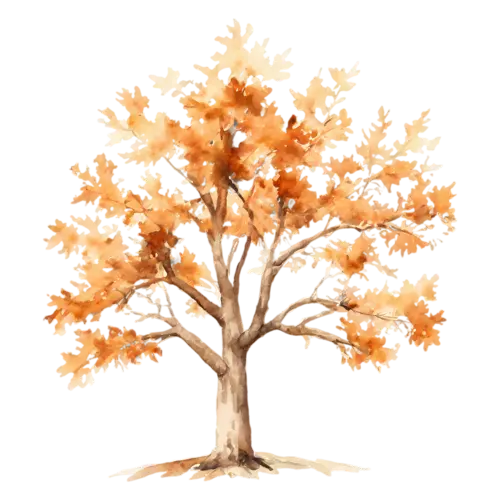
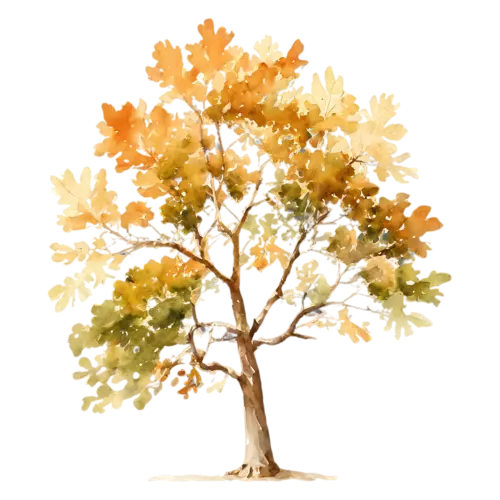
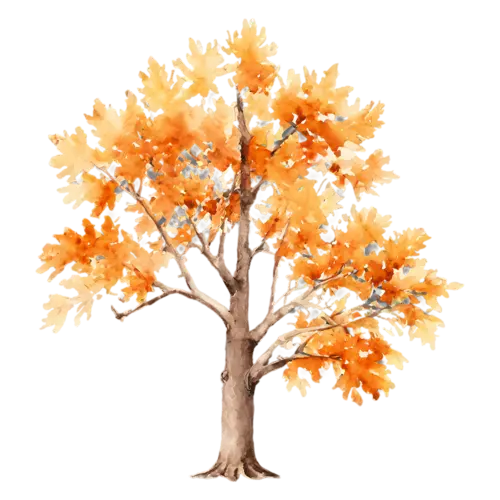
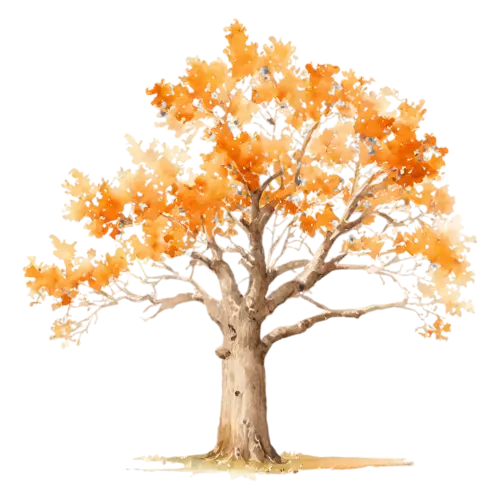
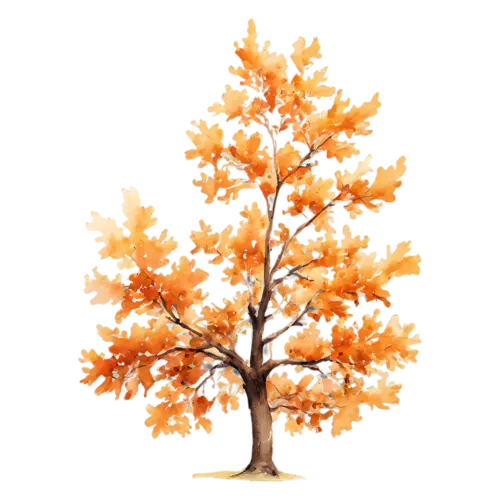
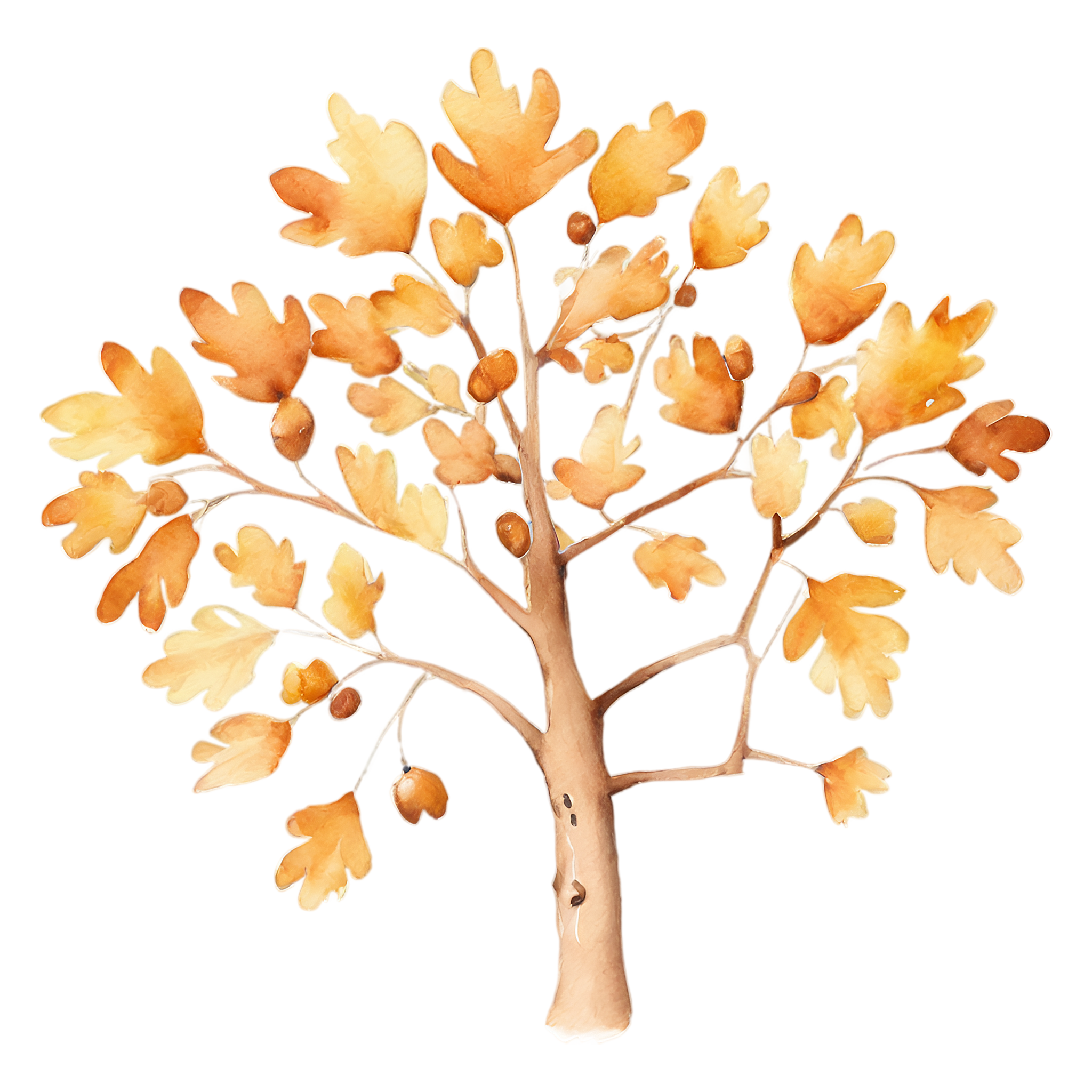
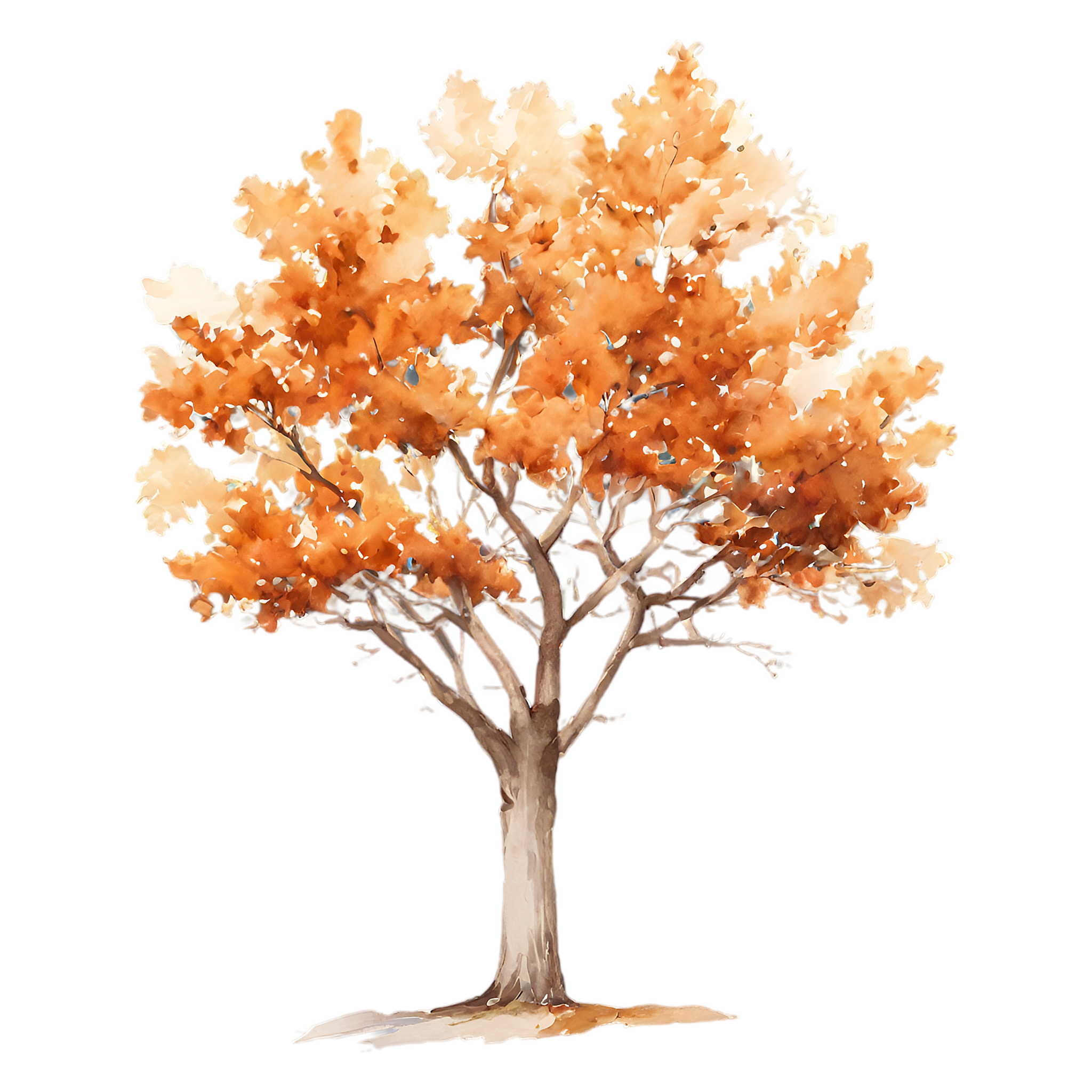
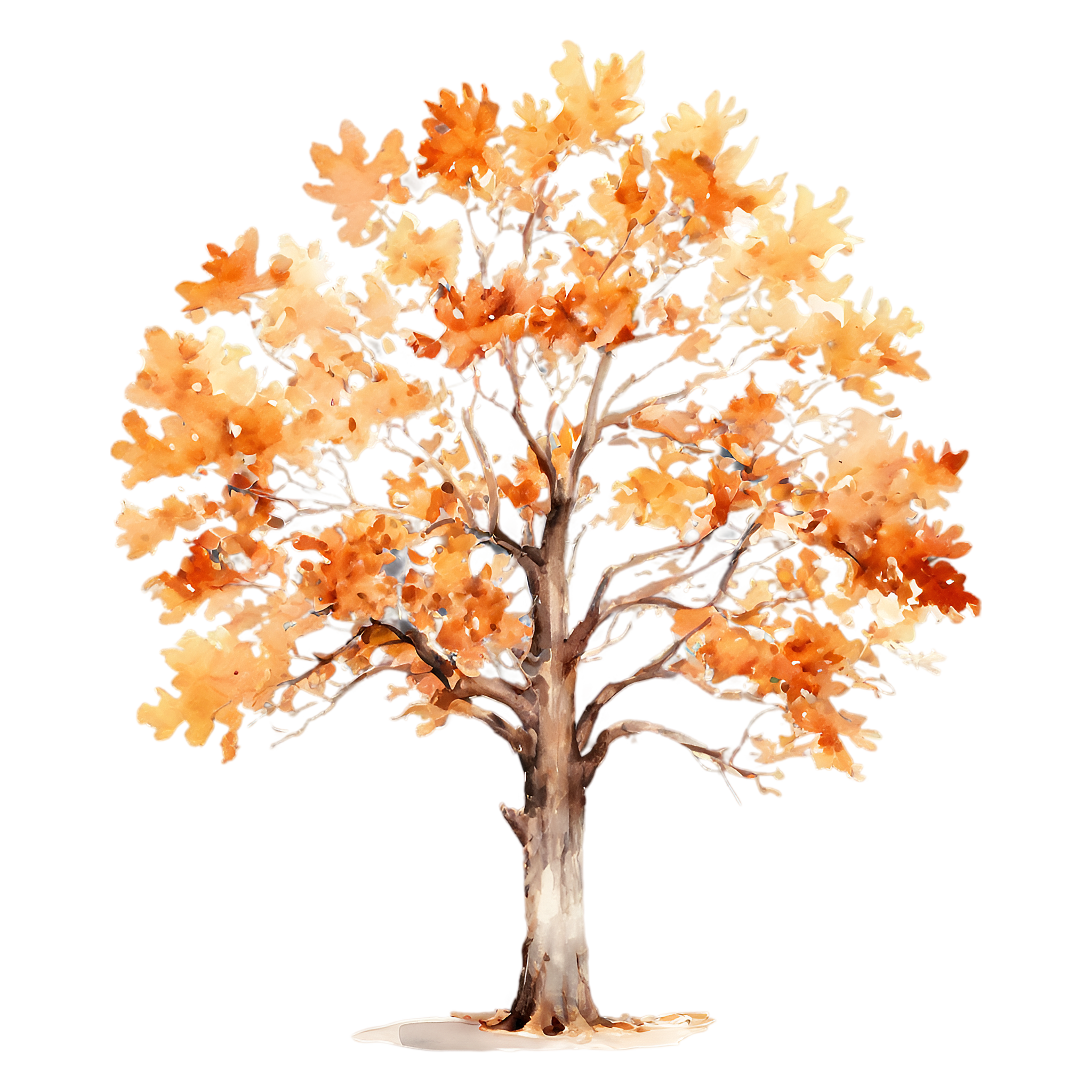
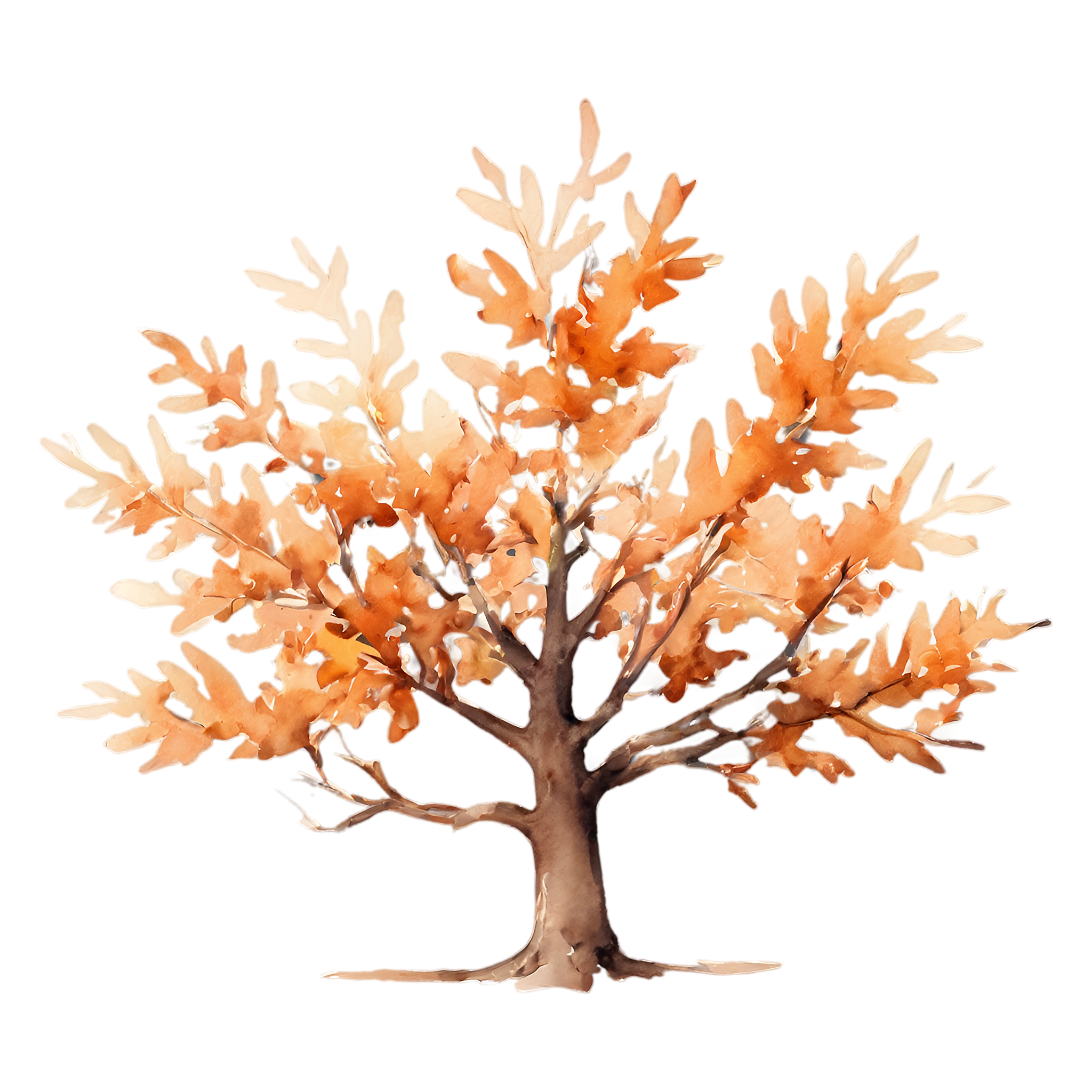
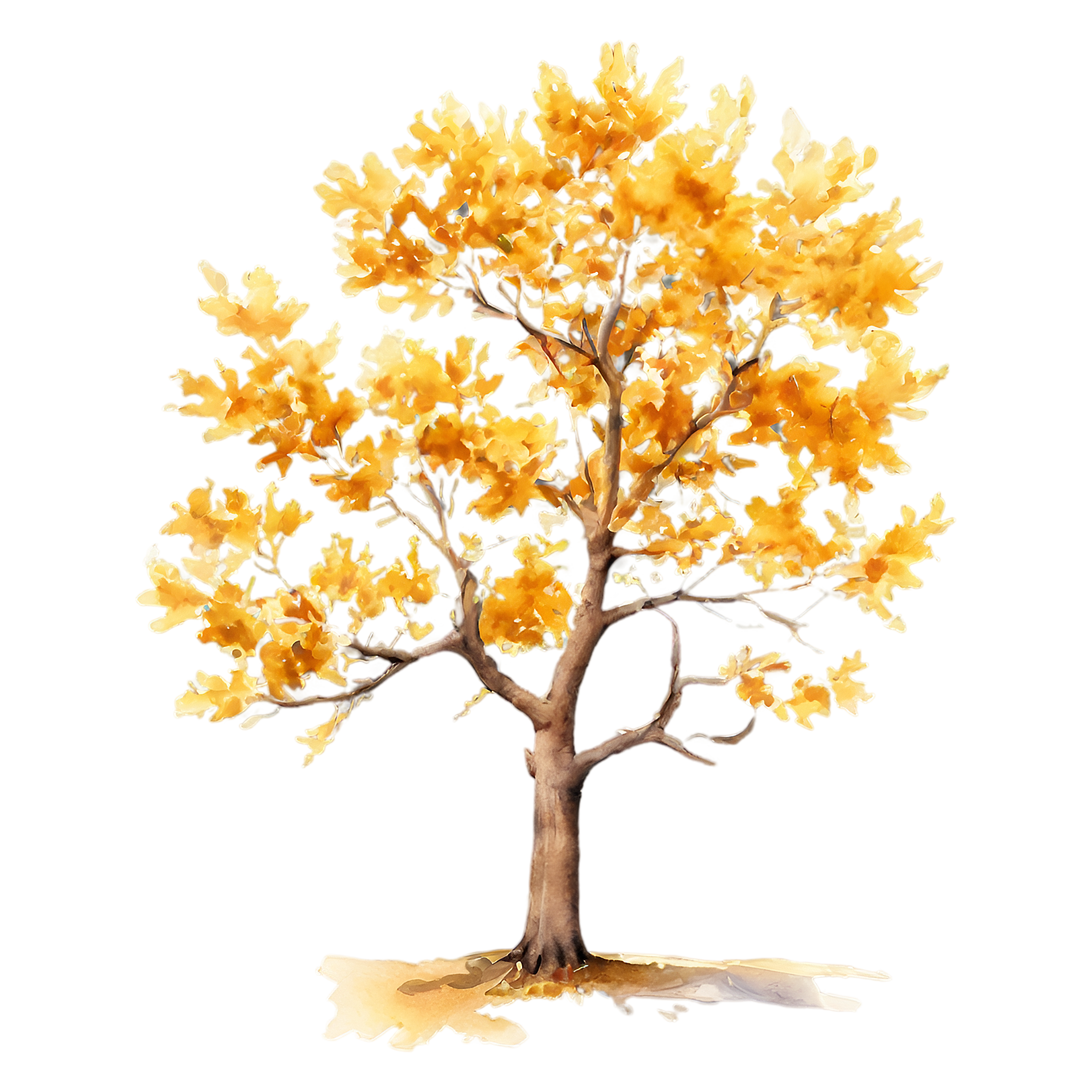
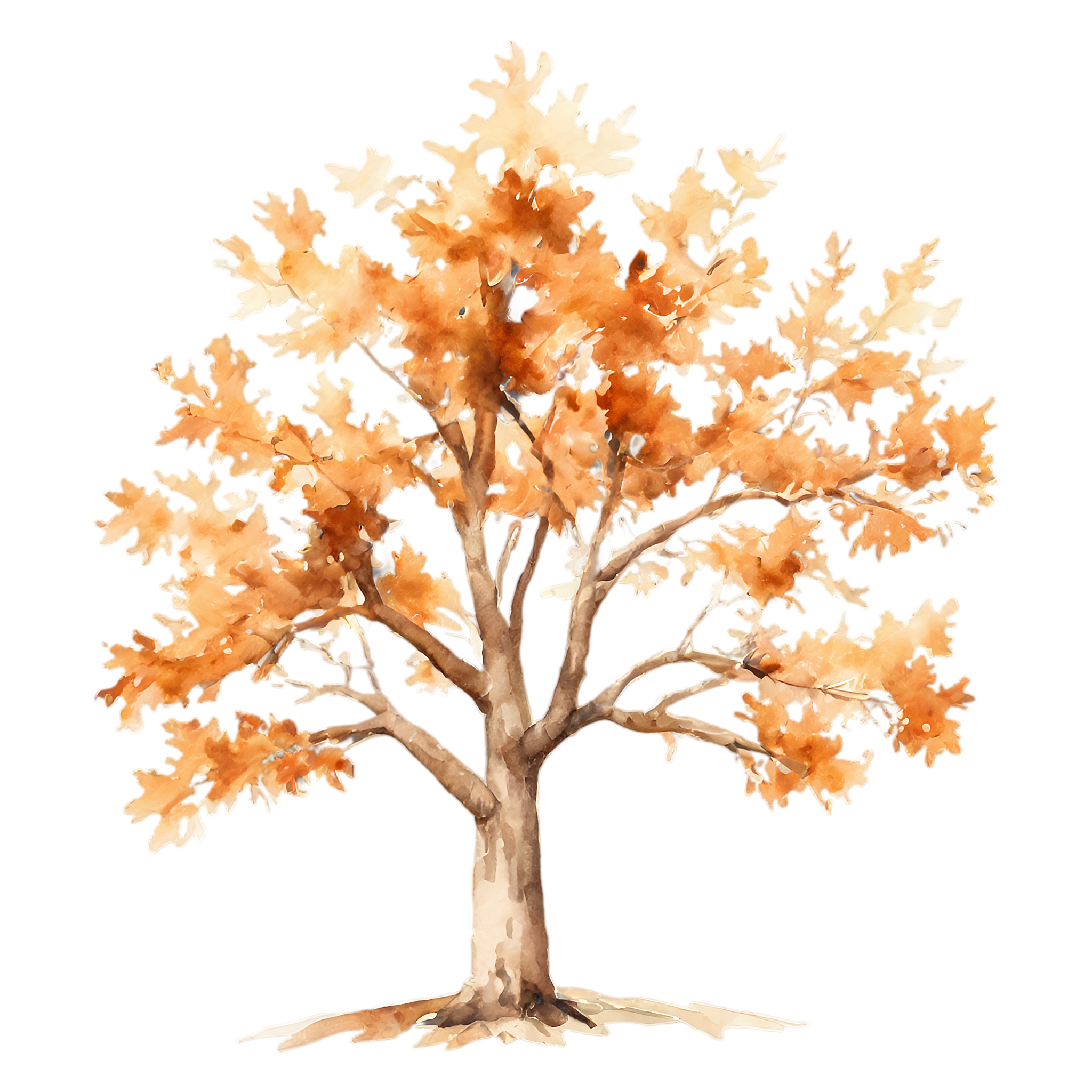
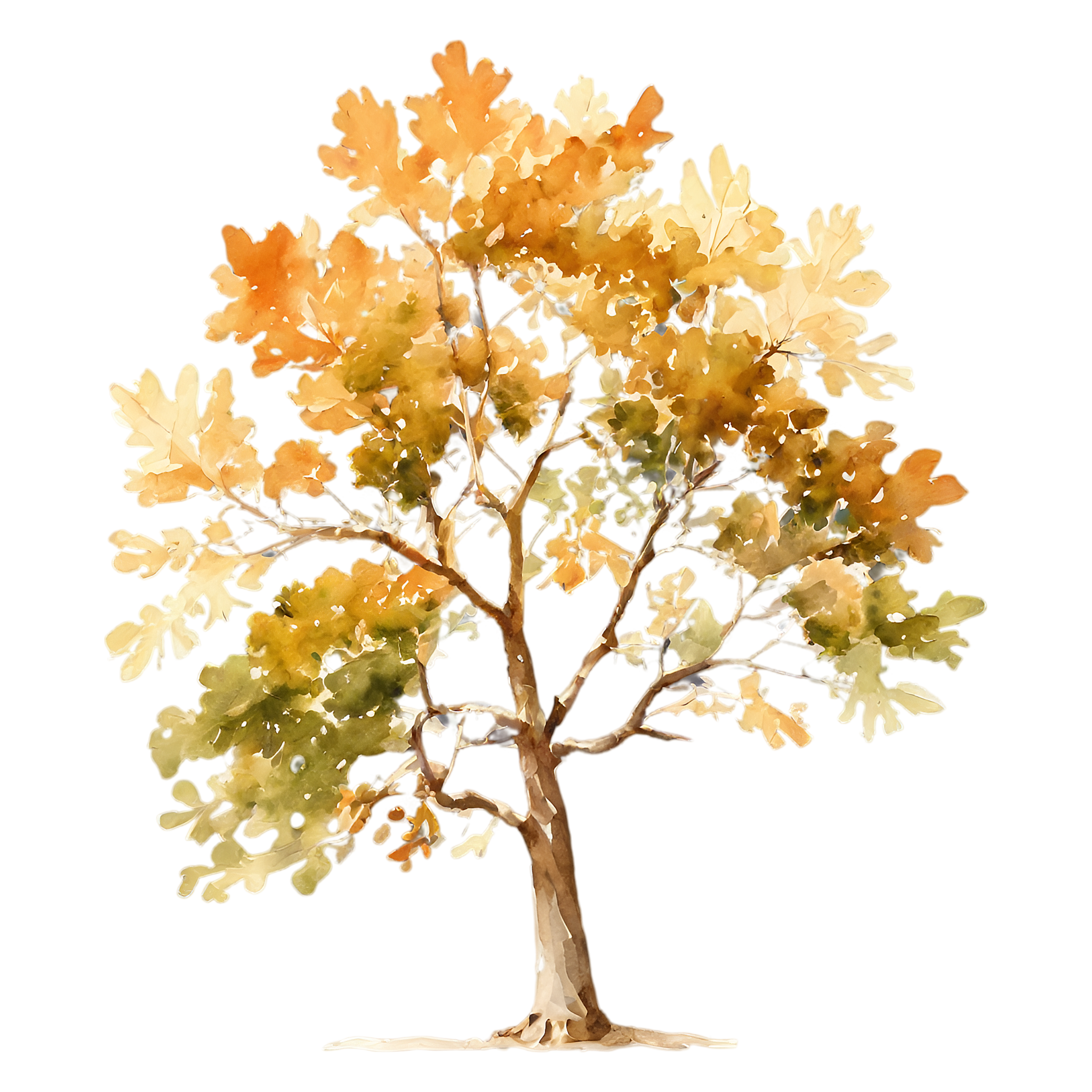
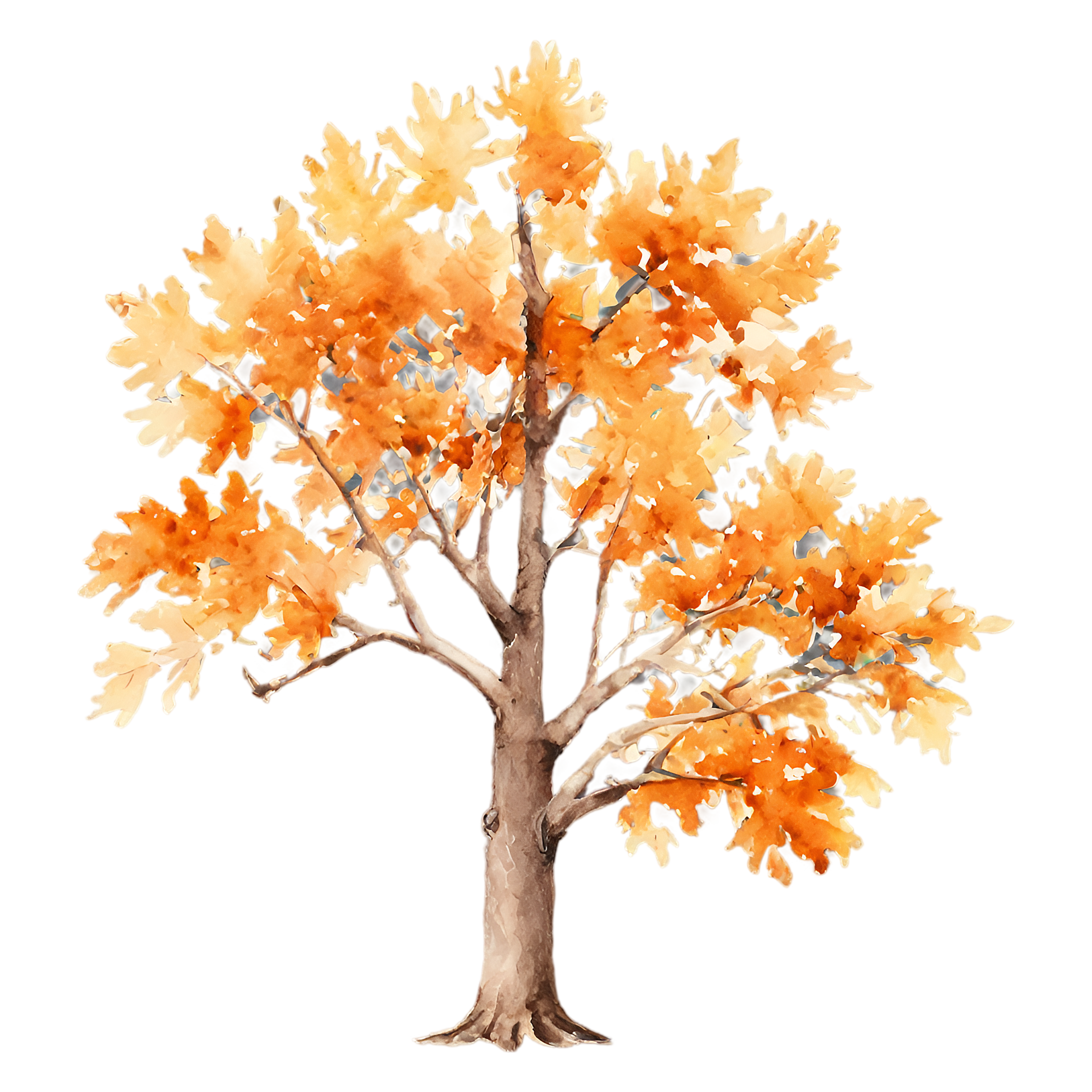
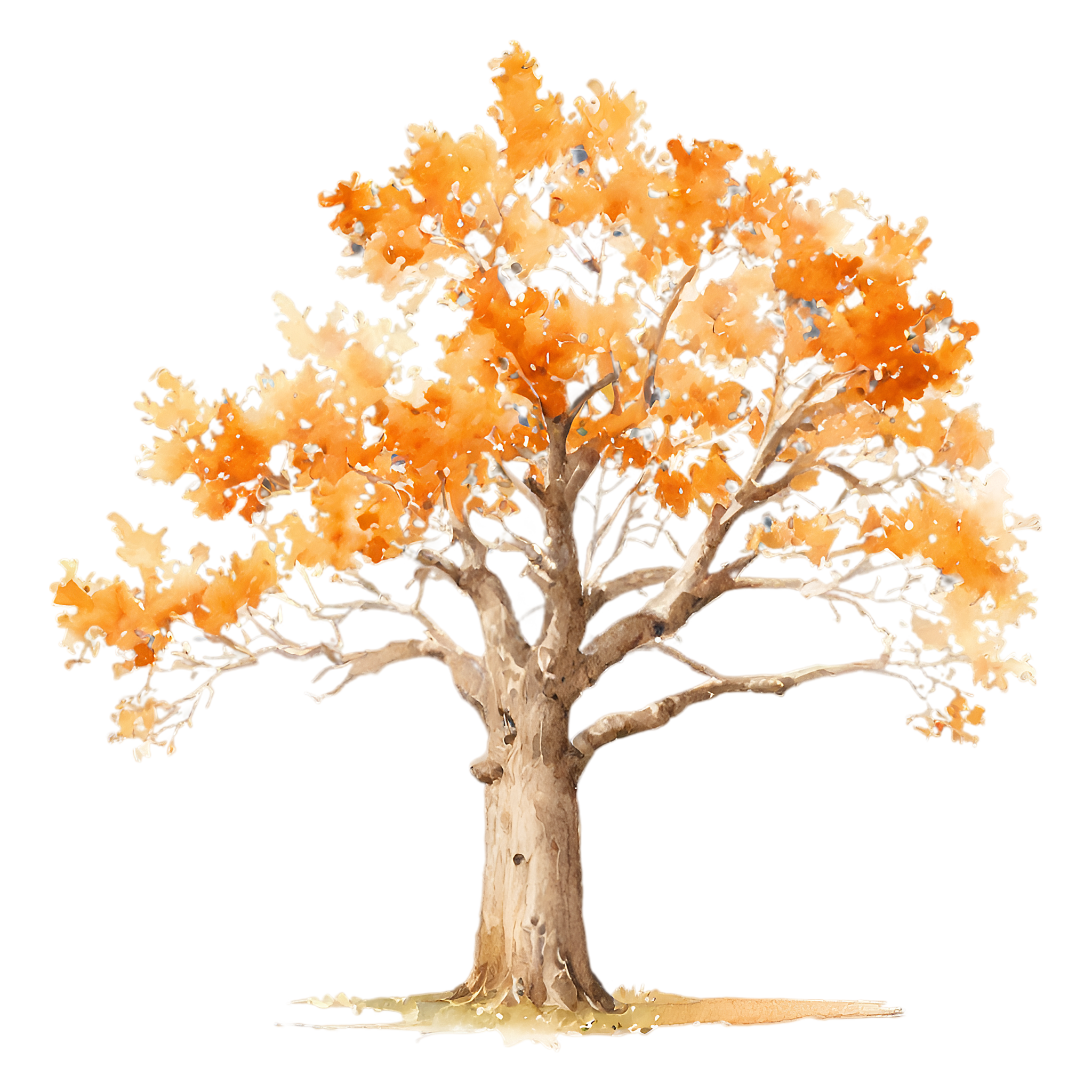
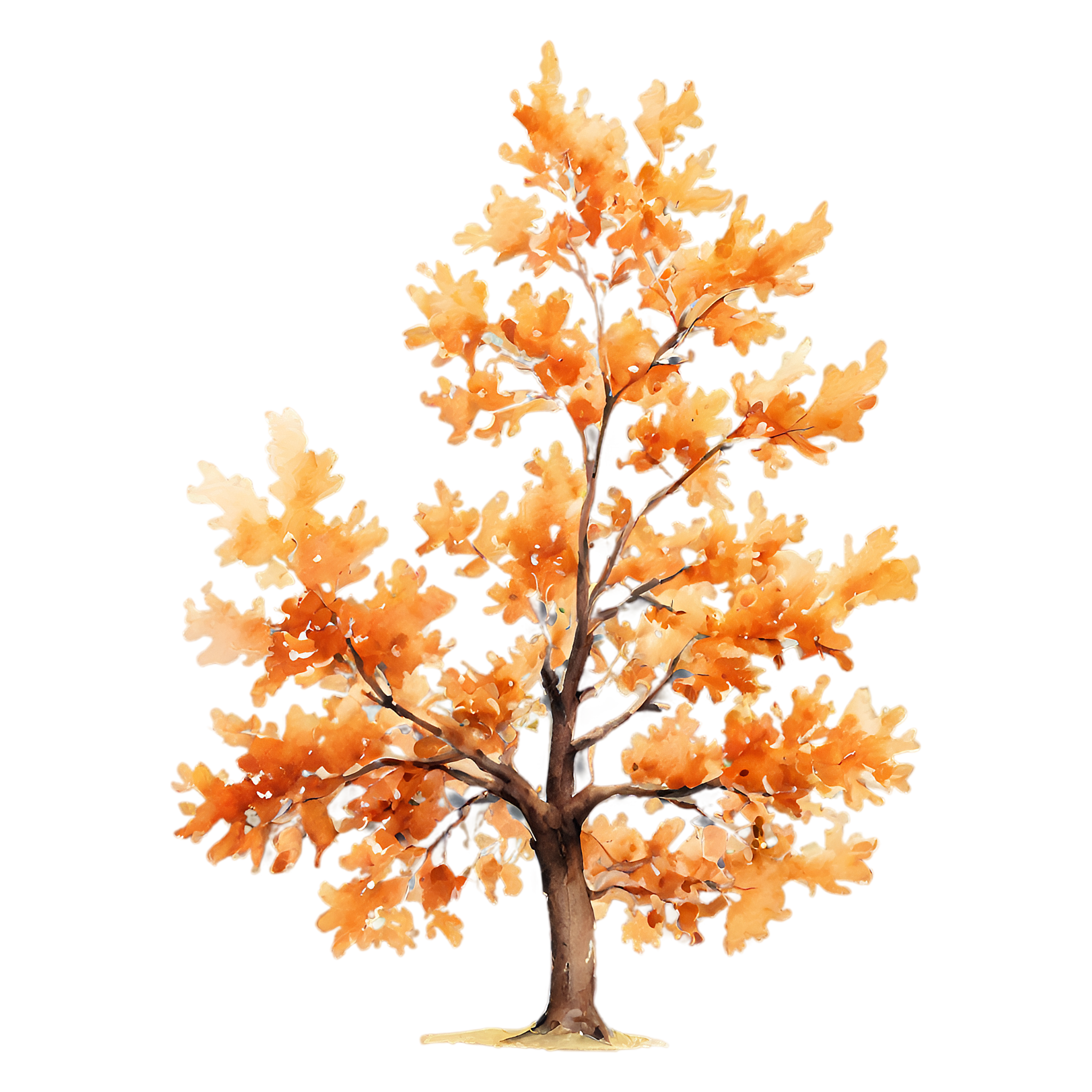
Each image is a single, complete tree with trunk, branches and canopy. The set includes an oak with golden-brown leaves and acorns, a broad oak in russet-brown, an oak with a wide gnarled canopy of amber leaves and a tall oak in deep bronze and copper. There is a young oak with golden-yellow turning leaves, an oak with sturdy spreading branches and tan-brown leaves, one in mixed green and golden-brown for early fall, a rounded canopy of chestnut leaves, a weathered old oak in rich amber, and an oak with burnished orange-brown leaves over a thick trunk. No ground line or grass is painted in, so each tree can stand on any surface.
Thanksgiving tables, family trees and fall festivals
Autumn oaks cover the stretch from late September to Thanksgiving. Use them on harvest festival flyers, fall open-house invitations, Thanksgiving menus and place cards, and autumn newsletters for schools, churches and nature centers. The oak's long life also makes it the classic tree for genealogy: family tree charts, reunion invitations and heritage scrapbooks all lean on a broad oak. Teachers use oaks for fall science units on seasons and seeds, and acorn-to-oak lessons on growth. A strong single tree also suits memorial programs and "in loving memory" cards, where the oak stands for endurance. Landscapers, arborists and park conservancies can use the same trees on service flyers and tree-planting event posters, picking the young oak for planting drives and the old oak for heritage-tree walks.
Amber, bronze and russet
The palette is warm and deep: golden brown, amber, bronze, rust and chestnut, matched on this page to DMC floss such as 3827 Golden Brown Pale, 3853 Autumn Gold Dark and 3854 Autumn Gold Medium. To make a mixed woodland, set the oak beside a red-orange maple tree or a pale-trunked birch tree, and scatter fall leaves at its base. The autumn hub collects every fall set, and the orange hub has more warm-toned art.
Laying out a family tree chart
For a family tree, choose an oak with a wide canopy: the gnarled amber oak or the oak with sturdy spreading branches gives the most room for name labels. Place the tree at full size on an 8 x 10 or 11 x 14 inch page, drop its opacity to around 50 to 60 percent so text stays readable, then put the oldest generation near the trunk and children toward the outer leaves. Each file is a 2048 x 2048 px transparent PNG, about 6.8 inches at 300 DPI, so on larger prints scale it up a little and let the soft watercolor edges carry the slight loss in sharpness.