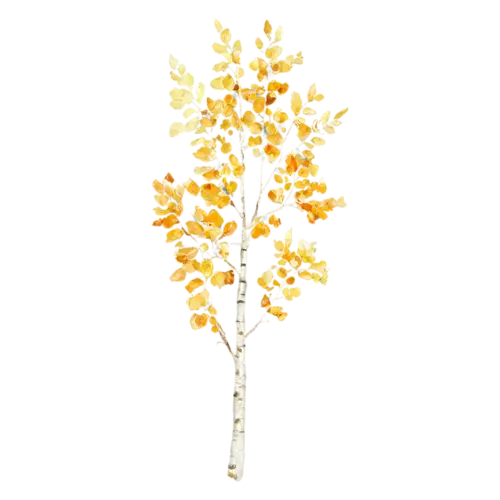
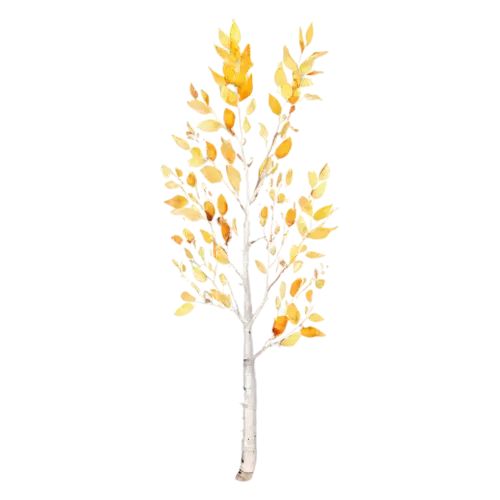
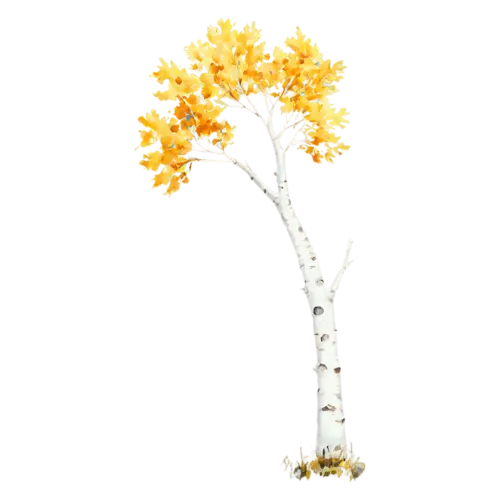
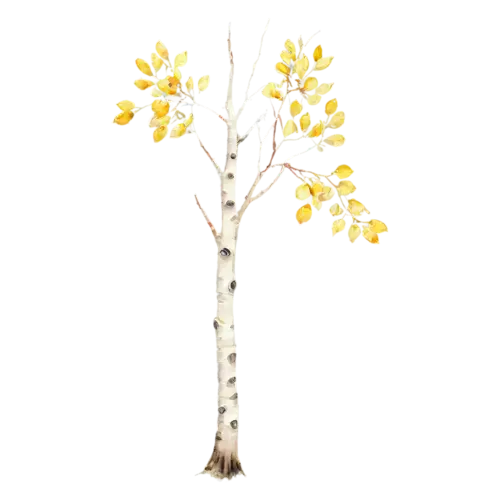
White bark, dark marks and yellow leaves
Birches (Betula) are the trees most people can name from the bark alone. The white color comes from betulin, a compound in the outer bark, and the short dark horizontal lines across it are lenticels, pores that let the trunk exchange gases. Paper birch, common across Canada and the northern United States, sheds its bark in thin curling sheets, and Indigenous peoples of the region have long used that bark for canoes and containers. In Europe the silver birch fills the same niche and is the national tree of Finland. Paper birch is also the state tree of New Hampshire. Birches are pioneer trees that move quickly into cleared or burned ground, and their small toothed leaves turn clear yellow in fall, which is the moment this set captures.
Ten single trees from sapling to windswept
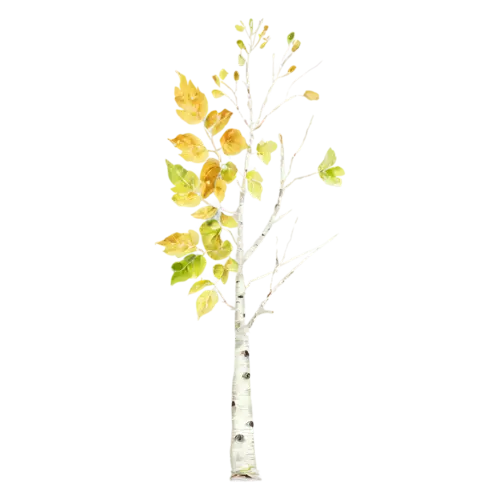
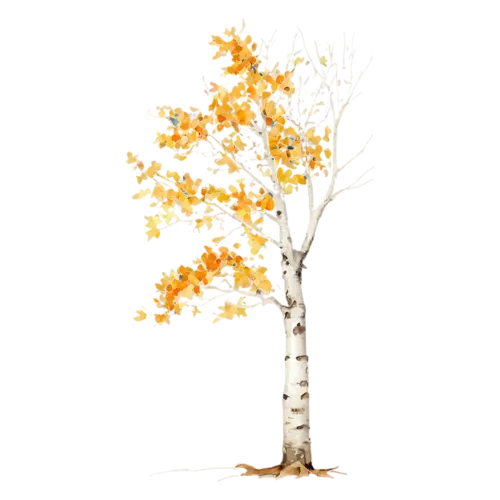
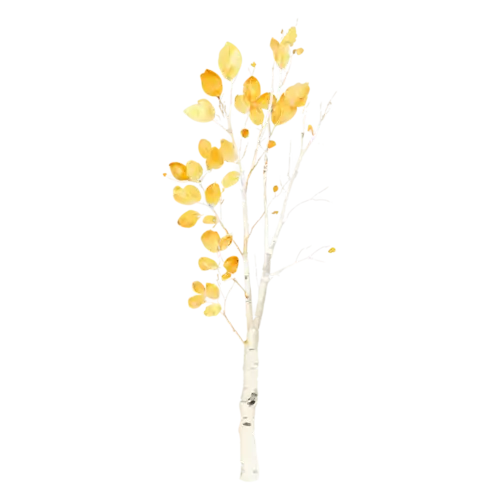
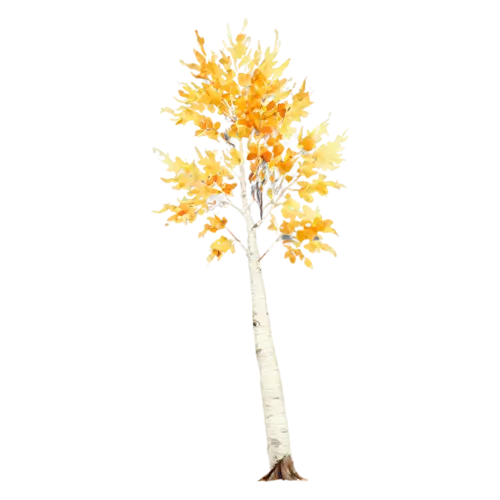
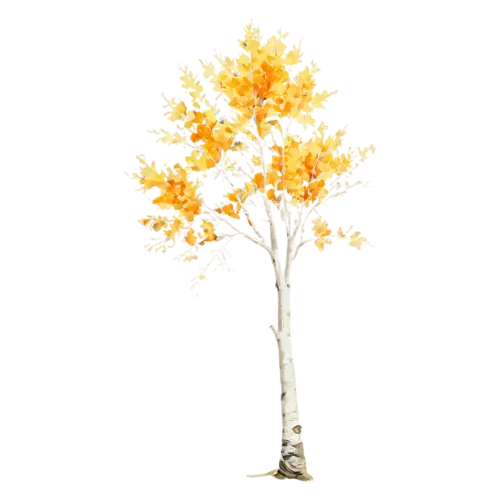
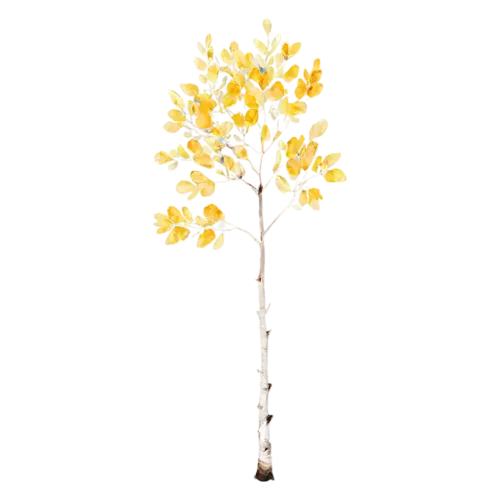
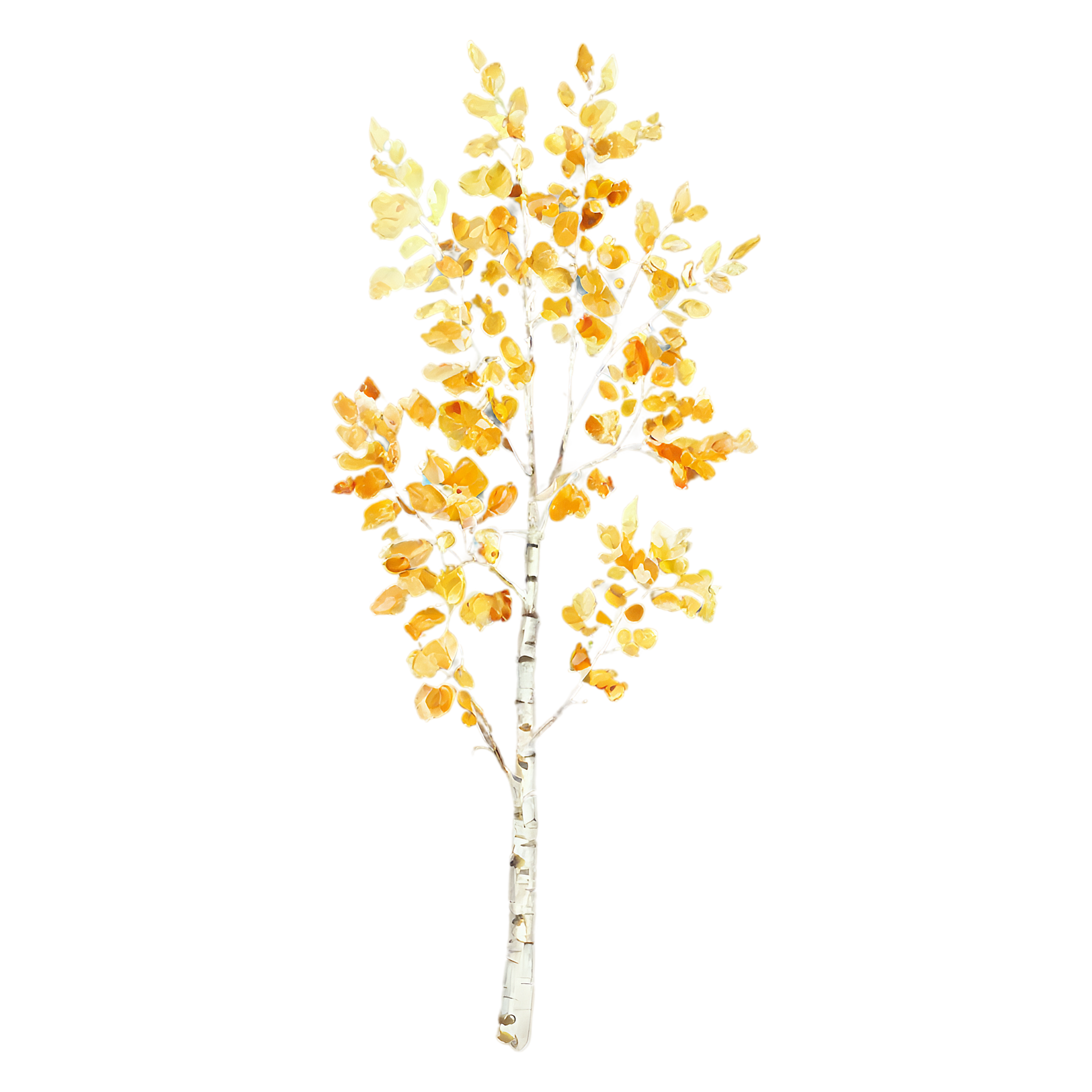
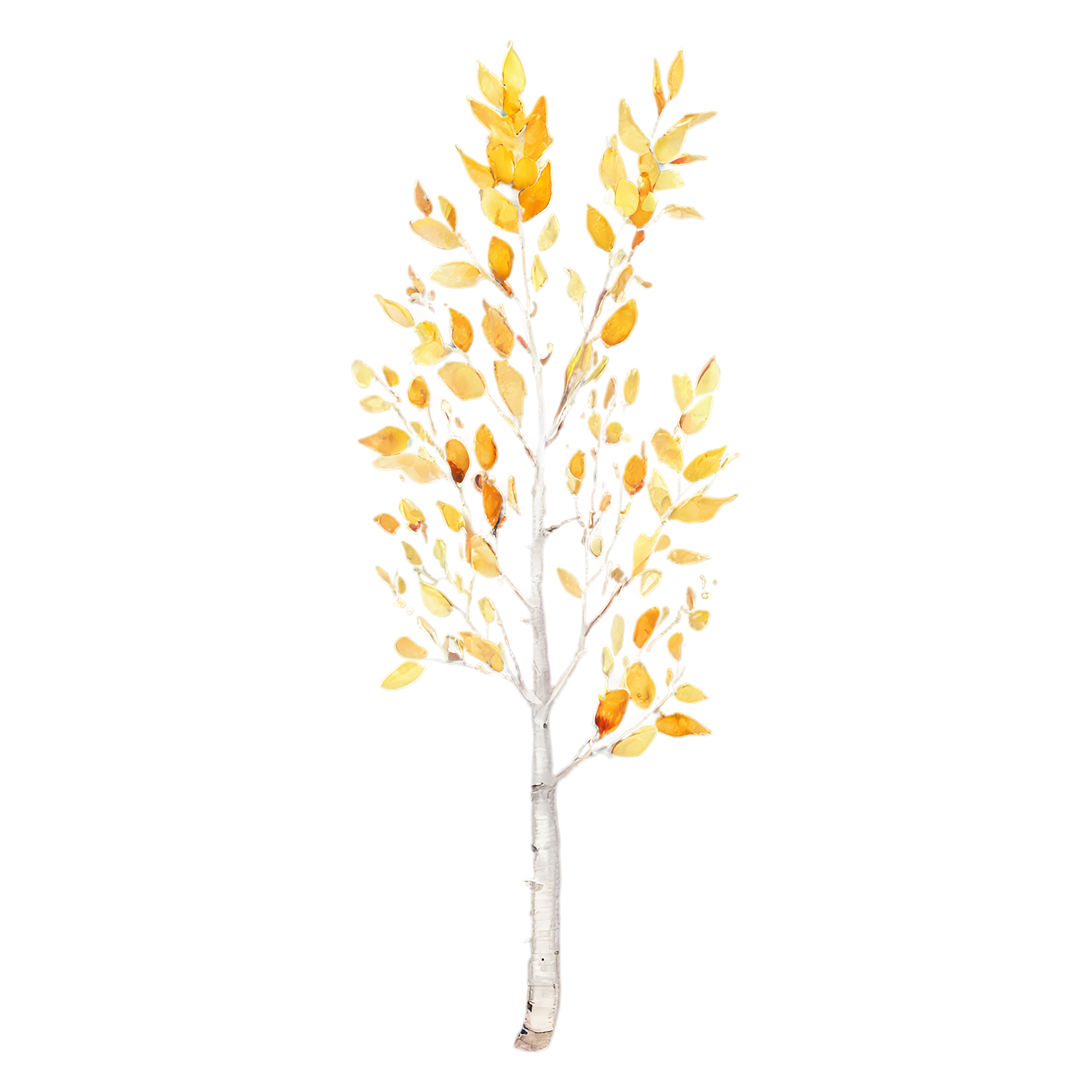
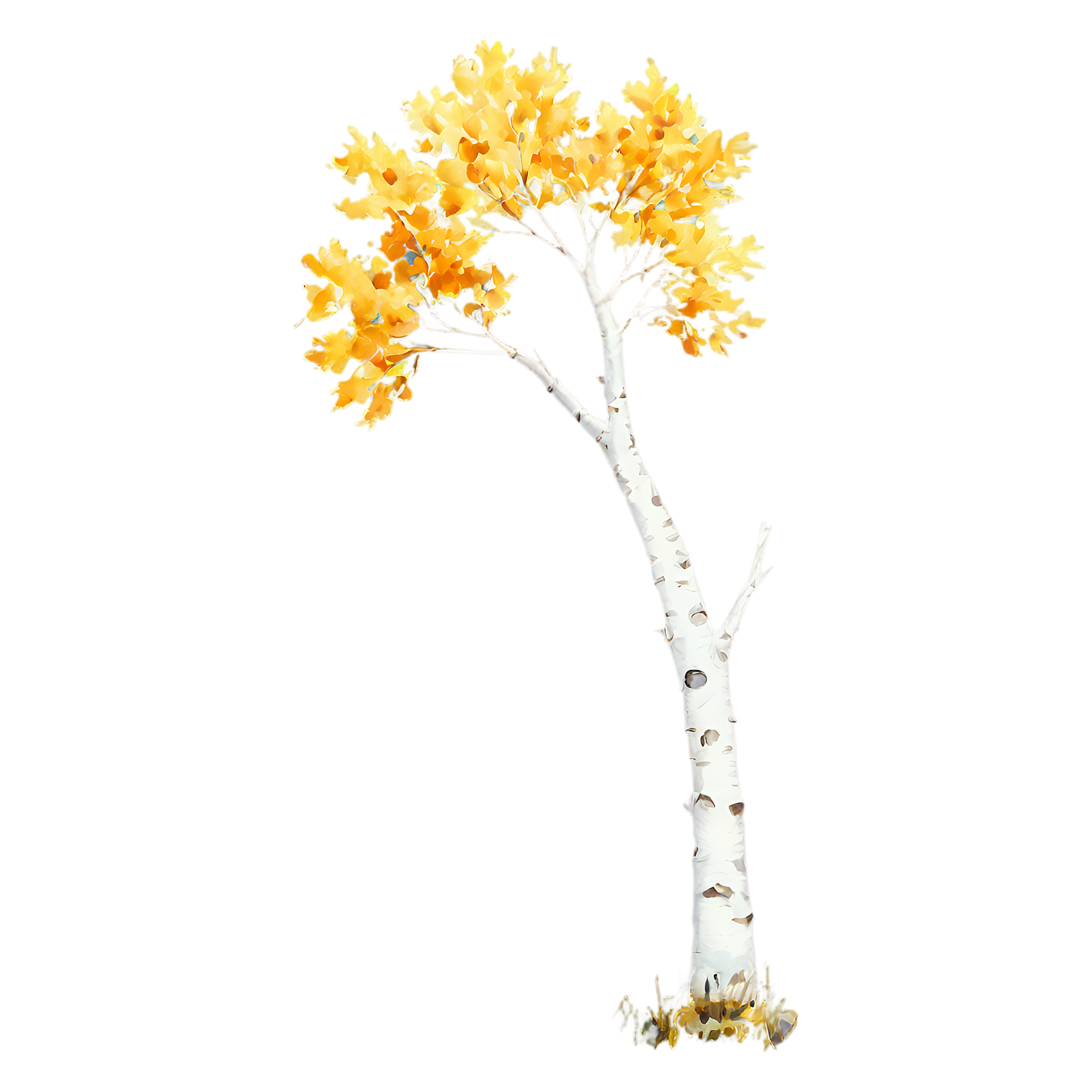
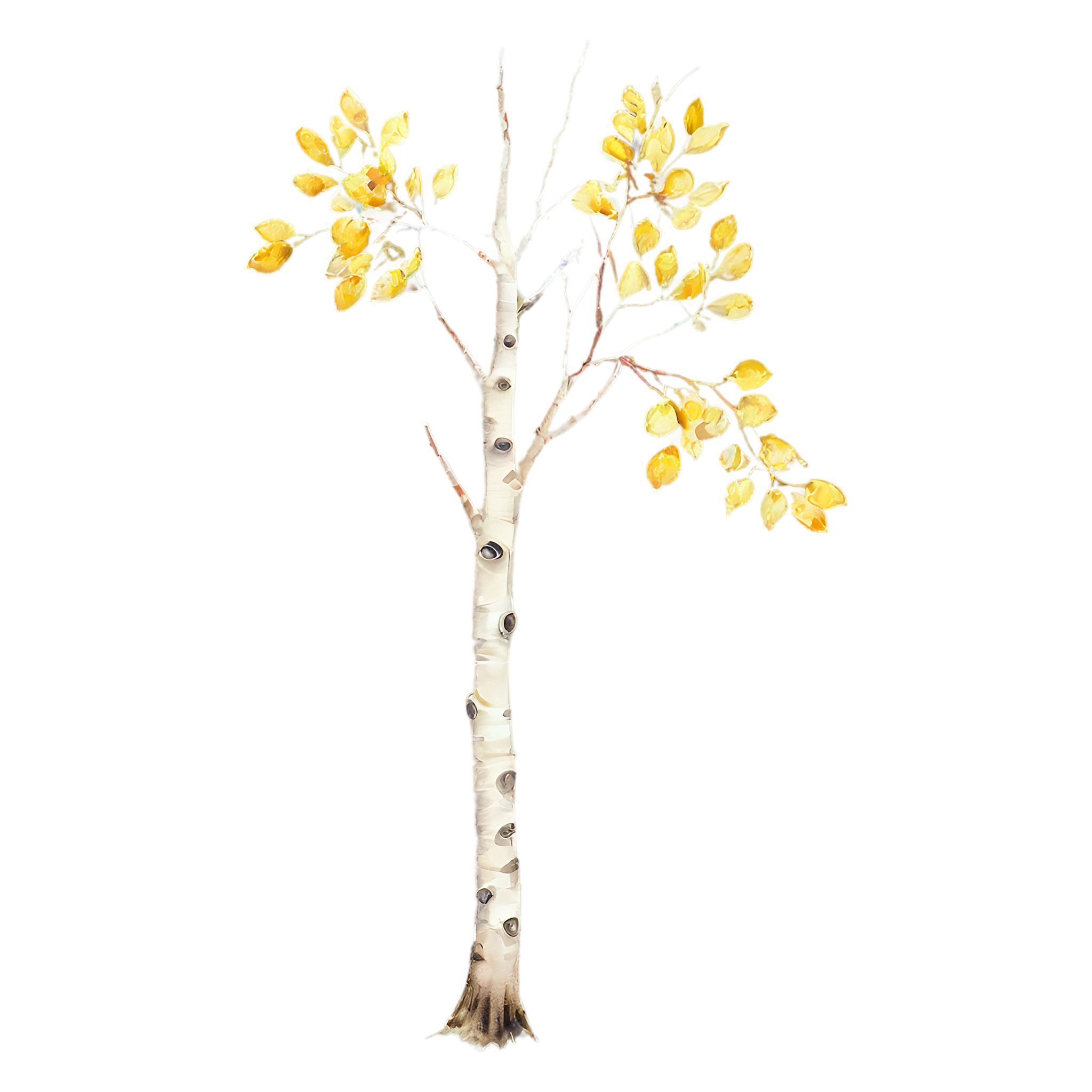
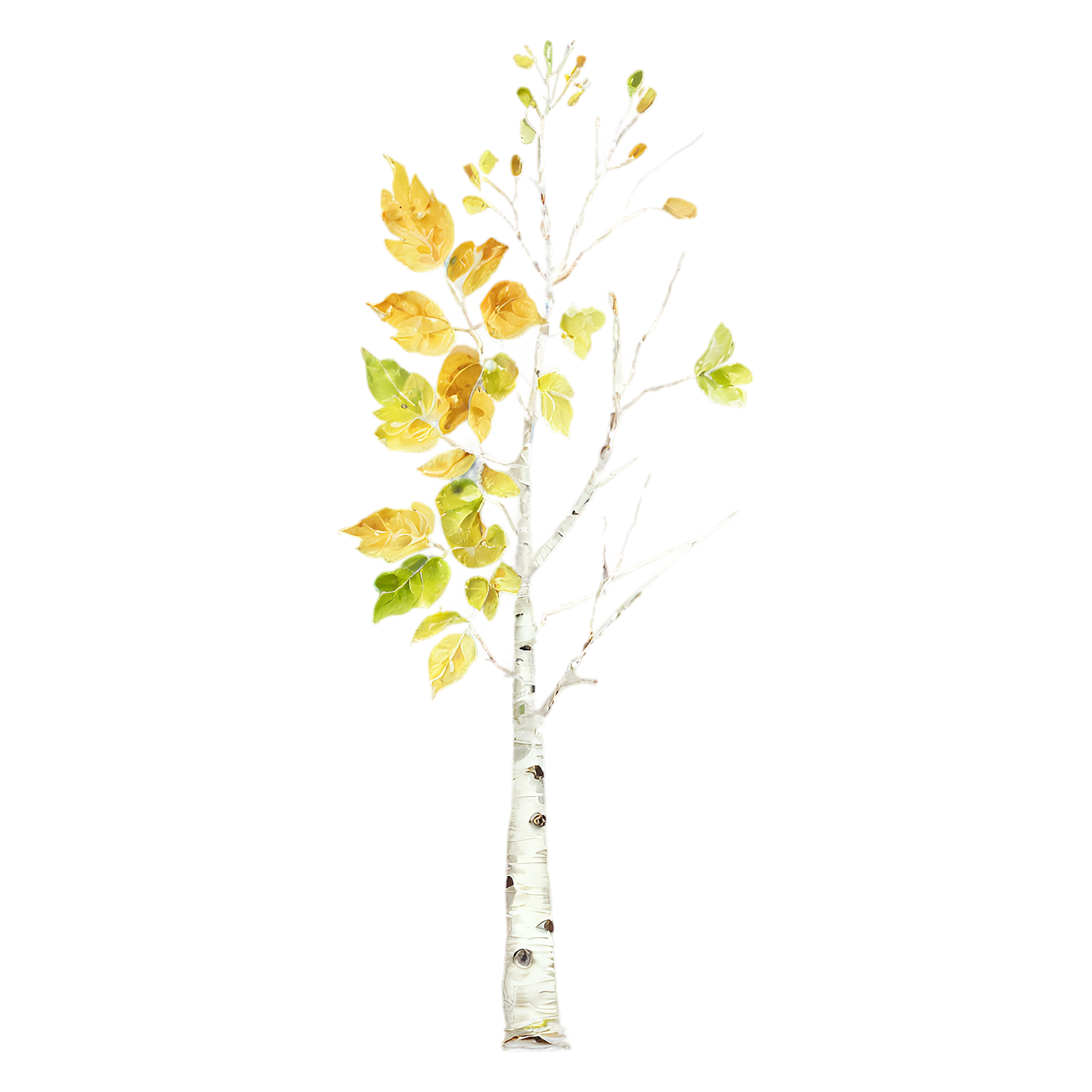
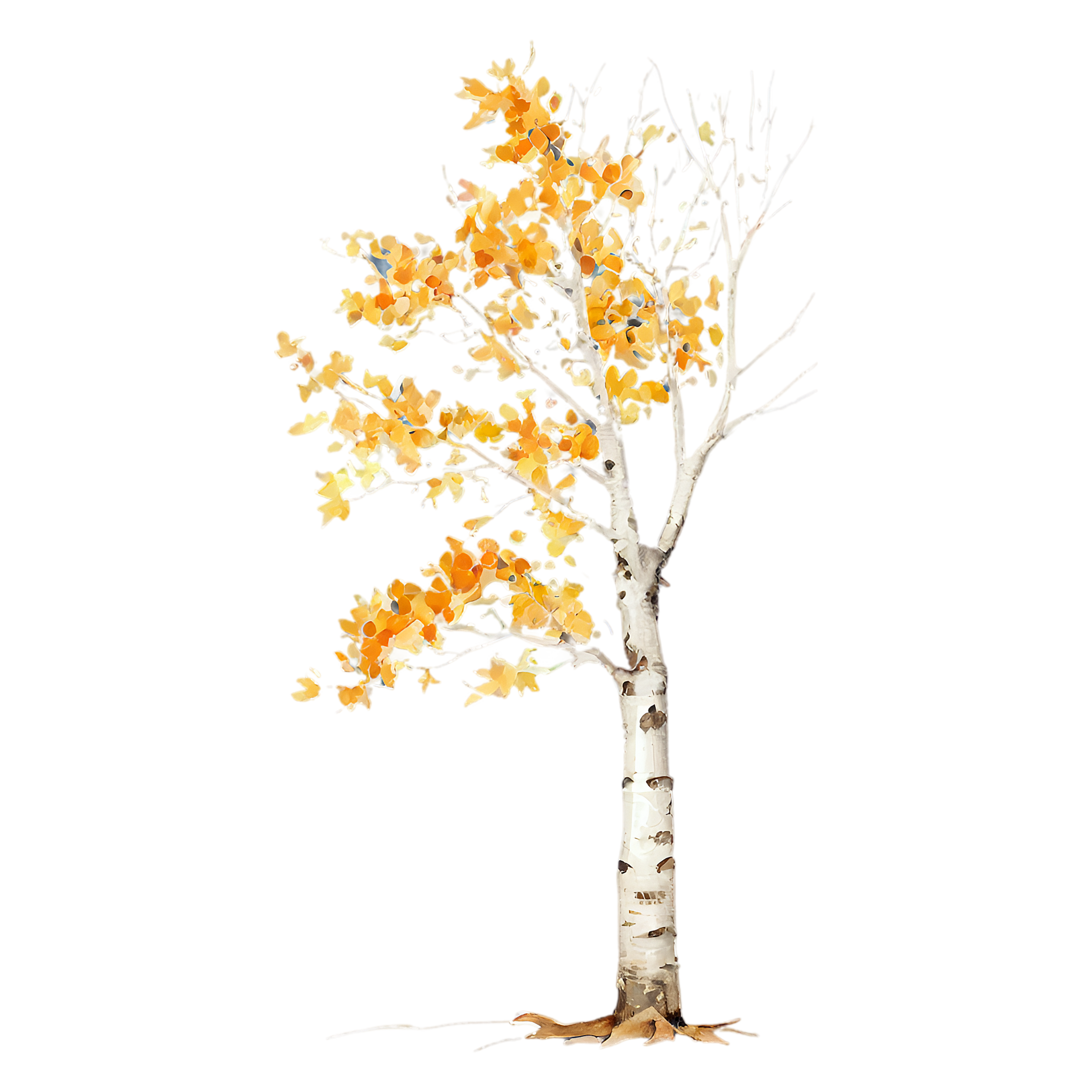
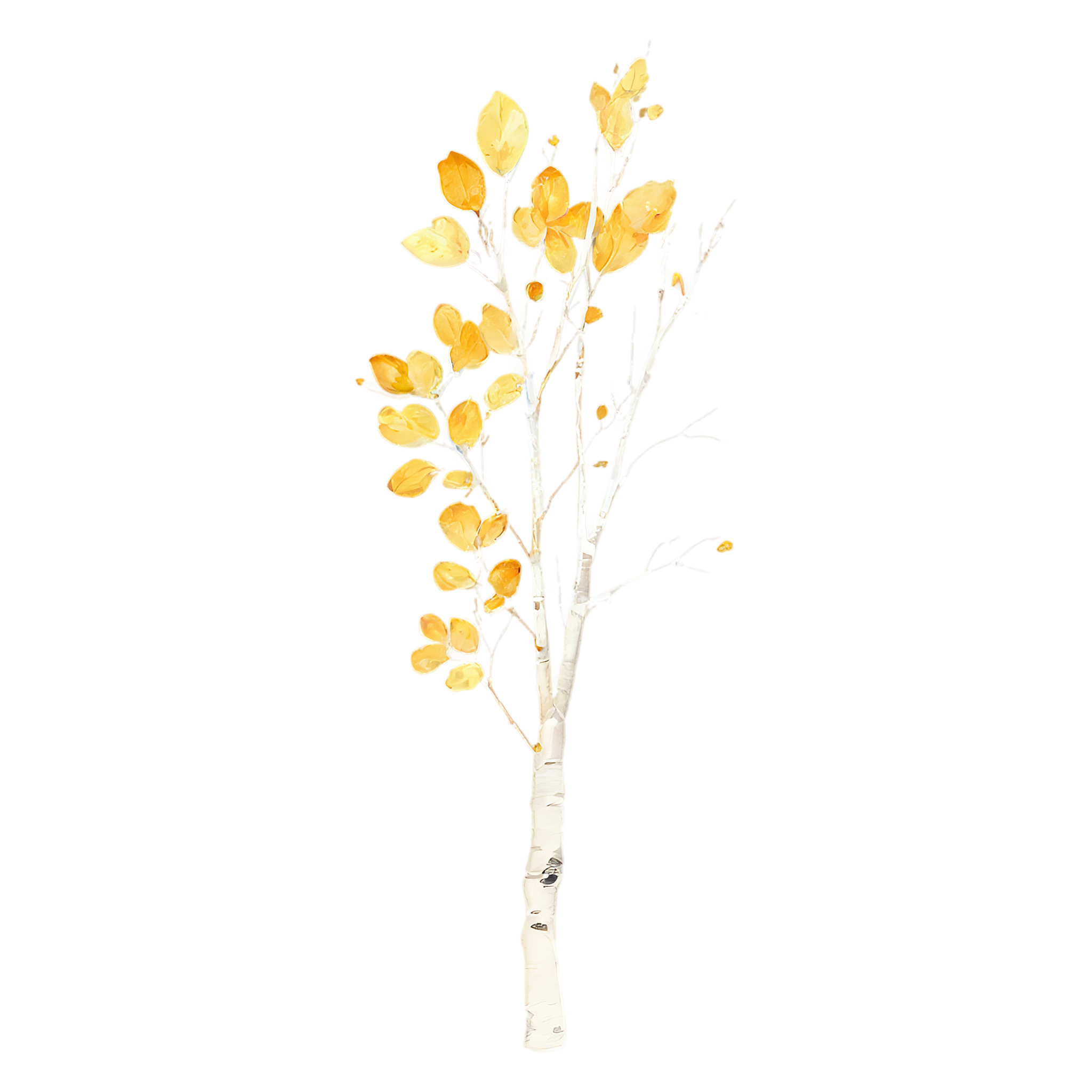
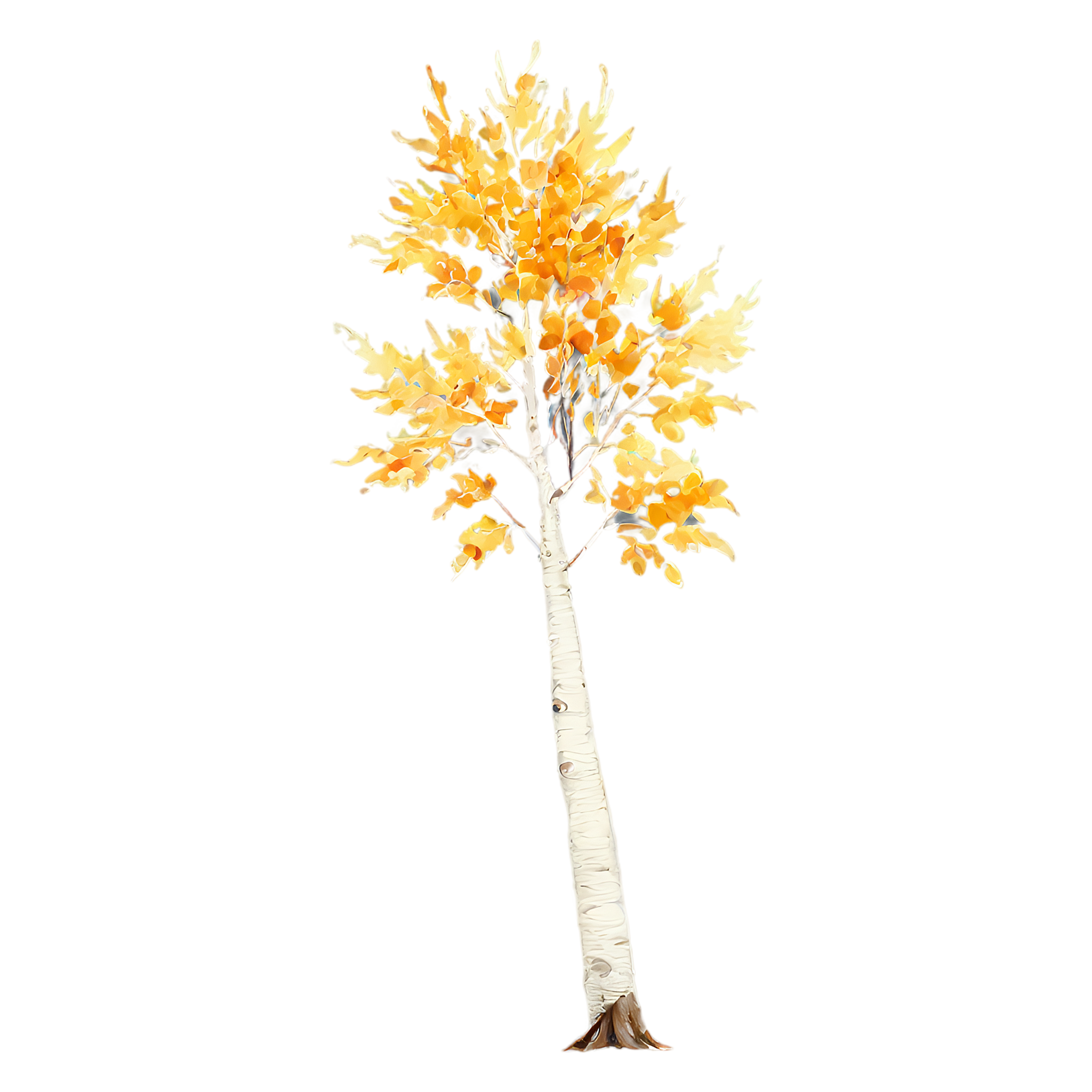
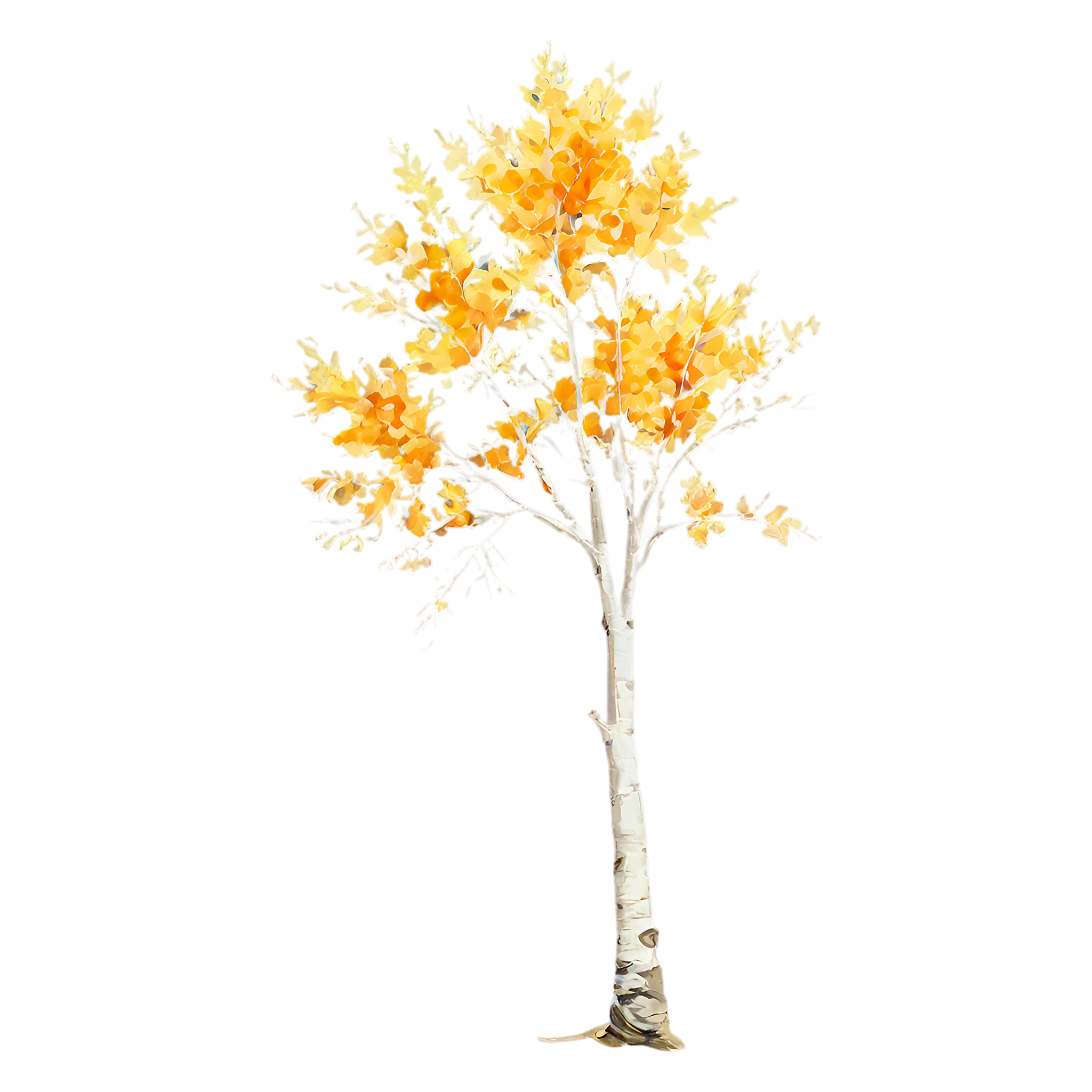
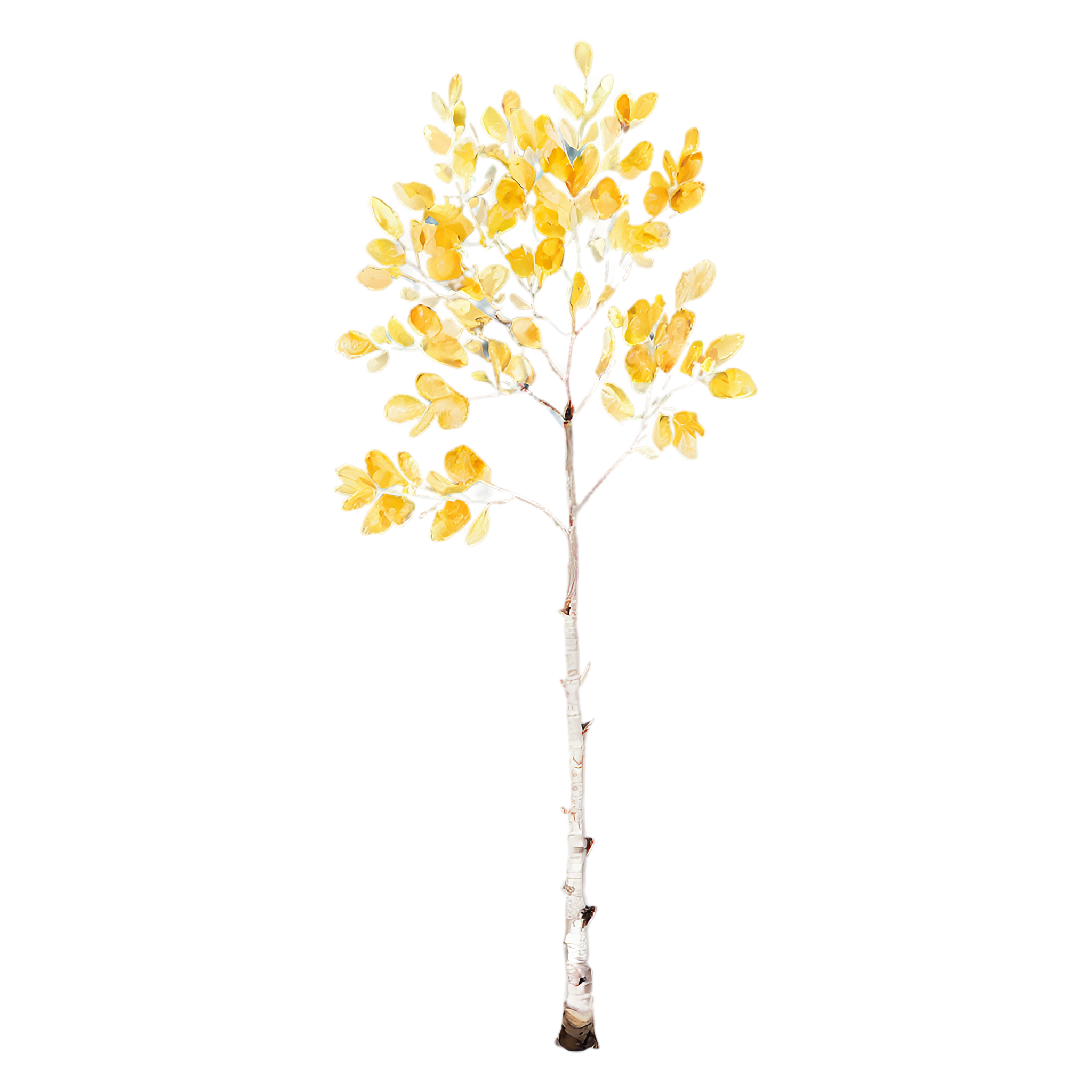
Each image is one standalone tree with no ground, grass or horizon, so it drops onto any background. The set covers a slim white trunk under golden-yellow leaves (01), a tall graceful tree in bright yellow (02), a trunk with visibly peeling bark (03), a young birch in soft lemon yellow (04), an airy golden canopy (05), a tree caught mid-change with green and yellow leaves mixed (06), a narrow upright canopy in amber (07), a windswept birch with leaves drifting down (08), a pale-barked tree with warm yellow foliage (09) and a light, open canopy of bright gold (10). The mix of heights and canopy shapes lets you line several up into a grove without it looking like one tree copied.
Fall stationery, Nordic decor and classroom leaf units
Golden birches belong to September through November. Use them on fall wedding invitations and seating charts, Thanksgiving menus, harvest-festival flyers and back-to-school newsletters. The pale trunks fit the Scandinavian style that leans on white, wood and soft yellow, so they work on minimalist wall art, cabin rental guidebooks and hygge-themed planner pages. Tree #06, with green and yellow leaves together, is useful for teaching why leaves change color: chlorophyll breaks down in fall and the yellow pigments that were there all along show through. Tree #08, with leaves blowing off, suits an end-of-season card or a farewell note.
Gold and white with the rest of the autumn woods
The color story is almost all yellow: canary, topaz and old gold in the leaves, with ecru and soft gray in the bark. On-page thread matches include DMC 726 Topaz Light, 972 Canary Deep and 725 Topaz Med Lt. For a mixed fall forest, combine birches with the red-orange maple tree and the brown-gold oak tree sets, or put the similar pale trunks of the aspen tree beside it for a western mountain scene. This gallery is part of the autumn hub and the yellow hub. The white trunks disappear on white paper, so give them a backdrop: a soft gray, a pale sky blue or a deep charcoal makes the bark stand out, and kraft paper adds warmth to the gold leaves.
Building a birch grove from single trees
Each PNG is 2048x2048 pixels with a transparent background, about 6.8 inches square at 300 DPI. To make a grove, place three to five trees at different sizes, put the smallest ones higher on the page so they read as farther away, and flip one or two horizontally so no two lean the same way. Birch trunks are thin, so for Cricut Print Then Cut add a generous offset or the cut line will slice through the bark. For embroidery, satin-stitch the trunk in white or ecru and add the dark lenticel marks last in a single straight stitch.