How to recognize a quaking aspen
The quaking aspen (Populus tremuloides) is the most widely distributed native tree in North America, growing from Alaska and Canada down the Rocky Mountains into Mexico. Two features give it away. The bark is smooth and chalky white to pale green, marked with dark scars where old branches fell off. The leaves are nearly round with a short pointed tip, and they hang from long, flattened stalks, so the slightest breeze sets them trembling. That shiver is where the tree gets its common name. Aspens often grow as clonal stands: one root system sends up many trunks, which is why a whole hillside can turn gold on the same week. Pando, a single aspen clone in central Utah, is counted among the largest living organisms by mass, and the quaking aspen has been Utah's state tree since 2014.
Ten aspens, from slim saplings to windswept canopies
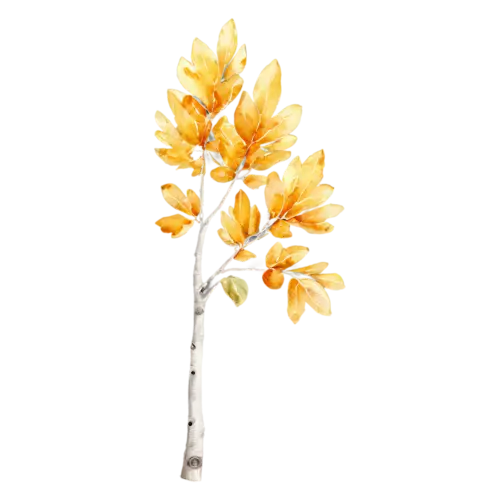
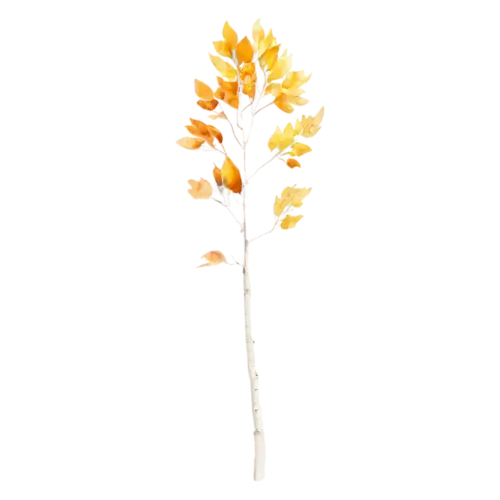
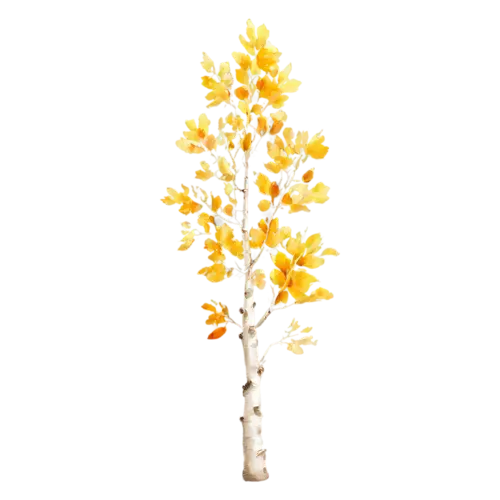
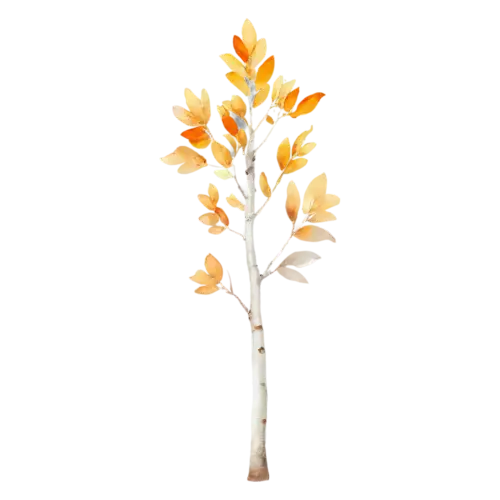
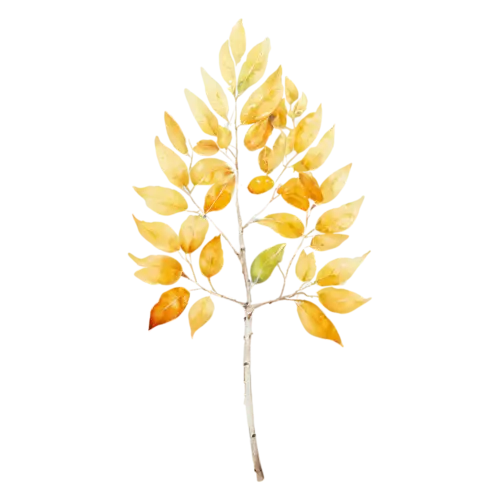
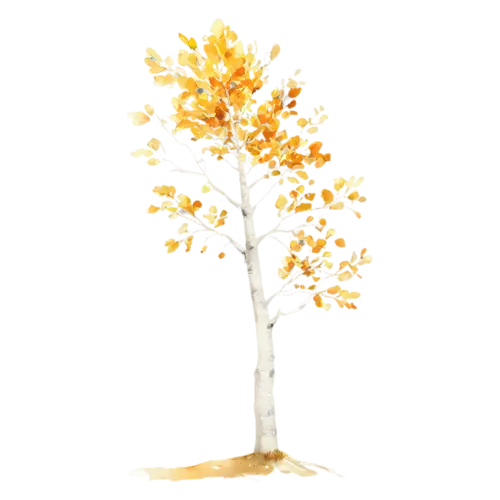
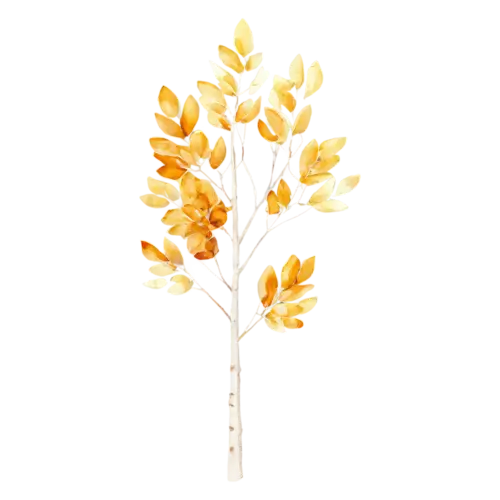
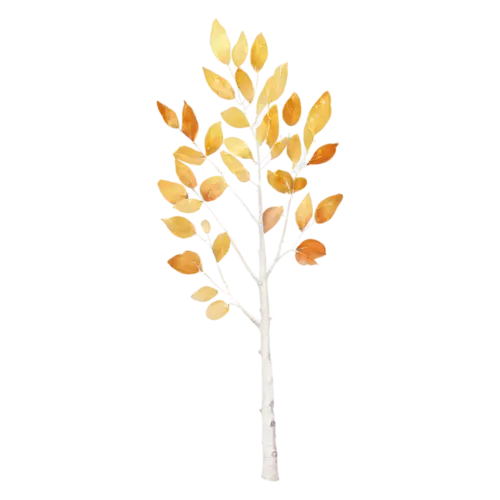
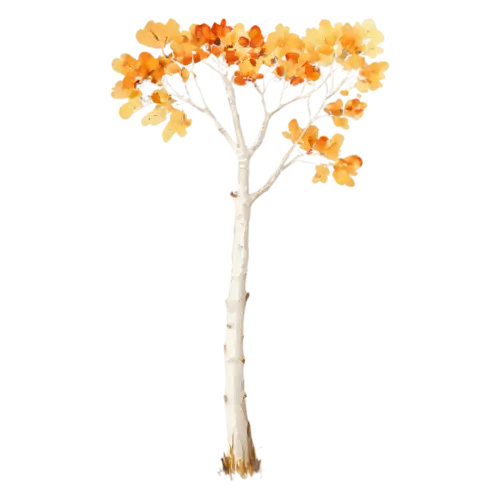
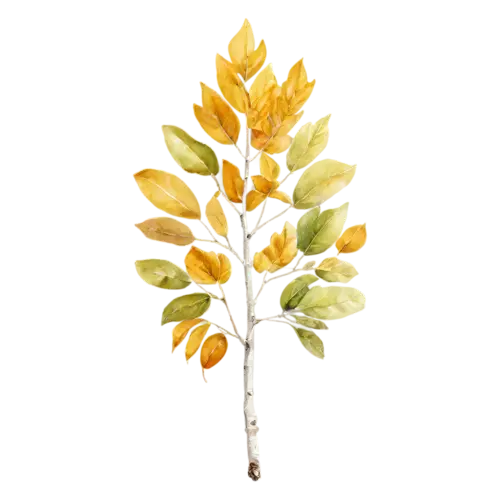
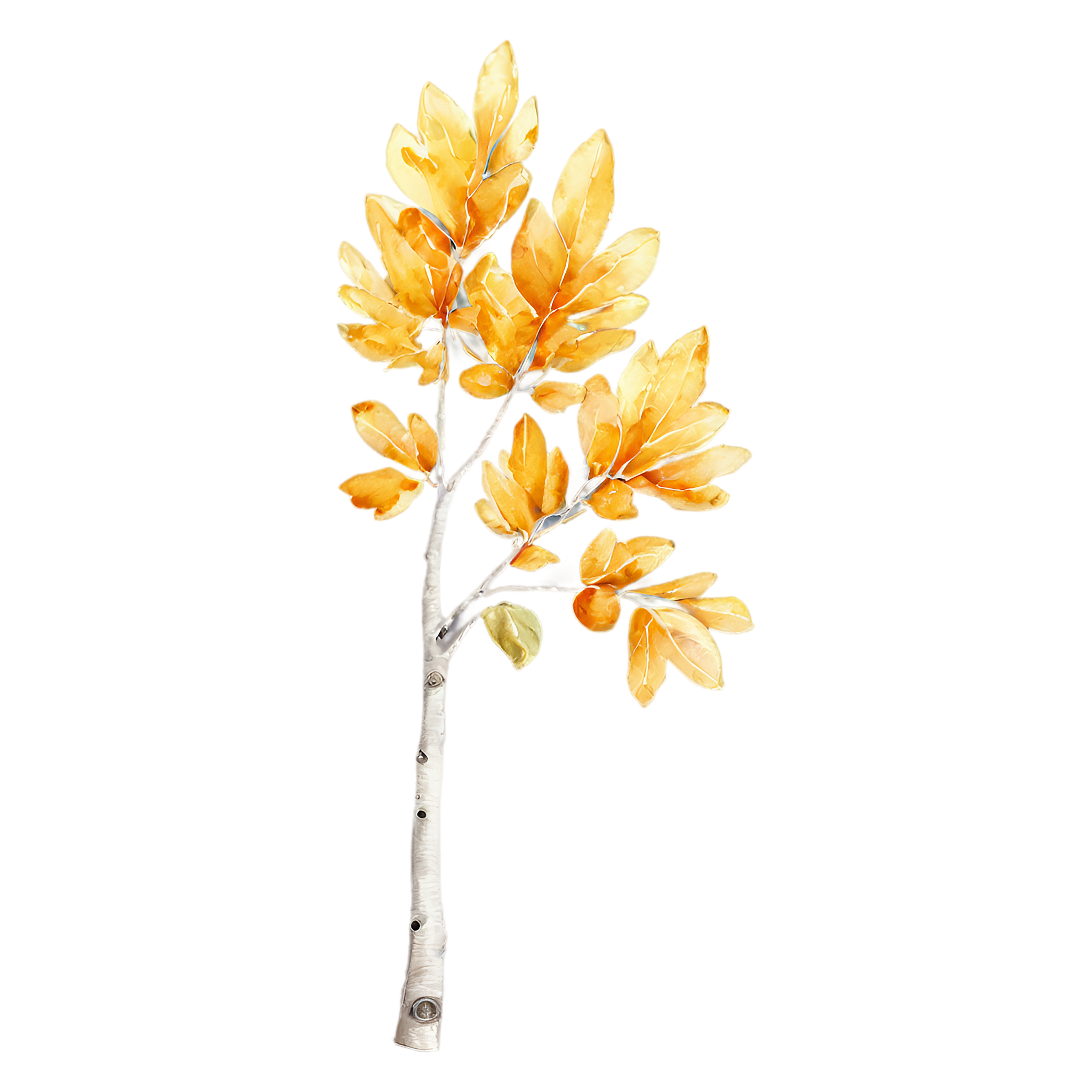
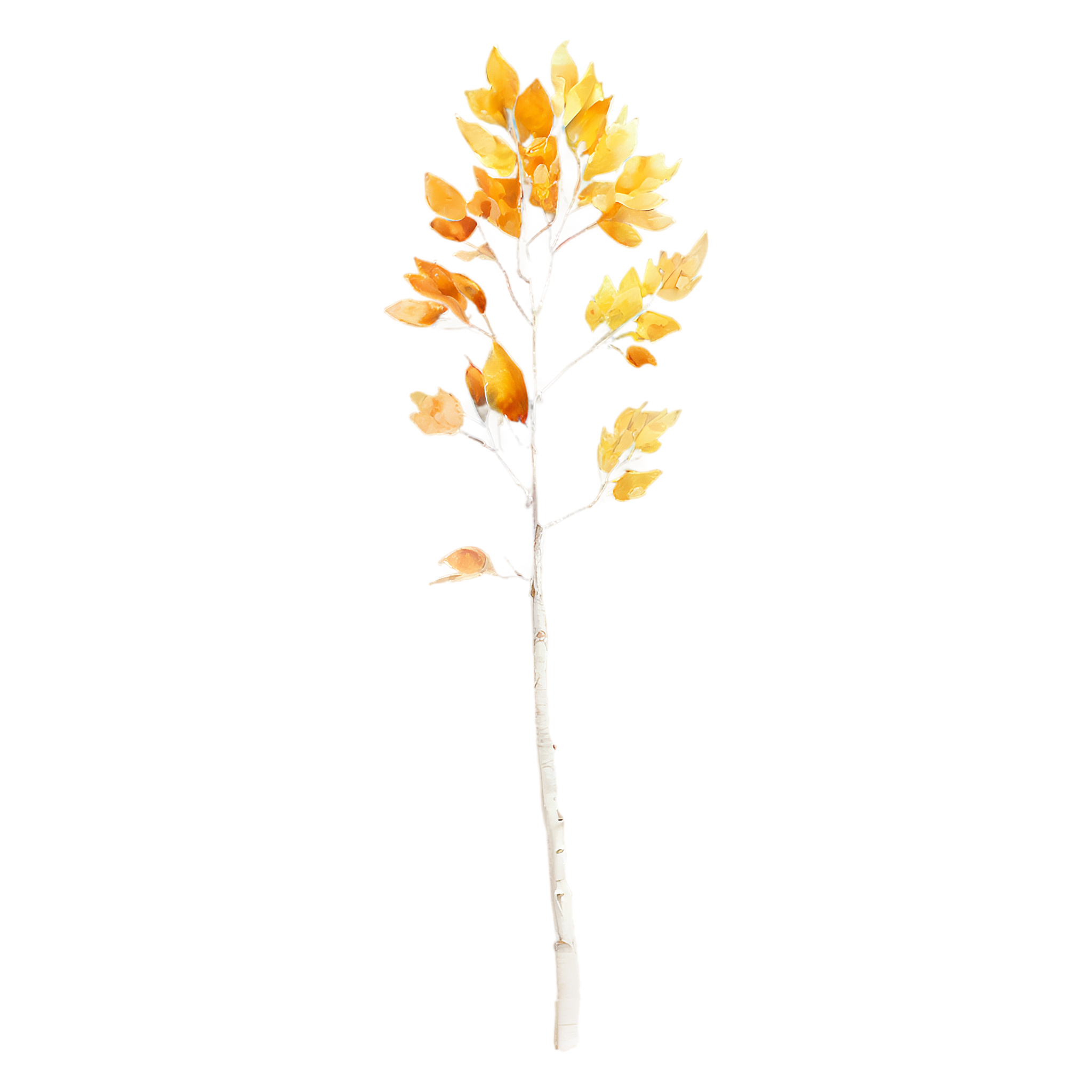
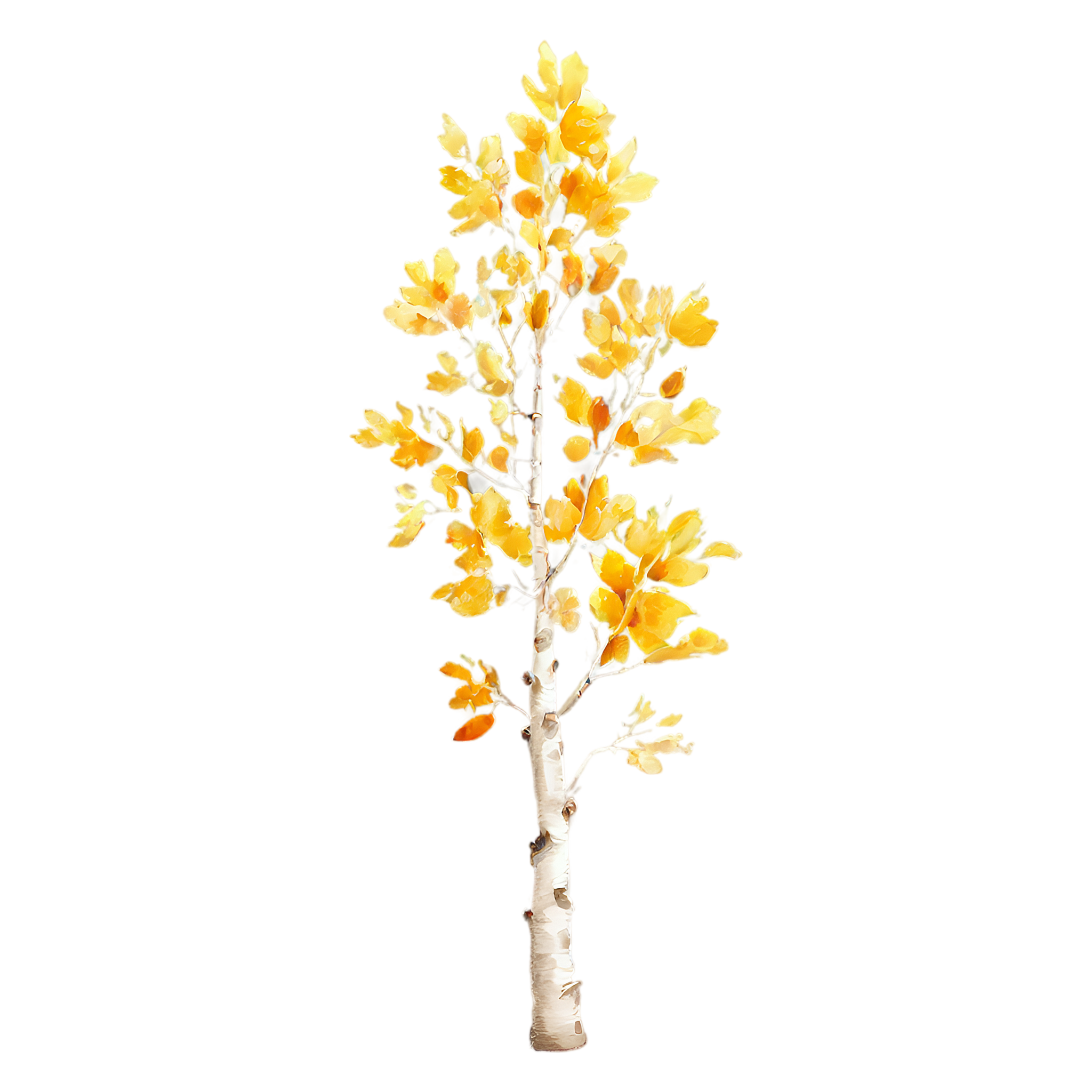
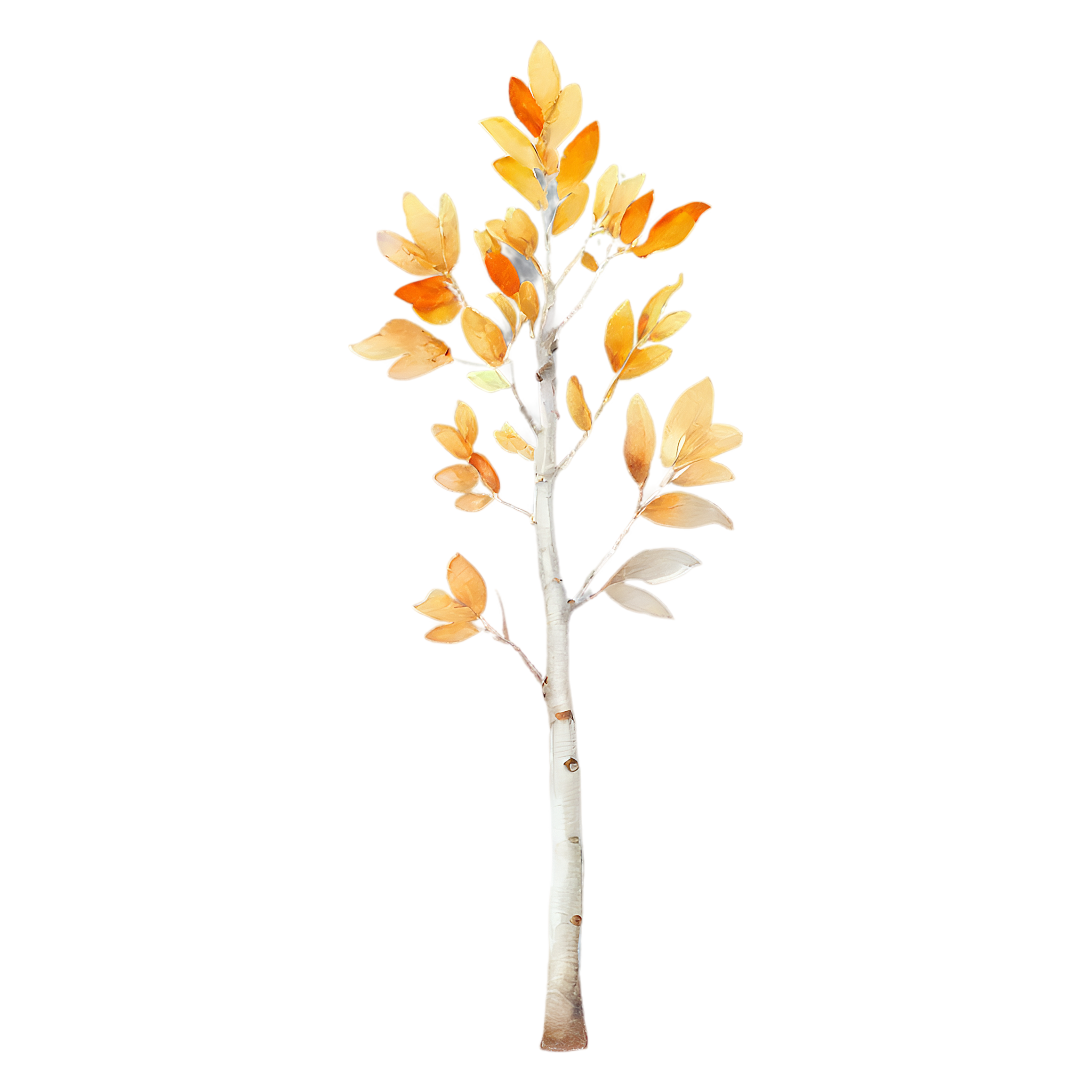
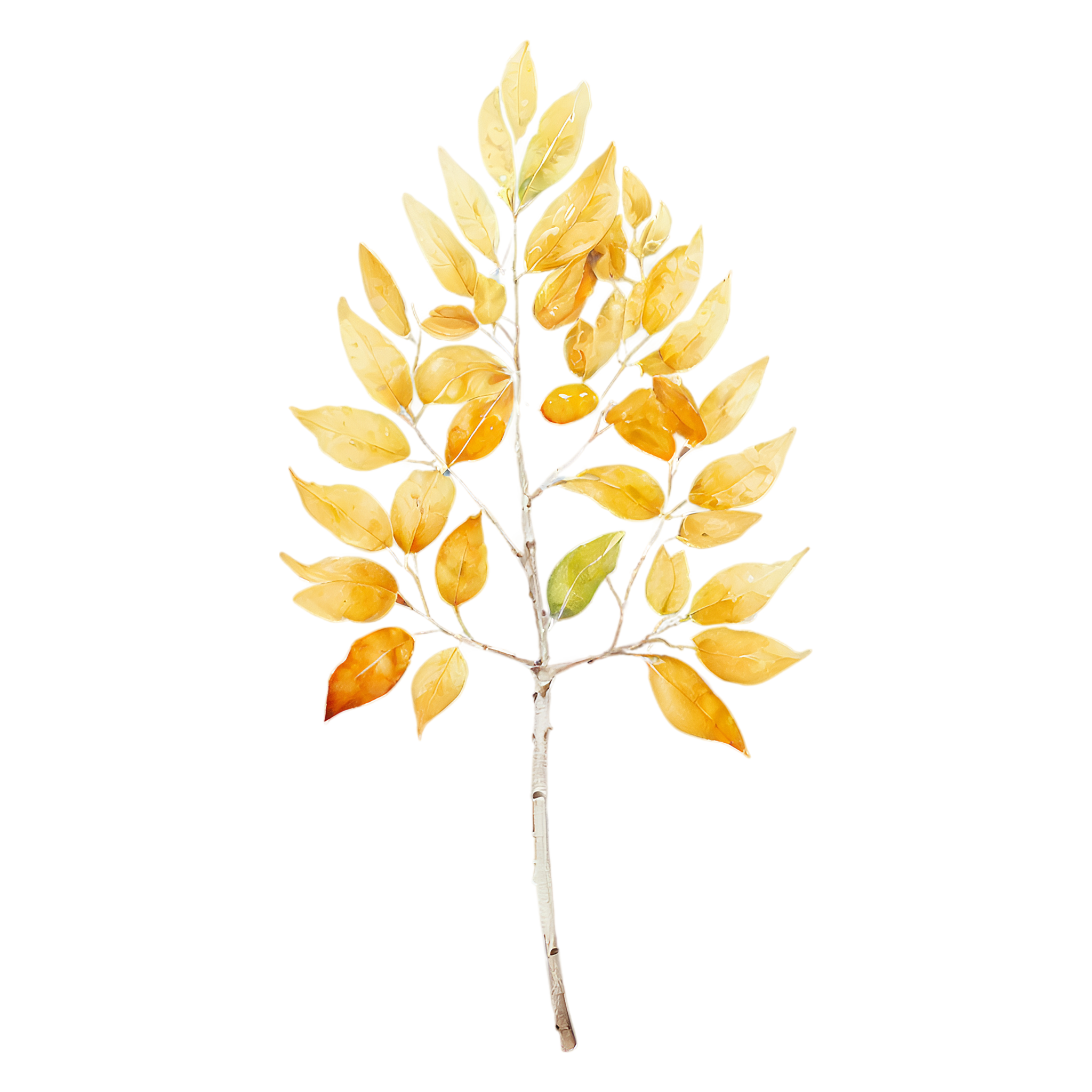
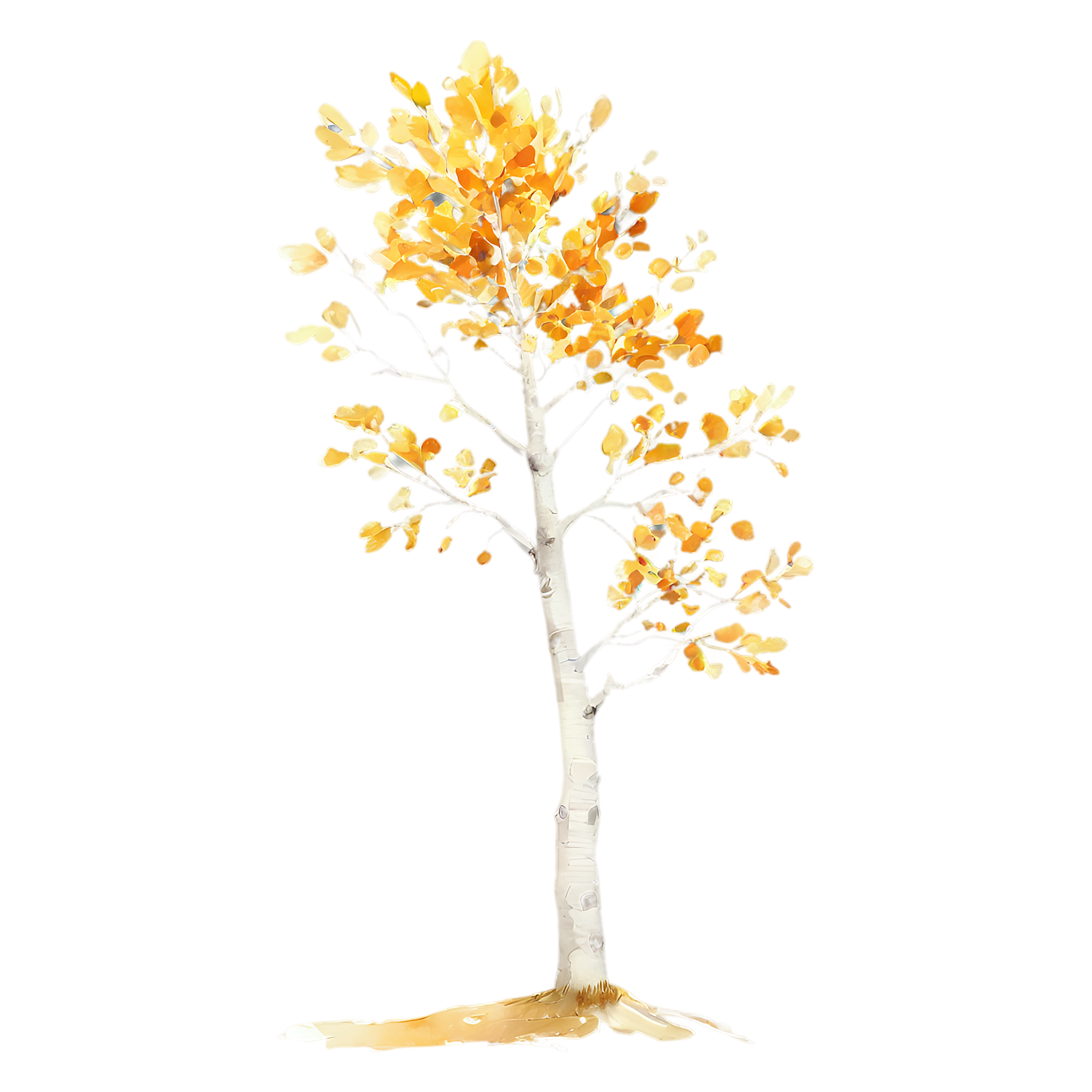
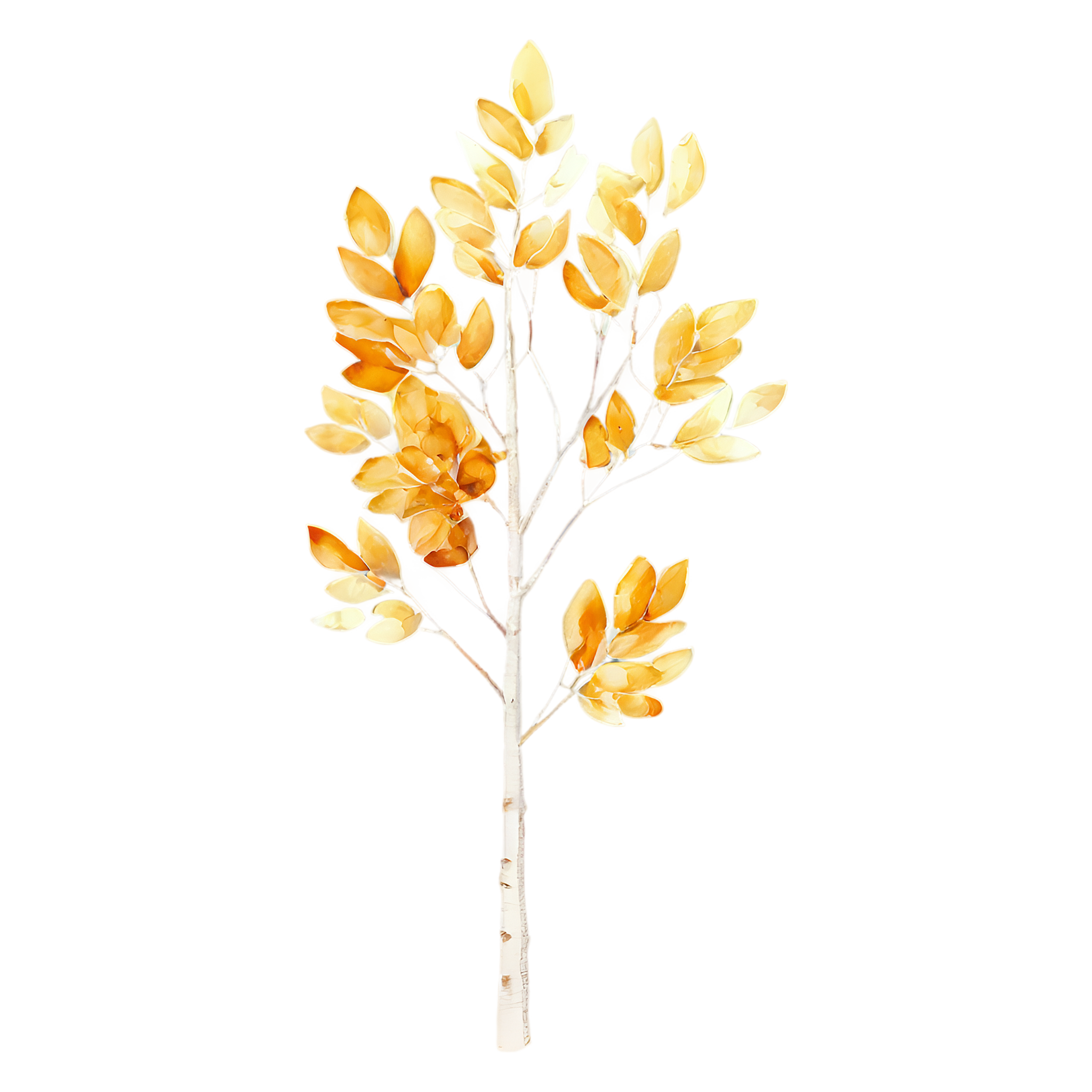
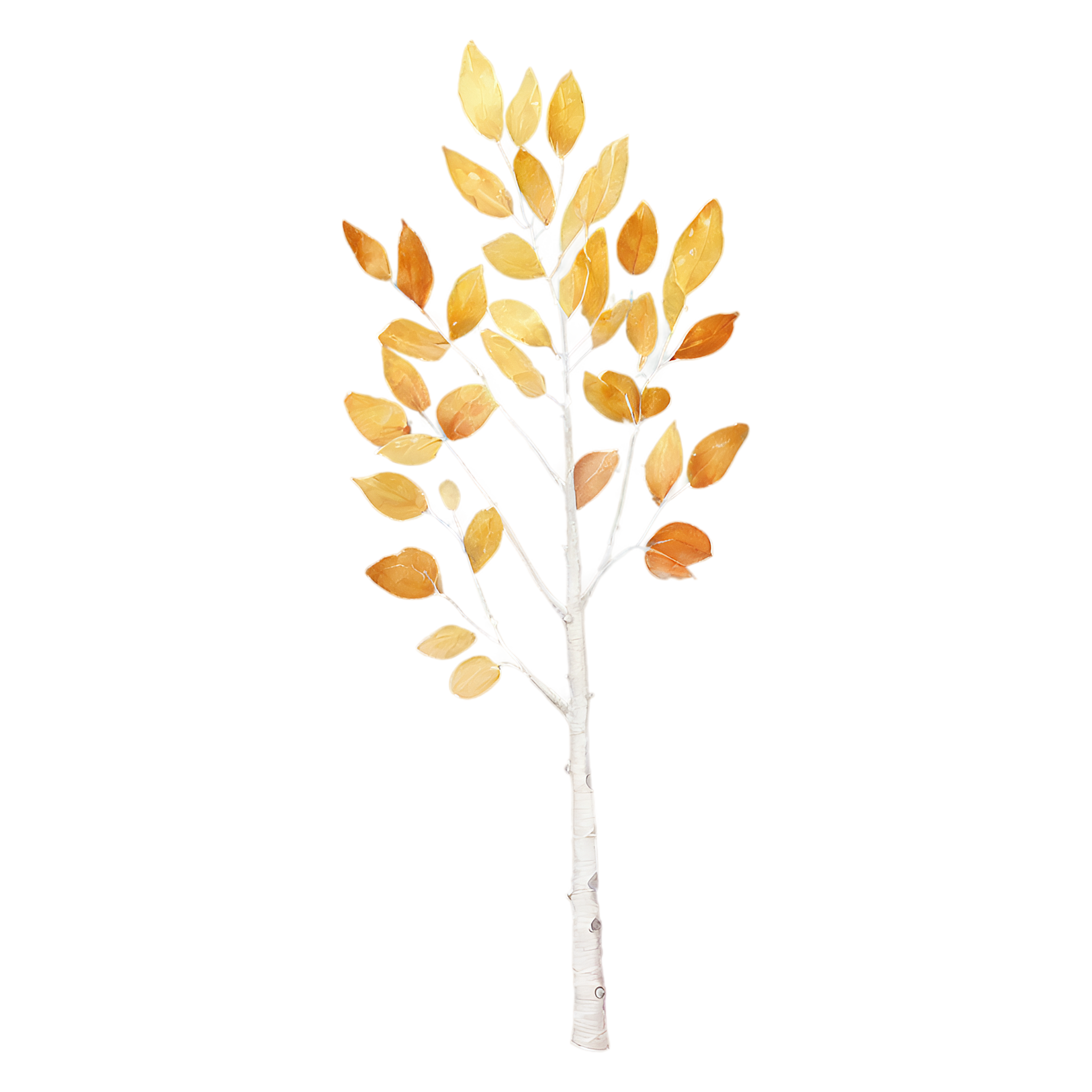
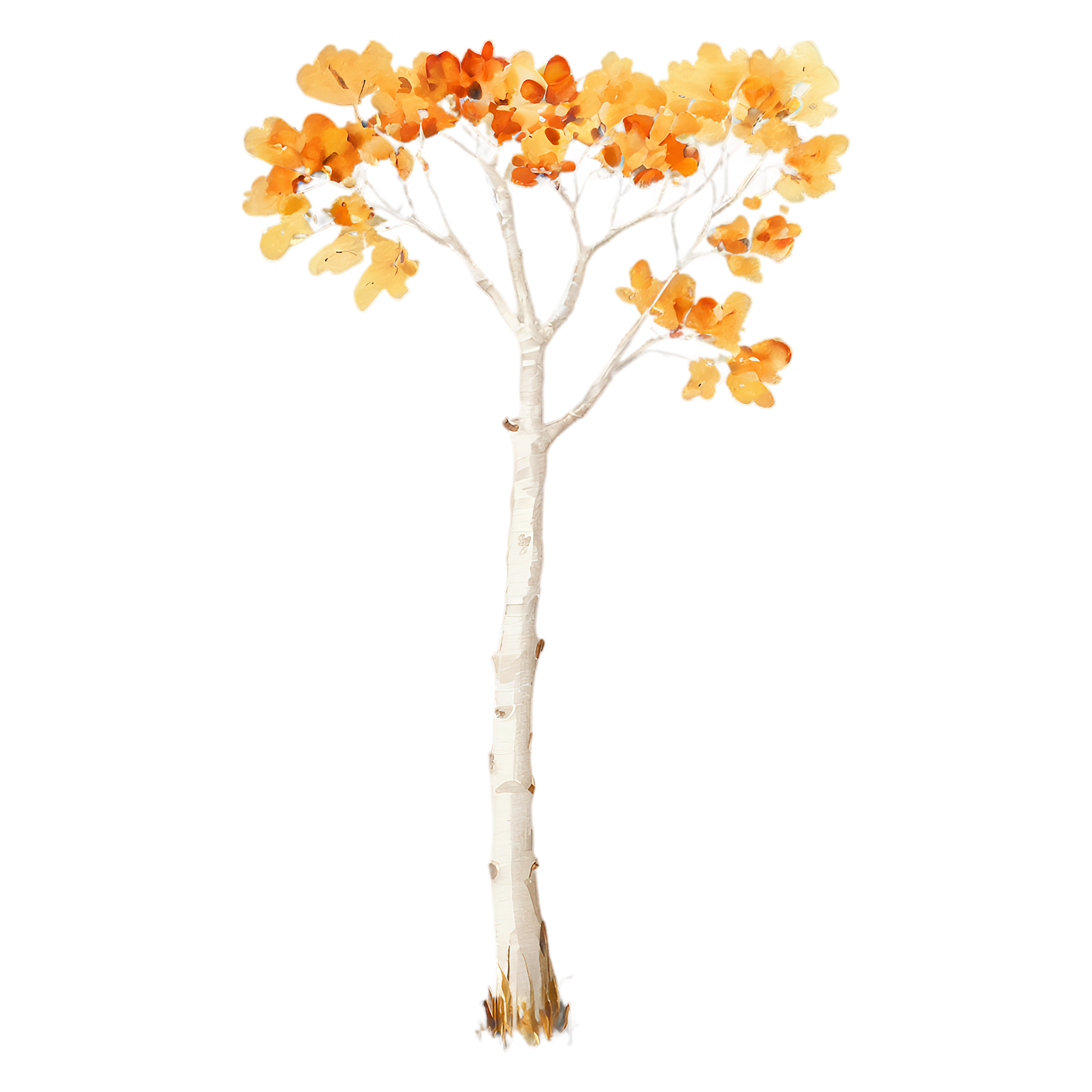
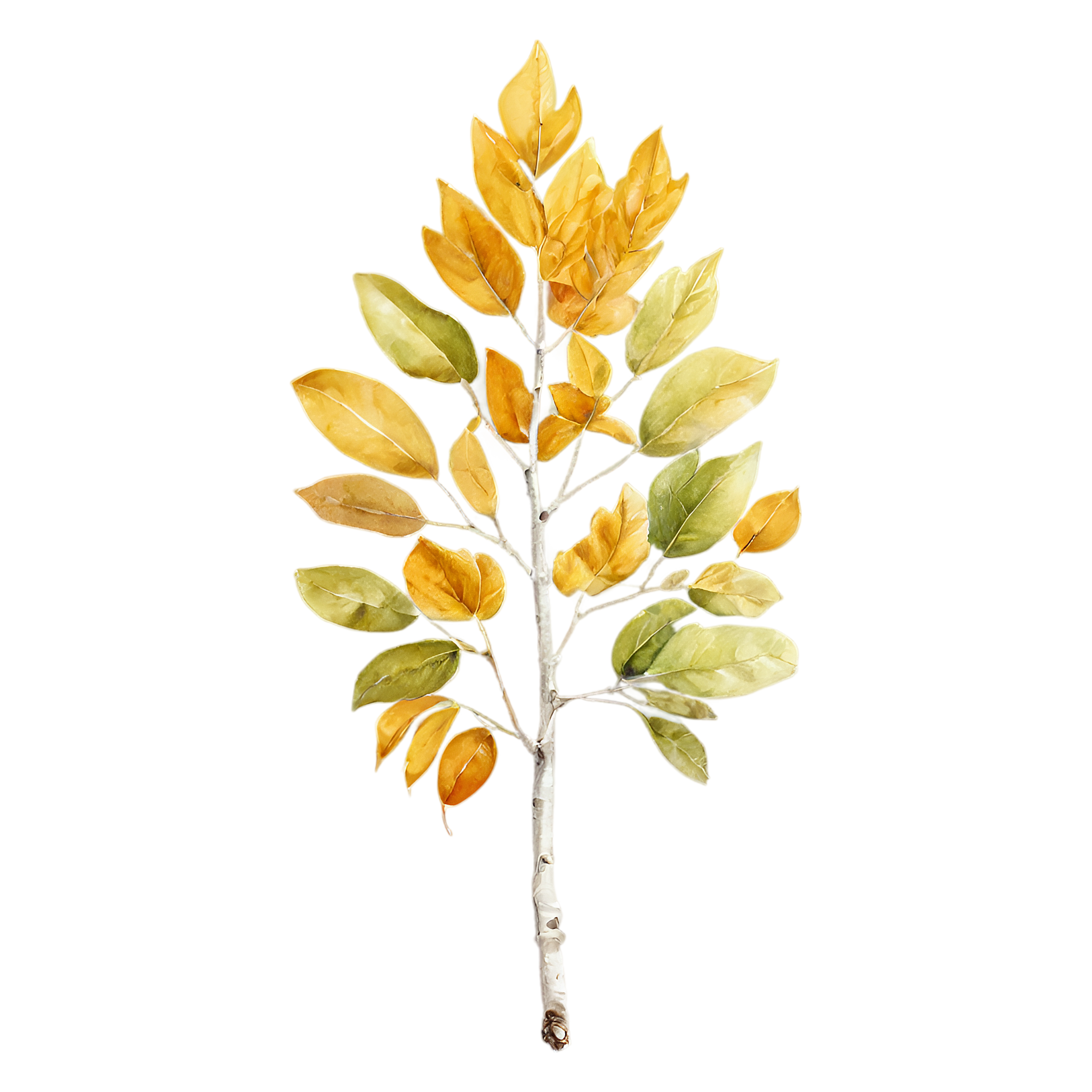
Every tree in this set is drawn in its autumn coat with a pale white trunk. The shapes vary more than the season does. You get a tall, slender aspen in bright gold, one with a narrow column of quaking golden-yellow leaves, and a narrow upright canopy that reads well as a tall accent at the side of a layout. One young aspen leans toward yellow-orange, another toward warm amber. A windswept tree shows leaves catching the light as if a gust just came through, and one tree carries a light, airy canopy with gaps you can see through. For an early-fall scene, use the tree showing a mix of green and turning gold leaves, the only one in the set still partway through the change.
Mountain weddings, trail maps and late-September cards
Aspens mean late September and early October in the Rockies, when leaf-peepers drive the passes of Colorado, Utah and New Mexico to see the gold. That timing makes this set a natural fit for fall wedding invitations at mountain venues, ski-lodge and cabin rental listings, hiking club newsletters, and trail race posters. Teachers can use a few trees on a bulletin board about deciduous trees and why leaves change color. Etsy sellers making autumn sublimation tumblers, tea towels or printable wall art can line several trees up to form a grove, since real aspens rarely grow alone. A single white-trunked tree also works as a quiet thank-you card for a Colorado or Utah trip.
Gold, amber and chalk-white
The palette is narrow and warm: lemon and golden yellows, amber, a touch of orange, and the cool white-gray of the bark, which keeps the trees from looking muddy against cream paper. They sit comfortably next to other autumn trees. A maple tree adds red, an oak tree adds russet brown, and the white bark of a birch tree matches the aspen trunks for a mixed pale-barked grove. For more fall material, browse the autumn clipart hub or the yellow clipart hub.
Building a grove that looks like a clone
Because real aspen stands grow from one root system, a believable grove uses repeated, similar trees rather than a mix of species. Place three to five of these trees in a row, scale the back ones down to about 60 to 70 percent, and lower their opacity slightly so they recede. Overlap the trunks a little and let the canopies merge at the top. Each file is a transparent PNG at 2048 by 2048 pixels, about 6.8 inches at 300 DPI, so even the shrunk background trees stay sharp on a 5 by 7 card. For a cutting machine, use print-then-cut on a single tree and add a small white offset around the leaves so the blade doesn't nick the fine leaf edges.