Pumpkins: winter squash from the Americas
Pumpkins are winter squash in the genus Cucurbita, native to the Americas and grown there for thousands of years before Europeans arrived. Botanically they are fruits, a kind of berry with a hard rind. They are planted in early summer and harvested in September and October, which is why they became the emblem of the fall harvest. Today Illinois grows more pumpkins than any other U.S. state, much of it for canned pie filling. The jack-o'-lantern custom came over with Irish immigrants, who had carved faces into turnips and found that the larger American pumpkin made an easier lantern. Pumpkin also anchors the Thanksgiving table through pumpkin pie, and the word itself traces back to a Greek word for a large melon.
Heirloom varieties, not one generic pumpkin
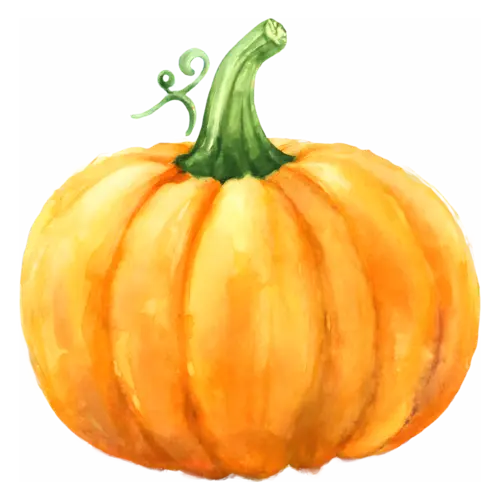
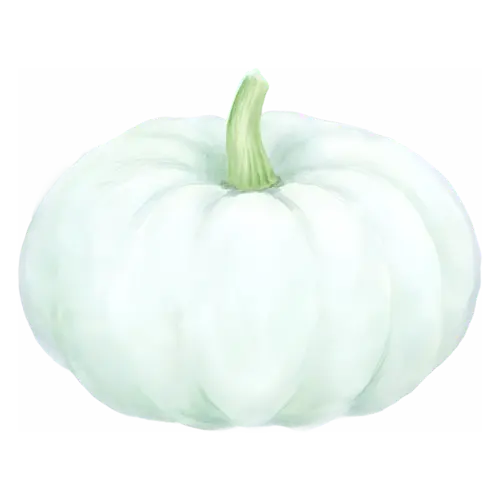
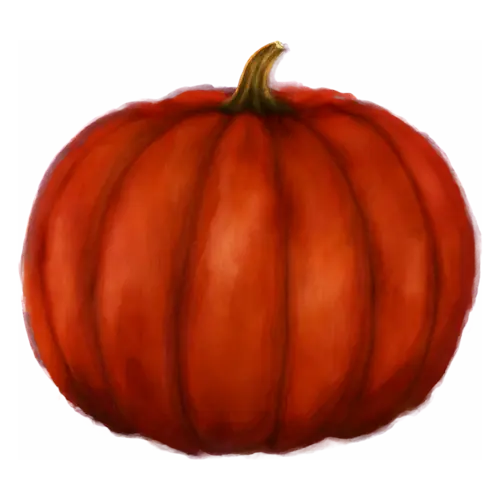
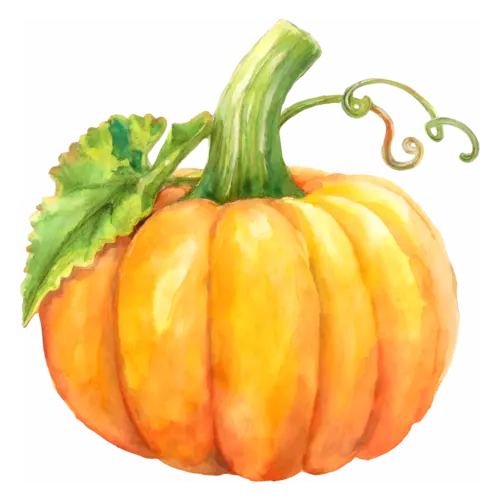
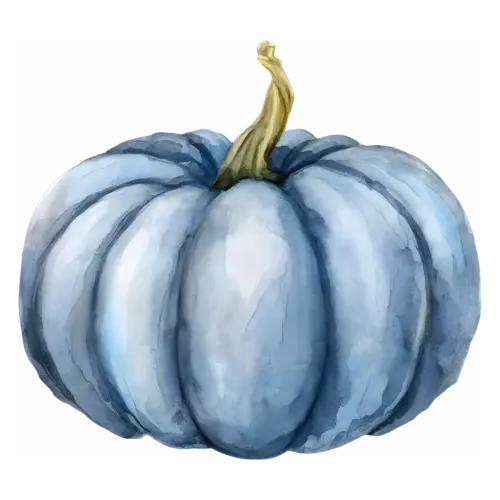
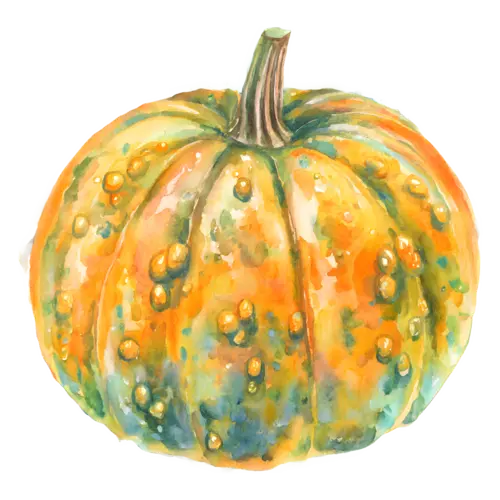
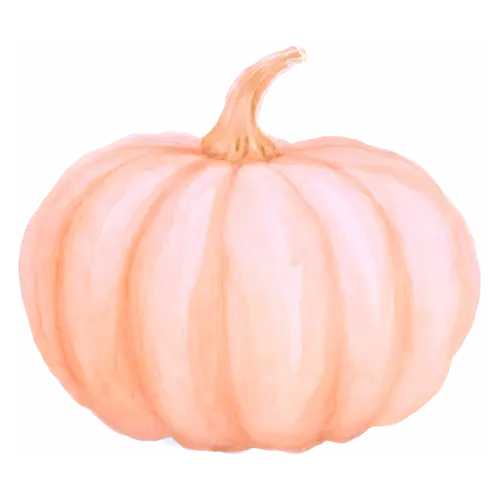
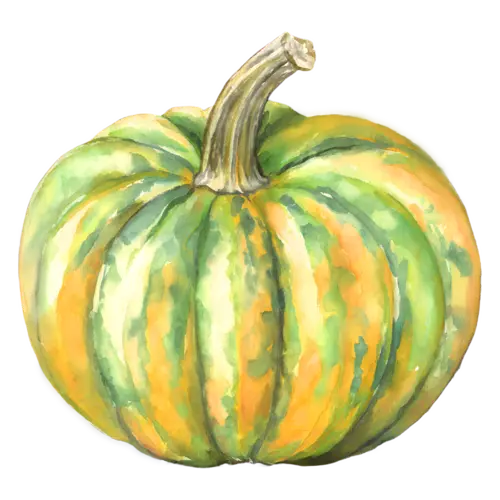
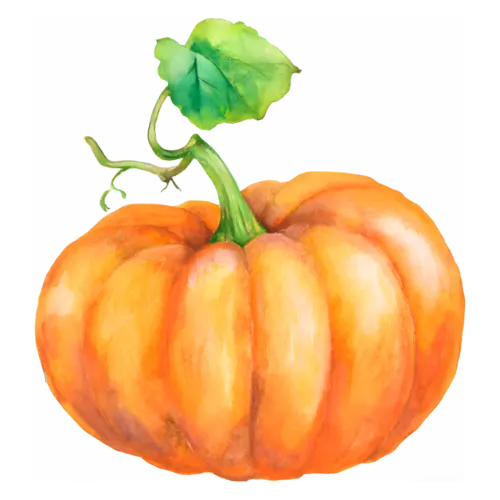
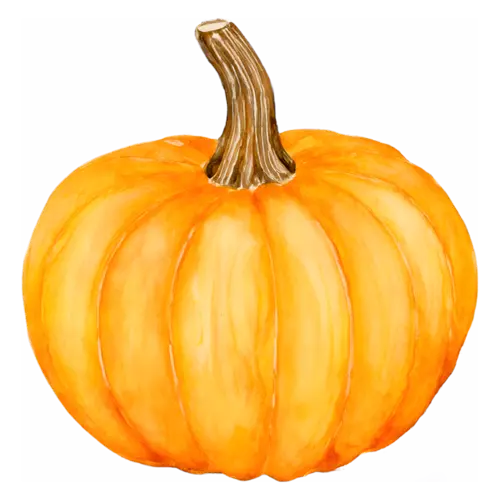
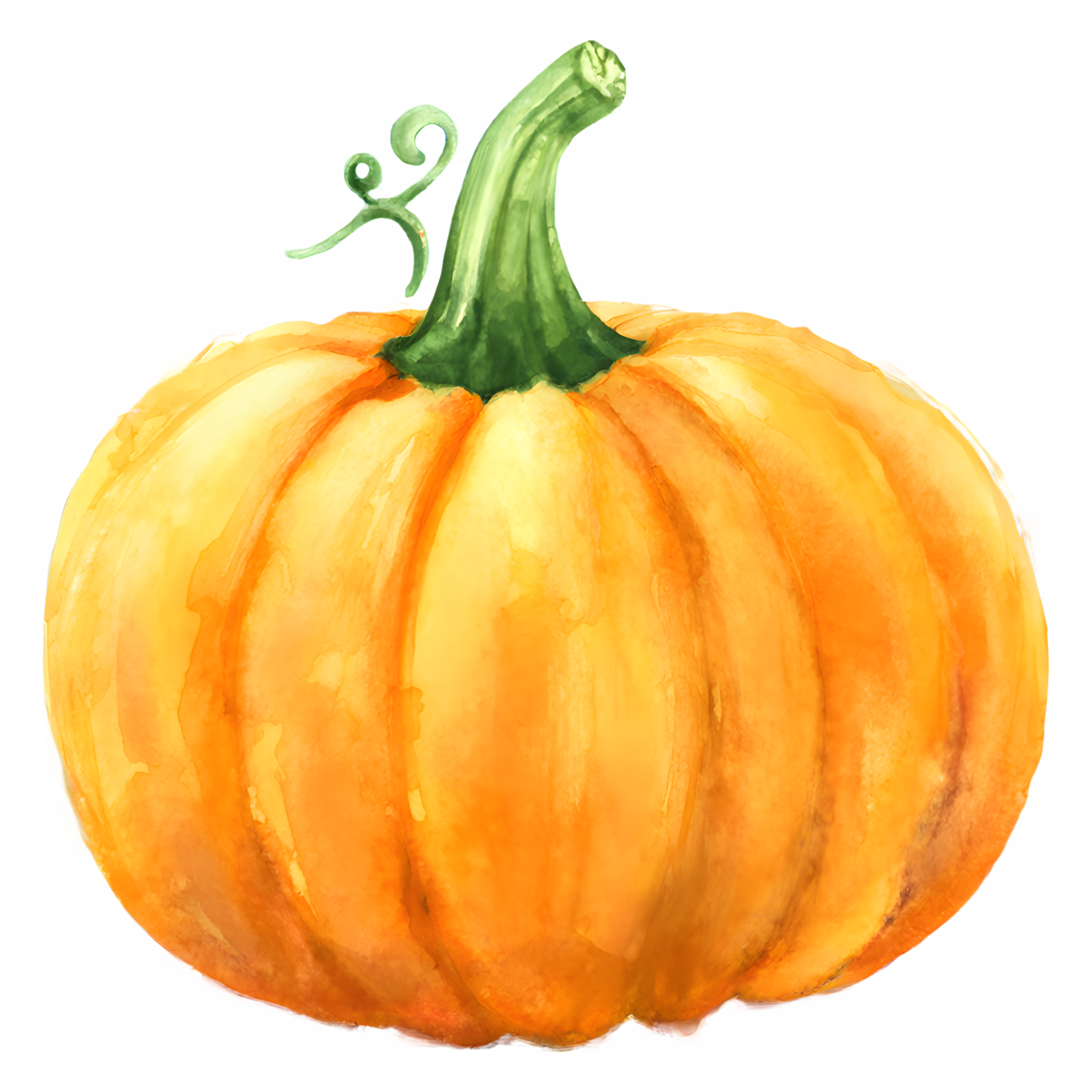
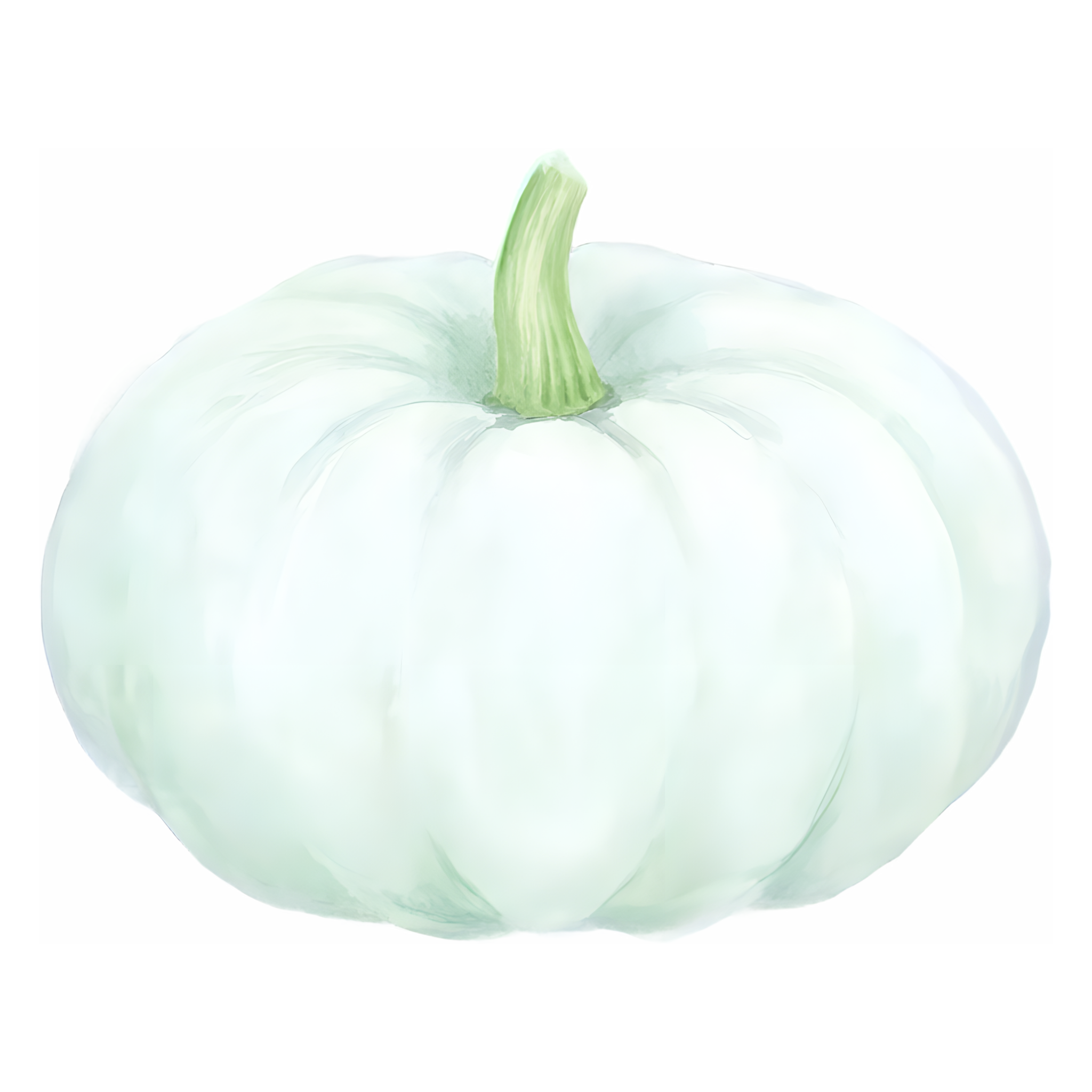
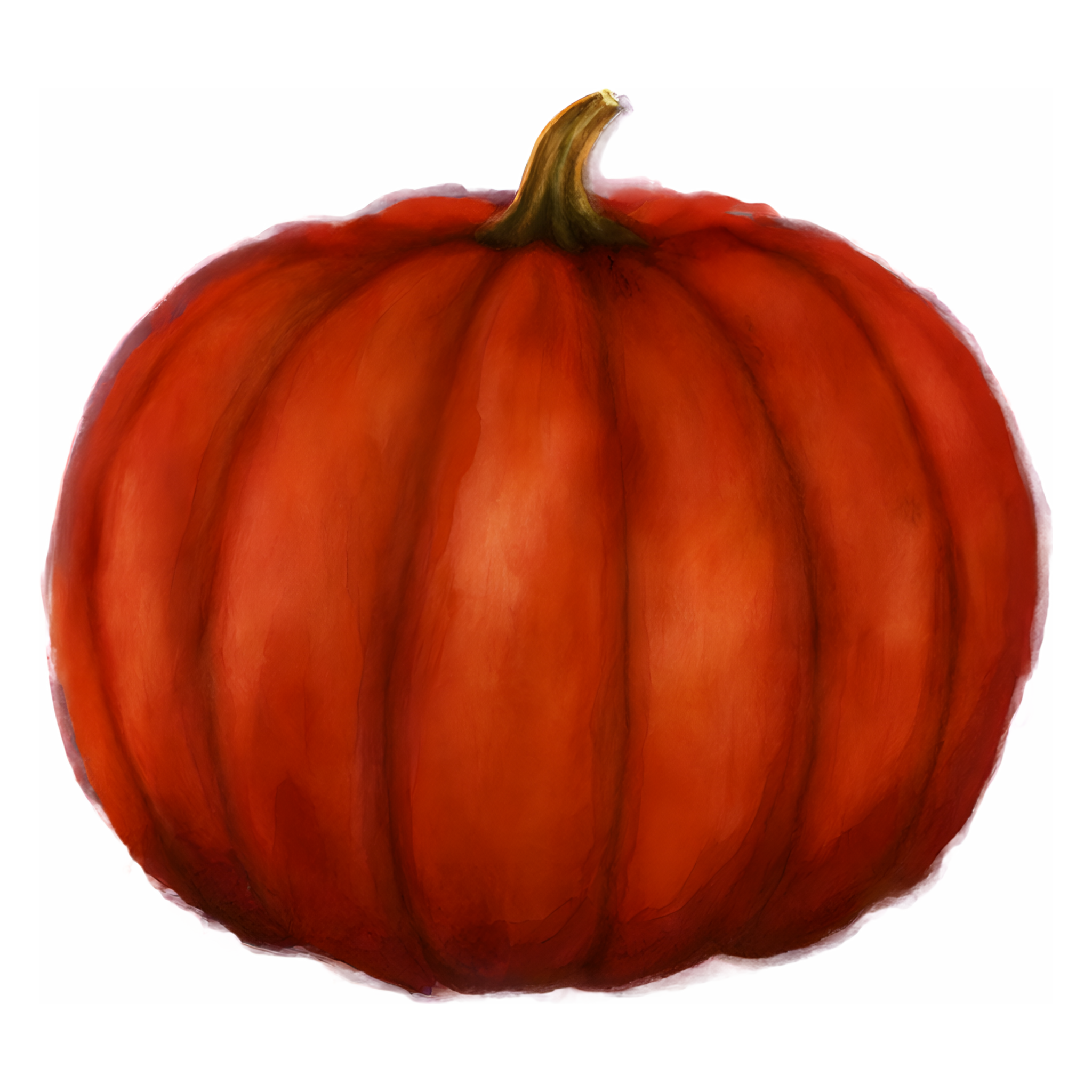
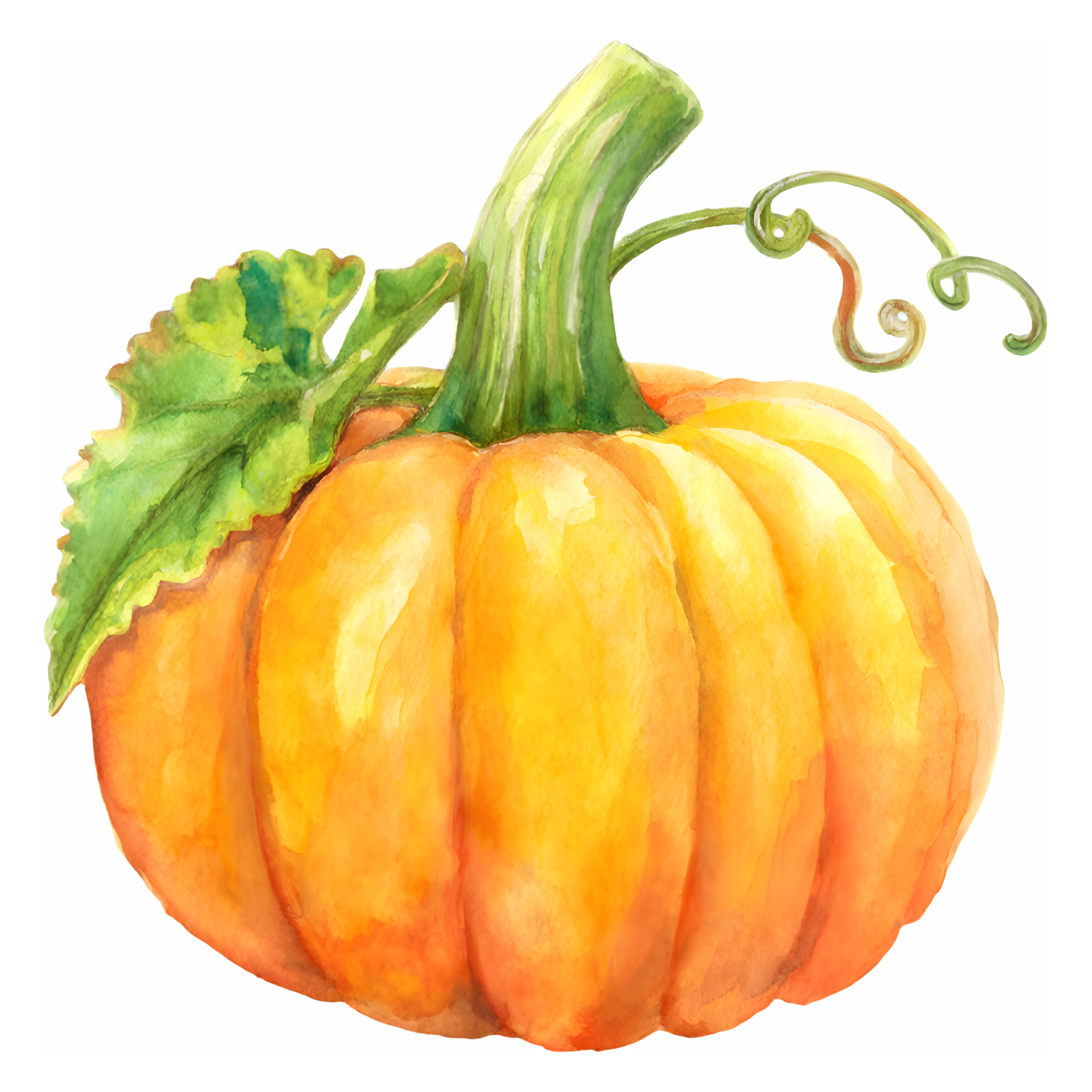
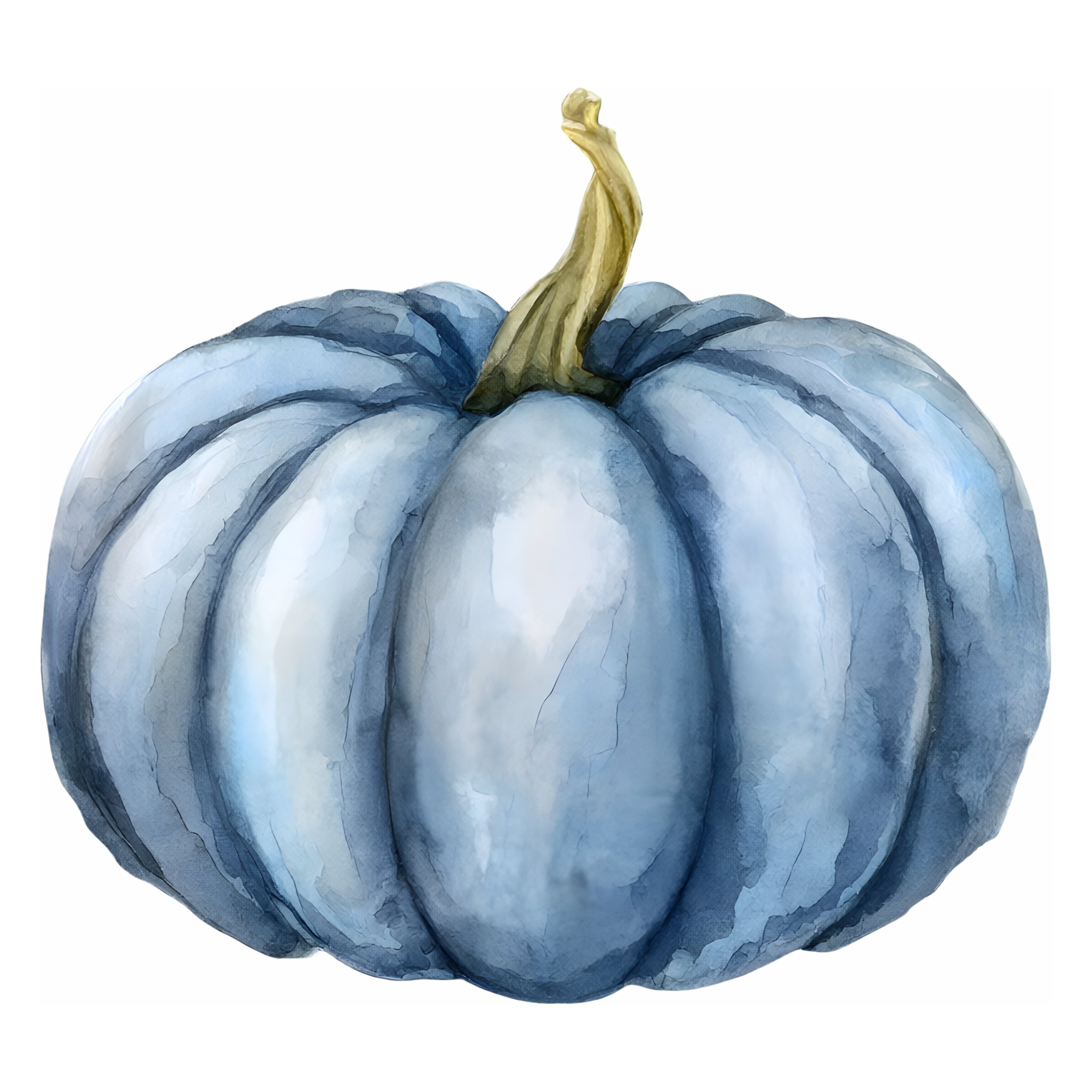
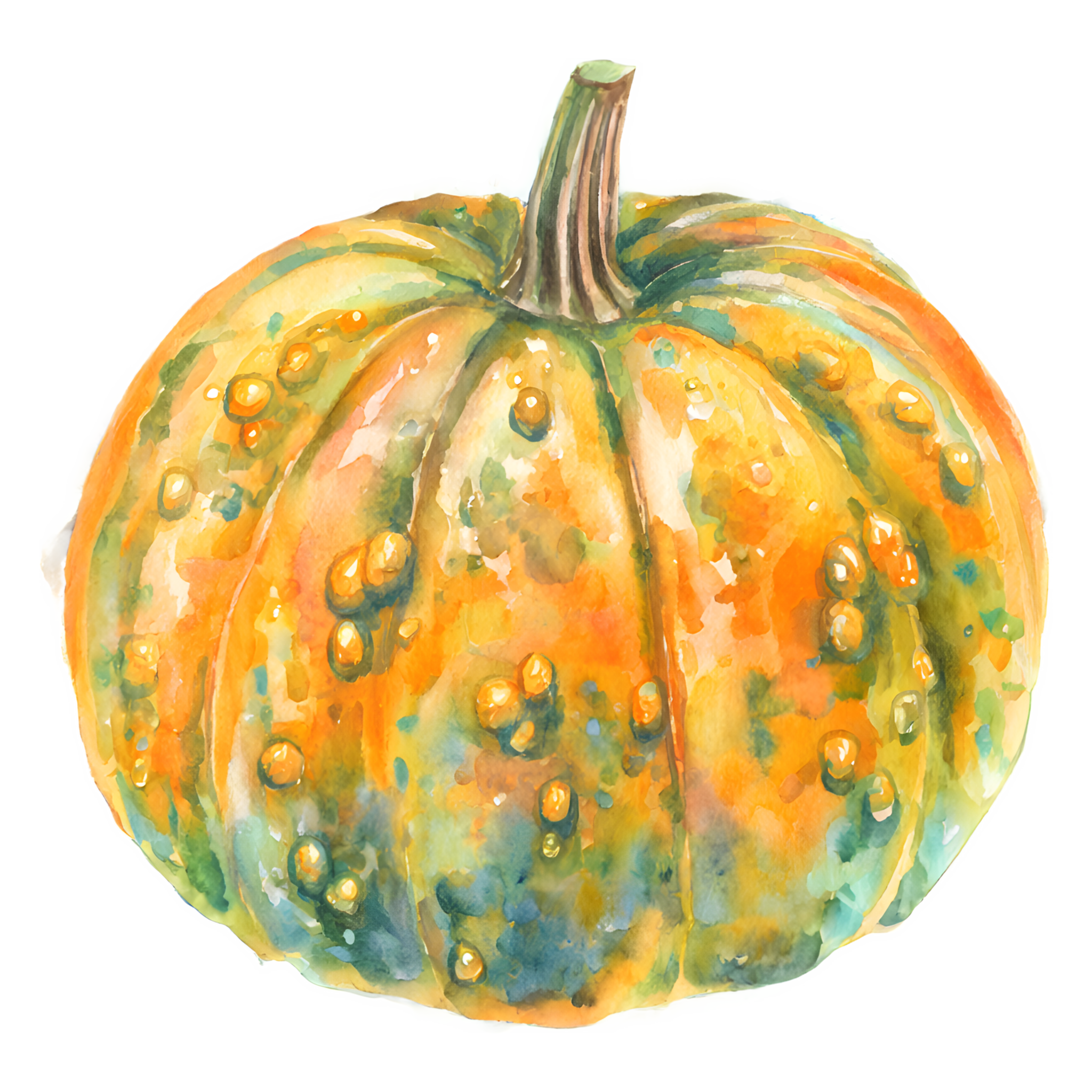
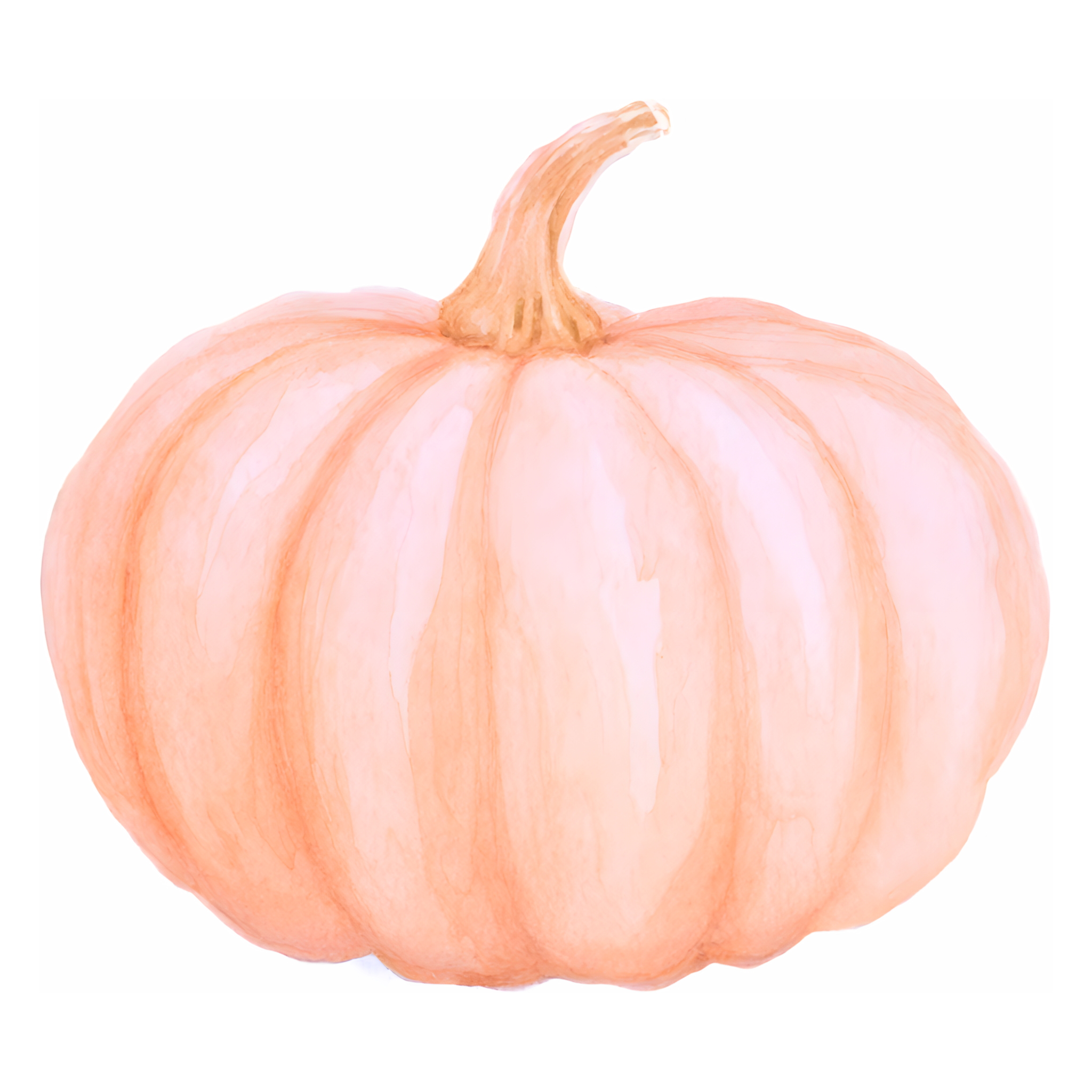
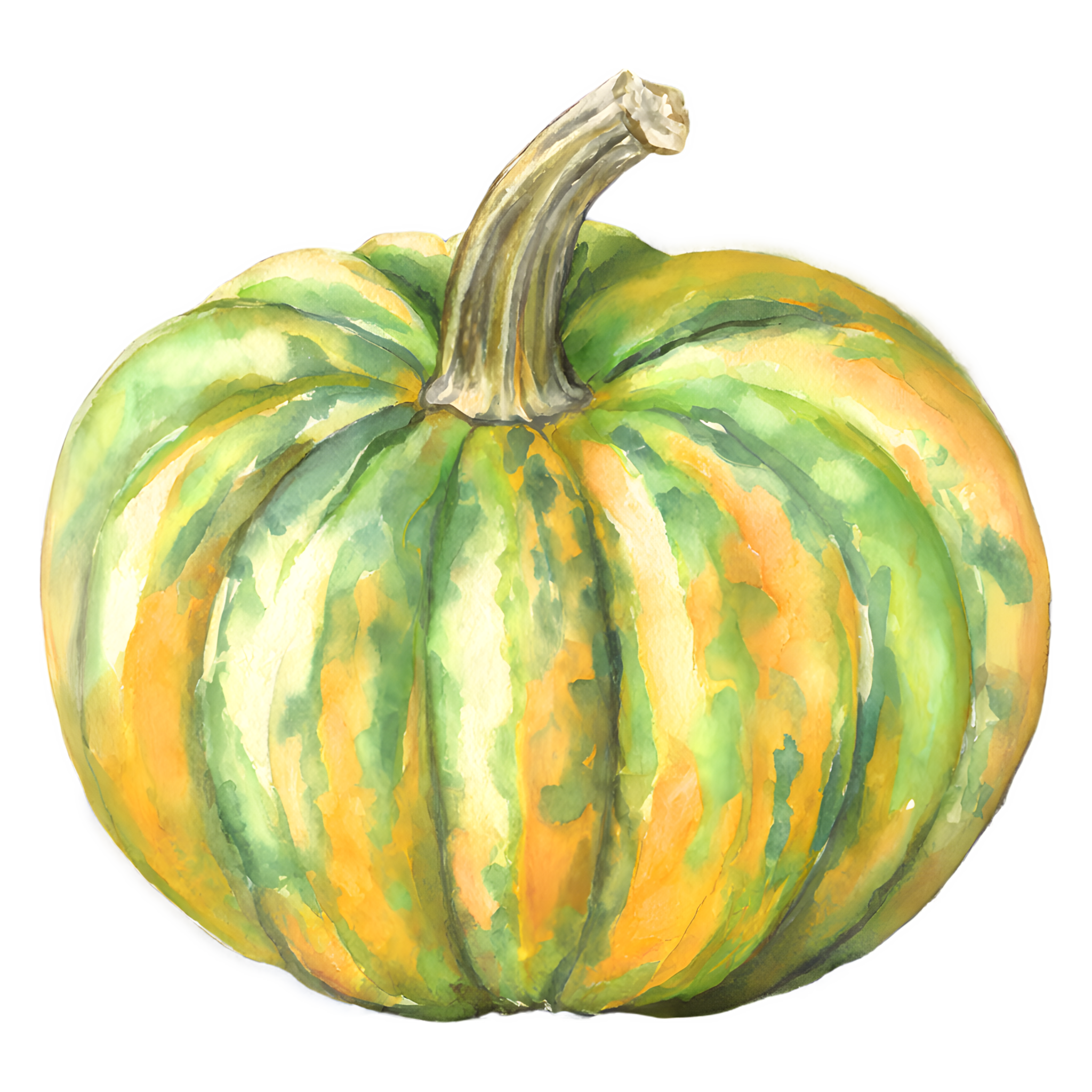
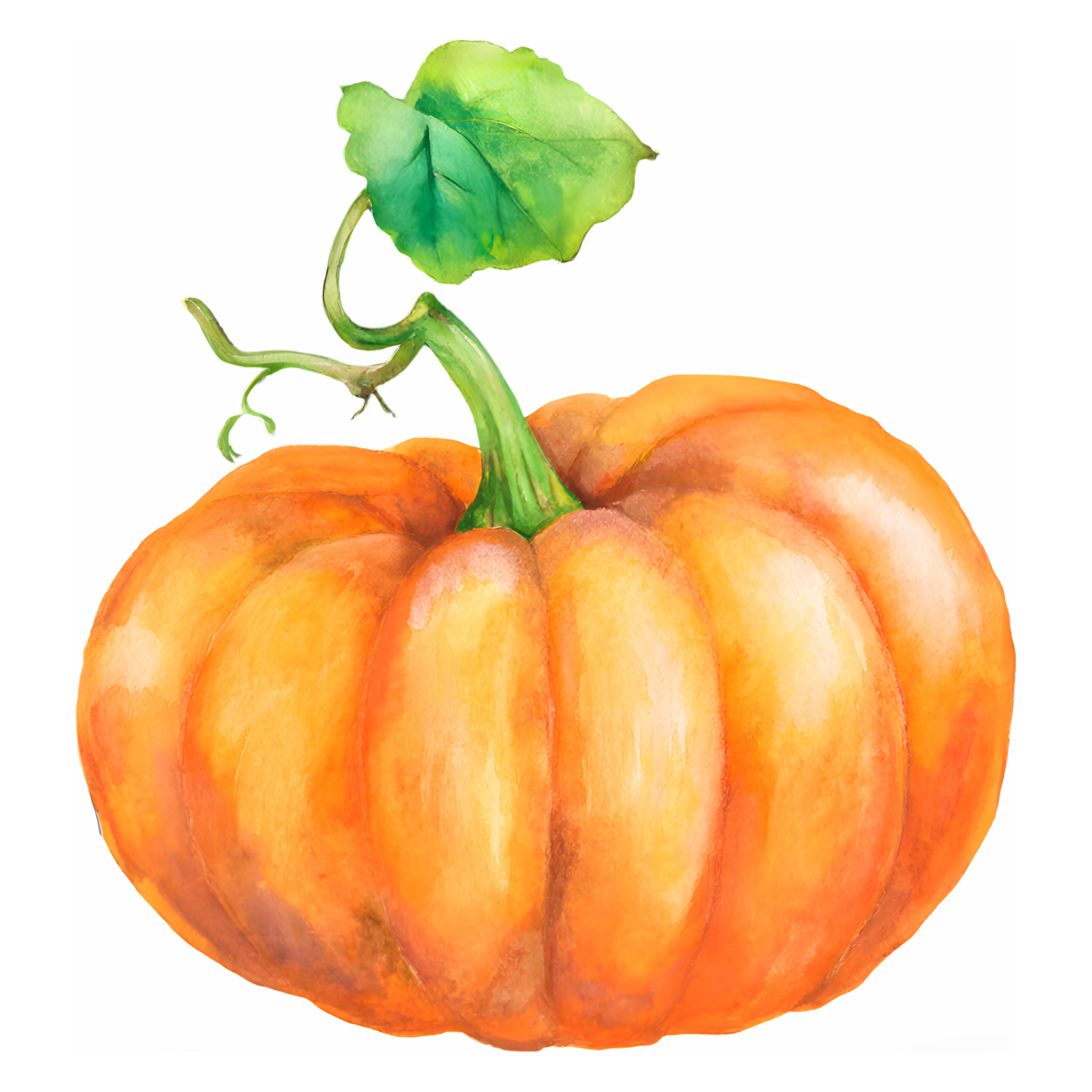
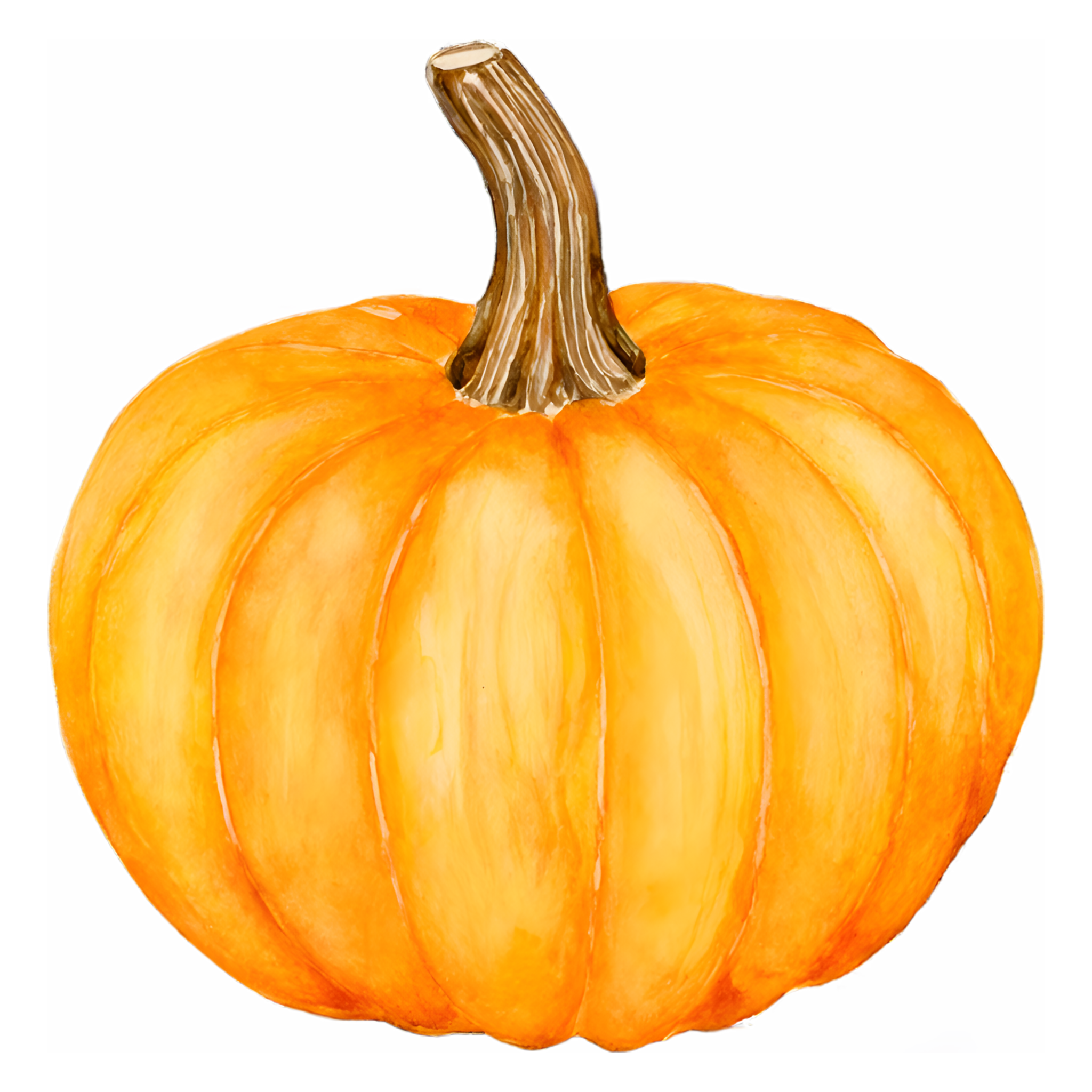
Each image shows a single pumpkin of a specific variety, with its own ribs, stem and color. Varieties include a classic round orange pumpkin with a curly green stem, a white ghost pumpkin with a pale green stem and a round pumpkin in deep red-orange with dark ribs. There is a small sugar pie pumpkin with a vine leaf and a curling tendril, a blue-gray Jarrahdale with deep ribs, a warty heirloom in mottled orange and green, a pale peach Long Island Cheese pumpkin, a striped green-and-orange heirloom, an orange pumpkin with a large leaf on the vine and a small bright orange pumpkin with a dried brown stem. None are carved.
Pumpkin patches, harvest tables and "little pumpkin" showers
From late September through Thanksgiving these pumpkins cover most seasonal print jobs: pumpkin patch and farm stand signs, fall festival flyers, harvest wedding stationery, Thanksgiving invitations, place cards and pie recipe cards. Because none are carved, they suit fall designs that need to stay friendly rather than spooky, and you can add your own jack-o'-lantern face for Halloween. A popular use is the "little pumpkin" theme for fall baby showers and first birthdays, where the small orange or the sugar pie pumpkin takes center stage. Teachers use the varieties for harvest units and pumpkin life-cycle worksheets. For a full fall table, combine them with the fall leaves, sunflowers and marigold galleries.
Orange, ghost white and dusty blue-green
The set's colors go beyond orange. Alongside the warm pumpkin orange and deep red-orange there is a ghost white, a pale peach, a dusty blue-gray from the Jarrahdale and mottled greens on the heirlooms and the vines. That mix lets you build a farmhouse-style palette (white, peach and blue-gray, the look of a styled porch) or a bold traditional one in orange and green. These tones pair with cream, rust, mustard and sage, and with the deep reds of a maple tree in full color. Browse the autumn clipart hub and the orange clipart hub for more matching sets. Each image on the page lists its main HEX colors with DMC floss and Copic marker matches.
Tip: group pumpkins in odd numbers
Real porch displays look best with pumpkins in groups of three or five, in different heights and colors, and the same holds in a layout. Put the leafy orange pumpkin at the back, the squat Long Island Cheese or blue Jarrahdale in front and the small one to one side, overlapping slightly. Every file is a 2048 x 2048 px transparent PNG, about 6.8 inches square at 300 DPI, so a group of three still prints sharply across a letter-size sign. For Cricut print-then-cut stickers and cupcake toppers, the round pumpkins cut cleanly, while the curling tendril on the sugar pie pumpkin needs a larger offset or a trim before cutting.