

An American flower with European nicknames
Garden marigolds belong to the genus Tagetes, native to Mexico and Central America. The two common garden types carry misleading names: the tall, big-headed African marigold (Tagetes erecta) and the shorter, often two-toned French marigold (Tagetes patula) both originated in the Americas and reached Europe after the Spanish conquest. In Mexico Tagetes erecta is called cempasúchil, from a Nahuatl word usually translated as "twenty flower". Marigolds have finely divided, sharply toothed leaves with a strong scent, and they bloom from early summer until frost. The pot marigold, or calendula, is a different plant from a different genus. Marigold is one of the traditional birth flowers for October.
French, cempasúchil and pom-poms
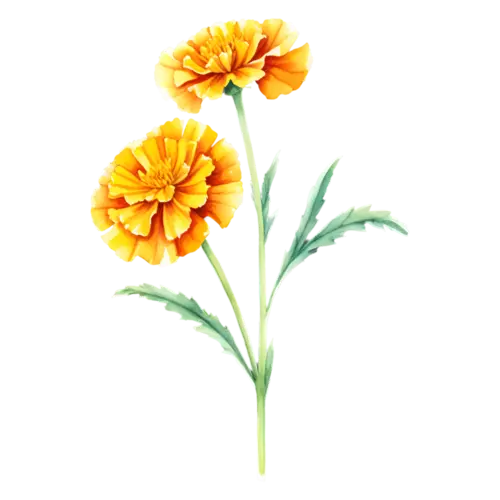
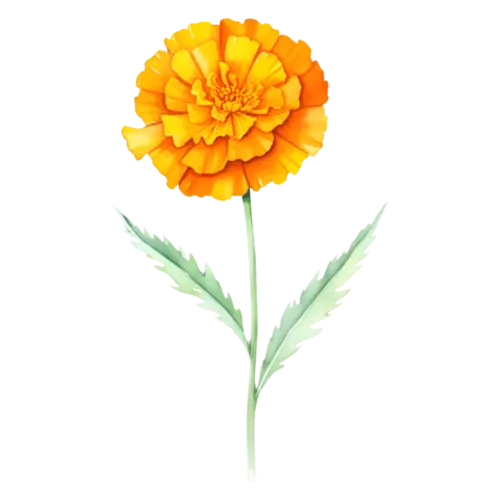
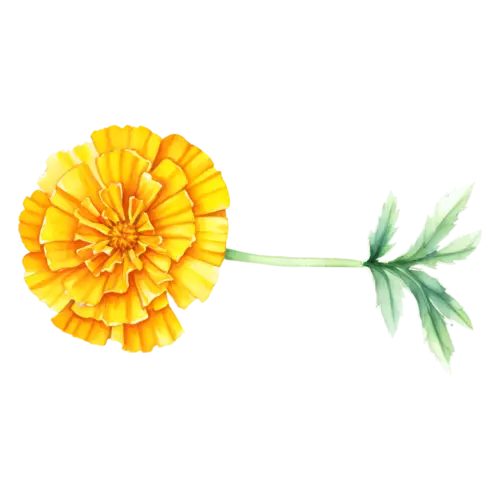
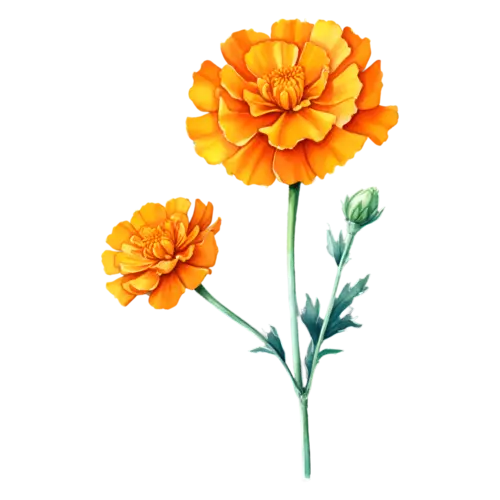
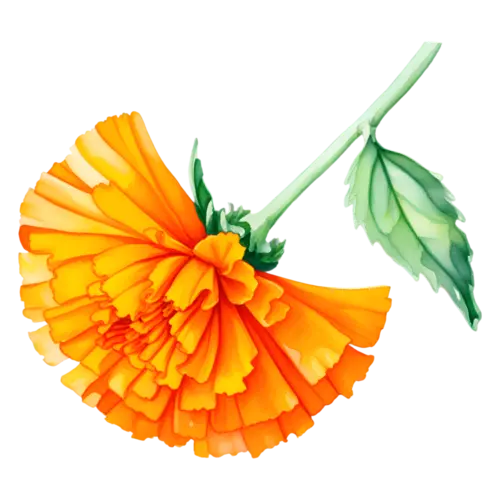
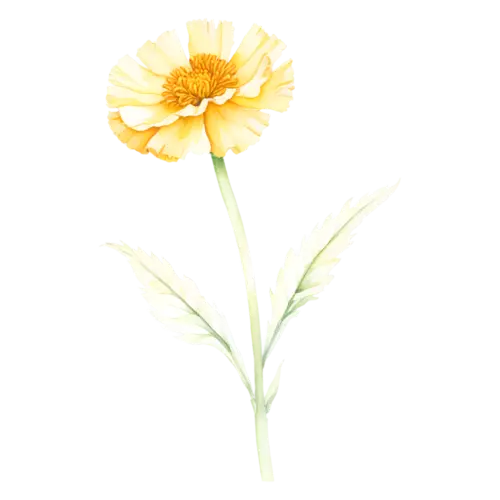
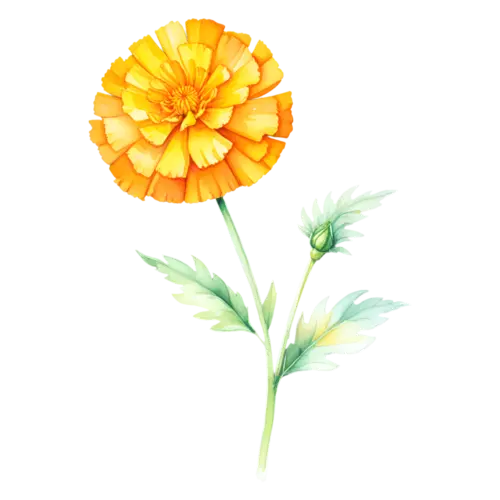
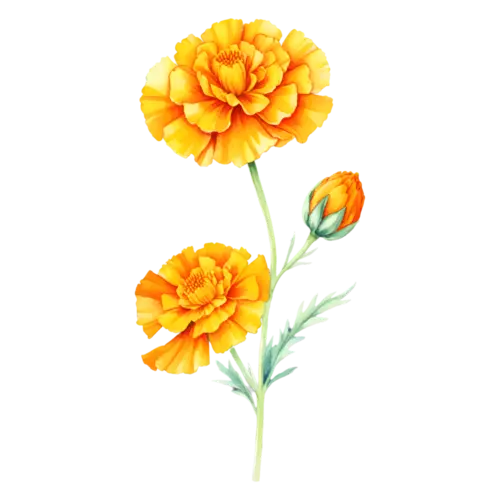
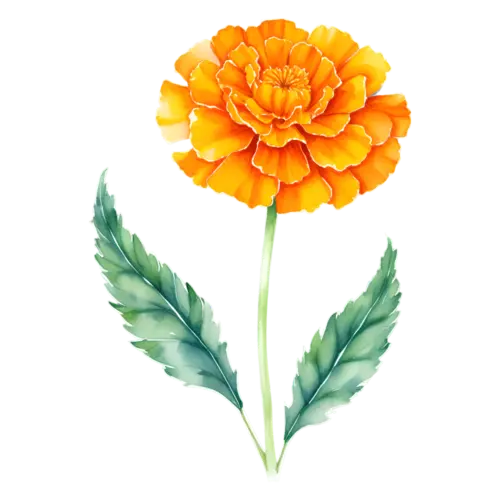
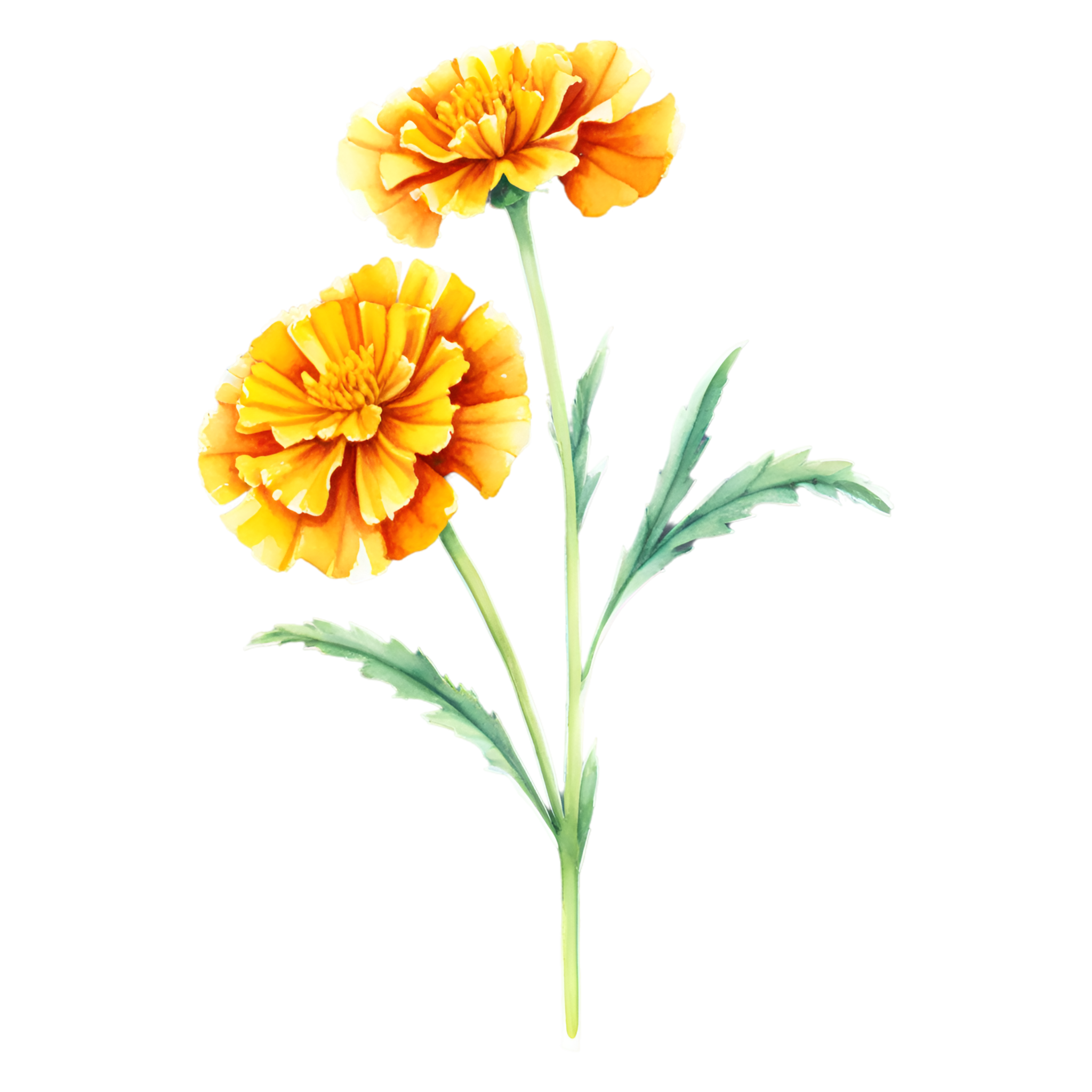
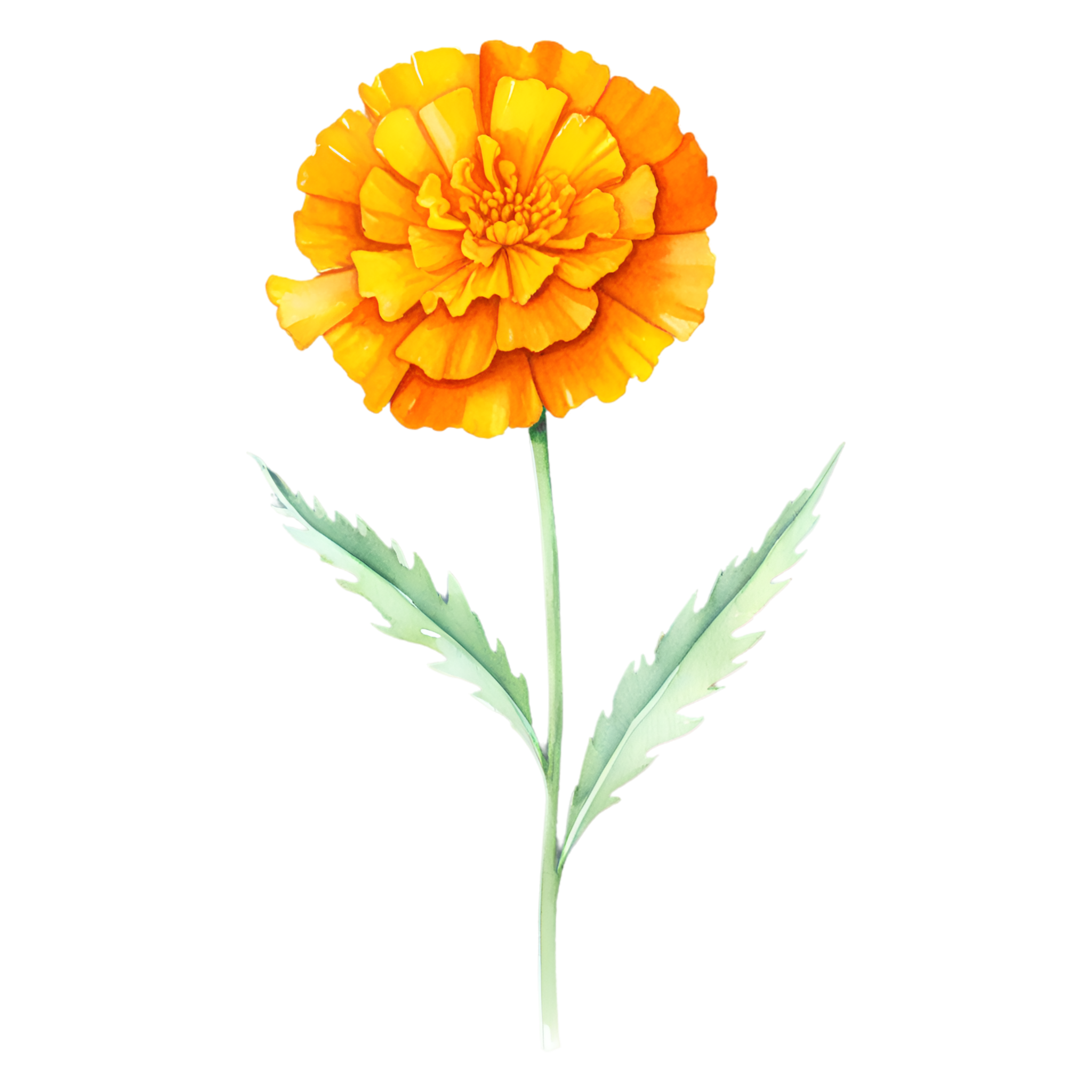
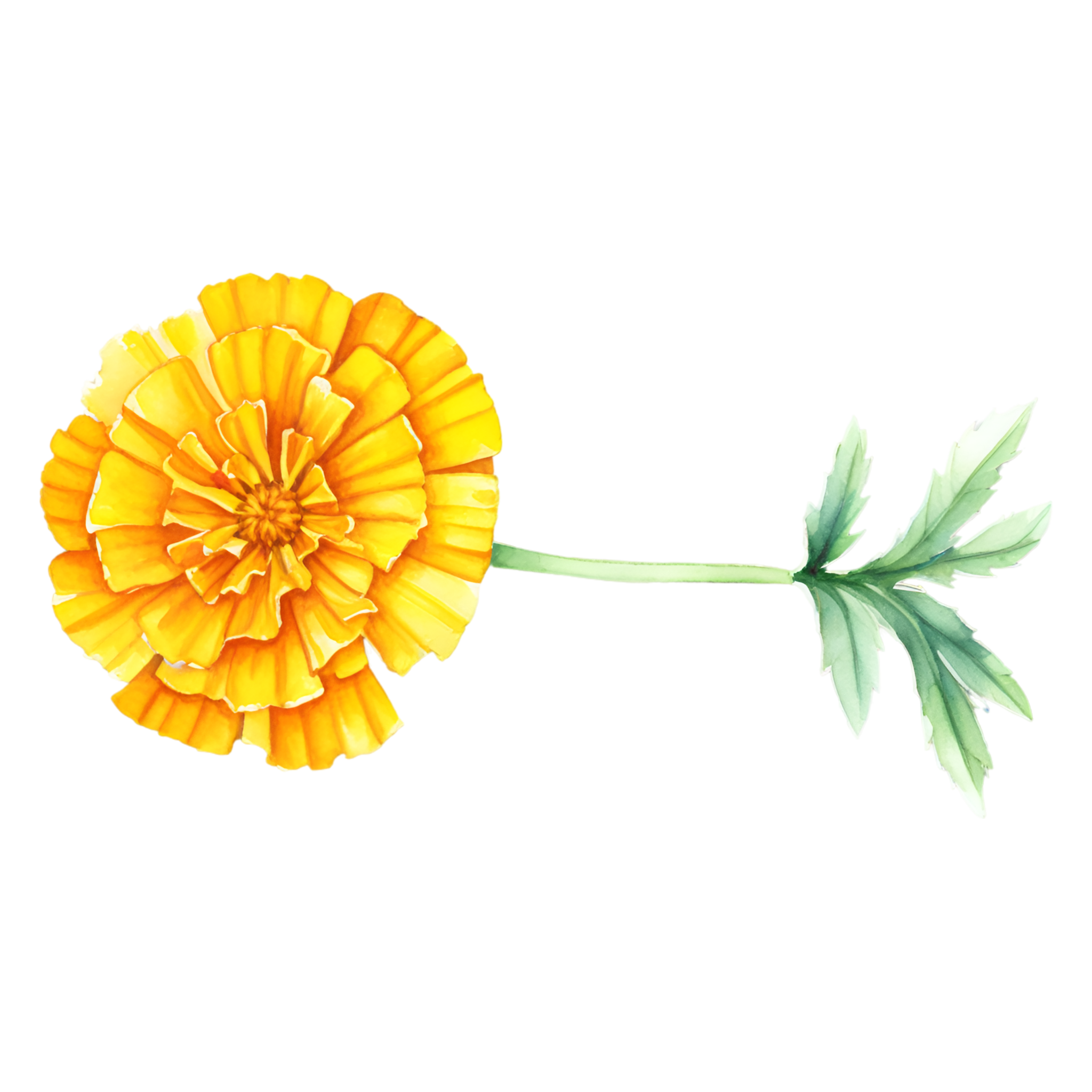
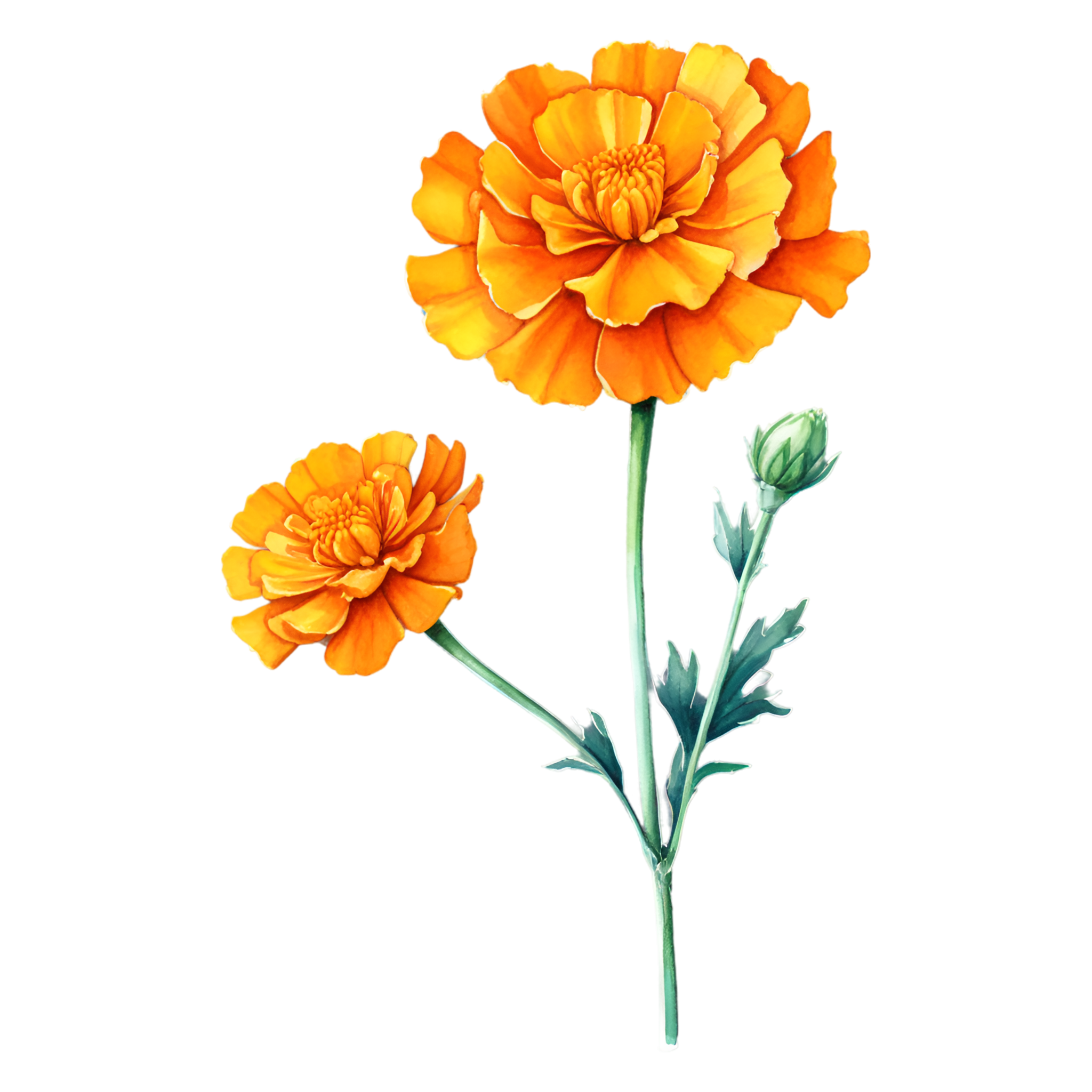
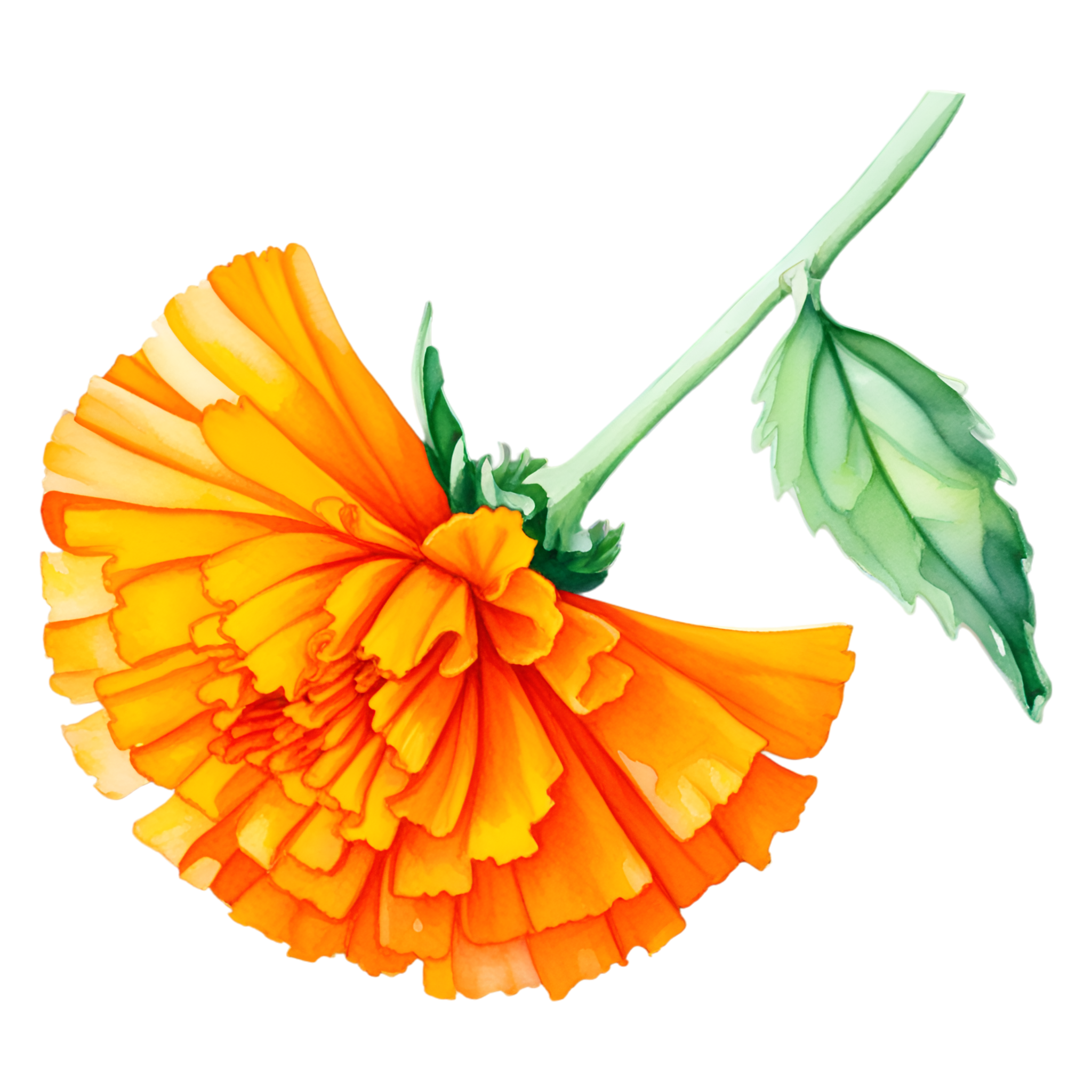
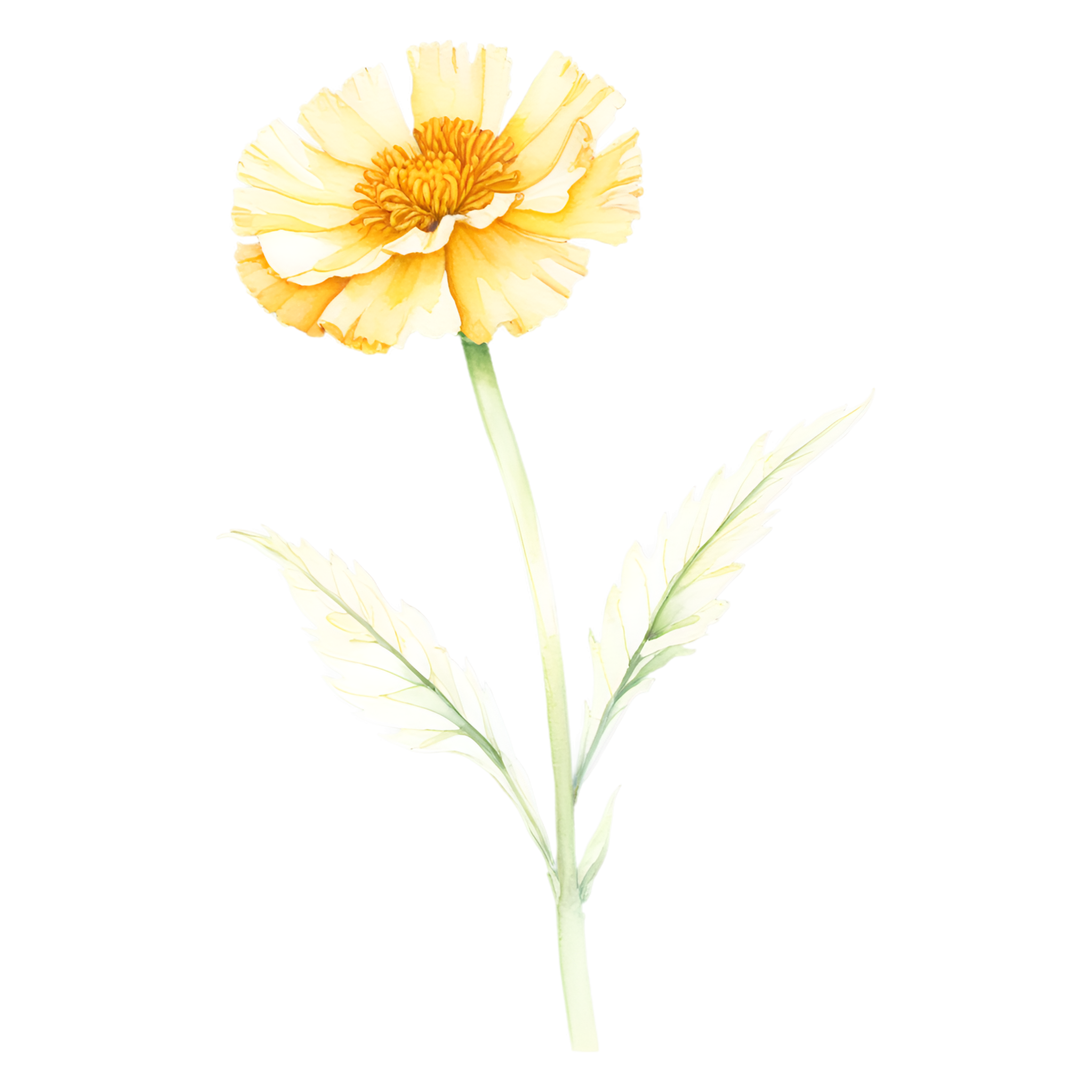
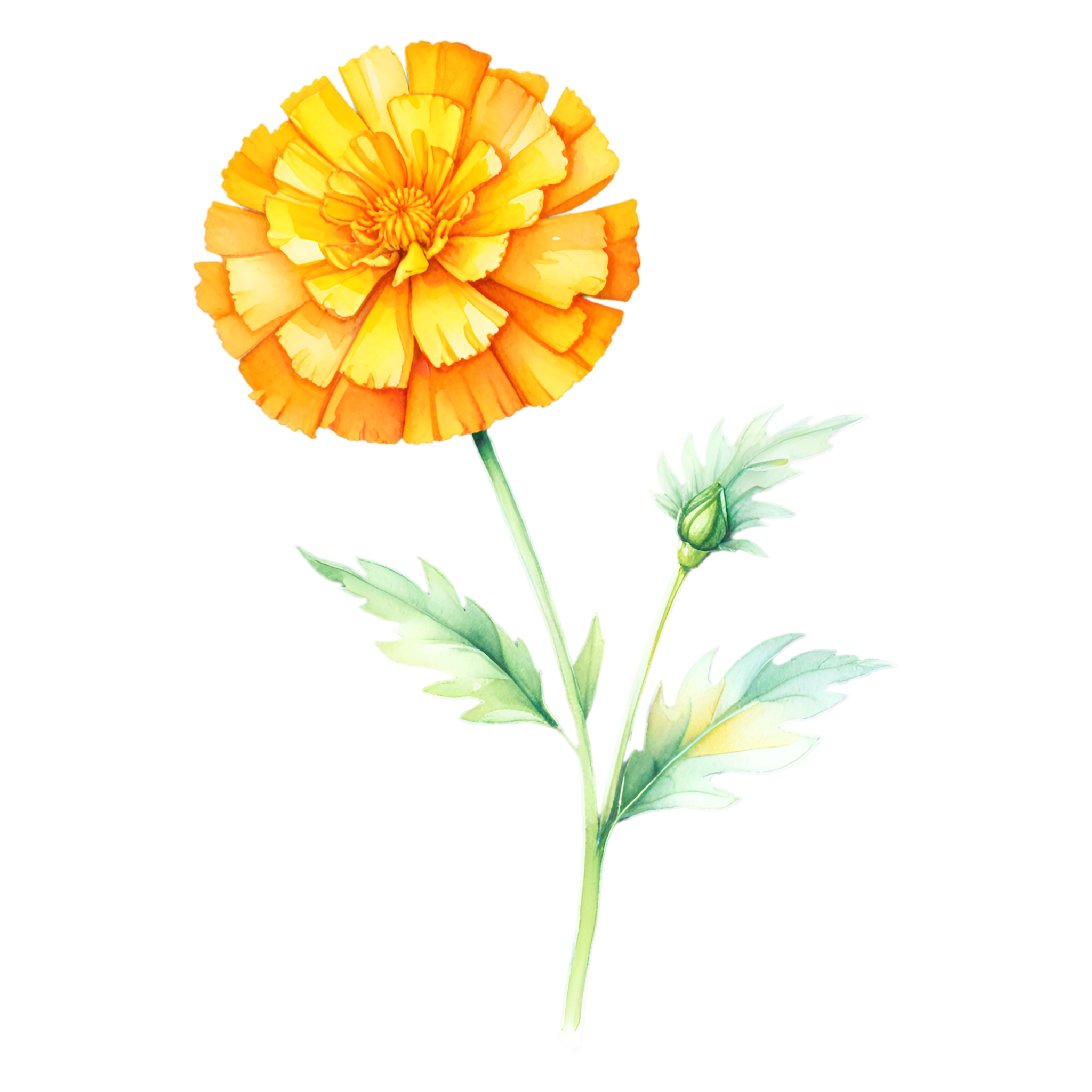
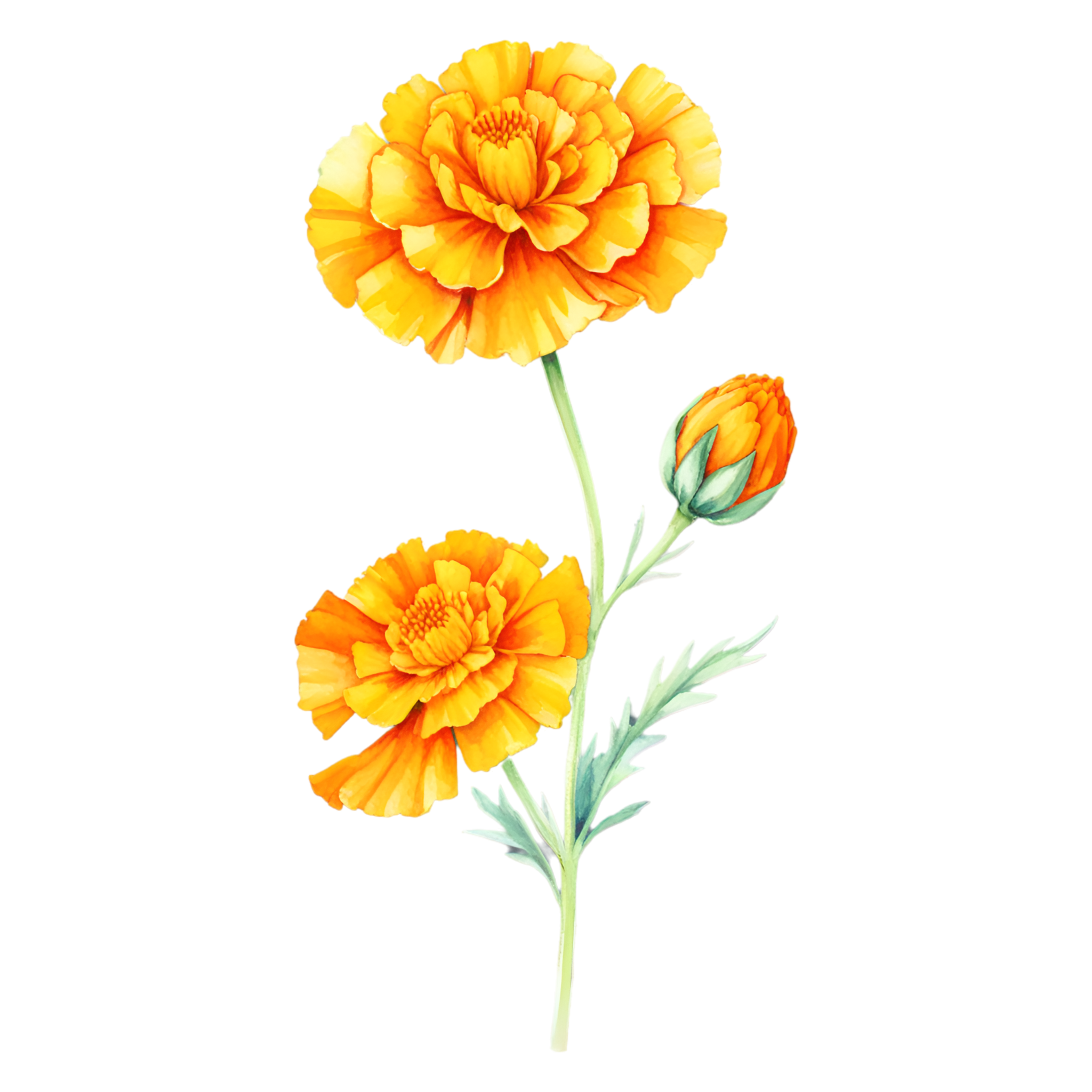
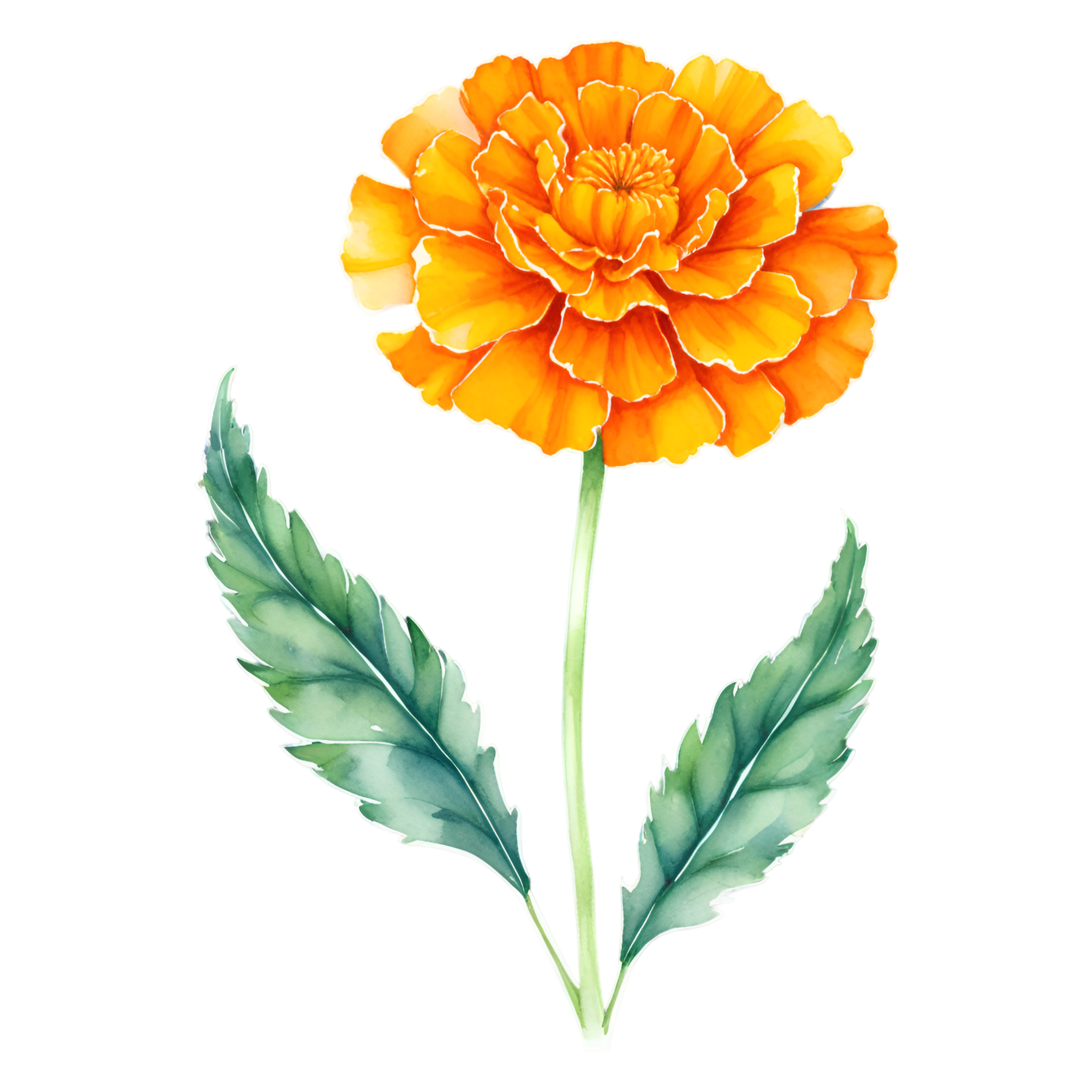
The set mixes named varieties with simple single blooms. You get a French marigold sprig with two red-and-gold bicolor flowers on one branching stem, and a cempasúchil bloom in bright orange with densely ruffled petals on a leafy stem. The pom-pom form shows up as a large tangerine bloom in side profile on a diagonal stem and a golden pom-pom with a green bud on a branching stem. There is a golden bloom face-on with its stem laid flat, a rust-orange bloom with a fan of serrated leaves behind it, a pale cream-yellow bloom with sage leaves, two sprigs carrying two blooms and a bud each, and a luminous orange bloom with two large serrated leaves.
Ofrendas, garlands and harvest designs
In Mexico, cempasúchil fills the ofrendas (home altars) and graves of Día de Muertos on November 1 and 2, its color and scent said to guide the spirits of the dead home. That makes marigolds the core flower for Day of the Dead invitations, ofrenda printables, sugar-skull layouts and classroom lessons on the holiday. In India, strings of orange and yellow marigolds decorate weddings, temples and festivals such as Diwali, so the same blooms suit mehndi and wedding invitations and Diwali greetings. Closer to home, vegetable gardeners have long tucked French marigolds between tomato plants, so a marigold sprig fits garden planners, community garden flyers and seed packets. The same blooms carry Thanksgiving place cards and October birthday cards.
Gold, tangerine and rust
The palette is saturated and warm: canary gold, tangerine and rust with fresh green leaves, matched on this page to DMC floss such as 972 Canary Deep, 740 Tangerine and 741 Tangerine Medium. The cream-yellow bloom gives a softer option for wedding stationery, and the French bicolor sprig adds a red-brown note where the oranges need depth. For a harvest layout, combine marigolds with sunflowers, a pumpkin or a scatter of fall leaves. More warm-toned art is in the orange hub, and seasonal sets are gathered in the autumn hub.
Building a marigold arch or garland
Ofrendas are often framed by an arch of marigolds, and you can build one on the page. Duplicate the tangerine side-profile bloom and the golden pom-pom, scale the copies between 70 and 100 percent, and set them along a curved path so they touch. Flip every other copy horizontally and rotate each a few degrees so the repeats don't line up. Each file is a 2048 x 2048 px transparent PNG, about 6.8 inches at 300 DPI, so even scaled-down blooms stay sharp on a letter-size poster. A straight version of the same chain makes a garland border for wedding invitations and Diwali cards. For a classroom project, print the chain on card stock and glue it over the top of a shoebox ofrenda.