The bird behind the Thanksgiving table
The wild turkey is native to North America and was domesticated in Mexico long before Europeans arrived, which makes it one of very few farm animals that went from the Americas to the rest of the world rather than the other way. Males are called toms or gobblers, females are hens, and the young are poults. A displaying gobbler fans his tail, drops his wings, puffs his body feathers and turns his bare head red, white and blue as blood flow changes. The fleshy flap that hangs over the beak is the snood, the red skin under the chin is the wattle, and the bumps on the neck are caruncles. Wild turkeys fly well over short distances and roost in trees at night. The only other living species, the Ocellated turkey of the Yucatan Peninsula, is smaller and colored like a peacock.
Wild birds, heritage breeds and one cousin
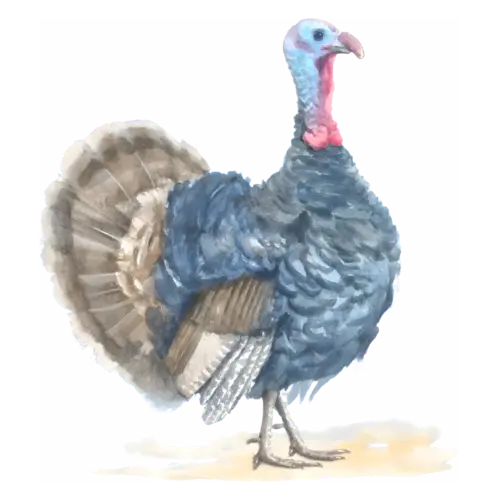
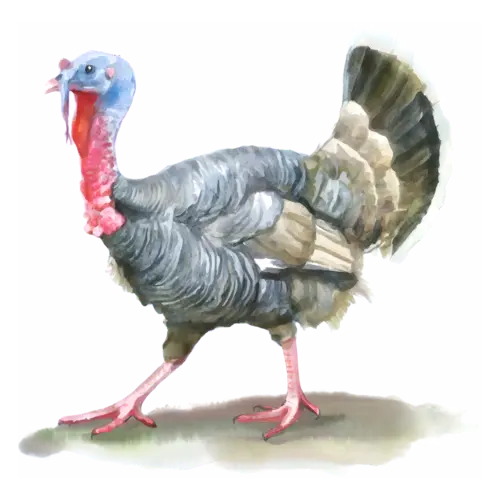
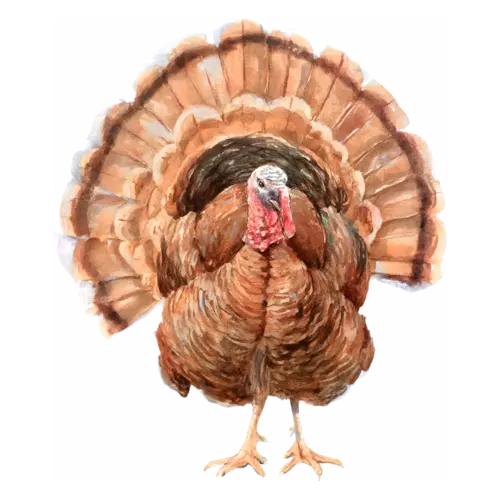
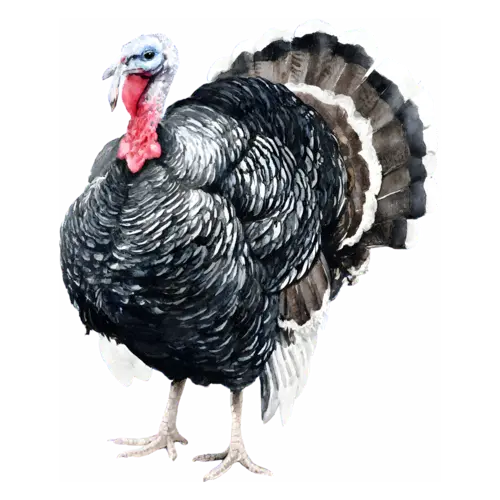
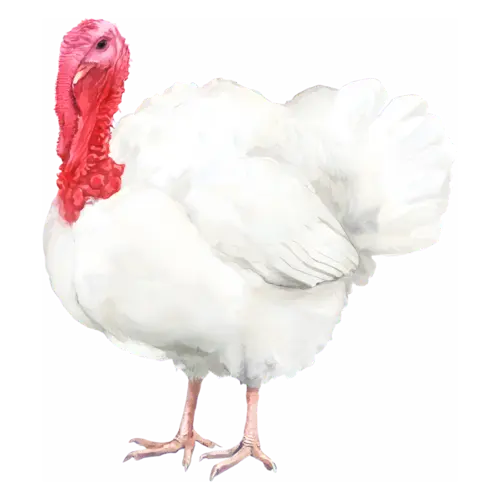
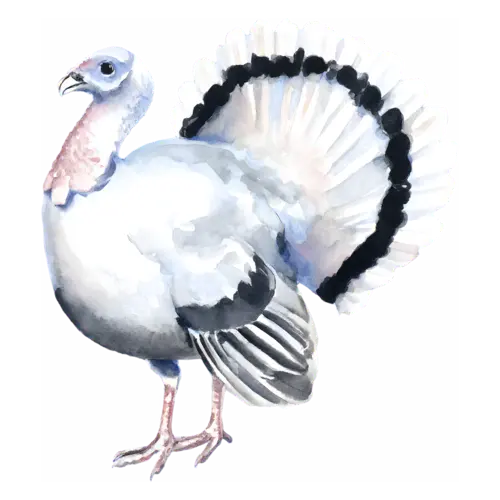
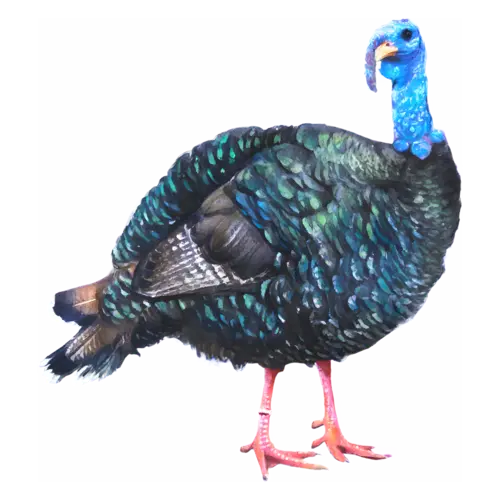
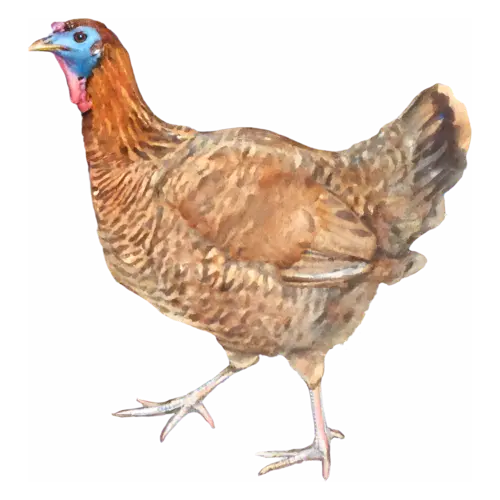
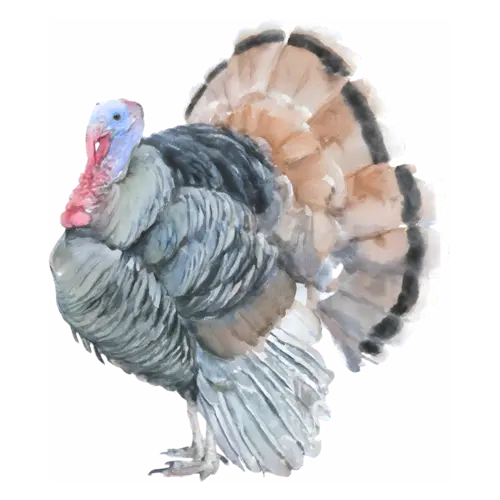
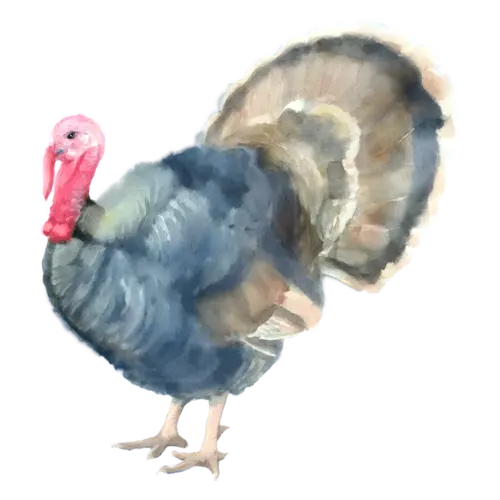
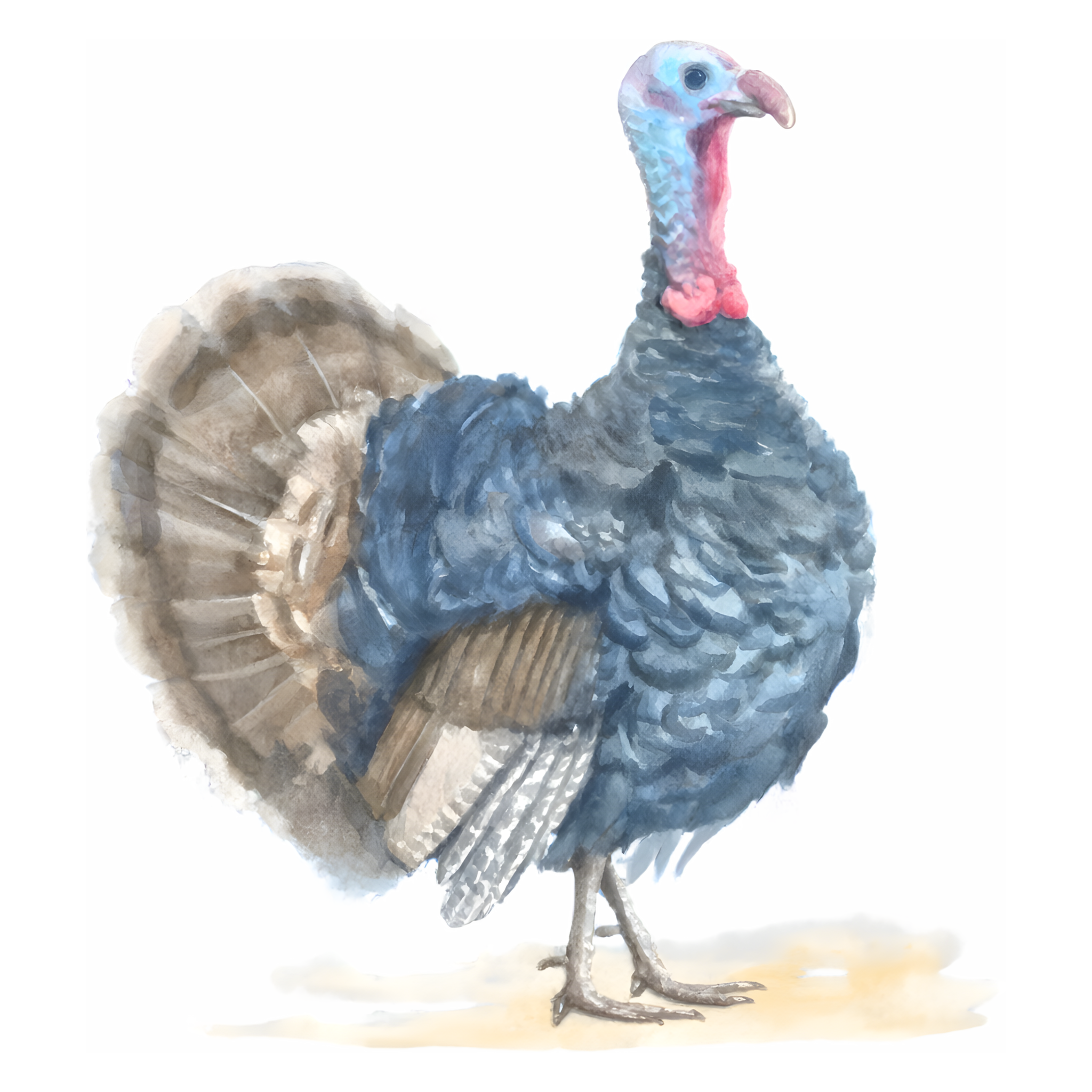
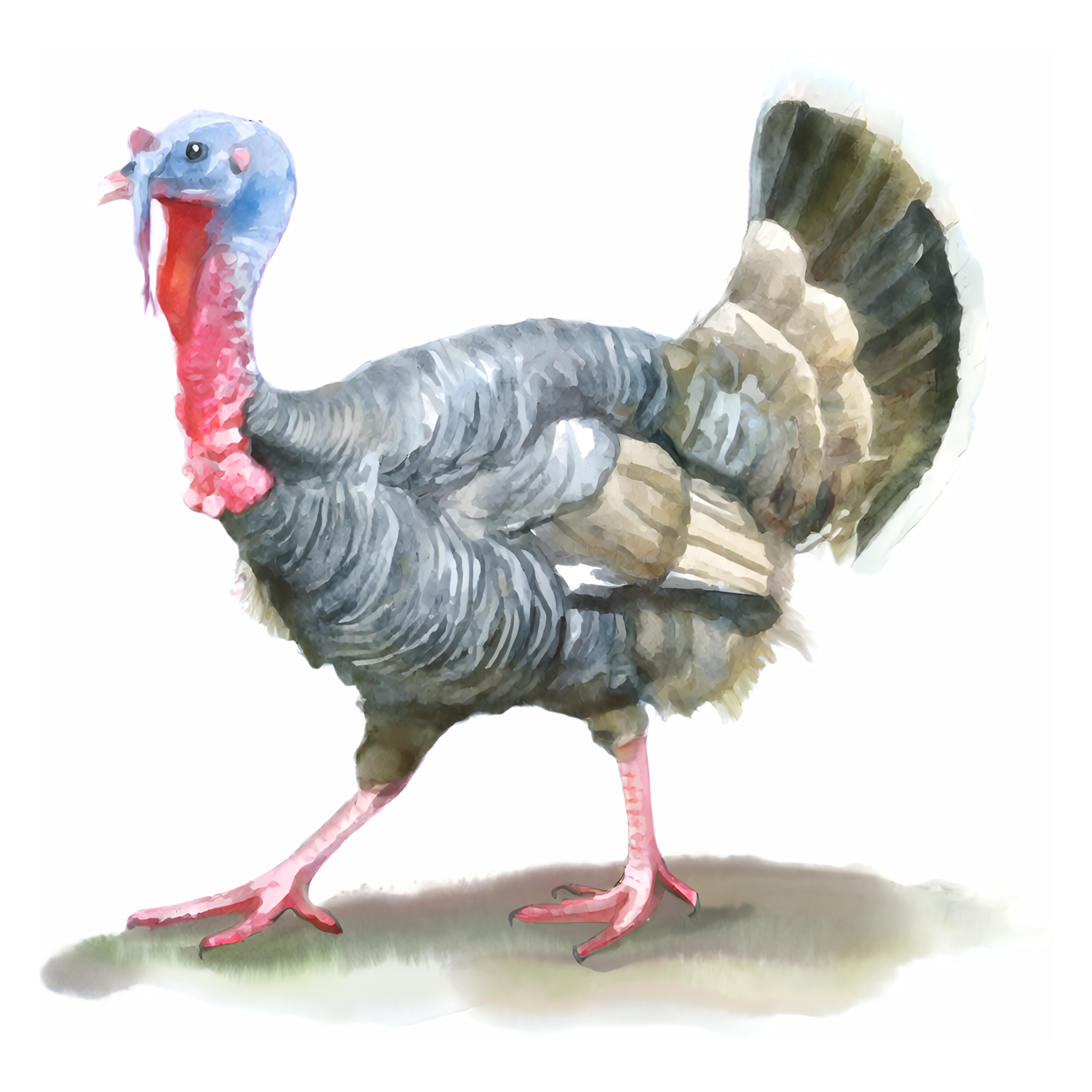
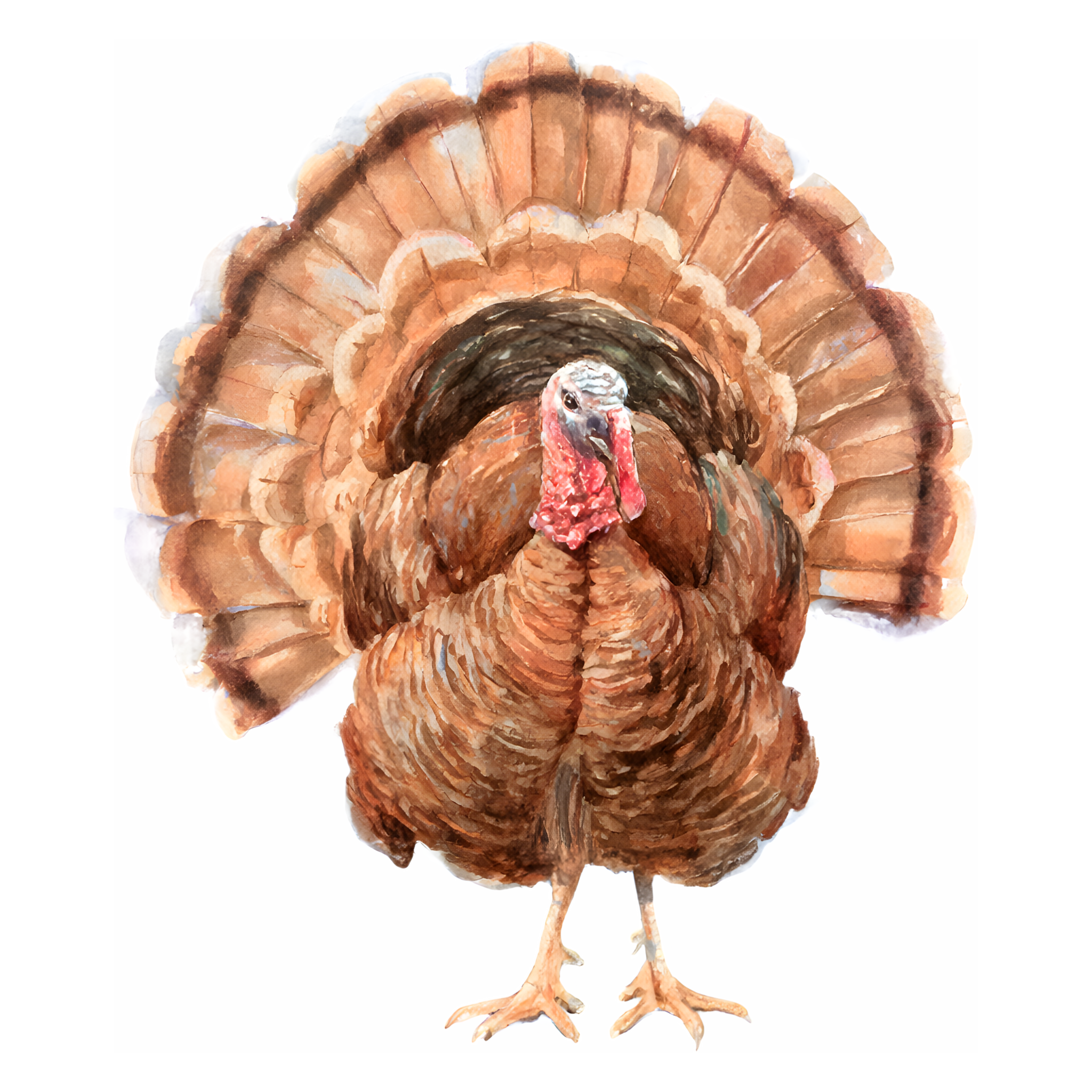
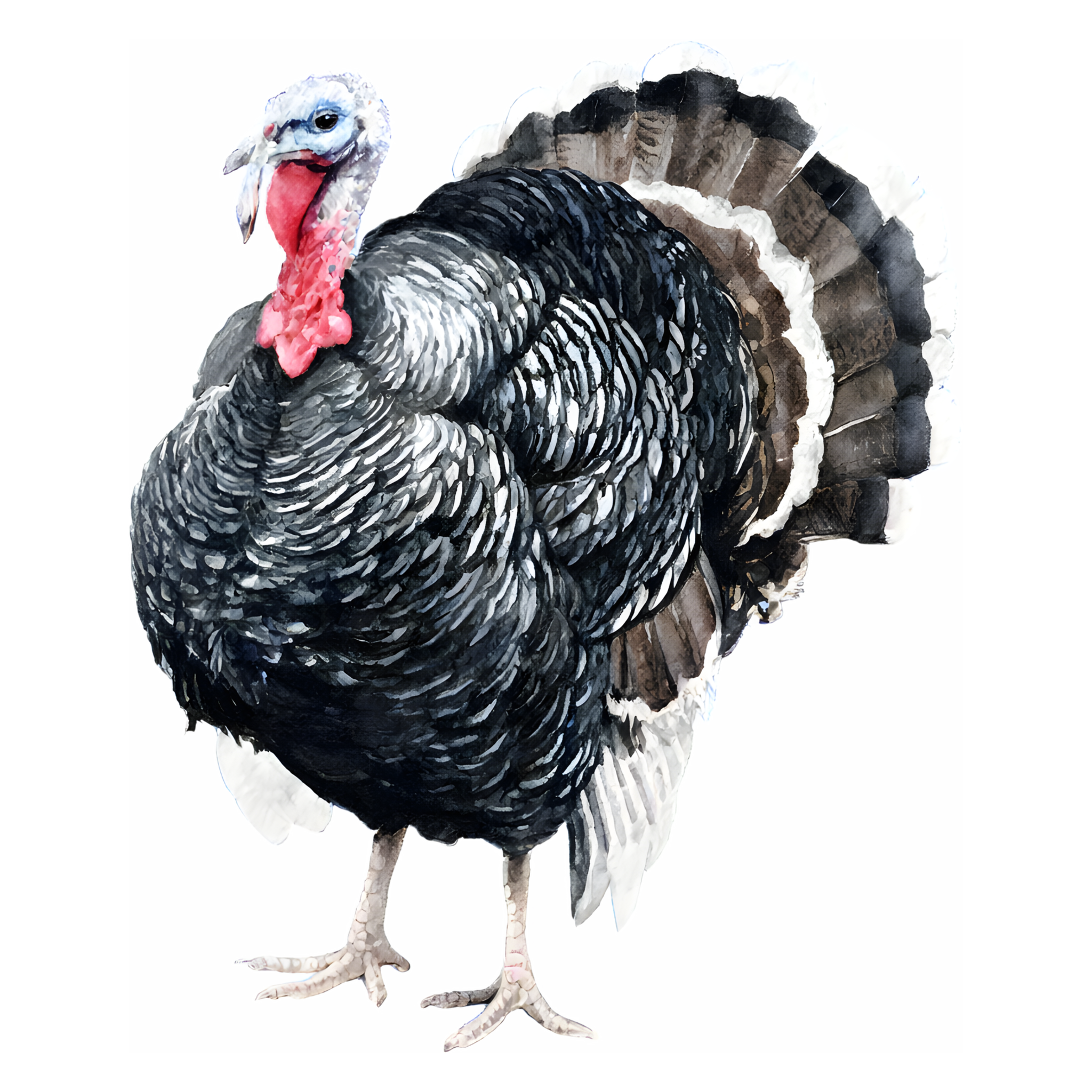
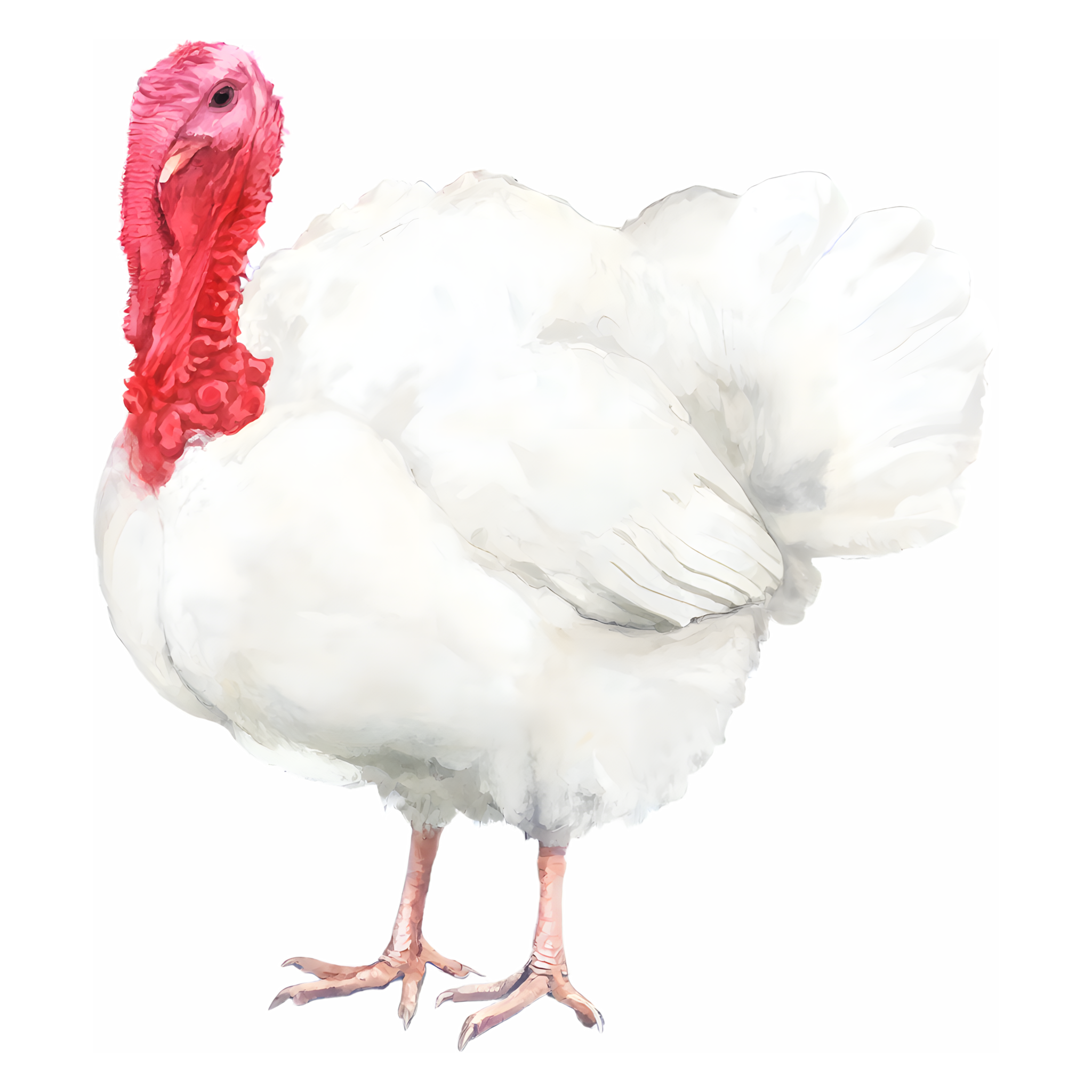
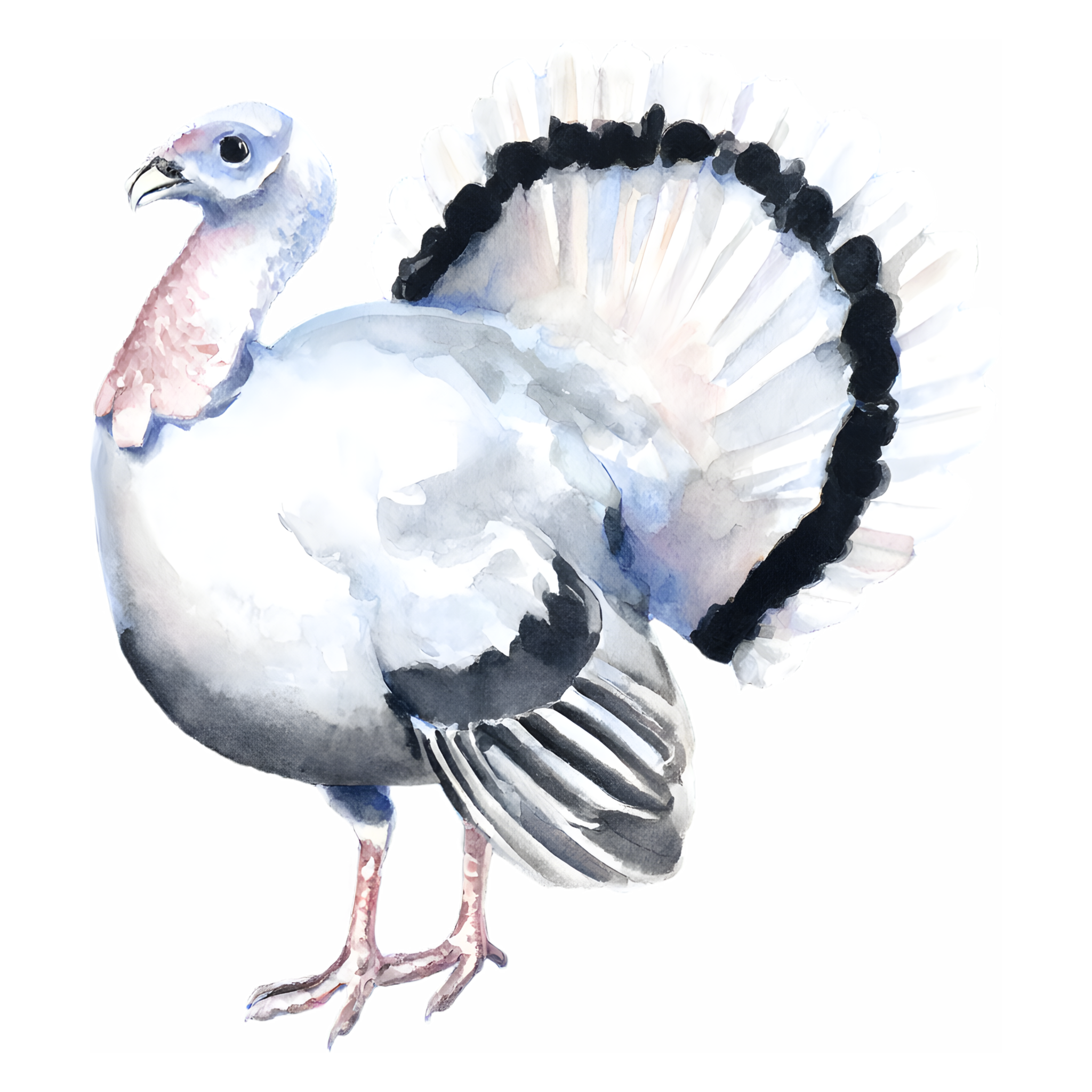
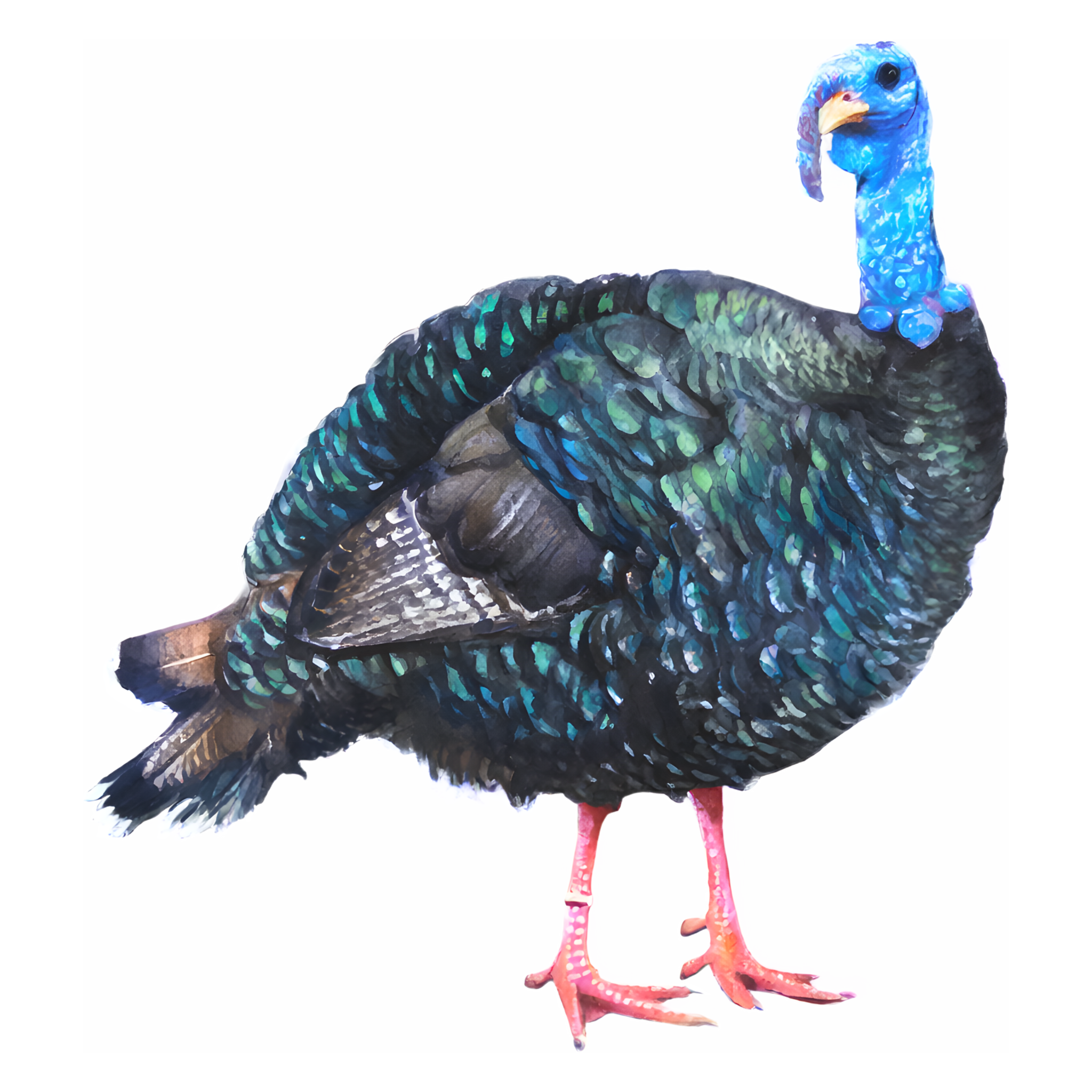
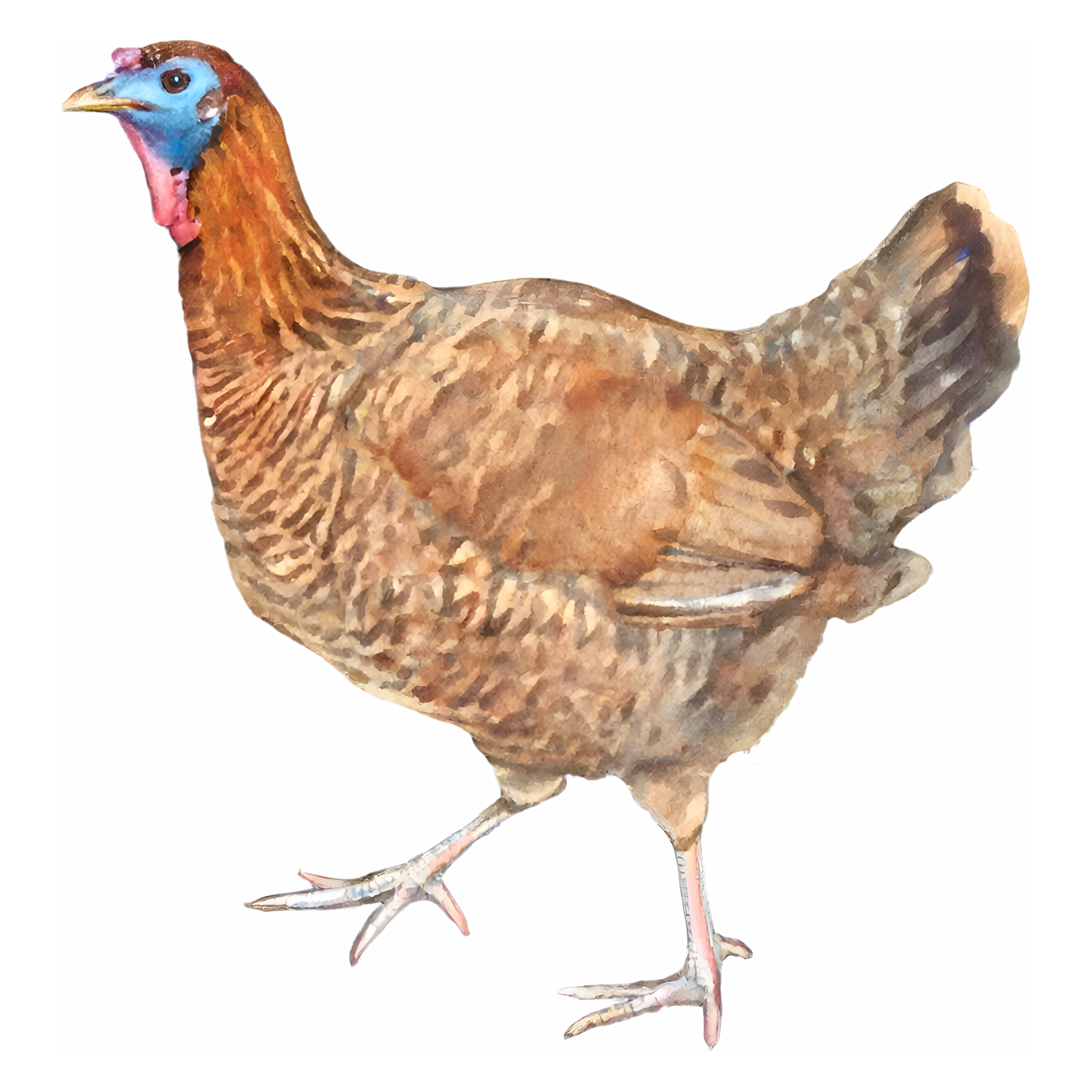
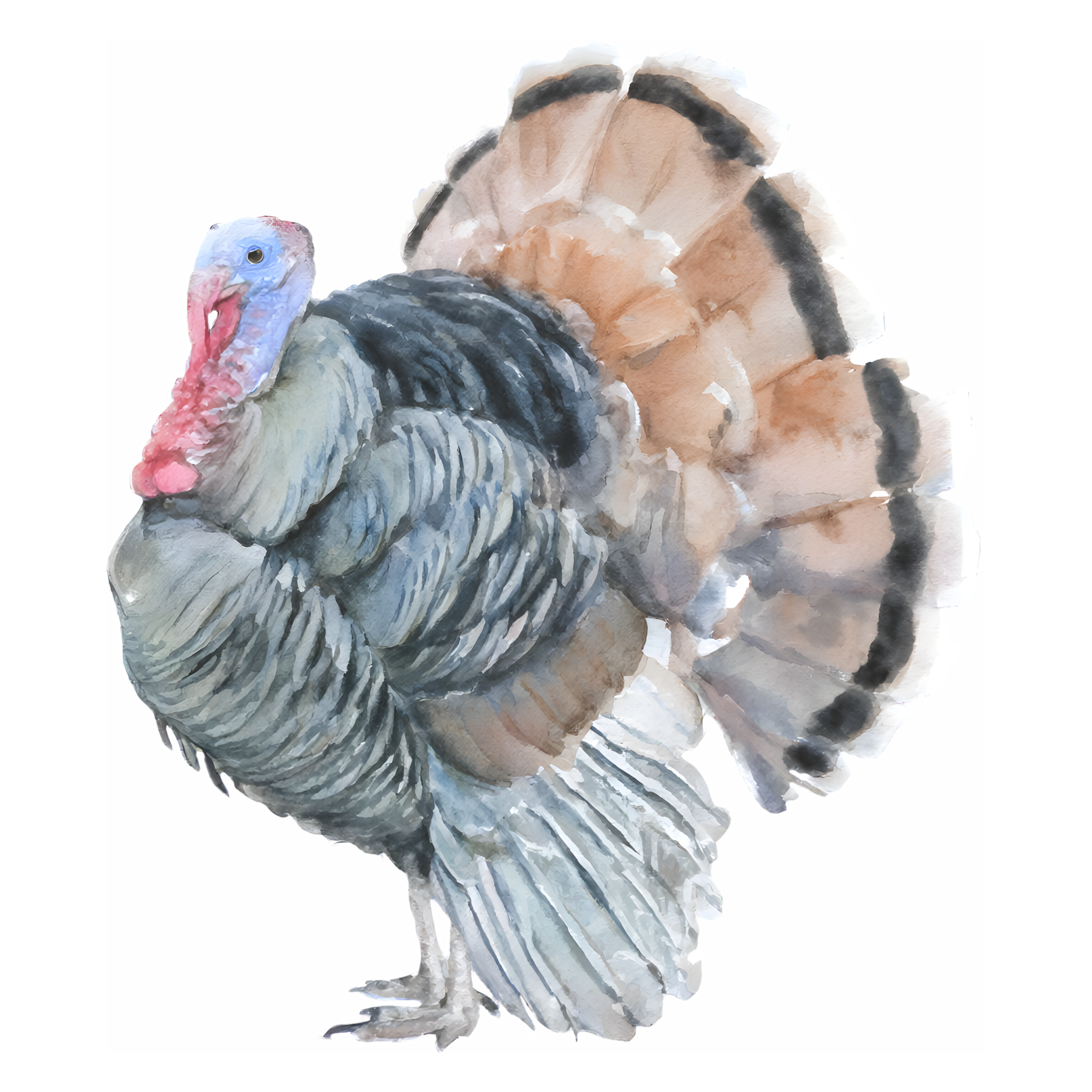
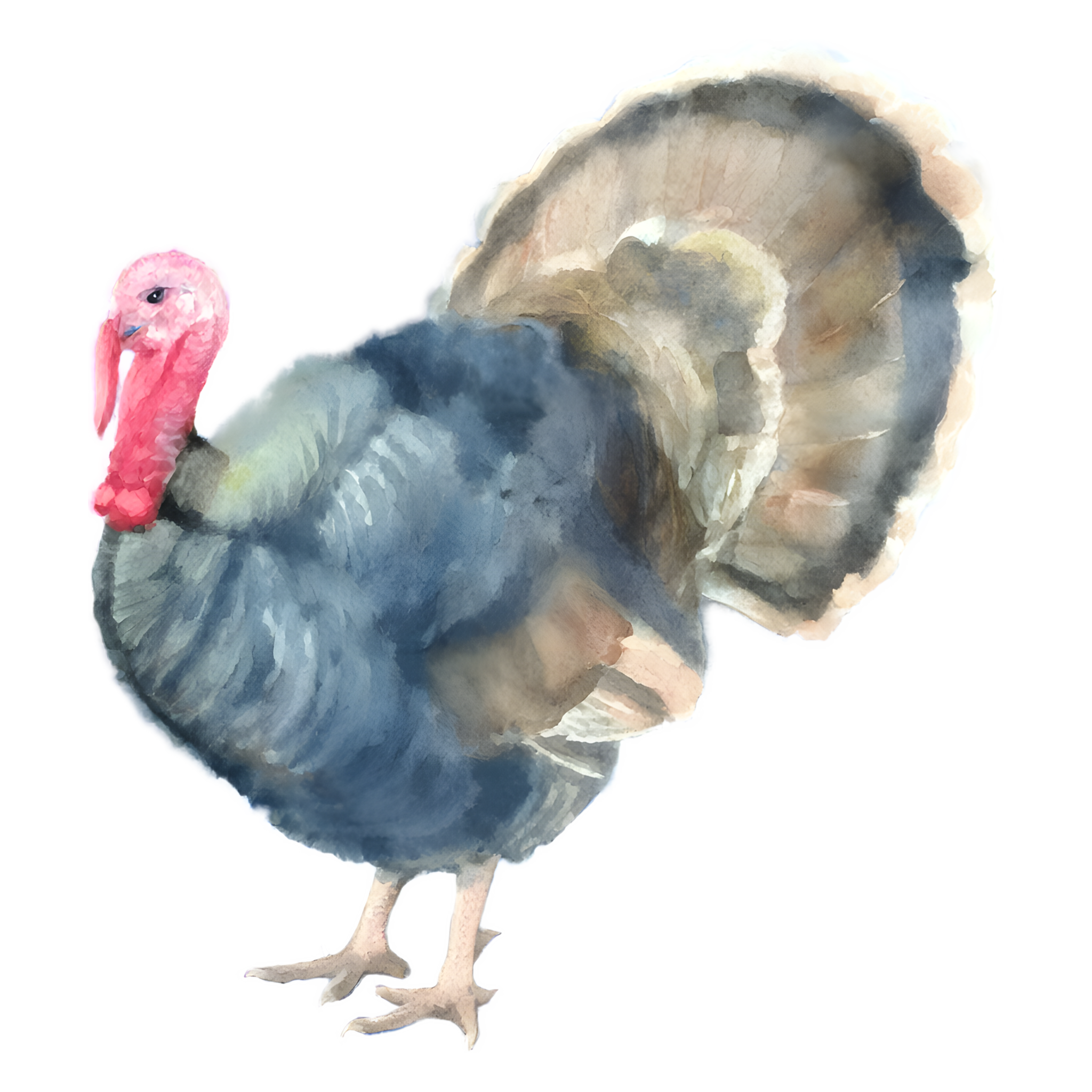
The set mixes wild turkeys with the heritage farm breeds people ask for by name. There are three wild gobblers in full strut with their tail fans spread, a gobbler walking in side profile with the tail raised, and a mottled brown hen, which is the plainer bird most people see crossing a rural road. The heritage birds are a front-facing Bronze in copper feathers with a fully opened fan, a black, gray and white banded Narragansett, a pure white White Holland with a red head, and a Royal Palm in white feathers edged with black. The tenth bird is an Ocellated turkey with iridescent blue-green plumage and a bright blue head. Every turkey stands alone with both feet showing; two of the birds stand on a light painted ground wash.
Where turkey art gets used in November
Turkey clipart carries most of the Thanksgiving season. Use the strutting gobblers on invitations, menus, place cards and kids' table activity sheets, and the hen or the walking gobbler where you want something quieter, like a gratitude journal page or a recipe card for leftovers. Teachers use turkeys for November bulletin boards, the classic hand-turkey craft, and lessons on birds of North America, where the wild birds and the Ocellated cousin make a neat comparison. Farm stands and butchers taking holiday orders can put a heritage breed on the order form and price signs. Hunters' clubs and wildlife groups use the wild birds for spring gobbler season flyers, which is when the strut display actually happens in the woods.
Bronze, white and iridescent blue-green
Most birds sit in browns, coppers and slate gray with red heads, which pairs naturally with orange and gold. Set a gobbler beside pumpkins and scattered fall leaves for a full harvest scene, or with a cornucopia on a table card. The White Holland and Royal Palm read well on kraft paper and dark backgrounds, and the Ocellated turkey's blue-green adds color to a palette that would otherwise be all brown. The palette panel lists the HEX codes and nearest DMC floss for each bird. More seasonal art is in the autumn hub, and the rest of the bird species are in the bird hub.
Facing the right way on a card
A turkey that faces off the edge of a card pulls the eye away from your text, so place each bird facing into the layout. The walking gobbler and the hen face left, so put them on the right side of a menu with the text to their left; flip a copy horizontally in your design tool when you need the other direction, which works for every bird here because none of them carries lettering. Each file is a 2048 x 2048 px transparent PNG, about 6.8 inches at 300 DPI, so a single gobbler can fill a 5 x 7 inch invitation front with room left for a greeting.