Where the horn of plenty comes from
Cornucopia is Latin for horn of plenty, from cornu (horn) and copia (abundance). In Greek myth the horn belonged to Amalthea, the goat that nursed the infant Zeus; in one version Zeus broke off one of her horns and gave it the power to fill with whatever its owner wished. Another story has Heracles snapping a horn from the river god Achelous during a wrestling match. Roman artists put the horn in the arms of goddesses of plenty and good fortune, and it has carried the same meaning ever since. It appears on the coats of arms of Peru and Colombia and on the state seal of New Jersey. In the United States the woven wicker version became the standard Thanksgiving centerpiece, a basket on its side with the harvest pouring out of the mouth.
Nine harvests, one basket shape
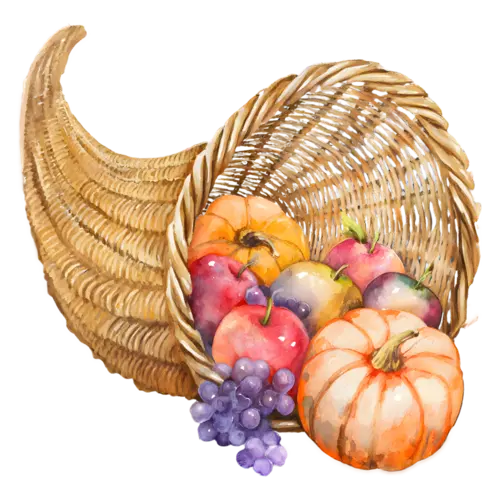
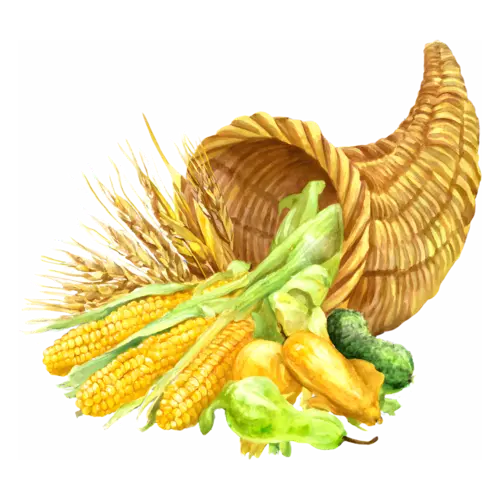
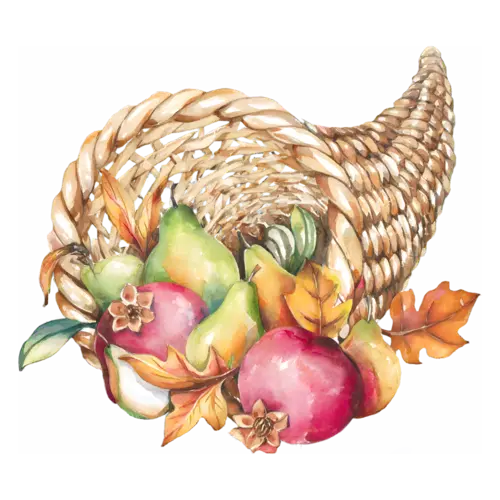
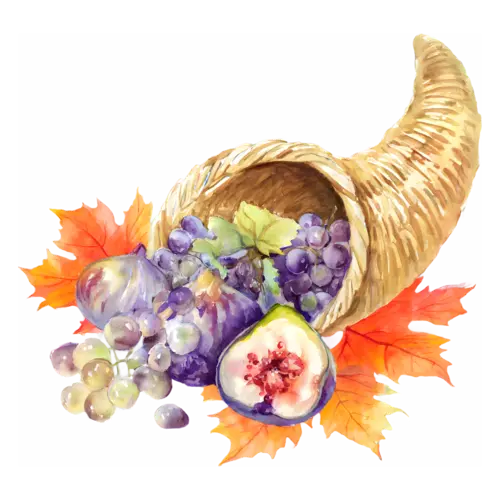
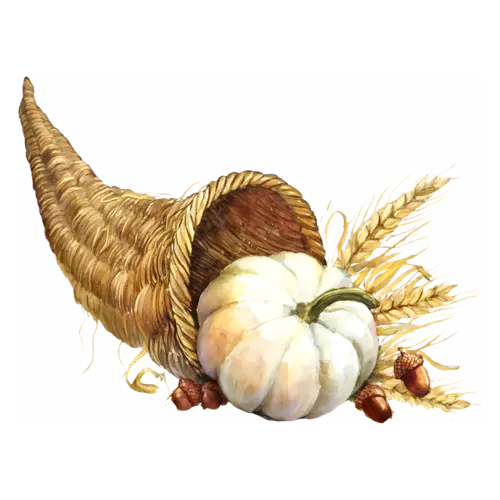
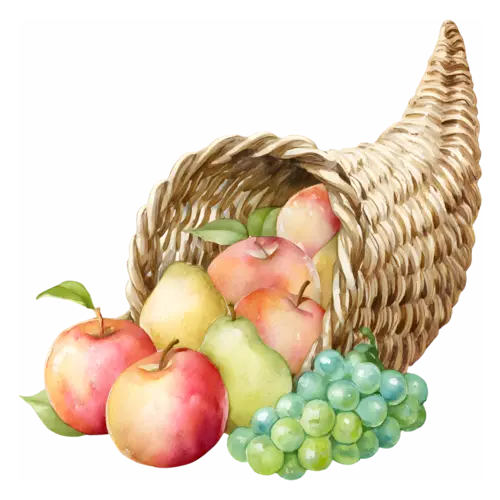
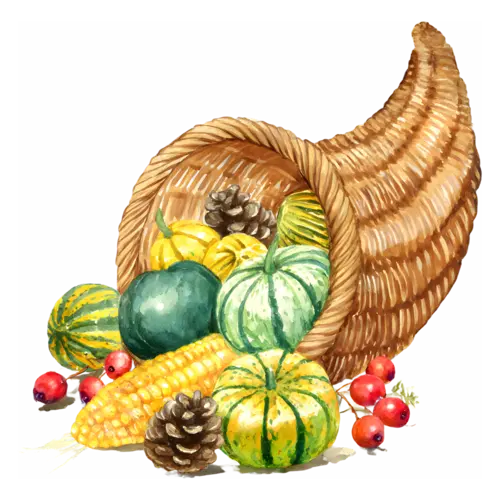
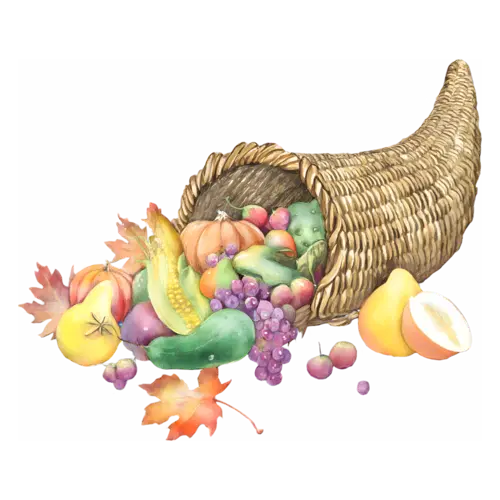
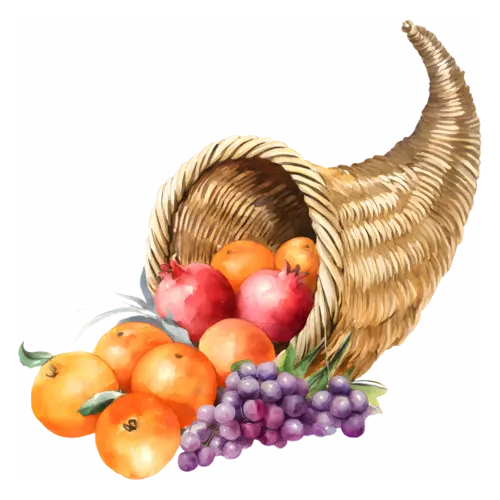
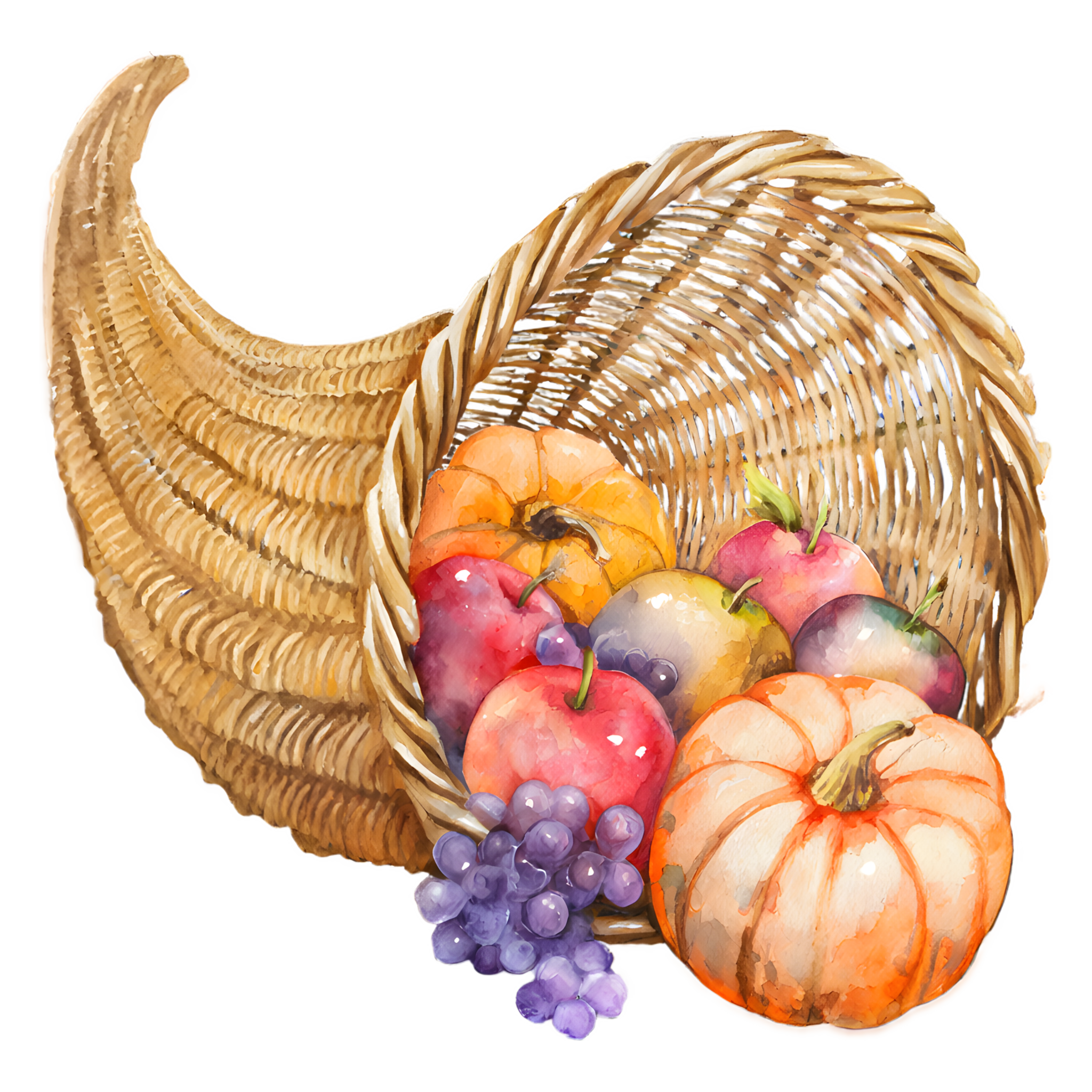
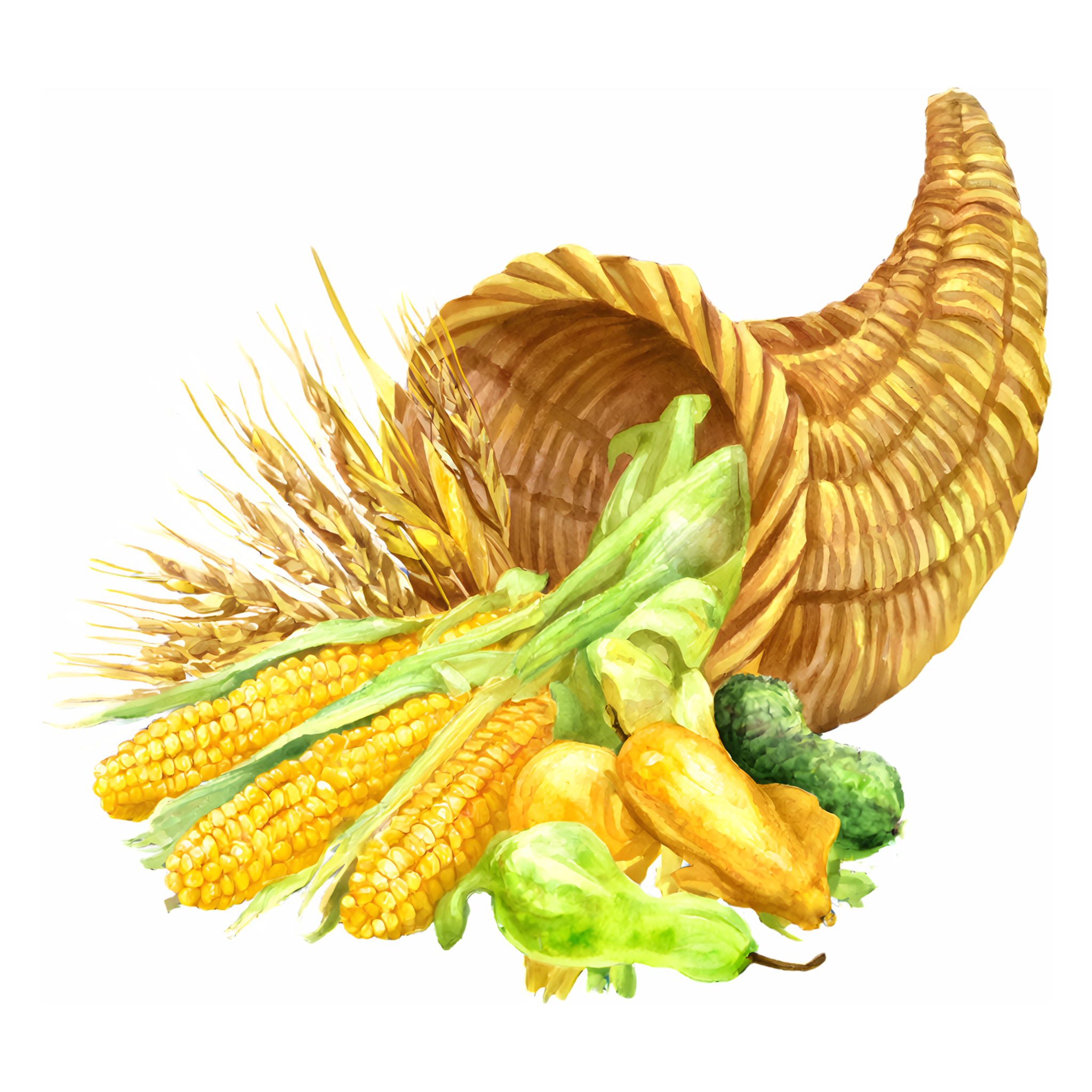
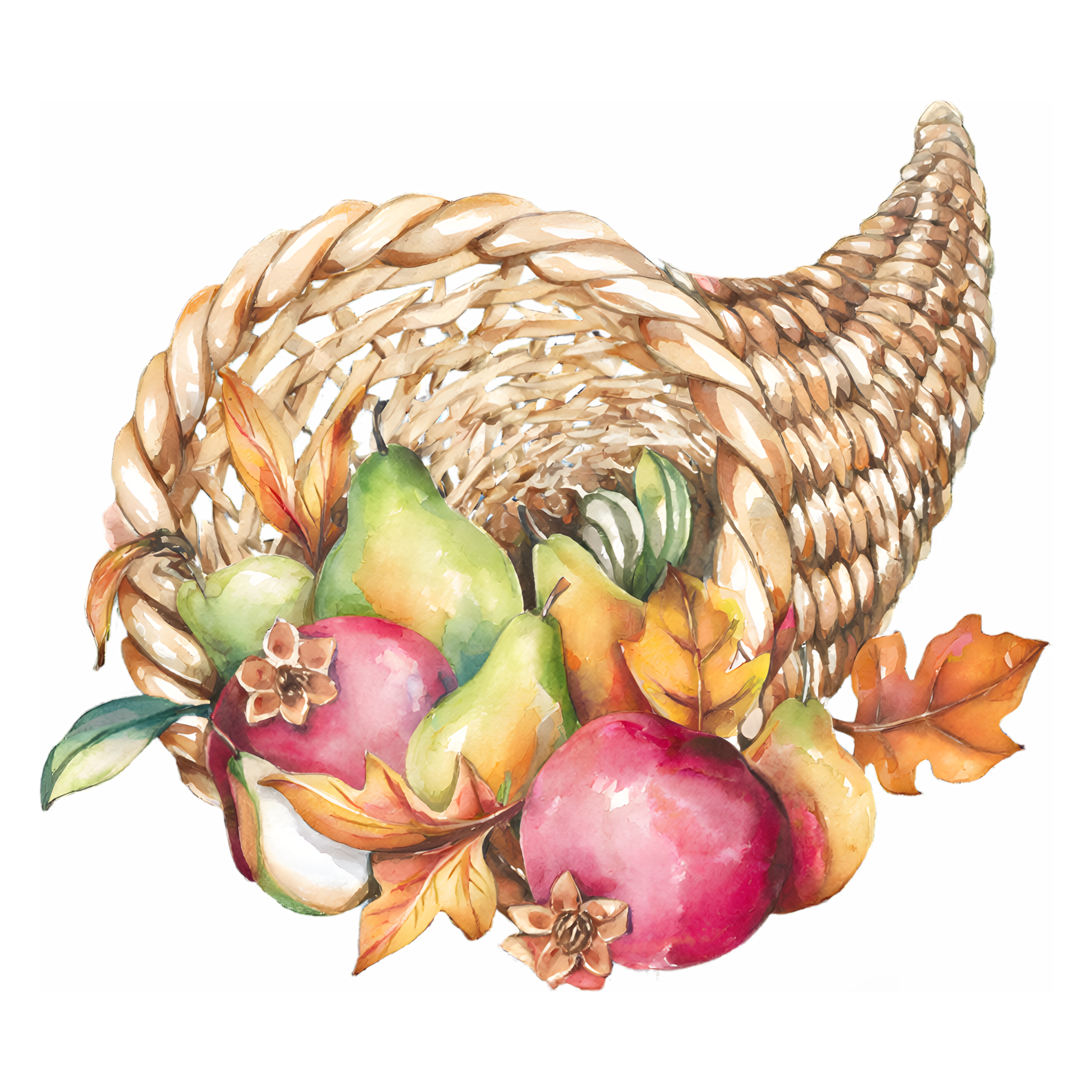
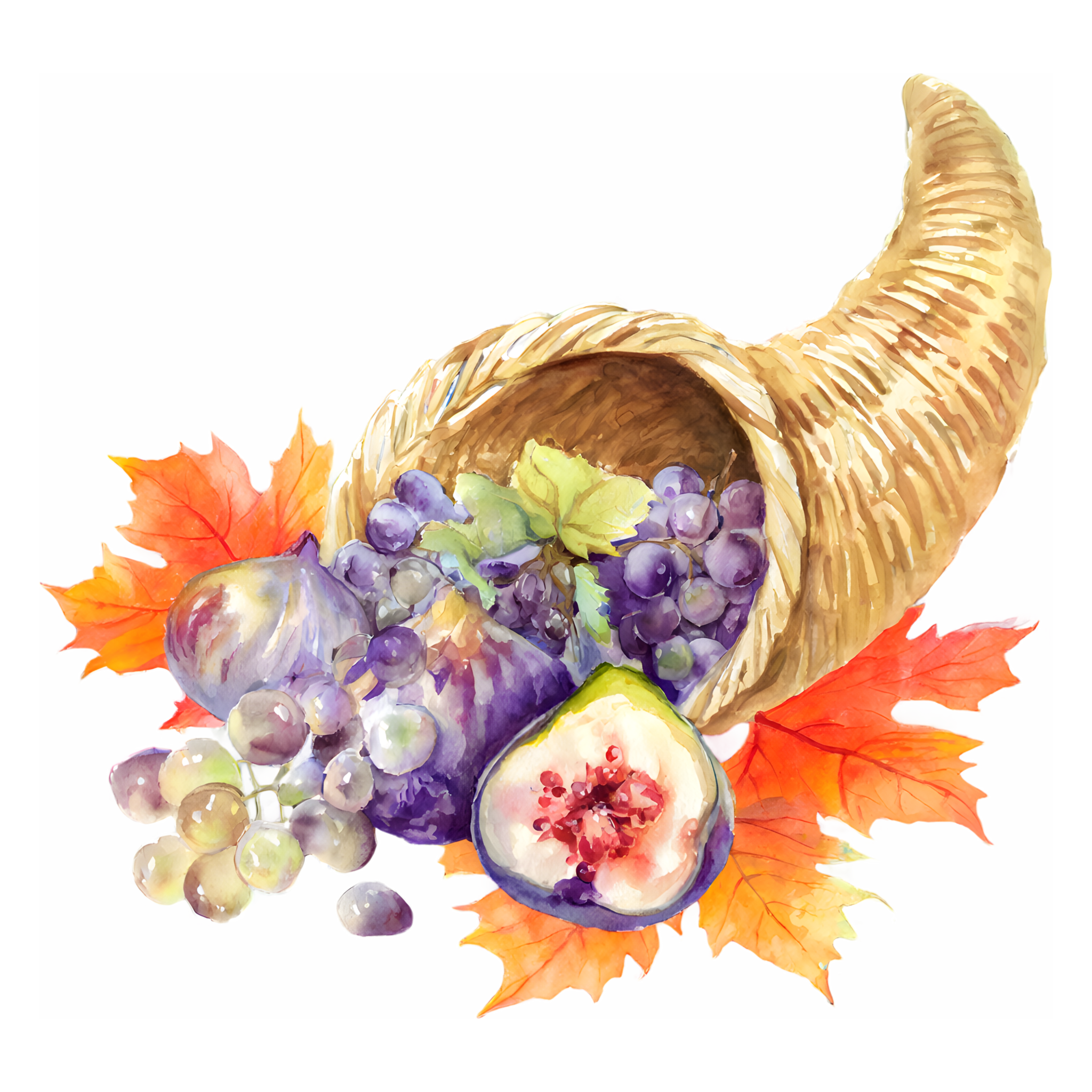
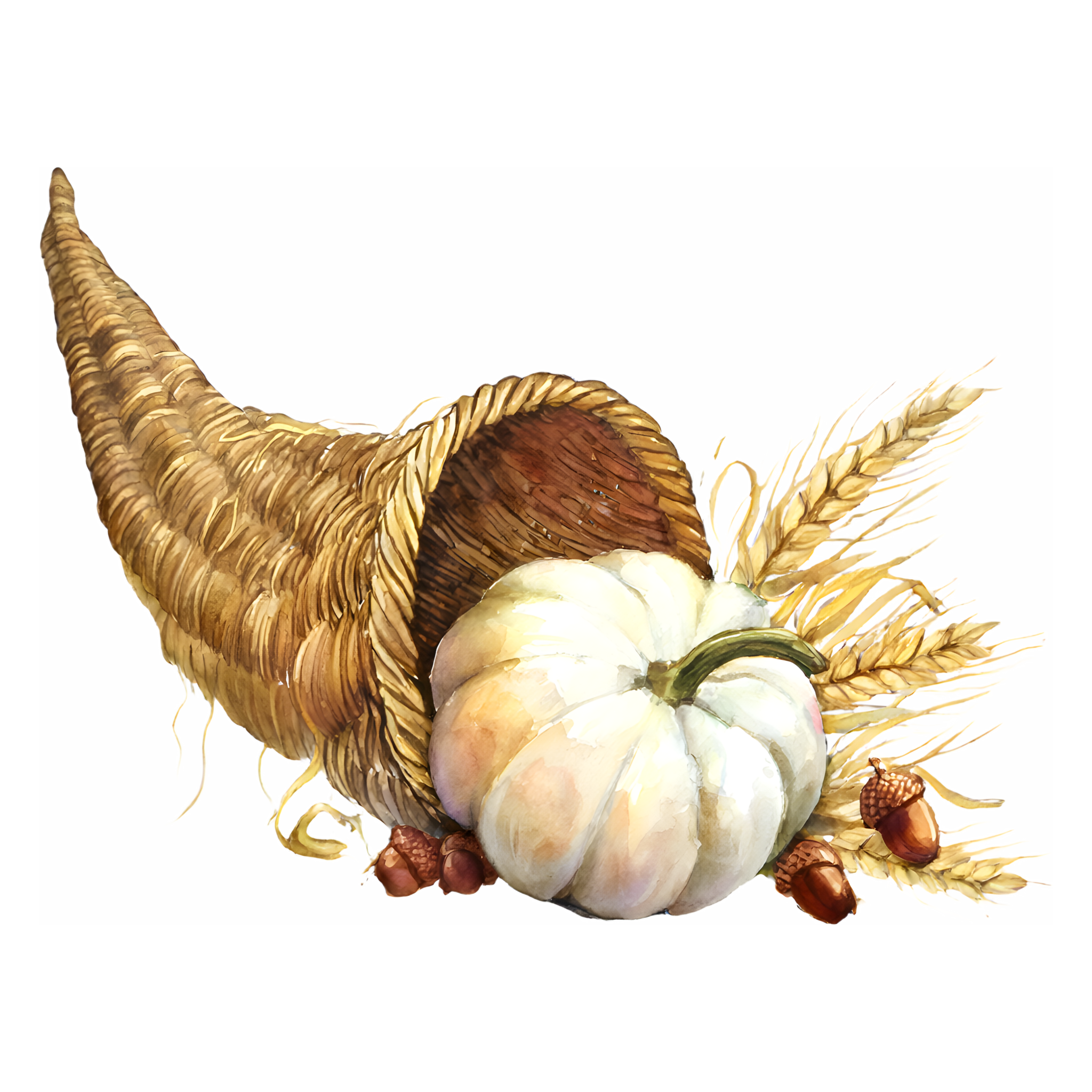
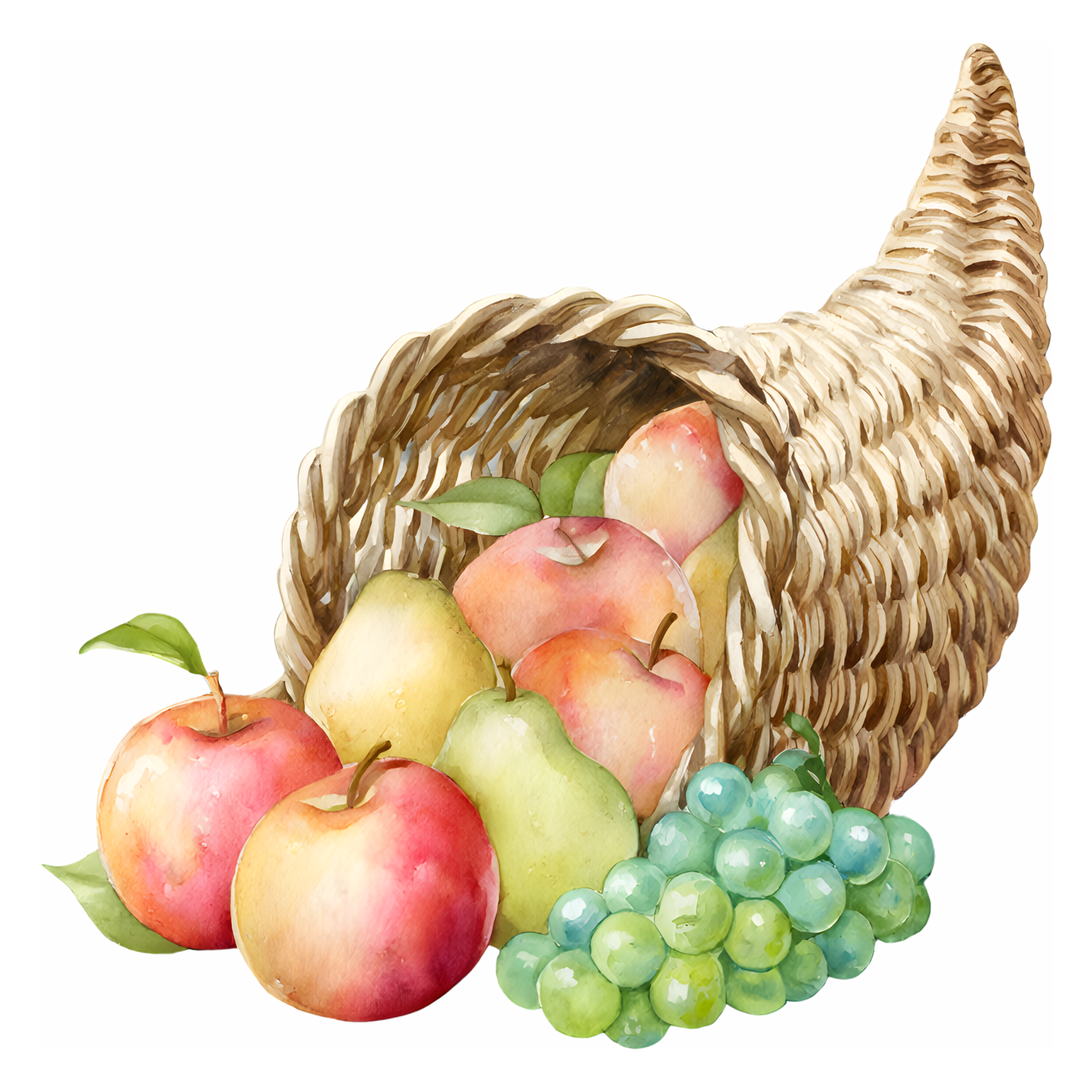
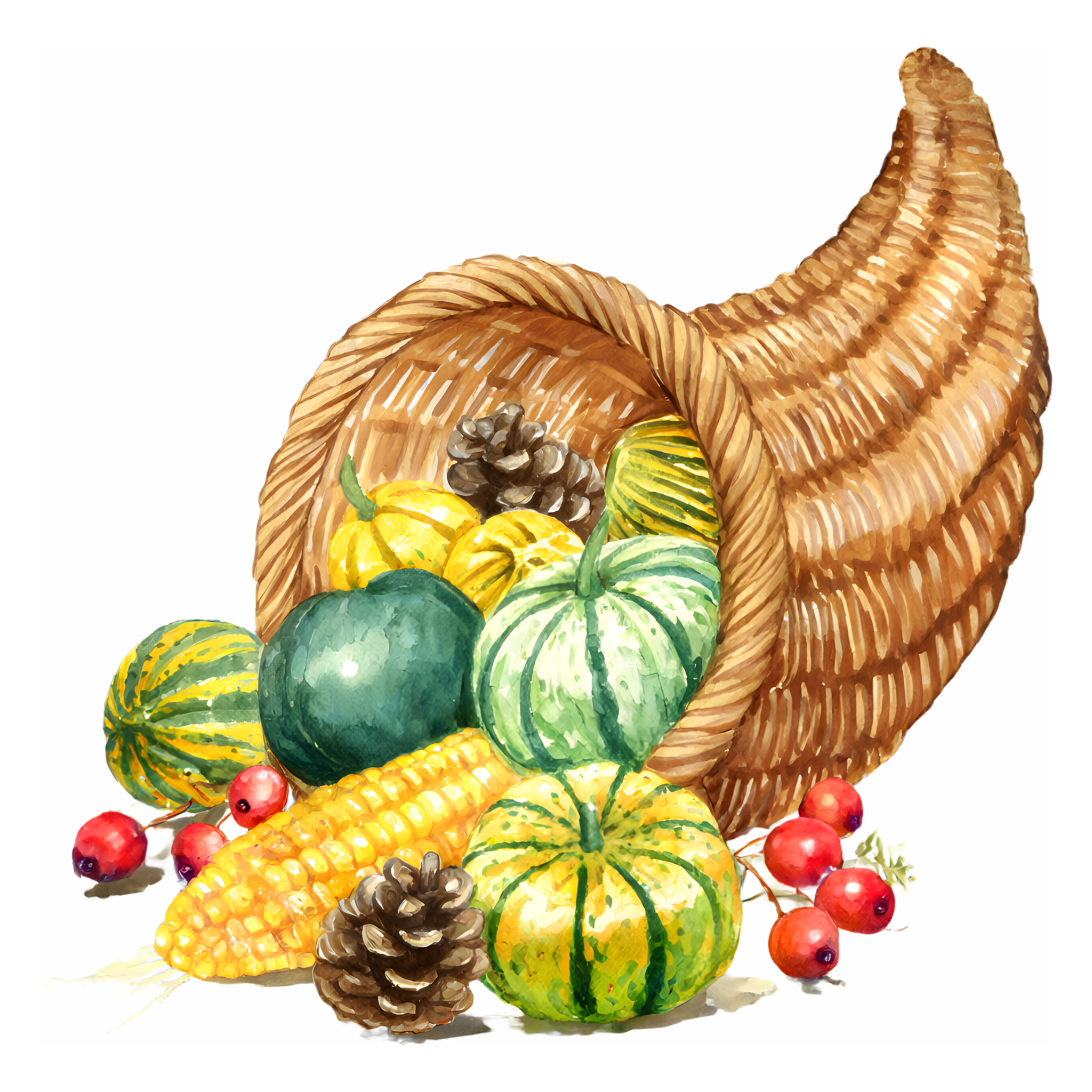
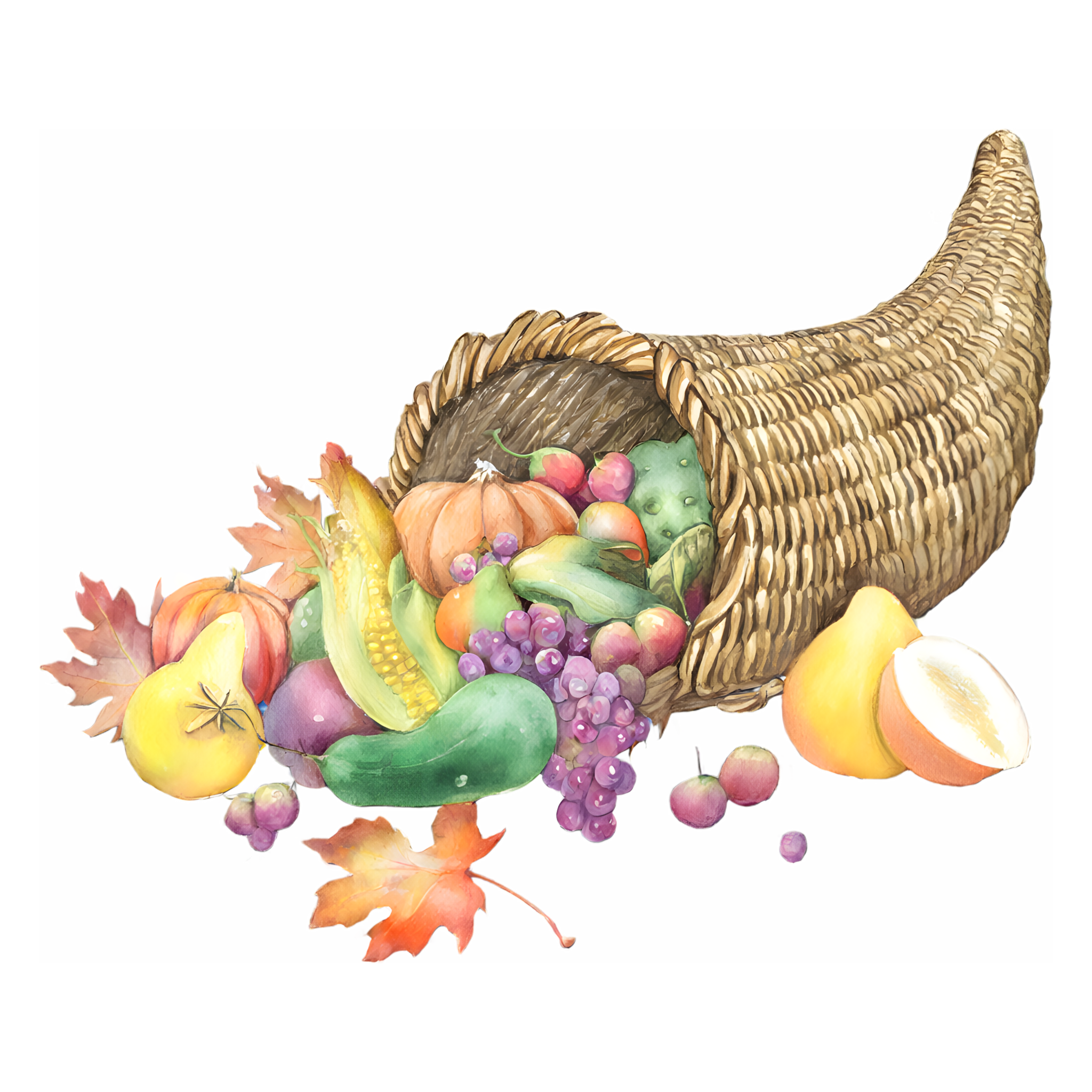
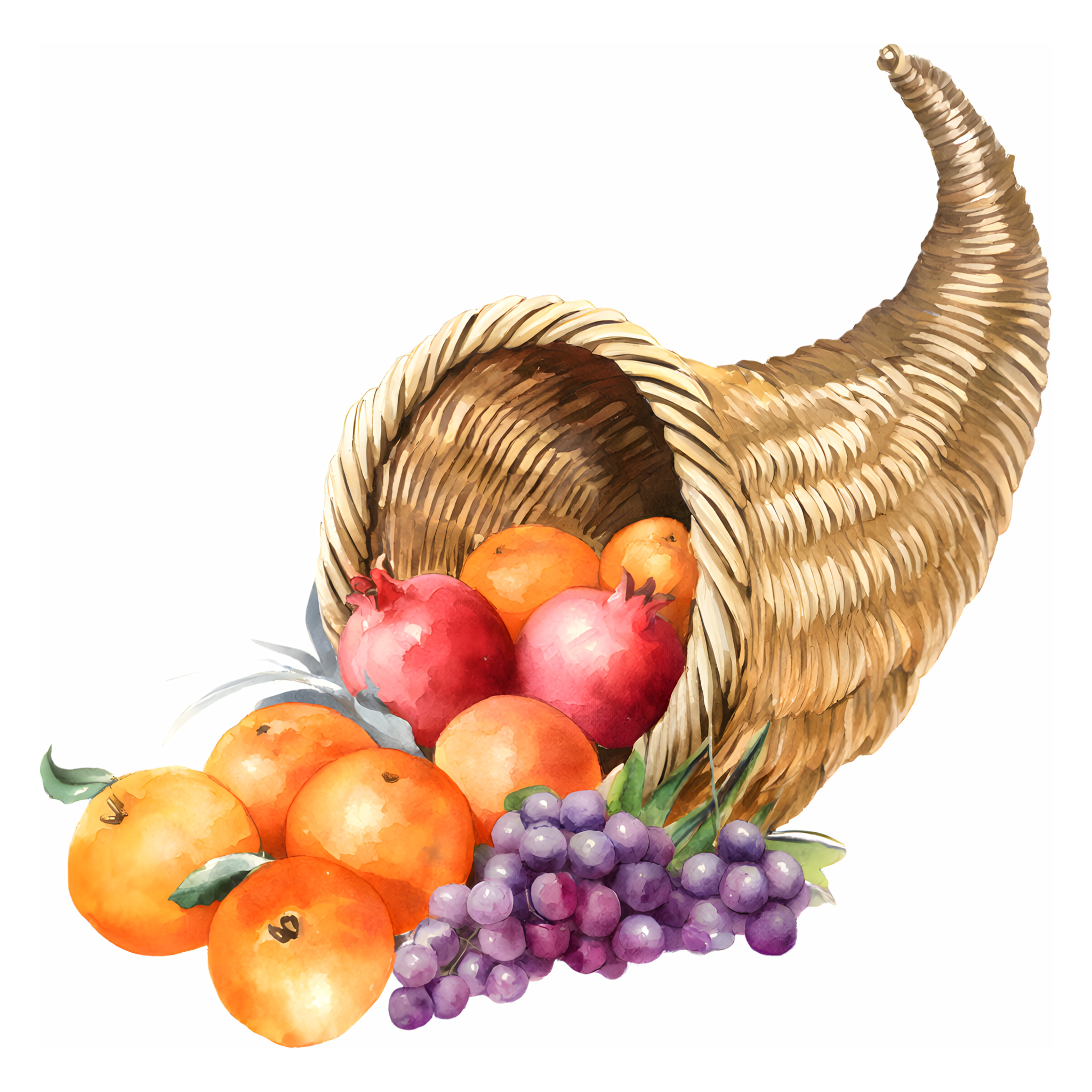
Every image is a single horn-shaped wicker basket lying on its side, and each one spills a different harvest. One holds small orange pumpkins, red apples and purple grapes. A golden basket pours out ears of corn, yellow and green gourds and wheat stalks. Others carry pears and pomegranates with oak leaves, figs and grapes on orange maple leaves, and a white pumpkin with acorns and dried wheat. A lighter mix has apples, pears and a bunch of green grapes, and a darker one has striped gourds, corn, pine cones and red berries. There is a busy mixed basket of vegetables, fruit and fall leaves with a few pieces rolling free, and one of oranges, pomegranates and grapes. The horn points left in some and right in others, so you can mirror a pair on a table card.
Thanksgiving tables, harvest sales and classrooms
The cornucopia is the symbol of a shared harvest meal, so it fits anything that invites people to a table. Use it as the header on a Thanksgiving menu or invitation, the centerpiece graphic on a buffet sign, or a small mark on place cards. Food banks and churches run November food drives under exactly this image, and the produce-filled baskets read well on donation flyers and collection-box labels. Farmers markets, orchards and farm stands can use the apple, pear and pumpkin versions on harvest-sale posters and price boards. Teachers use the horn of plenty for gratitude lessons, where students write one thing they are thankful for on a paper fruit and add it to a classroom cornucopia display.
Wicker gold with the colors of fall produce
The baskets are warm wheat and honey brown, and the produce brings pumpkin orange, apple red, pear green and grape purple. The palette panel on this page lists HEX codes and the nearest DMC floss and Copic markers for each image. For a full Thanksgiving layout, pair a cornucopia with a strutting turkey, loose pumpkins and a scatter of fall leaves, or a few pine cones along a border. The whole holiday set is in the Thanksgiving hub, and wider seasonal art in the autumn hub.
Leave room for the words
A cornucopia is wide and low, about twice as wide as it is tall once trimmed, so it sits best along the bottom of a page with the greeting above it. On a 5 x 7 inch portrait invitation, scale the basket to the full card width and let it fill the lower third. On a landscape menu, put it in a corner with the open mouth pointing toward the text, so the spilling fruit leads the eye into the list of dishes. Each file is a 2048 x 2048 px transparent PNG, about 6.8 inches at 300 DPI, which covers a letter-size flyer header without upscaling.