Bald eagle or golden eagle: telling them apart
North America has two eagles. Every bird in this set is a bald eagle, but it helps to know both. The adult bald eagle is the easy one: a white head and tail, a dark brown body and a heavy yellow bill. It lives near water and eats a lot of fish, and it has appeared on the Great Seal of the United States since 1782. Young bald eagles look nothing like their parents. They are mottled brown and white for several years and only reach the full white head at around five years old. The golden eagle is dark brown all over with a wash of pale gold on the back of the head and neck. It prefers open country and mountains, hunts rabbits and ground squirrels, and has legs feathered all the way to the toes. A golden eagle is the bird on the coat of arms in the Mexican flag.
Ten poses of the adult bald eagle
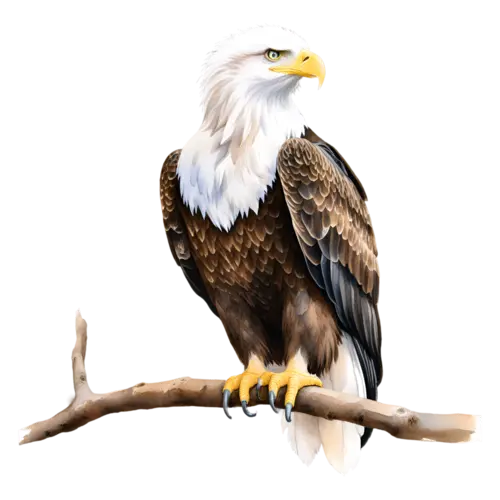
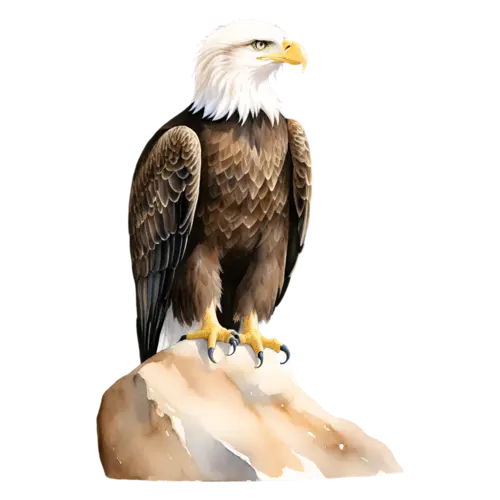
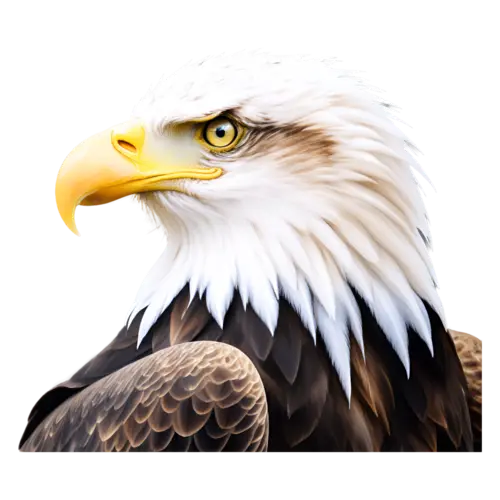
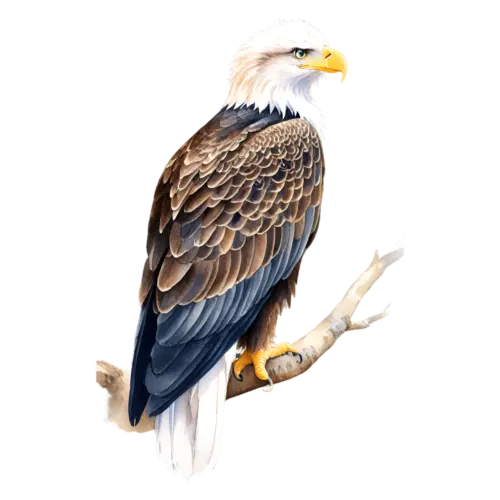
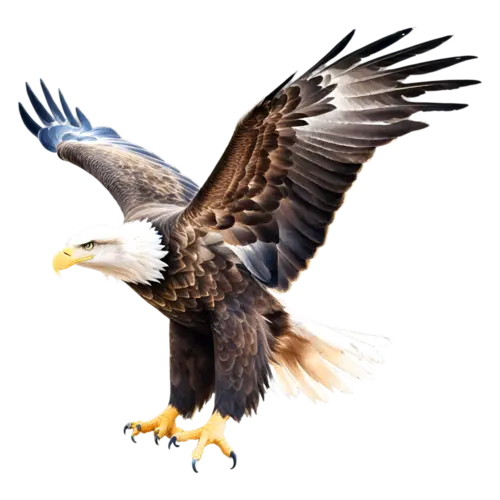
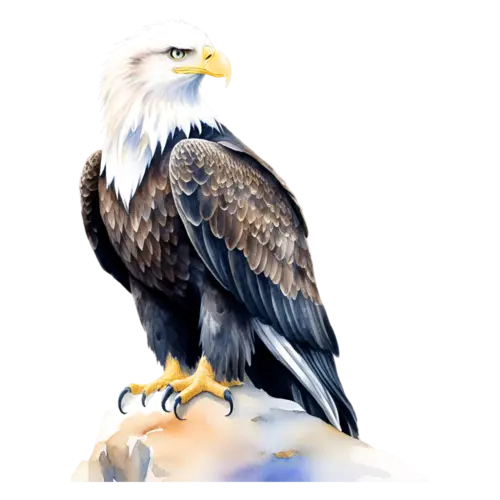
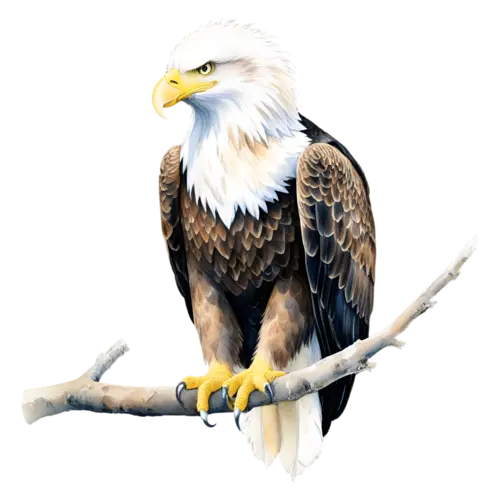
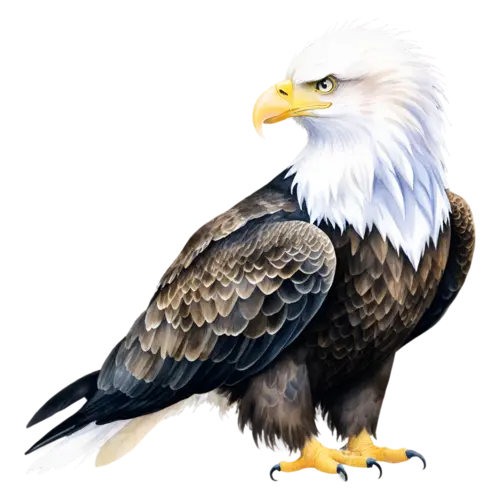
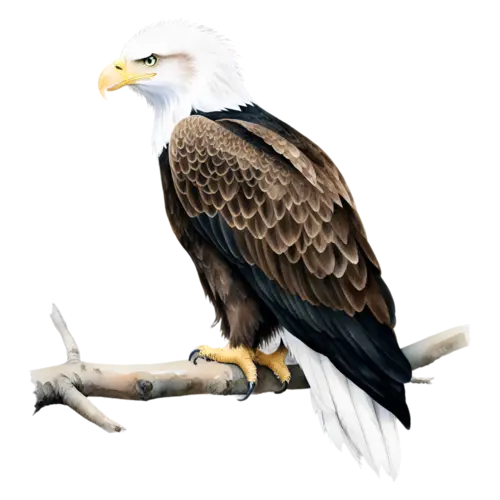
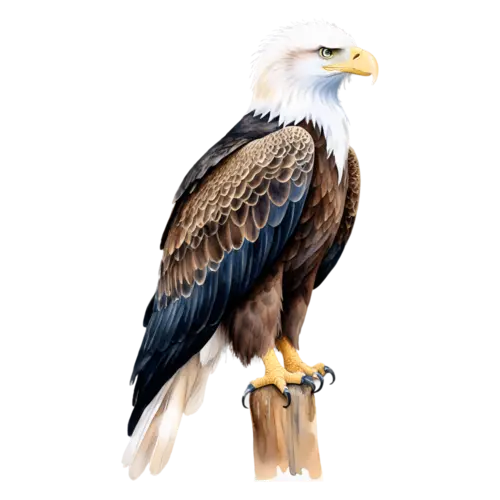
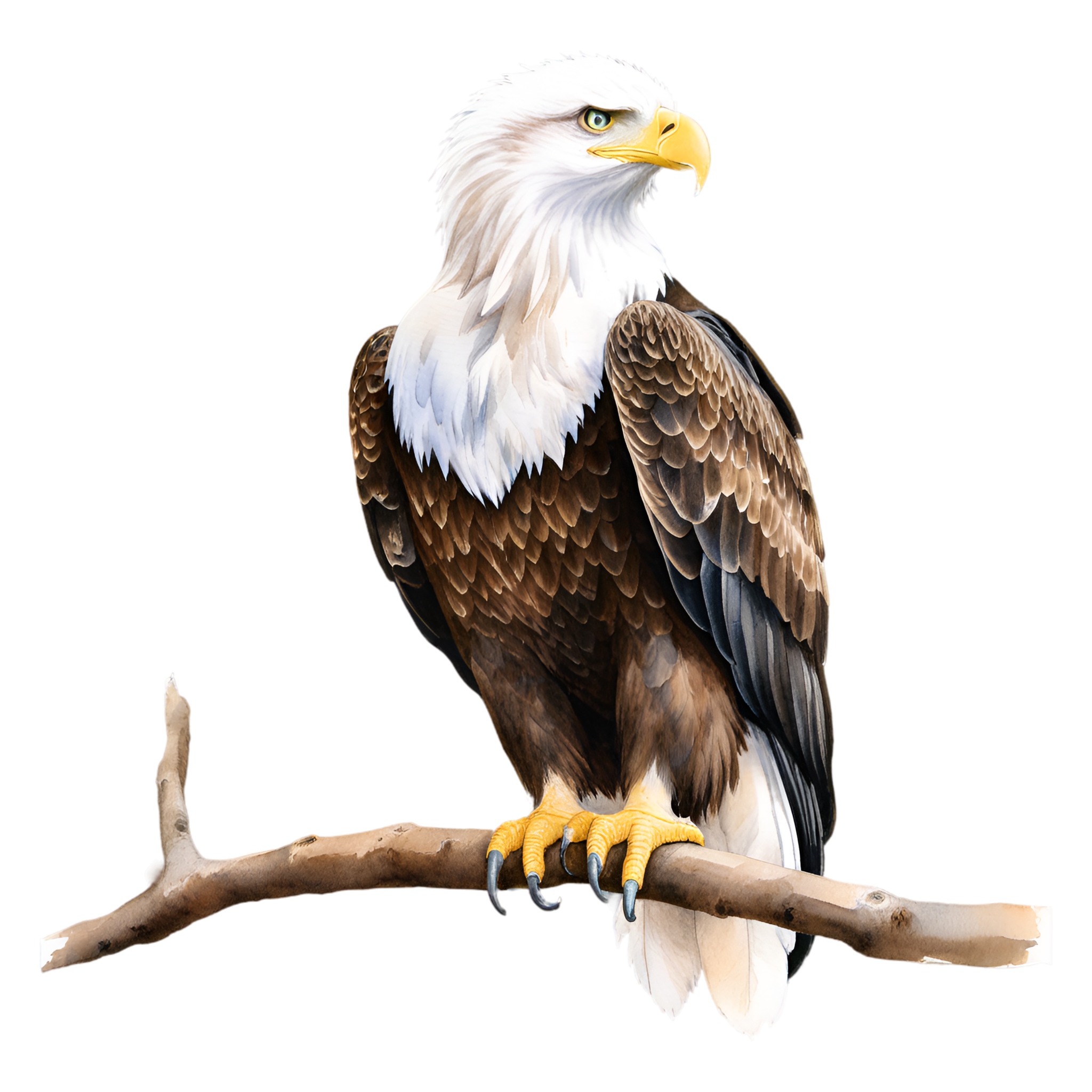
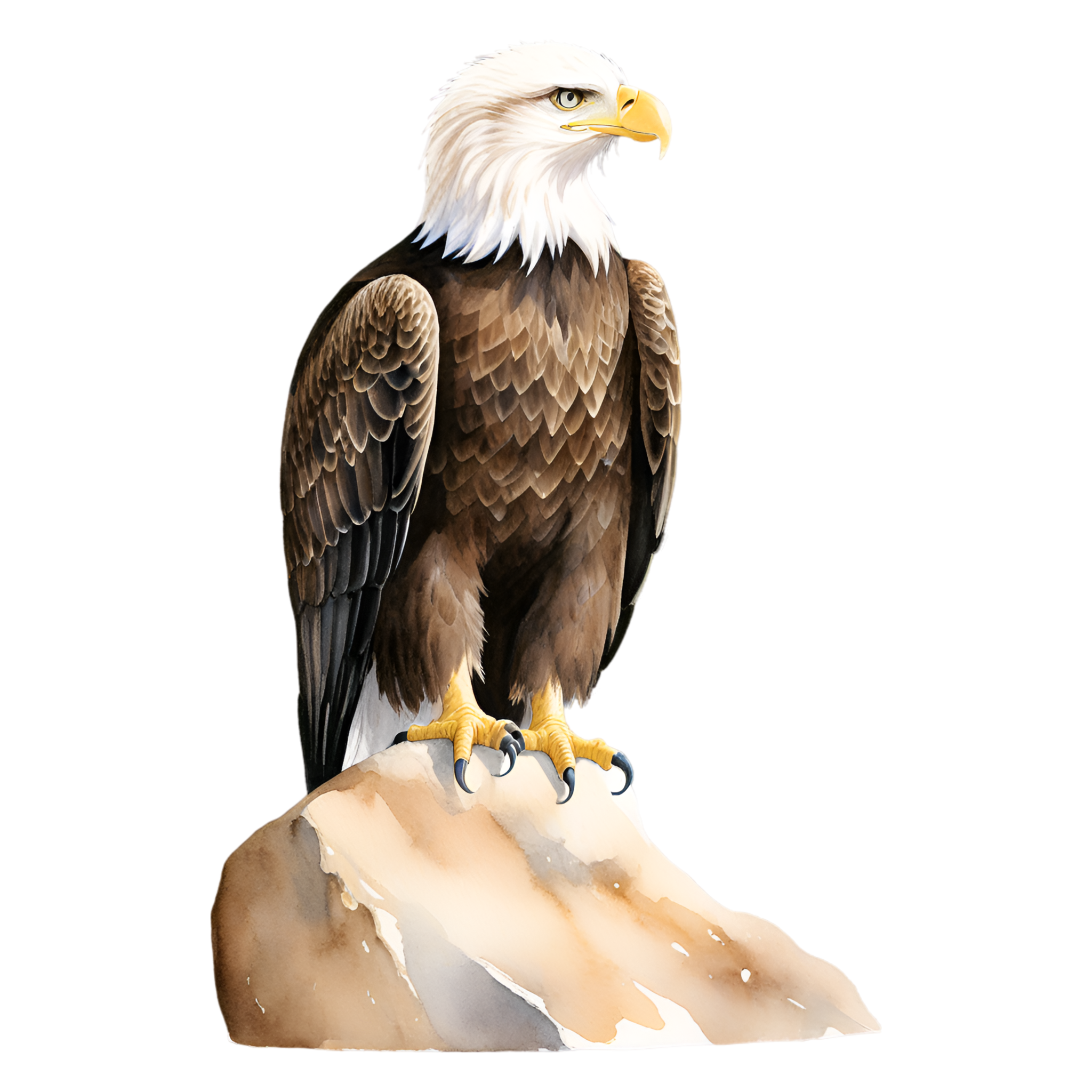
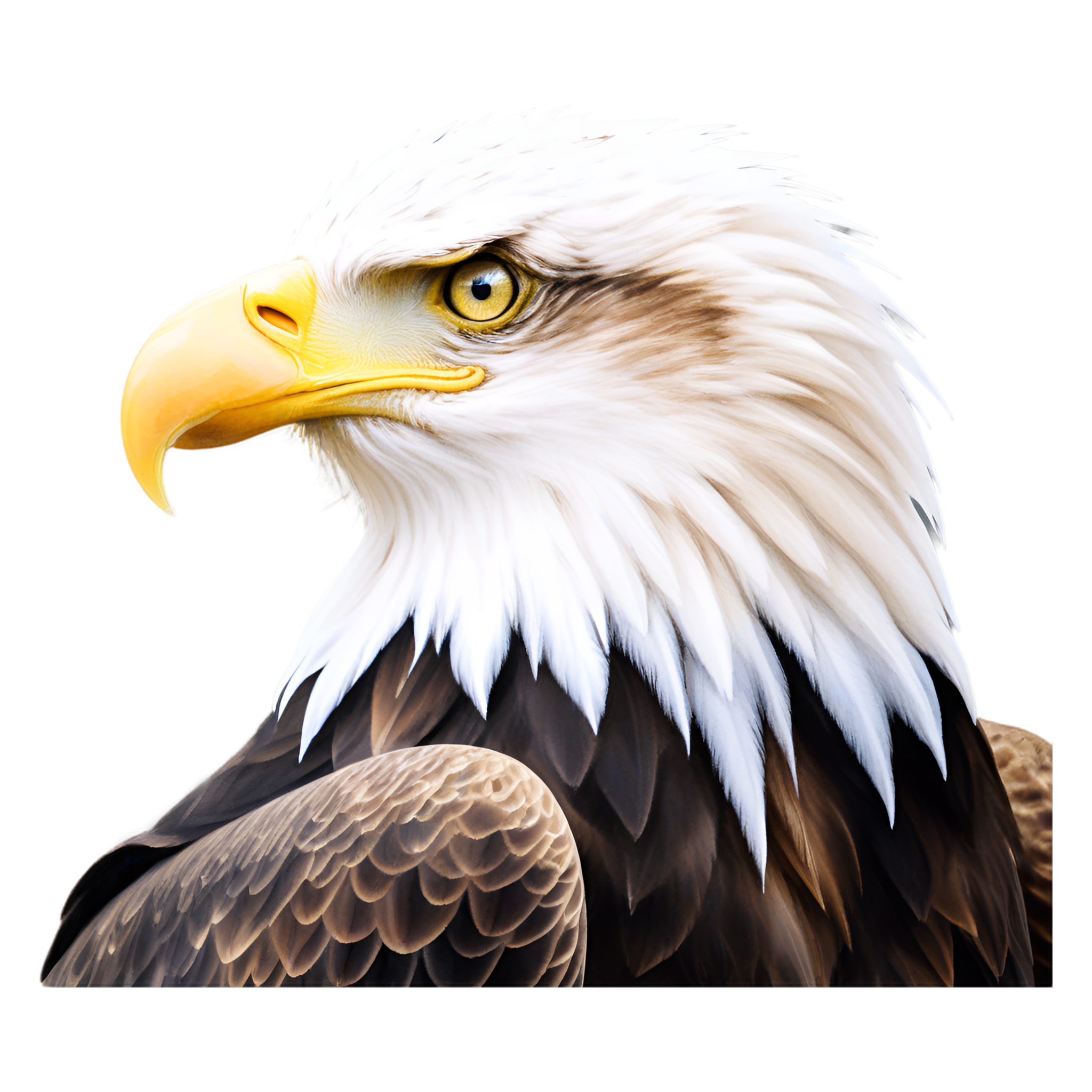
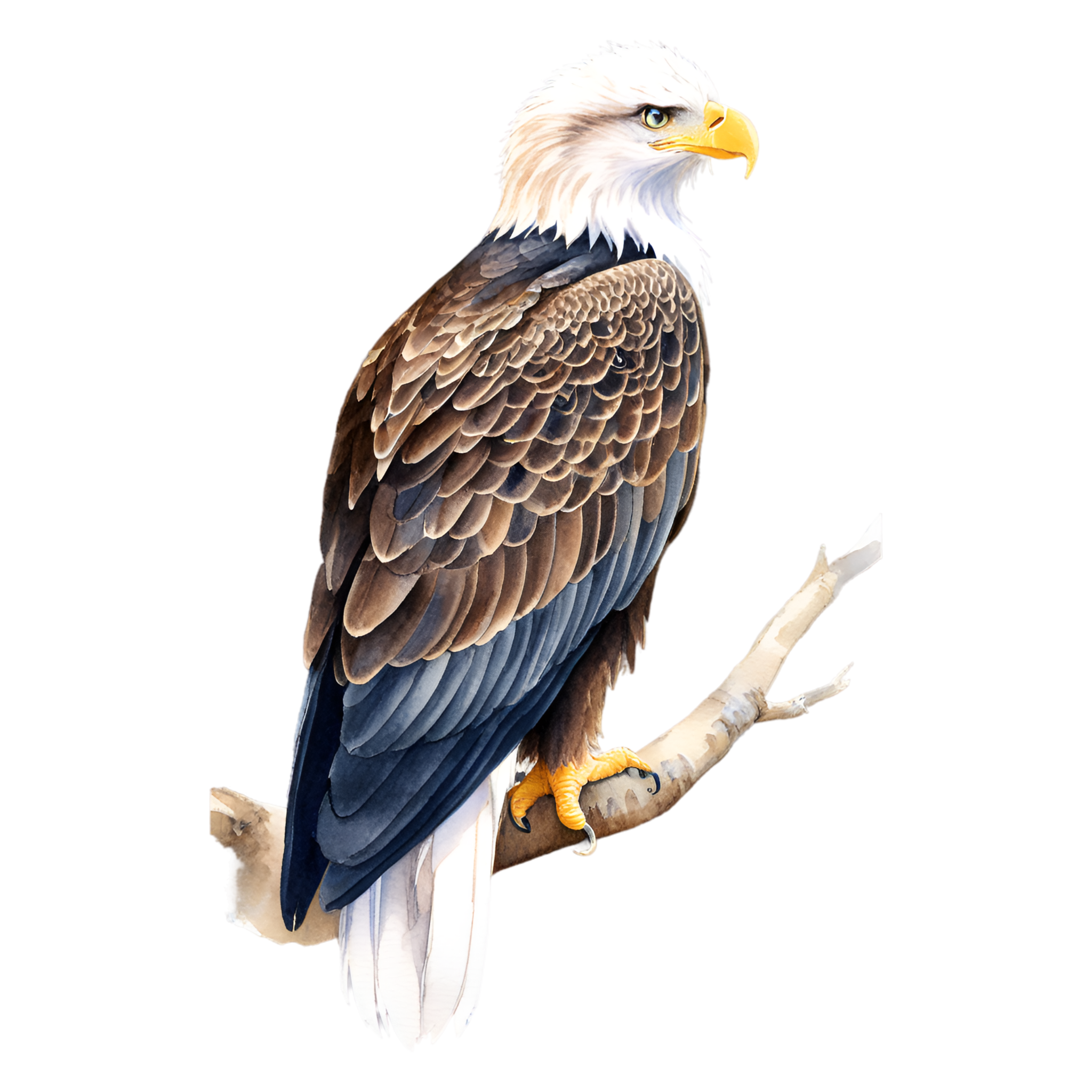
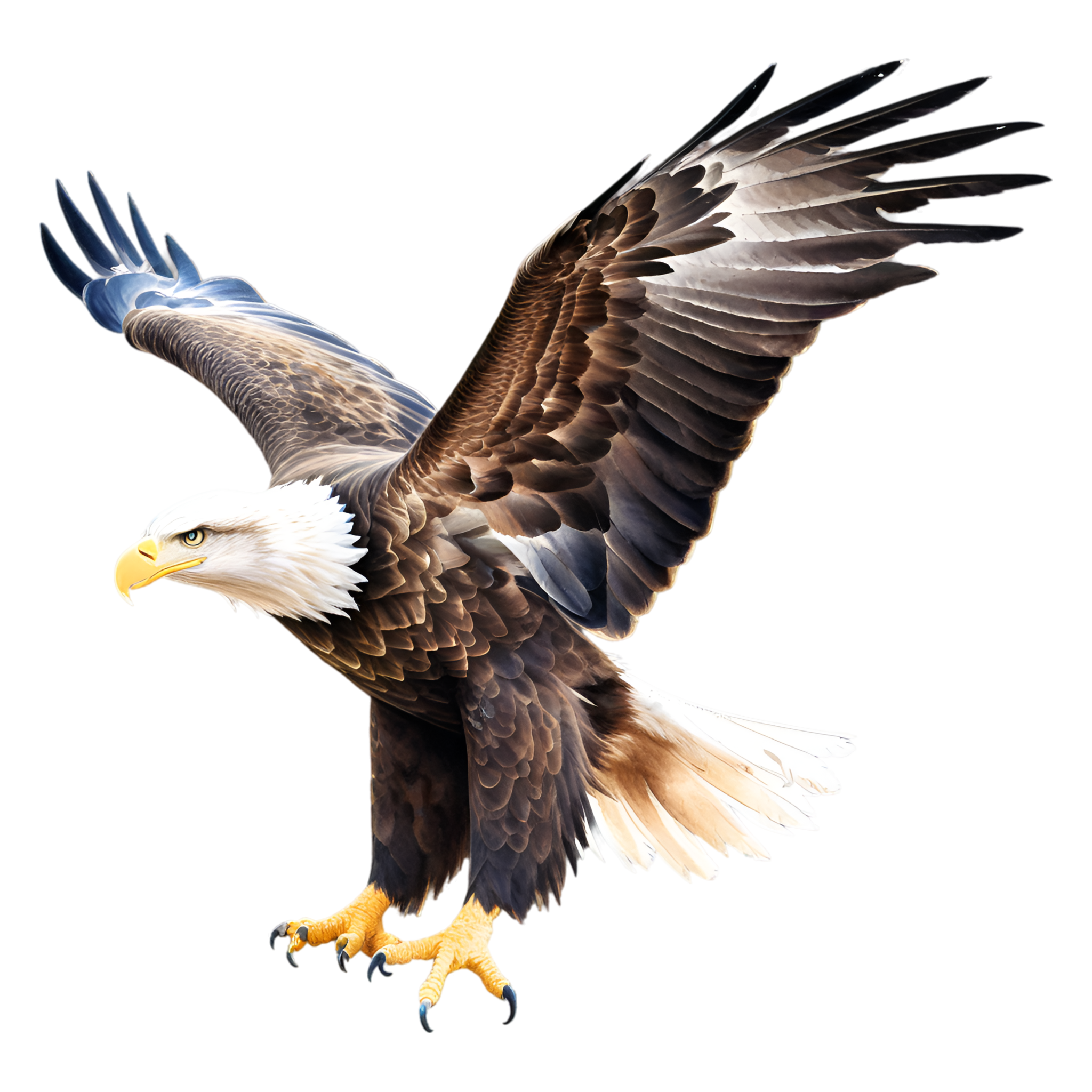
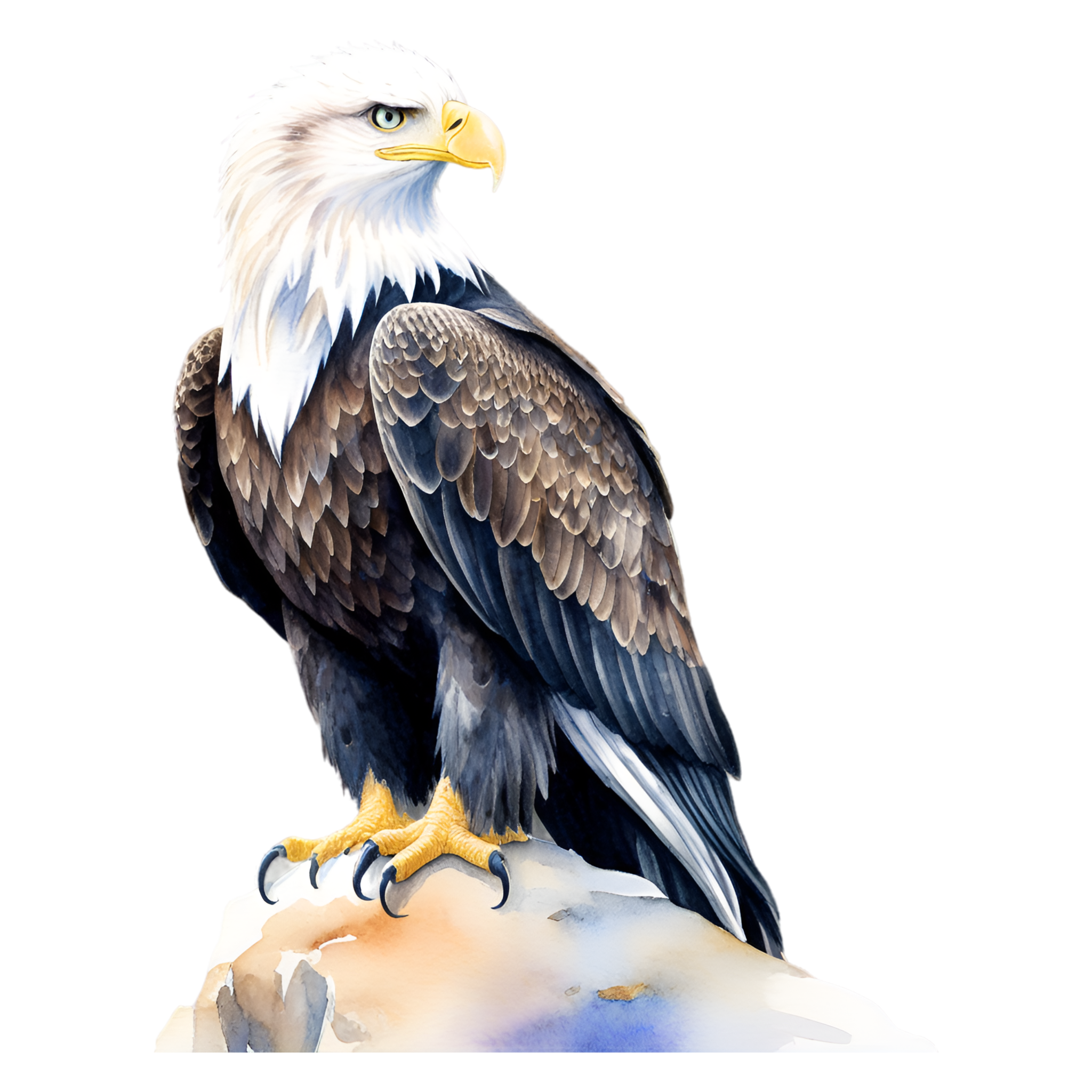
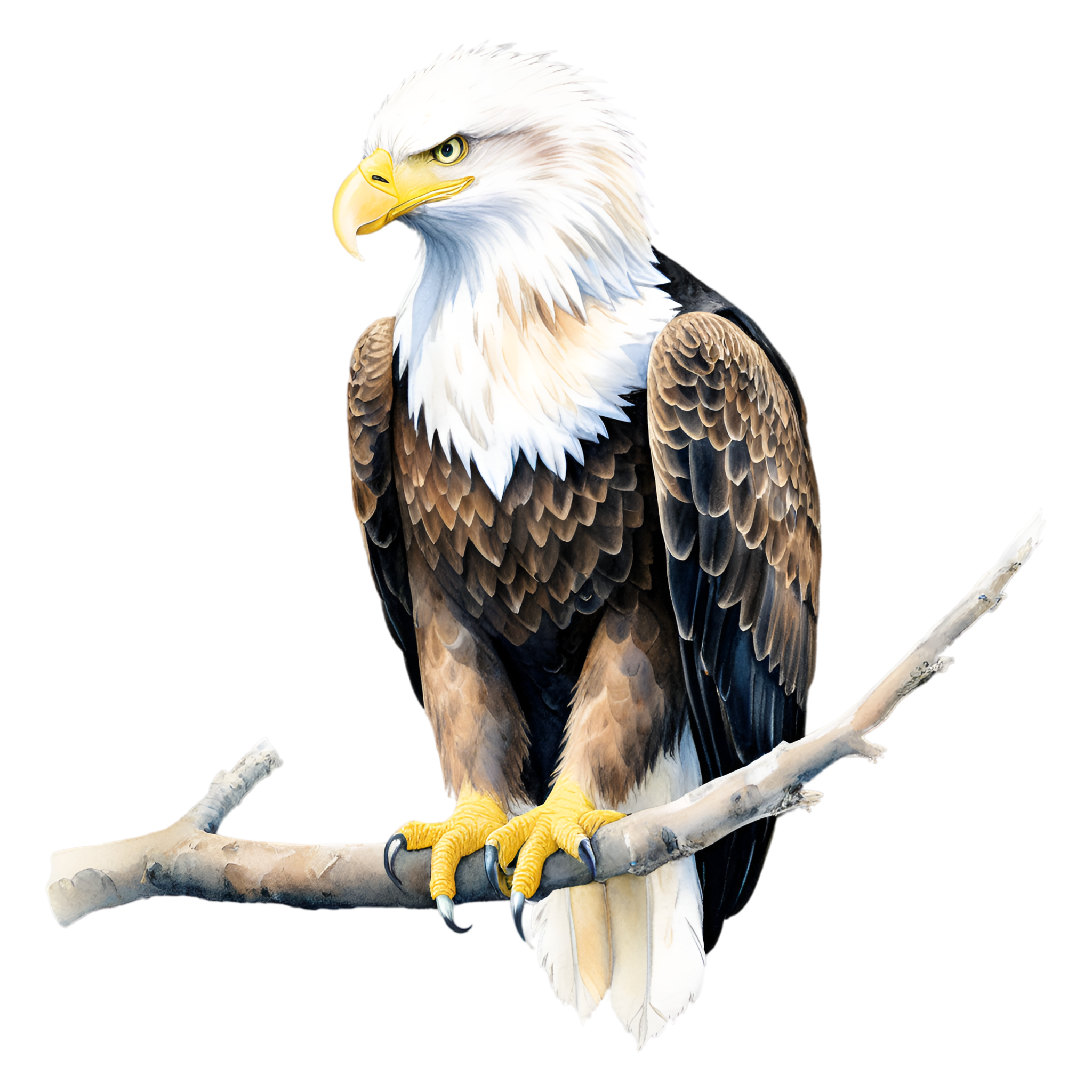
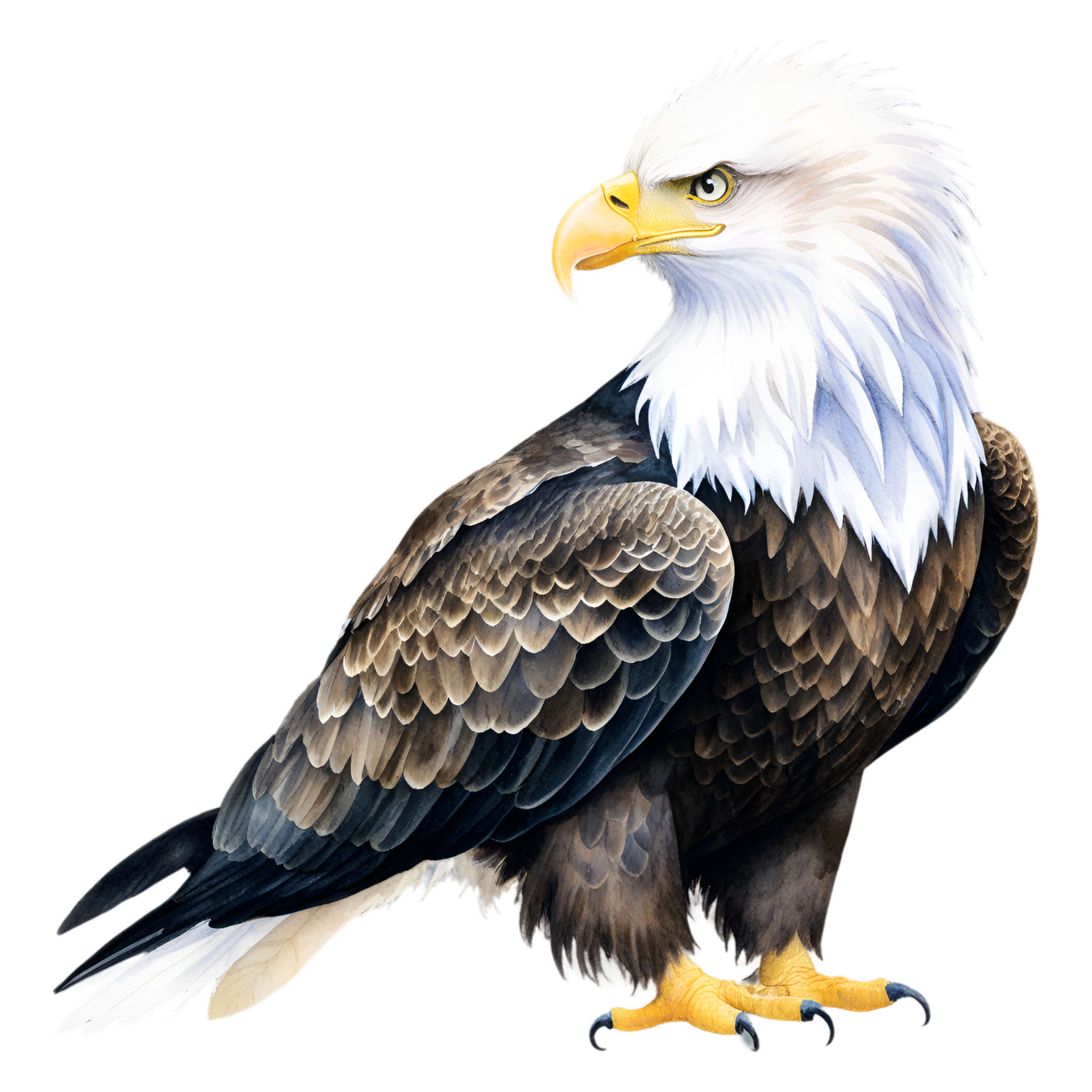
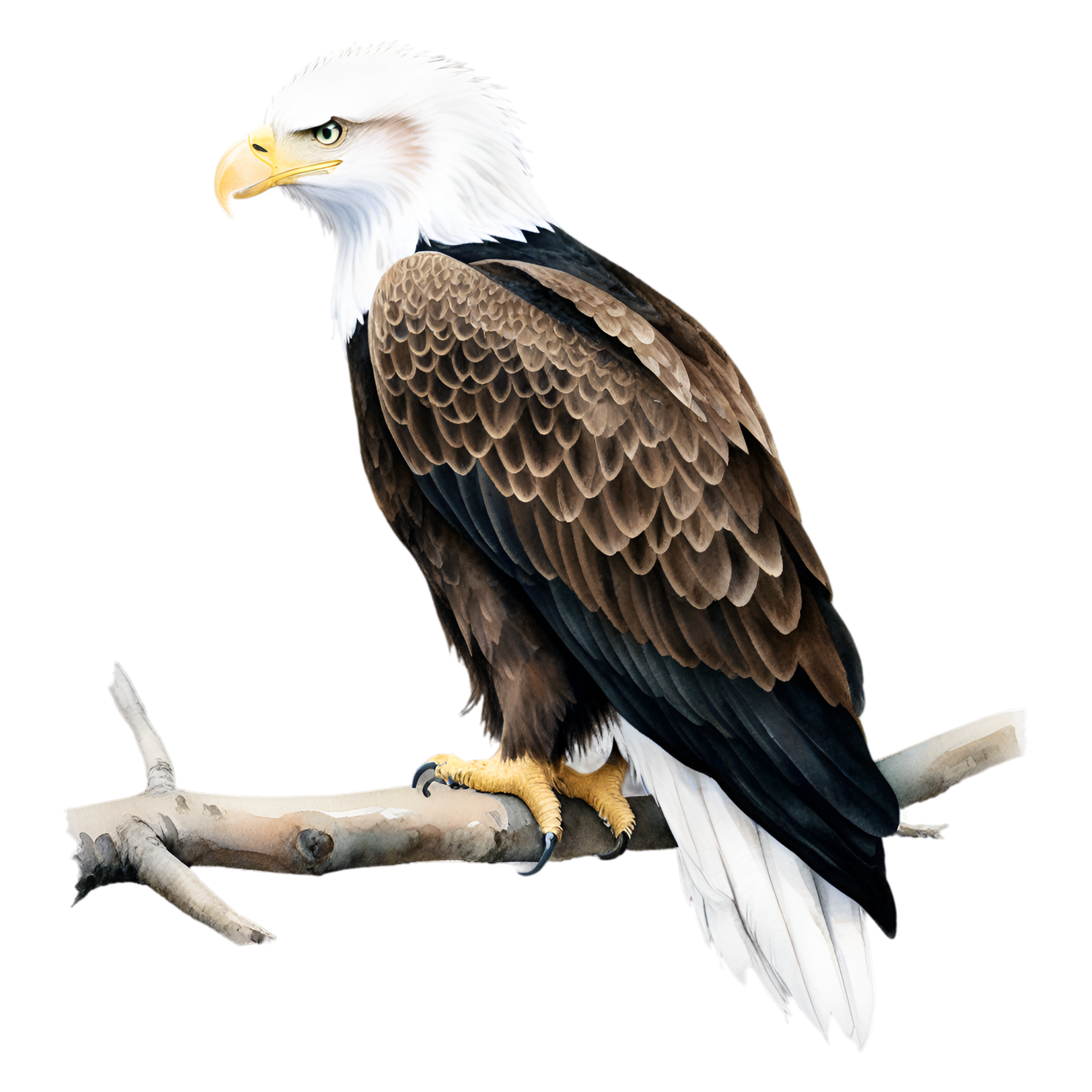
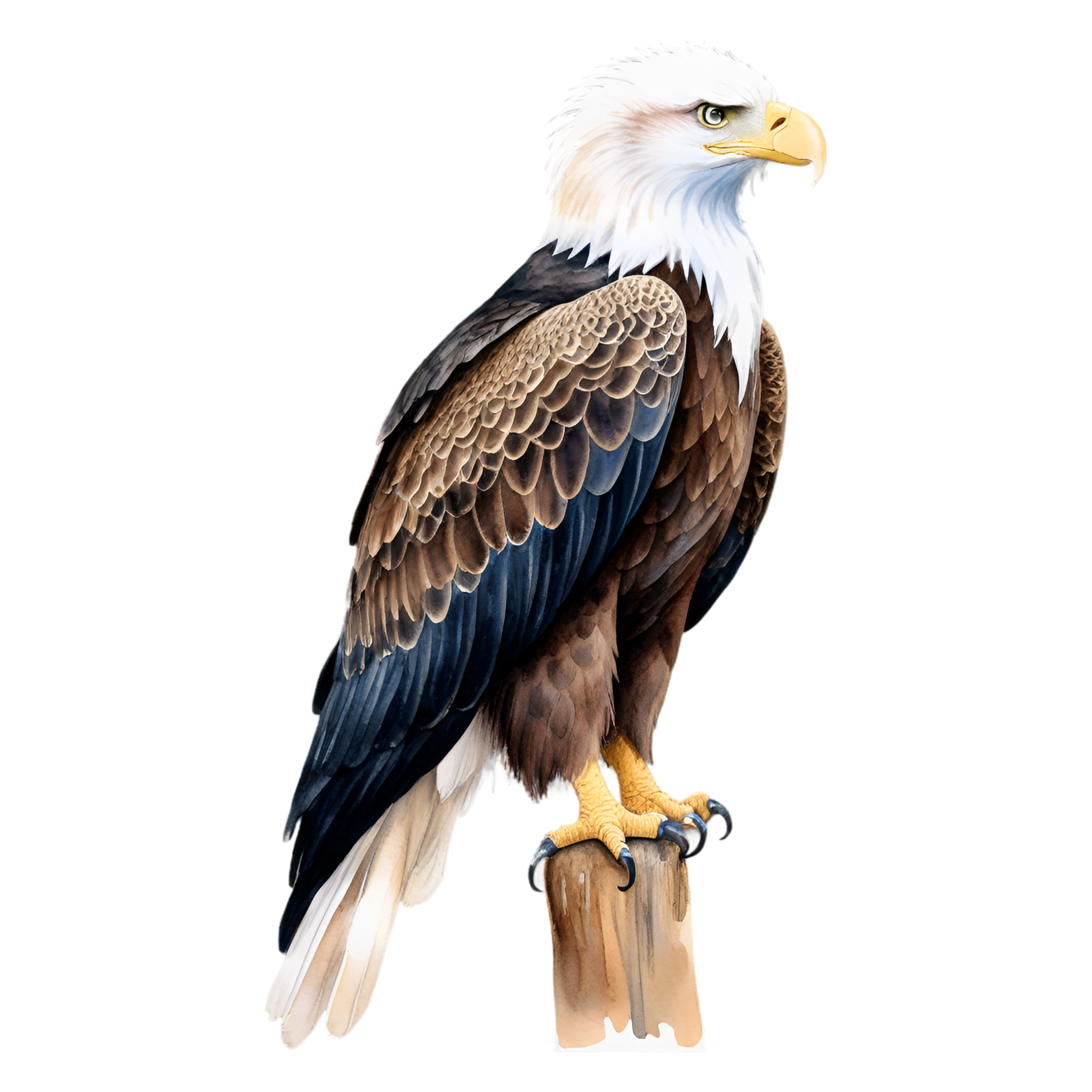
Every image shows the white-headed adult bald eagle, so the variety is in pose and perch. Four sit on branches: one facing forward (01), one seen from behind with its head turned back over its shoulder (04), one gripping the branch with large yellow talons (07) and one in a calm side view (09). Two stand on rocks (02 and 06), and one perches with wings folded on a weathered wooden post (10). One stands with no perch drawn, its head turned in profile (08). The last two give you composition options: a head-and-shoulders portrait with a hooked yellow beak and fierce eye (03), and an eagle landing with broad wings spread wide and talons forward (05).
Fourth of July, Eagle Scouts and team mascots
Bald eagles carry national meaning in the United States, so the white-headed birds suit Fourth of July and Memorial Day graphics, Veterans Day programs, military retirement certificates and Flag Day classroom handouts. Families use the portrait or the perched bird on Eagle Scout court of honor invitations, cake toppers and congratulation cards, since Eagle is the highest rank in Scouting America. Schools with an Eagles mascot can use the landing bird on spirit wear mockups, booster club flyers and yearbook pages. Raptor centers and wildlife refuges can use the perched birds on fundraiser flyers and adopt-a-bird certificates, and bird club newsletters can use the portrait to point out the heavy yellow bill of the adult.
Dark browns with a white and gold accent
The set is built on deep chocolate and umber browns, with crisp white on the heads and tails, plus a yellow beak and feet. On patriotic layouts it pairs well with navy and brick red. For a full raptor page, combine it with the hawk, falcon and owl galleries, which share the same perched, sharp-beaked look. All of them are collected in the birds of prey hub, and the wider bird clipart hub holds the songbirds.
Placing a large raptor on a page
Eagles look best with room to breathe. A perched bird with folded wings is tall and narrow, so it fits the side panel of a certificate or the right edge of a flyer. The landing bird with spread wings is wide and works as a header across the top of a program. Flip it horizontally so the eagle faces into your text rather than off the page. Each file is a transparent PNG at 2048 by 2048 pixels, about 6.8 inches square at 300 DPI, which covers a full-width letter-size header. For an embroidered Eagle Scout patch or a cross-stitch, the palette panel lists the nearest DMC floss colors for the browns and whites, which saves guessing between near-identical dark shades.