Buteos, accipiters and the famous scream
Hawk covers several groups of daytime raptors. The soaring hawks of open country, like the Red-tailed Hawk and Red-shouldered Hawk, are buteos: broad wings, a short wide tail, and a habit of circling high or sitting on roadside poles watching for rodents. Accipiters such as the Cooper's Hawk have short rounded wings and a long tail for chasing birds through woodland, and they often turn up at backyard feeders. Adult Red-tailed Hawks show the brick-red tail the species is named for, while young birds have a brown, banded tail. In most hawks the female is noticeably larger than the male. The raspy scream of the Red-tailed Hawk is the sound films often dub over eagles, whose real calls are thin and chirping.
Perched, standing, landing: what the ten images show
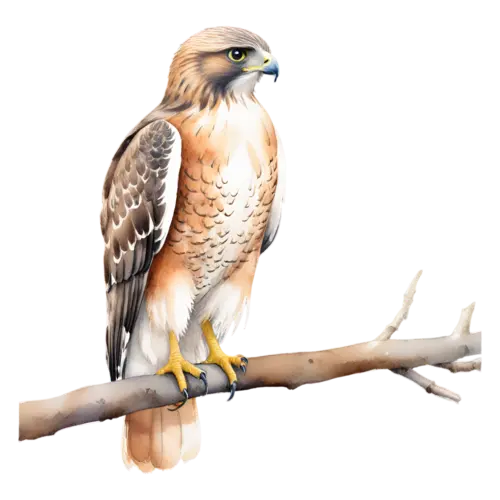
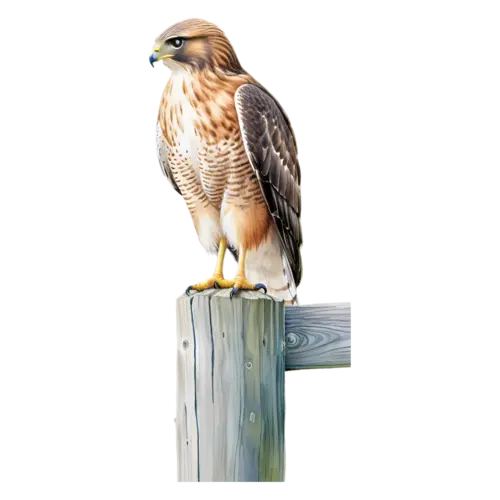
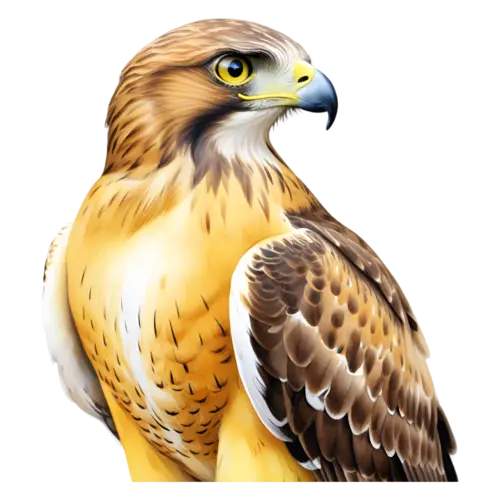
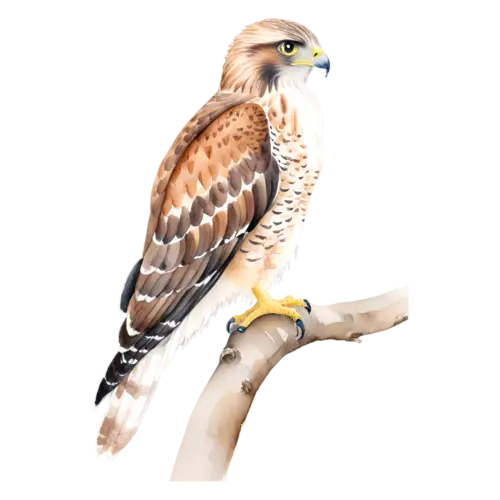
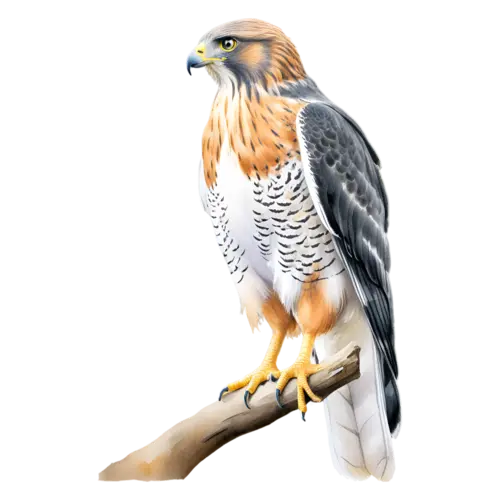
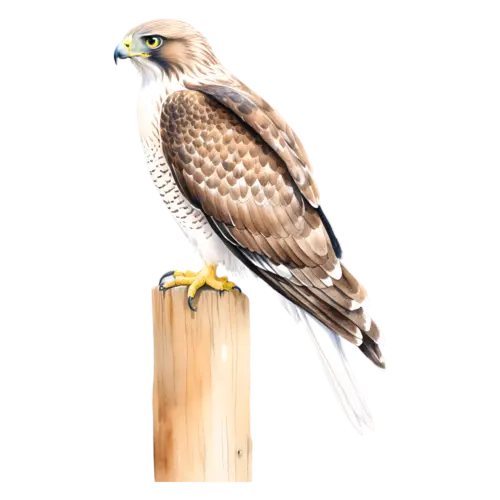
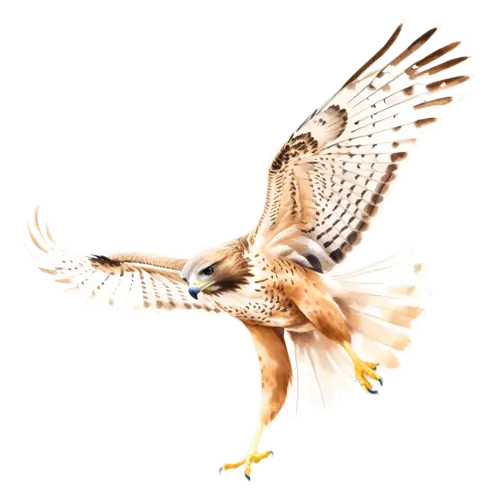
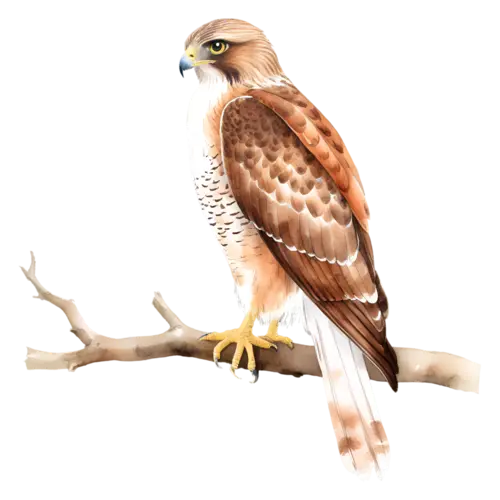
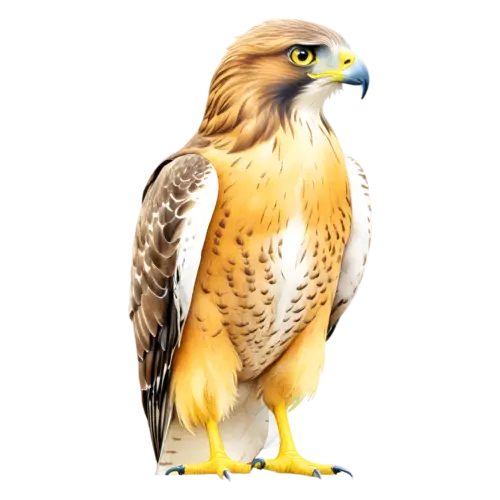
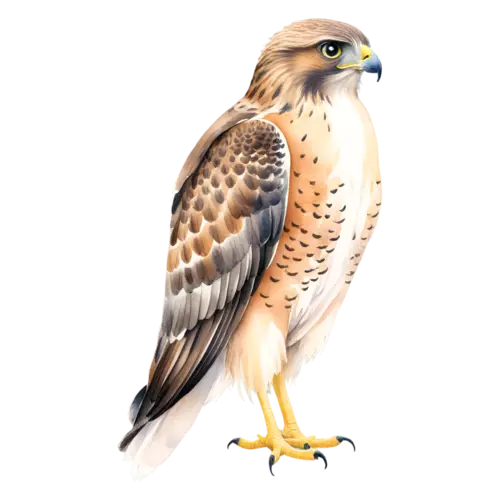
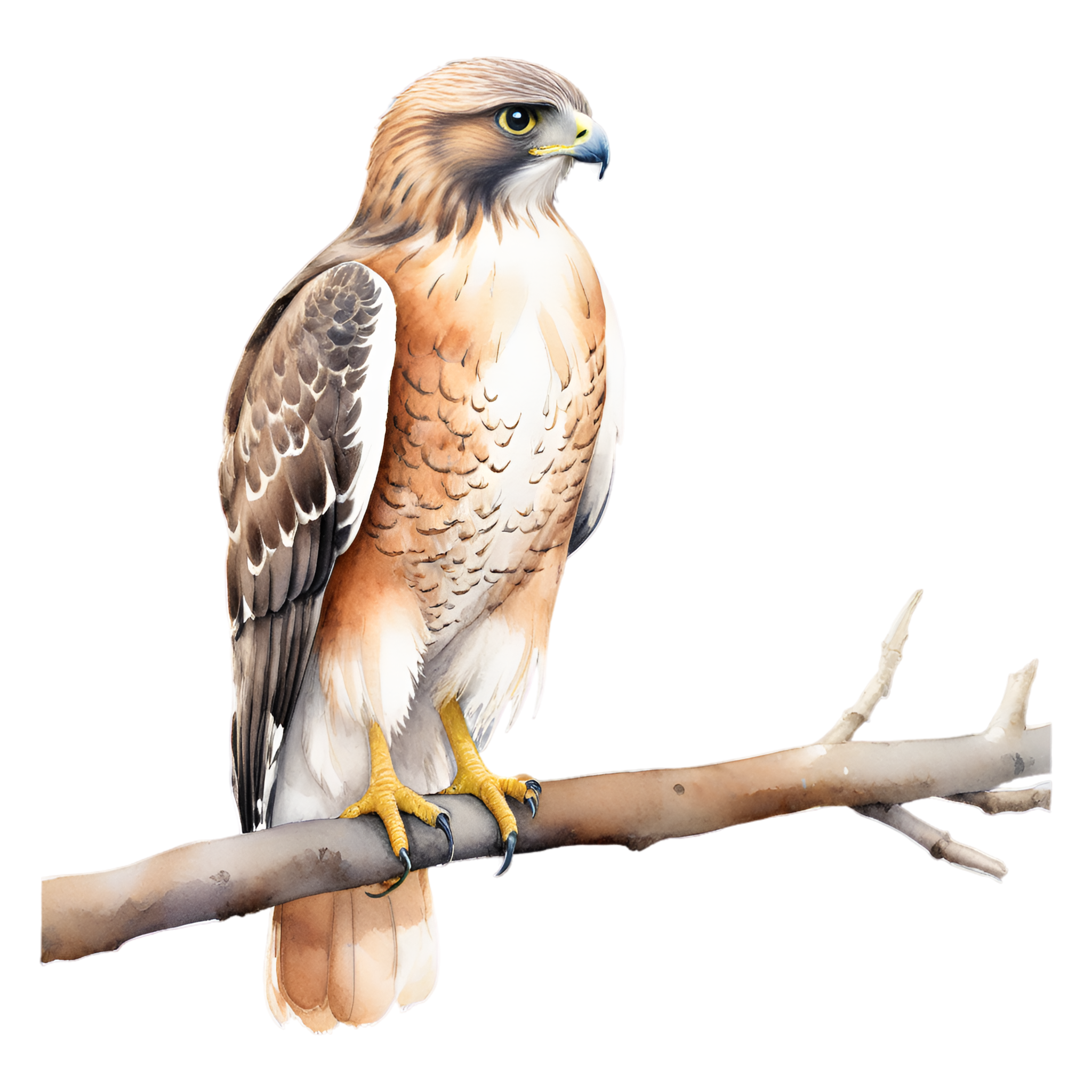
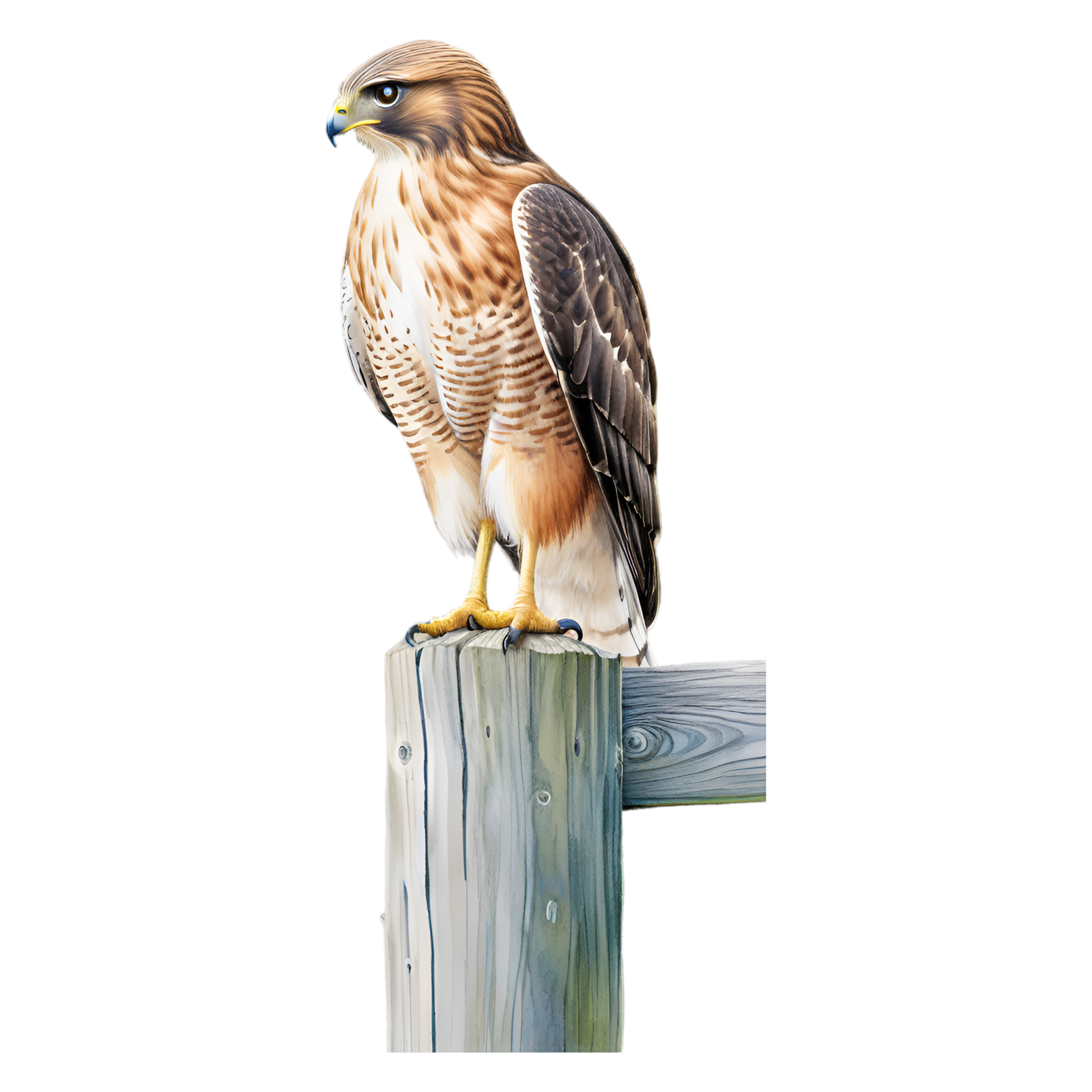
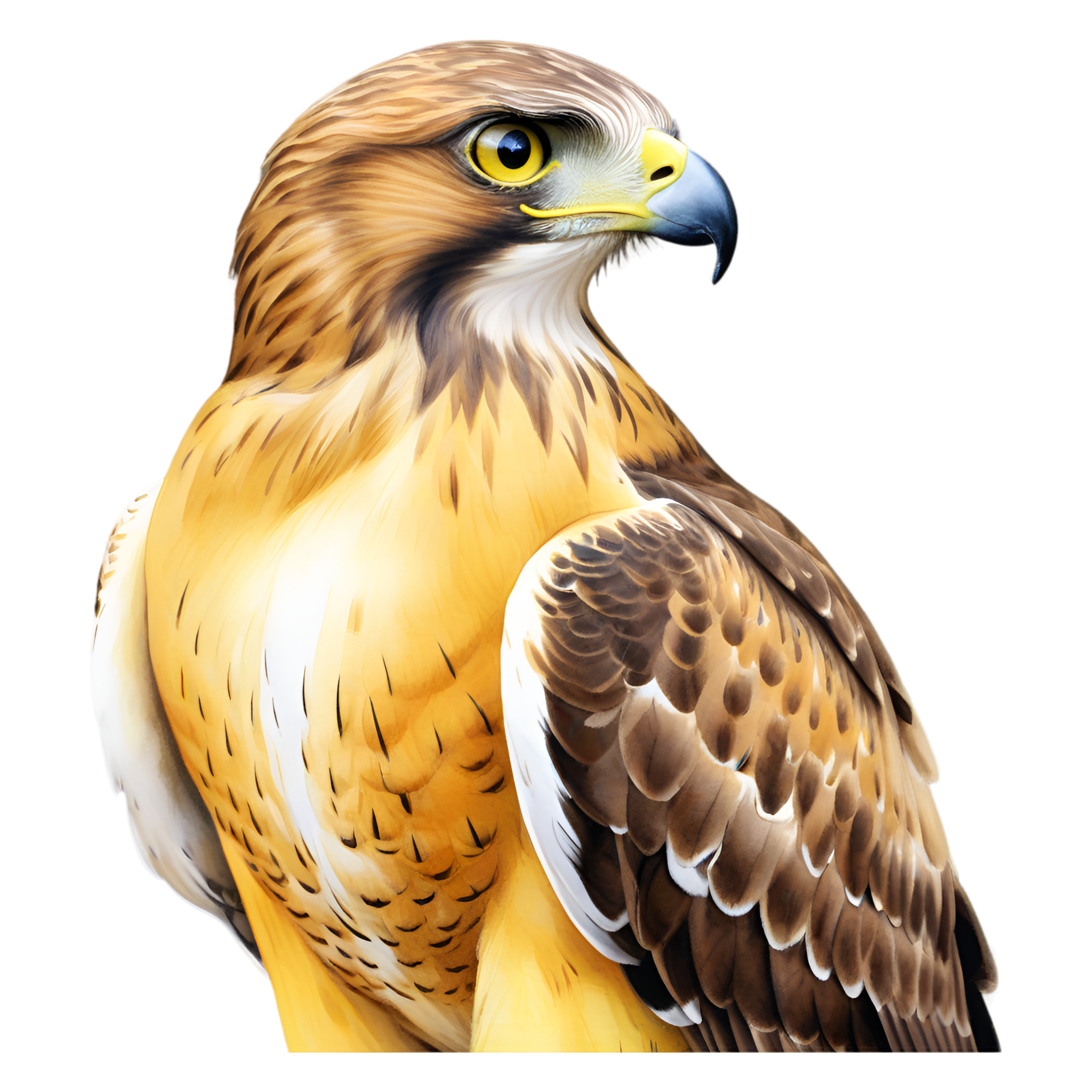
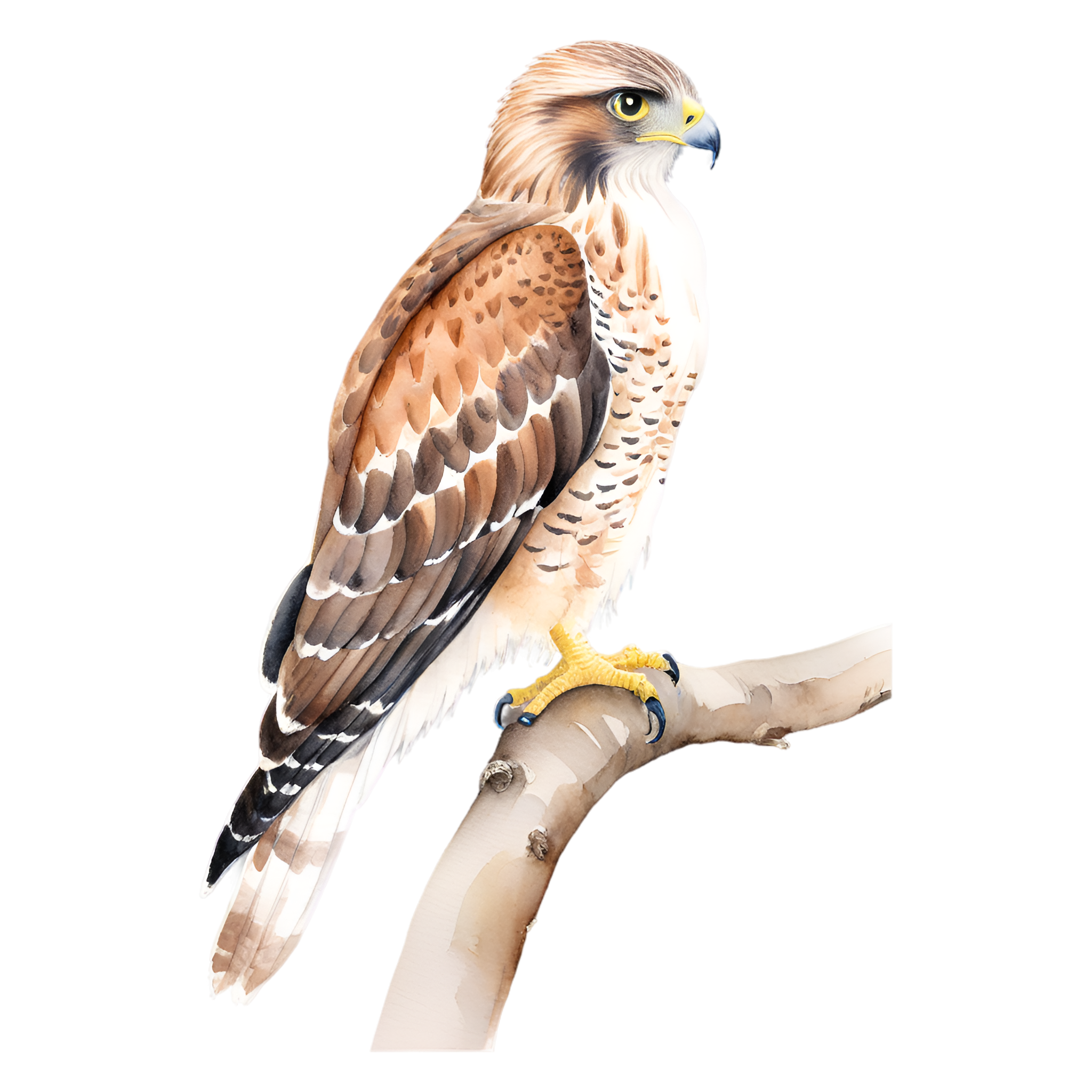
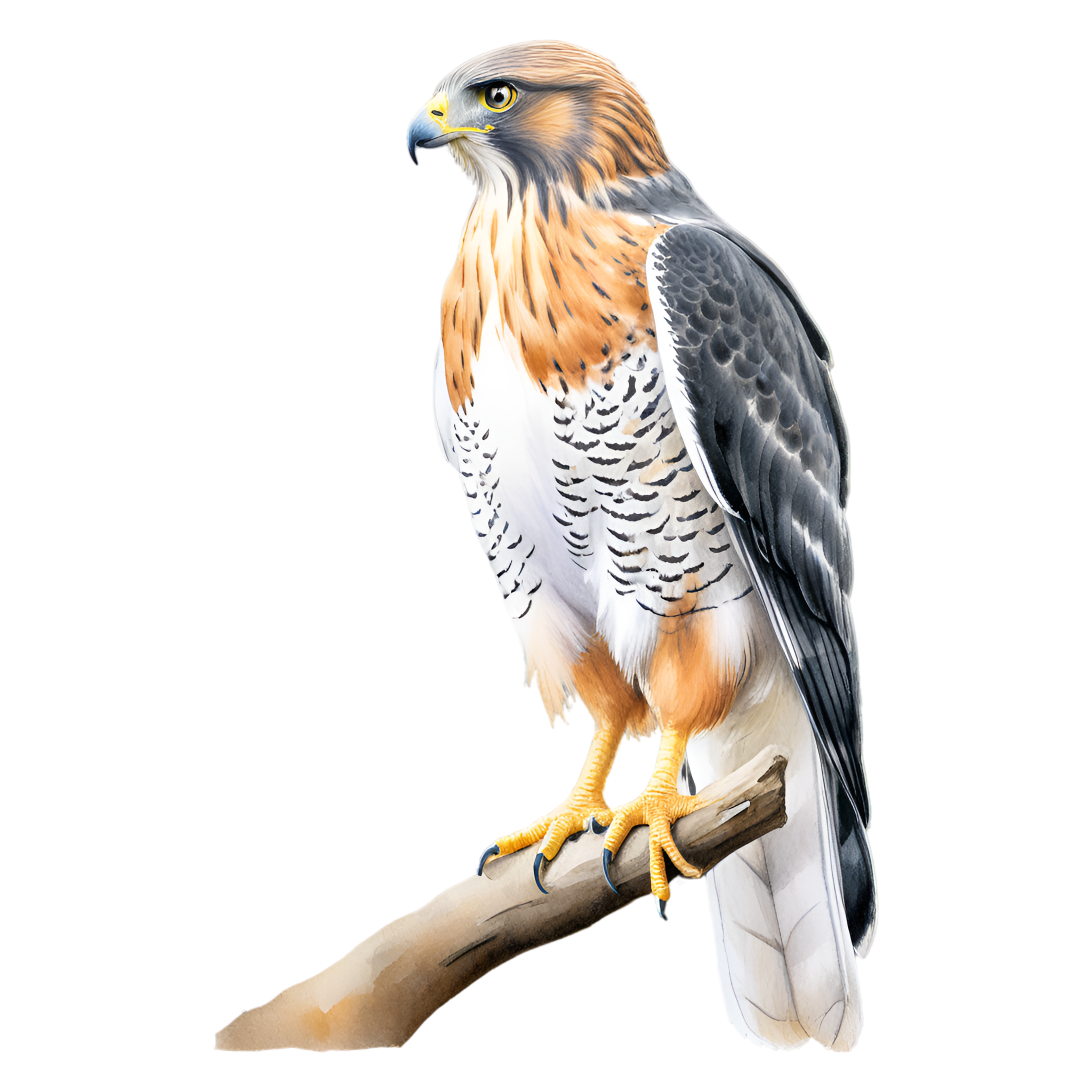
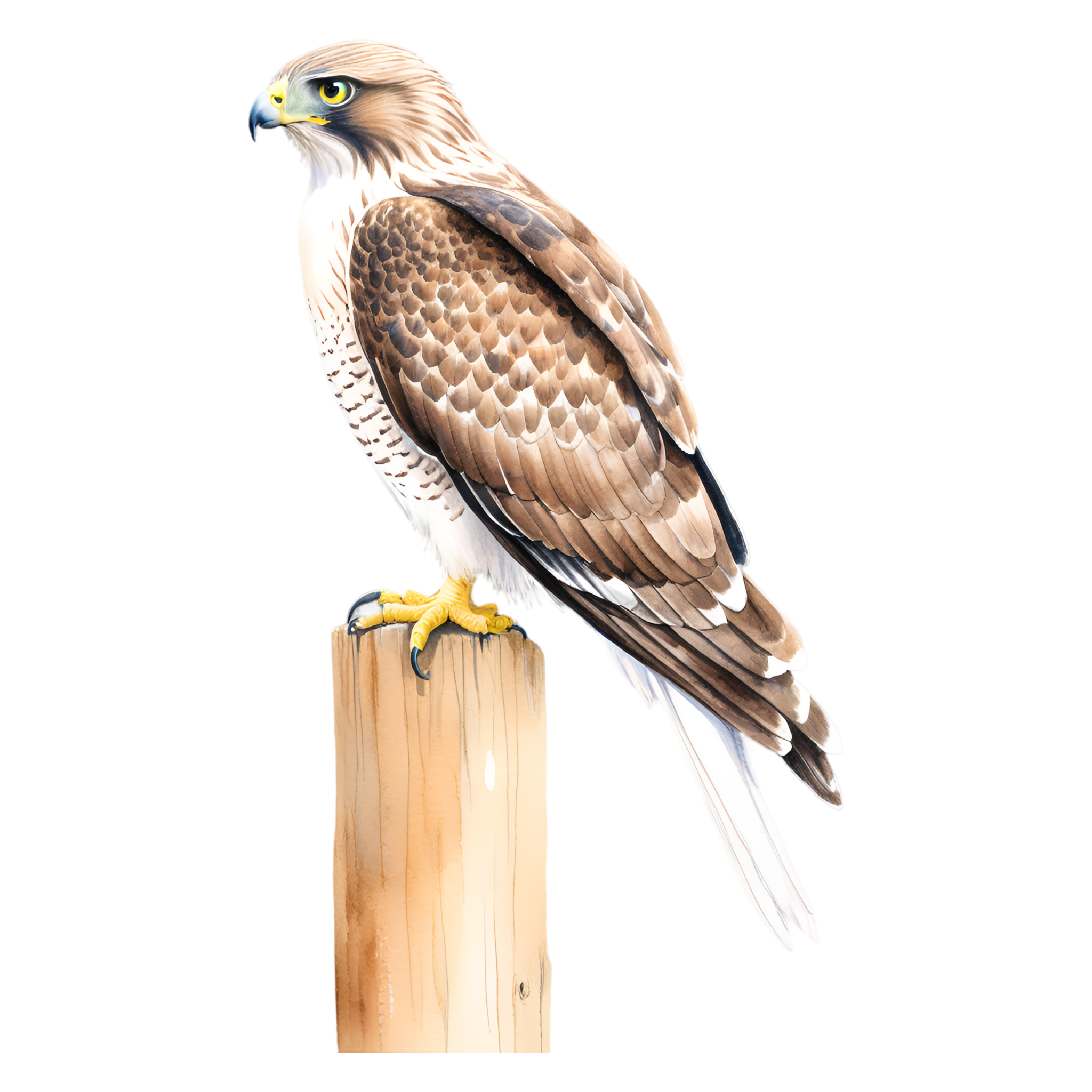
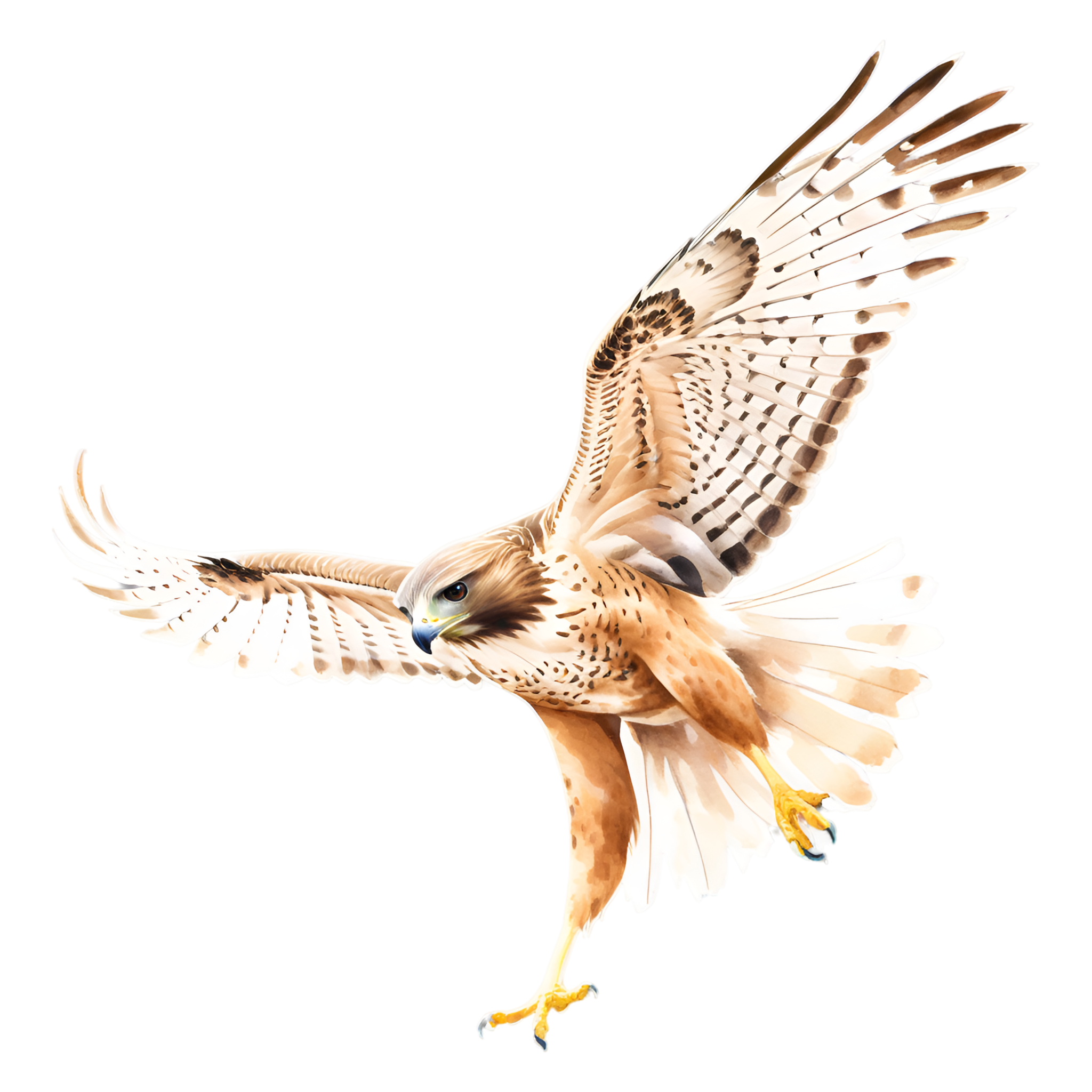
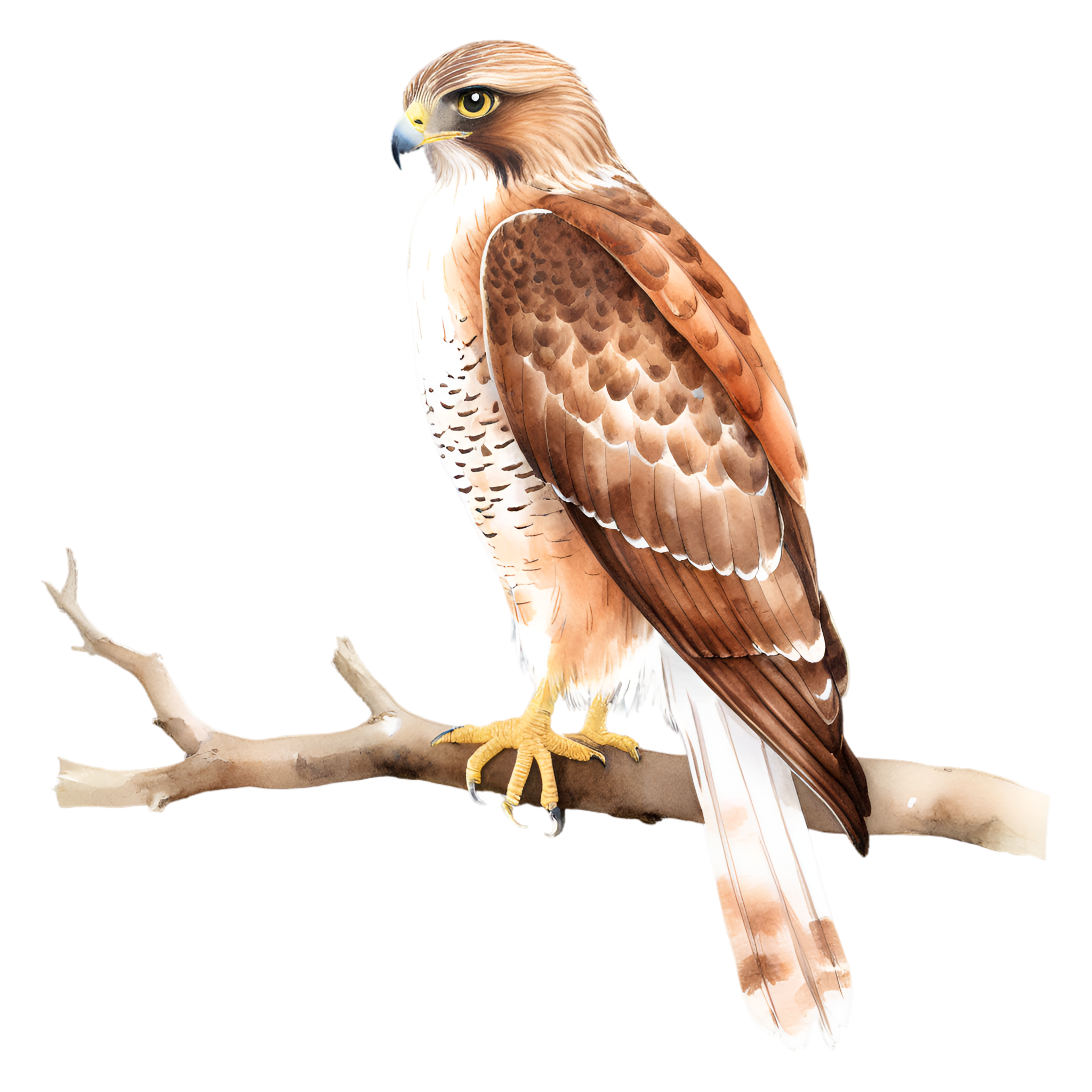
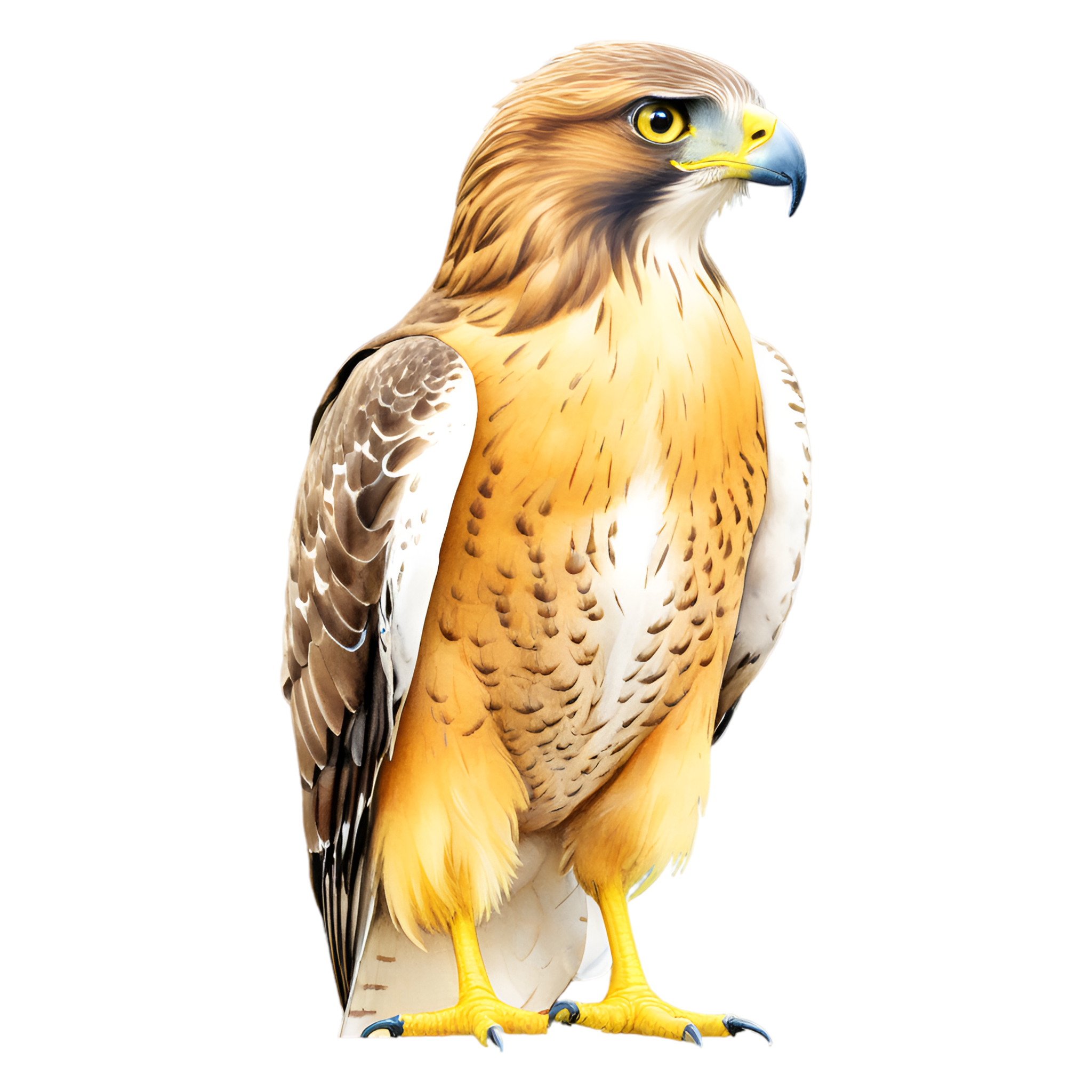
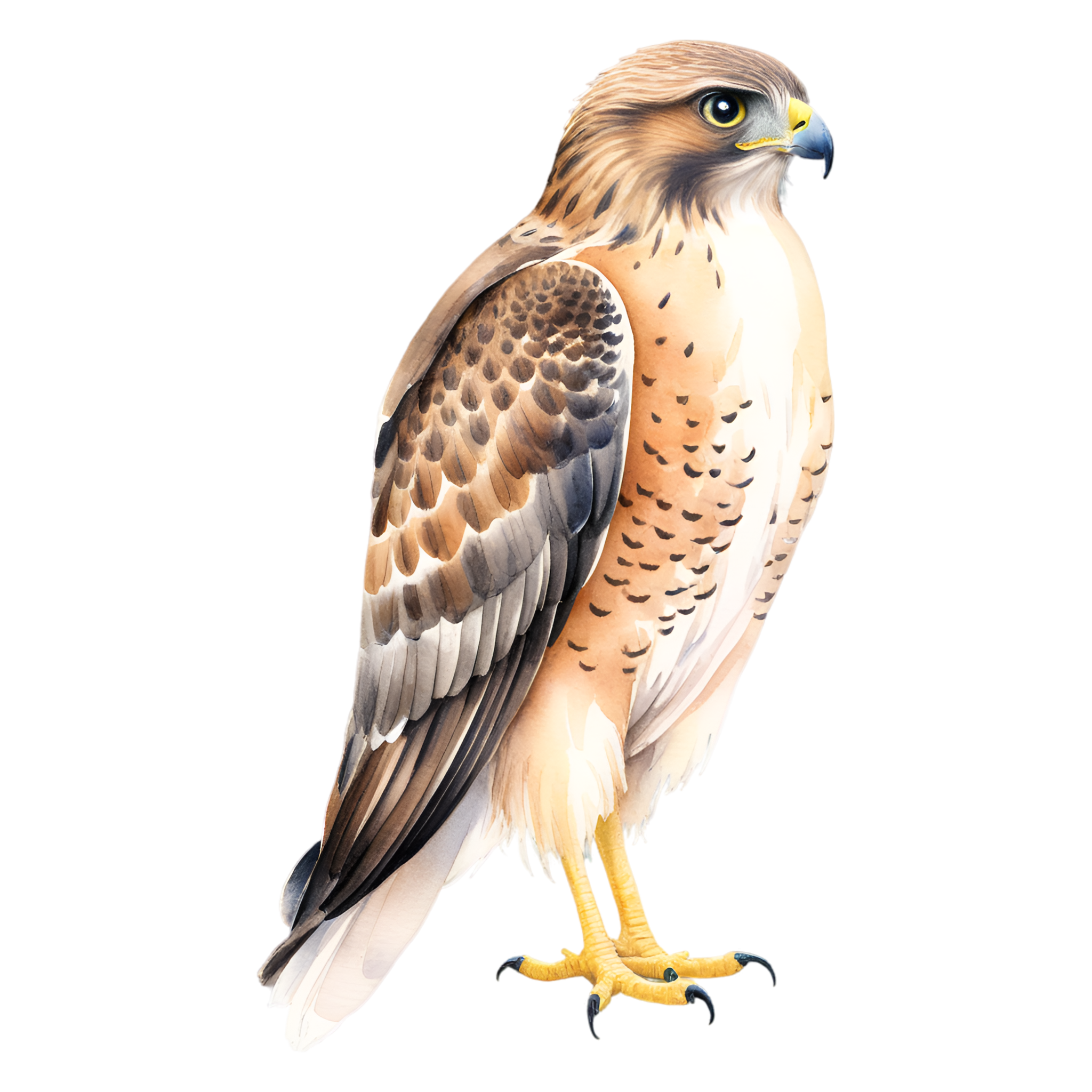
The set mixes plumages. One hawk on a branch has the rusty-red tail and brown back of a red-tail, and another on a fence post shows the streaked brown-and-white breast typical of the same species. One perches on a bare branch with barred chestnut shoulders like a Red-shouldered Hawk, and another stands upright with a slate-gray back and orange-barred breast like an adult Cooper's Hawk. There is a head-and-shoulders portrait with a hooked beak and yellow cere, a second branch perch with a rusty back and banded tail, one gripping a post with yellow talons, two hawks standing without a perch (one with a golden streaked breast, one in side profile with broad rounded wings folded), and one landing with wings spread and tail fanned. Talons, beak and eye carry enough detail for close crops, which helps when you need a tight portrait inside a circular badge.
Mascots, fall hawk watches and raptor education
Hawks is a common team name for American schools and leagues, so the set gets a lot of use on spirit wear, booster-club flyers, yearbook pages and game-day programs. Raptor rehabilitation centers and nature centers use hawk art for donation drives, adopt-a-raptor certificates and education boards. Fall is the other big season: from September through October hawks migrate south in large numbers along ridges and coastlines, and hawk-watch sites run counts and festivals that need flyers, T-shirts and tally sheets. The images also suit Father's Day cards, cabin and lodge decor, and science-class units on food chains and predators. Scout troops and 4-H clubs use raptor art for badge workbooks and fair displays.
Browns, cream and chestnut for a field-guide look
This is the most neutral of the bird sets: warm browns, cream, chestnut and gray, with yellow on the cere and feet. The most frequent DMC matches on the page include 3866 Mocha Brown Ultra Very Light, 739 Tan Ultra Very Light and 3024 Brown Gray Very Light, with Copic Y32 Cashmere for the pale breast. For a birds-of-prey poster, combine it with the eagle, falcon and owl galleries, or browse the whole group in the birds of prey hub. The muted palette also fits the autumn hub during migration season.
Tip: pick the right pose for logos and shirts
Each hawk is a 2048 by 2048 pixel transparent PNG, about 6.8 inches square at 300 DPI. Fine barring and streaks blend together when a bird is printed small, so use the head-and-shoulders portrait for anything under about 1.5 inches, such as a badge, button or sticker. The landing pose with spread wings has the strongest outline and suits a chest print or banner. Screen printing can't reproduce watercolor gradients without halftone separations, so for team shirts use direct-to-film transfers or sublimation on light polyester, which keep the soft washes intact. For vinyl decals on trucks, coolers or tackle boxes, the side-profile perch reads clearly from a distance.