Built for speed: what makes a falcon
Falcons (Falco) are birds of prey with long, pointed wings, a compact body and a notched upper bill, a small tooth-like edge they use to dispatch prey. Many species have a dark stripe below the eye, often called a sideburn or mustache mark, which is thought to reduce sun glare. The peregrine falcon is famous as the fastest animal on Earth, reaching speeds well over 200 miles per hour in a hunting dive. Peregrines nearly disappeared from much of North America because of the pesticide DDT, then recovered after it was banned and were removed from the US endangered species list in 1999. Today many nest on skyscrapers and bridges. Smaller falcons such as the American kestrel hunt insects and mice, often hovering in place over a field before dropping.
Ten falcons on post, glove, wire and branch
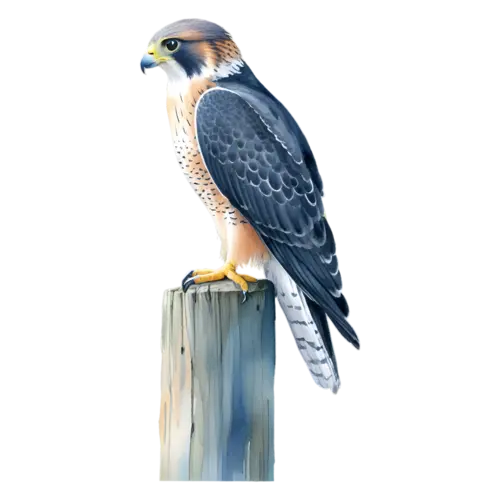
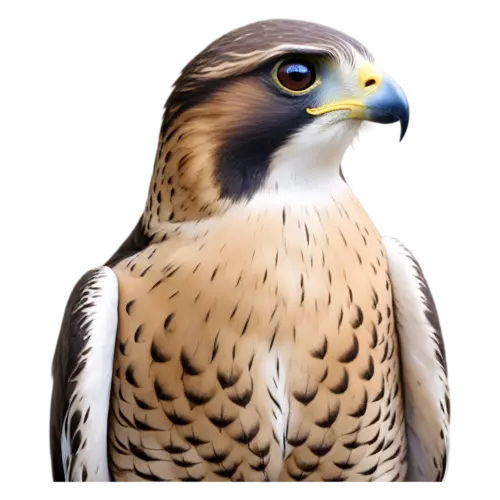
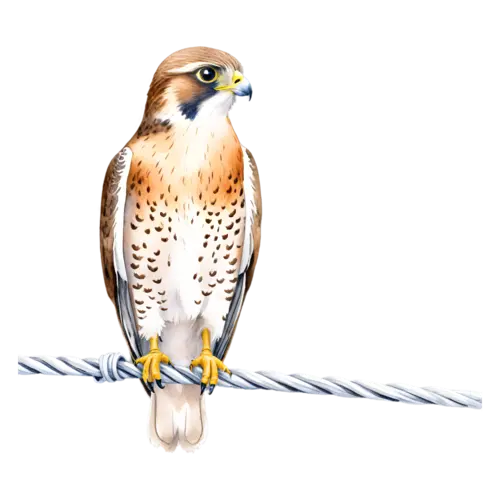
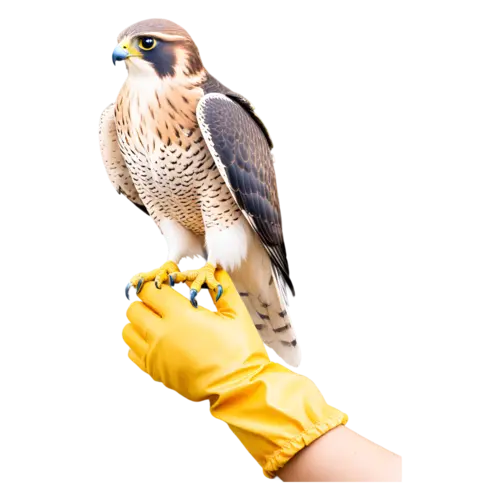
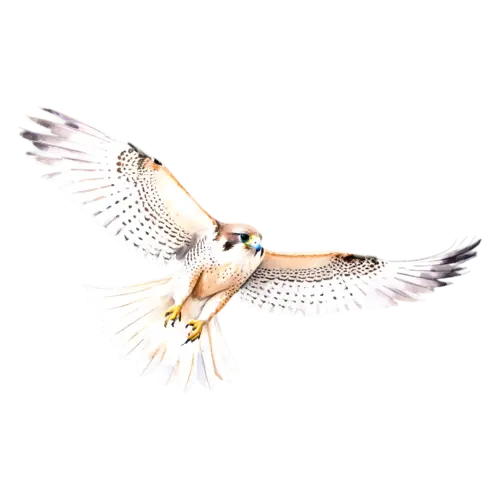
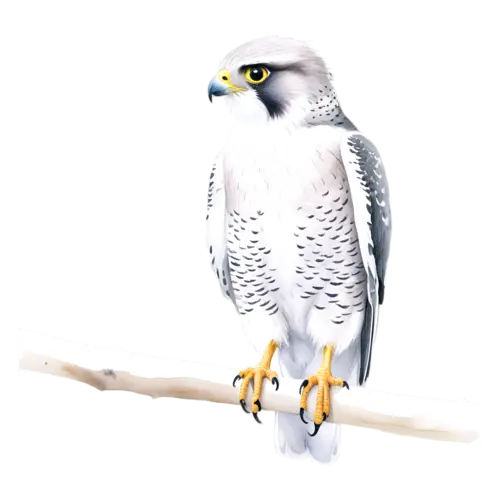
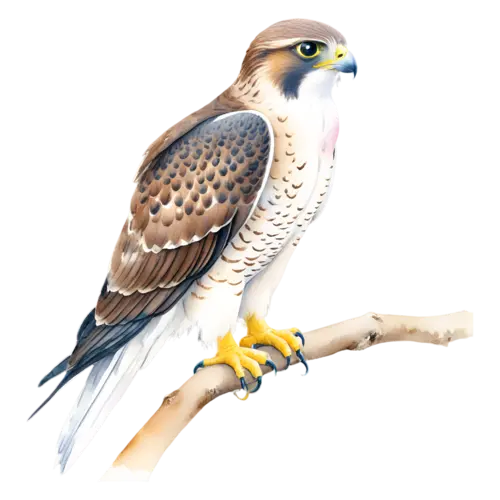
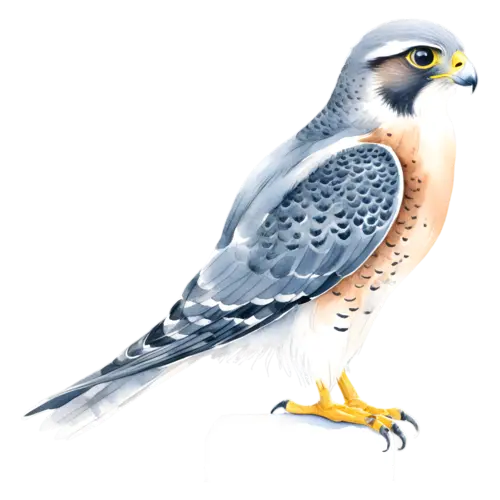
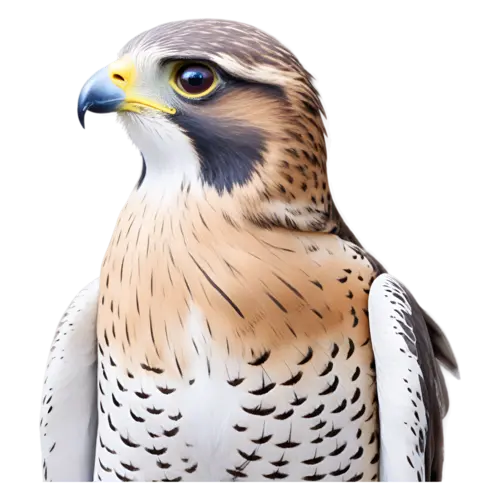
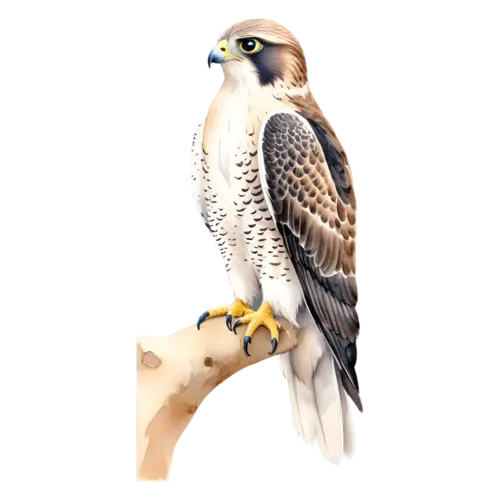
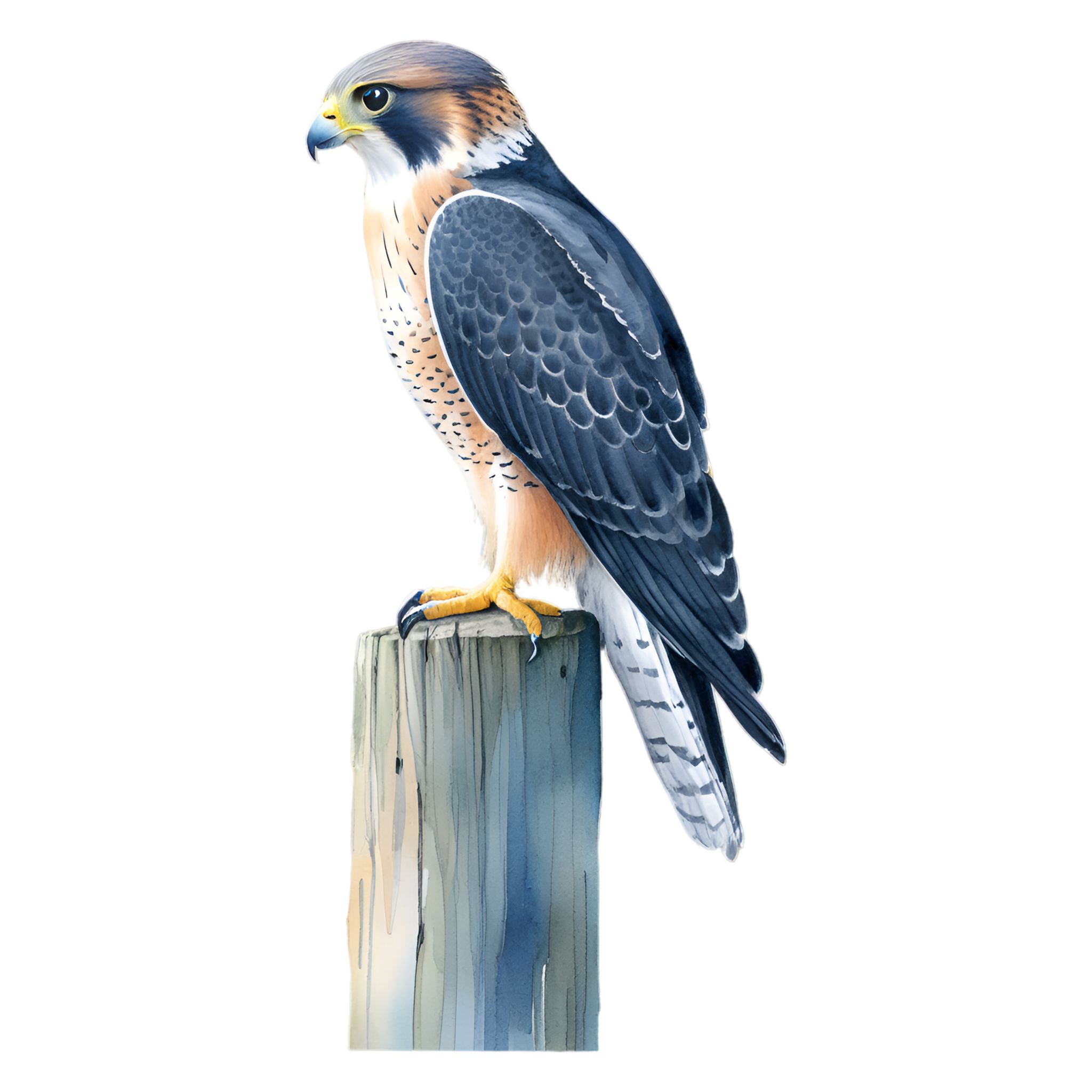
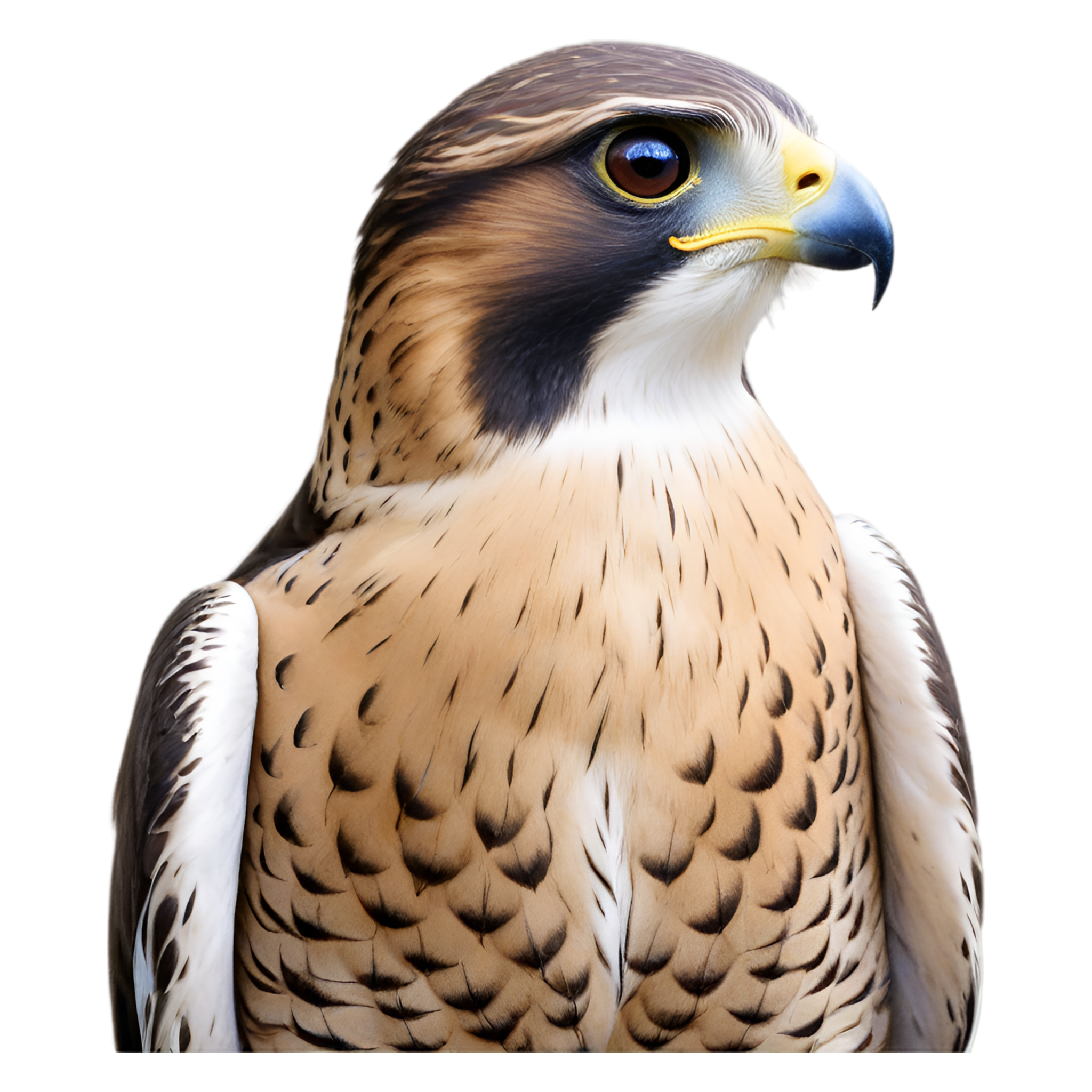
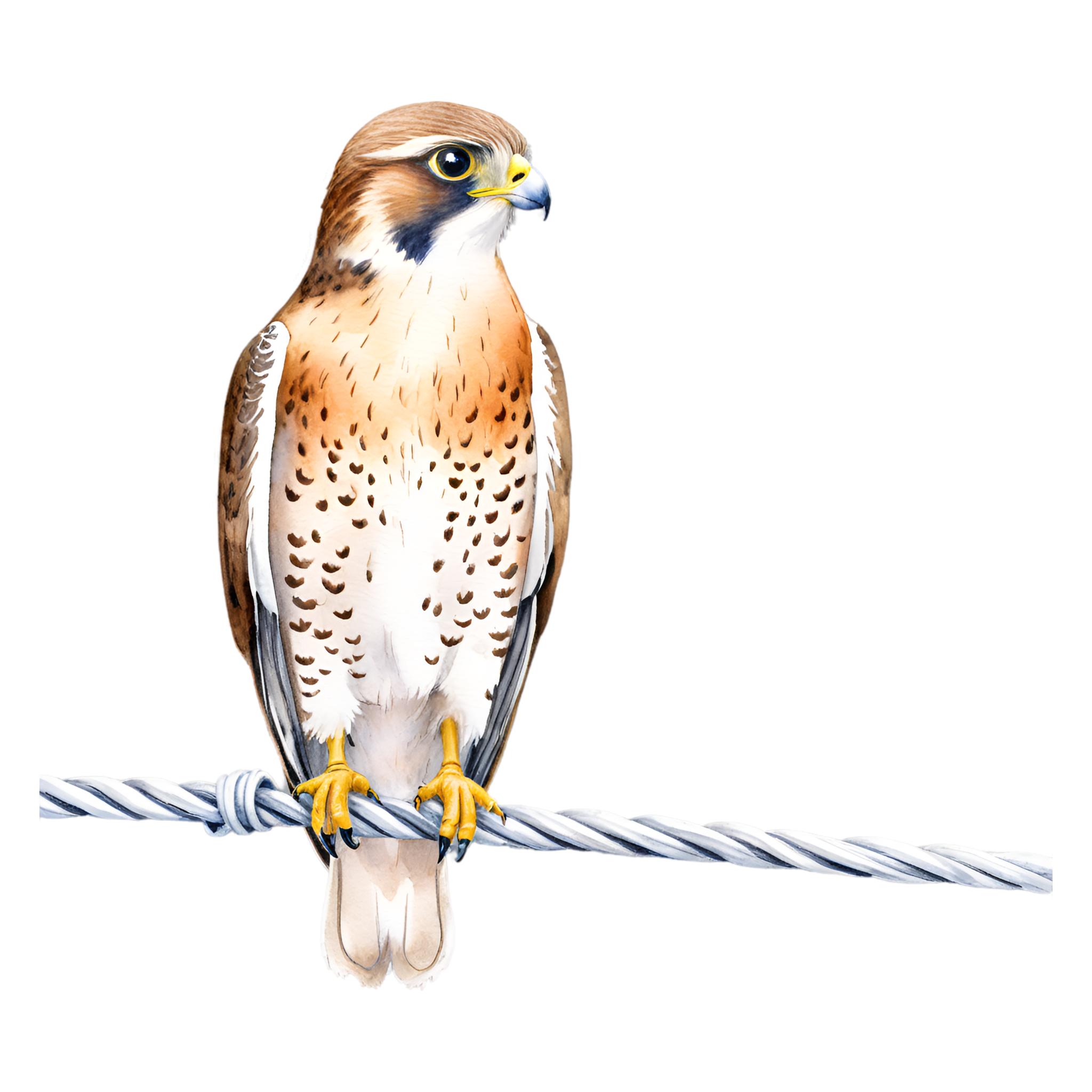
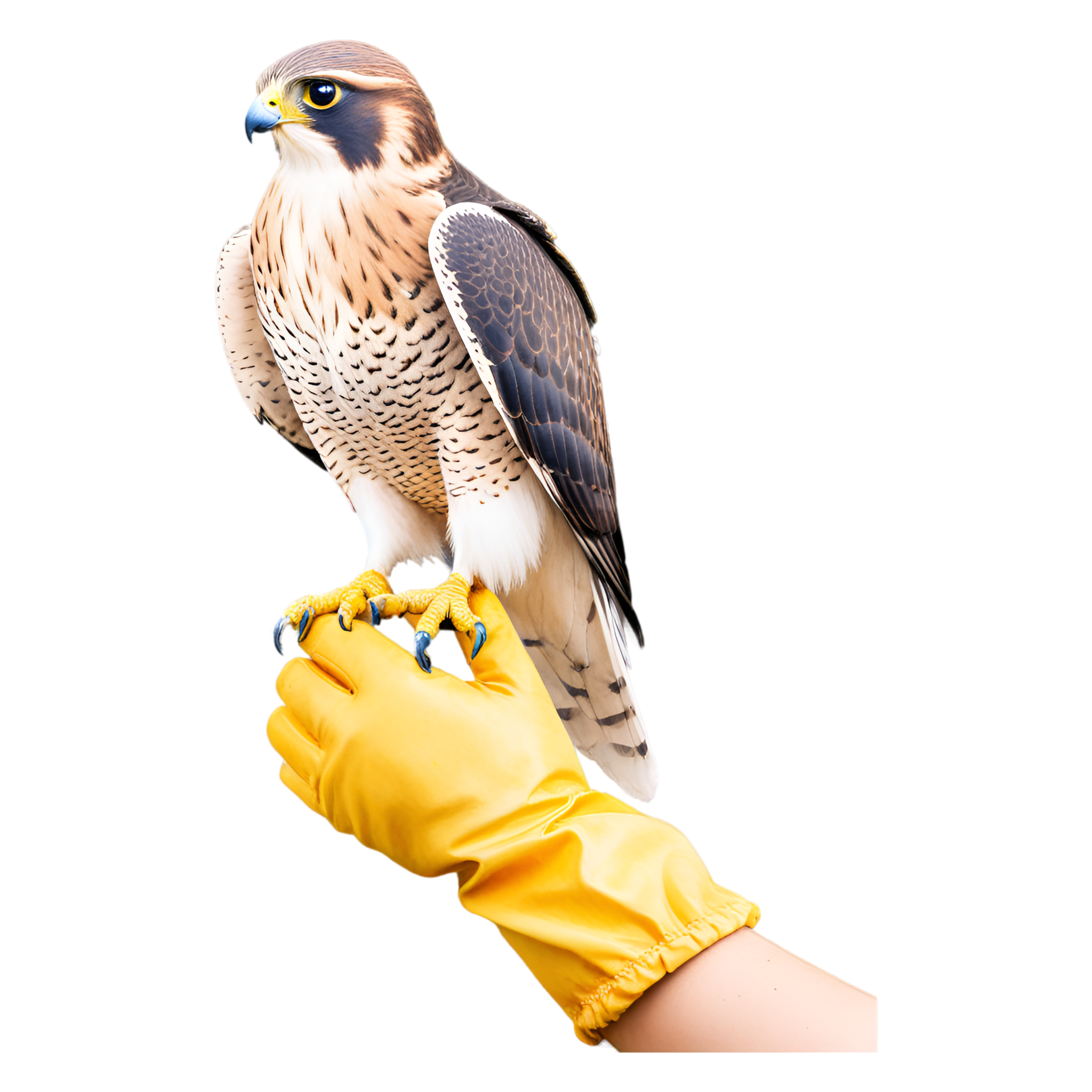
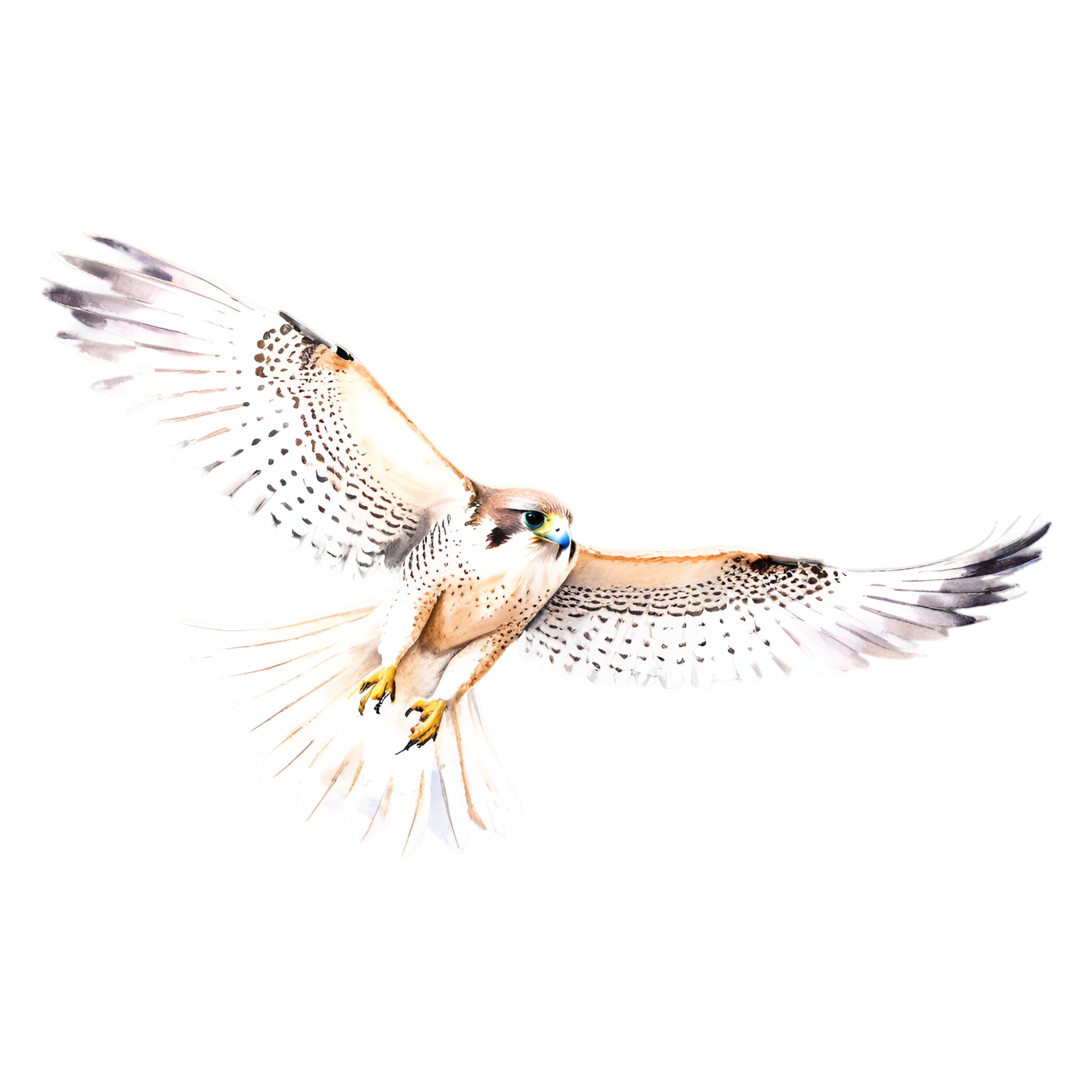
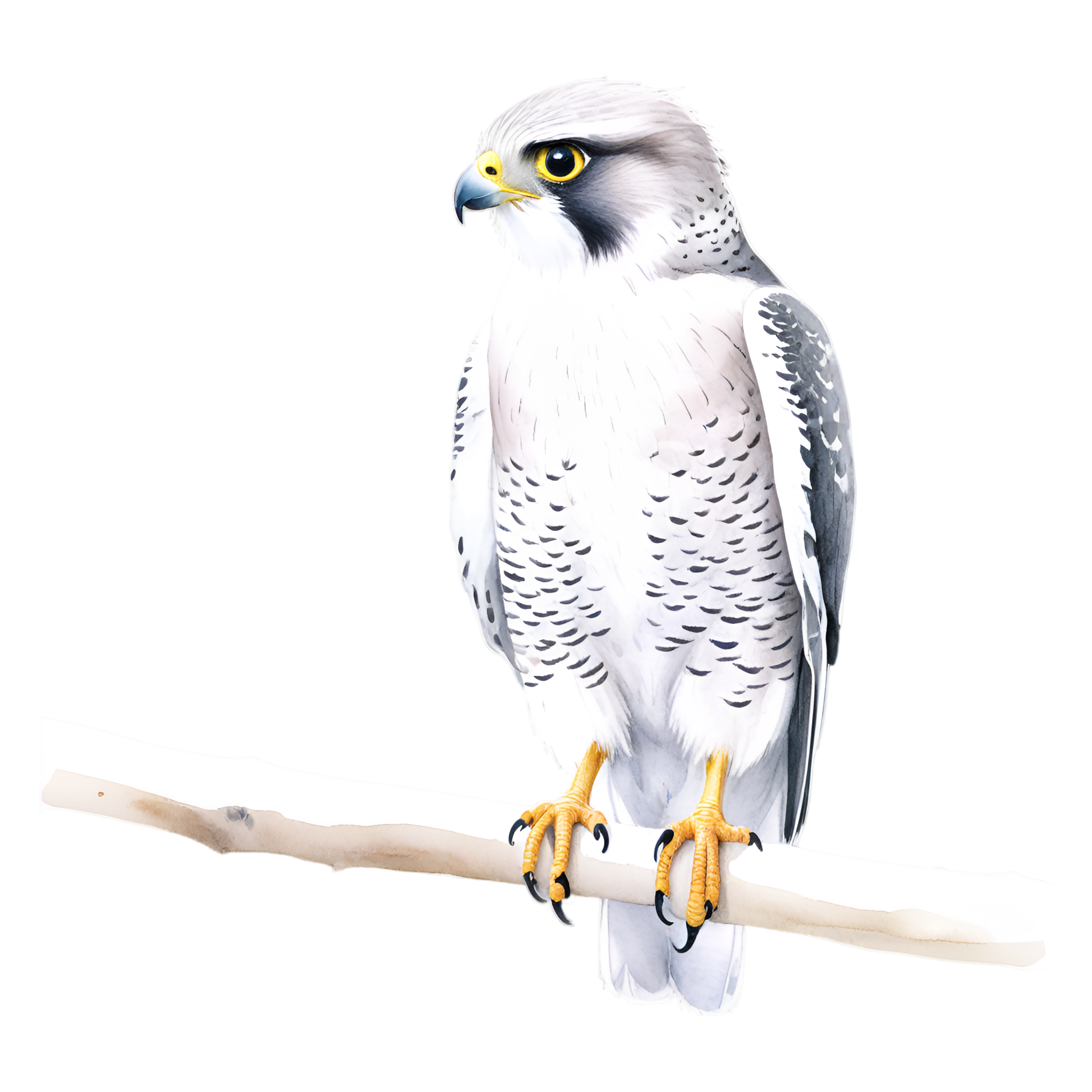
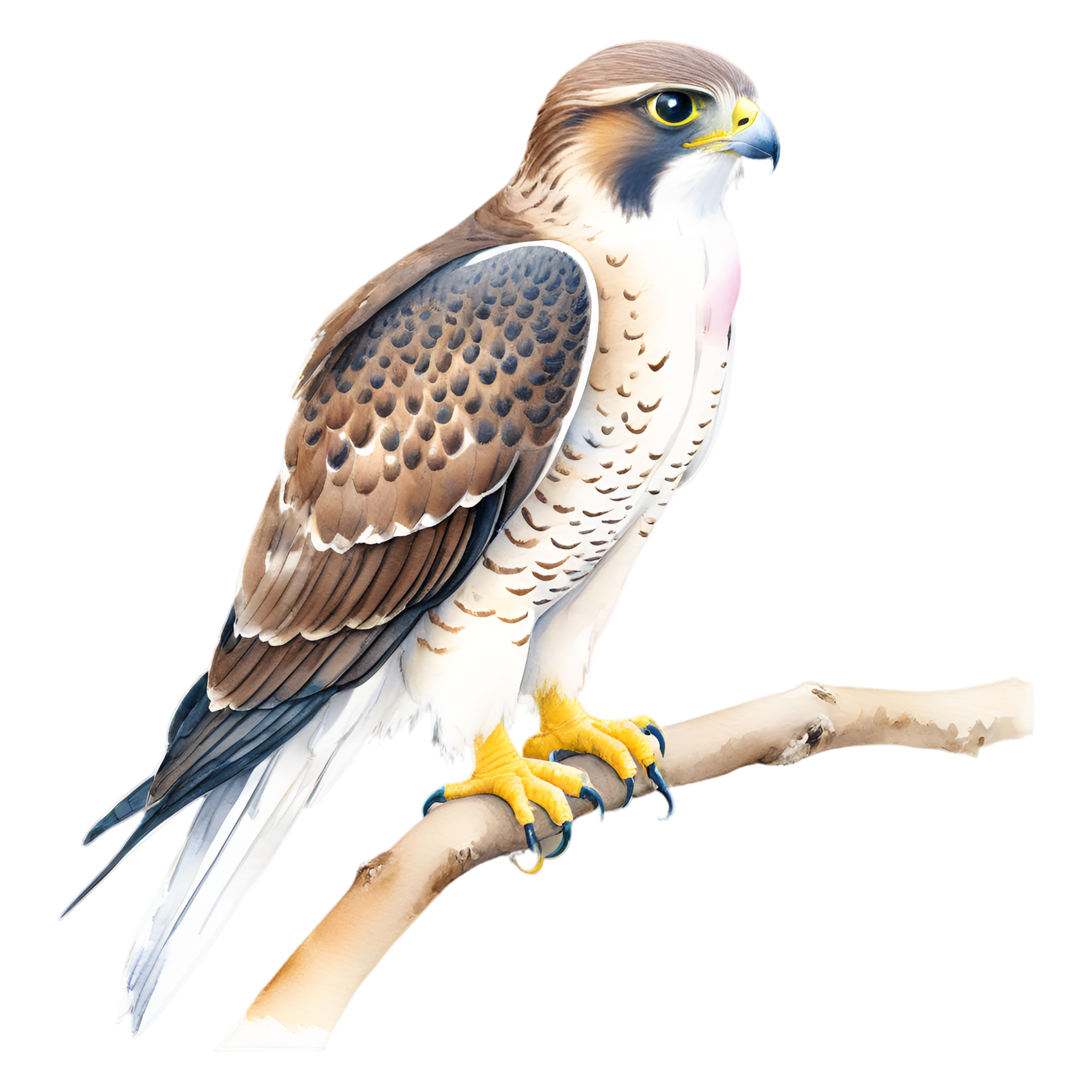
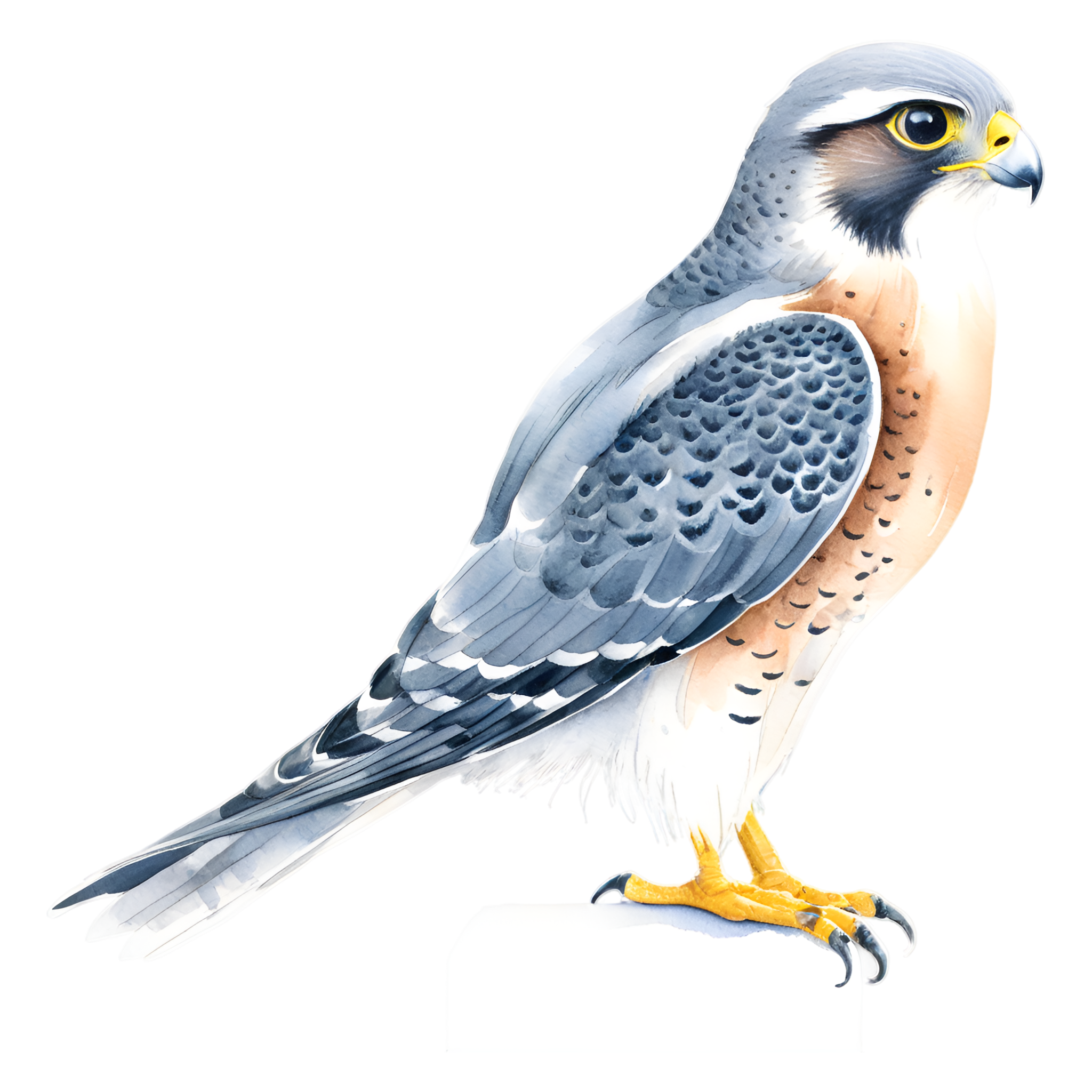
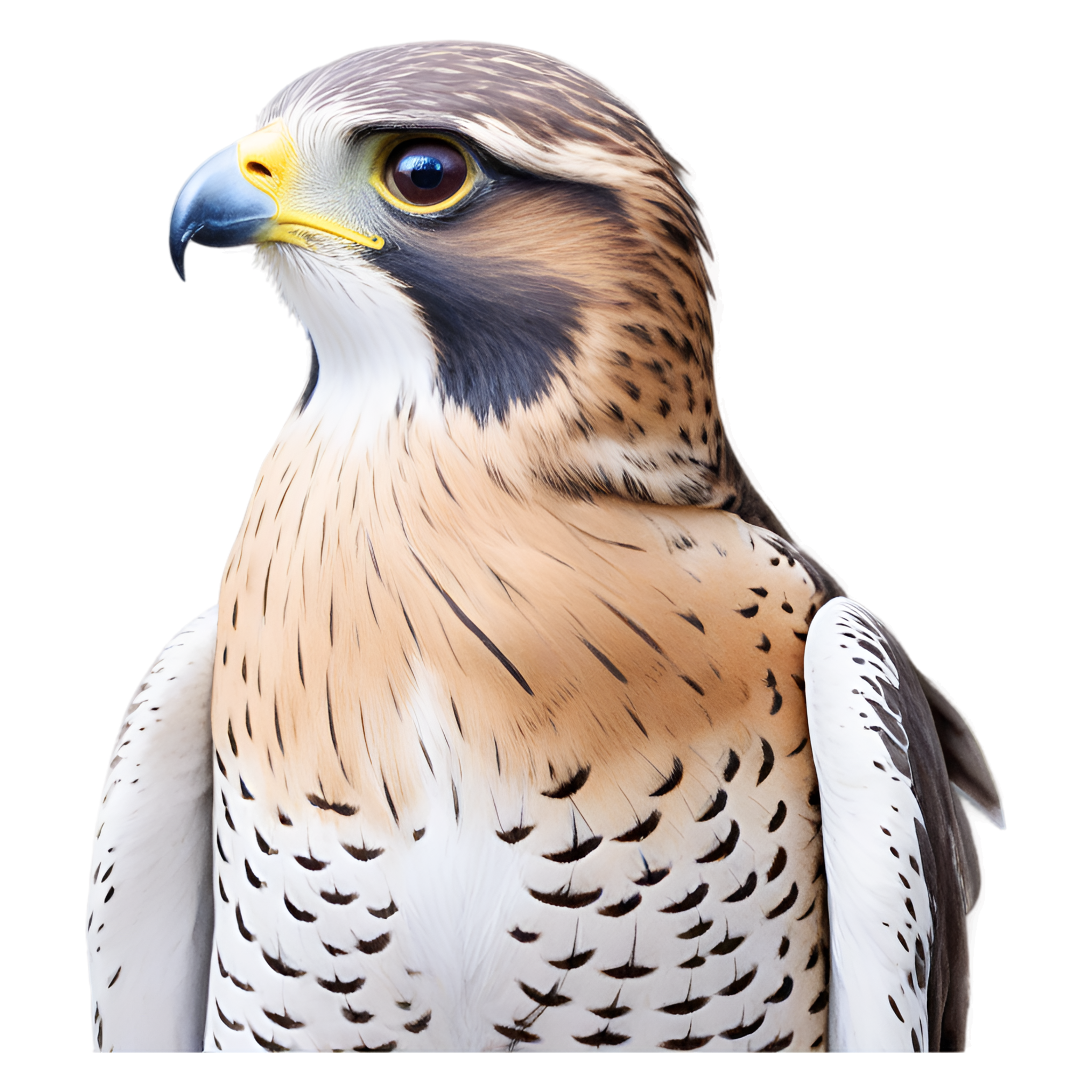
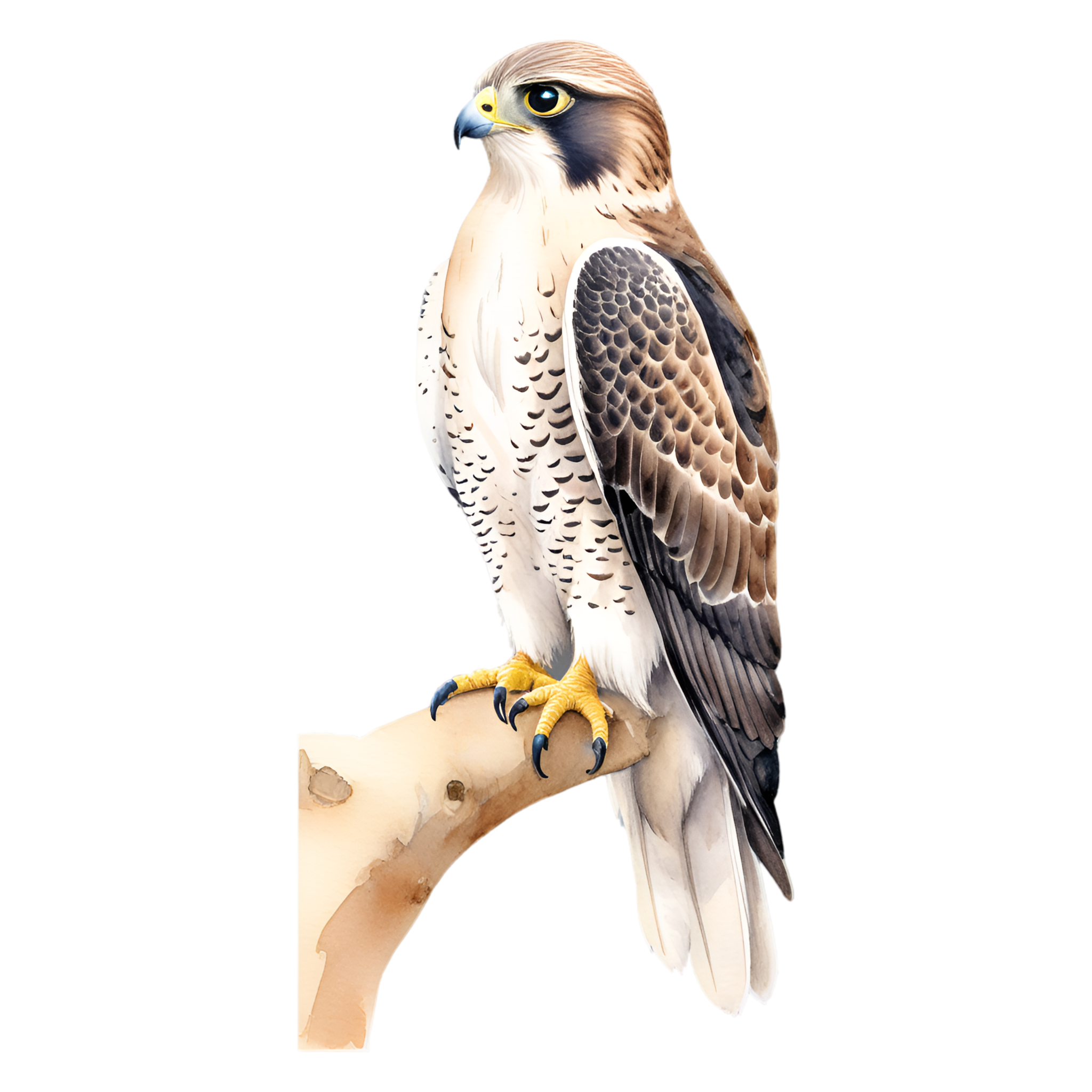
The birds share the dark sideburn mark of a falcon, painted in soft slate, cocoa and white washes. You get a blue-grey falcon perched on a post (01), a head-and-shoulders portrait (02), a small rusty-headed bird perched on a wire (03), a falcon on a gloved hand (04), a bird hovering with wings spread and tail fanned (05), a pale grey-and-white falcon on a pale branch (06), a brown-backed falcon gripping a branch (07), a slim blue-grey bird with a peach breast and long wings folded (08), a second head-and-shoulders portrait (09) and a brown-backed falcon on a bare branch (10). The glove image is the one to use for falconry, the hover suits a kestrel-style hunting scene, and the portraits work where only the face needs to show, such as a badge or a round logo.
Mascots, falconry clubs and field guides
Falcons are a common school and sports mascot, and the US Air Force Academy teams are the Falcons, so this set fits team flyers, booster-club shirts, spirit-week posters and yearbook pages. Falconry has a long history in Europe, Central Asia and the Arabian Peninsula, and the gloved-hand image is ready for a falconry club newsletter, a raptor-center program or a renaissance faire sign. Birding groups can use the perched birds on a hawk-watch flyer or a city peregrine nest-cam update. The two portraits suit Father's Day cards and outdoor-gear branding, and teachers can use the set in a lesson on speed records or on how the peregrine came back after DDT.
Slate, cocoa and white beside other raptors
The palette is cool: slate and antique blue on the back, charcoal in the hood, cocoa browns, and white or pale buff underparts. On-page thread matches include DMC 931 Antique Blue Medium, 3799 Pewter Gray Vy Dk and 779 Cocoa Dark. For a raptor lineup, pair the falcon with the eagle, the hawk and the owl sets. The gallery belongs to the birds of prey hub, which collects them all. Cool grey birds stand out well on warm backgrounds such as sand, rust or kraft, and on a navy sports jersey color they keep enough contrast to read from a distance.
Turning a falcon into a team logo
Each PNG is 2048x2048 pixels on a transparent background, about 6.8 inches square at 300 DPI, which covers a full shirt-front print. For a mascot mark, crop the portrait (02) into a circle and set the team name around it, or use the hovering bird (05) for a sense of motion. Sublimation needs white or light polyester, and grey falcons print best on a white or heather-grey blank. For printable iron-on transfers on light fabric, mirror the image before printing. To build a two-falcon crest, flip one perched bird horizontally so the pair face each other across a shield or monogram.