Sweet basil, Genovese and the mint family
Basil (Ocimum basilicum) belongs to the mint family, and it shows: the stems are square in cross-section and the leaves grow in opposite pairs. It is a warm-season annual that frost kills outright, so gardeners set plants out after the last spring frost and harvest from early summer until the first cold night. Pinching off the flower spikes keeps a plant producing leaves. Genovese basil, with large smooth leaves, is the classic for pesto alla genovese, named after Genoa in Liguria. Lettuce-leaf basil grows big crinkled leaves suited to wrapping and salads. Thai basil has narrower pointed leaves and a stronger anise note, and it is a variety of the same species, not the holy basil (tulsi) that is sacred in Hindu tradition.
What's in this bunch
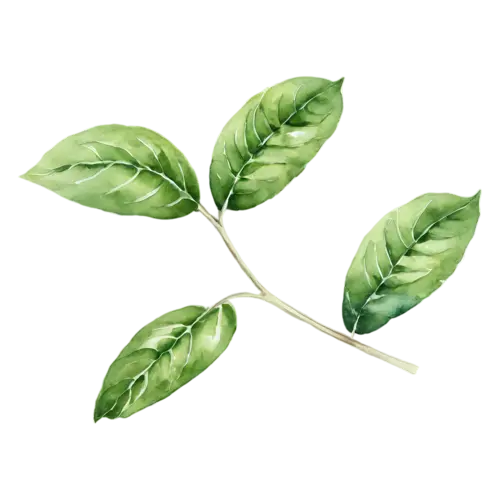
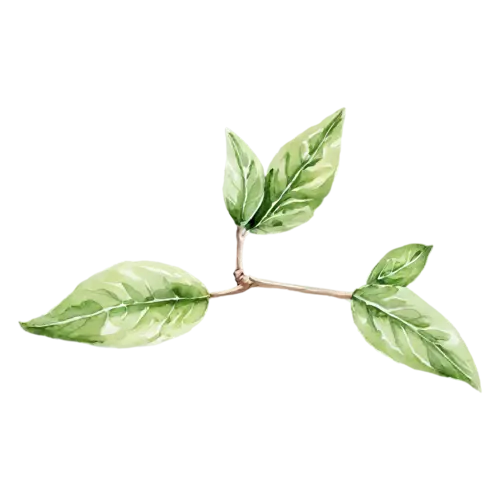
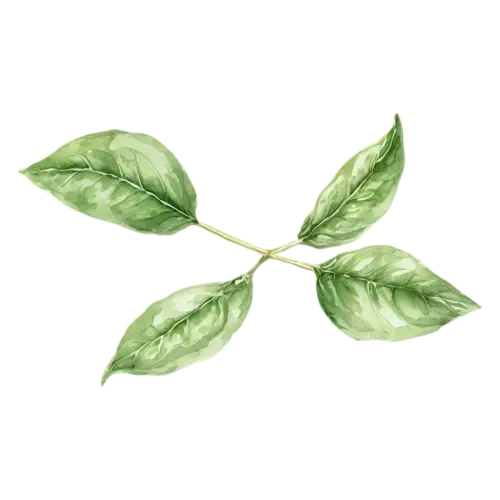
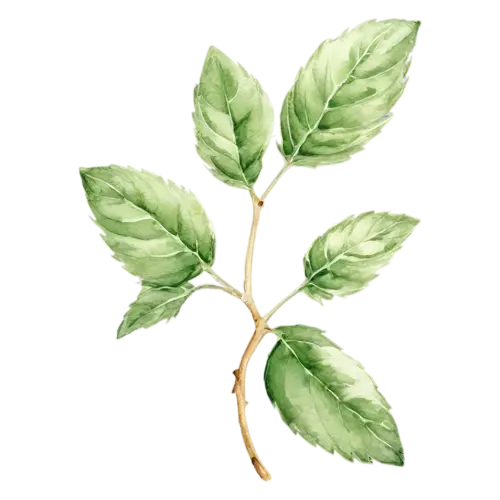
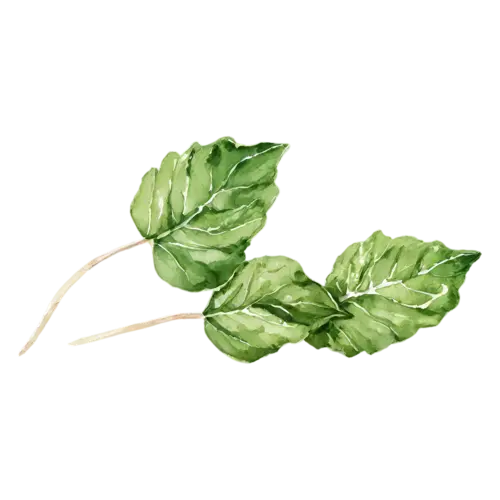
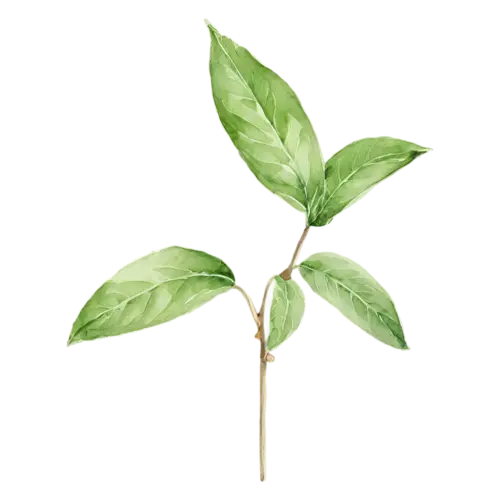
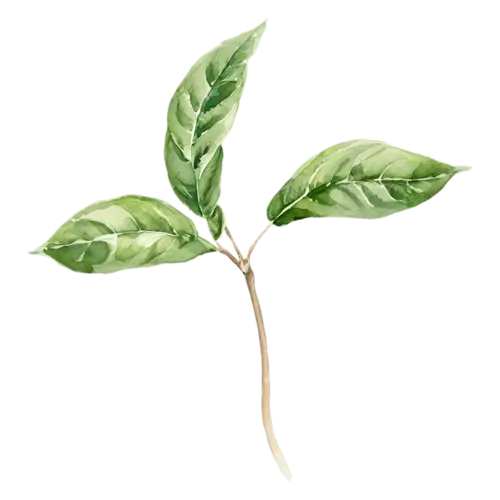
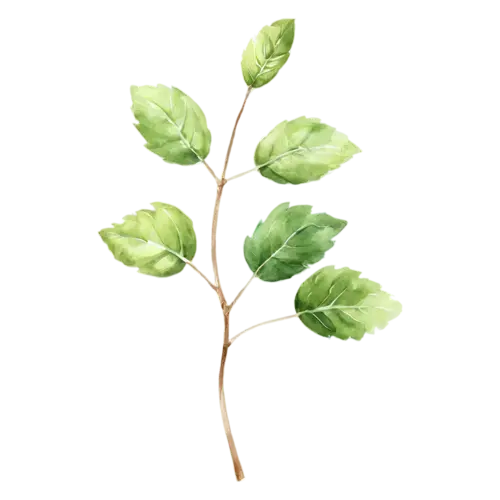
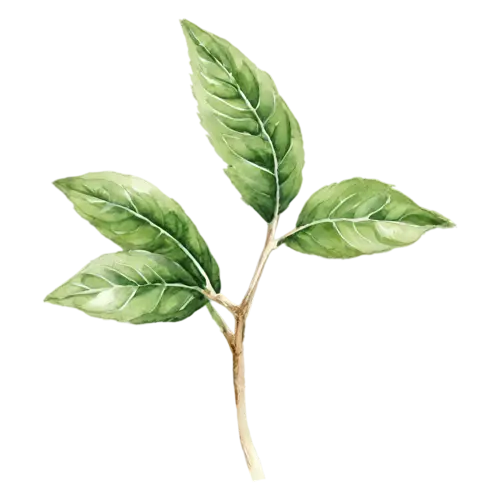
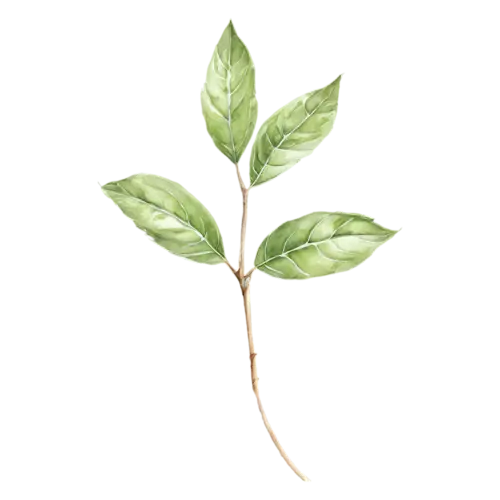
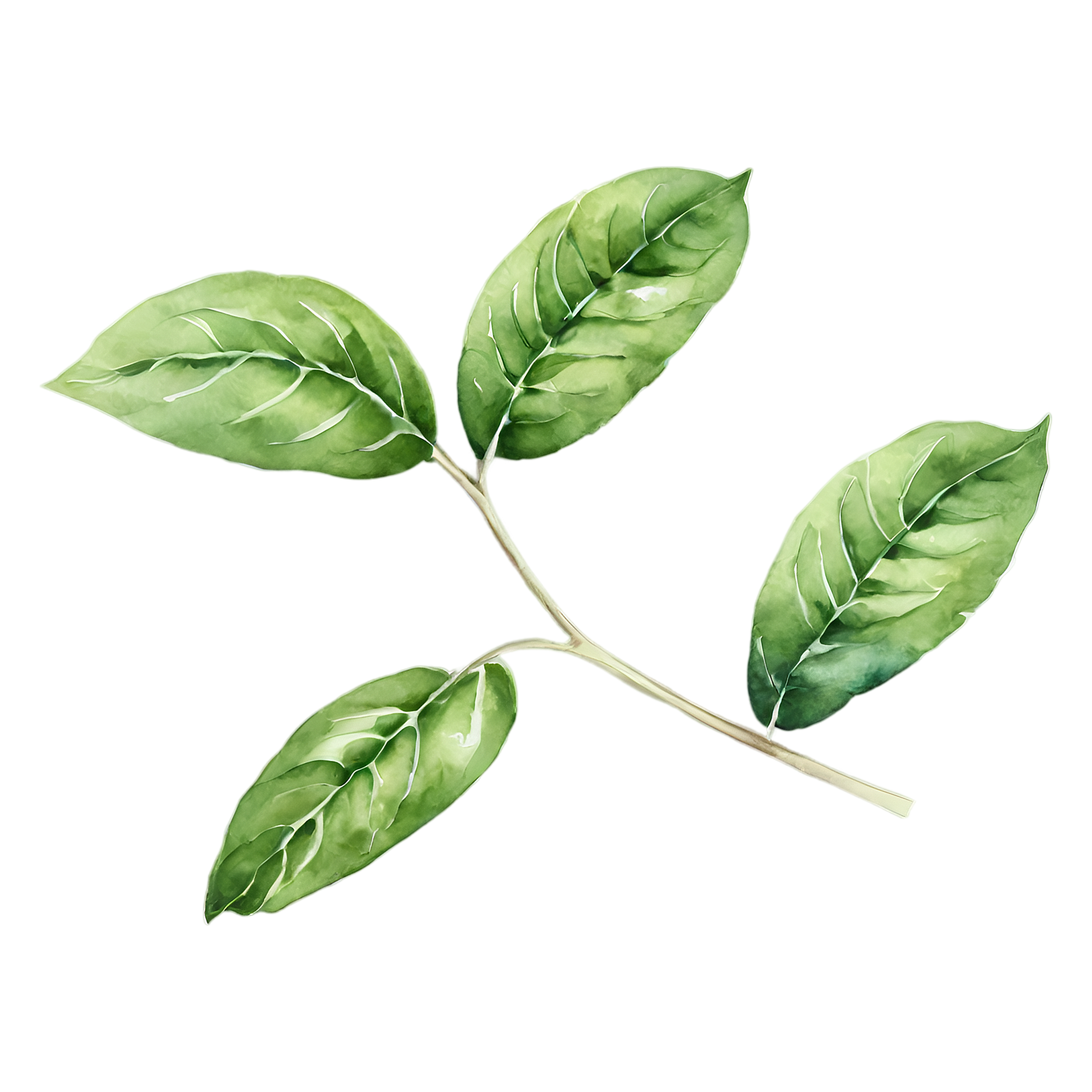
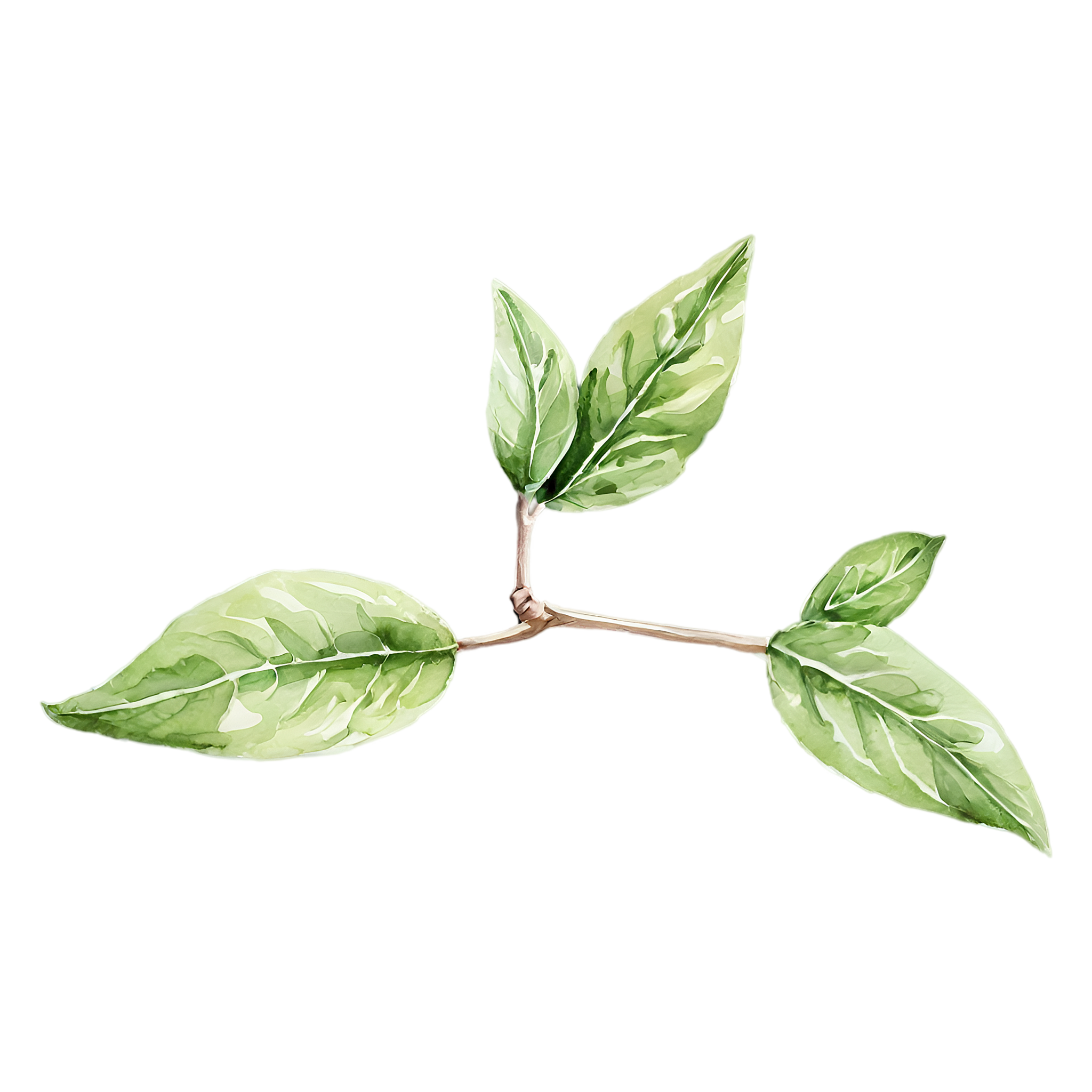
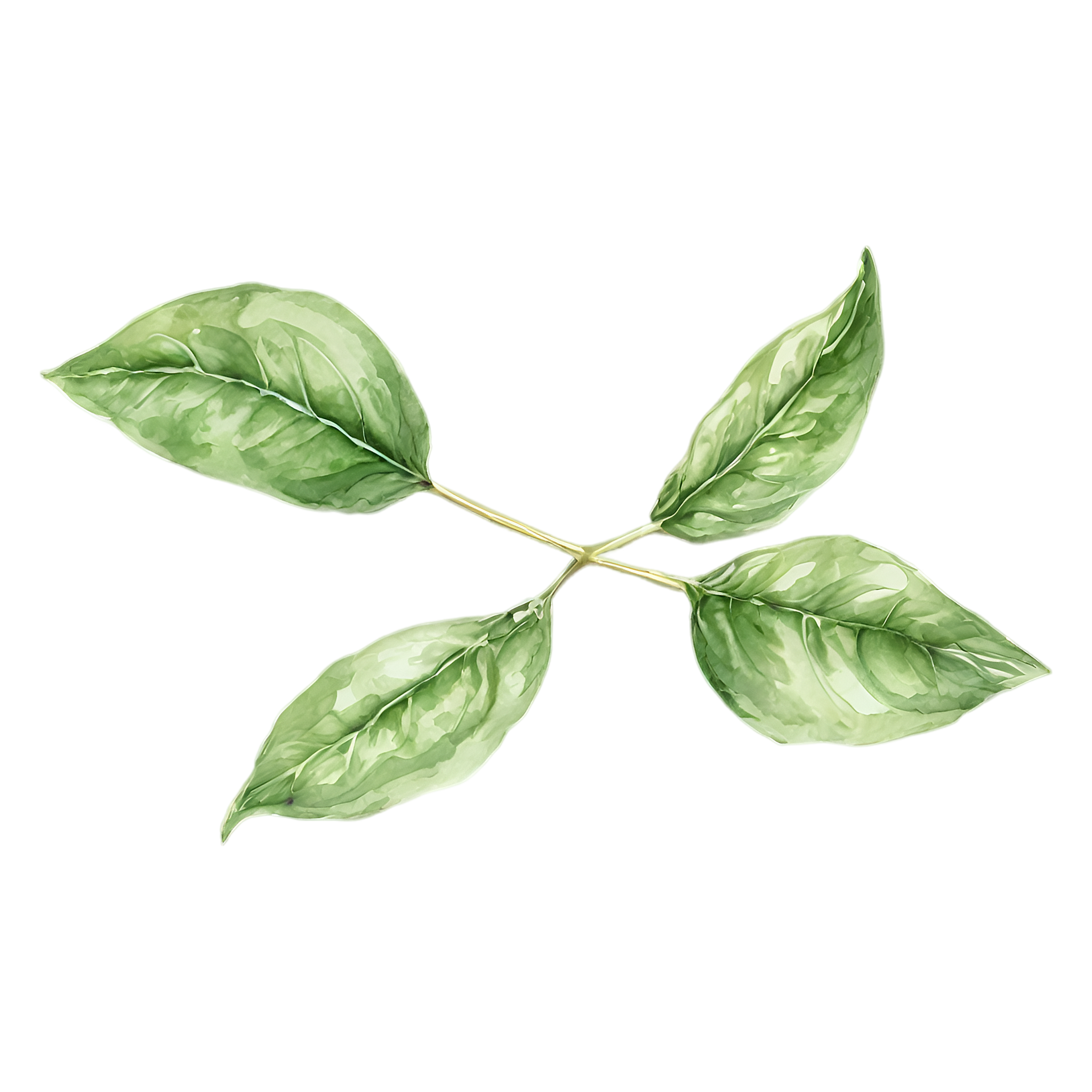
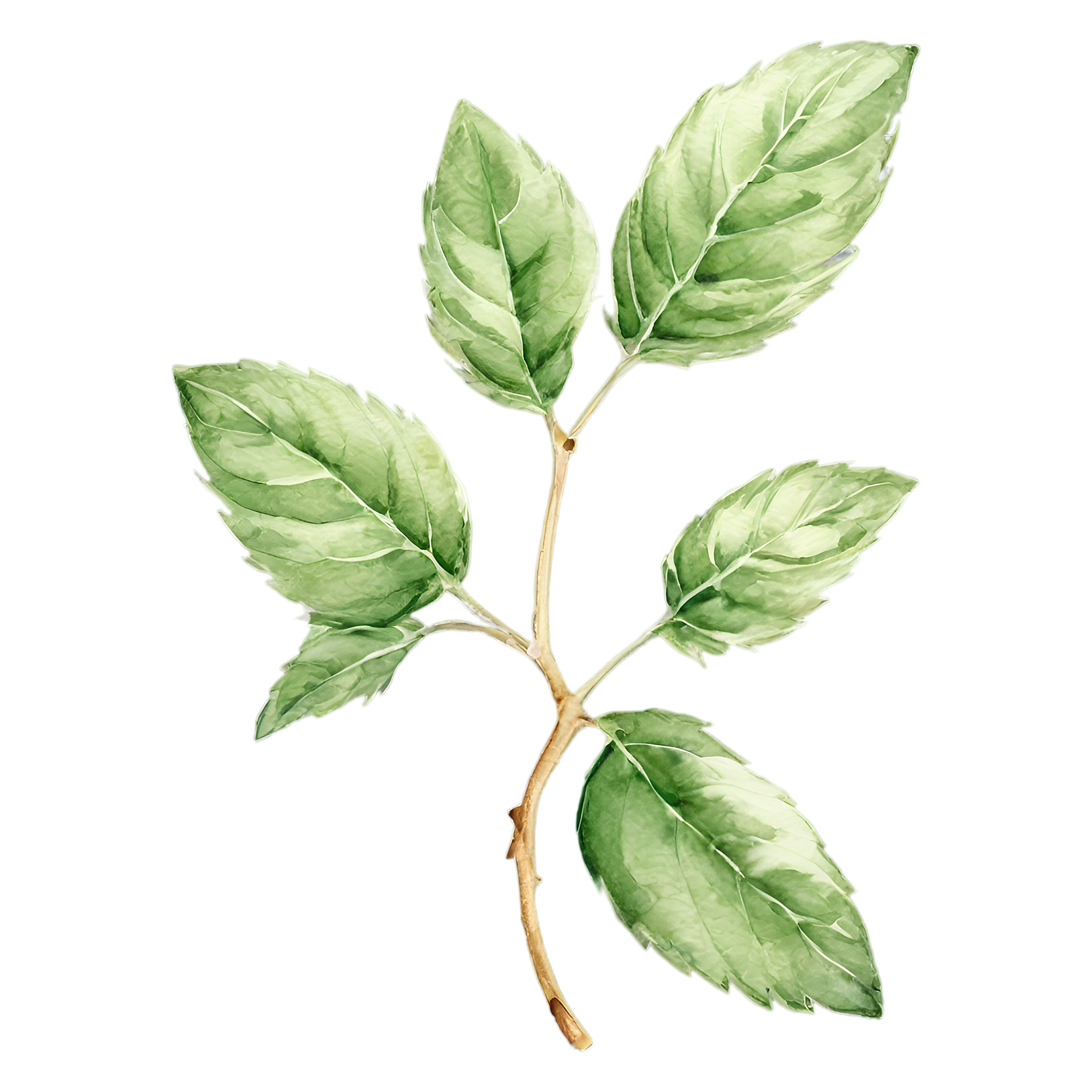
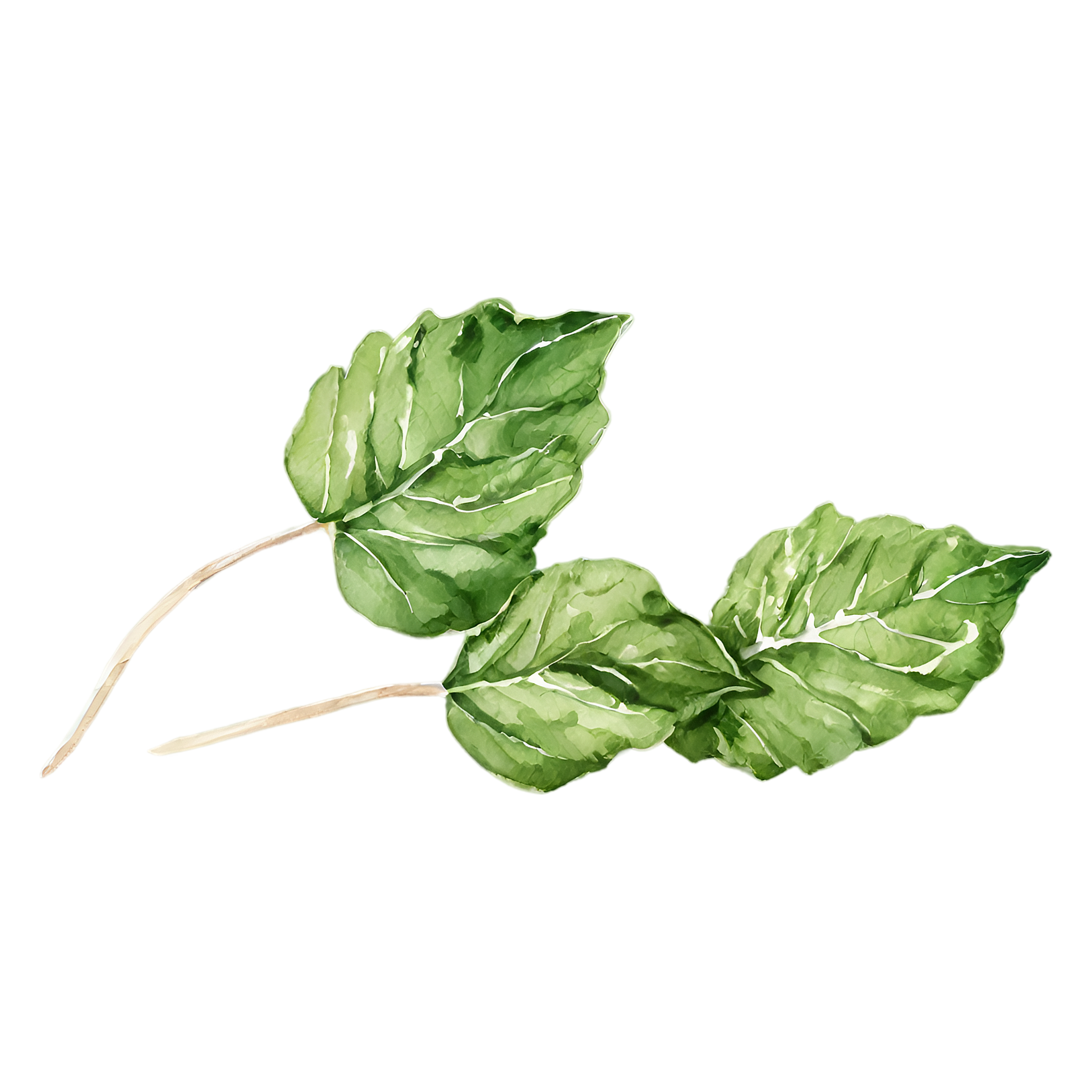
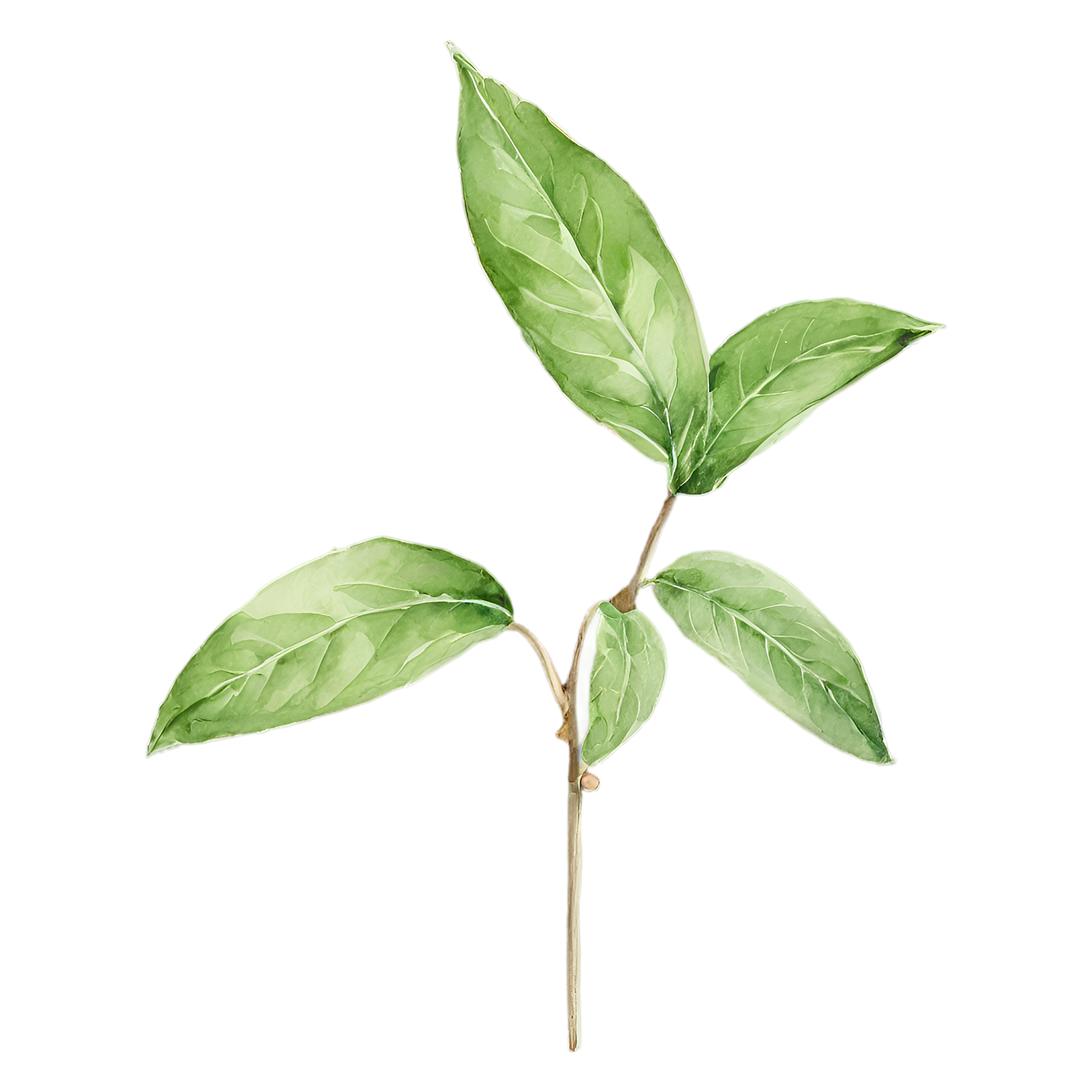
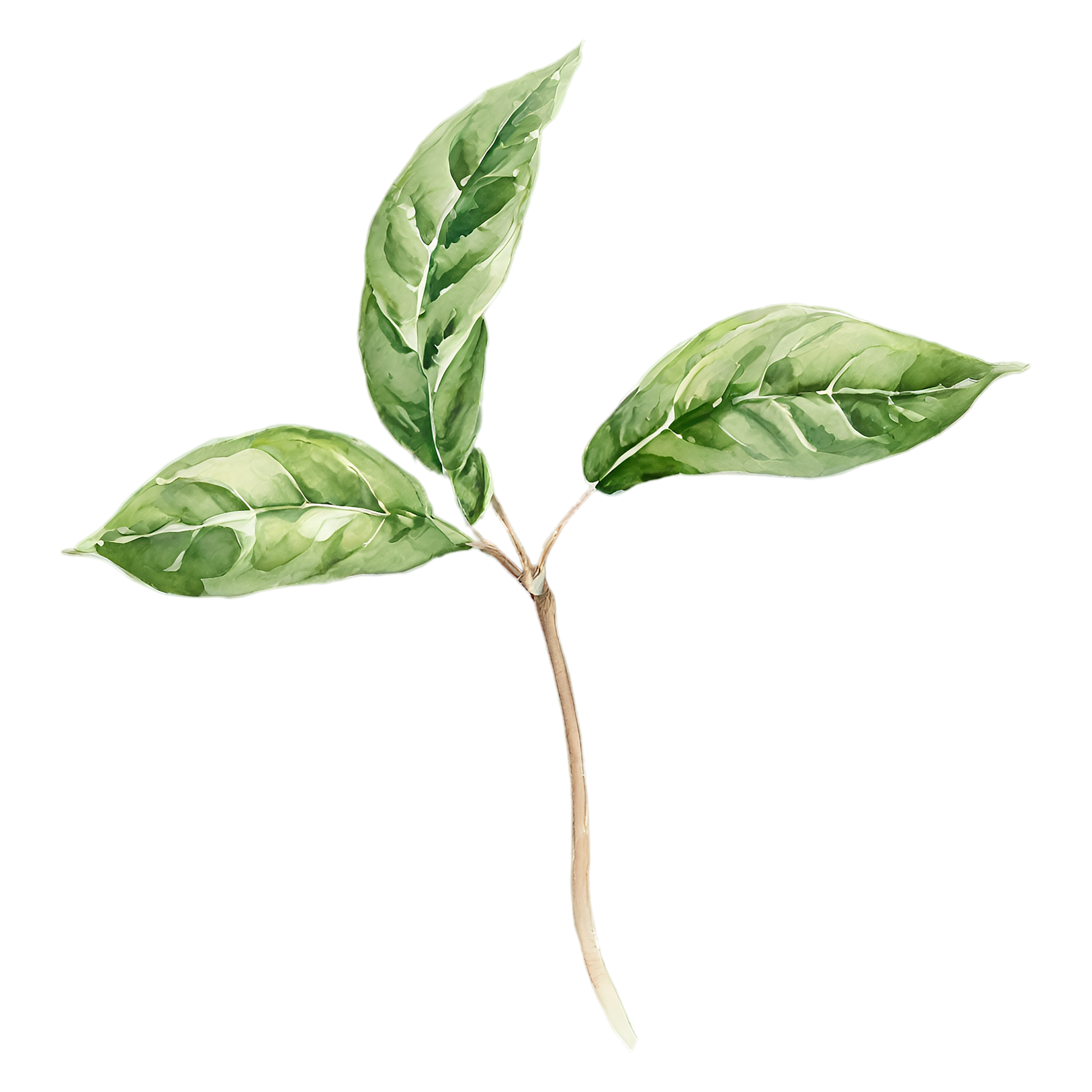
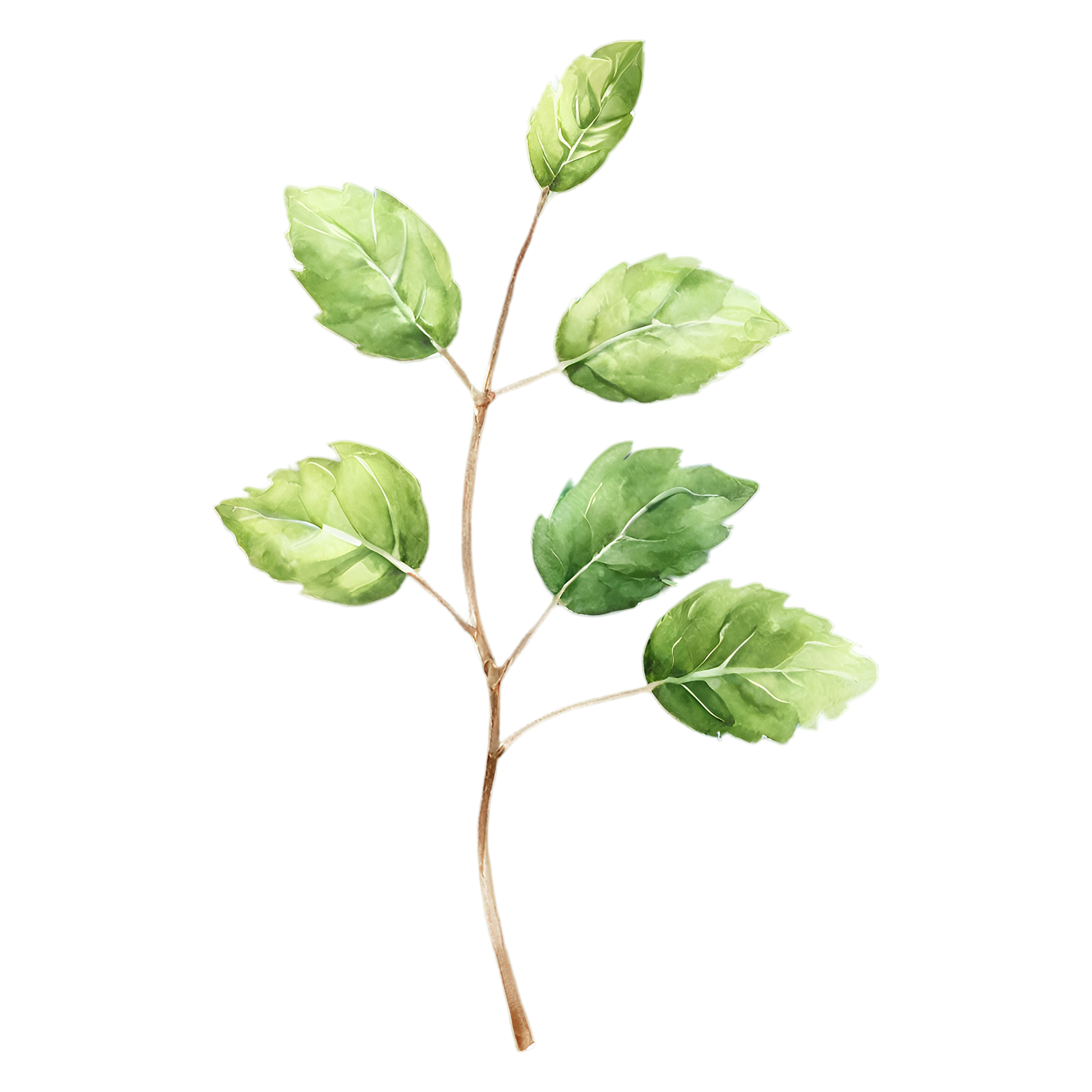
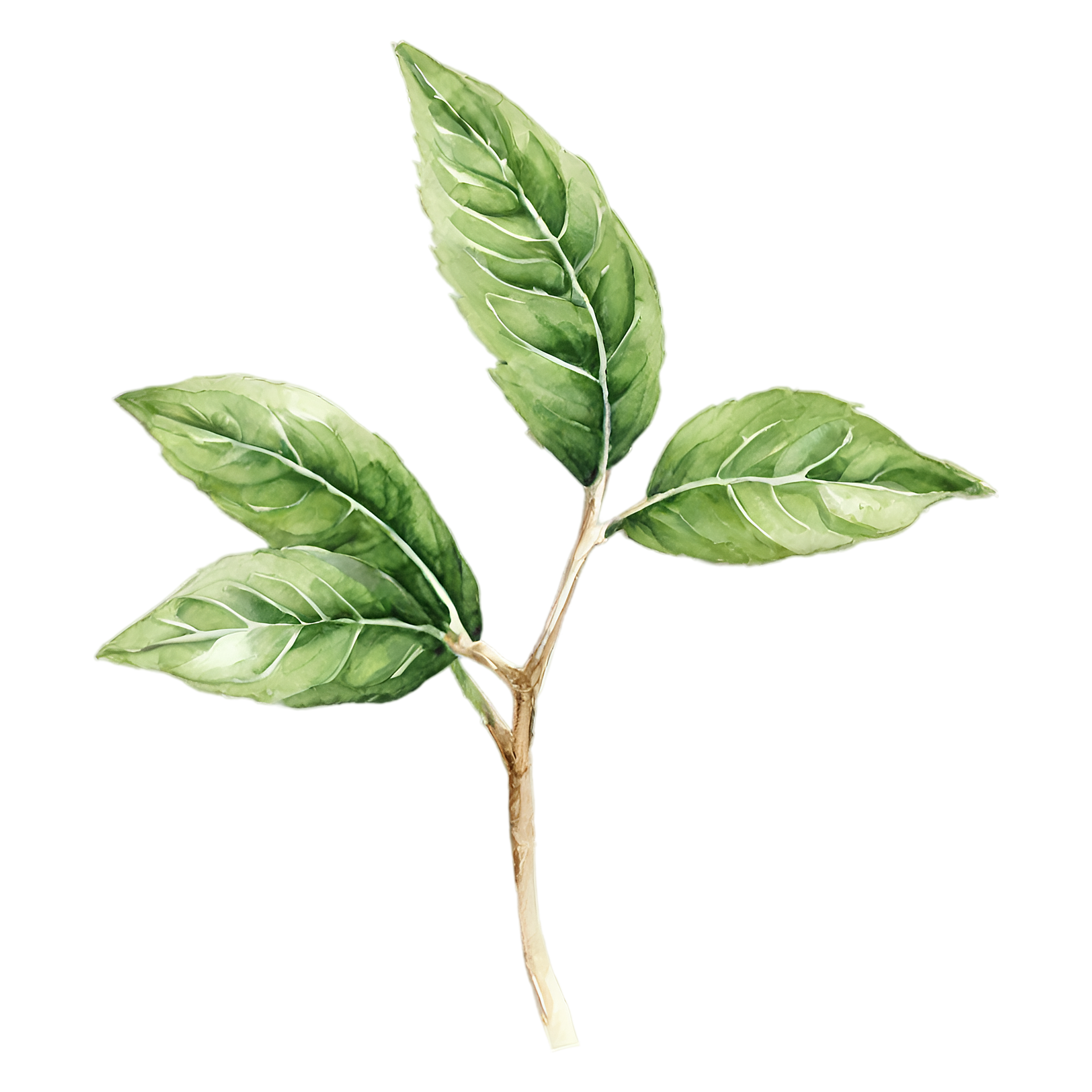
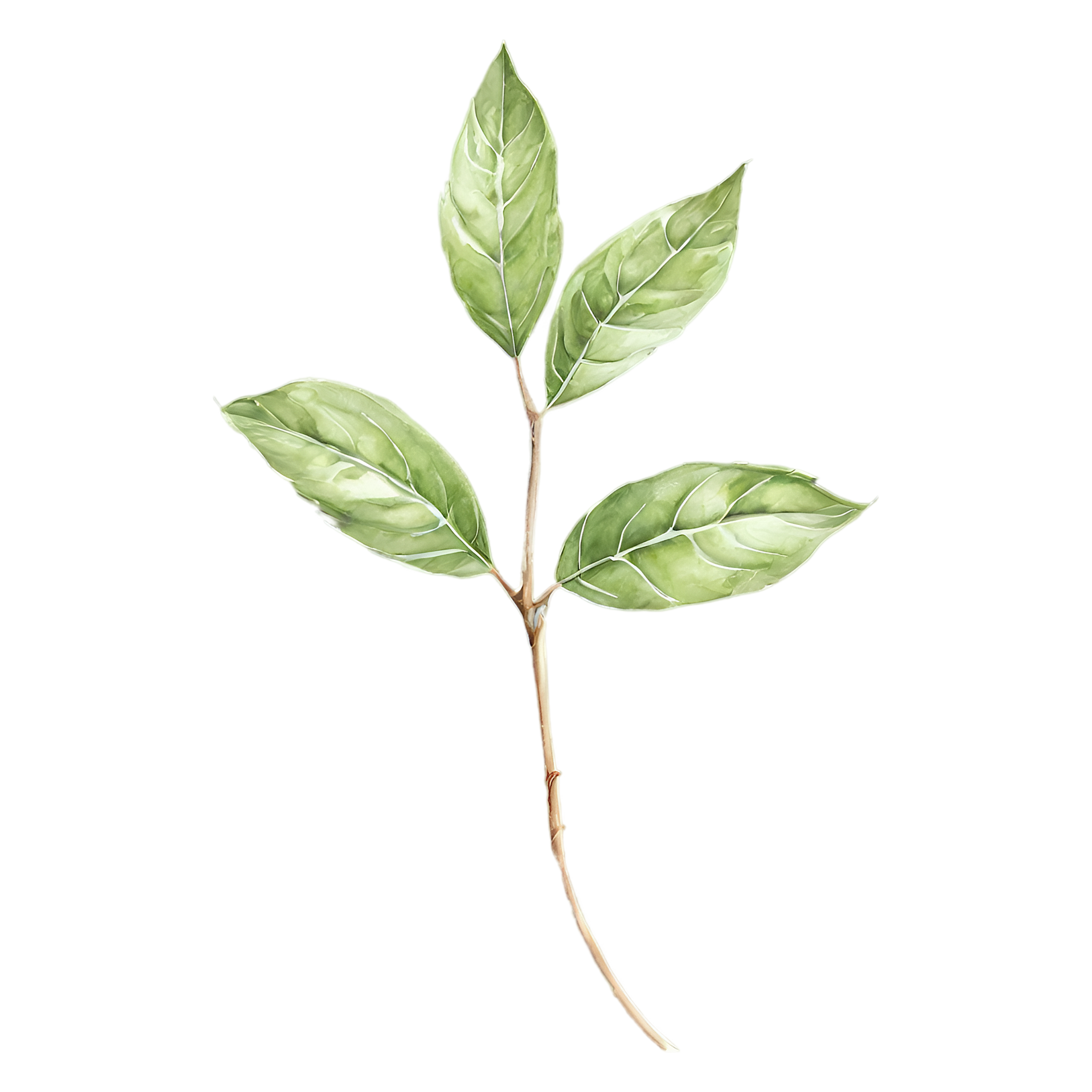
The ten sprigs cover three named varieties and several plant shapes. There is a Genovese sprig with large smooth leaves, a lettuce-leaf sprig with big crinkled leaves and a Thai basil sprig with narrow pointed leaves. One sprig has gone to flower and carries a small white flower spike at its top. The rest show sweet basil in different builds: a pair of broad leaves, several glossy leaves, a tall stem with layered leaves, a single upright stem with paired leaves, a bushy sprig with many small leaves, and two broad leaves around a tender growing tip. All are painted as glossy bright-green leaves with gently rippled edges, with no pot, jar or vase.
Recipe cards, pizzerias and seed packets
Basil belongs on anything Italian. Use it on recipe cards for pesto, caprese salad or margherita pizza, where basil, tomato and mozzarella echo the green, red and white of the Italian flag. Pizzerias and trattorias can run a sprig down the side of a menu or a takeout flyer. In July and August, when basil is cheapest and most plentiful, farmers market vendors need price signs and bunch tags, and home cooks need labels for jars of pesto or frozen basil cubes. In spring the same art suits seed packets, plant markers and garden-center signage. Cooking teachers can use the three varieties side by side on a handout comparing flavors.
Greens that sit with other herbs
The palette here is bright, warm green with yellow-green highlights. The DMC floss matches on this page cluster around 471 Avocado Green Very Light, 470 Avocado Green Light and 3348 Yellow Green Light, a useful starting set for stitching a sprig onto a kitchen towel. Basil looks livelier than the gray-greens of rosemary and thyme, so in an herb chart put it in the center and let the darker herbs frame it. Mint is a close relative and makes a natural neighbor on a tea or cocktail menu. For pantry labels, the jar and canning tops in the lid set pair well. The full herb collection lives in the herbs hub.
Making a sheet of herb jar labels
For spice-rack or pesto-jar labels, the compact sprigs (the pair of broad leaves and the two-leaf sprig with a tender tip) read clearly even when shrunk to 1 to 1.5 inches, while the tall stem and the flowering sprig work better as narrow vertical accents on the side of a rectangular label. Each file is a 2048 x 2048 px transparent PNG, about 6.8 inches at 300 DPI, so shrinking to label size loses nothing. Print on waterproof sticker paper if the jars live near the stove, and use a cutting machine's print-then-cut mode to trim around the leaves instead of cutting a plain circle.