A sea lizard, not a dinosaur
Mosasaurus was a marine reptile that lived in the Late Cretaceous, the last stretch of the age of dinosaurs, and it died out in the same mass extinction about 66 million years ago. It was not a dinosaur. Mosasaurs were squamates, the reptile group that includes lizards and snakes, and they spent their whole lives at sea, breathing air at the surface. Their limbs had become paddle-shaped flippers, and they swam with a long, powerful tail. The name means "lizard of the Meuse", after the river near Maastricht in the Netherlands, where a famous skull was dug out of a chalk quarry in the late 1700s. The largest species, Mosasaurus hoffmannii, is estimated at well over 12 meters (40 feet) long. Fossil stomach contents show that mosasaurs ate fish, sea turtles and even other marine reptiles.
Swimming poses, jaws and a baby
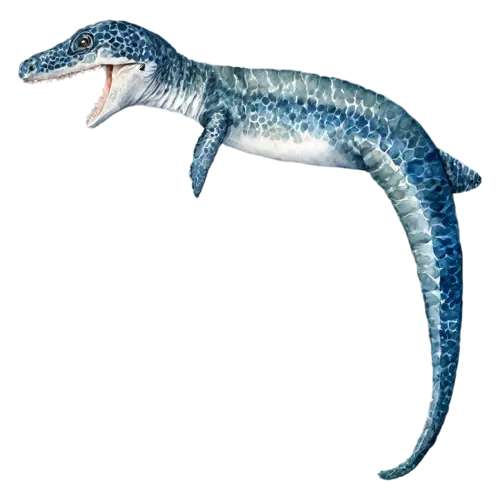
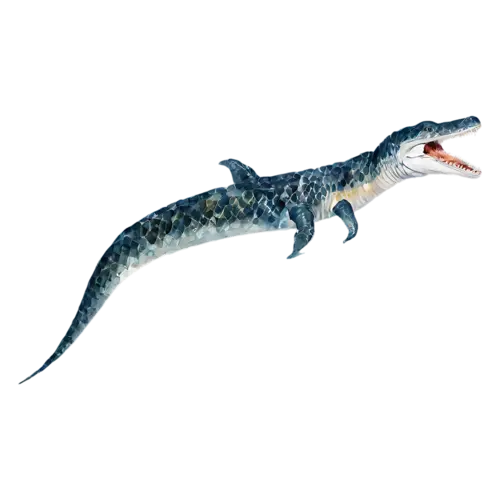
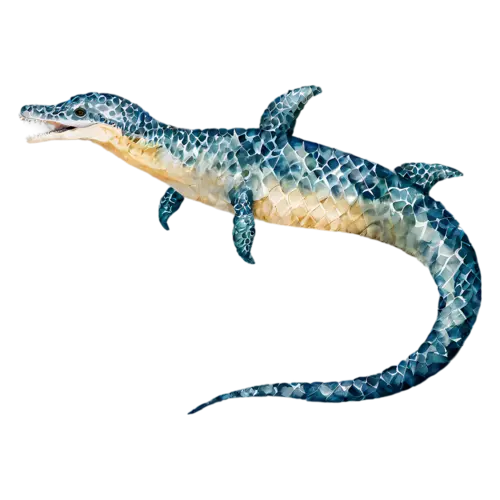
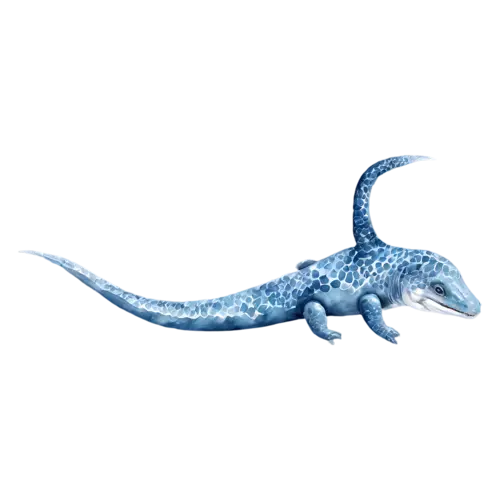
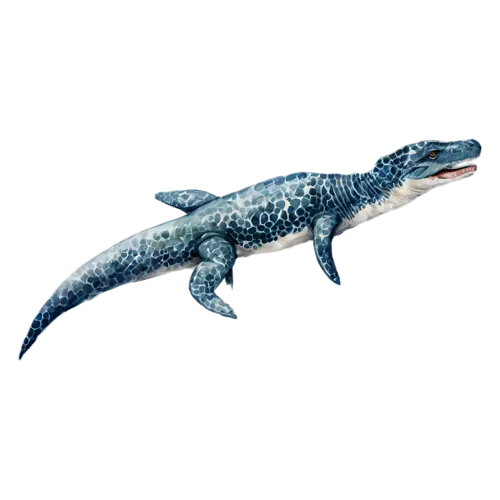
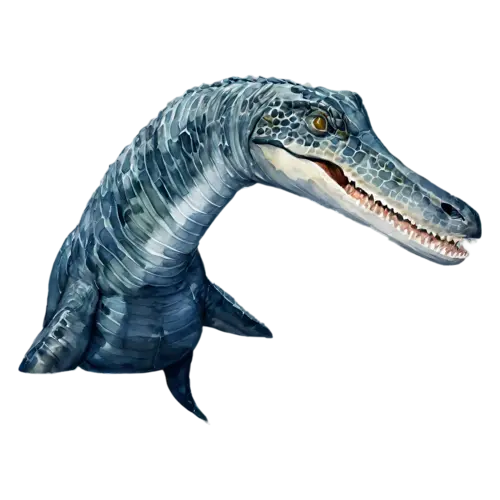
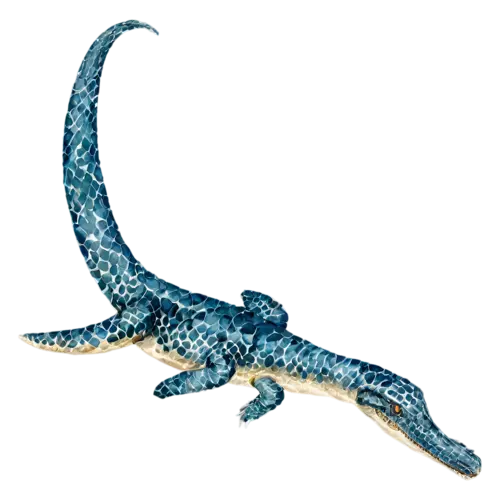
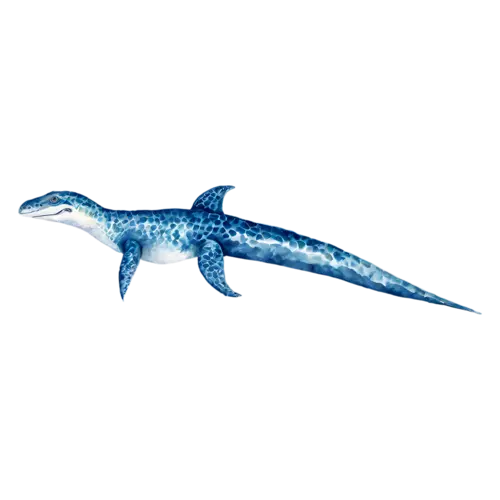
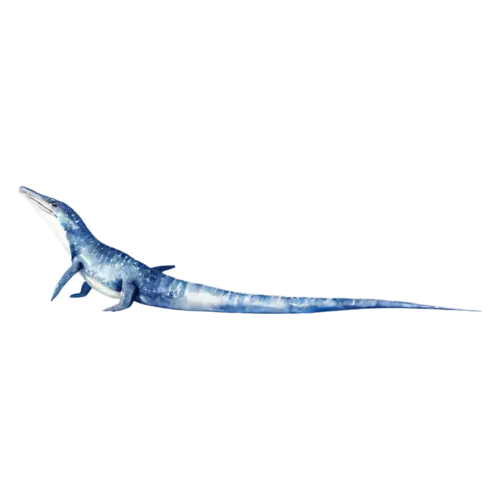
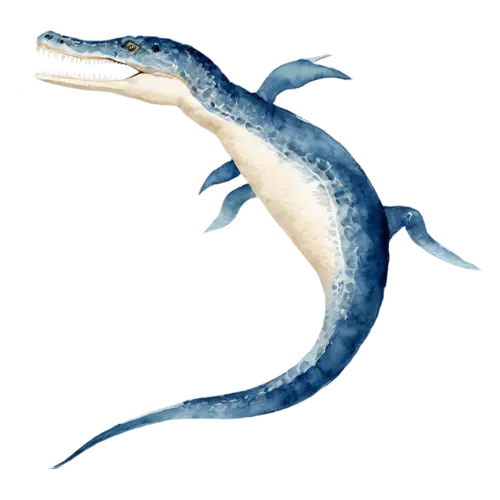
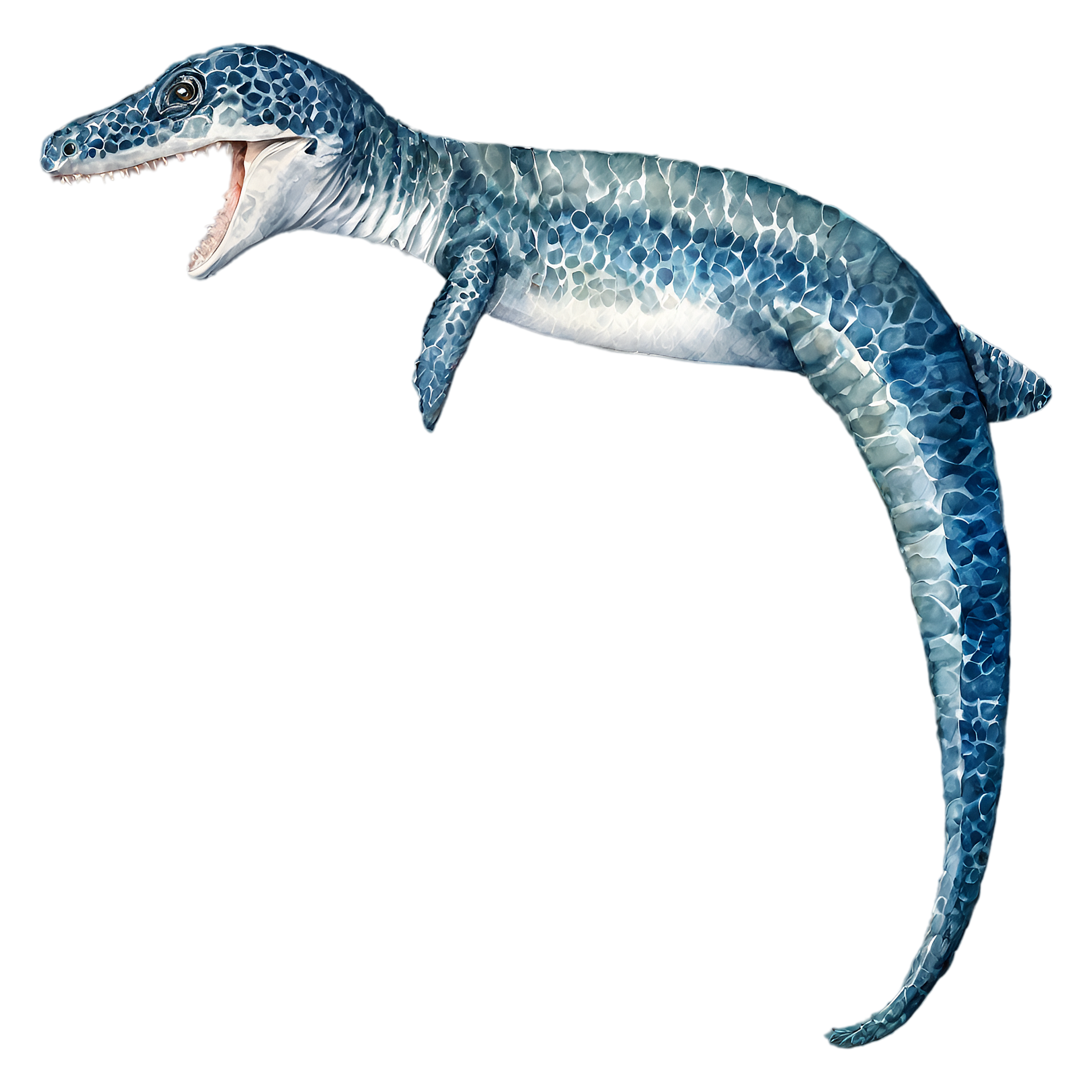
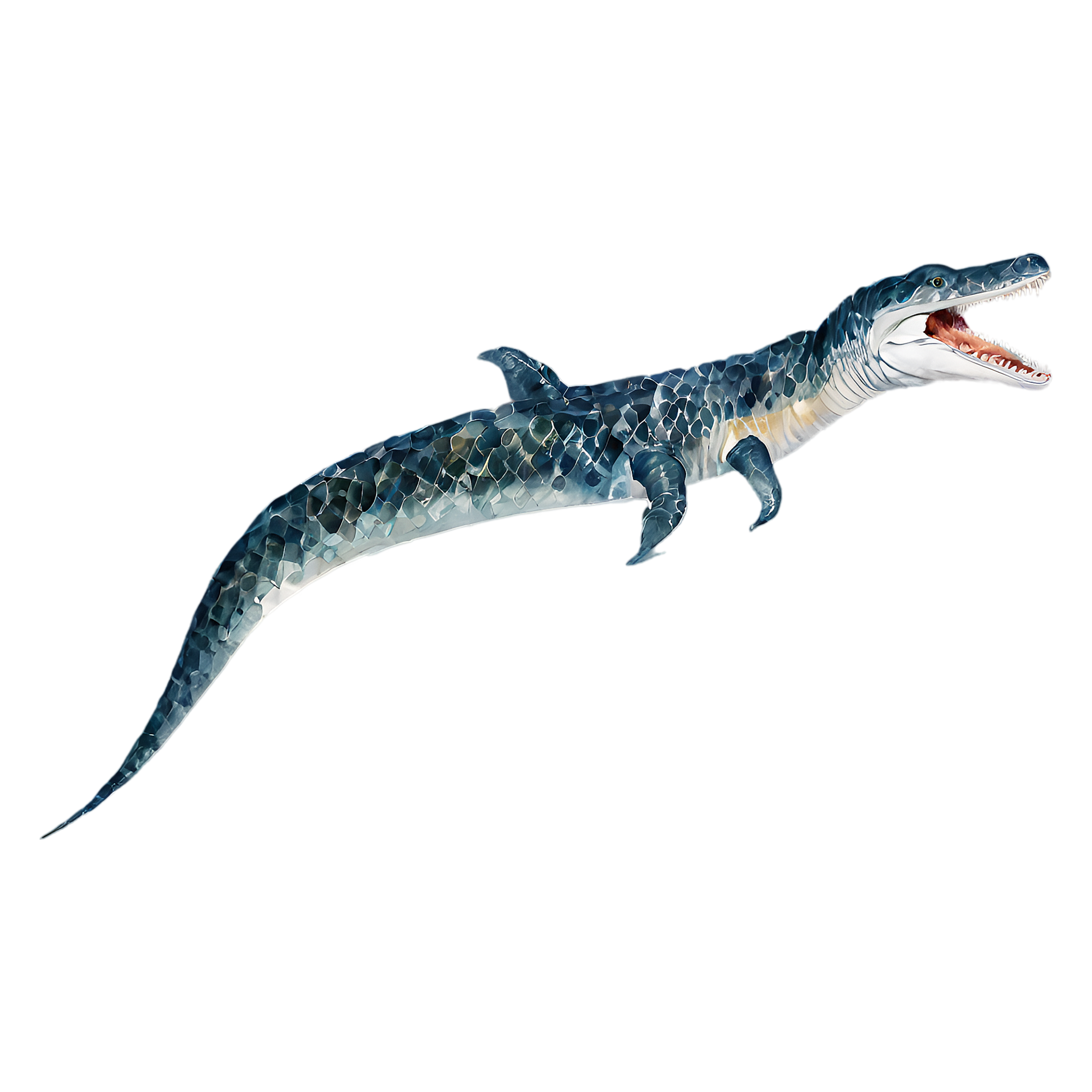
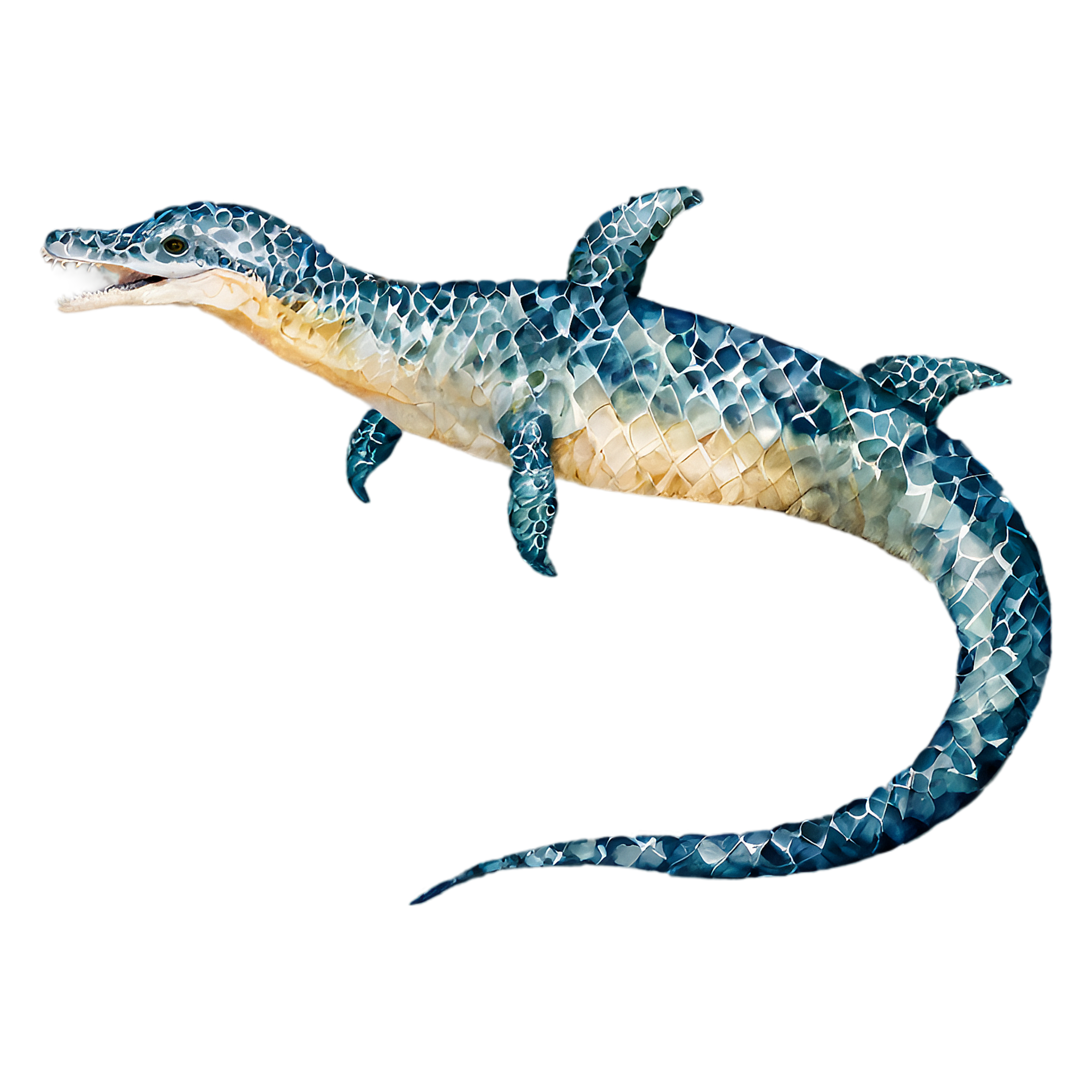
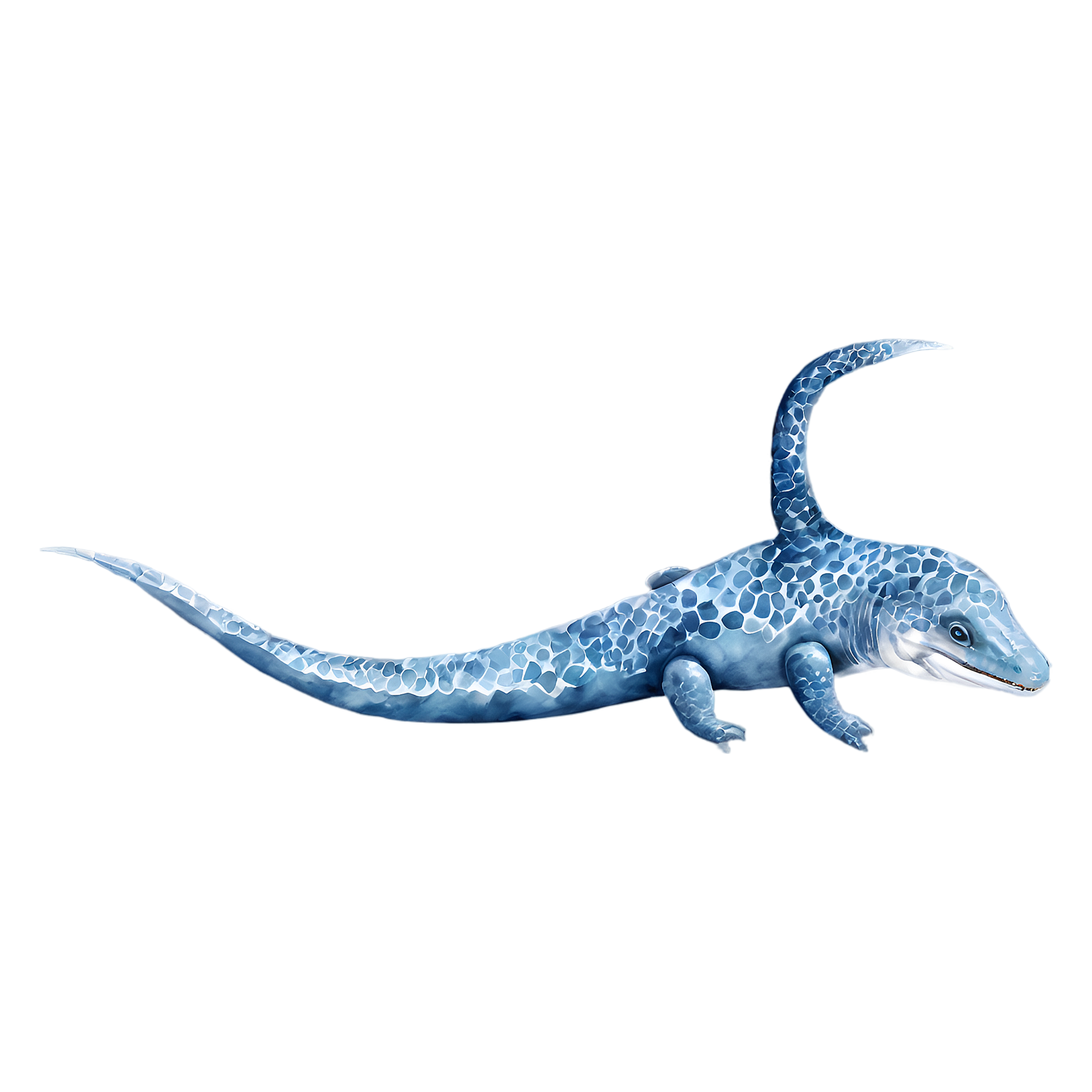
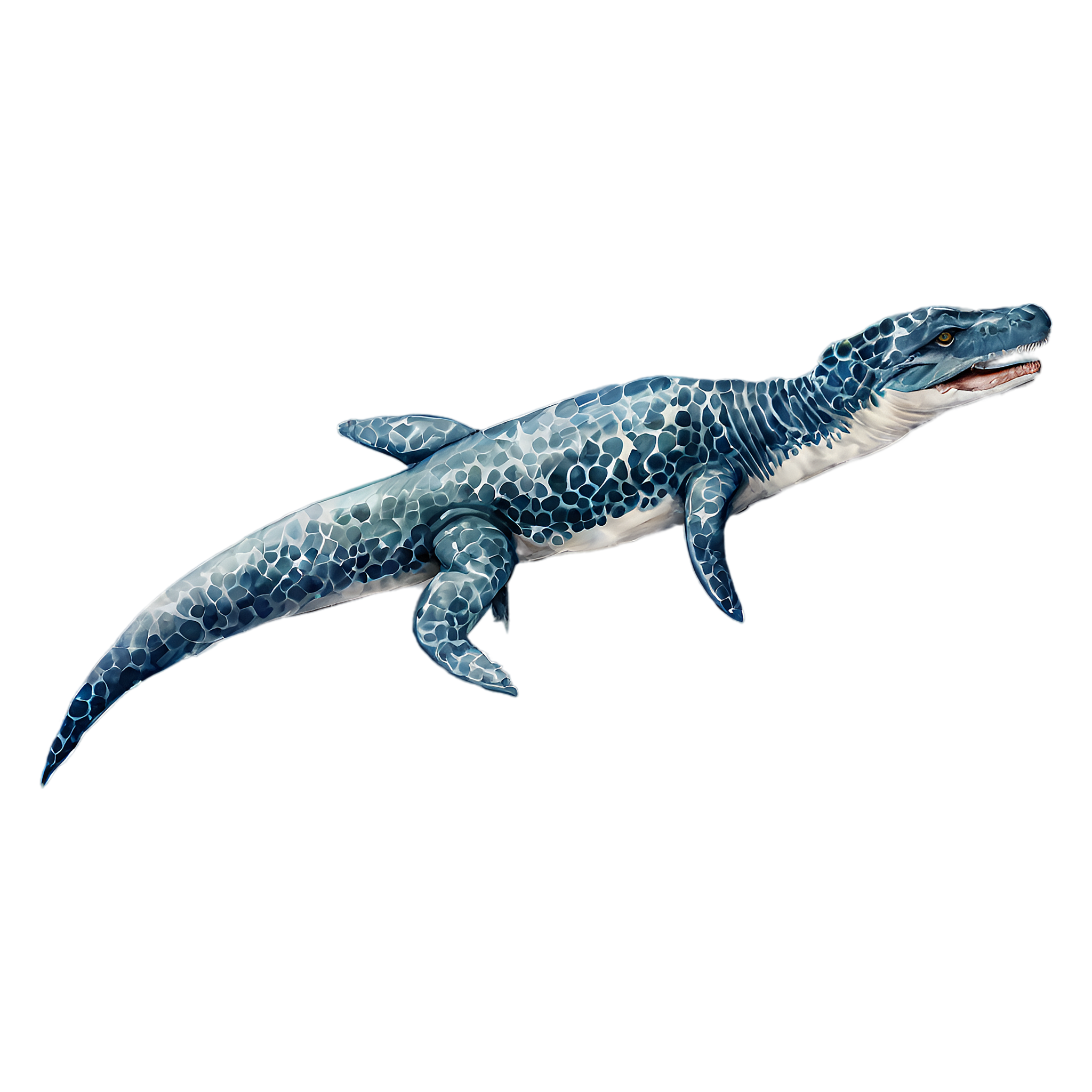
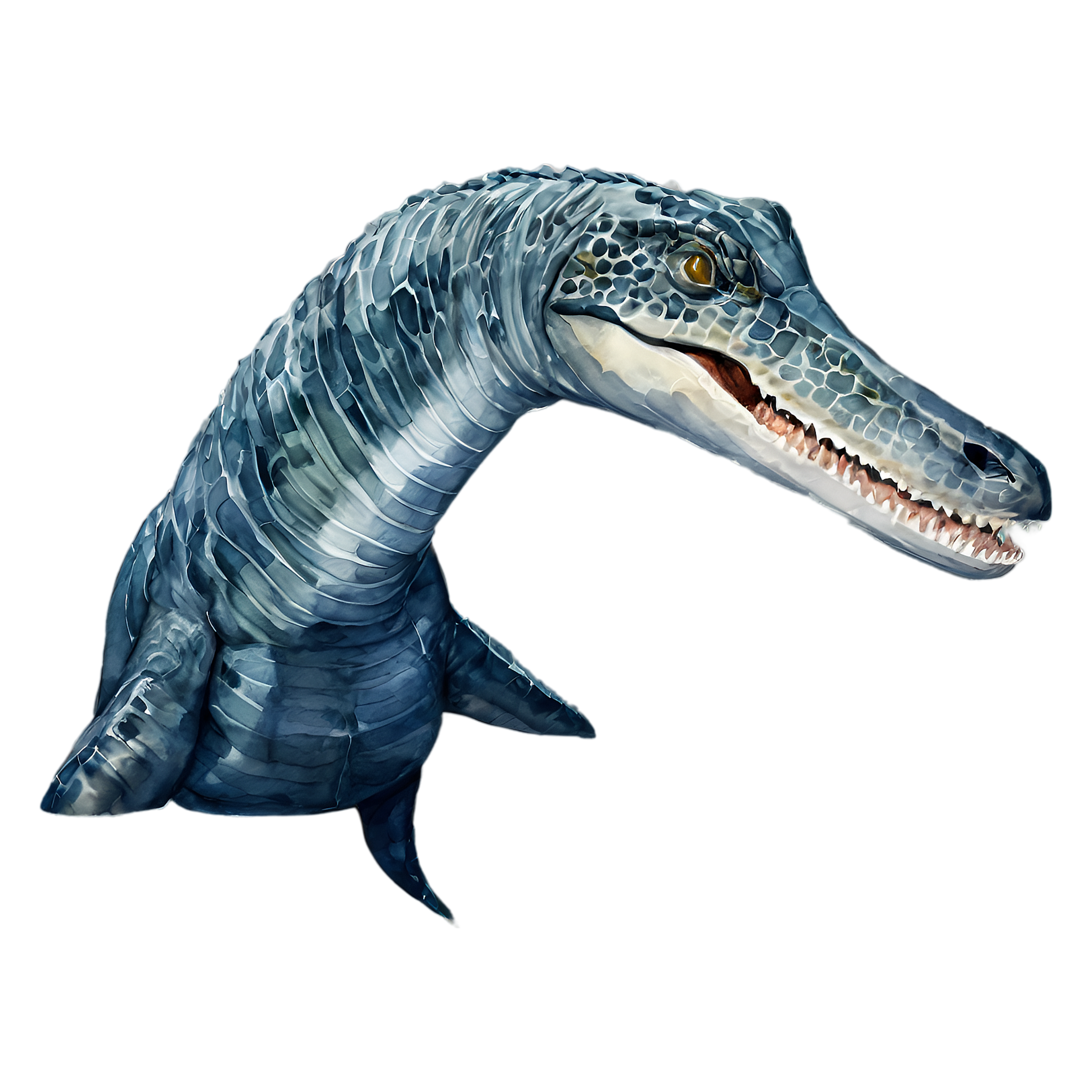
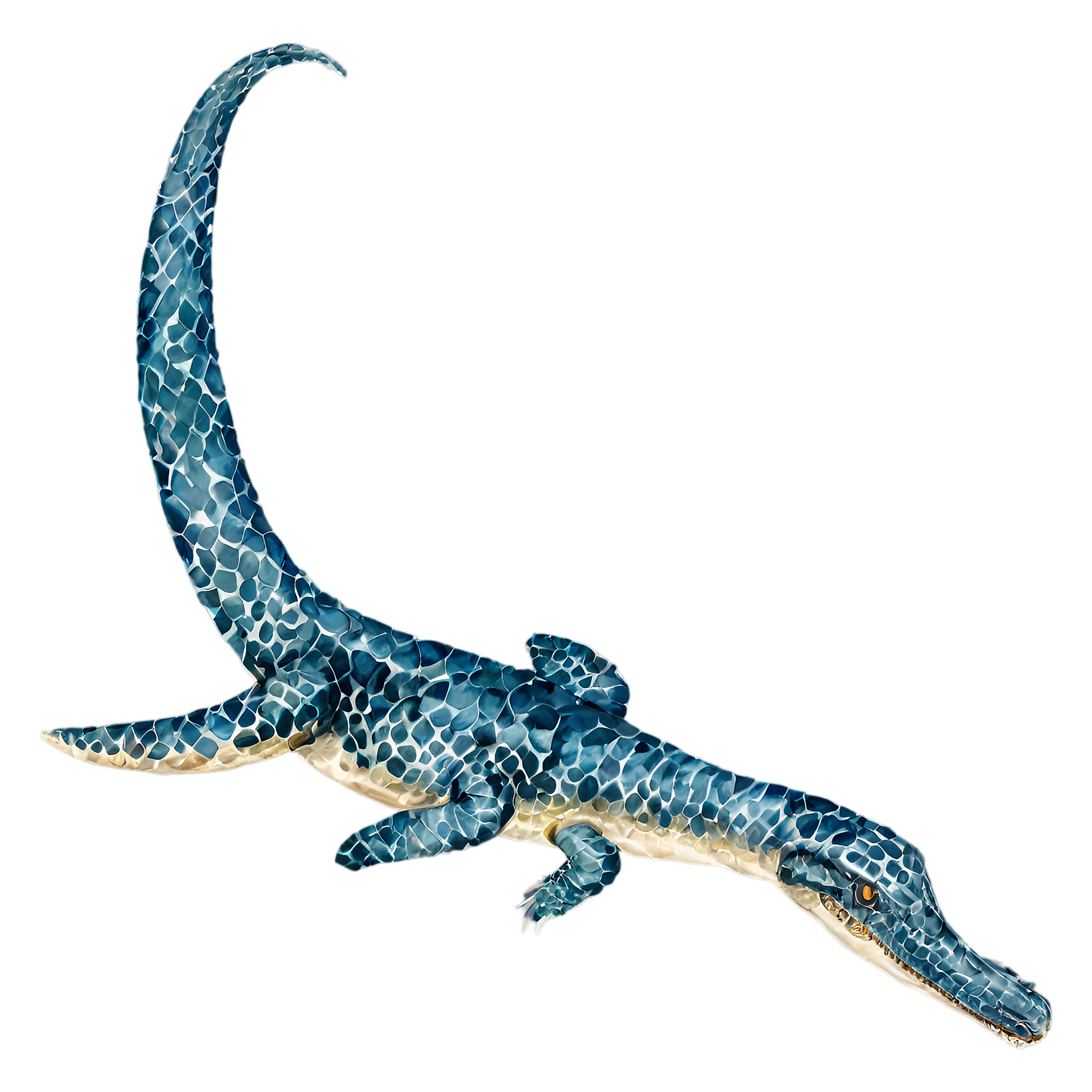
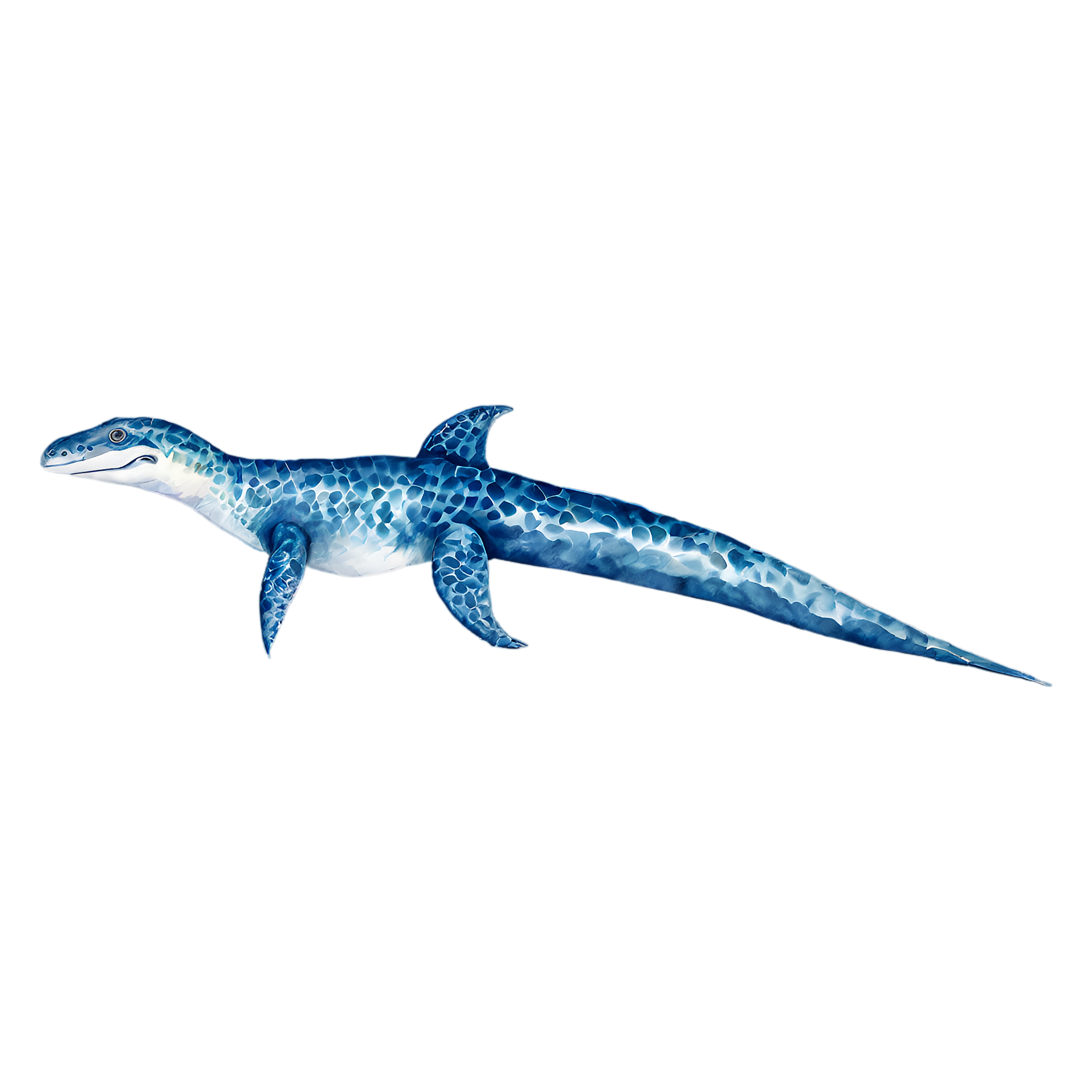
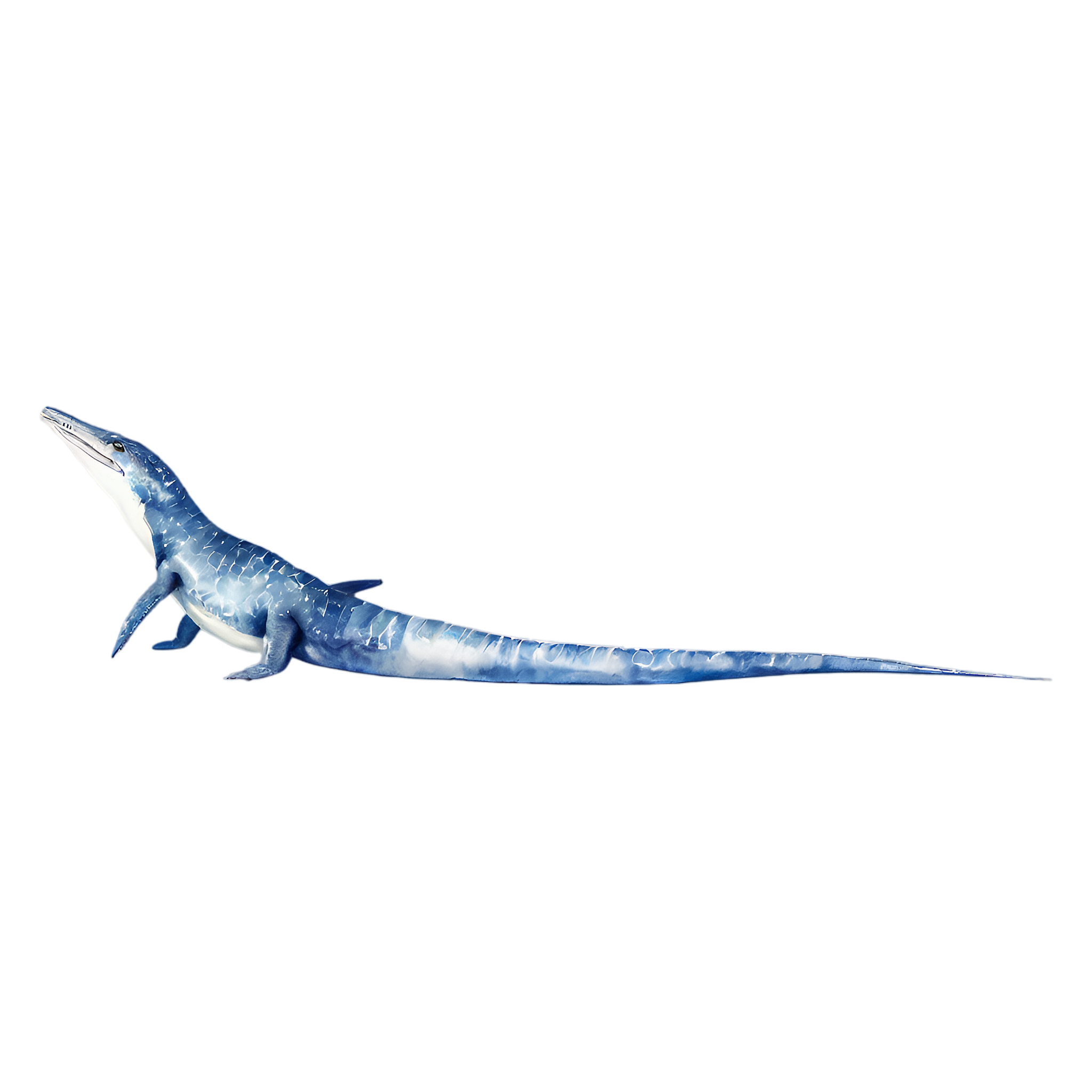
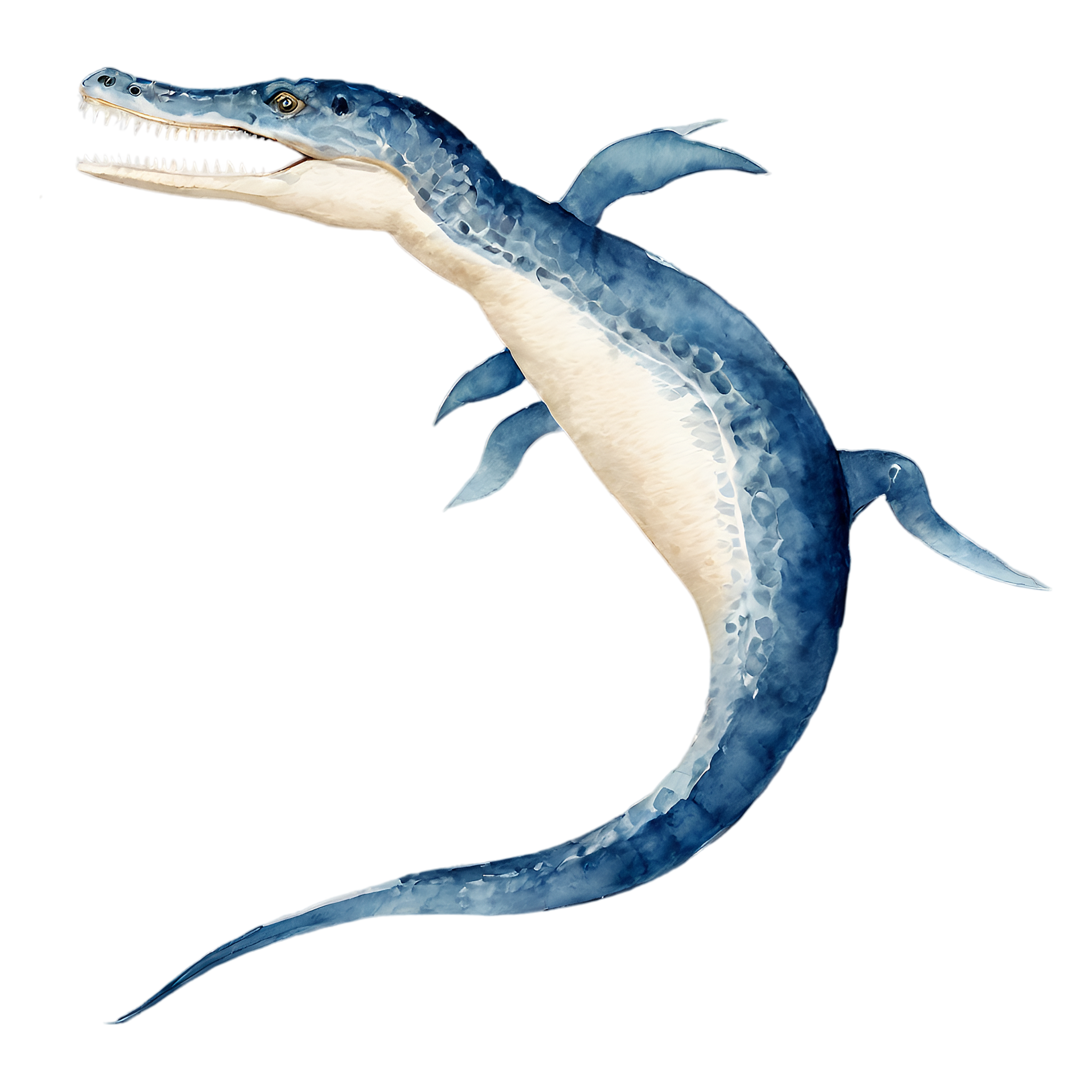
Every image shows the long, streamlined body that made mosasaurs fast ocean predators. Several are swimming poses: side profile with the body gently curved, an S-curve in side view, gliding horizontally, gliding with flippers extended, swimming downward at an angle, and a full-body side view with the tail curving behind. A three-quarter view spreads the flippers so all four paddles show. For a more dramatic look there is a mosasaurus with its long jaws open and a head-and-shoulders portrait with toothy jaws. The set also includes a cute baby mosasaurus swimming, which keeps a sea monster friendly enough for a nursery or a toddler's party.
Ocean-dinosaur parties and fossil lessons
Mosasaurus fills a gap that comes up at every dinosaur party: the kid who also loves sharks. It turns a land-dinosaur theme into an under-the-sea one for birthday invitations, cupcake toppers, thank-you tags and goody-bag labels, and its leap out of the water in the movie Jurassic World made it familiar to a lot of kids. The baby suits ocean nursery prints and baby shower games. Teachers can use it for a fossil unit lesson on why not every prehistoric reptile was a dinosaur, alongside plesiosaurs and pterosaurs. Mosasaur fossils are common in the chalk of western Kansas, laid down when a shallow sea covered the middle of North America, so the set is a fit for natural history museum events and Midwest field trips.
Deep sea blues
The coloring runs from very dark navy and royal blue to pale blue-gray and cream. The closest DMC floss matches include 820 Royal Blue Very Dark and 311 Wedgewood Ultra Very Dark. For a mixed land-and-sea dinosaur party, pair it with T-rex and Triceratops, both of which lived in the same final years of the Cretaceous. For an ocean scene, add a shark or sea turtle, since both groups swam in Cretaceous seas. The dinosaurs hub holds the rest of the prehistoric set.
Fitting a long animal on a round or square layout
A mosasaurus is long and low, so it fills a wide banner better than a square card. For round stickers and cupcake toppers, use the S-curve or the three-quarter view with flippers spread, which pack the body into a more compact shape. The open-jaw and portrait images crop well to a circle. For a party banner, run the horizontal gliding pose along the bottom with bubbles and kelp above it. Each file is a transparent PNG at 2048 by 2048 pixels, about 6.8 inches at 300 DPI, which is plenty for a full-width invitation header. Flip a swimmer horizontally so it heads into your text rather than off the edge of the page.