A fish built from cartilage
Sharks are fish, but their skeletons are made of cartilage rather than bone, the same flexible tissue in a human ear. Their skin is covered in tiny tooth-like scales called dermal denticles, which make it feel like sandpaper when stroked from tail to head. Most sharks lose and replace teeth constantly, growing new rows behind the old ones throughout their lives, which is why shark teeth are among the most common fossils on beaches. Sharks also sense the weak electric fields of other animals through pores on the snout. Many species are colored dark gray above and pale below. That countershading hides them from prey looking down into dark water or up toward the bright surface. Sharks have existed for hundreds of millions of years, long before the first dinosaurs.
Ten swimmers, one sleek gray build
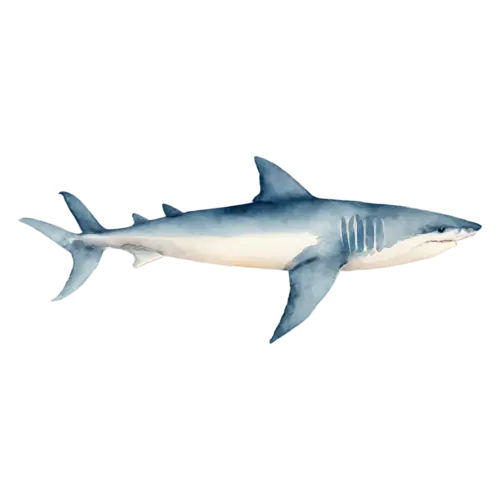
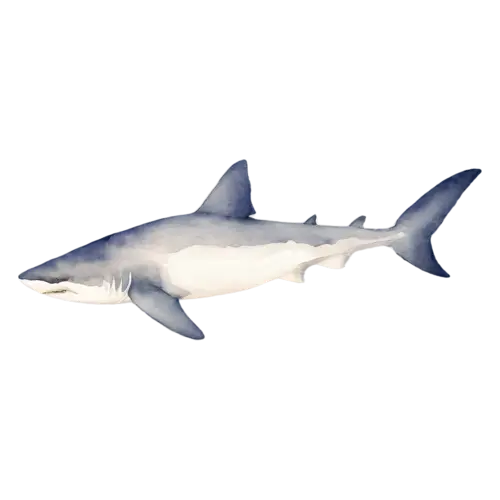
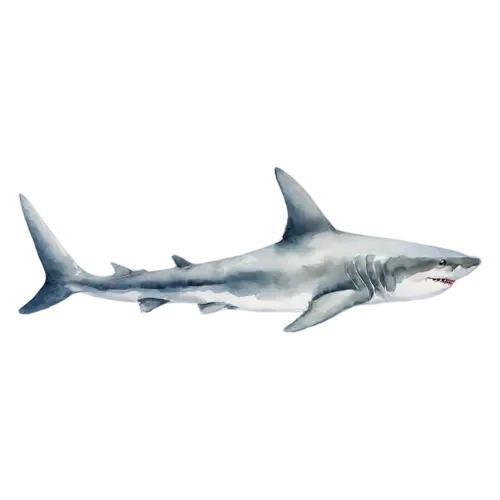
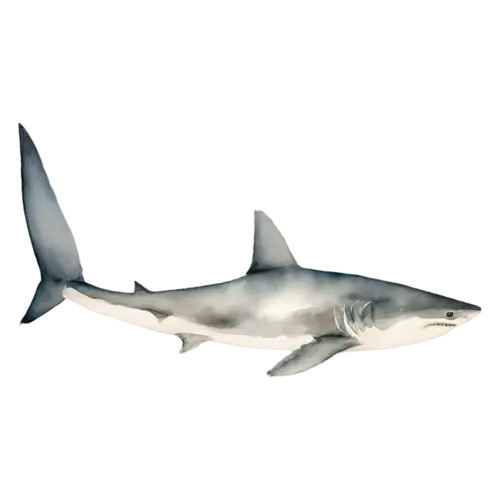
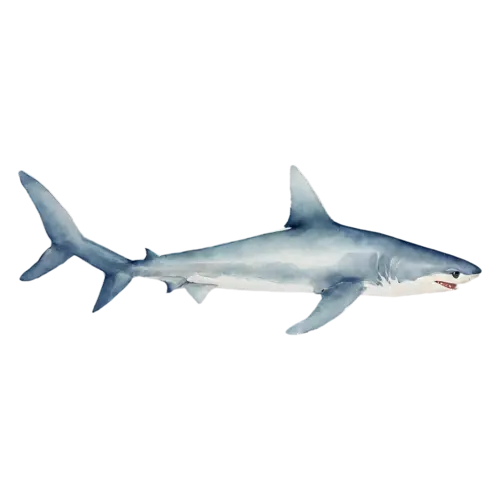
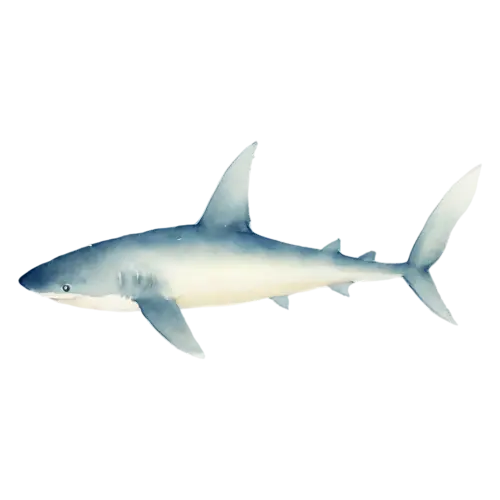
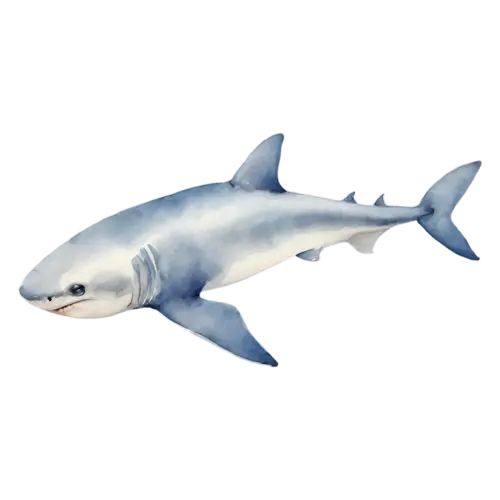
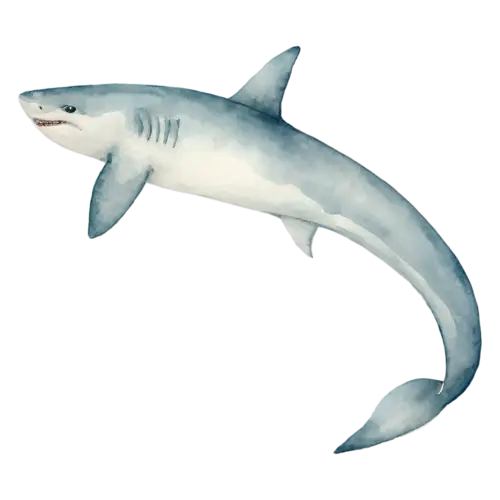
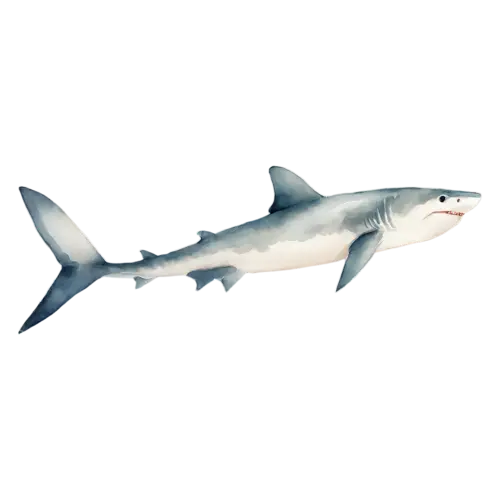
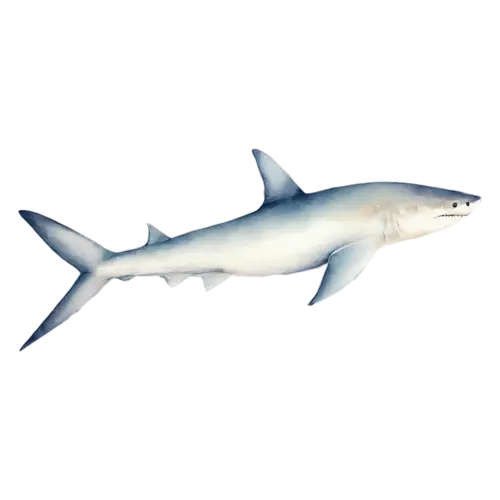
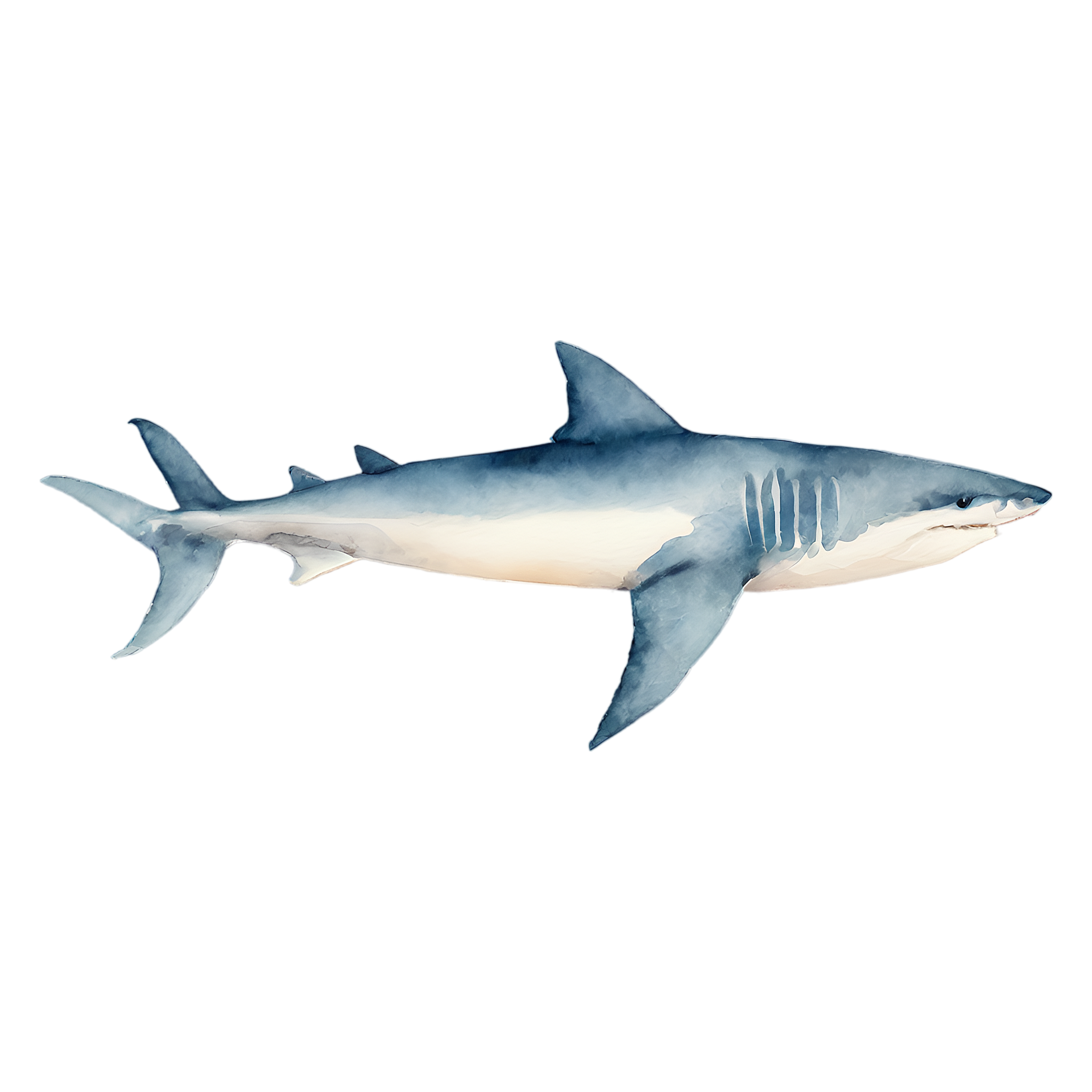
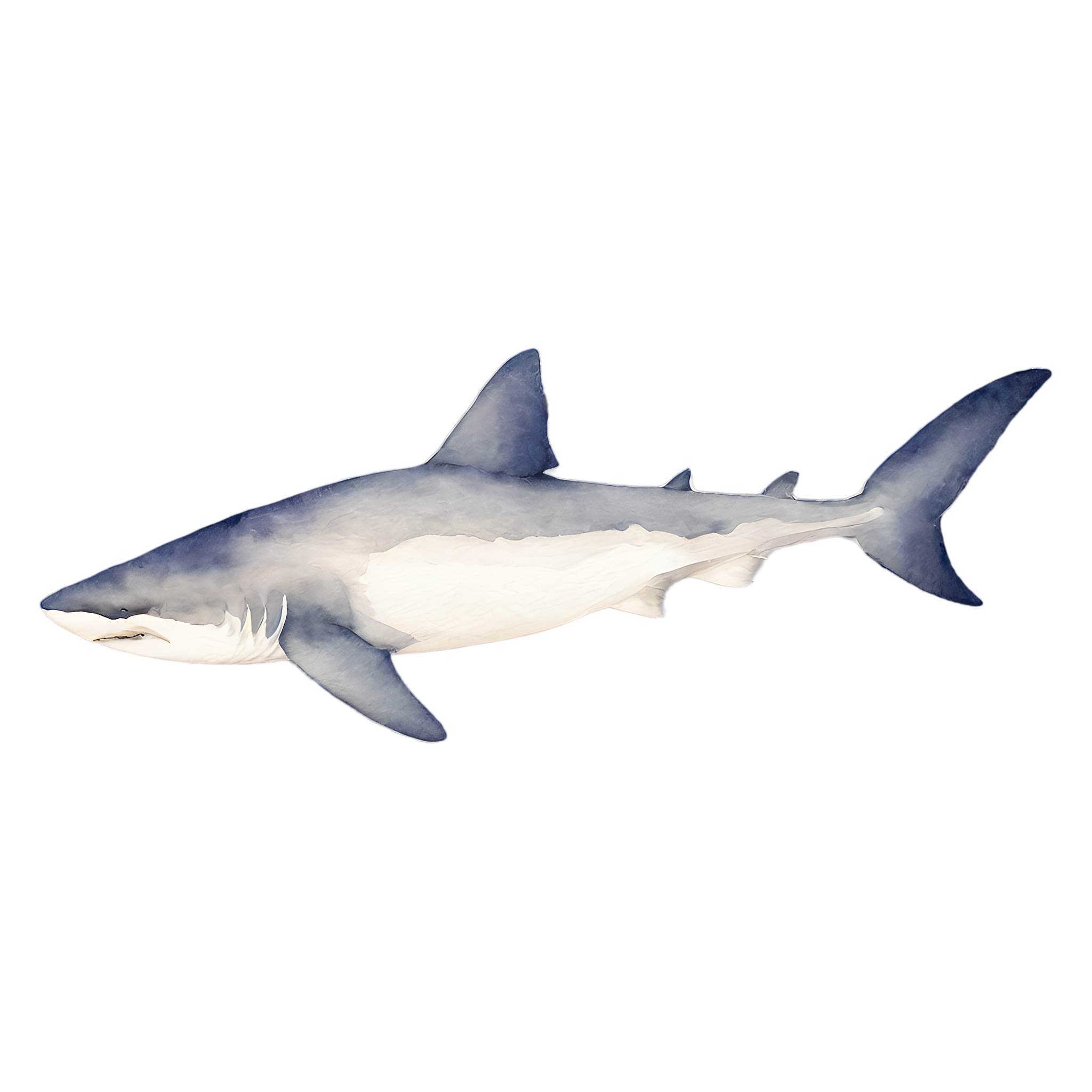
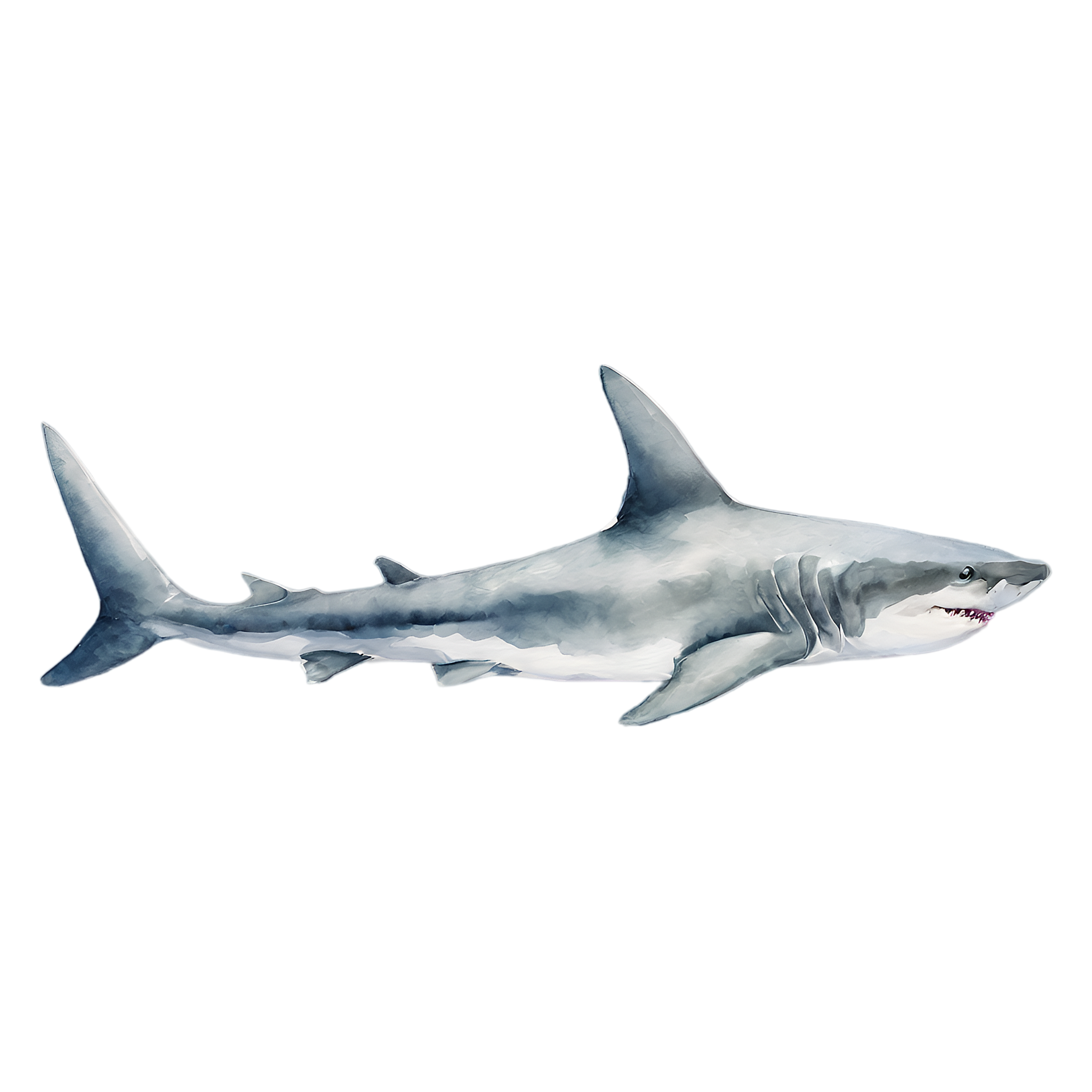
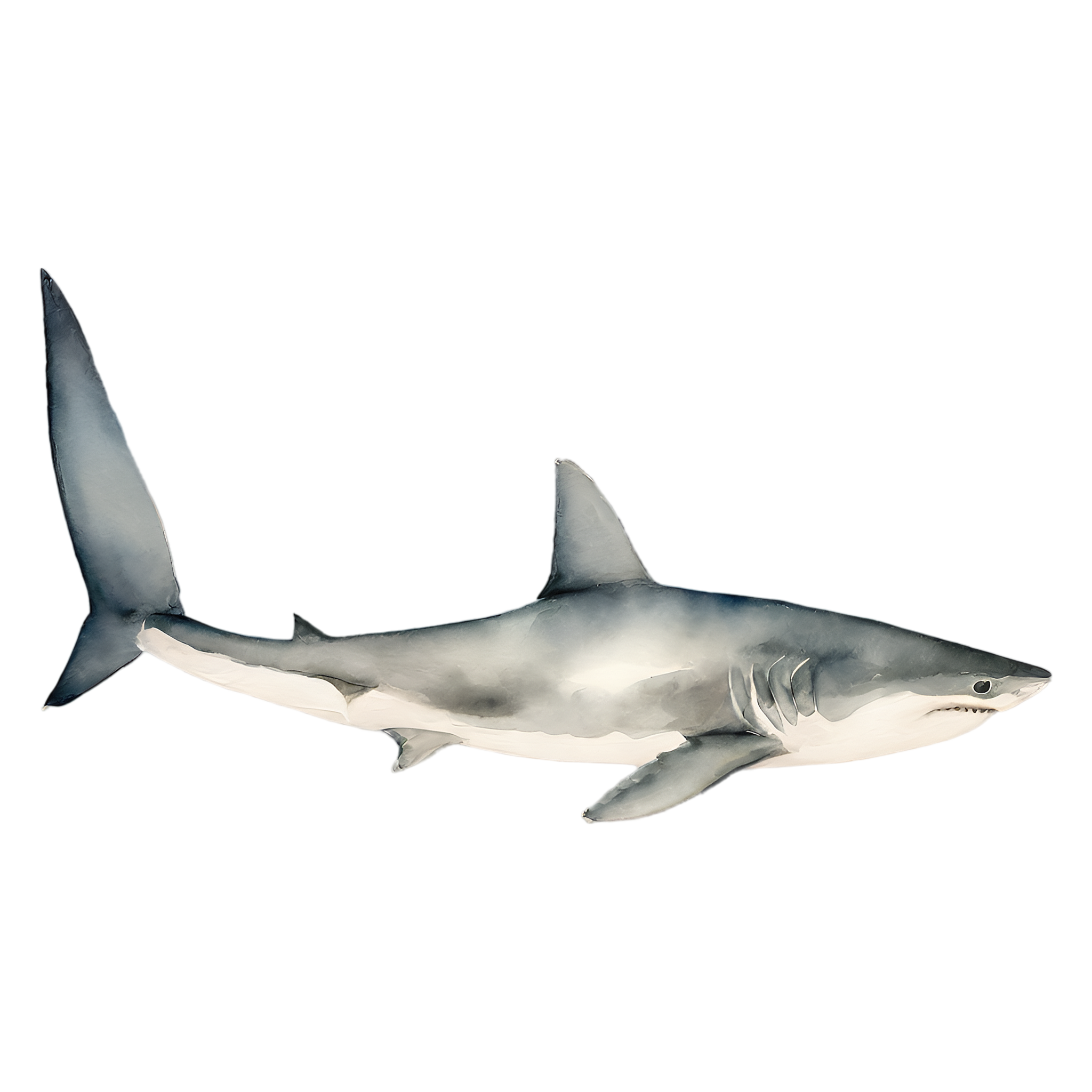
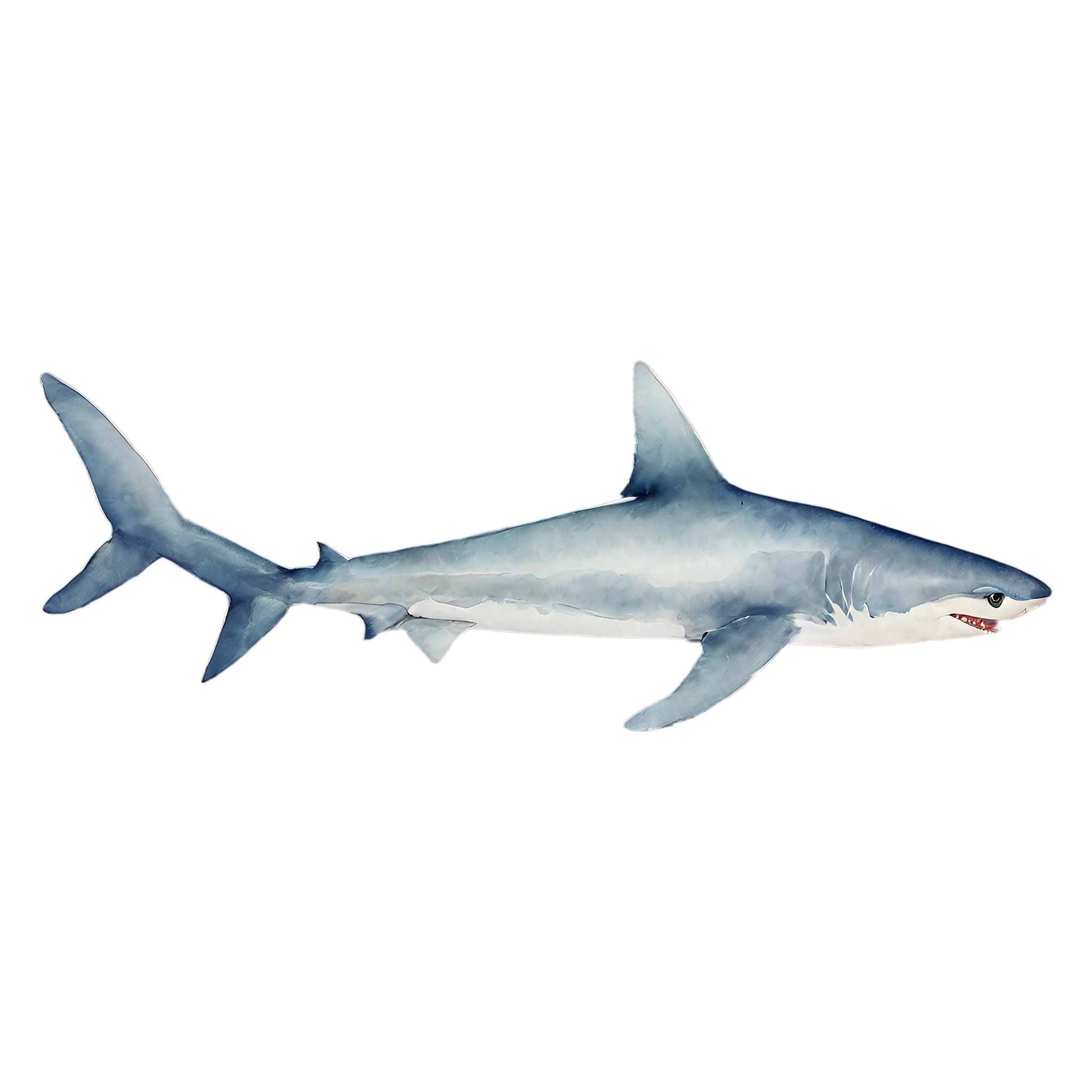
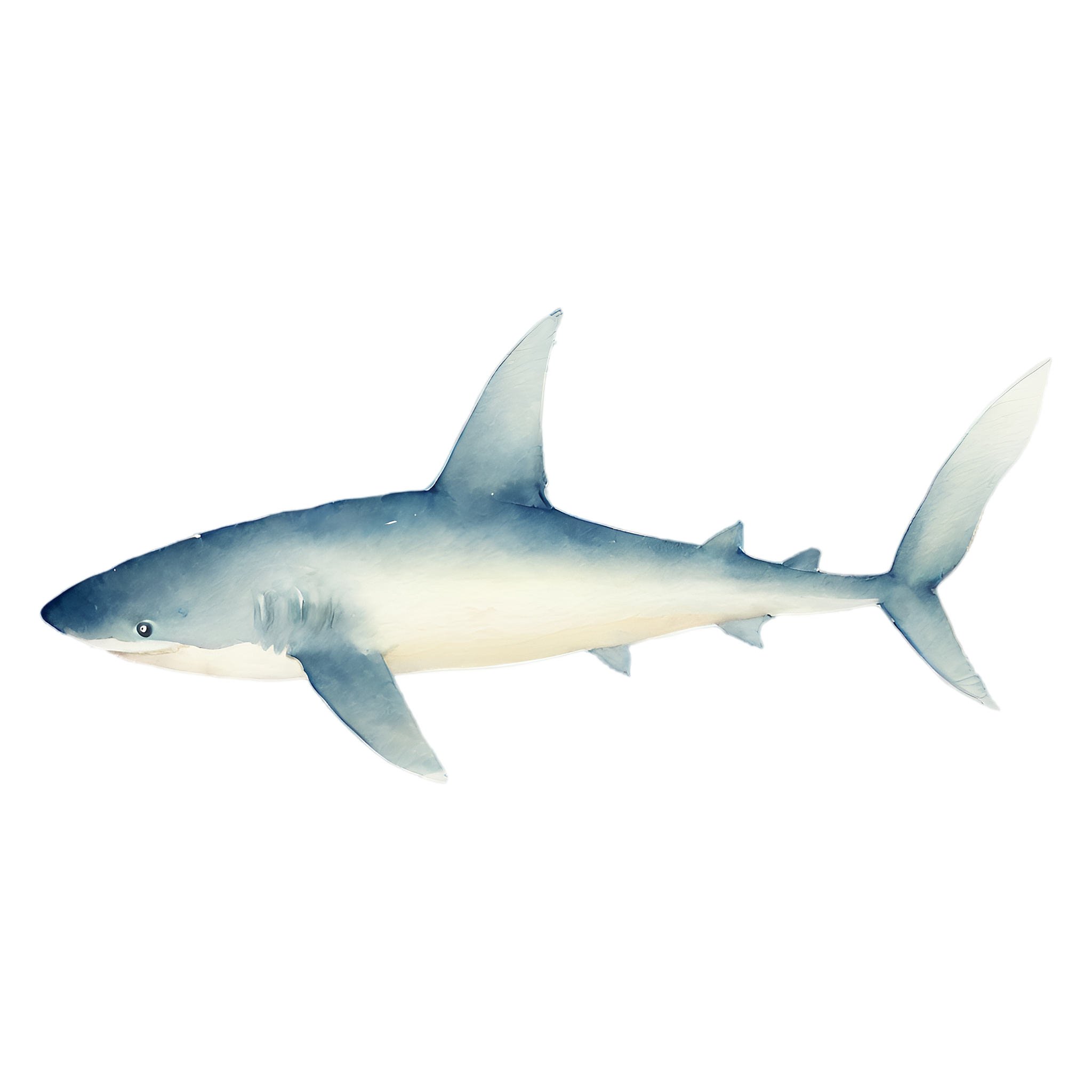
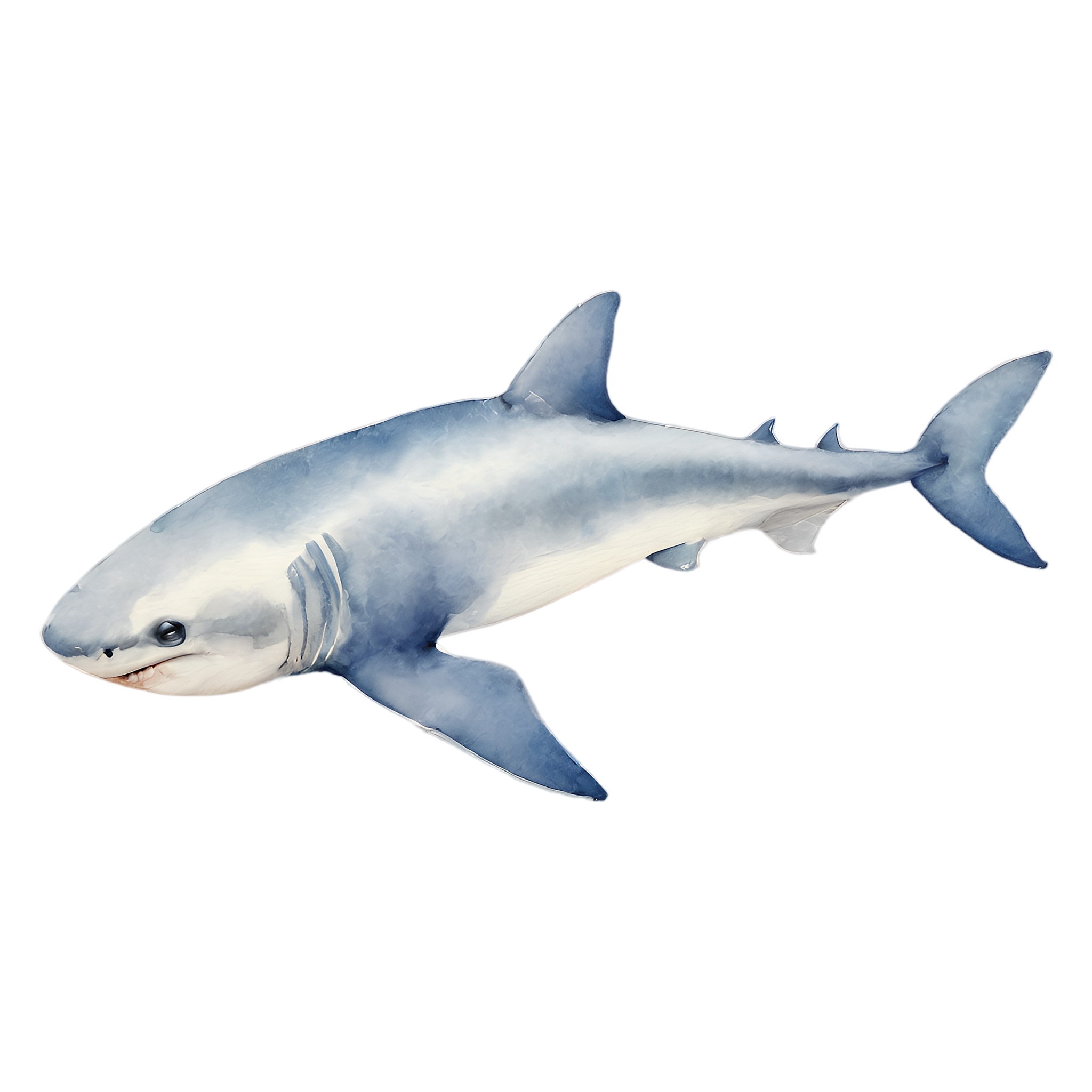
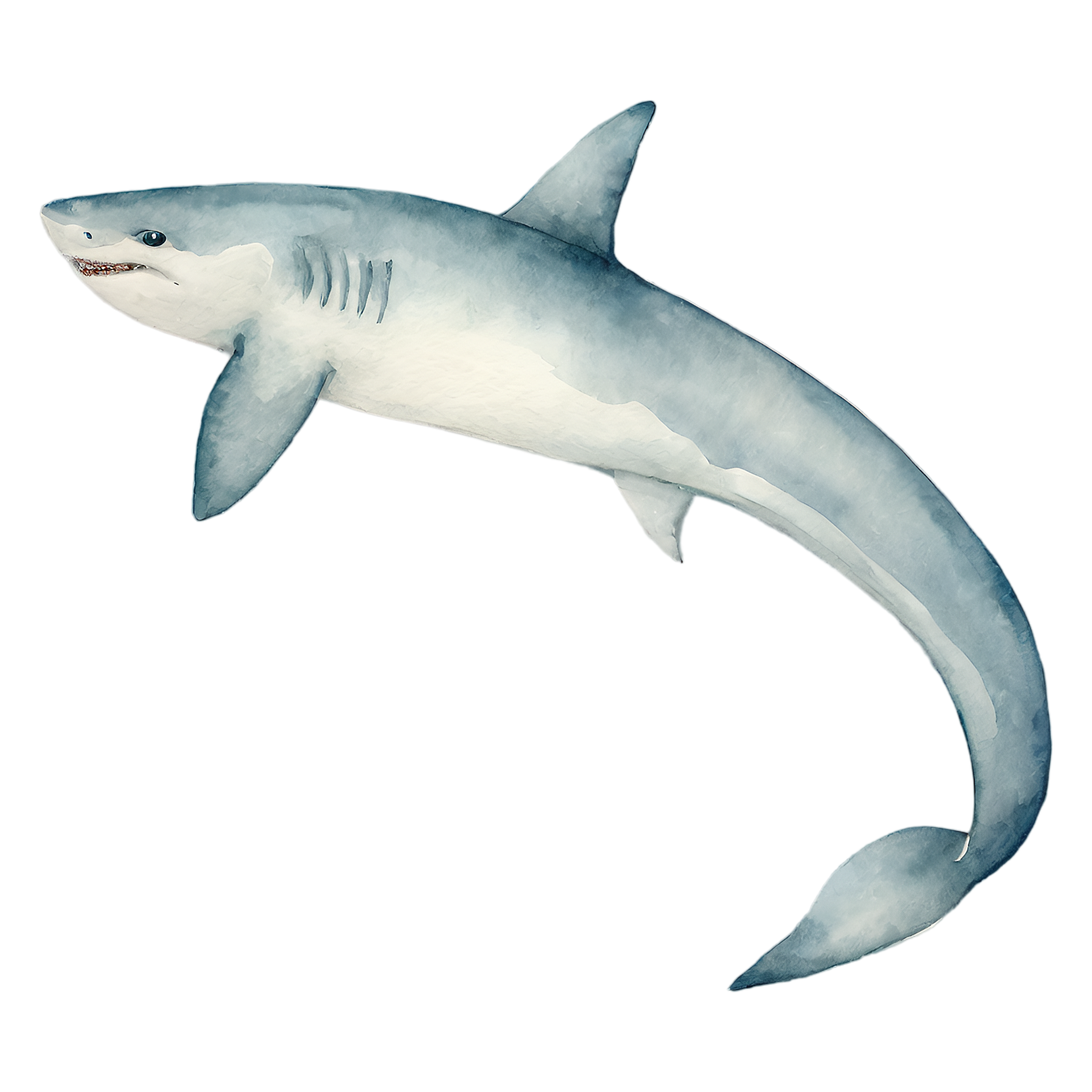
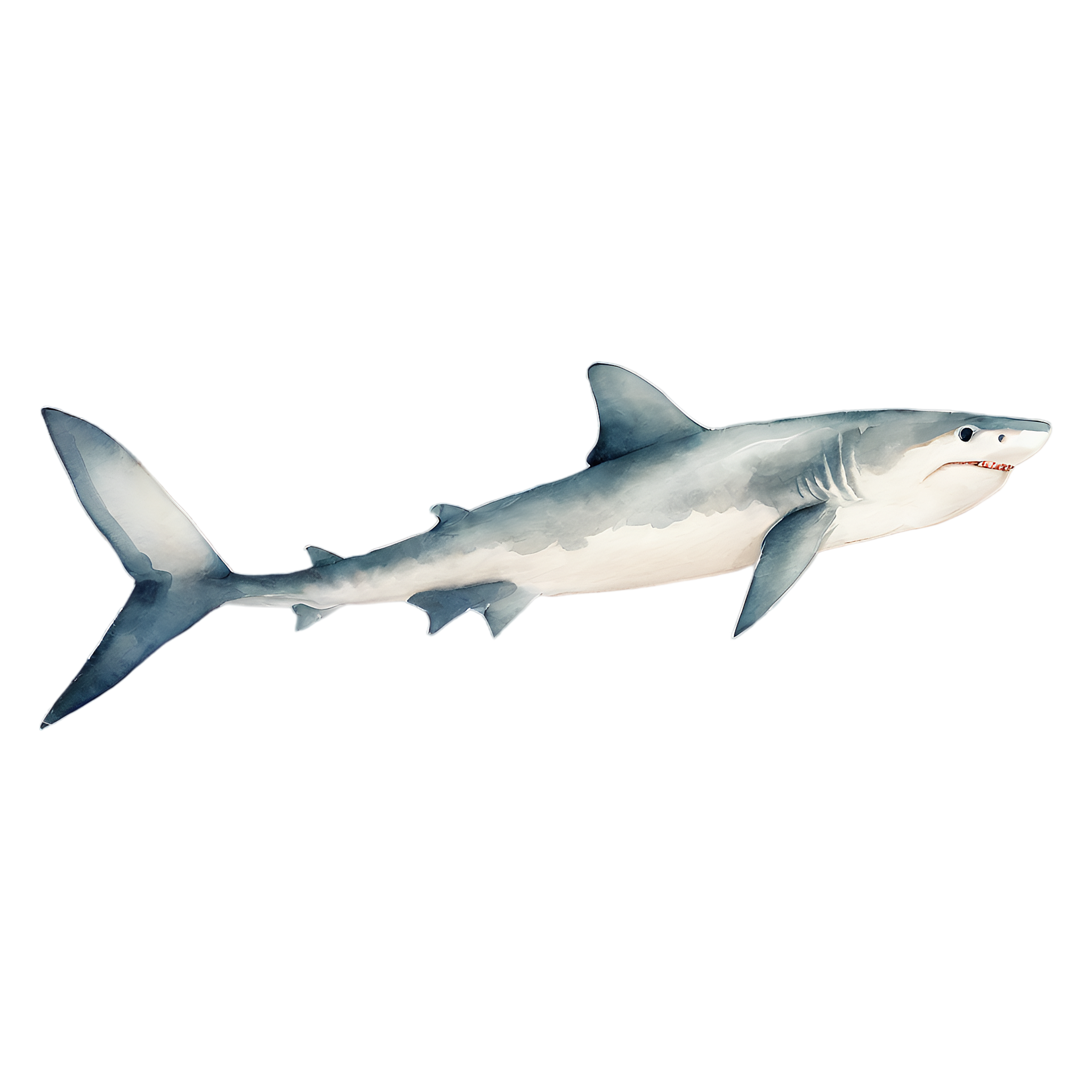
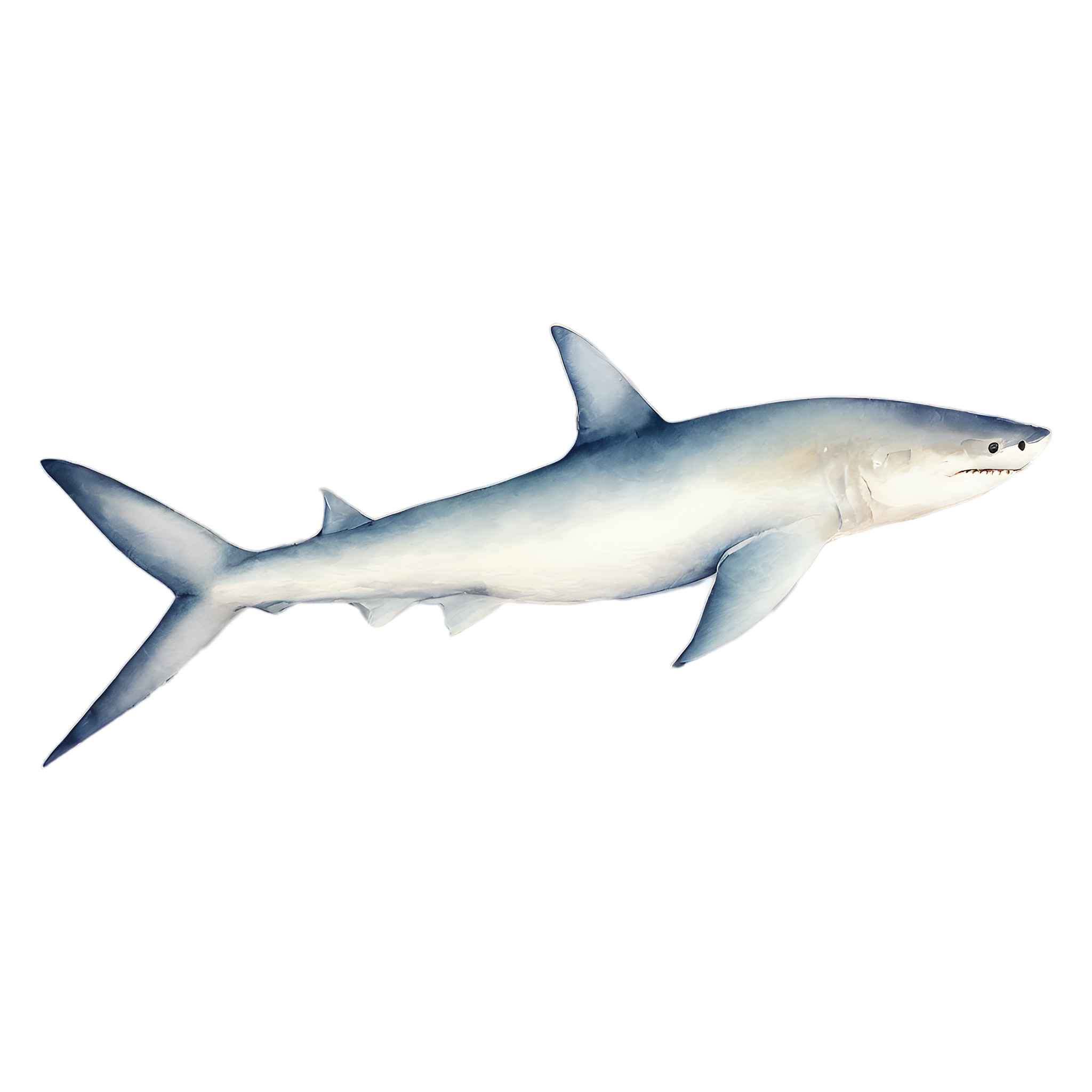
All ten sharks share the same sleek gray, torpedo-shaped body, so they look like one species across a design. The poses are mostly about direction. There is a classic side profile, a shark gliding forward calmly, one in a gentle downward dive and one swimming gently upward. A soft curved swimming pose bends the body, and a three-quarter view adds depth. The image with the dorsal fin raised is the iconic silhouette people expect at the water's surface. The view from above is unusual in clipart and useful for pool and beach designs. Two images are softer: a rounded friendly pose and a small baby shark swimming, both meant for younger audiences.
Shark Week, kids' parties and surf shops
Sharks have a calendar moment: Discovery Channel's Shark Week every summer, when schools, libraries, aquariums and bars run shark-themed events and need posters, trivia sheets and drink specials. The baby shark and the friendly pose cover the huge market for toddler birthday parties built around the "Baby Shark" song, plus ocean baby showers and nursery wall art. The side-profile and dorsal-fin images suit surf shops, swim teams, dive centers and a school's Sharks mascot. Teachers can use the set for an ocean unit on fish anatomy, labeling fins on the side view, or for a lesson on how sharks differ from dolphins and whales, which are mammals.
Cool gray-blue tones
The bodies are blue-gray to steel gray with some cream tones, matched most often to DMC 927 Gray Green Light, 926 Gray Green Medium and 318 Steel Gray Light. They read clearly on aqua, sand or white backgrounds and pair well with brighter sea life. For a broader ocean scene, add a whale shark, the largest fish in the sea and a gentle filter feeder, or a whale and octopus. A strand of kelp behind a swimmer makes it clearly underwater. More sea creatures are in the ocean clipart hub.
Placing a shark on pool and party designs
Use the top-down shark on anything that represents water seen from above: pool party invitations, swim lesson certificates, beach towel prints and splash-pad signs. Set it on an aqua rectangle and it looks like a shark gliding under the surface. For a "shark attack" joke on a birthday card, place only the dorsal-fin image at the bottom edge so it appears to cut through waves. Flip side-view sharks horizontally so they swim toward your headline. Each file is a transparent PNG at 2048 by 2048 pixels, about 6.8 inches at 300 DPI, large enough for a full-front T-shirt sublimation print. For cupcake toppers, the baby shark keeps its shape best at small sizes.