A shark, a filter feeder and the largest fish alive
The whale shark (Rhincodon typus) is a shark, not a whale, and it is the largest living fish. Despite its size it eats some of the smallest food in the sea: it swims with its wide mouth open, or gulps water, and filters out plankton, fish eggs and small fish. It is harmless to people, which is why swimmers and divers can share the water with it. Its mouth sits at the very front of a broad, flat head, unlike most sharks, and its back is covered in a checkerboard of pale spots and stripes. Every whale shark's spot pattern is unique, so researchers identify individuals from photographs. The species lives in warm seas worldwide, gathers seasonally at places such as Ningaloo Reef in Western Australia and Isla Holbox in Mexico, and is listed as Endangered by the IUCN.
Ten gentle giants
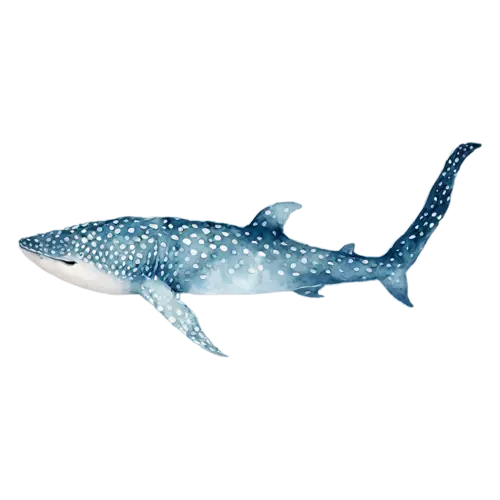
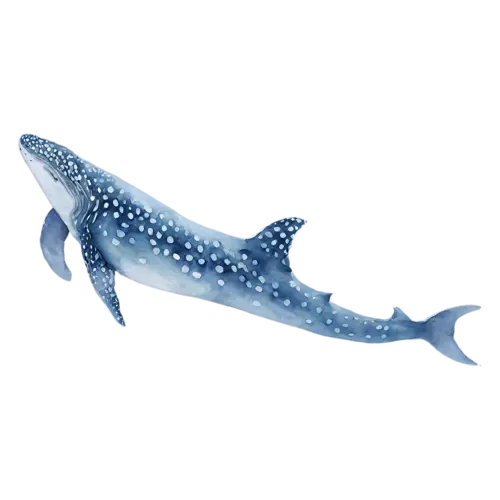
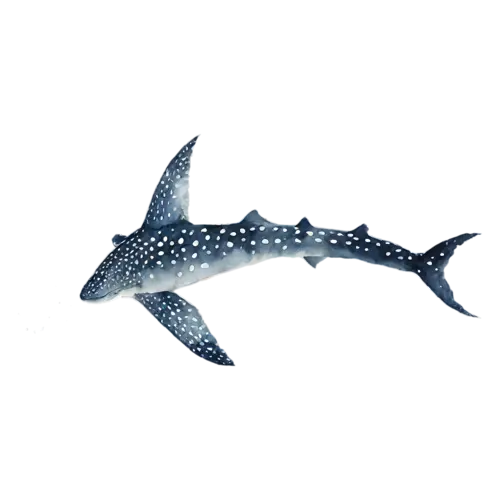
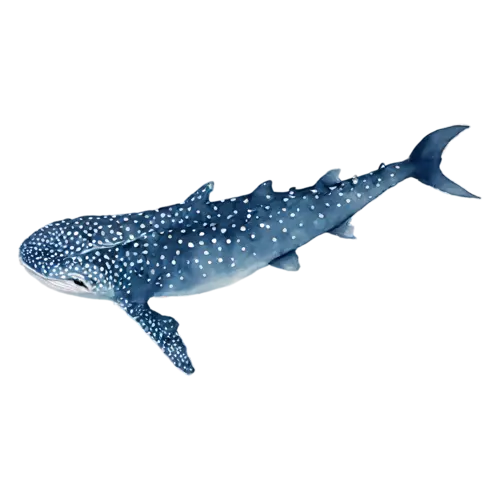
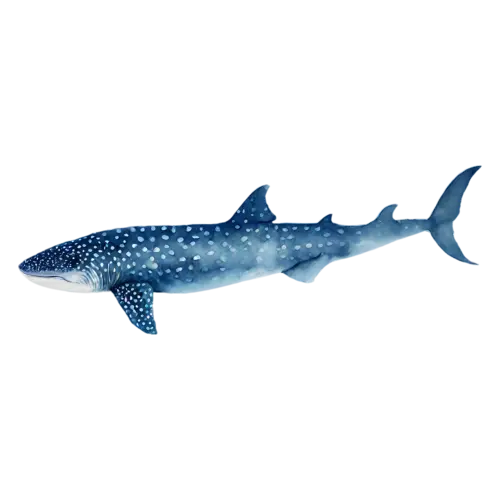
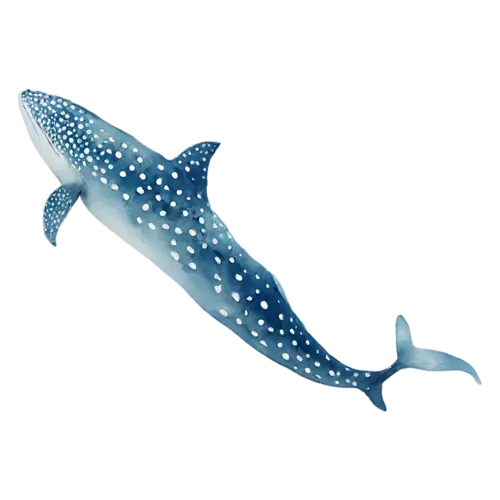
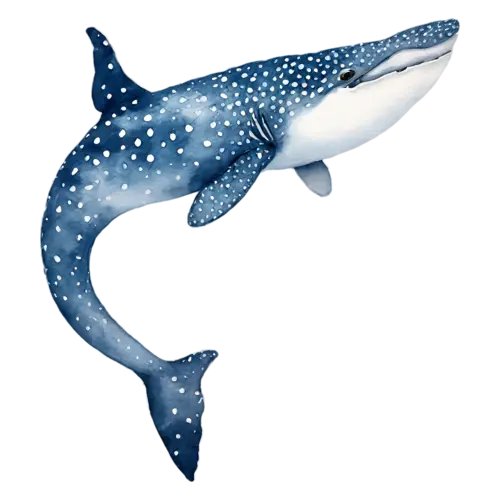
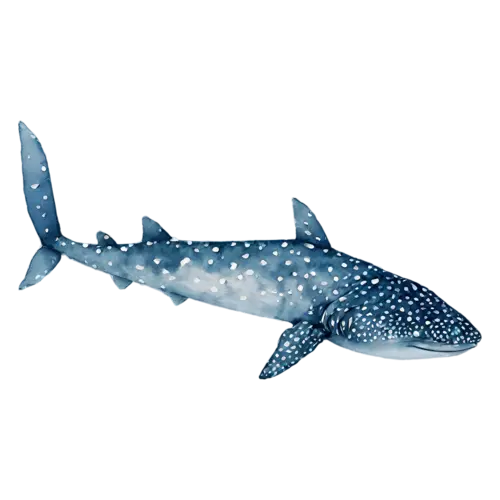
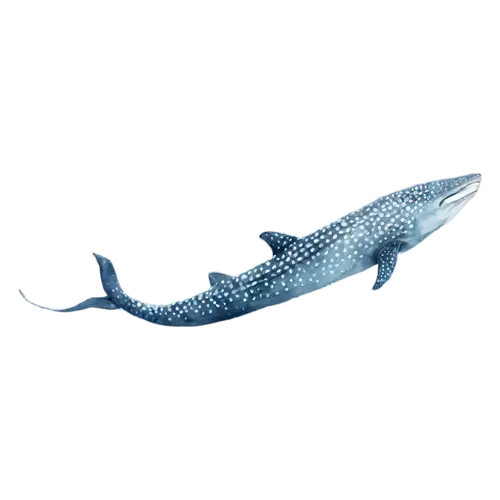
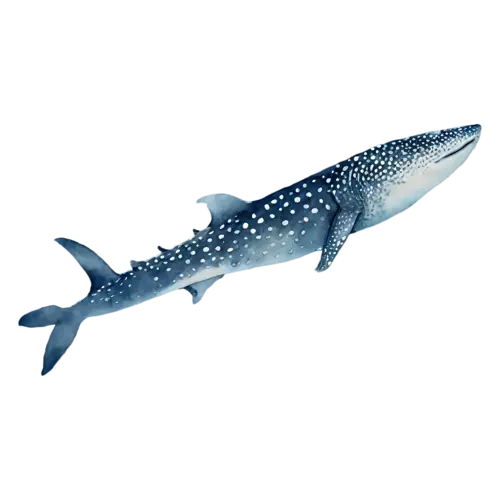
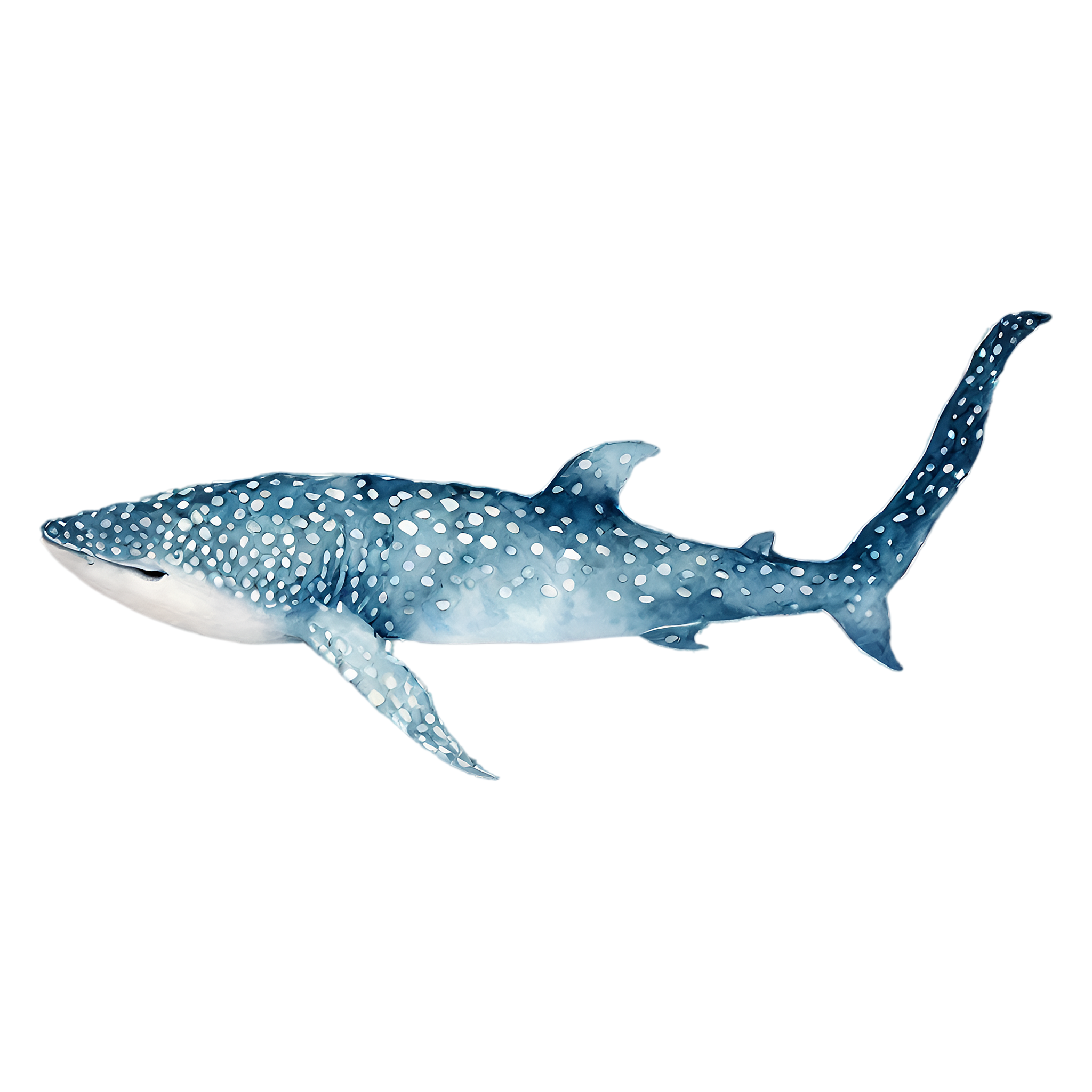
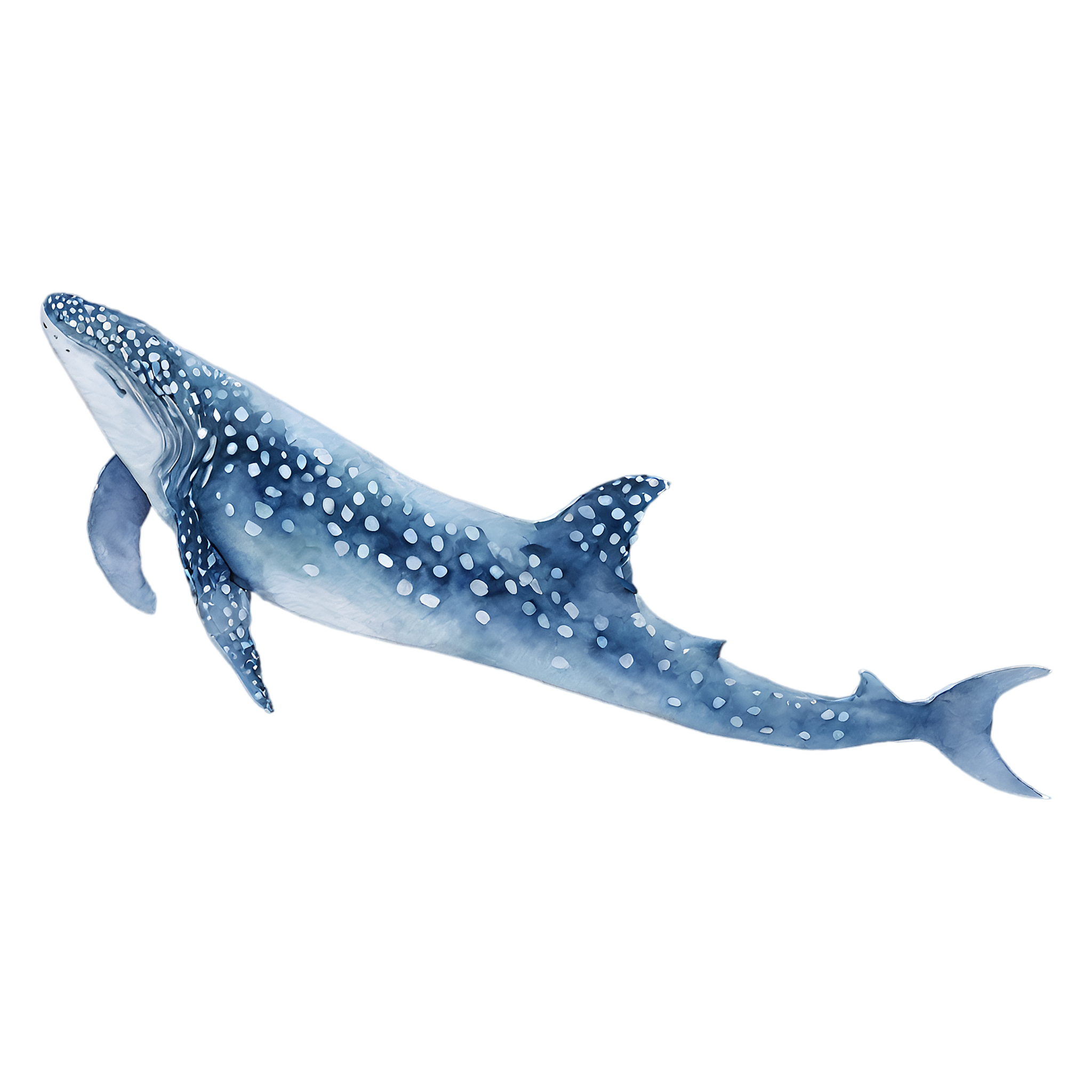
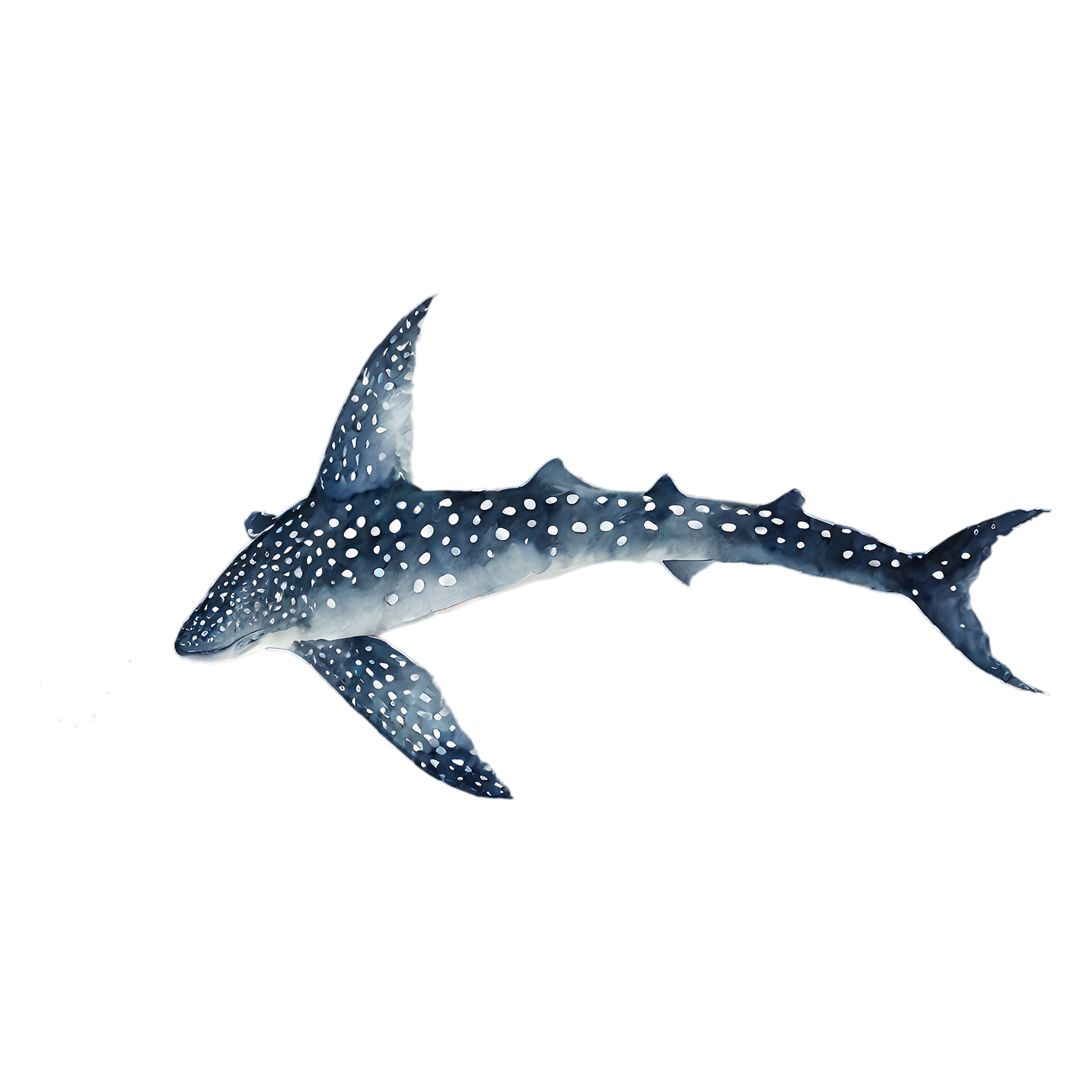
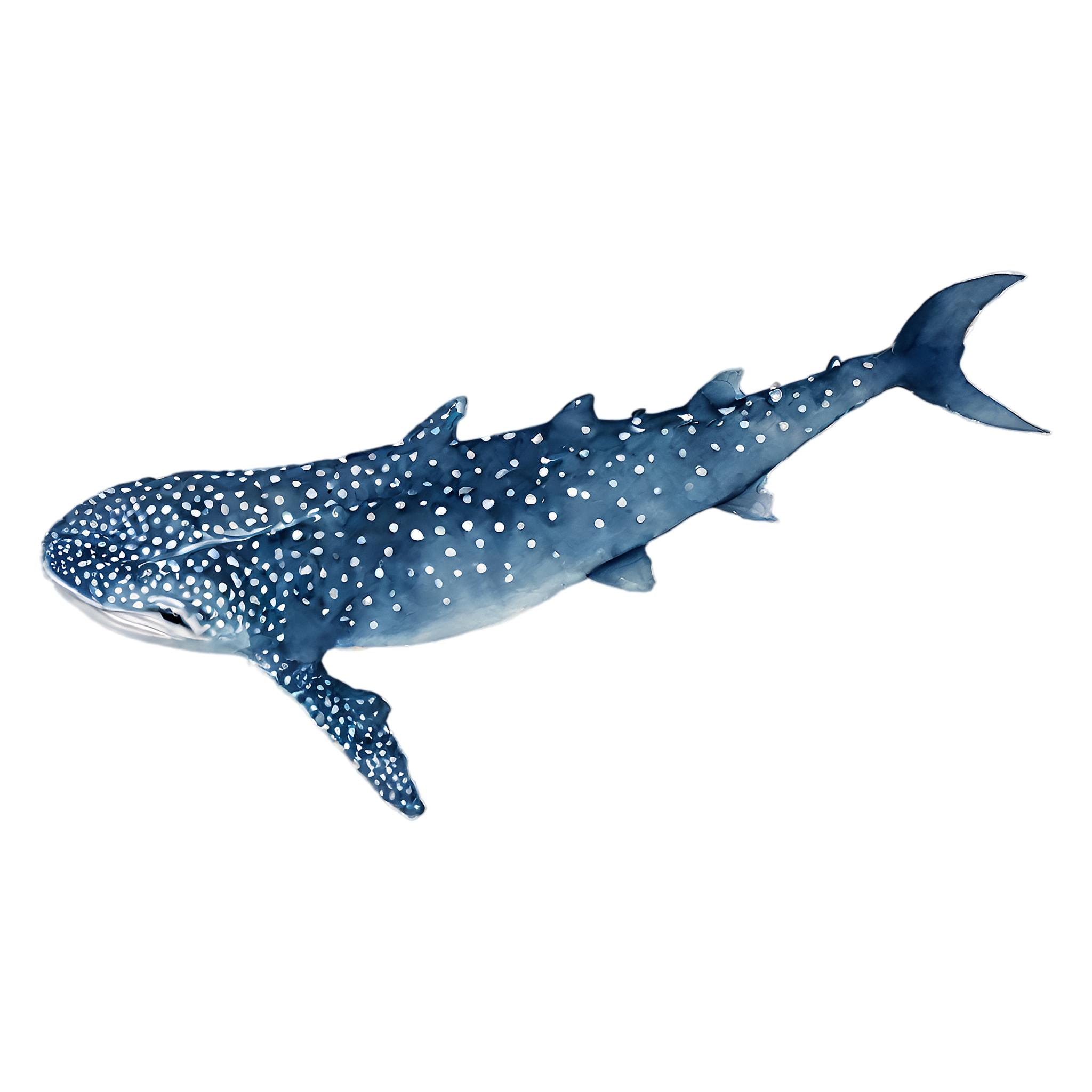
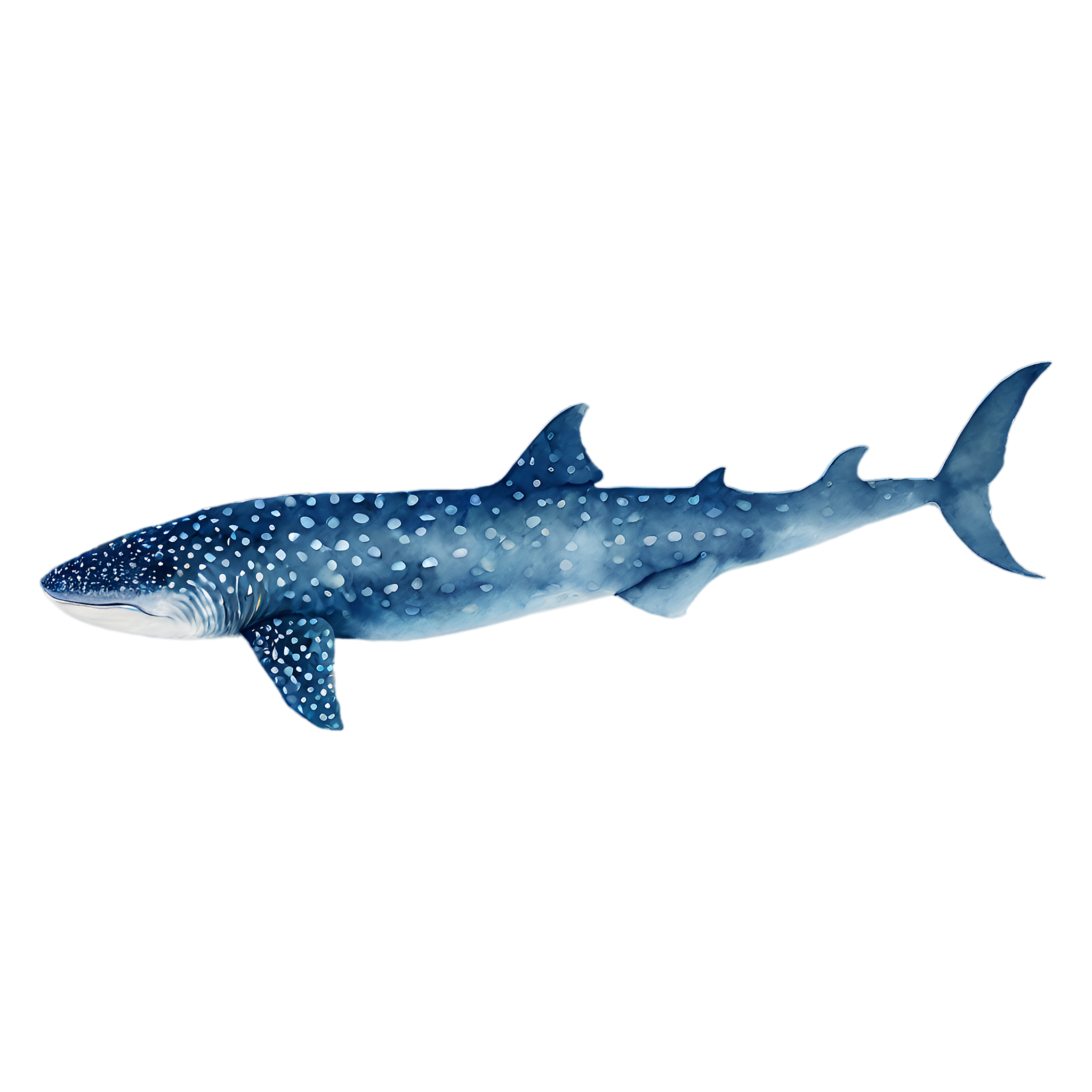
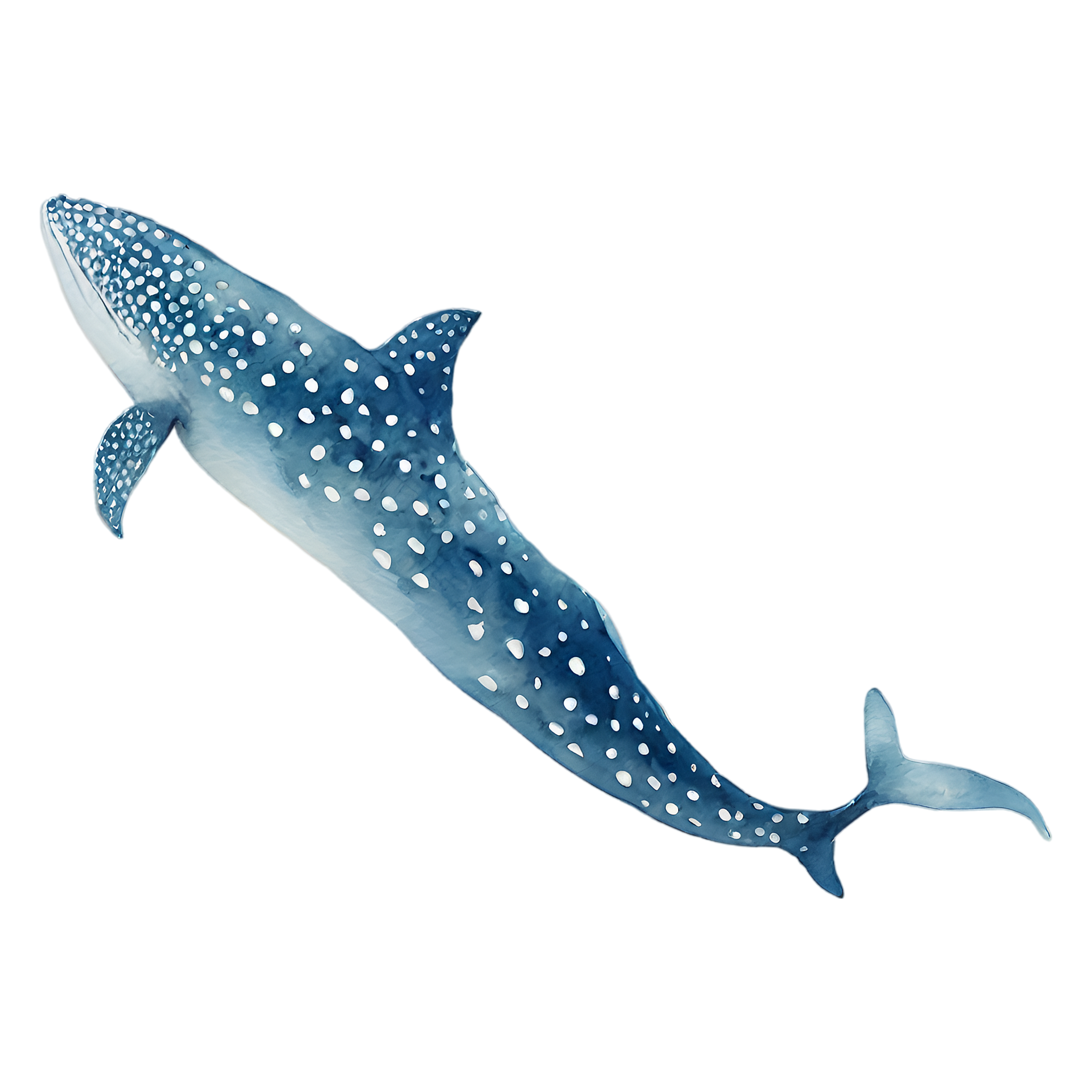
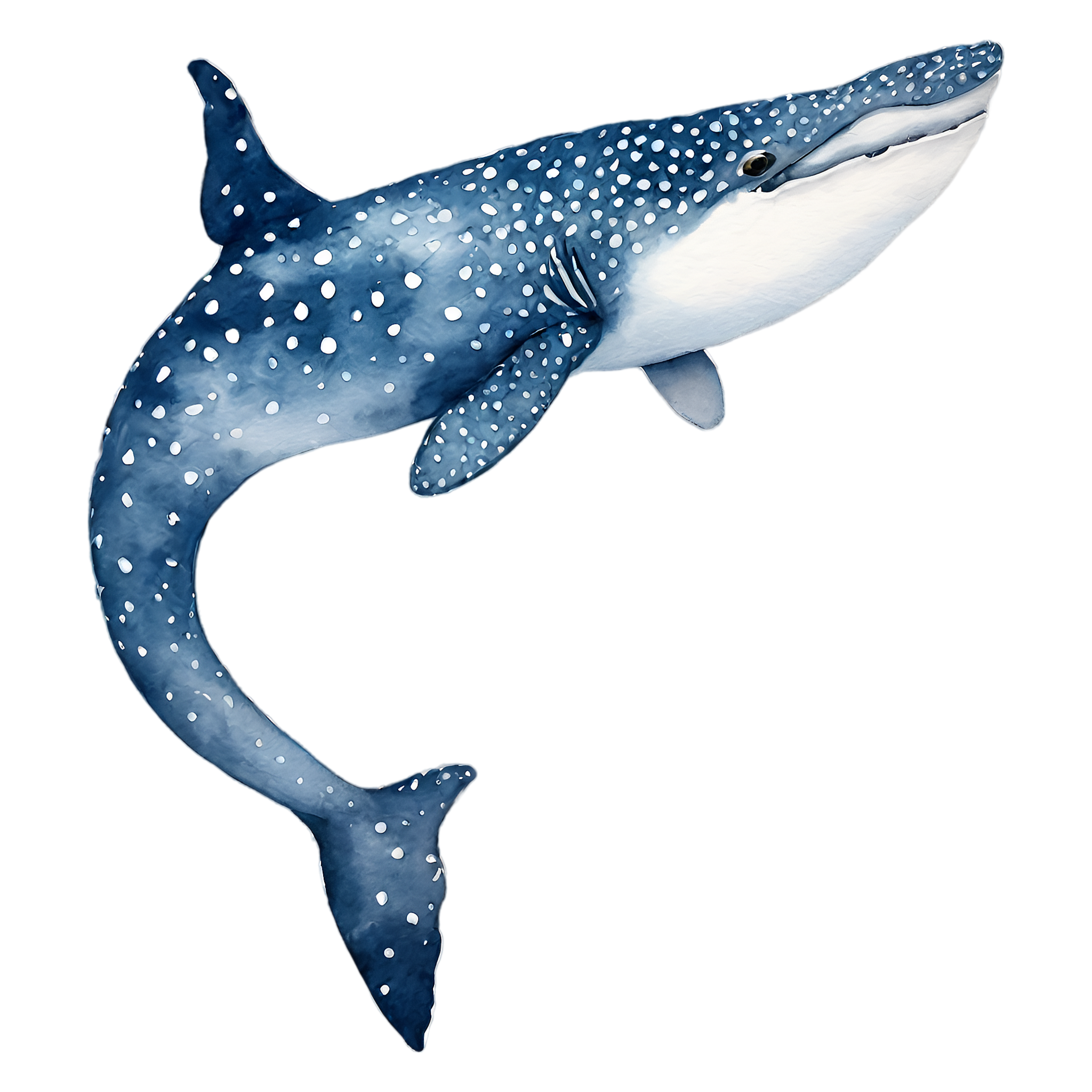
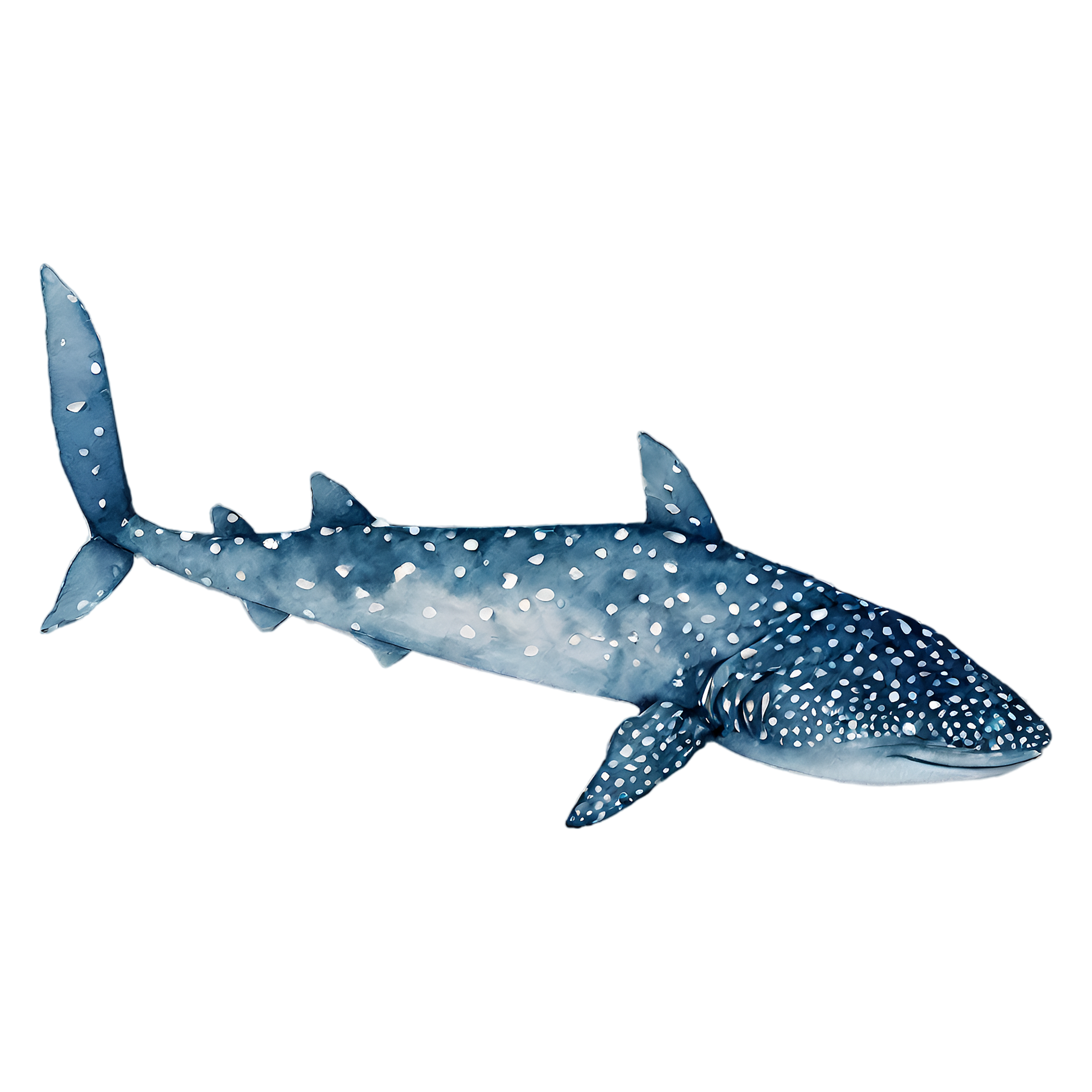
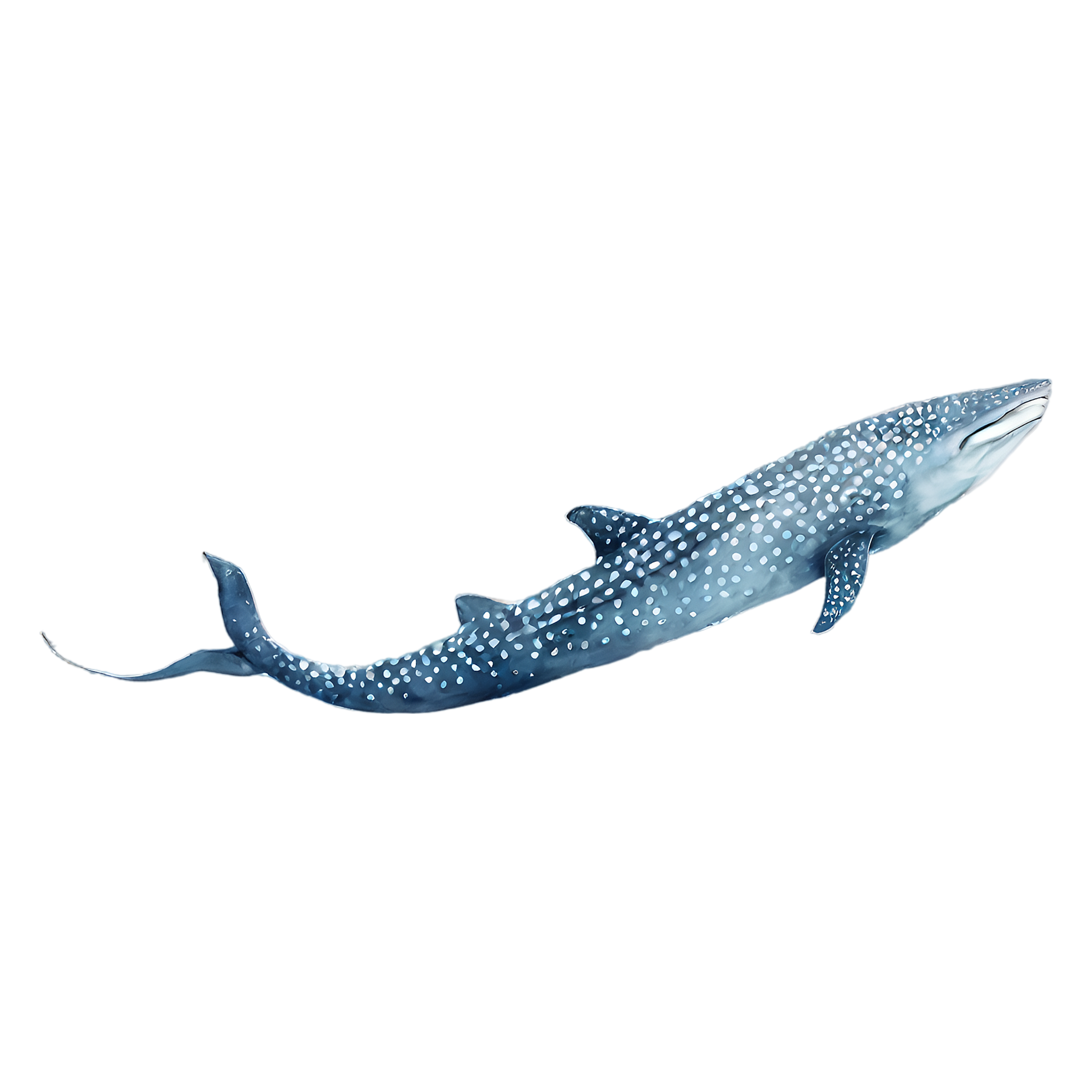
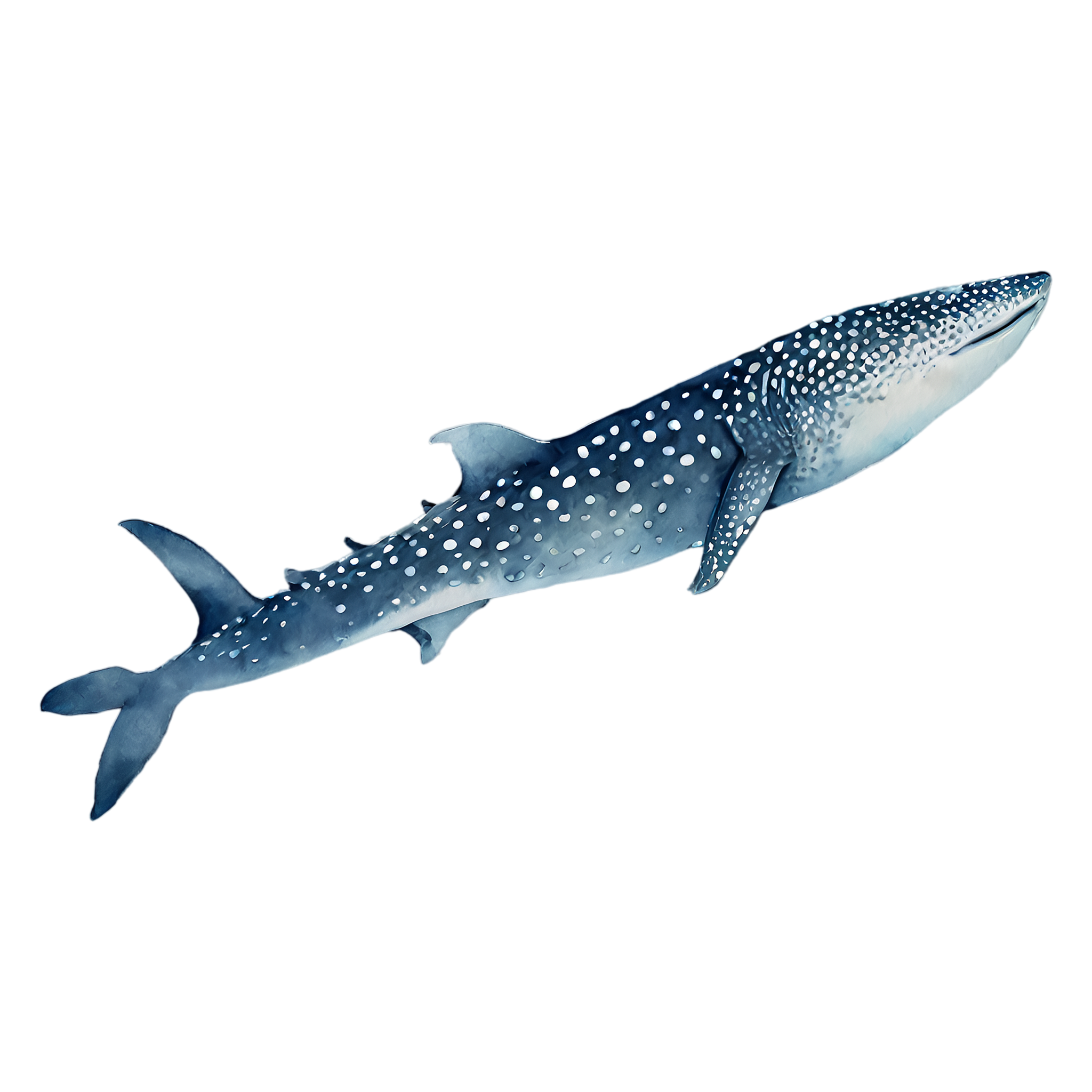
Every whale shark in this set has the same signature look: a huge spotted blue-gray body and a wide flat head. The poses give you range. There is a whale shark swimming in side profile, one viewed from above to show the full spot pattern, one in a gentle downward dive and one swimming gently upward. Others show it with its broad tail fin raised, with pectoral fins spread wide, in a soft curved swimming pose, in three-quarter view and gliding forward calmly. The last is a rounded, friendly version that suits children's designs. No water, bubbles or seafloor are painted in.
Dive trips, ocean lessons and big-fish birthdays
Whale sharks draw a dedicated crowd. Dive shops and snorkel tour operators in whale shark destinations use them on brochures, booking pages and souvenir shirts, and travelers use them in trip scrapbooks and photo books. Teachers use the whale shark to start a favorite classroom debate, whether it is a whale or a shark, and to teach the difference between fish and mammals. Ocean-theme birthday parties, under-the-sea nursery art and aquarium field trip worksheets all suit the rounded friendly pose. International Whale Shark Day falls on August 30, a good date for conservation posts and fundraising flyers. Travel agents and marine conservation nonprofits can also build trip itineraries and adopt-a-shark certificates around the side-profile image.
Deep blues with white spots
The palette is the darkest in the ocean collection: royal blue, antique blue and deep baby blue, matched on this page to DMC floss such as 820 Royal Blue Very Dark, 796 Royal Blue Dark and 312 Baby Blue Very Dark, with white spots on top. For a size-comparison page, line it up with a shark and a whale. For a reef scene, add a sea turtle swimming alongside. More sea life is in the ocean hub, and the blue hub collects other blue-toned art.
Long shapes for bookmarks and banners
A whale shark is long and horizontal, so it fits formats other animals don't. Rotate the side-profile or gliding image to run vertically on a 2 x 6 inch bookmark, or stretch a row of them across a website banner or a party table runner printout. The top view is best for a spot-pattern activity: print it large and have students count spots or design their own unique pattern, the way researchers tell real whale sharks apart. Each file is a 2048 x 2048 px transparent PNG, about 6.8 inches at 300 DPI. Because the bodies are dark, they print well on white or pale aqua paper.