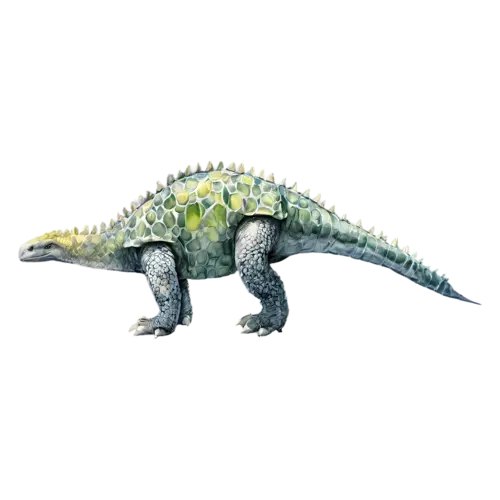
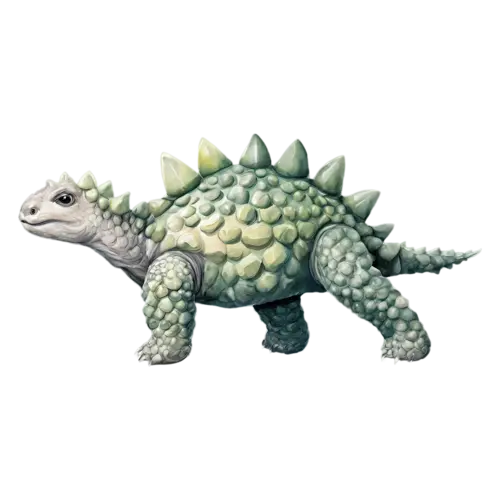
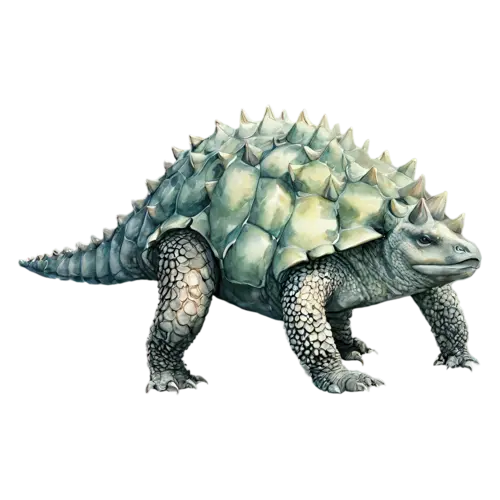
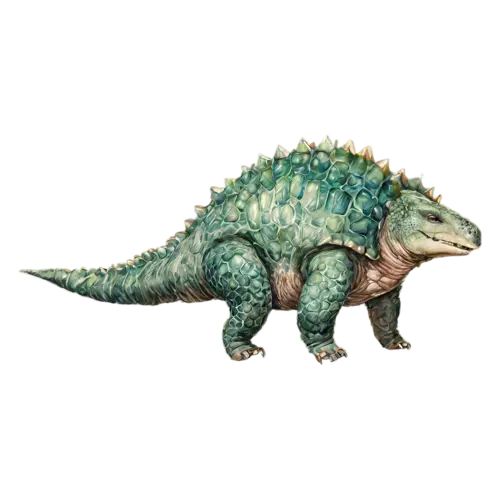
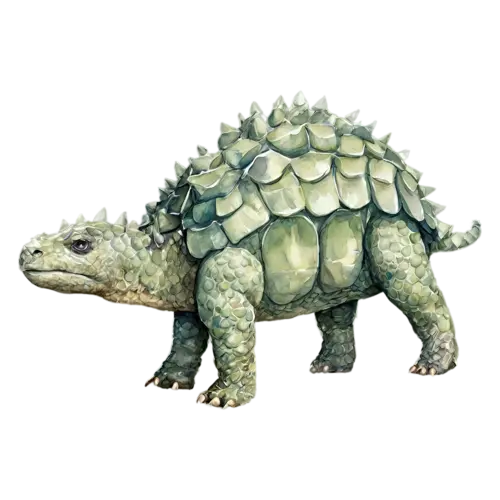
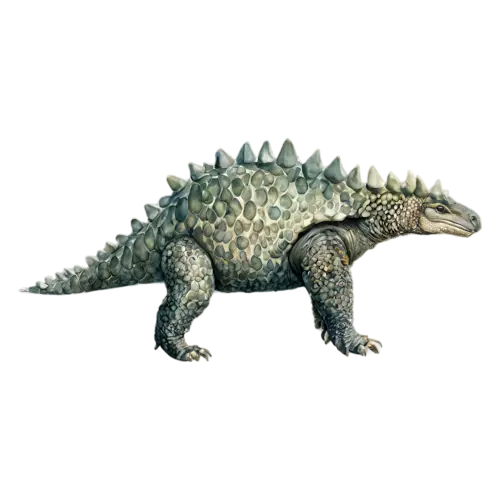
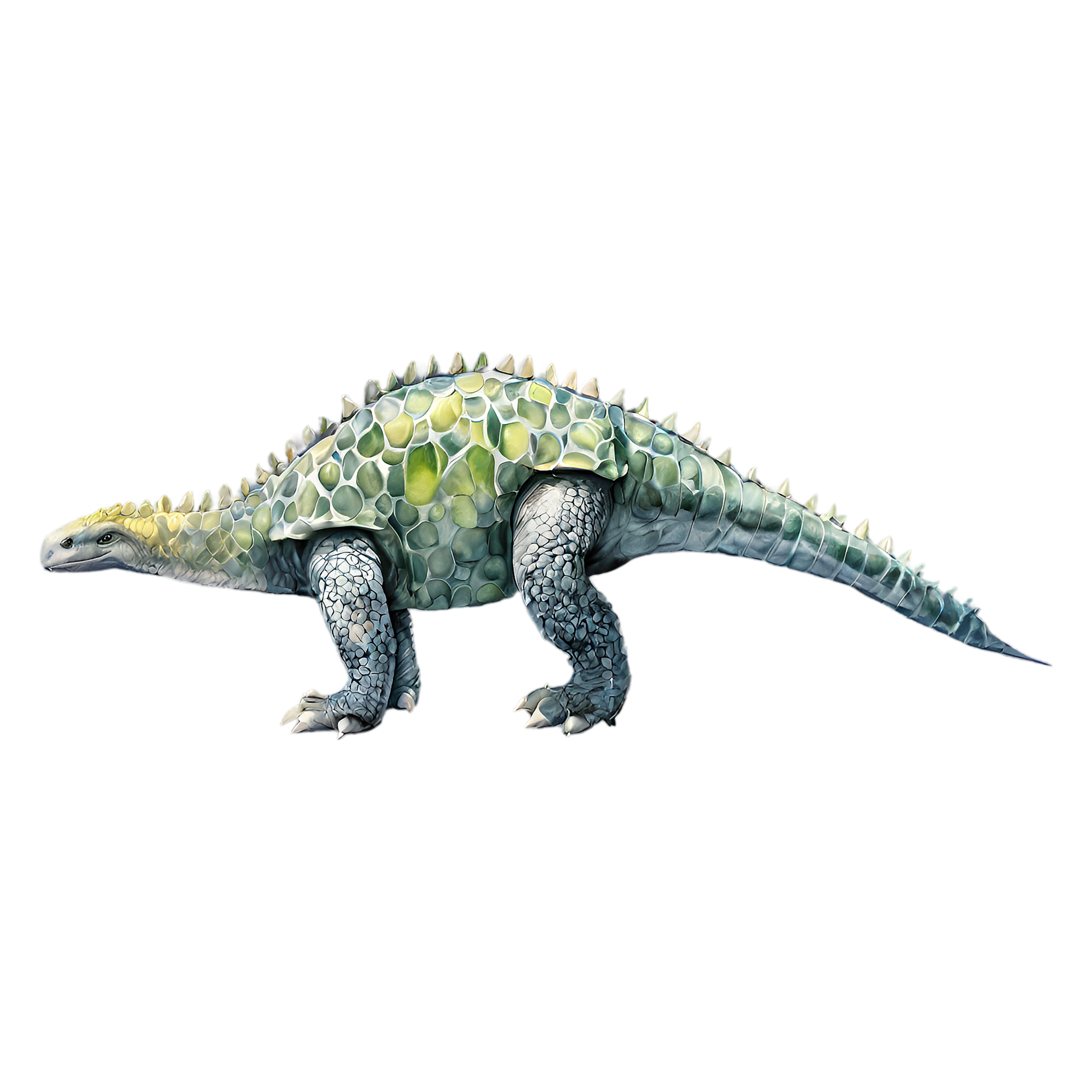
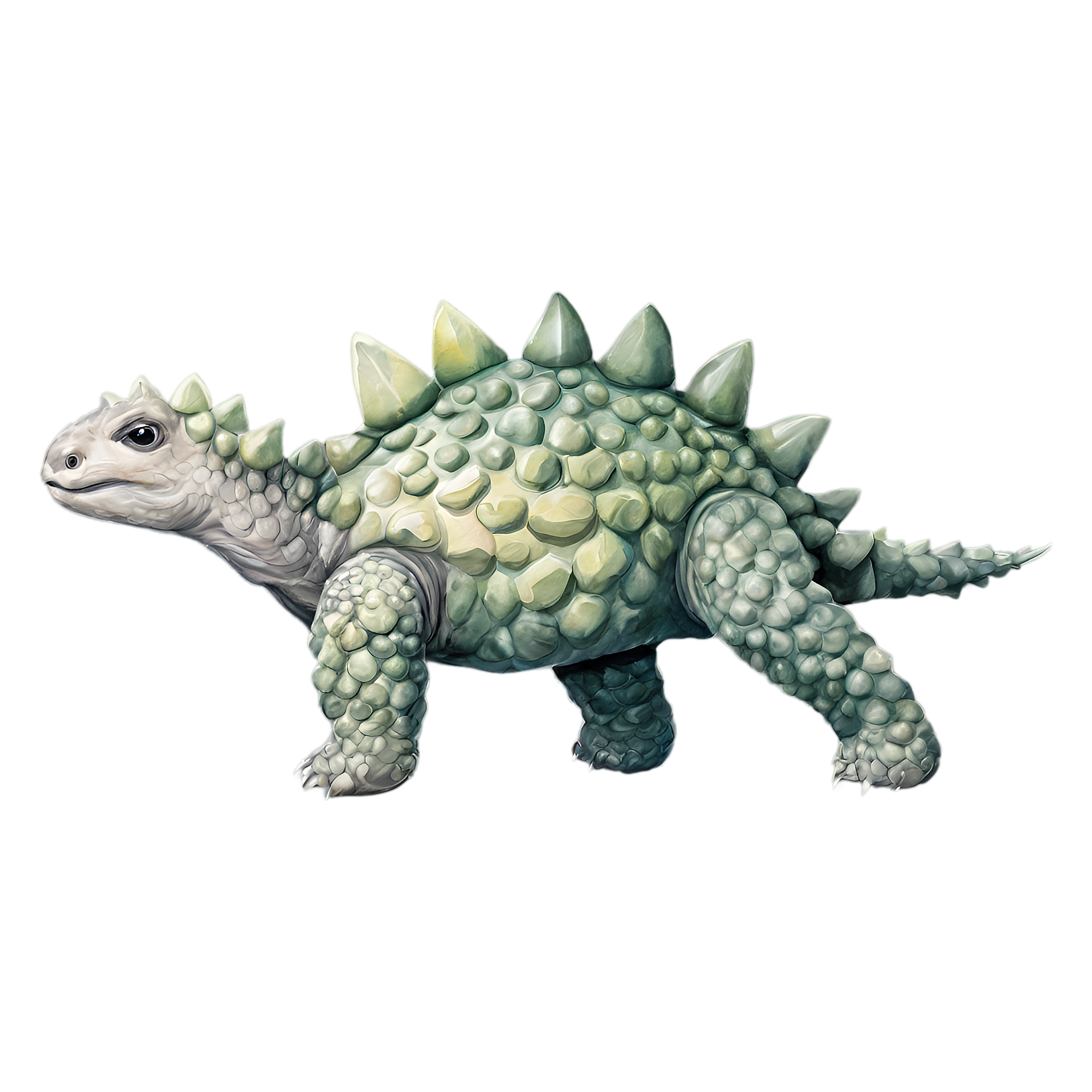
The armored dinosaur with a club on its tail
Ankylosaurus lived at the very end of the Cretaceous period, roughly 68 to 66 million years ago, in what is now western North America. It shared that landscape with Tyrannosaurus rex and Triceratops, which makes it a natural third member of any dinosaur trio. The name means "fused lizard," a nod to the bony plates (osteoderms) set into its skin across the neck, back and sides. The heavy club at the end of the tail was built from fused bone as well. Size estimates put it at around 20 to 26 feet long, low and wide rather than tall. It ate plants, cropping them with small, leaf-shaped teeth. No complete skeleton has been found, so what we know comes from skulls, armor pieces and tail clubs.
Ten poses, from tail swing to baby
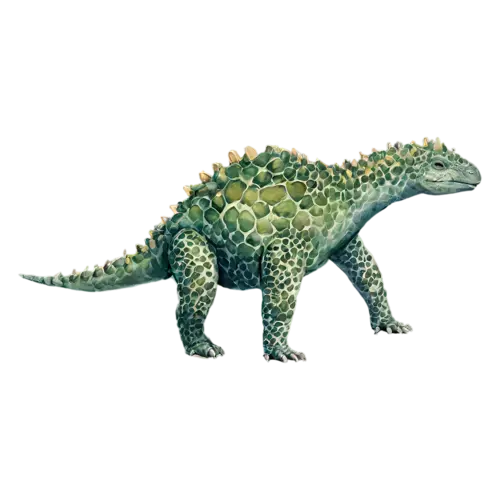
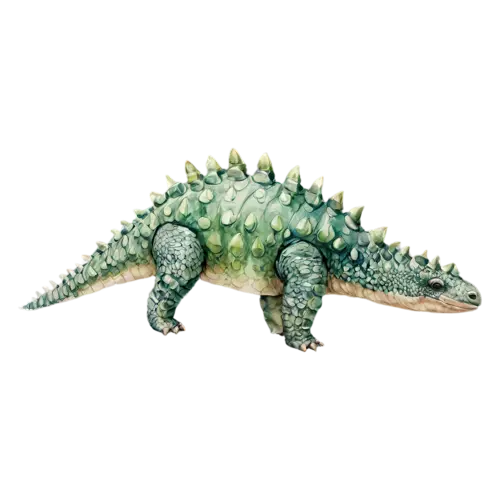
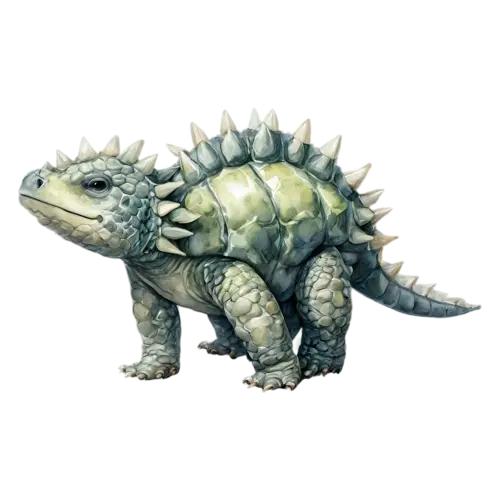
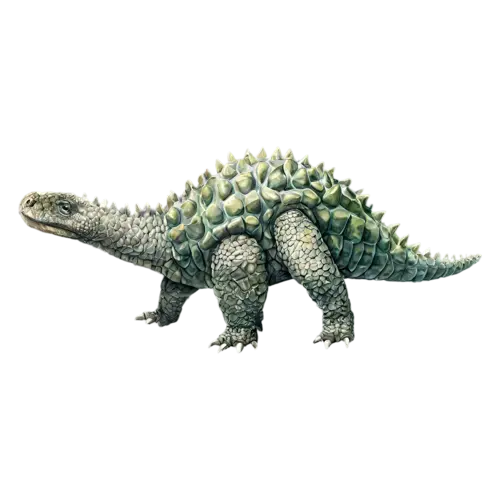
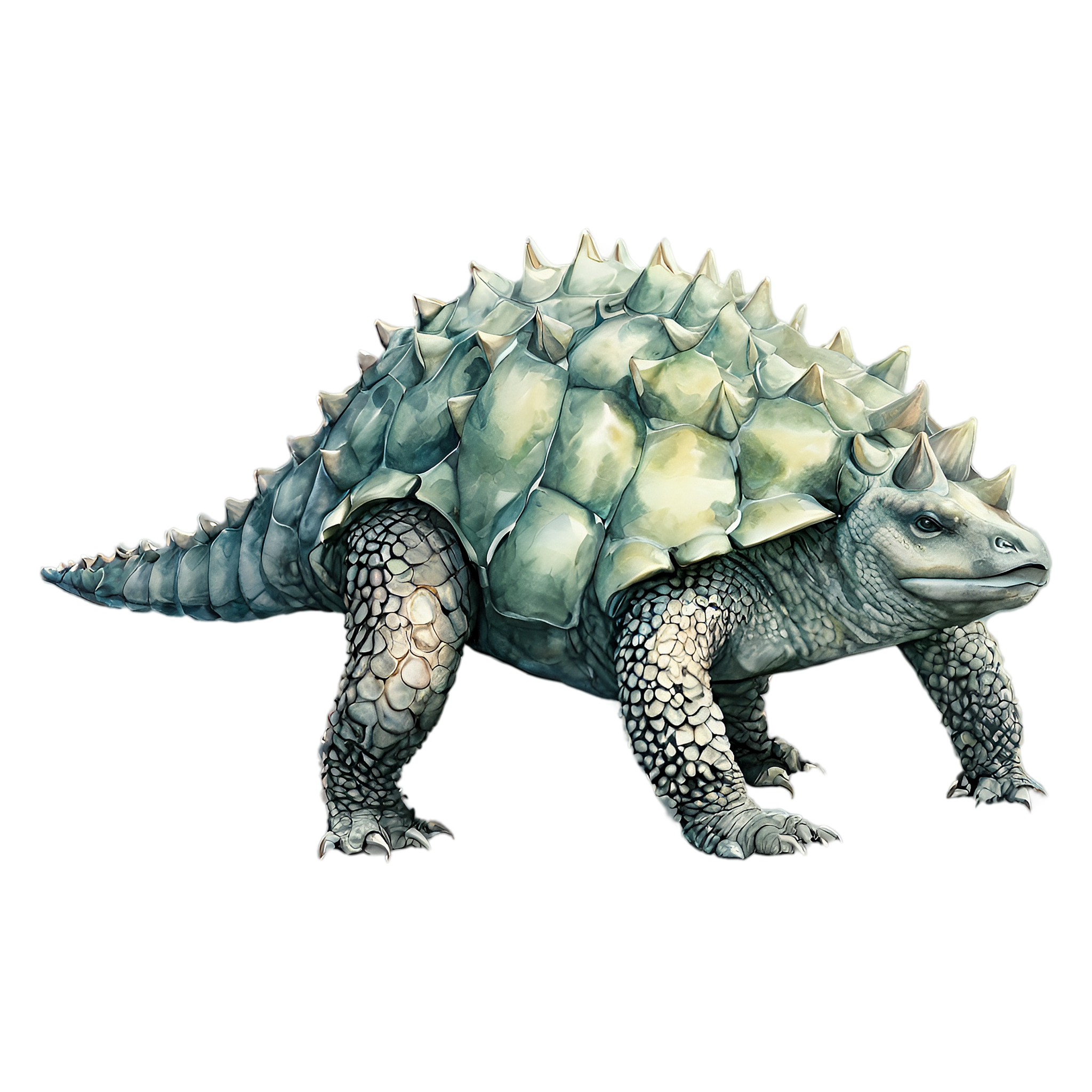
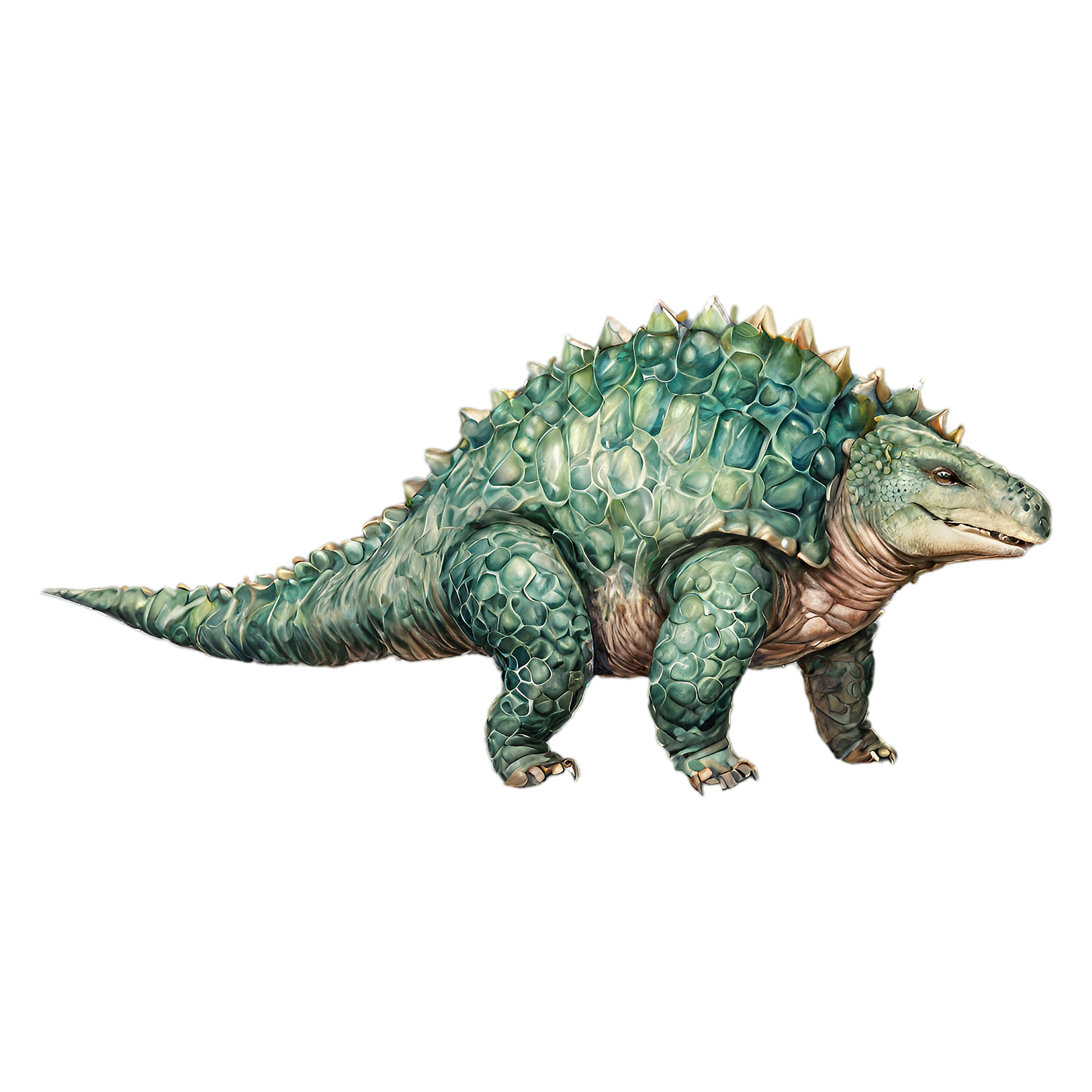
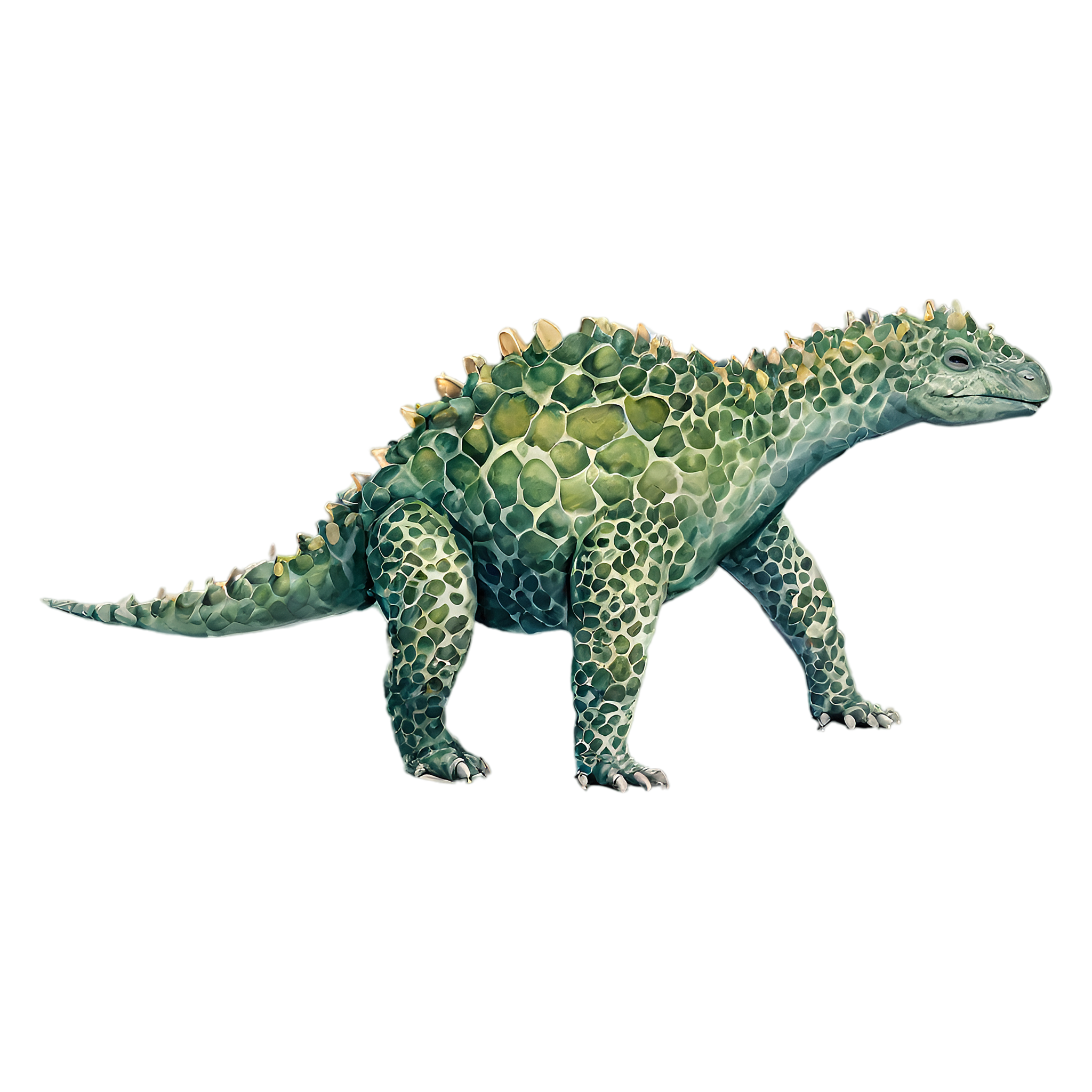
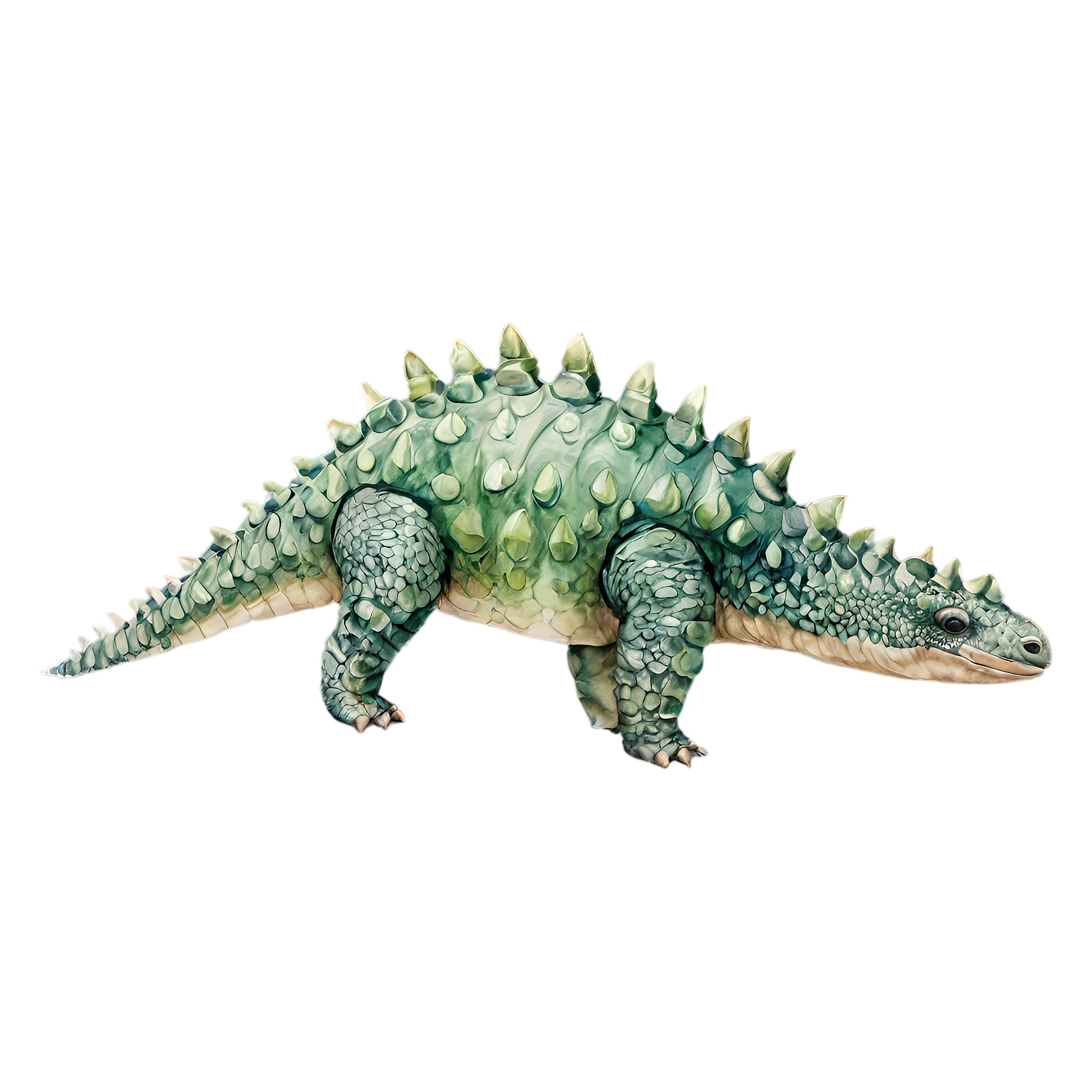
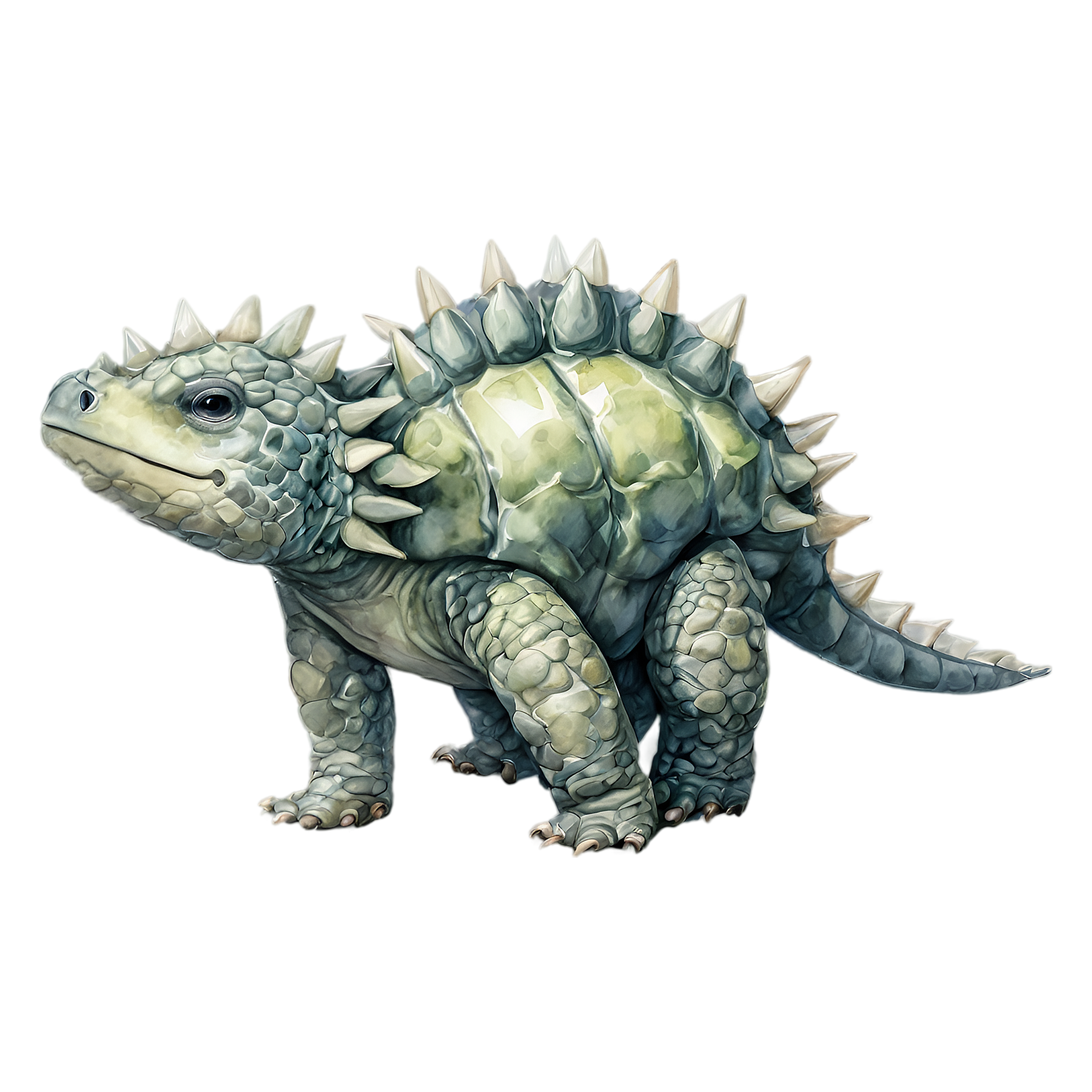
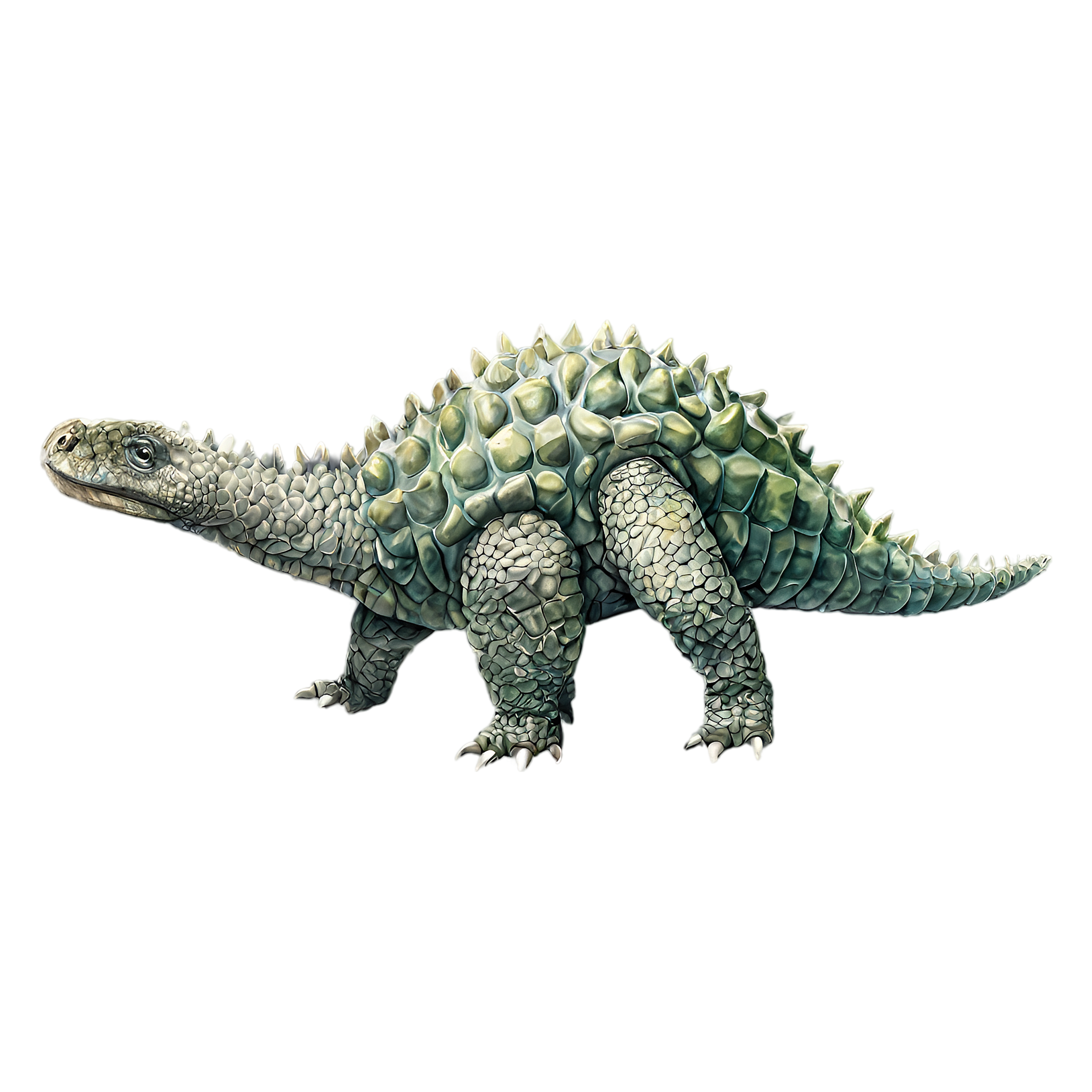
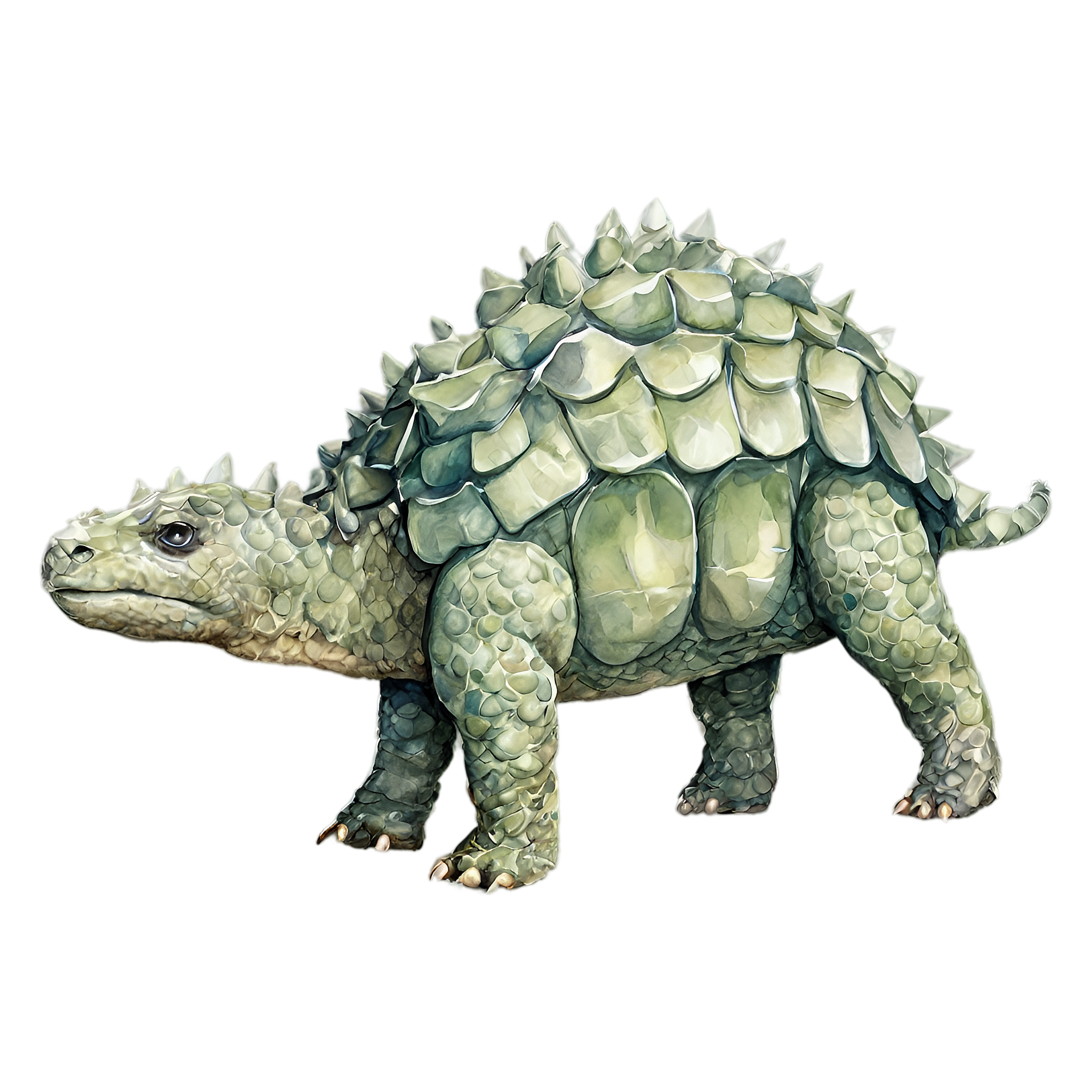
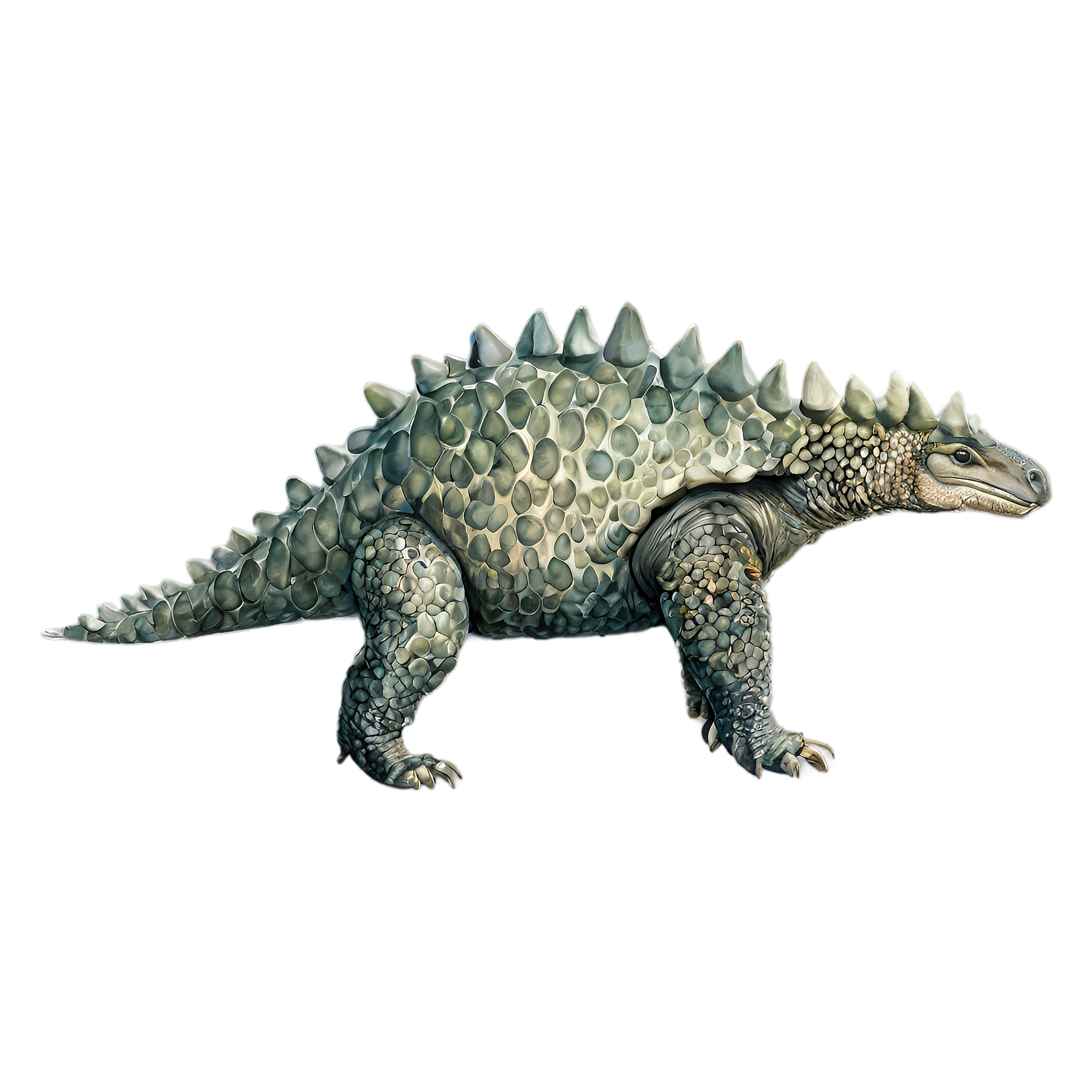
Two images focus on the armor: a three-quarter view that shows the bony plates and a head-and-shoulders close-up. Two are about the club: one walking with it raised and one swinging it out to the side, the action pose most kids ask for. The rest are quieter: a full side profile of the armored back, a low side view, one standing and looking forward, one grazing close to the ground and one resting. Rounding out the set is a cute baby ankylosaurus for baby showers and nursery prints. Because every pose shares the same coloring, you can mix three or four on one page and they read as one herd.
Birthday invitations, fossil units and the third dinosaur
Dinosaur birthday parties are where this set earns its keep. A T. rex usually takes the front of the invitation, and the ankylosaurus fills the thank-you tags, cupcake toppers and favor-bag labels, so the kid who prefers the walking tank over the predator gets a character of their own. Teachers use it in Cretaceous units and fossil-dig activities to talk about defense: armor and a club against teeth. It also suits a dinosaur nursery, since the grazing and resting poses look calm rather than fierce. For a matching trio, pair it with the T. rex and Triceratops galleries, both from the same late Cretaceous world.
Gray-green armor and what sits beside it
The palette leans on deep gray-greens and blue-greens on the back, near-black shading in the armor grooves and brown-gray on the legs and belly. Those tones look right on kraft paper, cream cardstock and the sandy tan backgrounds common in fossil-dig themes. For lettering, a warm accent such as orange or mustard stands out against the greens. The Mosasaurus, a marine reptile from the same era, extends a party set into an ocean scene. Browse the dinosaur clipart hub for the other species, or the nursery hub for gentle animals that sit well beside the baby pose. Each image on this page lists its main HEX colors with the closest DMC floss and Copic marker.
Printing a low, wide dinosaur
Ankylosaurus is long and short, so it fills a horizontal space far better than a square one. Every file is a 2048 x 2048 px transparent PNG (about 6.8 inches square at 300 DPI), and most of that width is body and tail, so even a 3-inch topper keeps the plates readable. For stickers and toppers made with a Cricut print-then-cut, the side-profile and resting poses cut cleanly because the outline has few thin parts. The tail-swing pose holds the club out on its own, so give it a slightly larger offset. On a classroom timeline, set the walking pose next to a T. rex to start a conversation about how each animal survived.