From battlefield club to symbol of authority
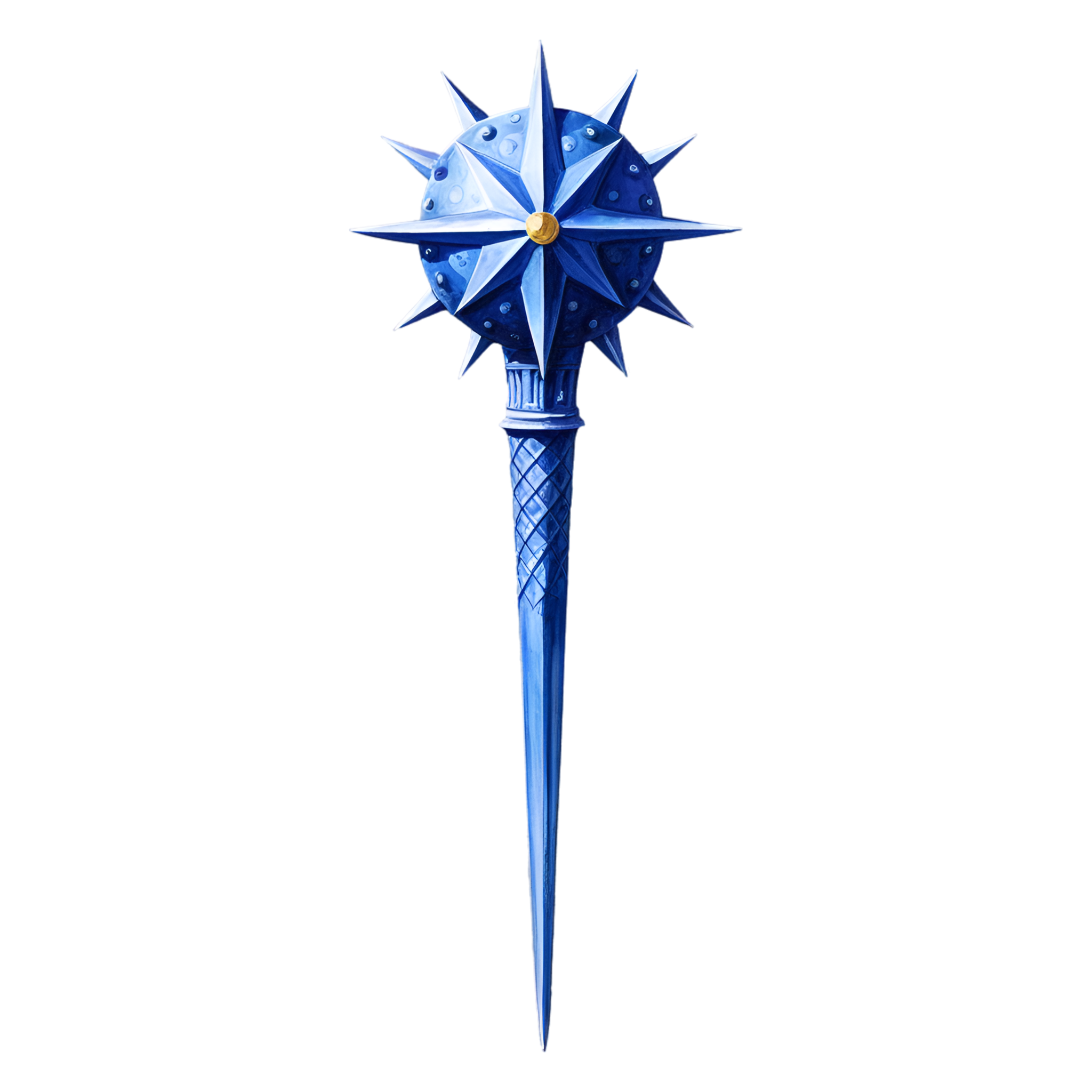
A mace is a striking weapon: a heavy head, usually metal, fixed to a shaft. It is one of the oldest weapon designs, and in medieval Europe it became important because an edge struggles against mail and plate armor while a heavy blow still transmits force. Flanged maces, with raised metal ridges around the head, focused that force on a small area. A morning star is a mace whose head bristles with spikes. Over time the mace also turned into a symbol of authority. A ceremonial mace still sits in the British House of Commons while it is in session, the US House of Representatives has its own, and many universities carry one at the head of the commencement procession.
Ten maces, leaning decorative
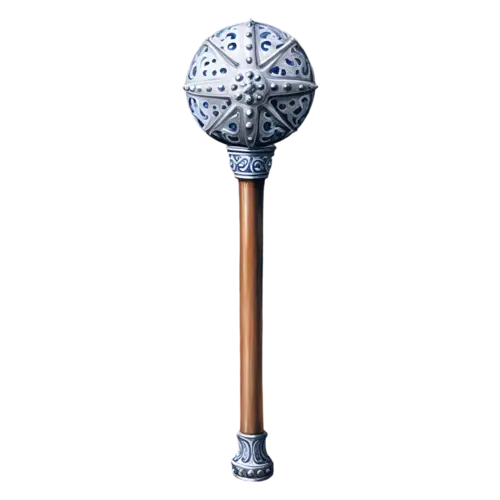
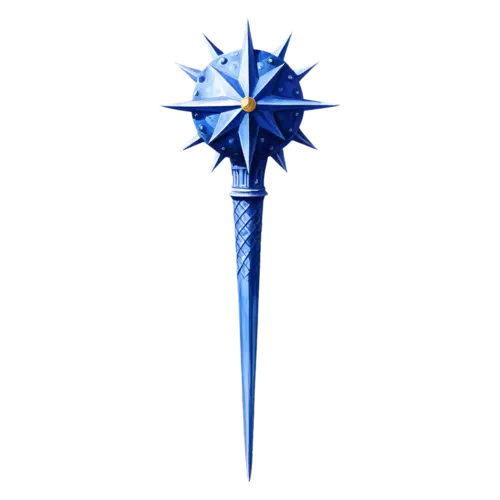
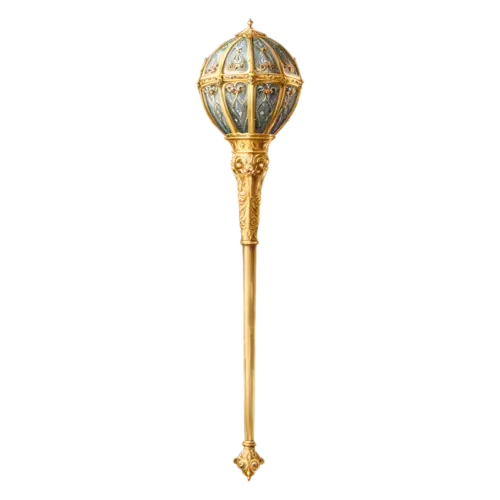
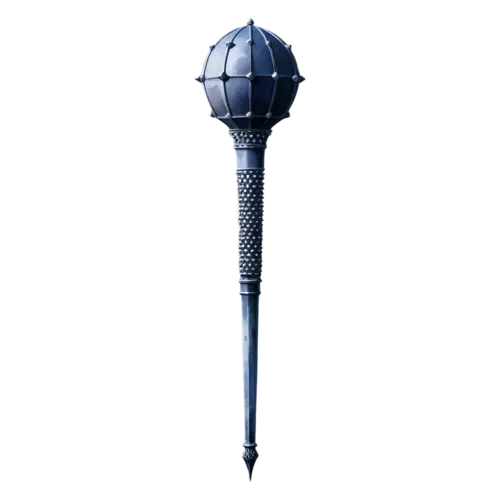
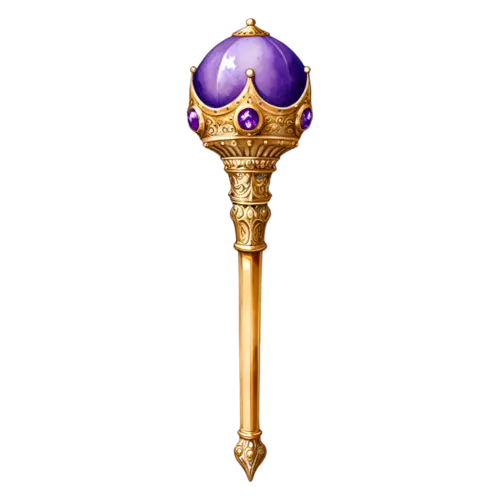
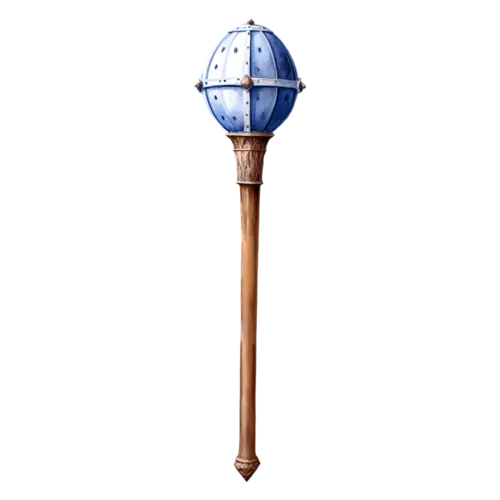
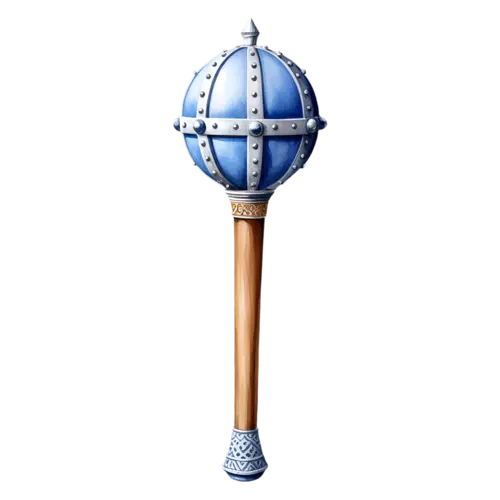
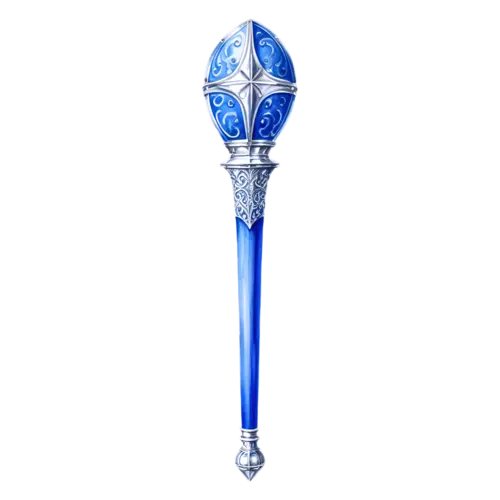
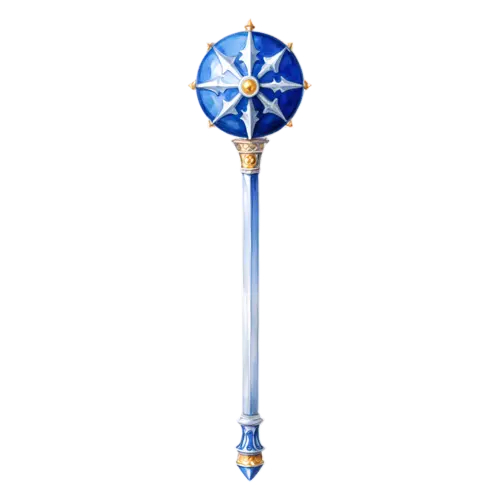
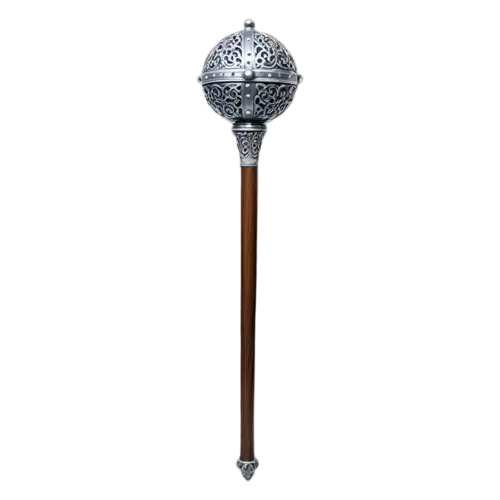
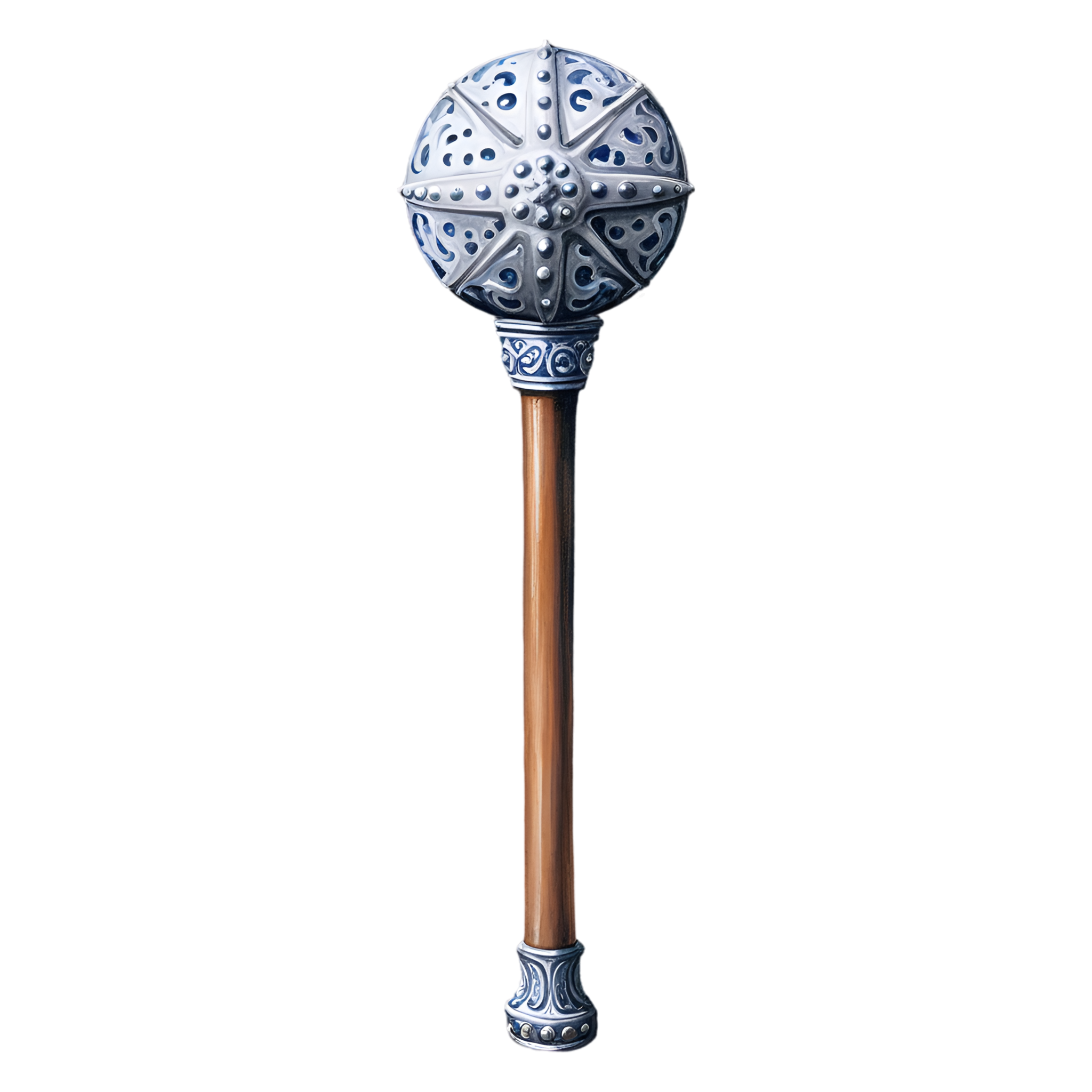
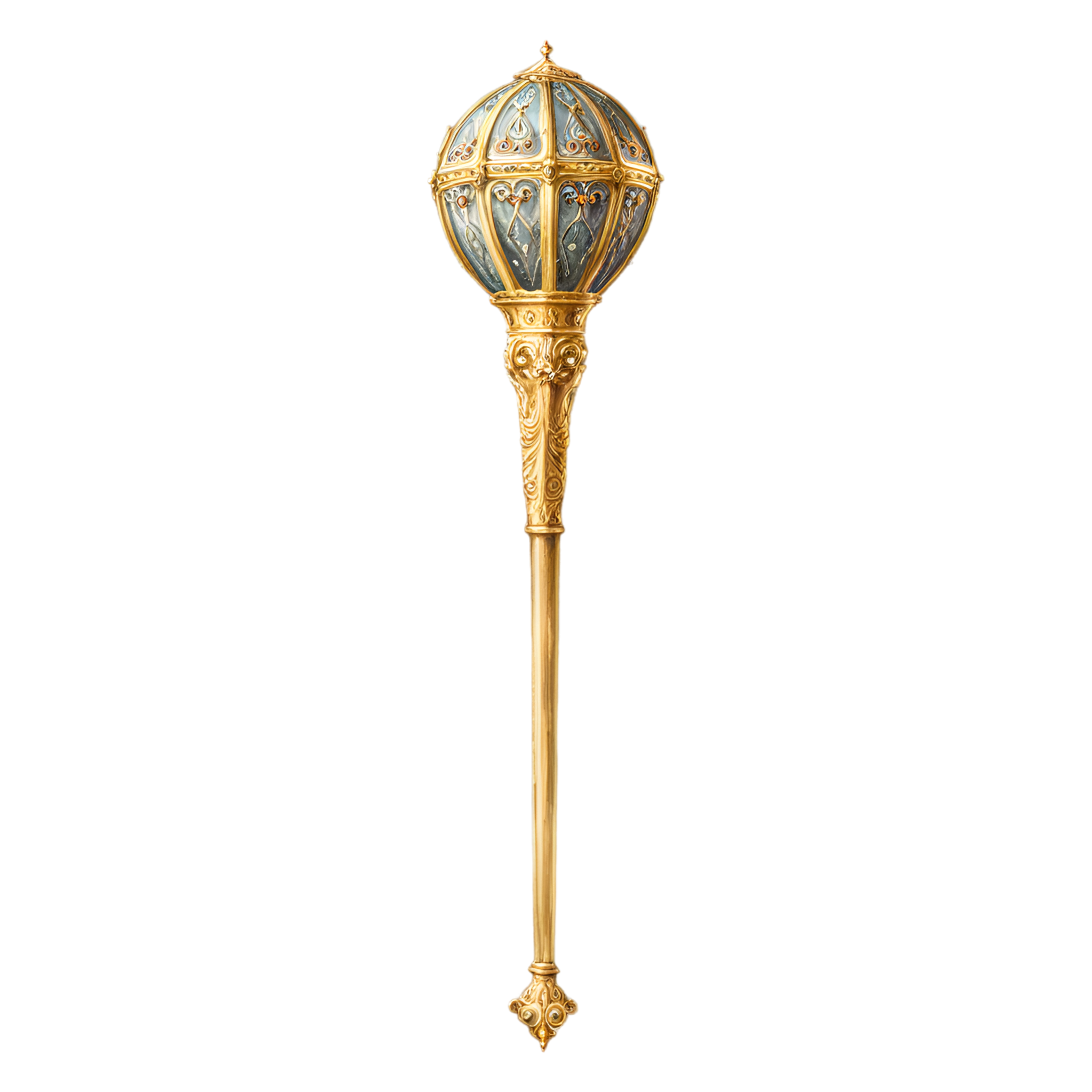
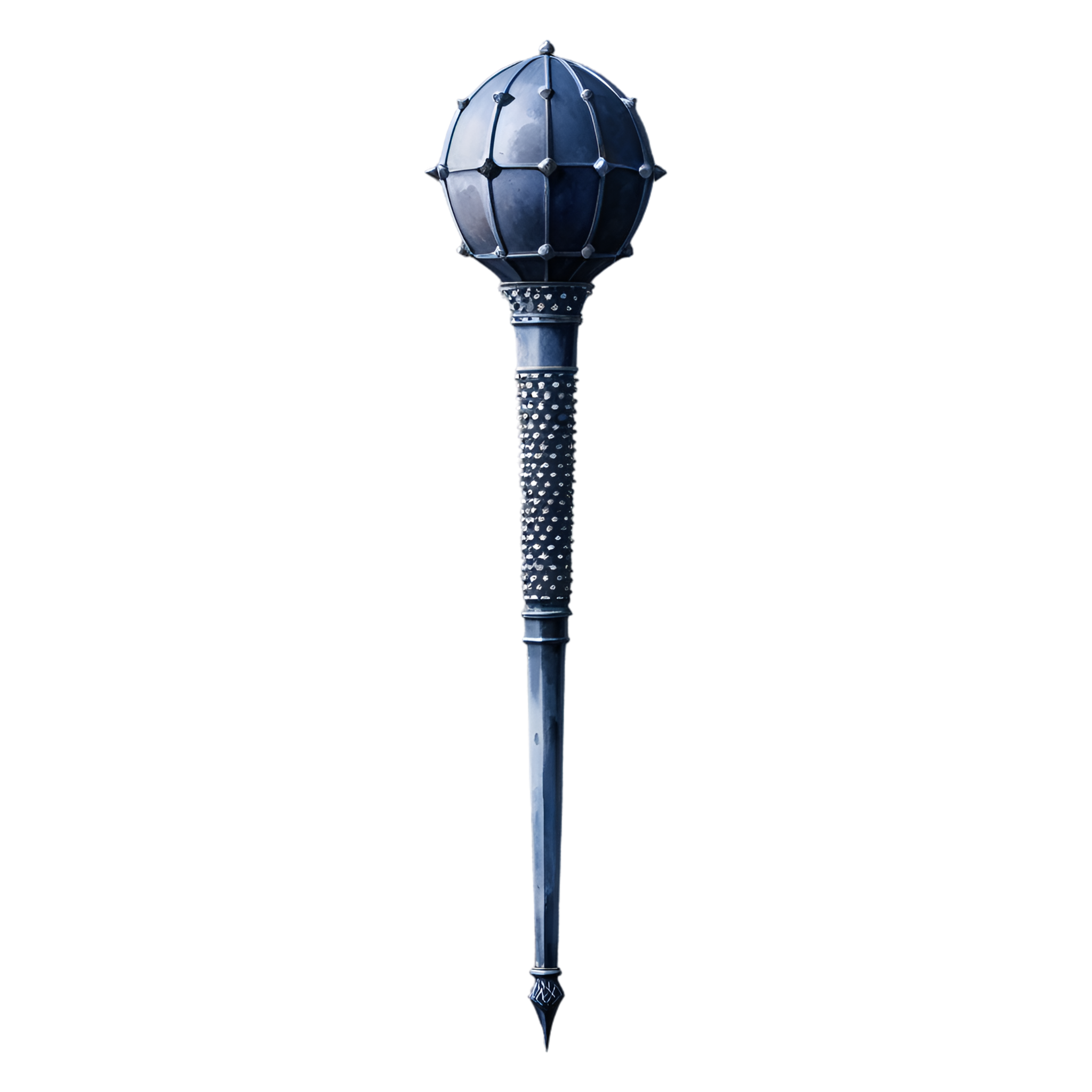
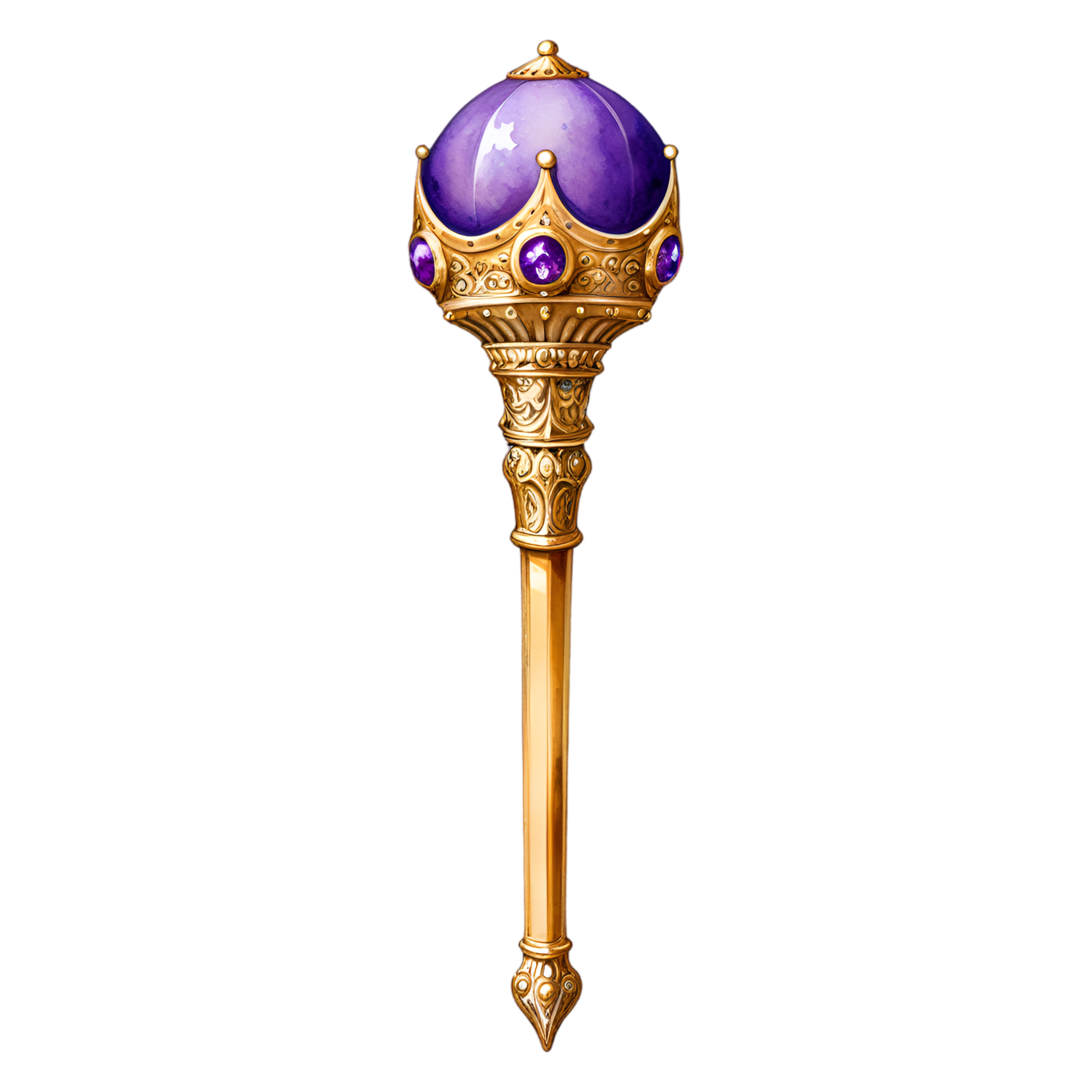
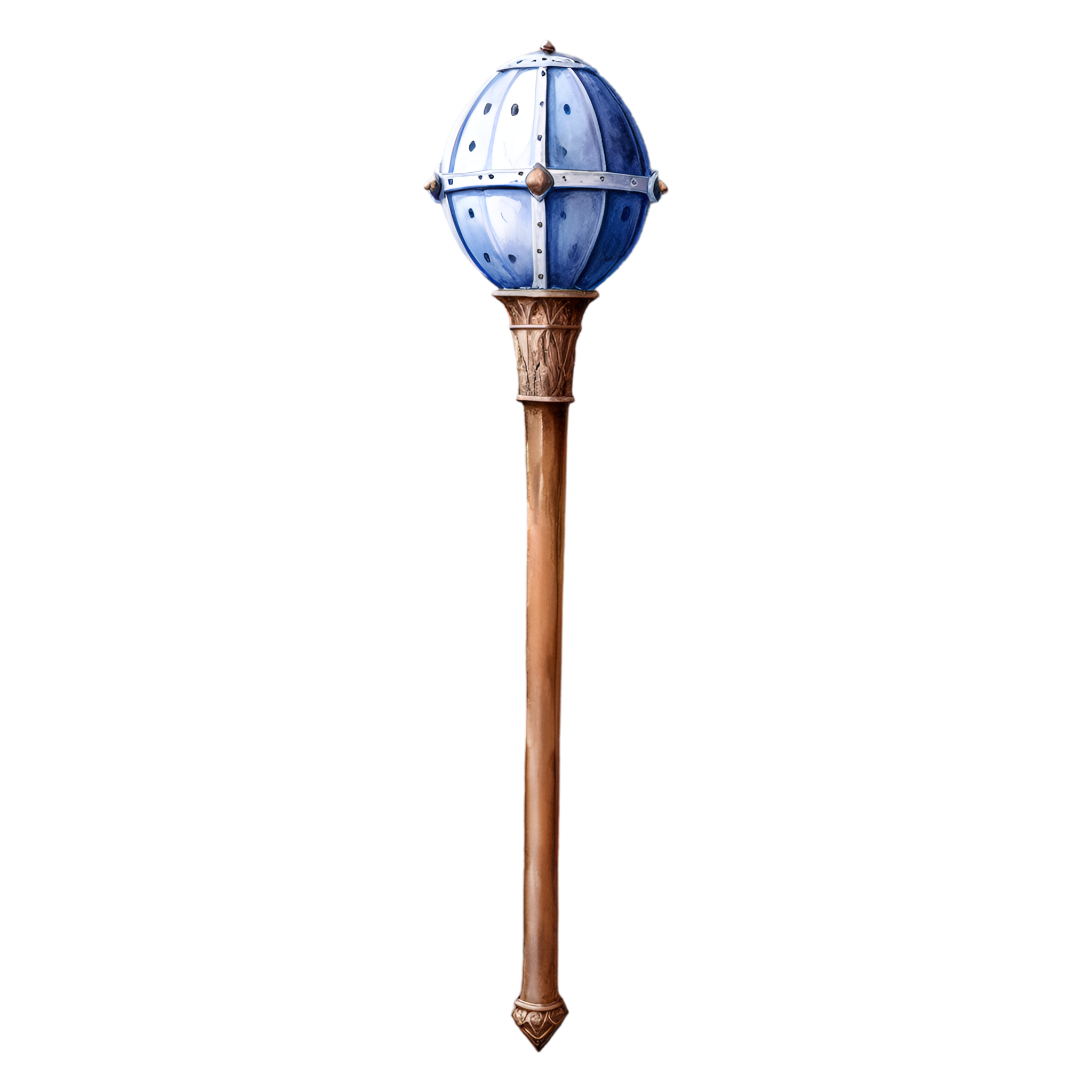
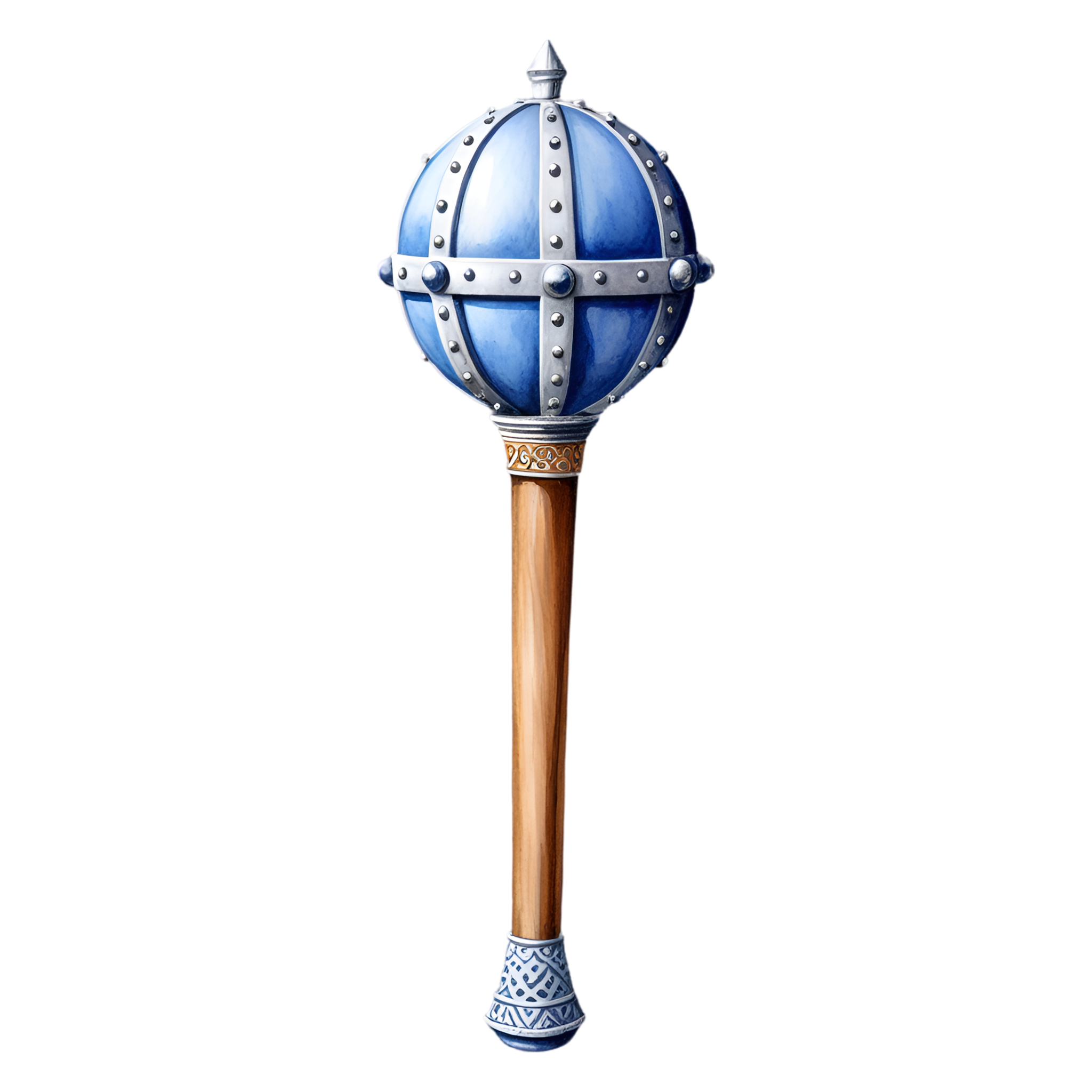
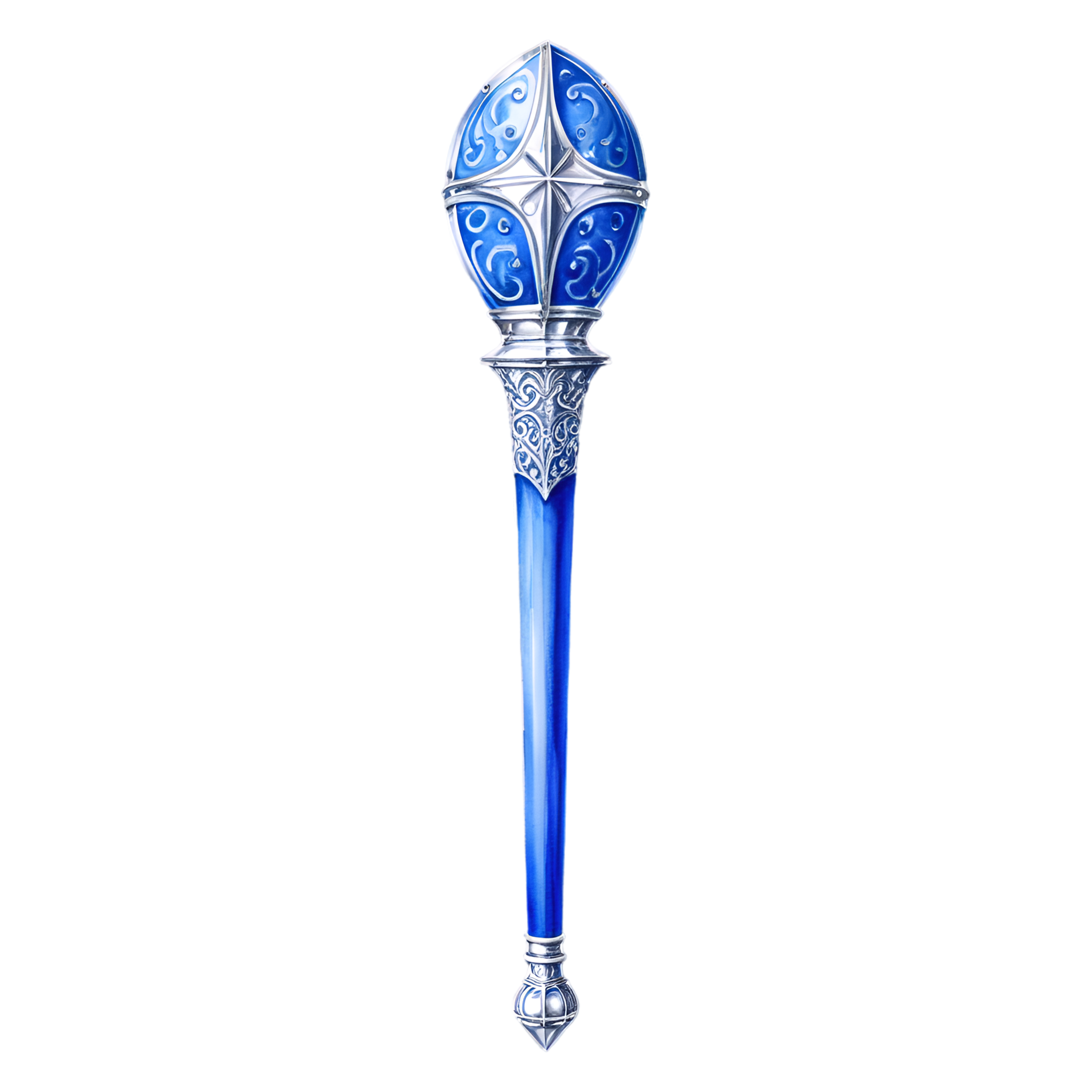
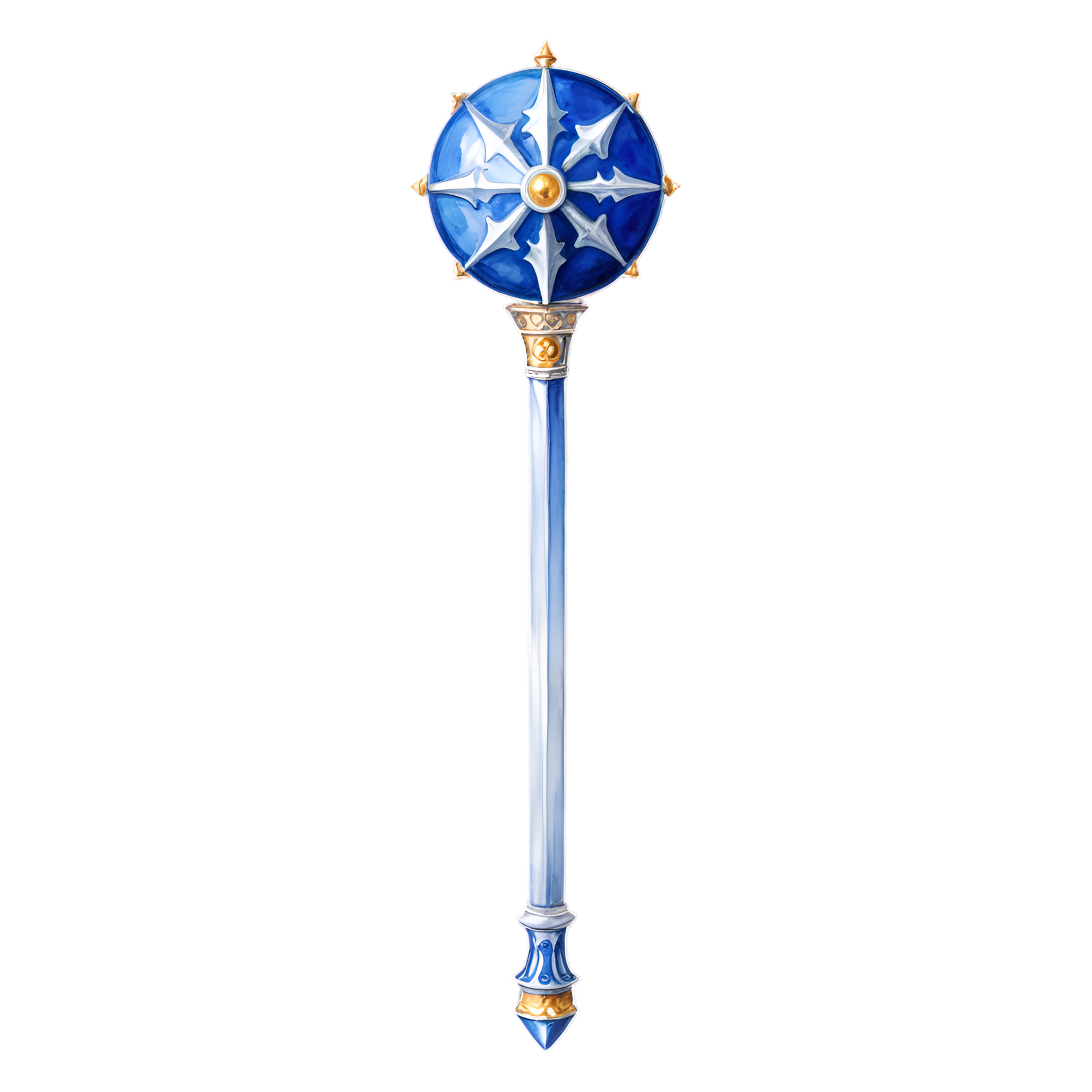
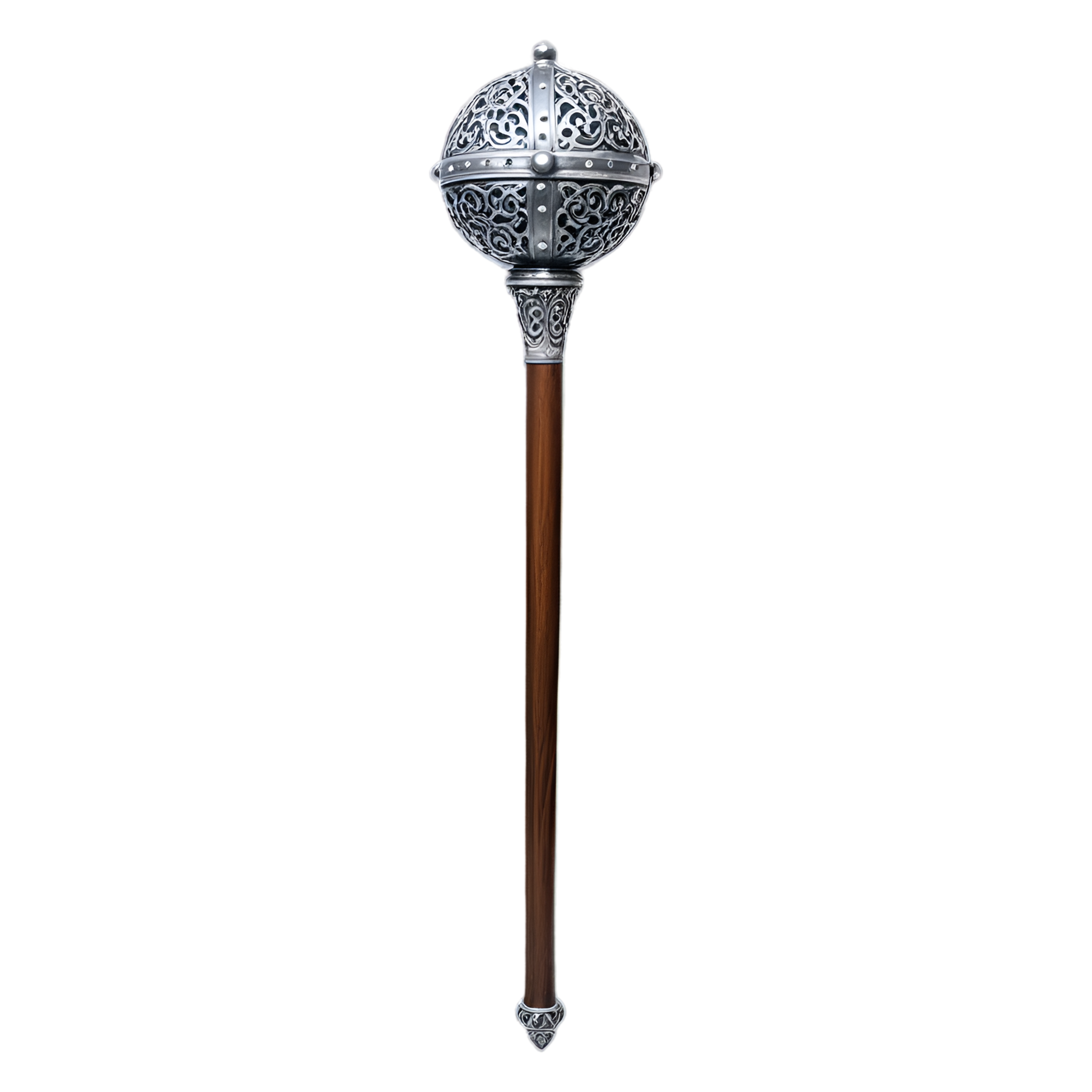
These are illustrated, ornamental maces more than plain battlefield gear, and most share a blue-and-silver color scheme. The set includes an ornate silver-and-blue studded globe head on a dark wooden handle (01), a morning star with a blue spiked star head on a tapered blue handle (02), a gilded ceremonial mace with an enameled globe (03), a gothic dark iron mace with a paneled head and studded grip (04), a jeweled fantasy mace in deep purple and gold (05), a blue-and-white paneled globe on a carved wooden shaft (06), a riveted blue globe with a patterned pommel (07), a polished silver knight's mace with a blue grip (08), a round blue head bearing a silver star (09) and an openwork filigree steel globe on a long shaft (10). There is no spice and no flail in this set.
Game tables, castle parties and commencement programs
The fantasy look of this set suits tabletop role-playing games, where the mace is a standard weapon for cleric characters. Use the images on printable item cards, character sheets, loot tables, campaign handouts and inventory icons for indie video games. The knight's mace (08) and the gothic iron mace (04) fit castle and knight birthday parties, renaissance faire signs and escape-room props. The gilded ceremonial mace (03) works on a commencement program, a legislative history lesson or a mock-parliament handout. History teachers can use the morning star (02) on a medieval weapons worksheet next to a sword or a shield.
Navy, silver and gold with quest-style props
The palette is dominated by navy and cornflower blue, silver grey and white, with gold accents on the ceremonial and fantasy pieces and dark wood on the shafts. On-page thread matches include DMC 939 Navy Blue Very Dark, 336 Navy Blue and 158 Cornflower Blu M V D. For a quest handout, pair a mace with the rolled parchment scroll and old papers in the vintage ephemera set. For a classroom worksheet, add a pencil beside the fill-in lines. The gallery lives in the objects hub, and more blue subjects are in the blue clipart hub.
Making item cards and crossed-mace crests
Each PNG is 2048x2048 pixels on a transparent background, about 6.8 inches square at 300 DPI. The maces are long and narrow, so rotate them about 45 degrees to fill a square card or an icon slot without shrinking the head. For a crest or a guild badge, duplicate one mace, flip the copy horizontally and cross the two shafts behind a shield. Game icons usually display at 64 to 128 pixels, so test the downscaled version: the bold globe heads (06, 07, 09) stay readable at small sizes better than the fine filigree of image 10.