An ancient flower and a Southern emblem
Magnolias are one of the oldest flowering plant lineages. Their ancestors appeared before bees did, and the flowers are still pollinated largely by beetles, which is one reason the blooms are so large and sturdy. Instead of separate petals and sepals they have tepals, all of a similar thickness. The genus is named for the French botanist Pierre Magnol. Two kinds dominate design work. The Southern magnolia (Magnolia grandiflora) is an evergreen tree with glossy, leathery leaves and huge, fragrant creamy-white flowers in late spring and summer; it is the state flower of Mississippi and Louisiana. The saucer magnolia blooms in early spring on bare branches, with cupped flowers flushed pink on the outside, before the leaves appear. In the South the magnolia stands for grace, dignity and endurance.
White blossoms, pink cups and buds
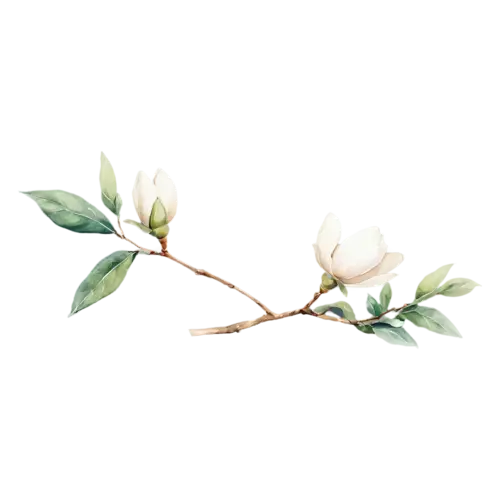
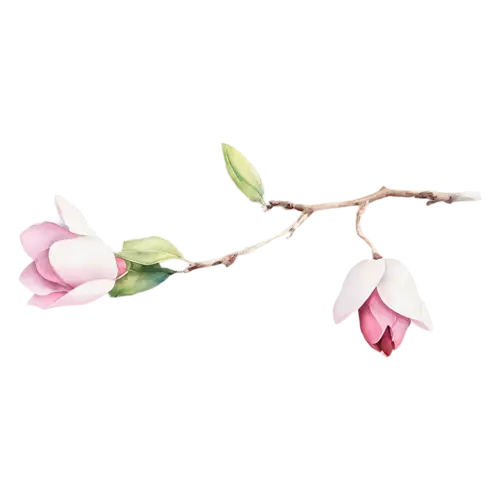
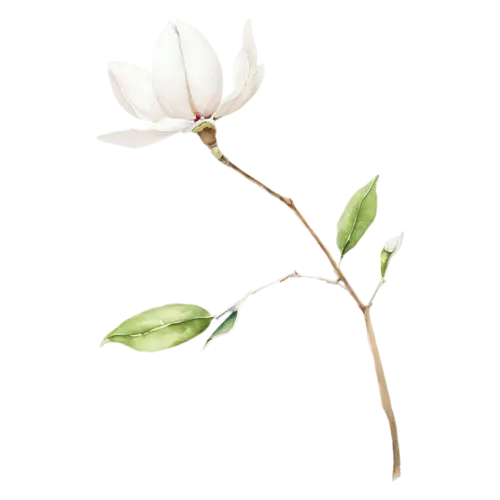
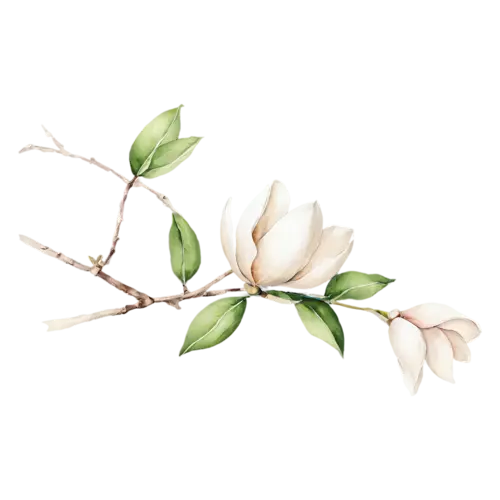
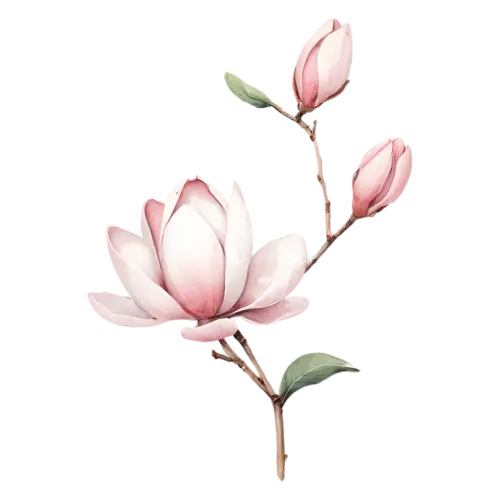
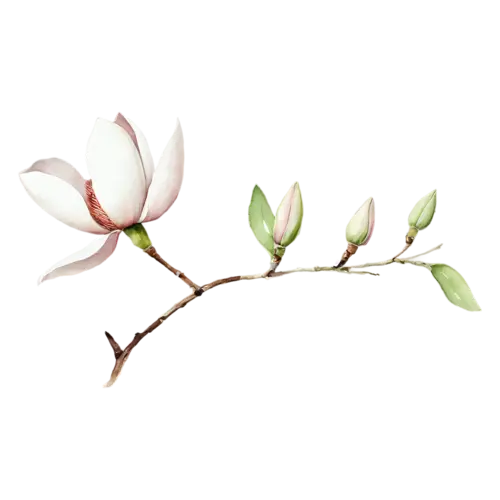
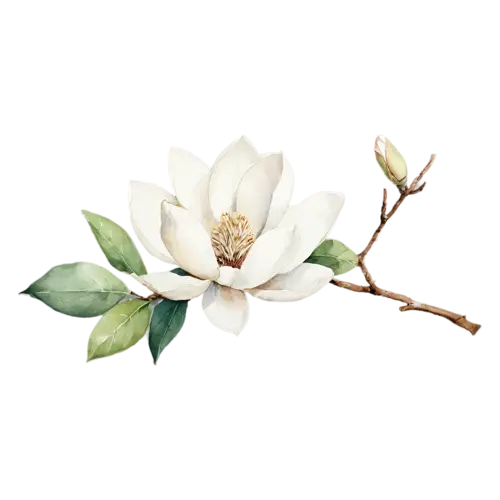
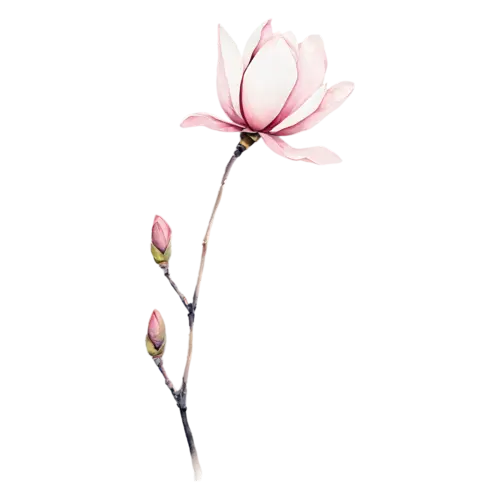
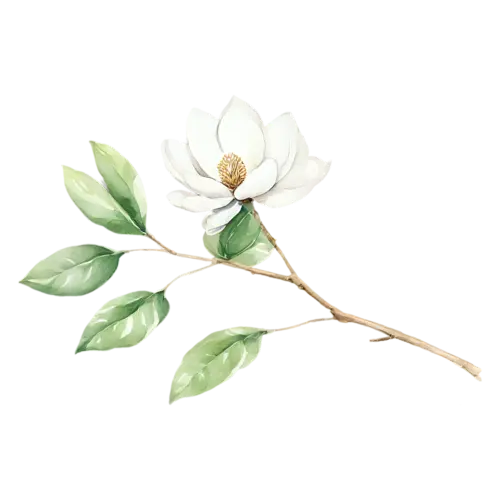
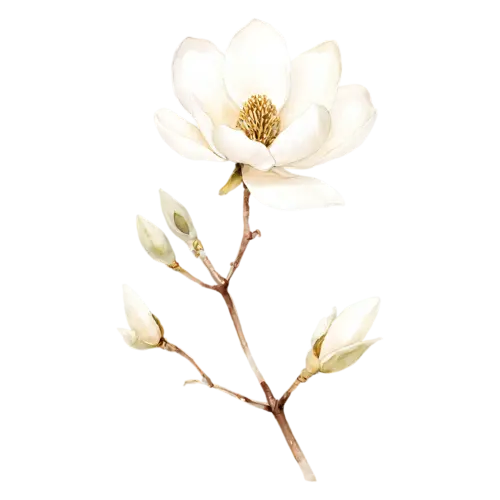
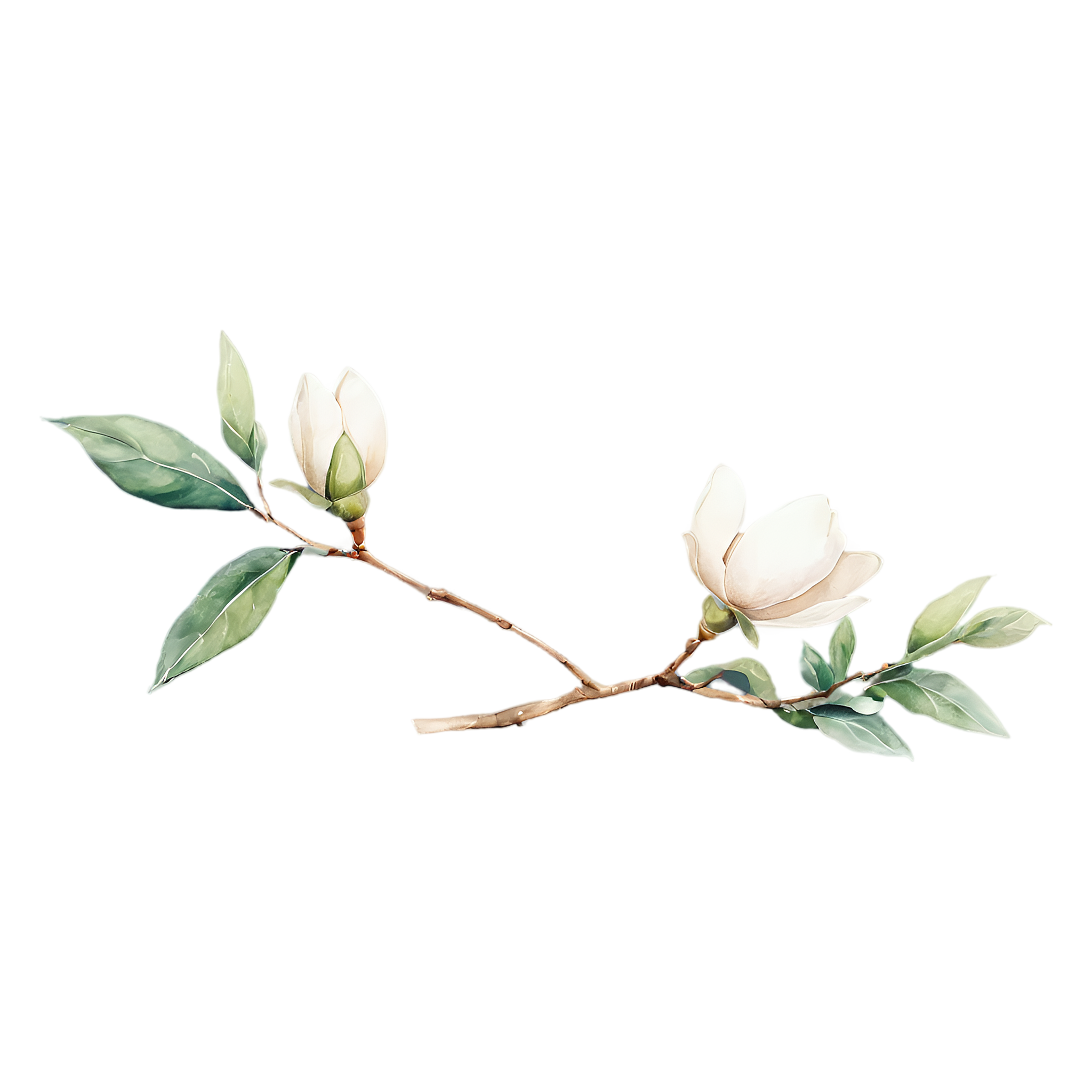
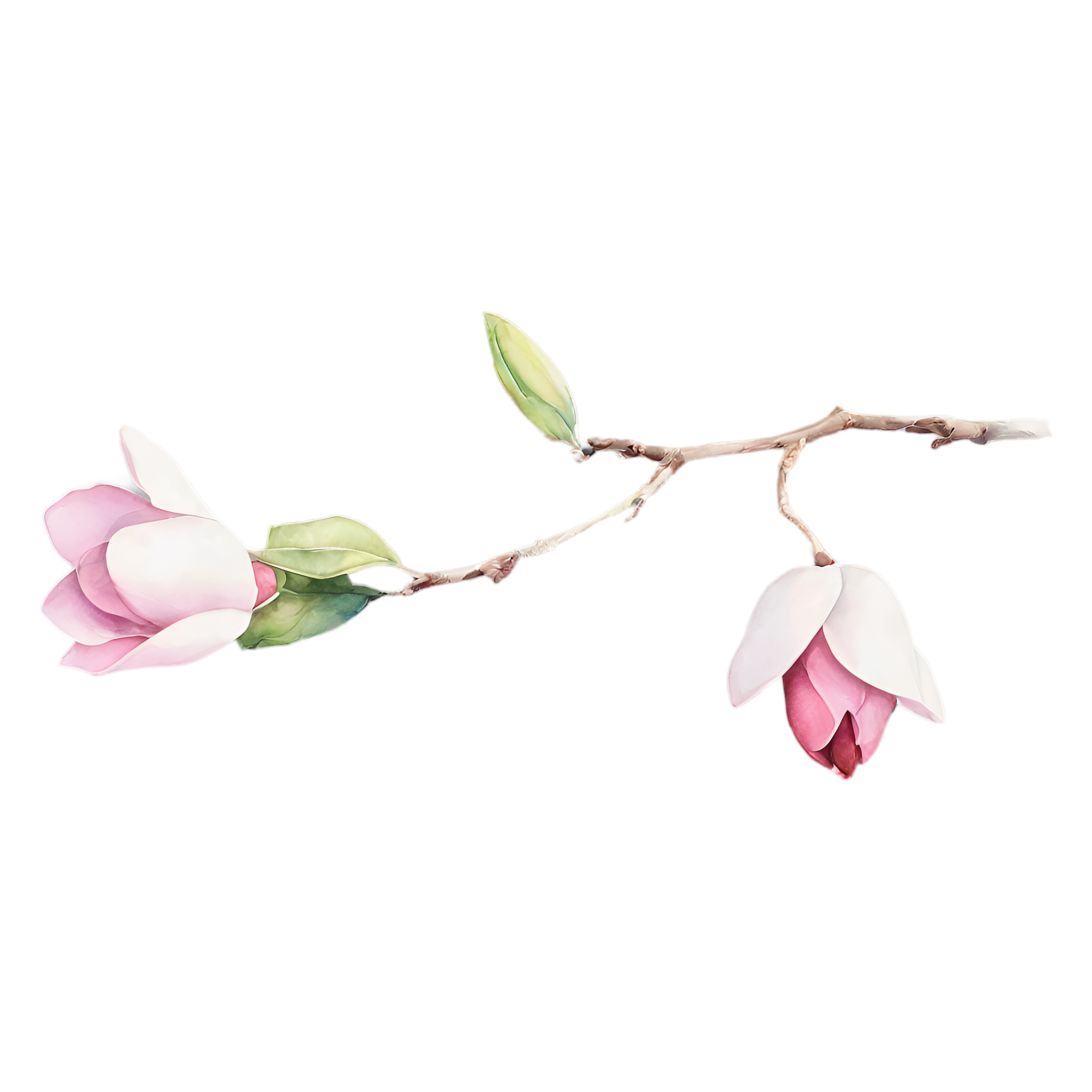
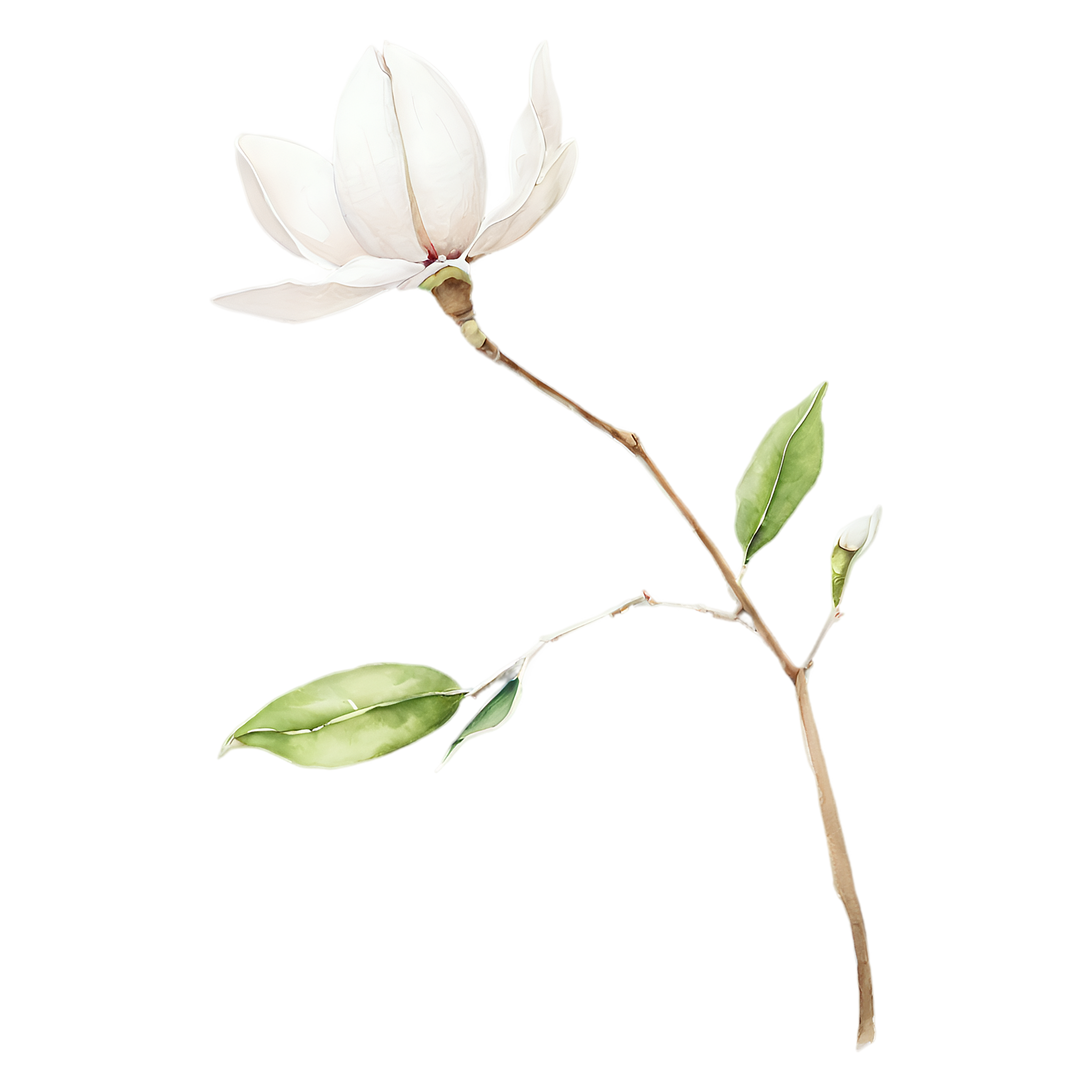
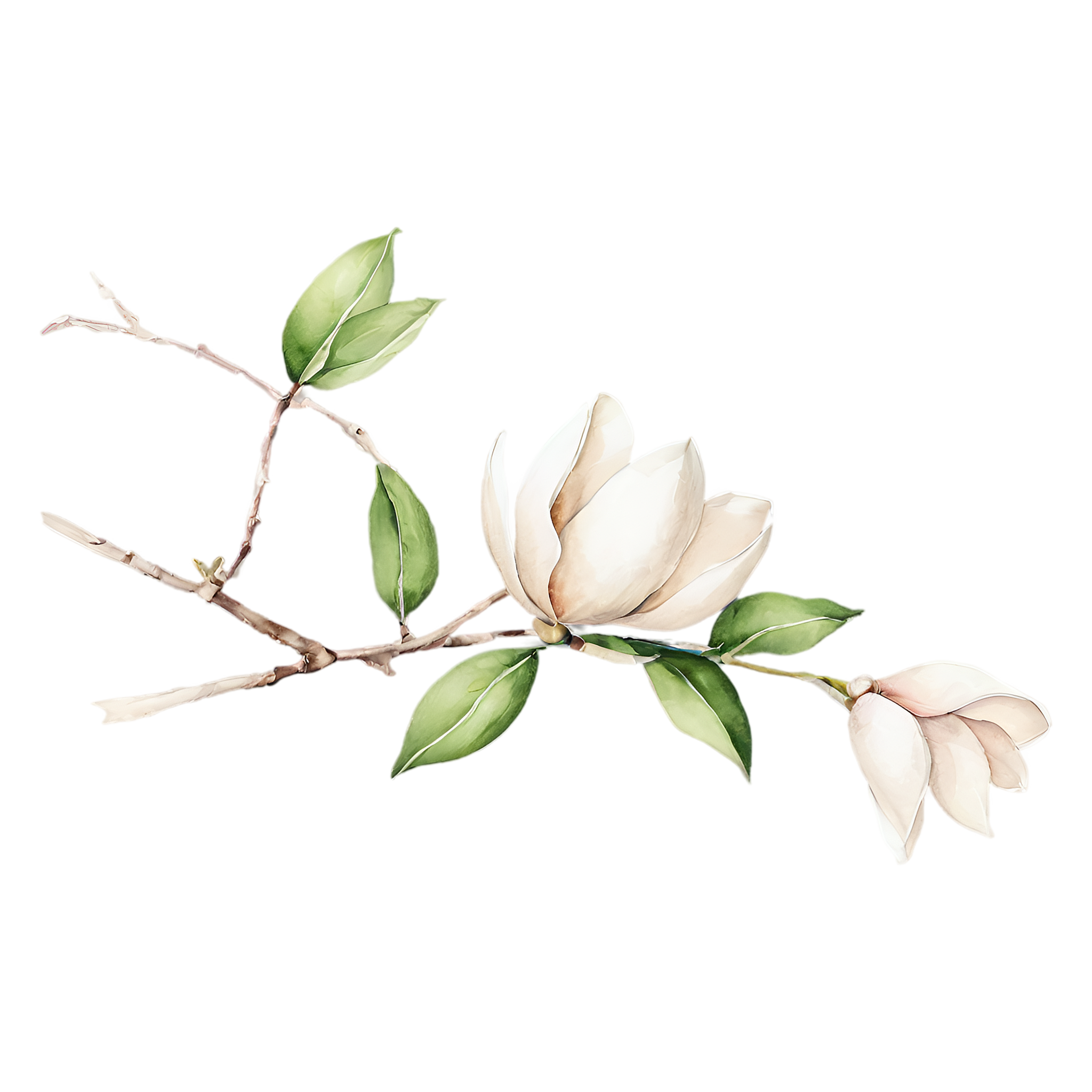
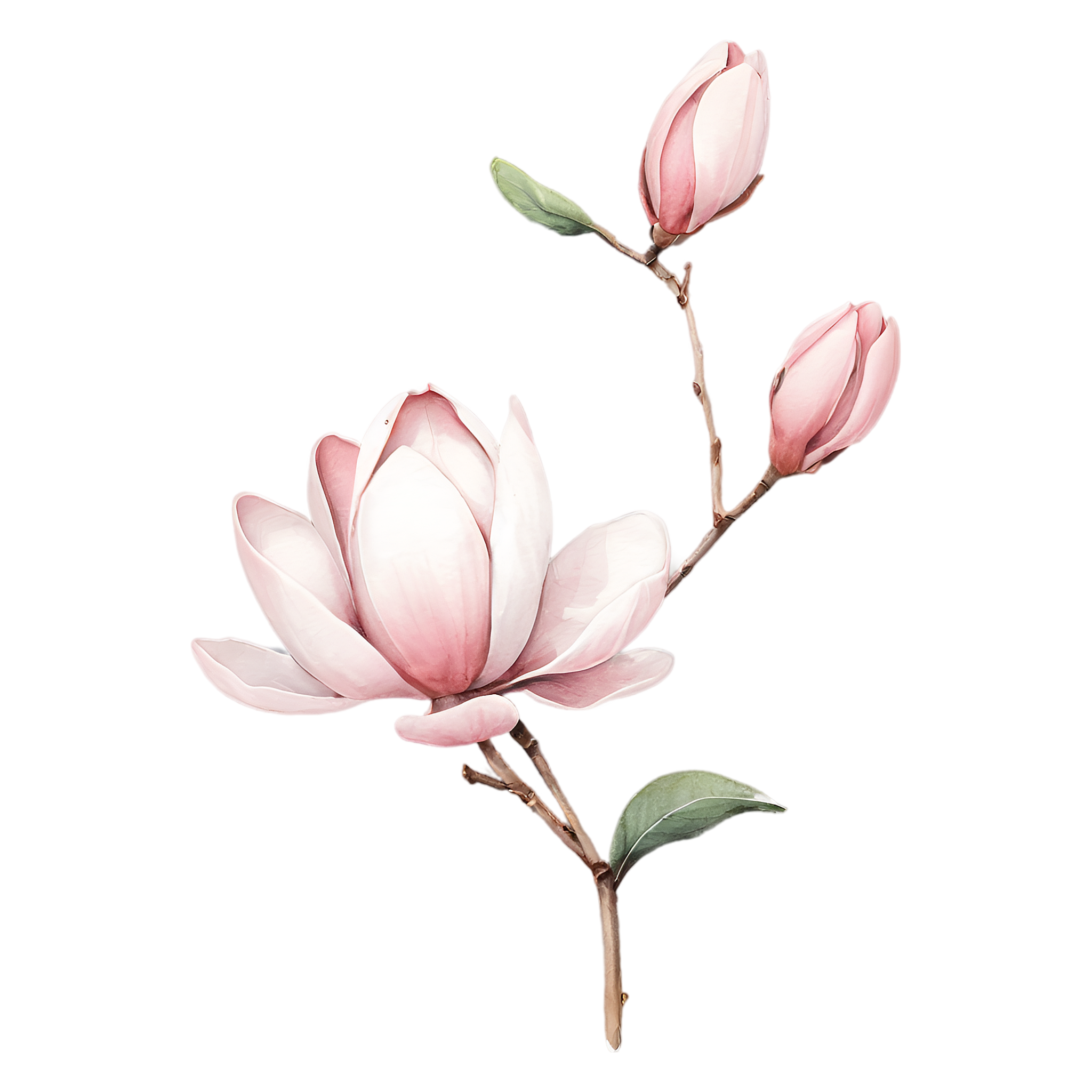
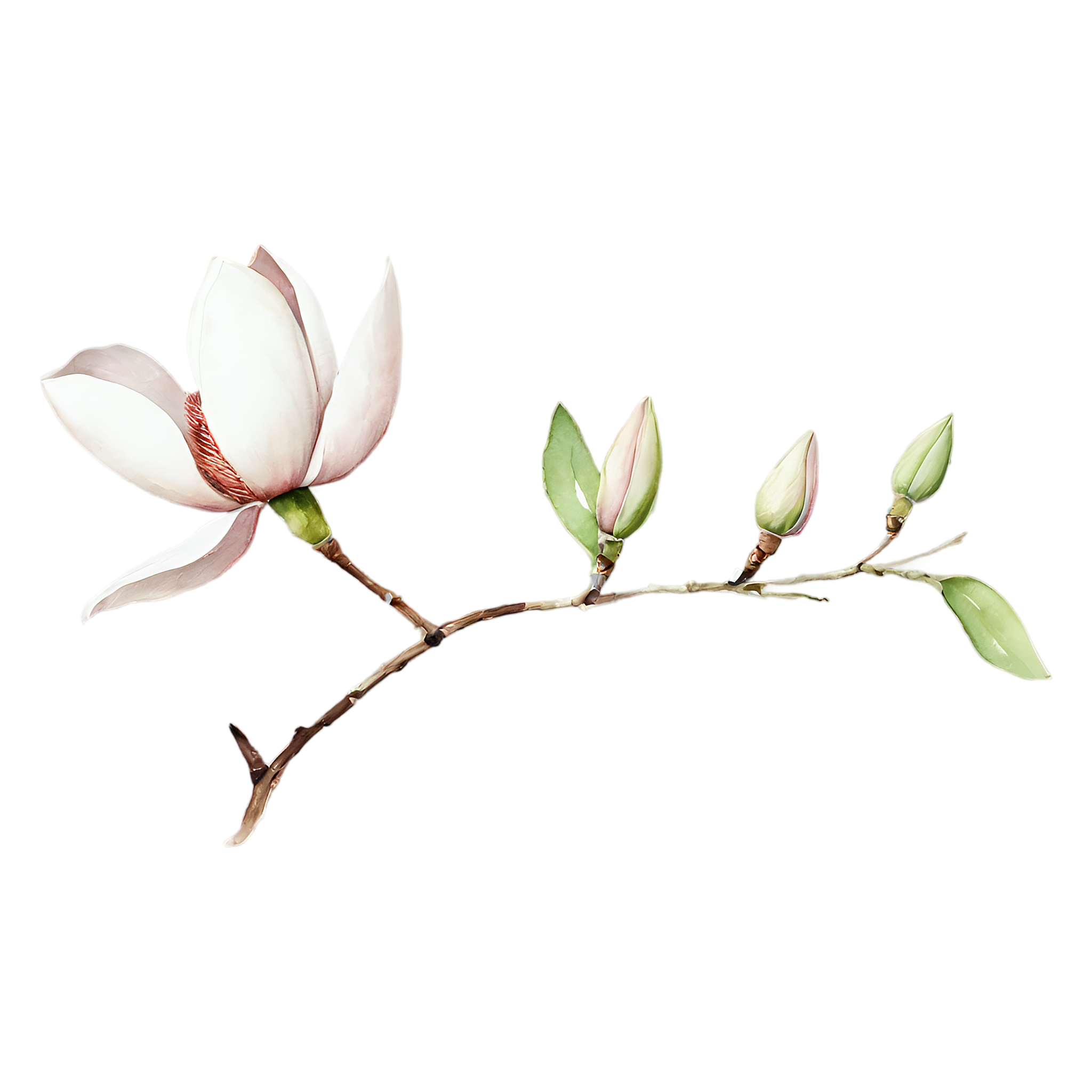
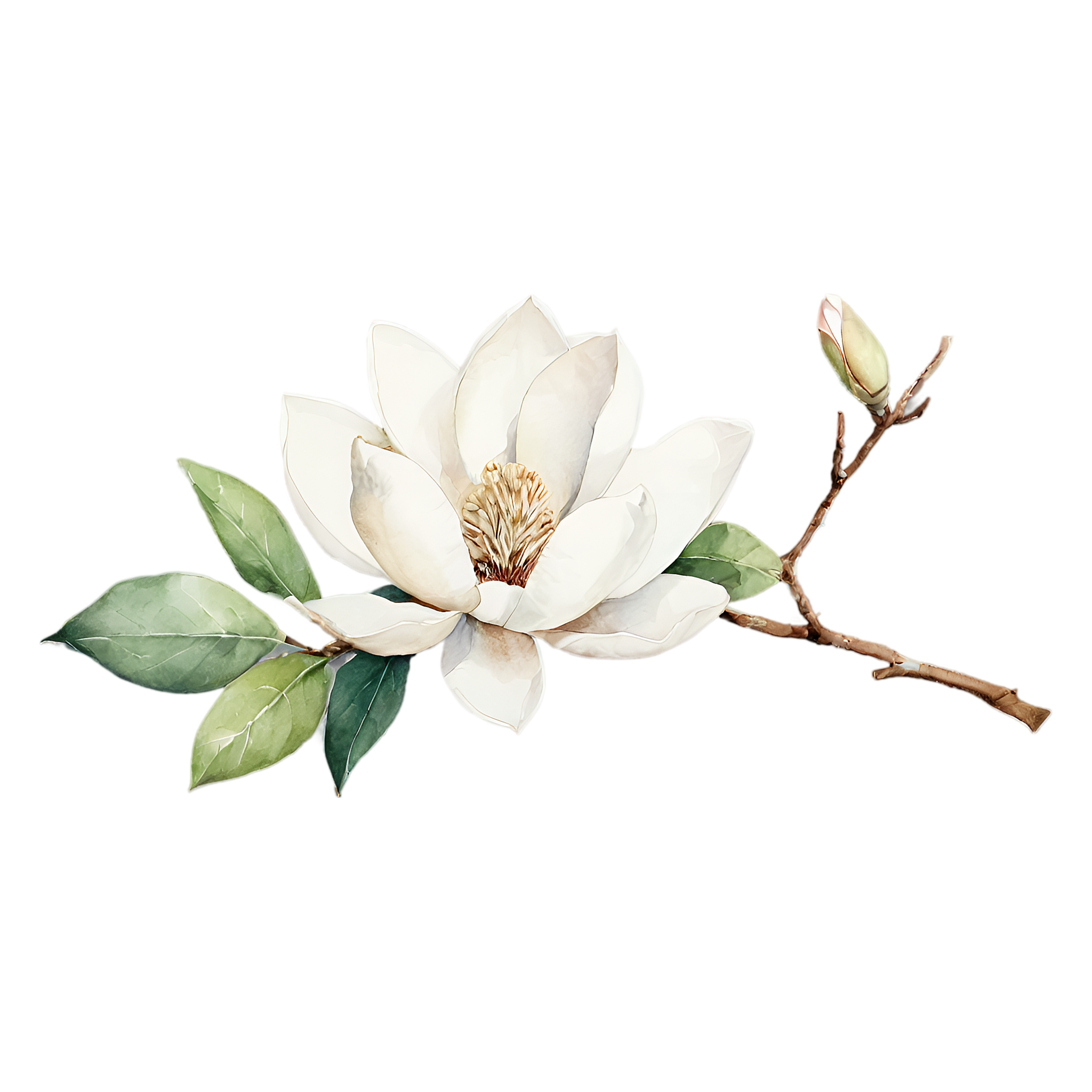
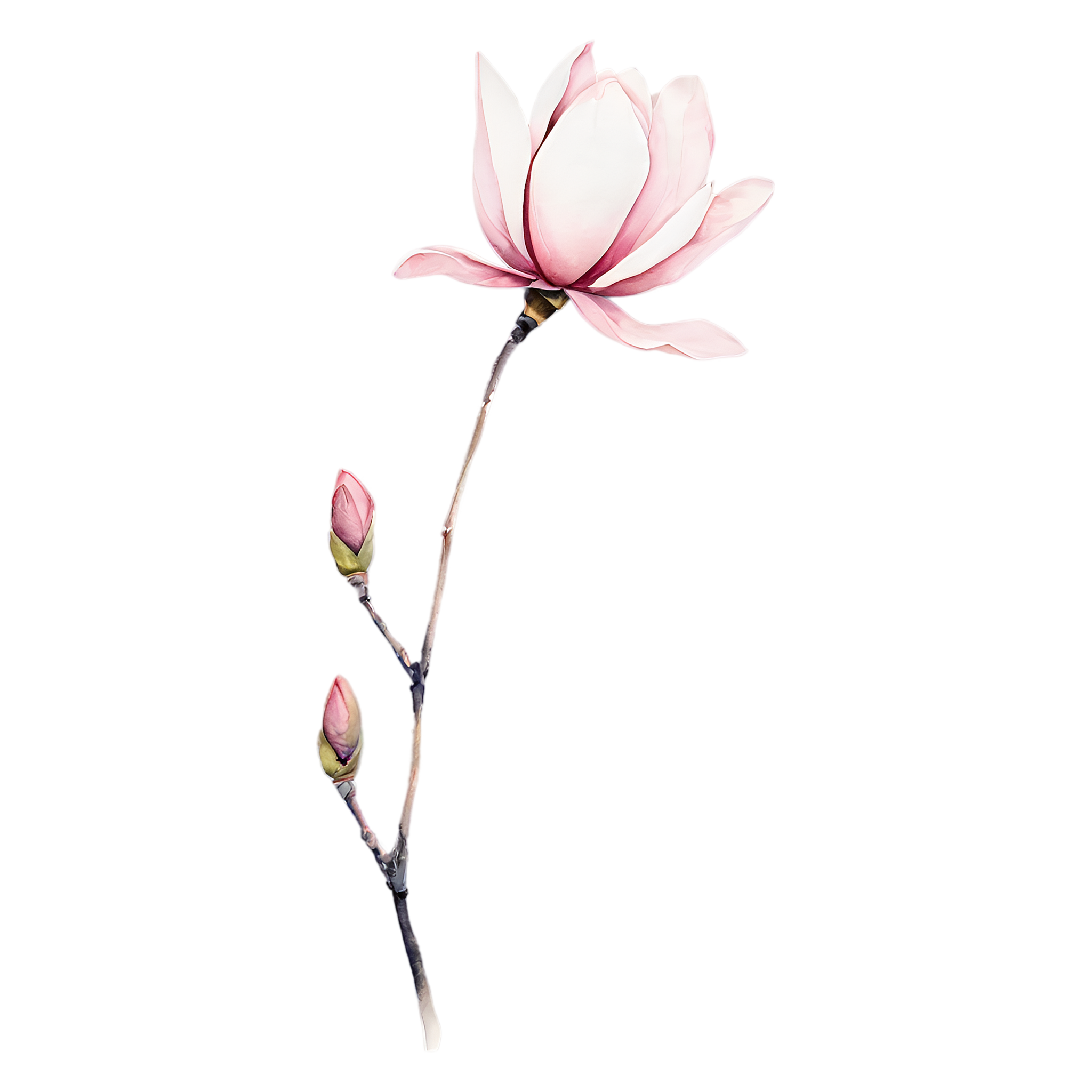
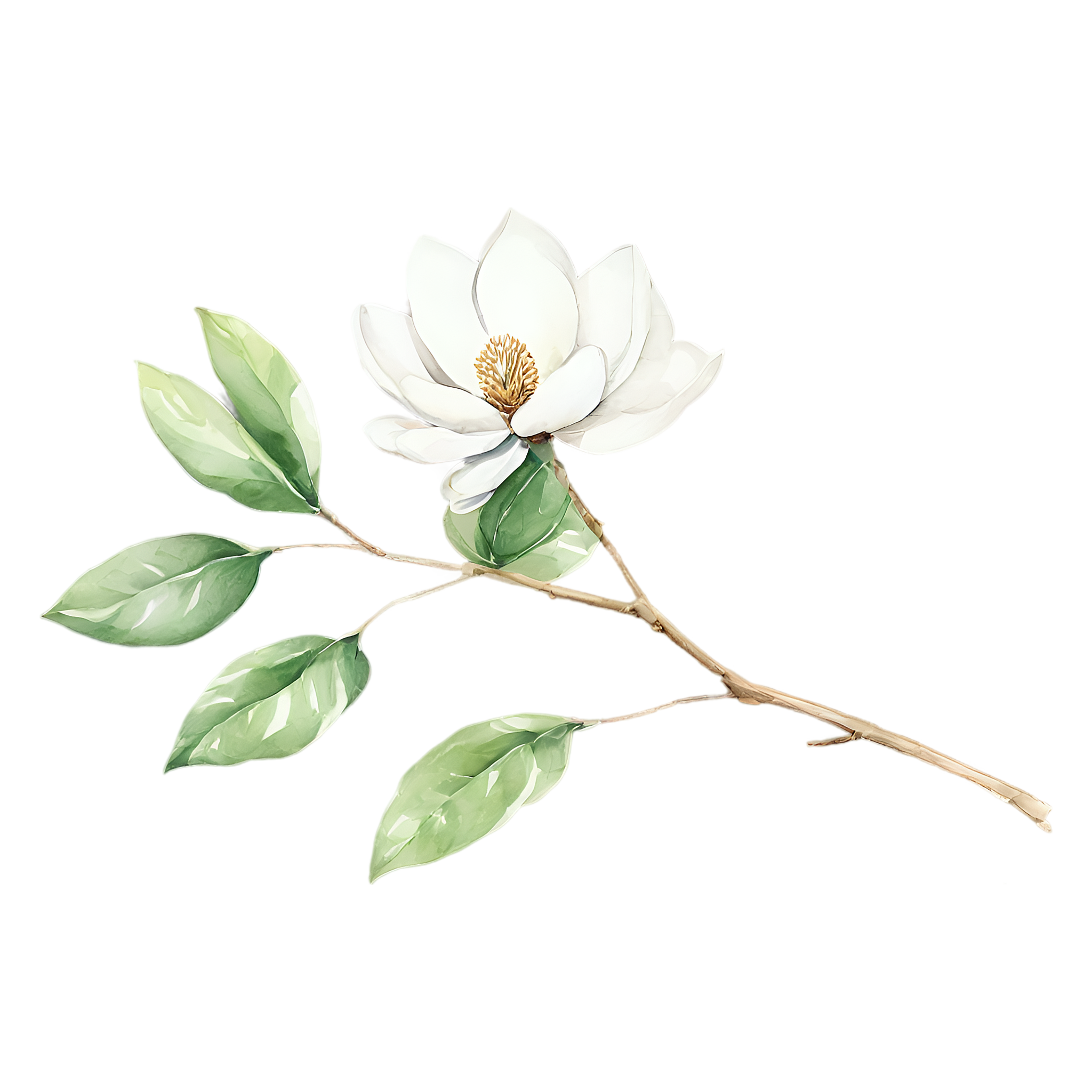
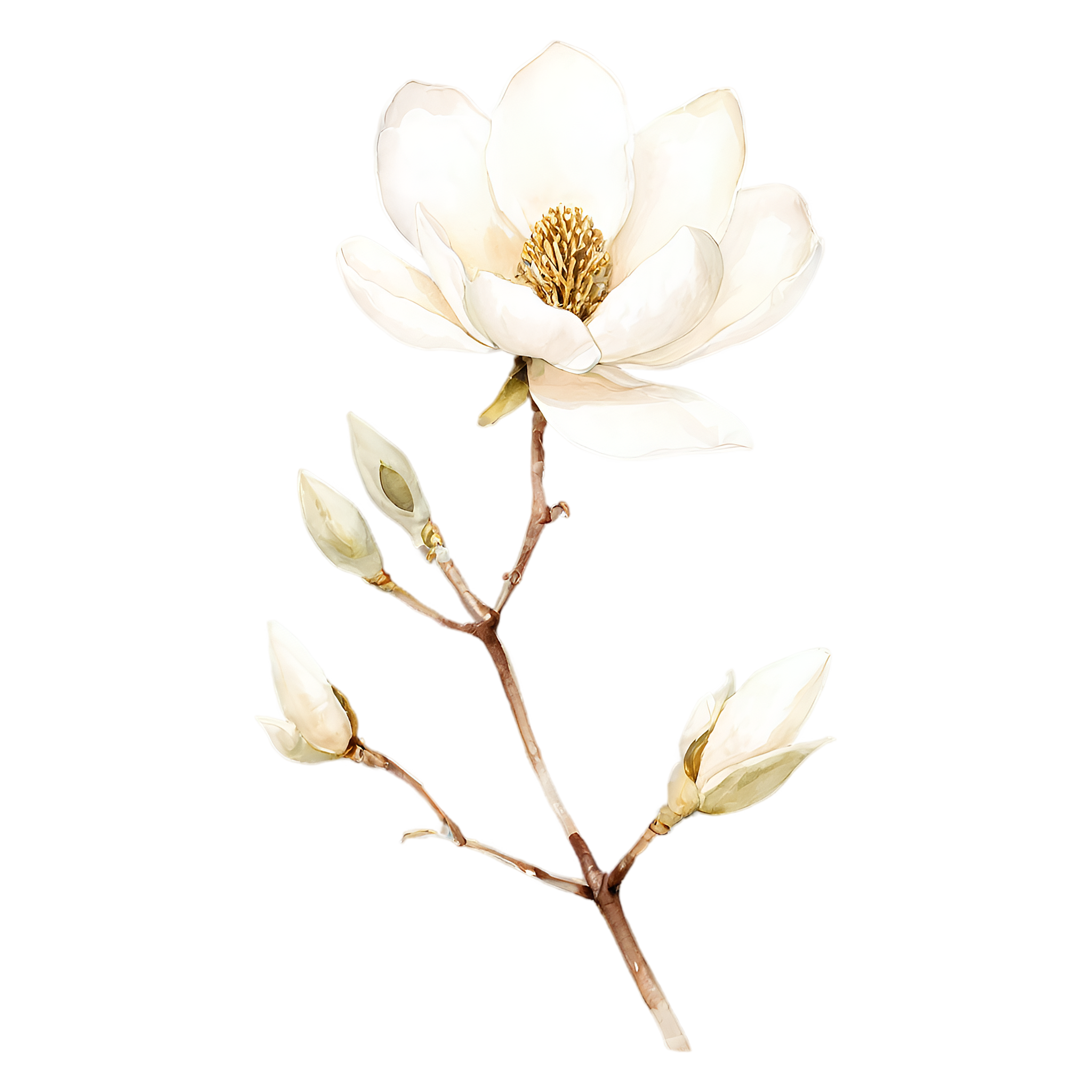
The set covers both looks. The creamy-white side includes a large blossom with green leaves, a single white bloom with a bud, two blossoms with glossy green leaves, a full white blossom seen from the side and a wide-open white flower showing its golden center, the closest to a classic Southern magnolia. The pink side includes a soft pink blossom opening, a blush-pink cupped flower and pink-tinged petals on a dark, bare stem, the look of a saucer magnolia in early spring. One image pairs an open flower with a closed bud, and one is a curved stem that works as a corner piece. Together they let you show a magnolia from first bud to full bloom.
Wedding suites, Southern homes and holiday garlands
Magnolia is a top choice for elegant wedding stationery, especially for Southern and spring weddings: invitation crests, monograms framed by a single bloom, menu cards and welcome signs. It is a natural fit for anything with a Mississippi or Louisiana connection, from state-themed gifts and graduation cards to restaurant menus and real estate flyers. The glossy leaves also have a holiday role, because magnolia-leaf garlands and wreaths are a Southern Christmas tradition. Other common uses include Mother's Day cards, sympathy cards and botanical prints for a living room. To build a spring wedding palette, pair it with cherry blossom branches or peonies; for summer, the hydrangea set fills out a bouquet.
Winter white, soft fern green and blush
Most of the set lives in warm whites and creams with soft fern and khaki greens, accented by dusty rose on the pink blossoms and warm mocha on the stems. That restrained range is why magnolias suit formal stationery: they look right with gold foil, navy, deep green and blush, and the white blossoms stand out on dark backgrounds such as charcoal or hunter green. For a richer bouquet, the garden roses add stronger pinks. Browse the wedding clipart hub for more flowers that coordinate. The page lists each image's main colors as HEX codes with the closest DMC floss and Copic marker, useful for matching a white that isn't stark.
Tip: let one bloom carry the design
A magnolia flower is large and simple, so a single blossom often looks better than a cluster. Center the wide-open white flower above a monogram, or place the curved stem along one side of a card with plenty of empty space. Every file is a 2048 x 2048 px transparent PNG, about 6.8 inches square at 300 DPI, so one bloom can fill an 8 x 10 print at full quality. If you print white blossoms on white paper, keep the soft gray-beige shading: it defines the petals, and removing it makes the flower disappear. For embroidery, satin-stitch the tepals in two cream shades from the DMC matches and use a darker green for the leaf veins.