Sakura: a week of flowers each spring
Flowering cherries are ornamental trees in the genus Prunus, bred in Japan for their blossoms rather than their fruit. A cherry flower has five petals, and each petal usually has a small notch at its tip, which is the quickest way to tell it apart from a plum blossom. The most planted variety, the Yoshino cherry, opens pale pink and fades almost to white. Double-flowered types such as Kwanzan carry deep pink pom-pom clusters and bloom a little later. Peak bloom is short, often around a week, and in Japan the custom of hanami (flower viewing) gathers people under the trees for picnics. That brief bloom is why sakura stands for the beauty of things that don't last. In the United States, the trees around the Tidal Basin in Washington, D.C., grew from a 1912 gift from the city of Tokyo.
Ten branches, from bud to full bloom
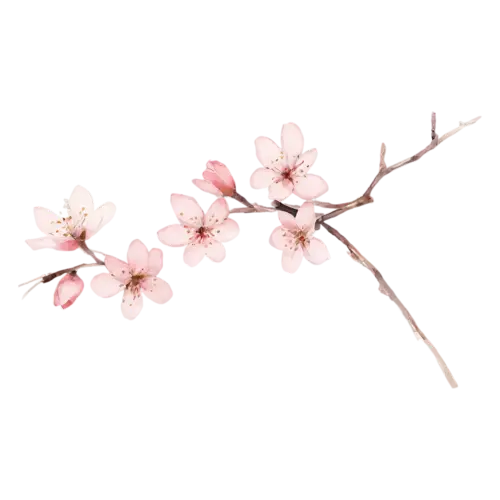
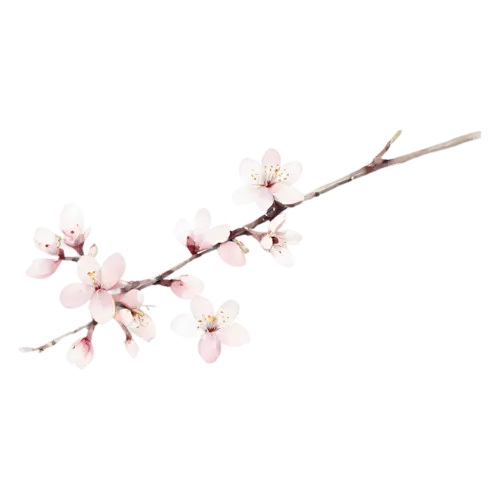
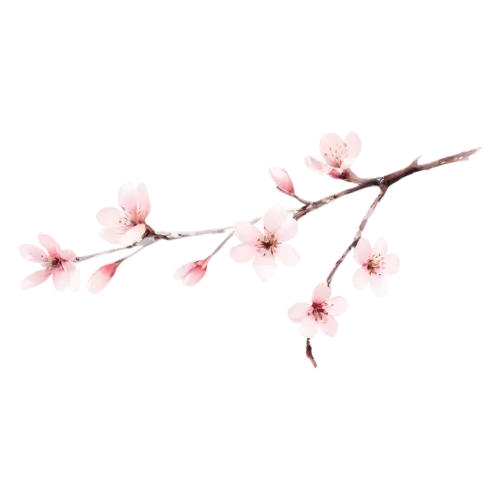
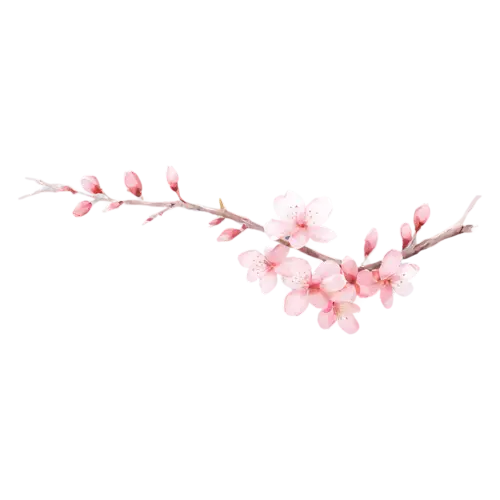
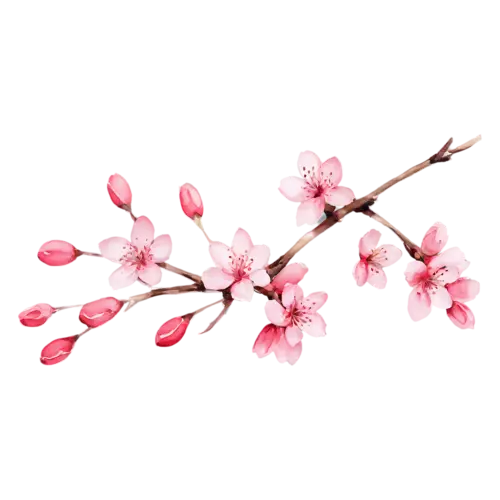
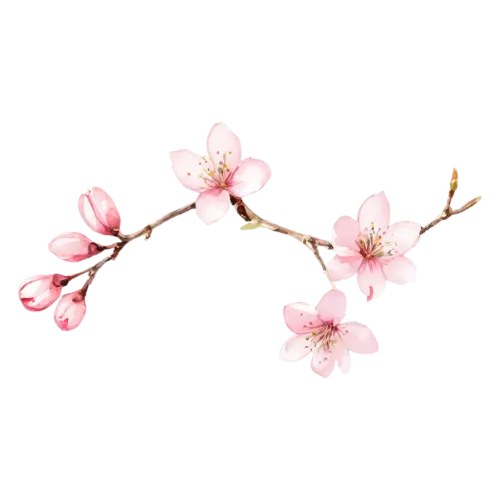
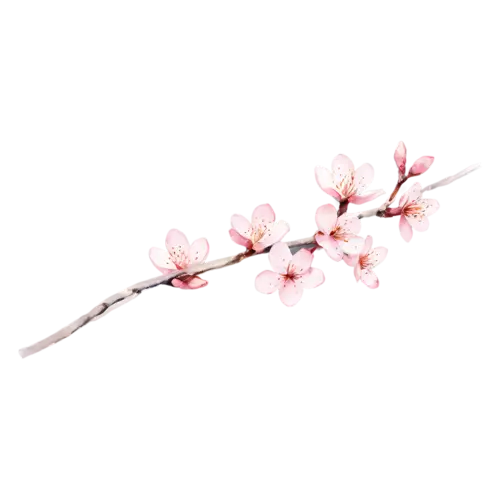
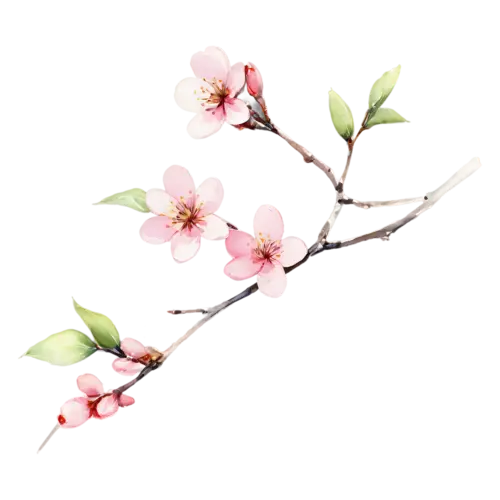
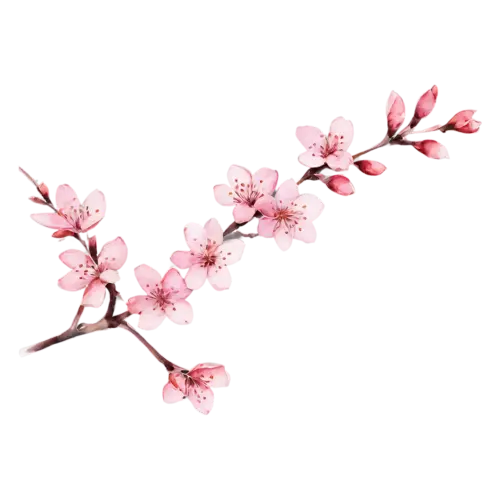
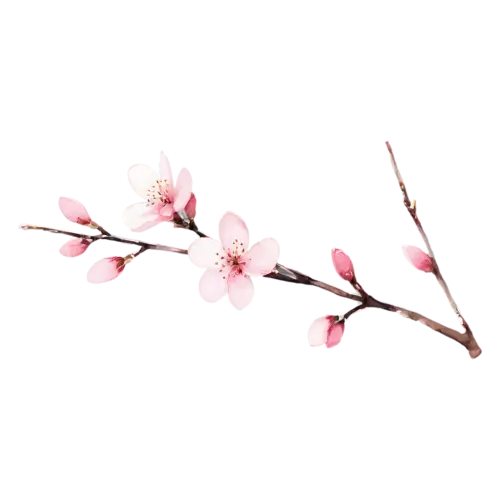
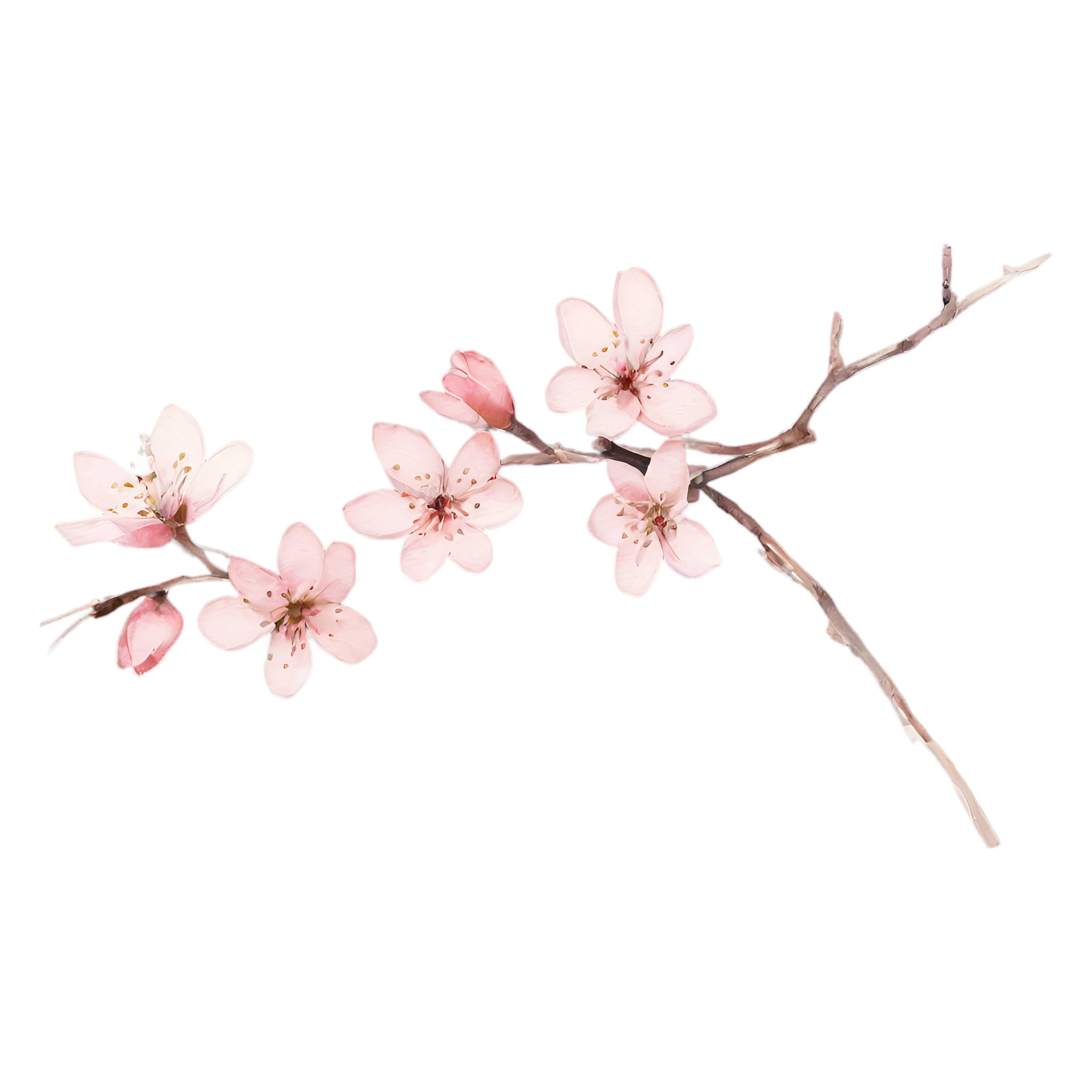
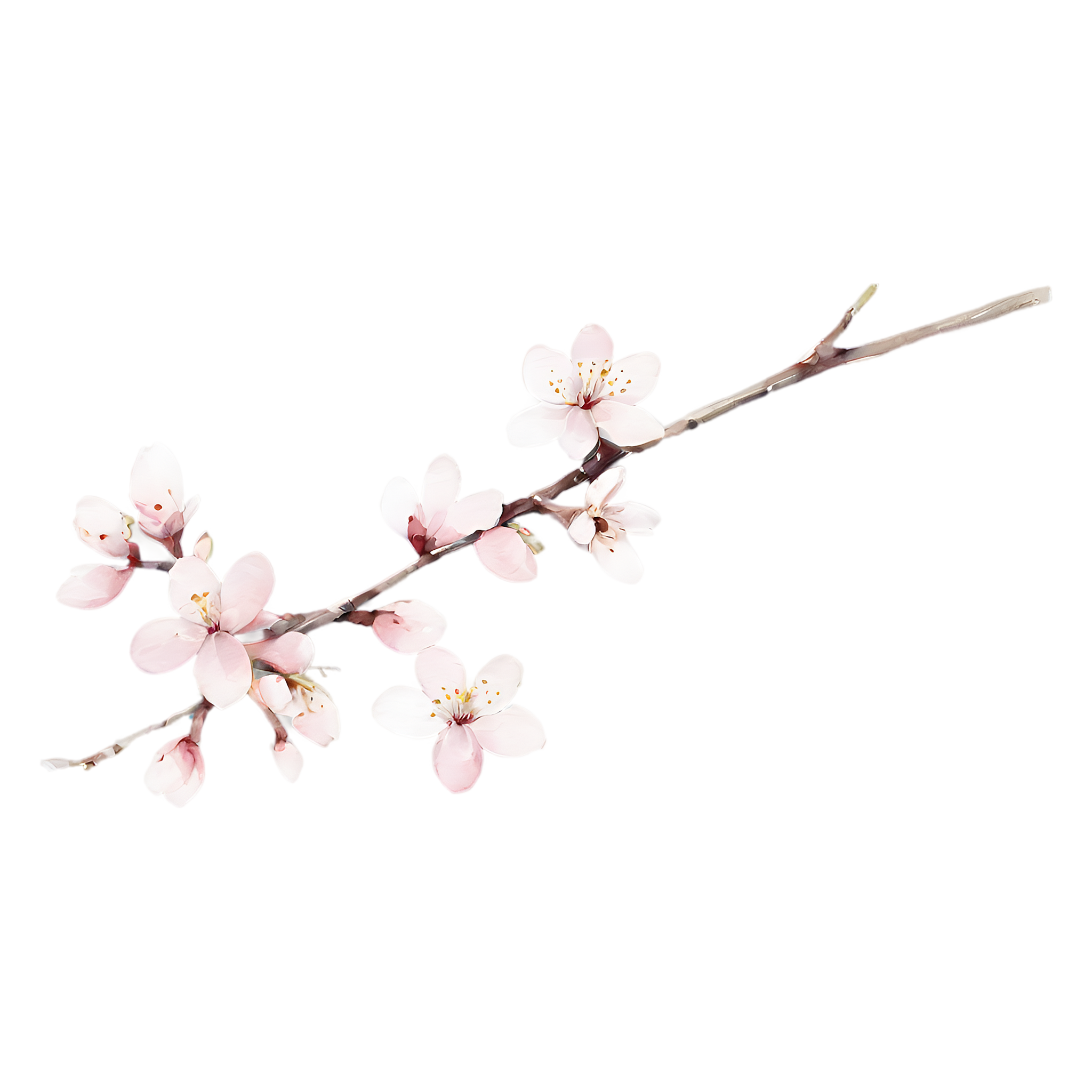
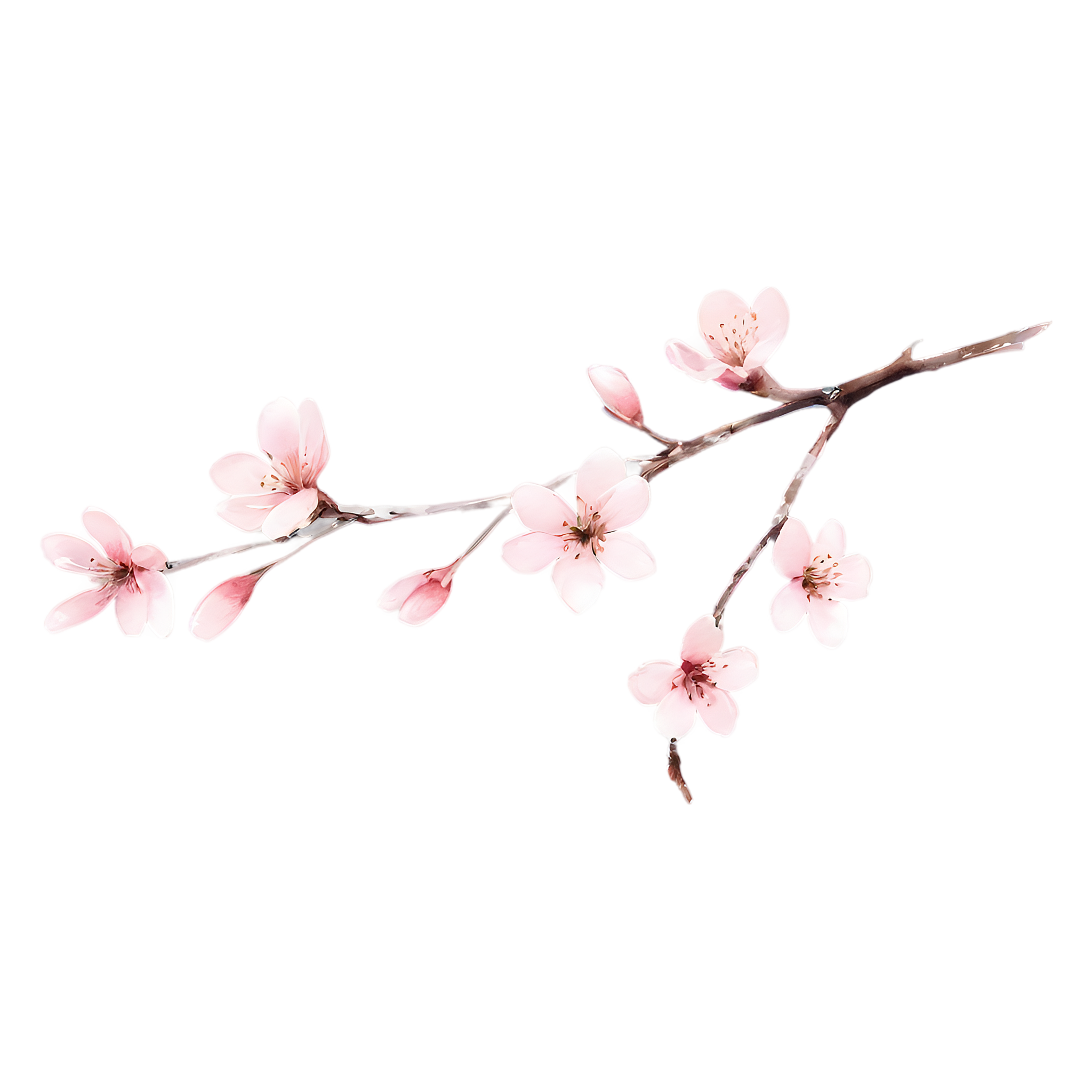
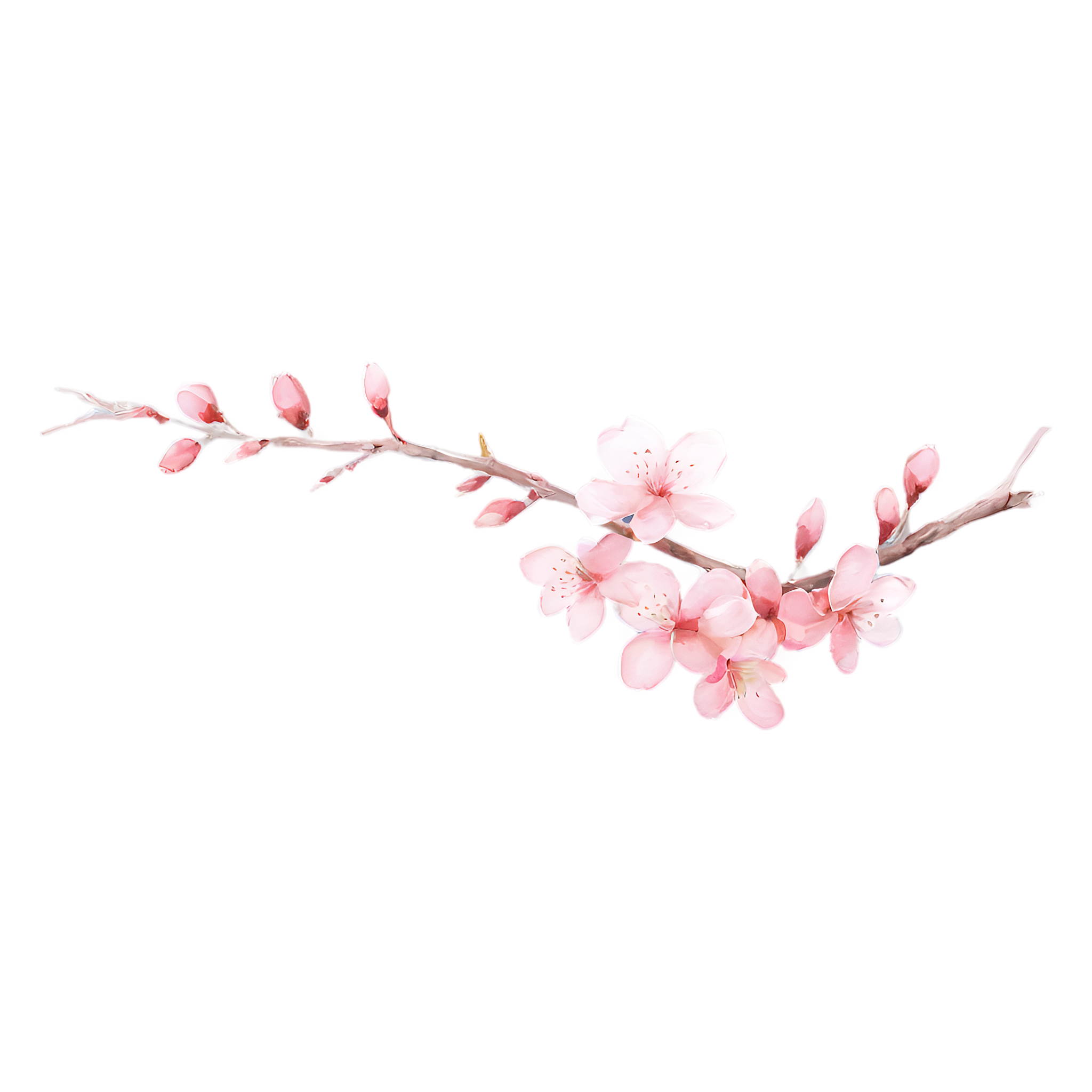
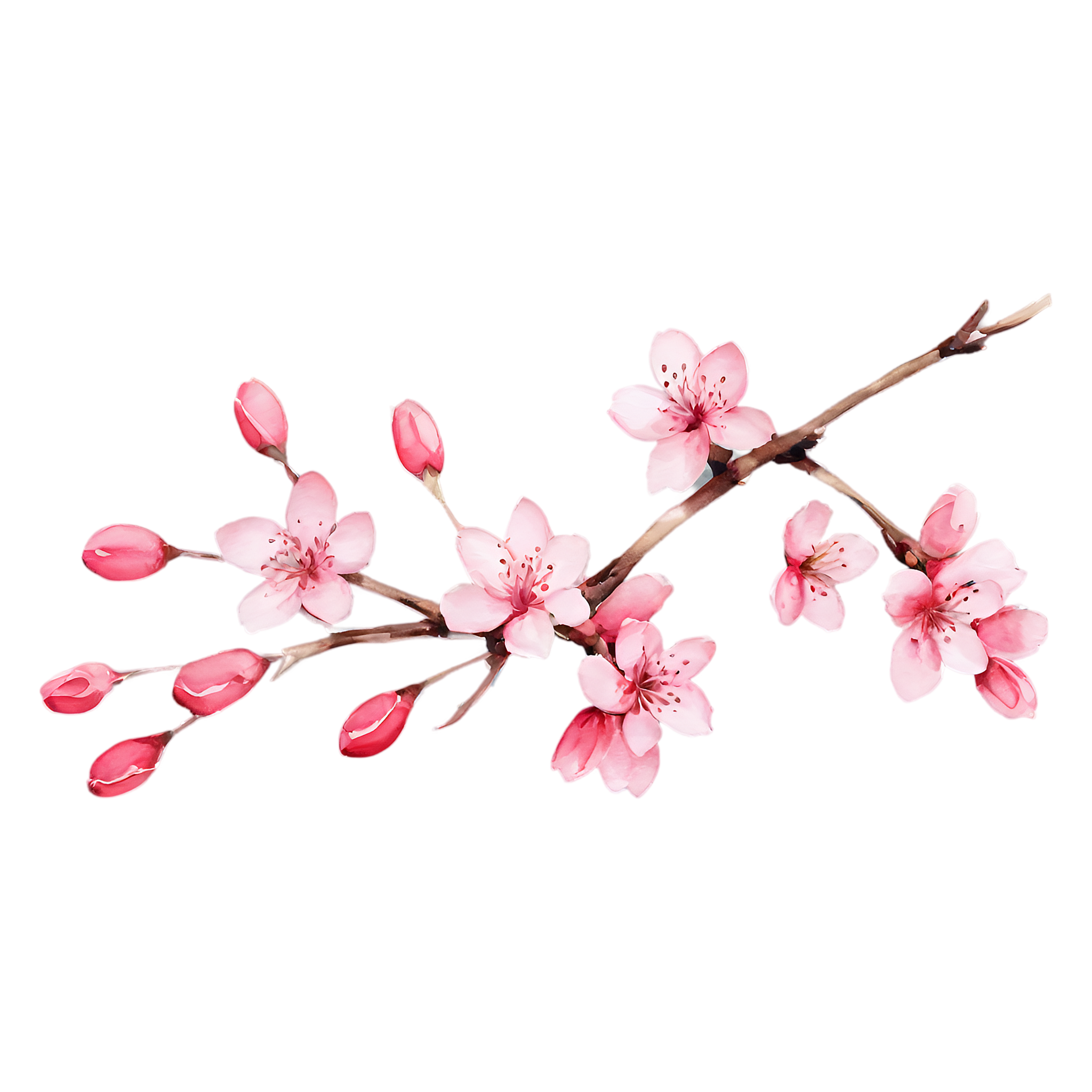
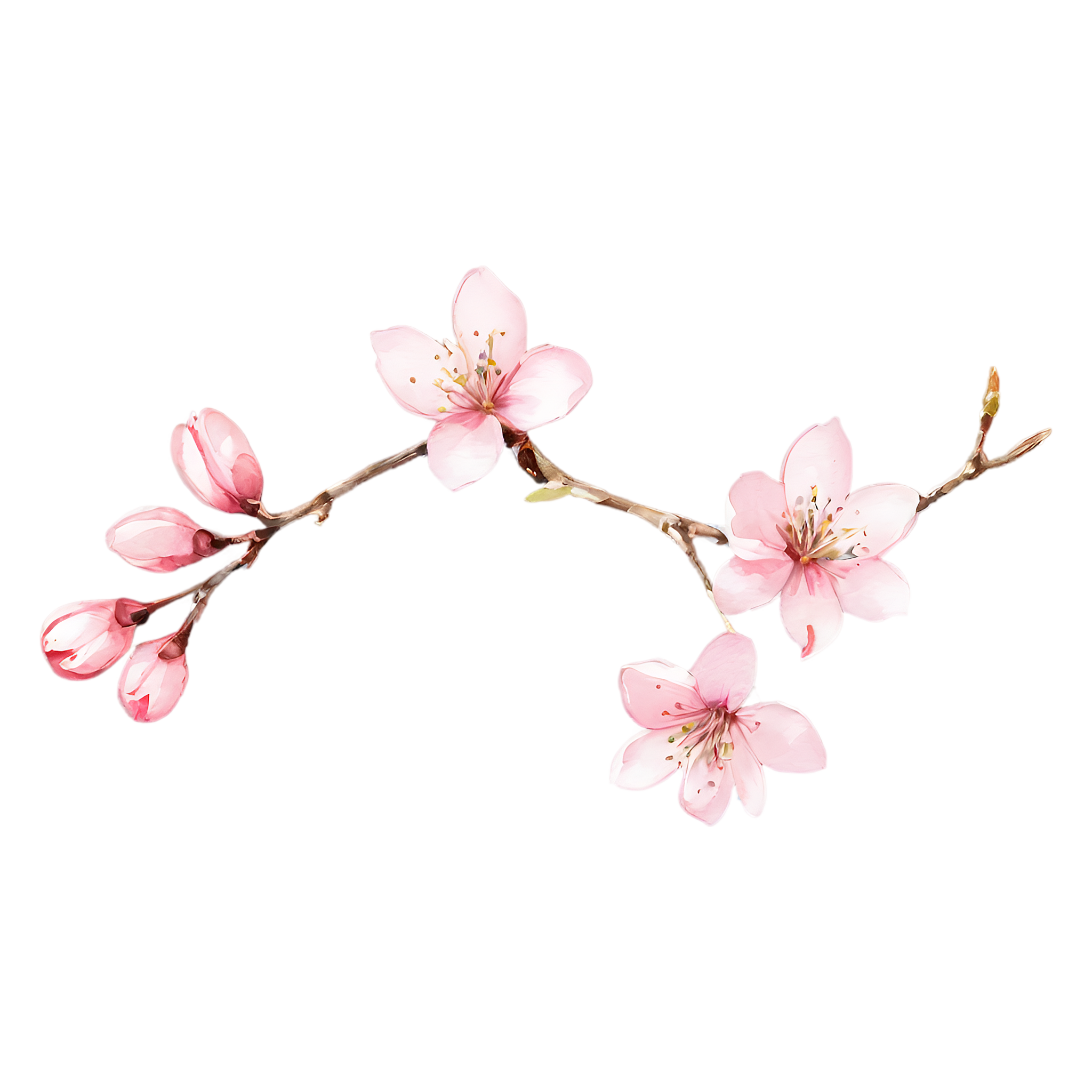
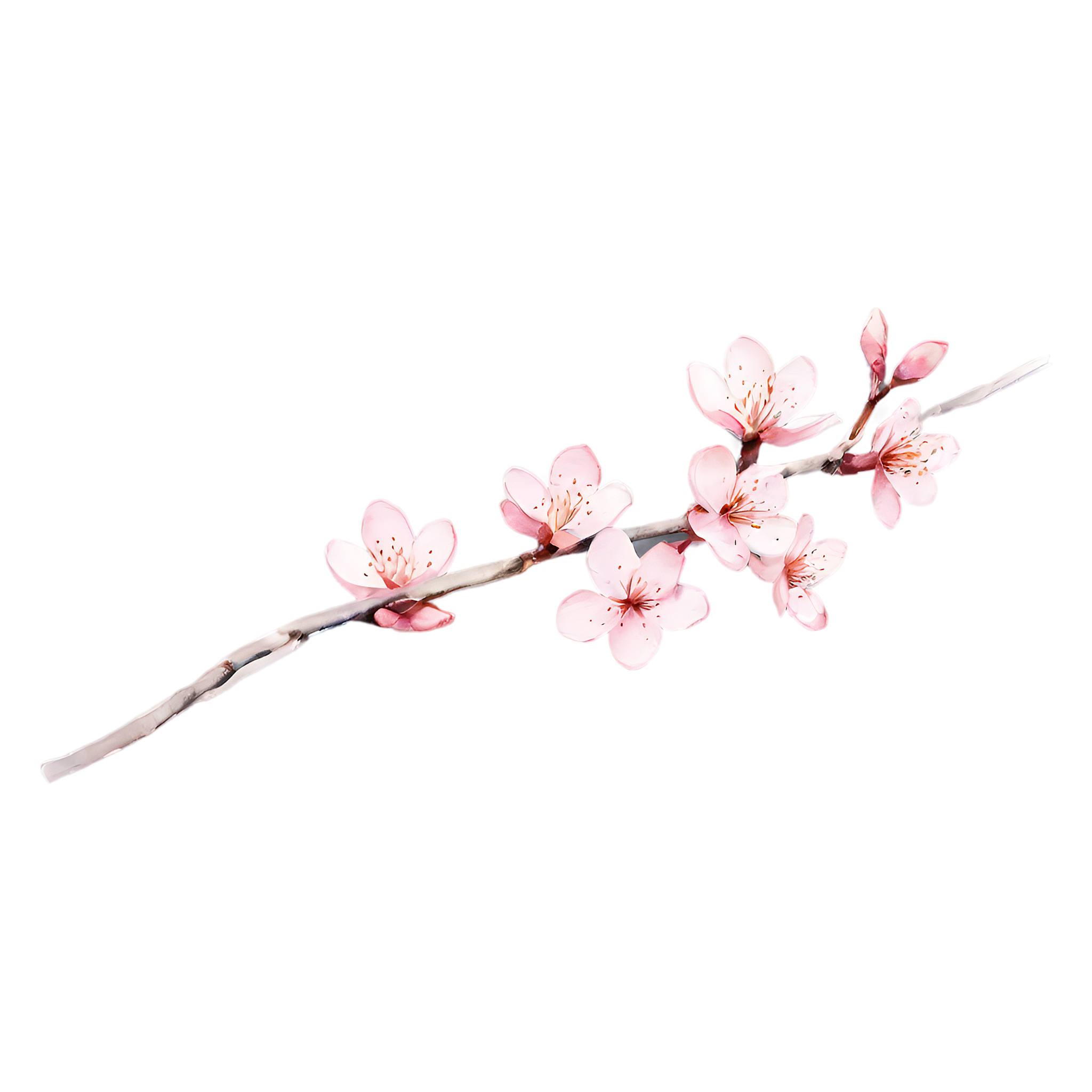
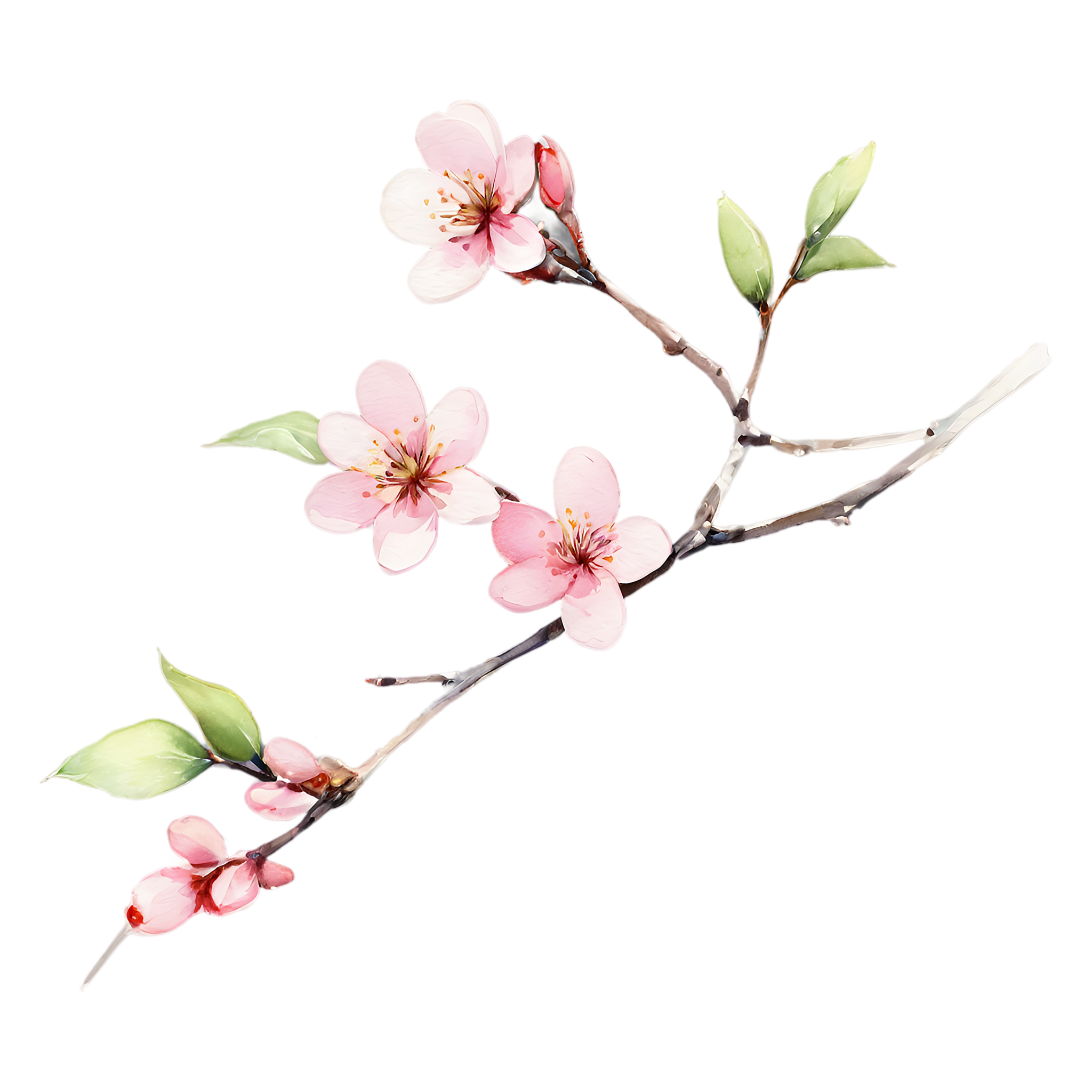
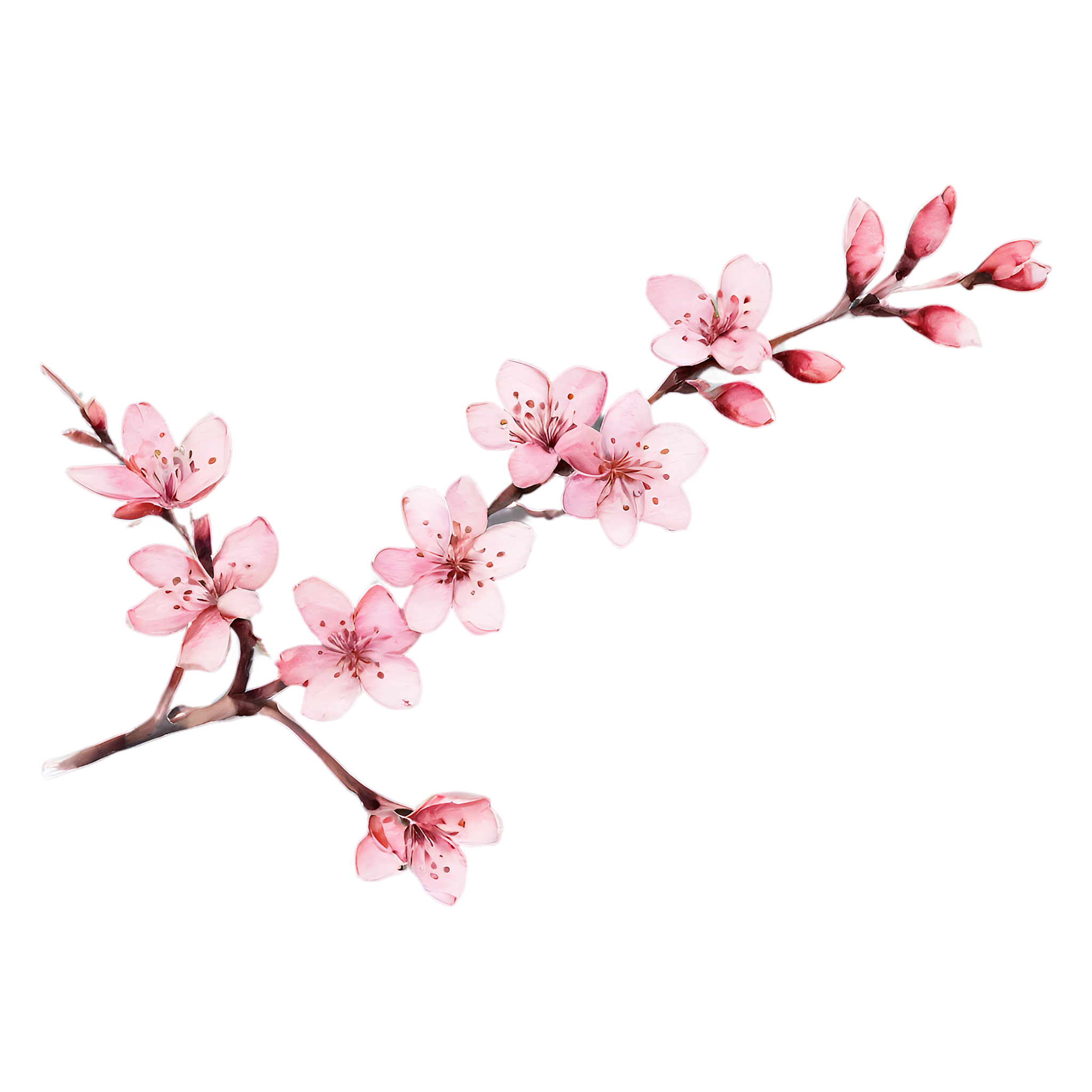
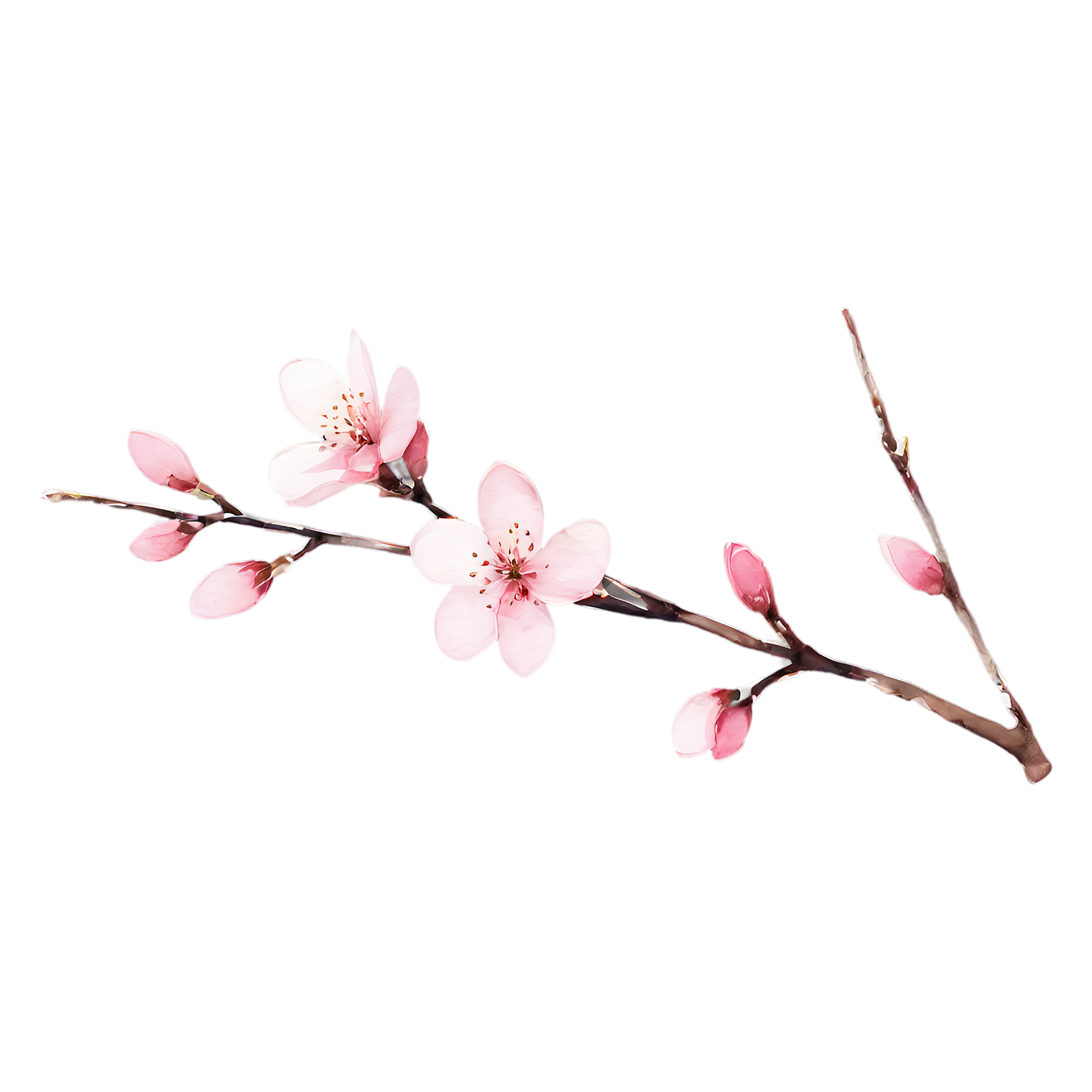
Every image is a single branch or spray, so you can arrange them into your own garland or corner swag. The set covers pale pink blossoms in full bloom, white flowers with a few pink buds, a single slender spray of soft pink, an arching branch covered in blush-pink flowers and a branch of deep pink double blossoms. Others show open flowers with unopened buds along the stem, a long horizontal spray (handy as a header or border), blossoms with a few young green leaves, a curved branch and white-pink petals on dark, slender twigs. The dark twigs give strong contrast on light paper; the leafy branch reads as later in the season.
Spring weddings, baby girls and Japanese menus
Cherry blossom is a top request for March and April weddings: invitation corners, table numbers and seating charts all take a horizontal spray well. It is also common on baby shower invitations and nursery prints for girls, Mother's Day cards and Japanese restaurant menus, sushi labels and tea packaging. Teachers use the branches for spring bulletin boards and lessons about Japan, and many people make a card or a small poster around the National Cherry Blossom Festival in Washington, D.C. For a wedding suite, pair it with the creamy cups of the magnolia gallery, which blooms around the same time, or with peonies for a fuller, later-spring bouquet.
Pale salmon, baby pink and dusty rose
The blossoms run from very light salmon and baby pink through dusty rose and a soft mauve, with dark brown twigs underneath. Those pinks look best on white, cream or soft gray paper; on a pure black background the pale flowers glow, which works for an evening hanami invite. For a two-flower design, the tulips gallery adds stronger spring color without clashing. The set belongs to the flower clipart hub and the spring hub. Each image on this page lists its main colors as HEX codes with the nearest DMC floss and Copic marker, so you can match ink or thread to the exact pink.
Tip: build a border from separate branches
Cherry branches are long and narrow, so they work better as borders than as a centered motif. Place the horizontal spray along the top edge of a card and a short, curved branch in the opposite corner; mirror one of them to make the layout feel balanced without a second copy looking repeated. Each file is a 2048 x 2048 px transparent PNG, about 6.8 inches square at 300 DPI, enough to run a branch across the full width of a 5 x 7 invitation. For embroidery, the DMC matches on this page cover both the petal pinks and the dark twig, and the five-petal flowers translate well to lazy-daisy stitches with French-knot centers.