The freight dog of the Arctic
The Alaskan Malamute is one of the oldest Arctic sled dog breeds. It is named for the Mahlemut, an Inupiat people of northwestern Alaska who kept these dogs to haul heavy loads and help hunt. Where racing sled dogs are built for speed, the malamute is built for strength and endurance: big-boned, deep-chested, with a dense double coat, a broad head, and a plumed tail carried over the back. Adults commonly weigh 75 to 85 pounds. Malamutes have brown eyes, and the breed standard counts blue eyes as a fault, which is one quick way to tell them from Siberian Huskies. Alaska made the malamute its official state dog in 2010. Owners know the breed for talking in woo-woo howls rather than barking much.
Ten poses of a gray-and-white malamute
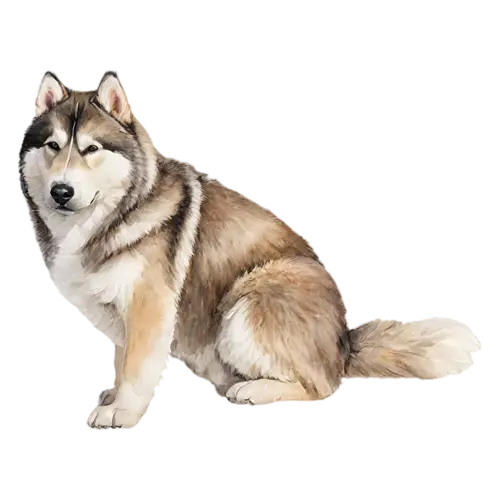
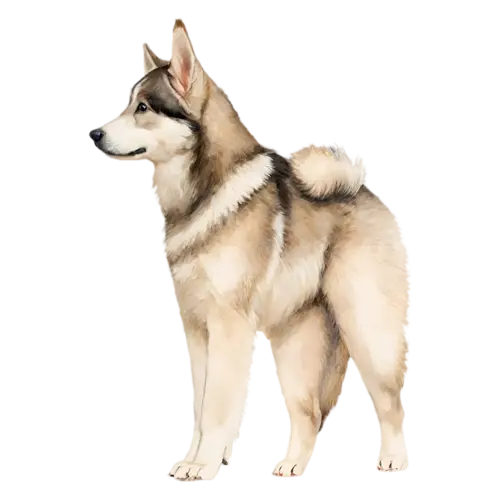
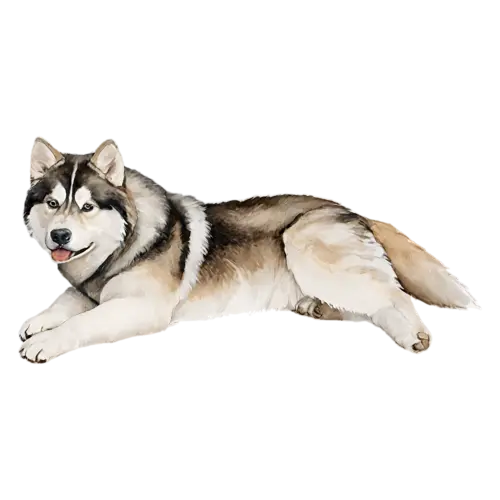
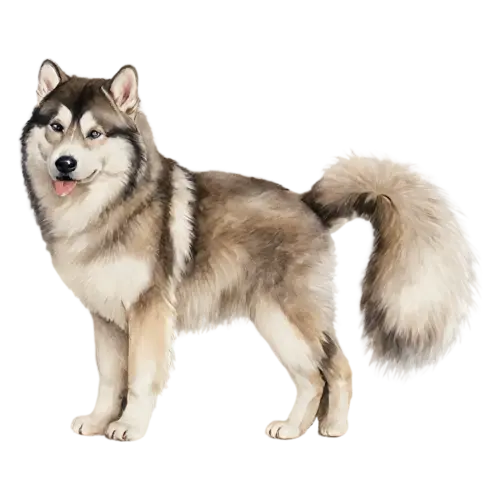
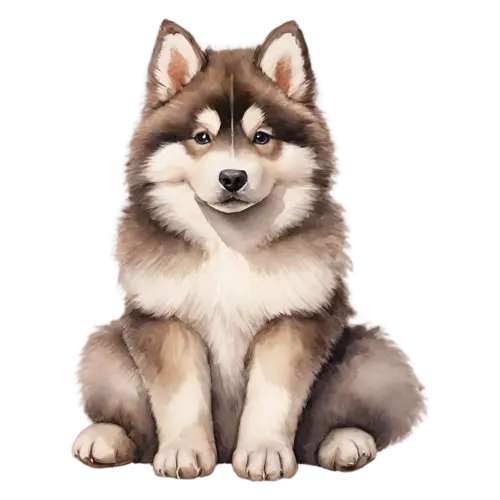
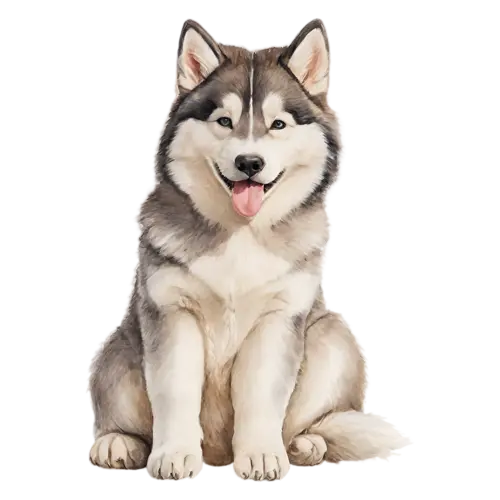
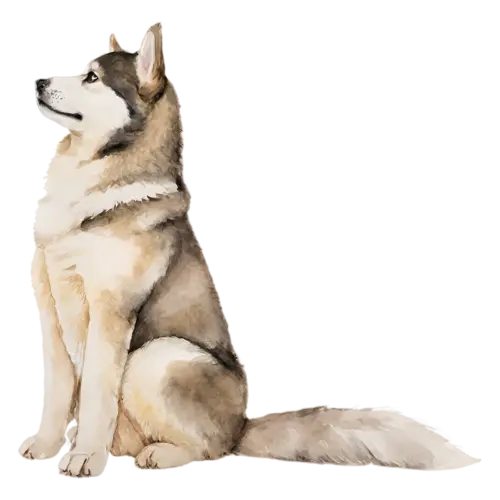
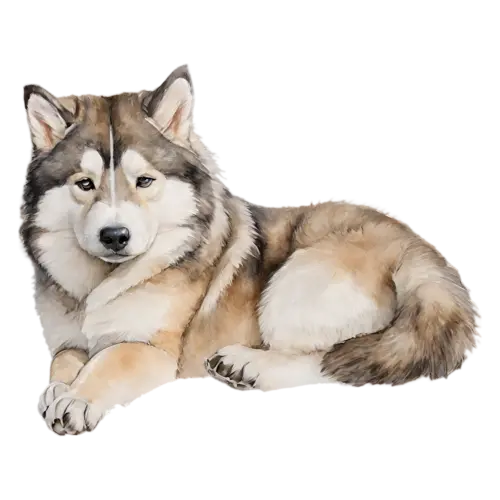
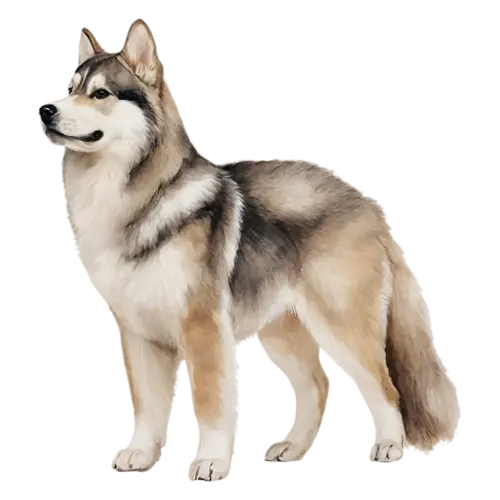
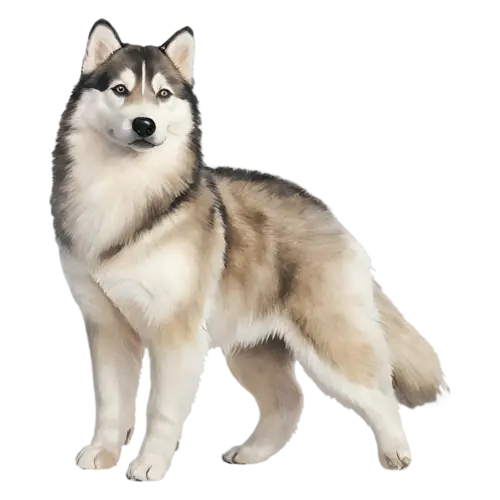
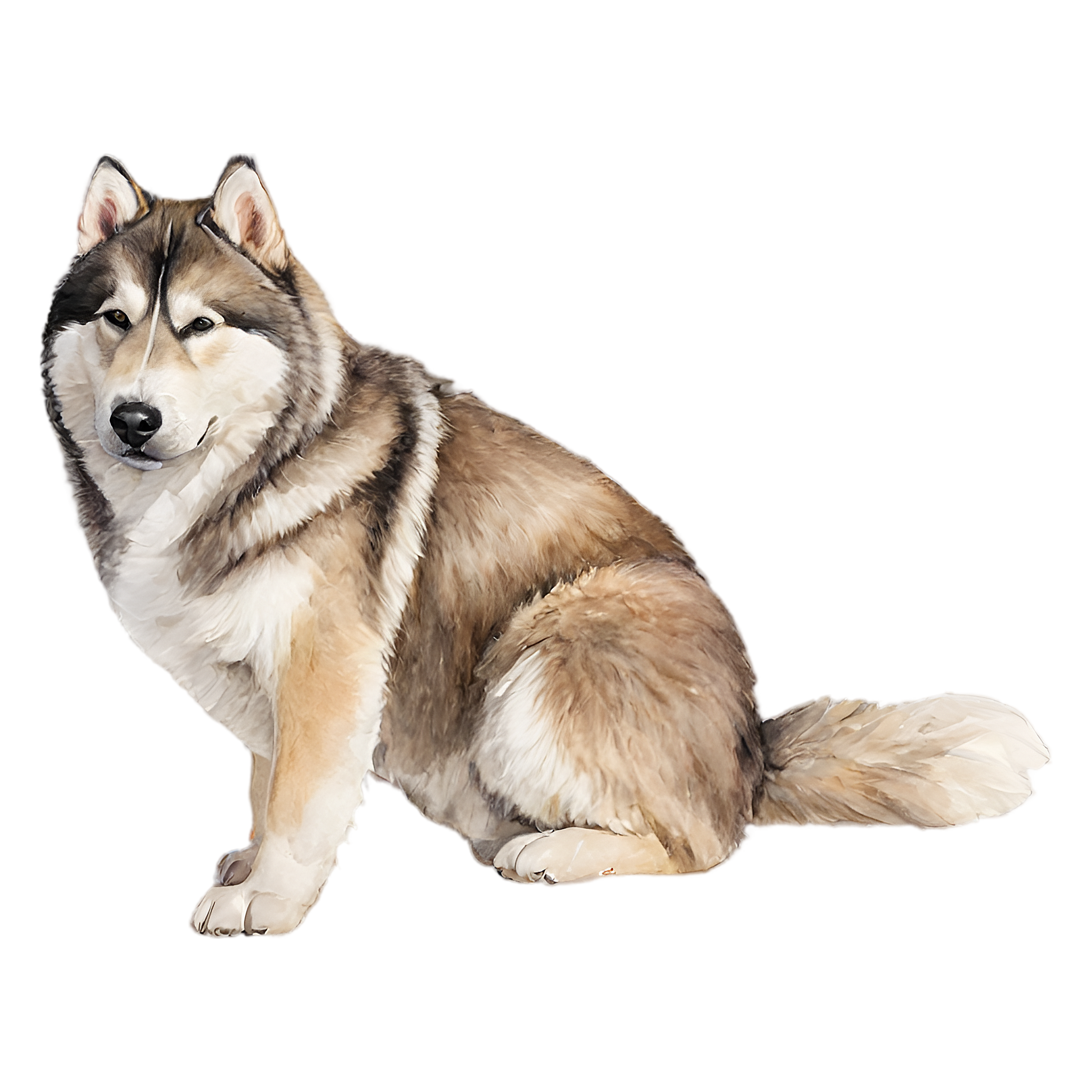
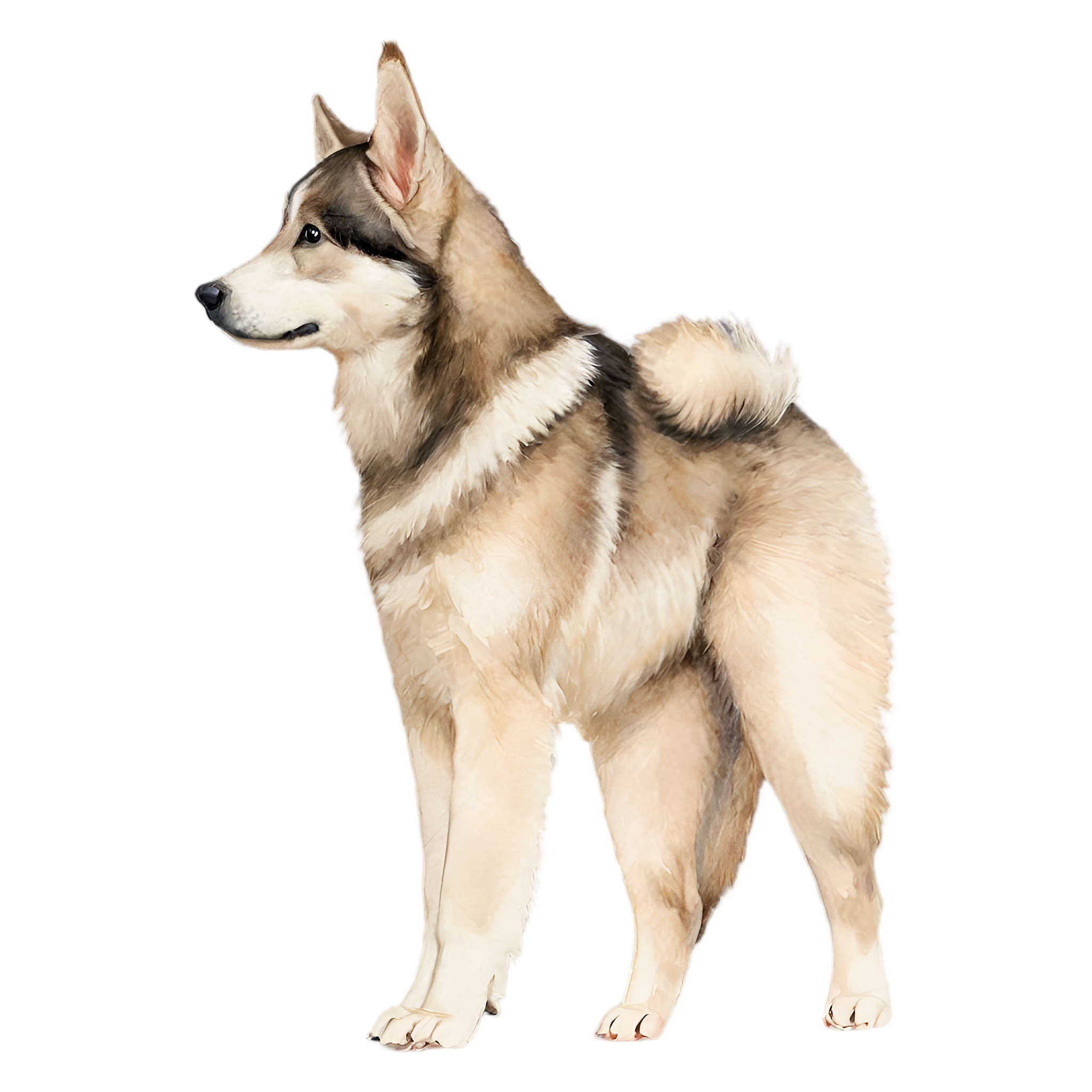
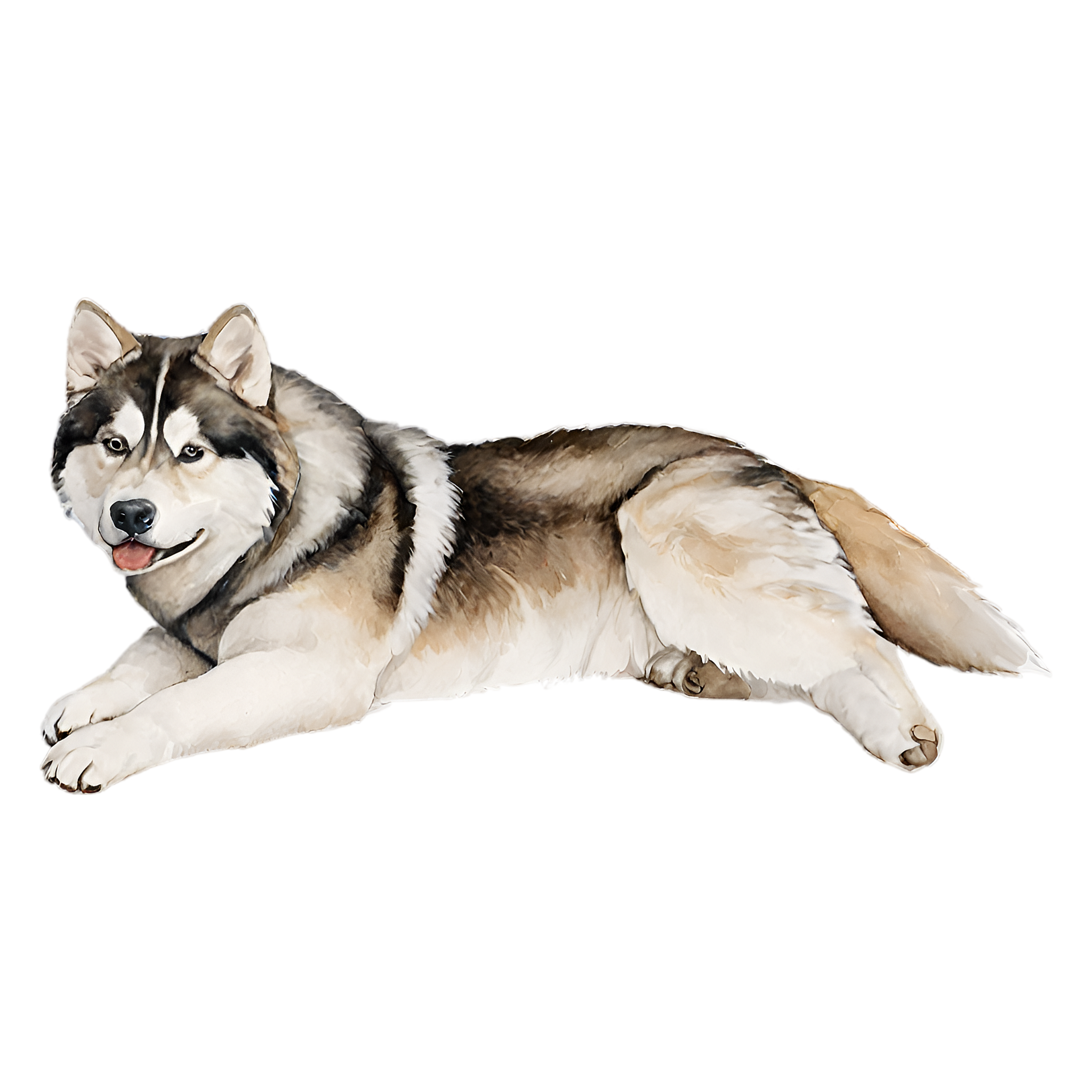
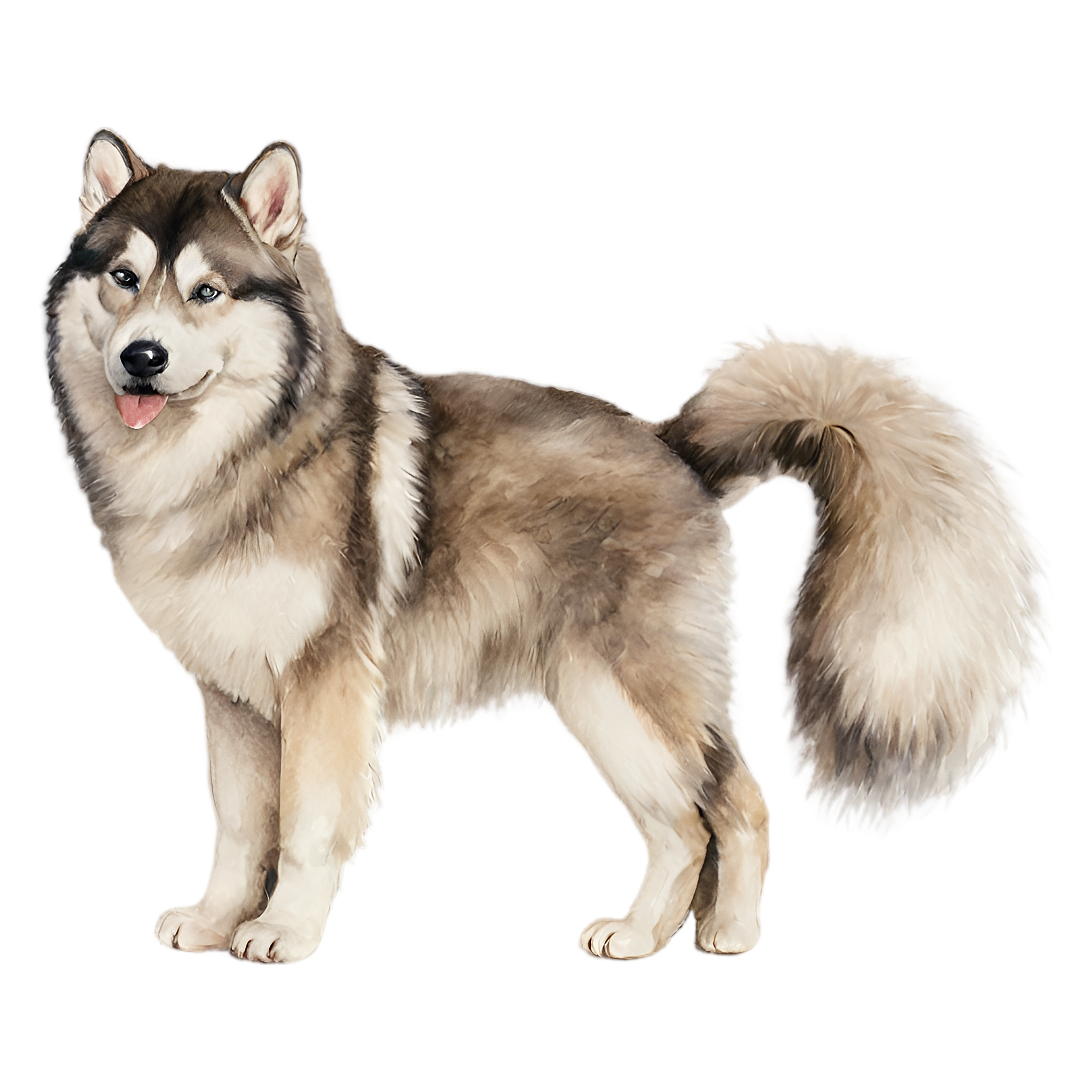
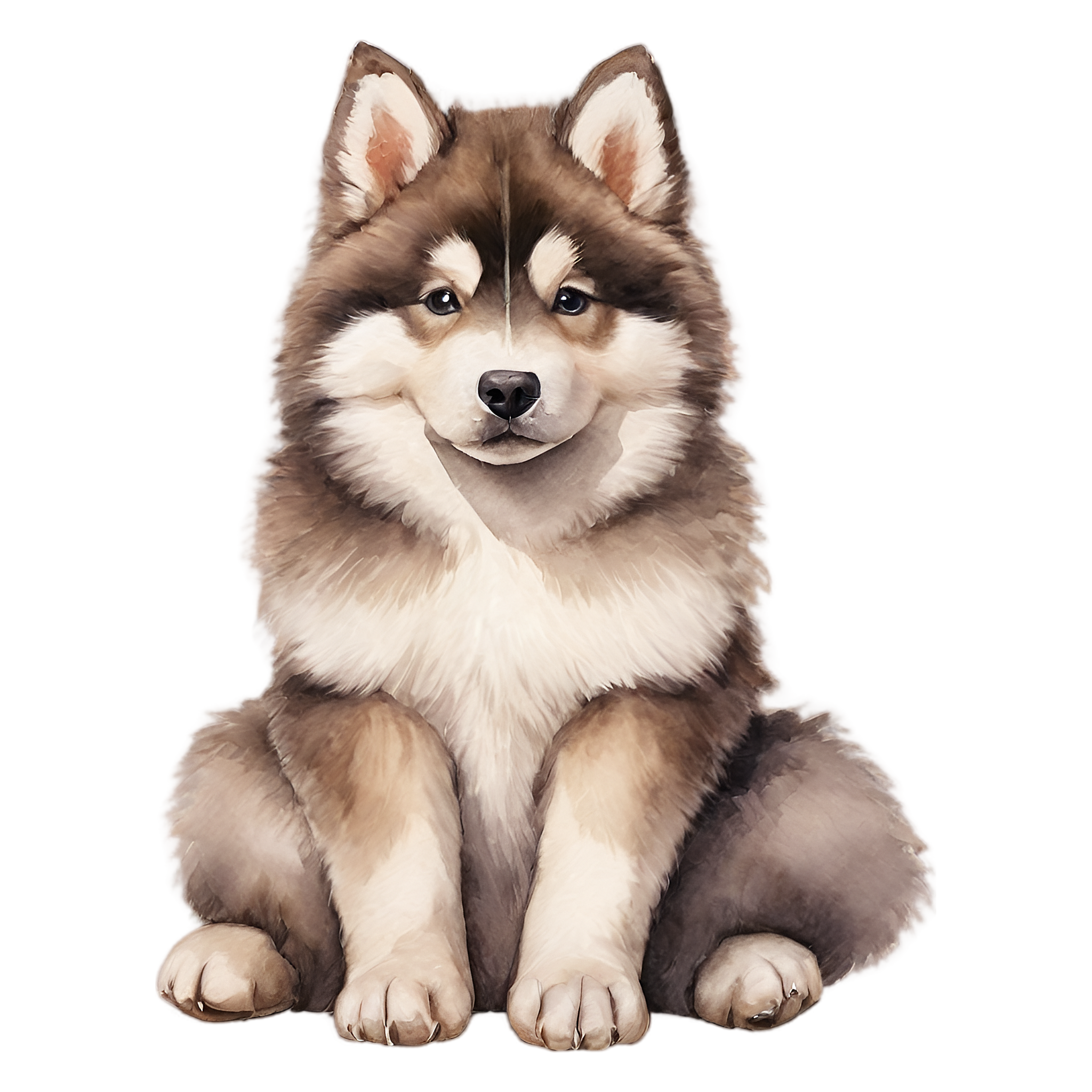
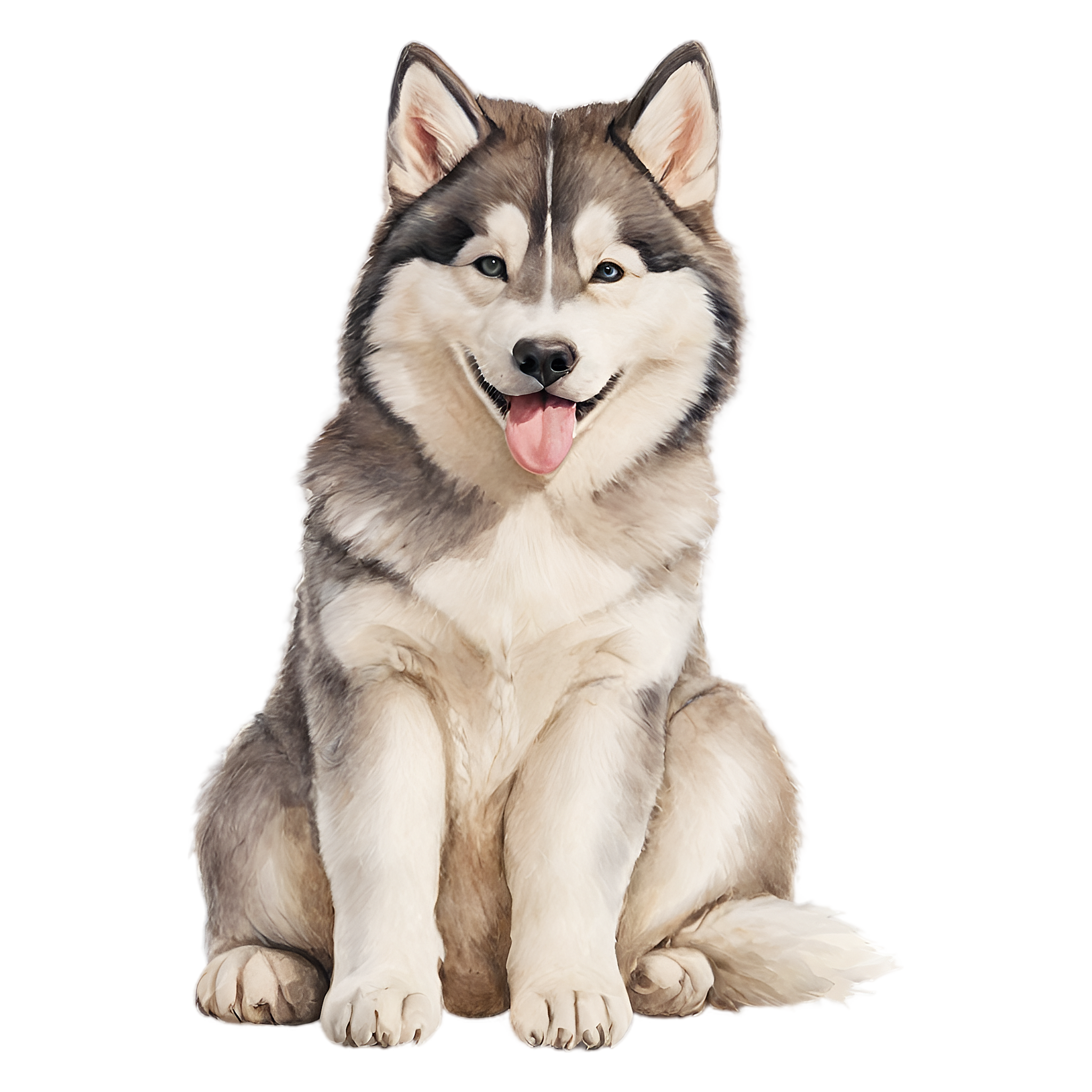
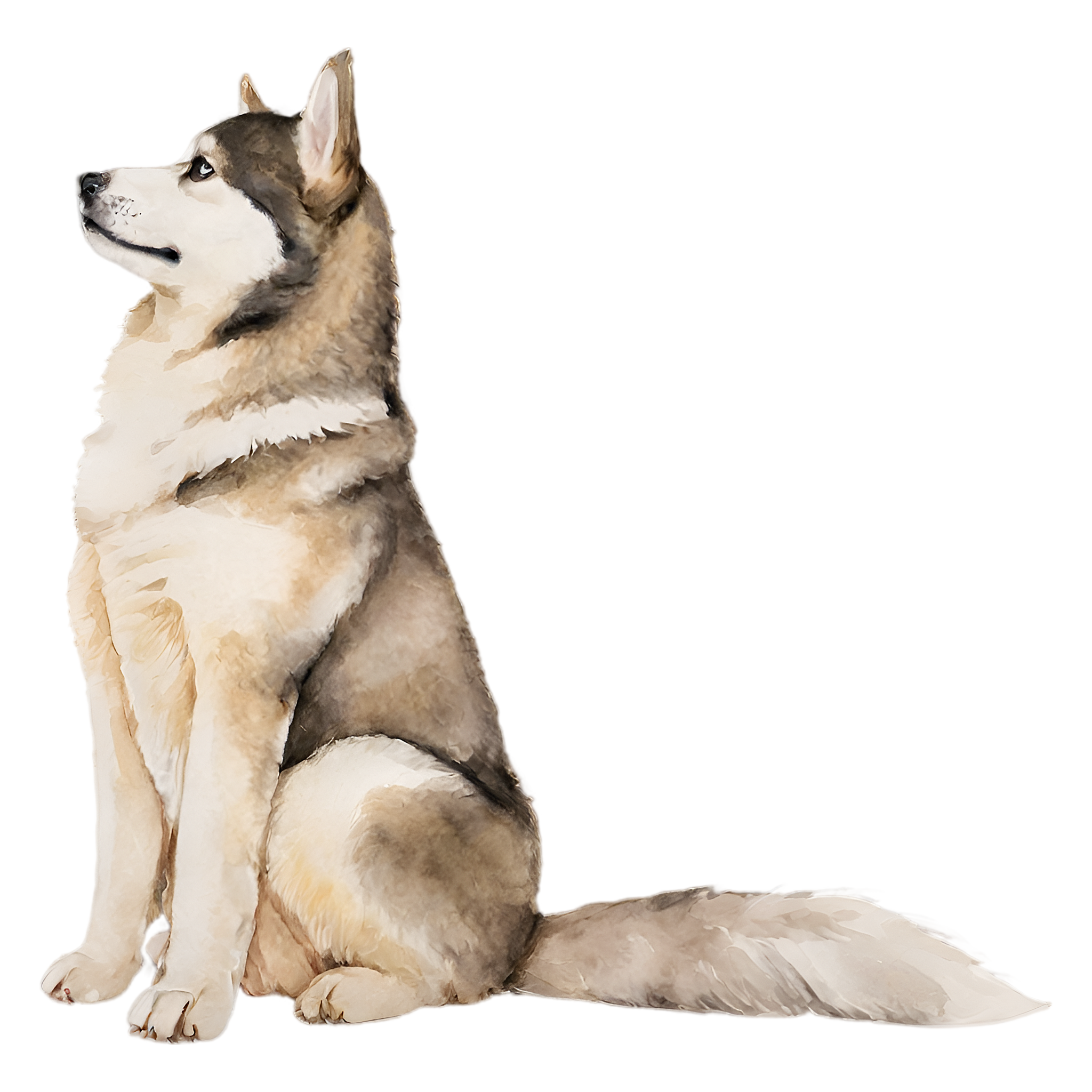
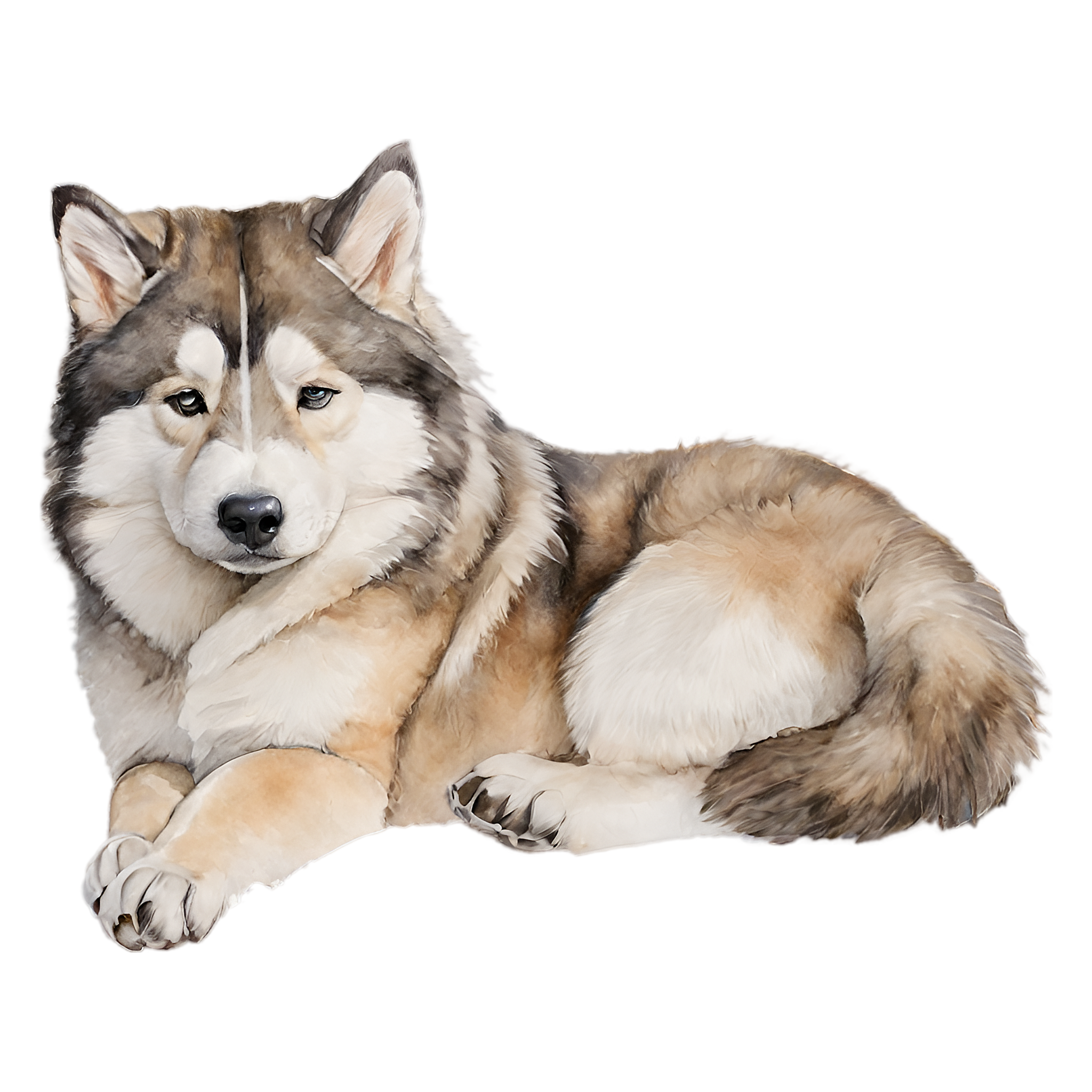
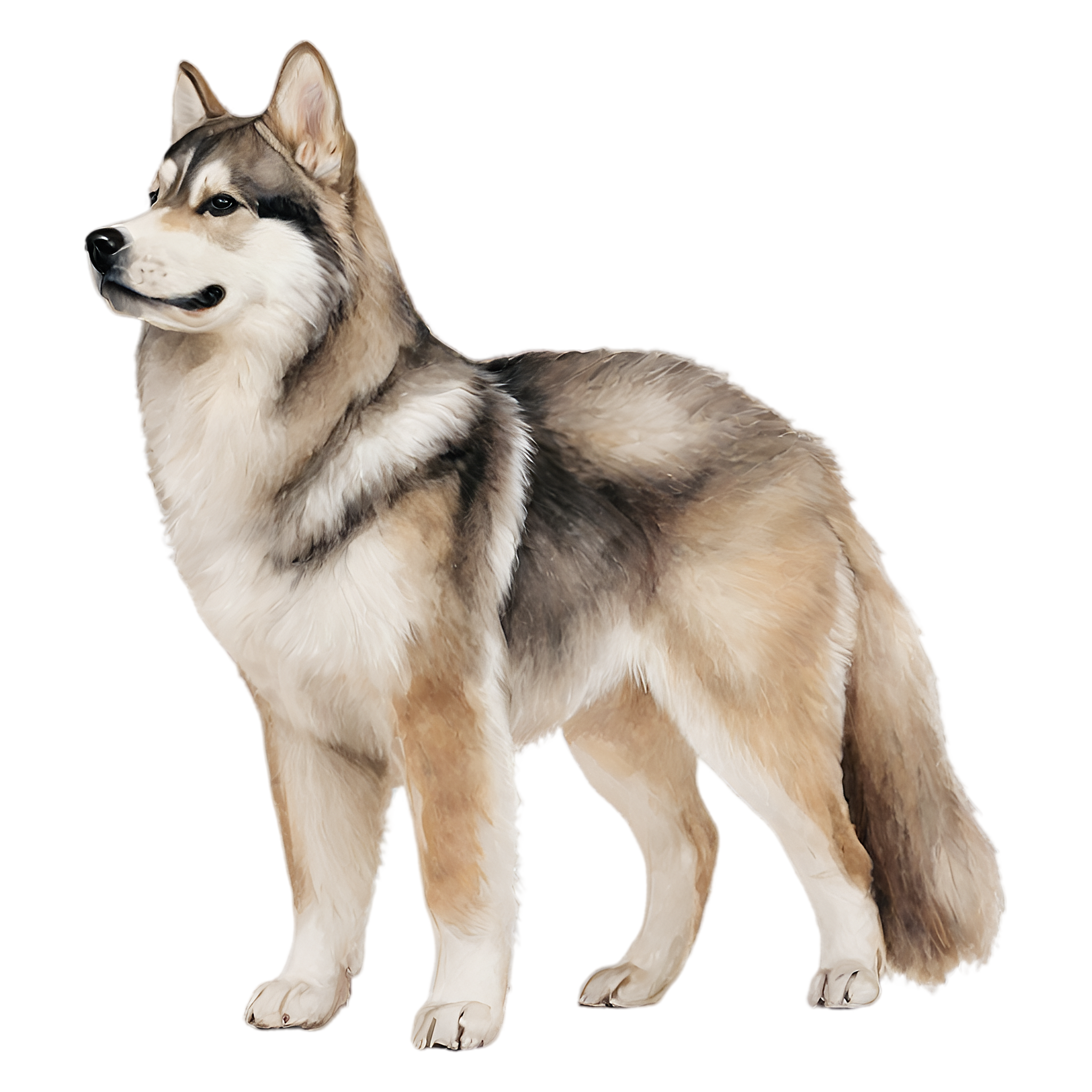
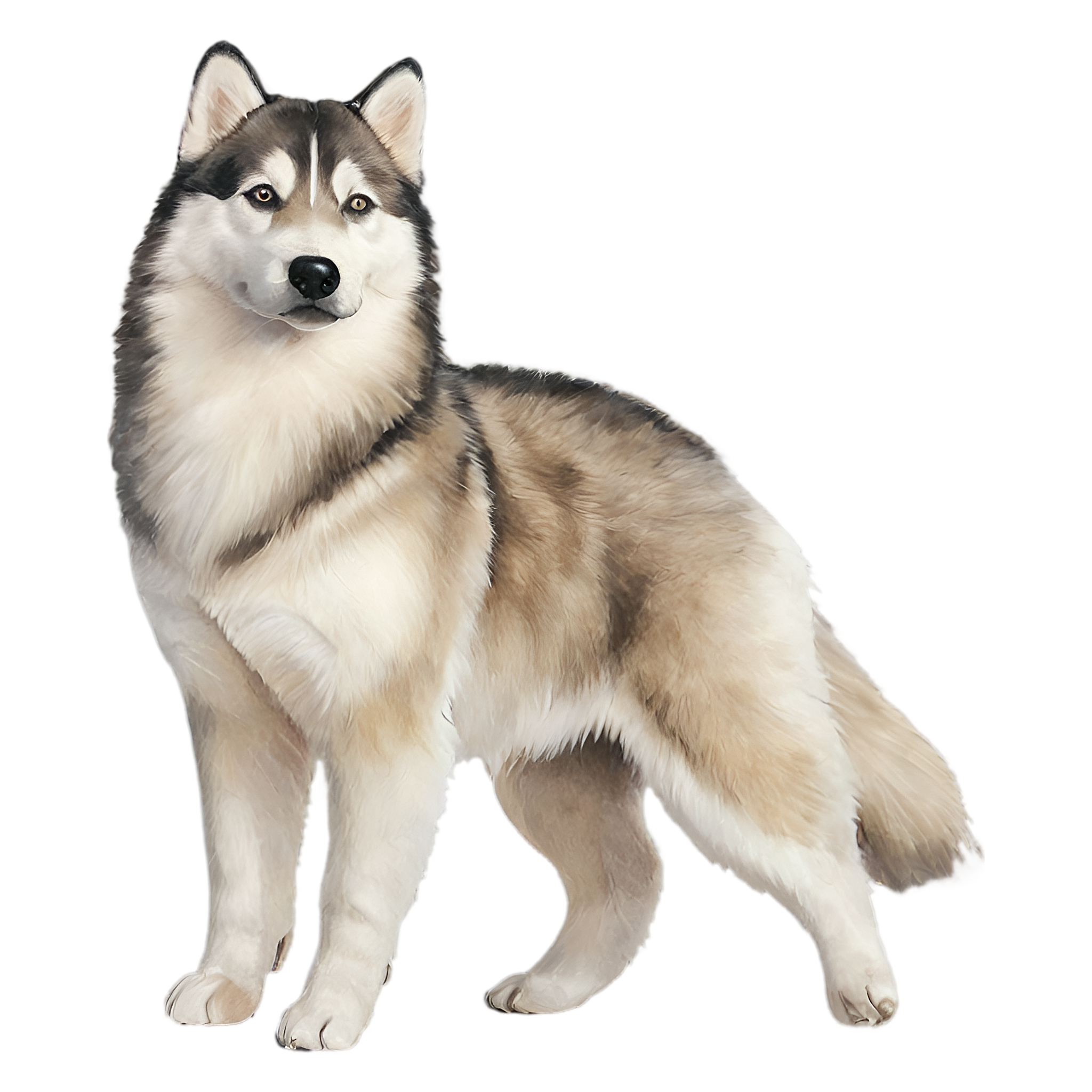
Every dog in the set has the thick gray-and-white coat, so the images look like the same dog across a design. The everyday poses are a sitting dog in side profile, a seated dog facing forward with a thick ruff around the neck, a full-body standing side view, an alert three-quarter stand, and a dog walking. For relaxed scenes there is a malamute lying down with paws stretched forward. One image shows off the breed's trademark plumed tail curled over the back. Two capture personality, a head tilt and an open-mouth smile, and the set closes with a fluffy malamute puppy sitting, which suits new-puppy and breeder material.
Winter cards, sled-dog events and Alaska gifts
A malamute in deep fur says winter without any snowflakes in the frame. Use the sitting and smiling poses on holiday cards and winter birthday invitations, and the walking or standing dog on posters for sled-dog demonstrations, skijoring clubs and winter carnival events. Alaska gift shops and tour companies can use the state dog on postcards, magnets and souvenir stickers. Breeders, rescue groups and Nordic breed clubs can put the puppy on adoption flyers and litter announcements. Owners order custom mugs, ornaments and pet memorial keepsakes, and the curled-tail pose is the one that makes a malamute owner recognize their own dog.
Cool grays with warm mocha shading
The coats are gray and white with warm beige and mocha shading in the fur; the closest DMC floss matches are 3033 Mocha Brown Very Light, 3032 Mocha Brown Medium and 648 Beaver Gray Light. That keeps the dogs from looking cold on white paper, and they also sit well on icy blue or forest green backgrounds. Add a pine cone or two for a winter cabin card. For a multi-dog household, the Border Collie and Golden Retriever sets match the poses here, and the mixed watercolor dogs include Siberian Huskies for a side-by-side comparison. Browse the winter clipart hub for snow-season art.
Keeping the fluff readable at small sizes
A malamute's outline is mostly soft fur, so small prints can lose the shape. For stickers, gift tags and phone-case designs, pick a pose with a clear silhouette: the side-profile sit, the standing side view or the curled-tail pose. Save the face-forward sit and head tilt for larger pieces like mugs and canvas prints, where the facial markings carry the likeness. Each file is a transparent PNG at 2048 by 2048 pixels, about 6.8 inches at 300 DPI. For cutting machines, add a white offset of a few millimeters around the dog before print-then-cut so the blade follows a smooth line instead of every wisp of fur. For an embroidered portrait, the palette panel beside each image lists its DMC floss matches, so the stitched coat can follow the same gray and mocha tones.