Lavender in the field: species, season and scent
Lavender (Lavandula) is a shrubby member of the mint family from the Mediterranean region. The two kinds most people grow are English lavender (L. angustifolia), compact and sweet-scented, and lavandin (L. × intermedia), a taller hybrid farmed on a large scale for its oil. Spanish lavender (L. stoechas) is the odd one out, with a short, fat flower head topped by petal-like bracts that stick up like rabbit ears. Lavender needs sun and well-drained soil and dislikes wet roots. The famous fields of Provence bloom from late June into July, when the harvest begins, and lavender farms in the United States hold their festivals in the same early-summer window. The scent comes mostly from oil glands on the flower buds, which is why dried bundles stay fragrant for months.
Ten single stems, from first buds to a full spike
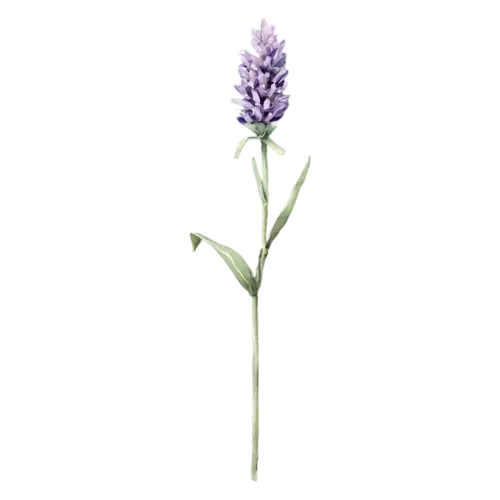
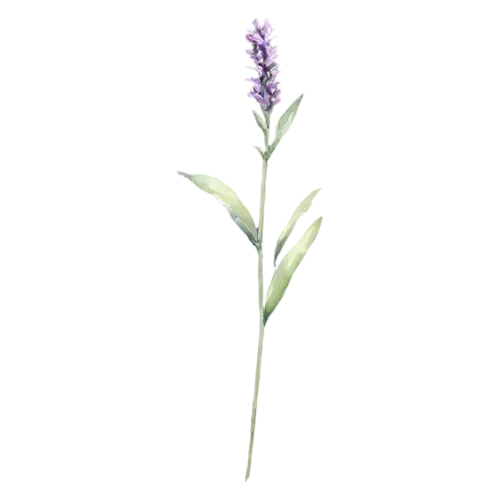
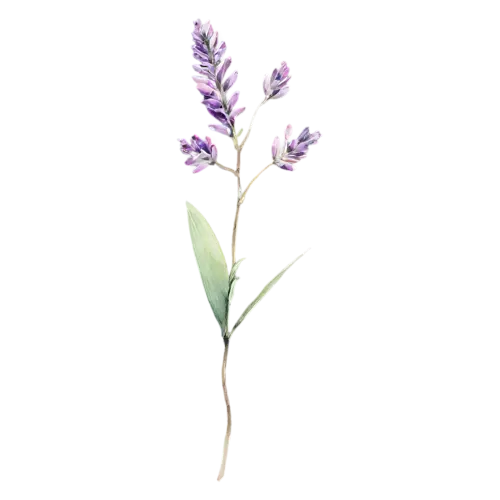
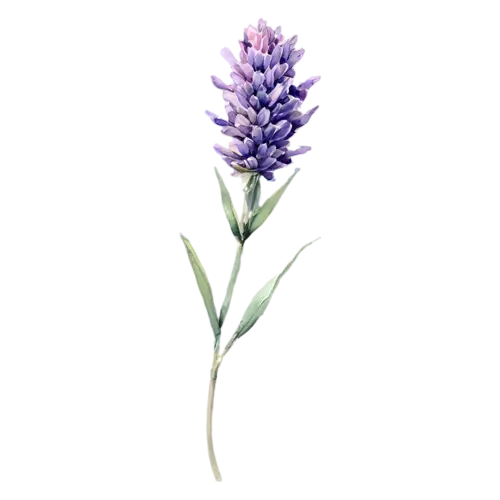
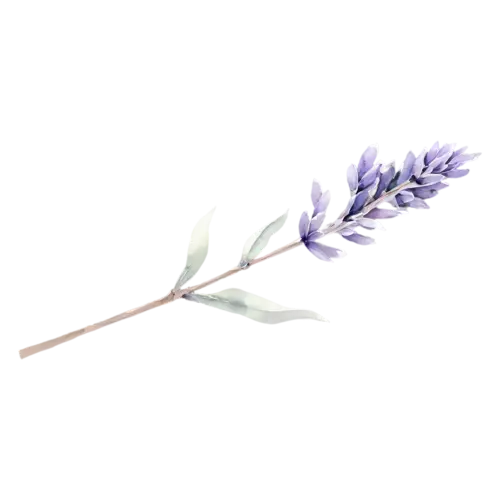
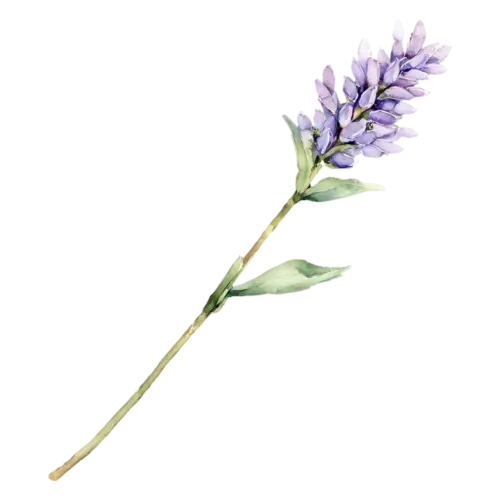
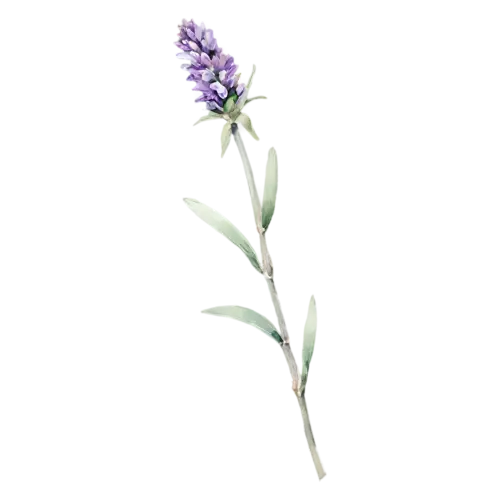
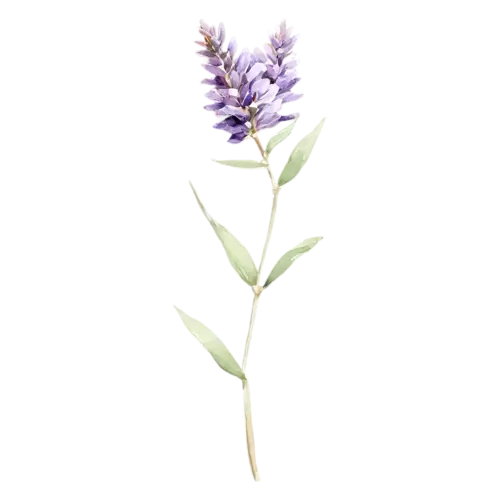
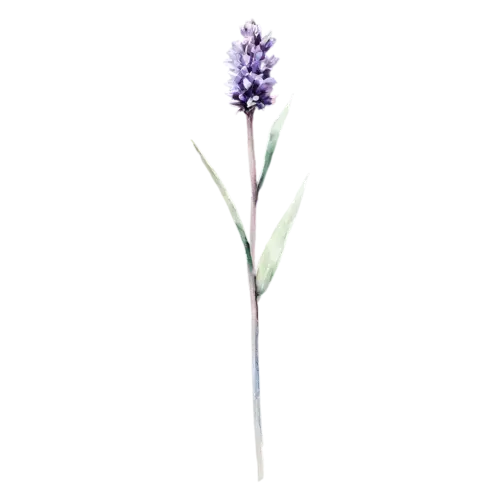
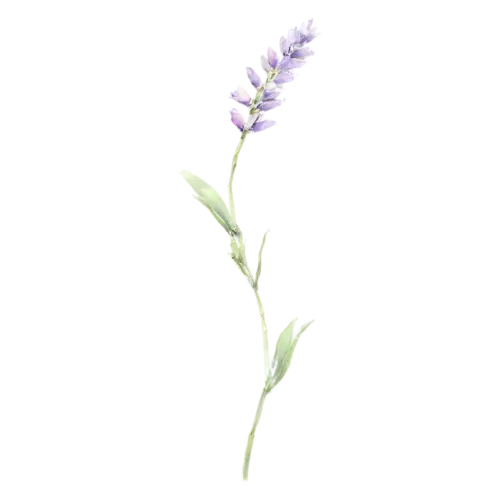
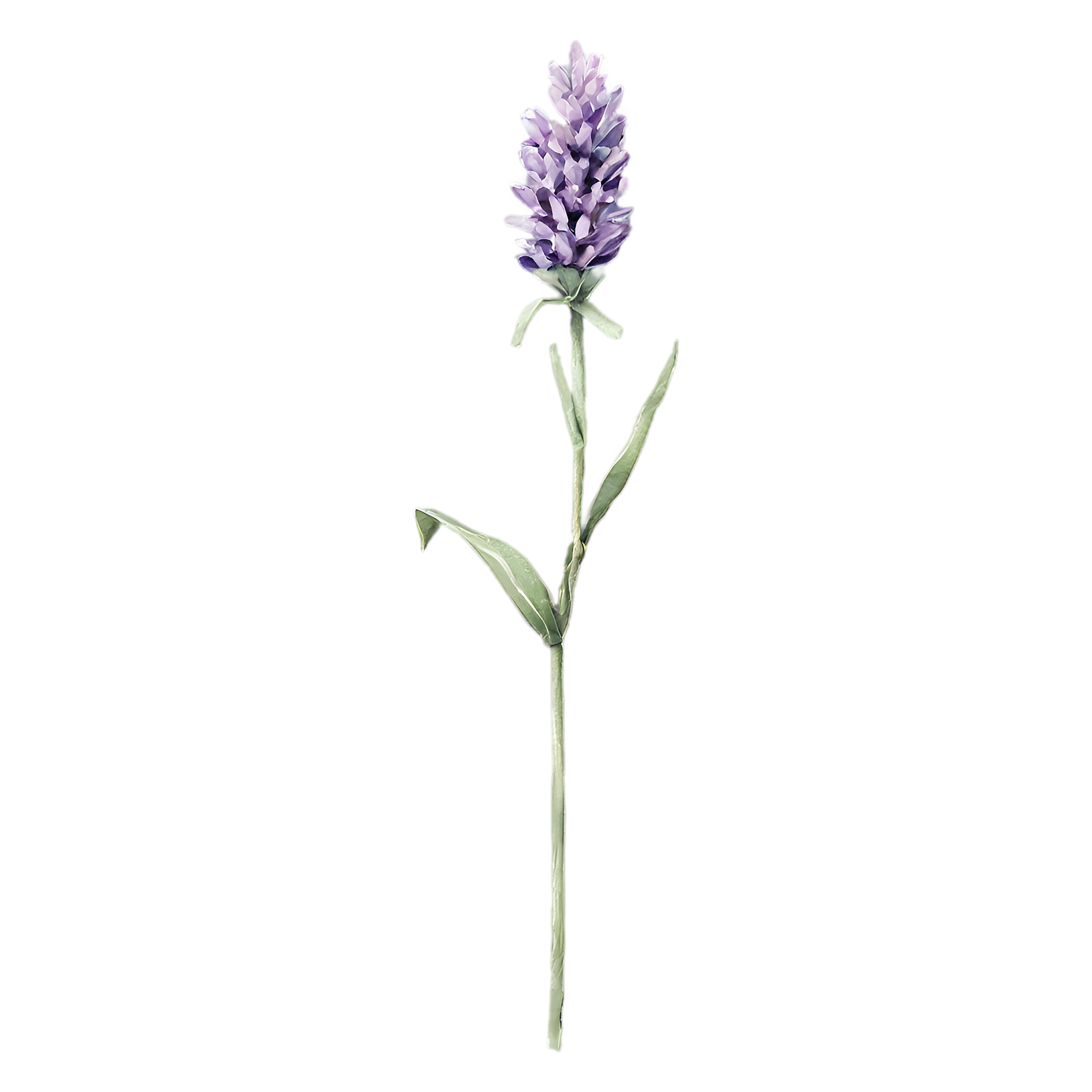
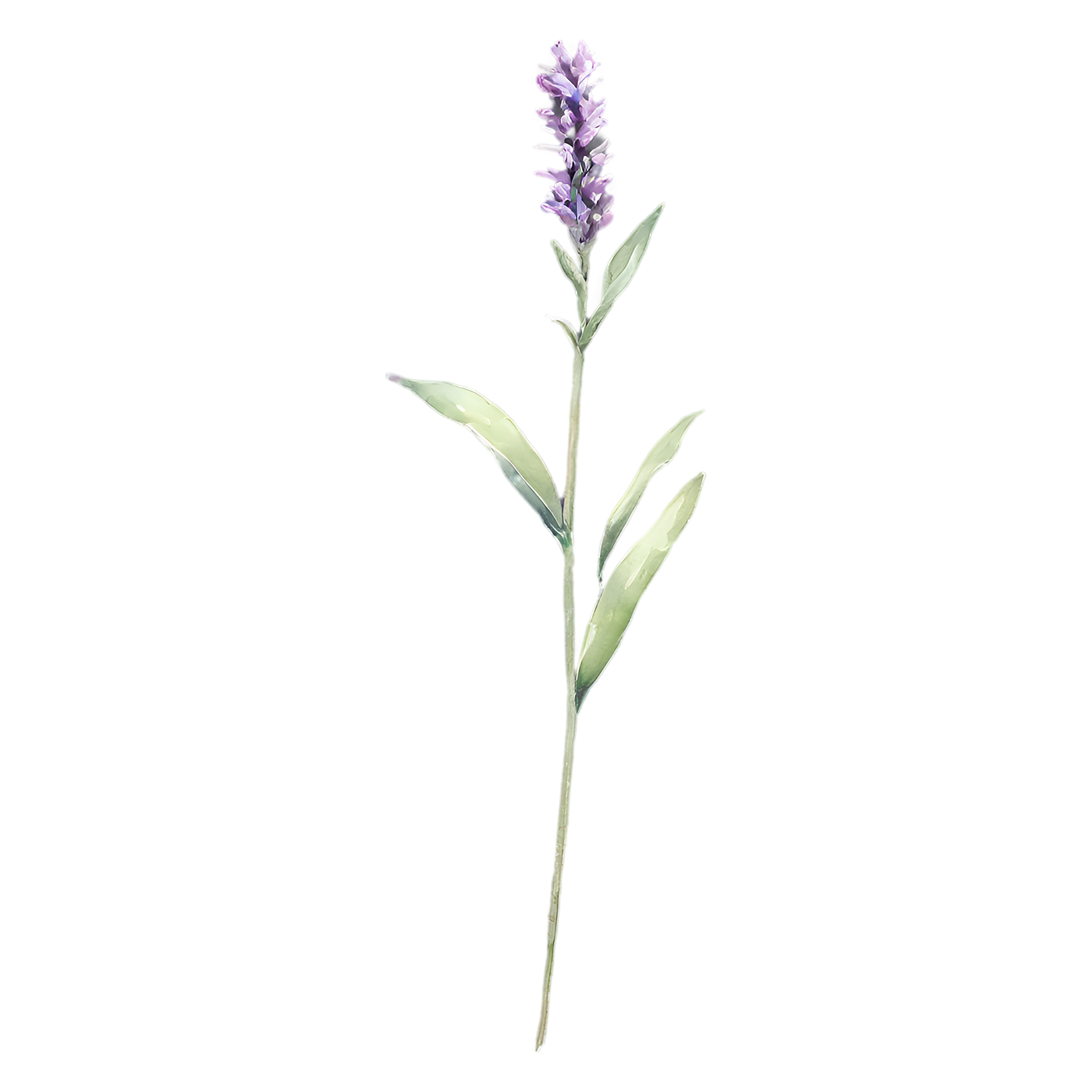
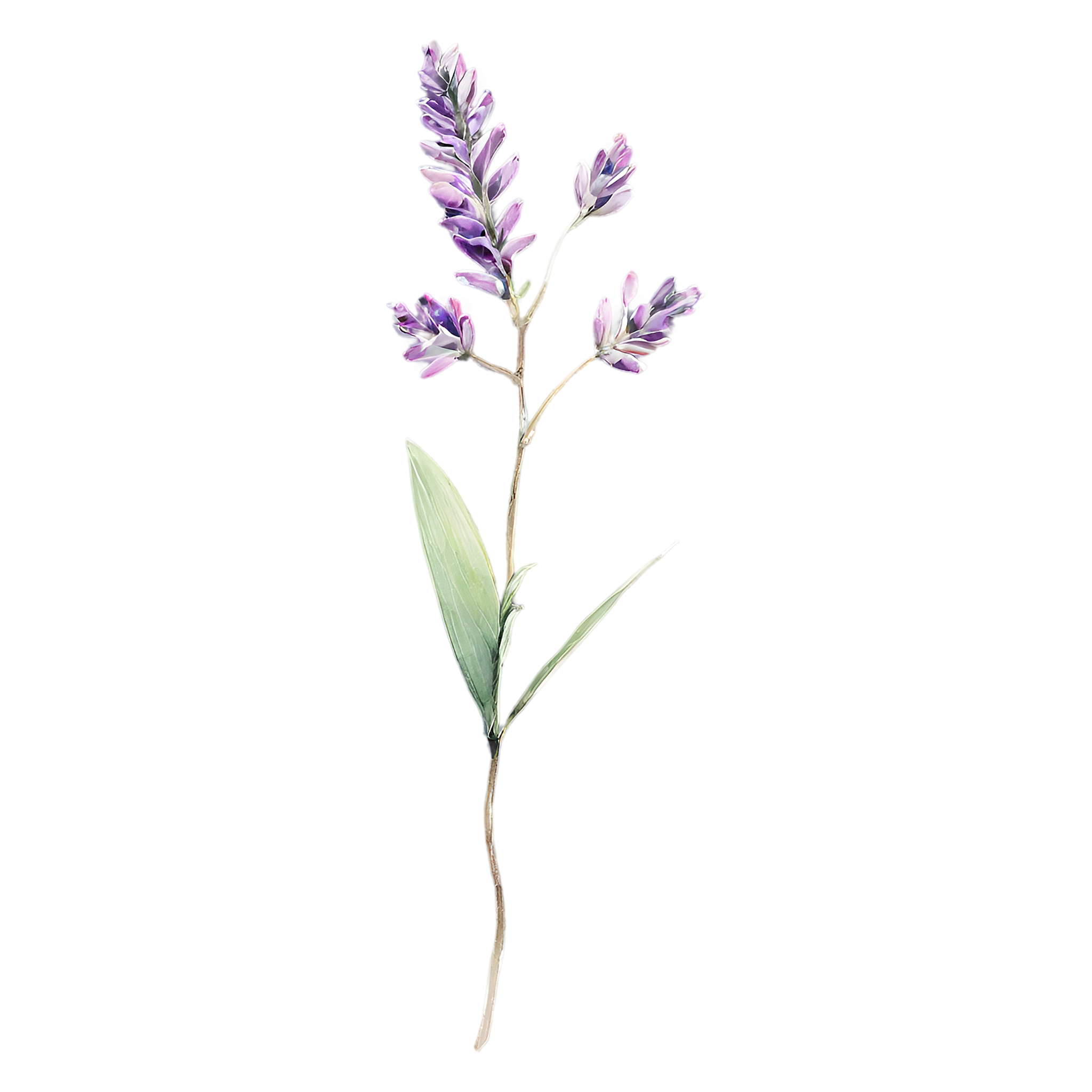
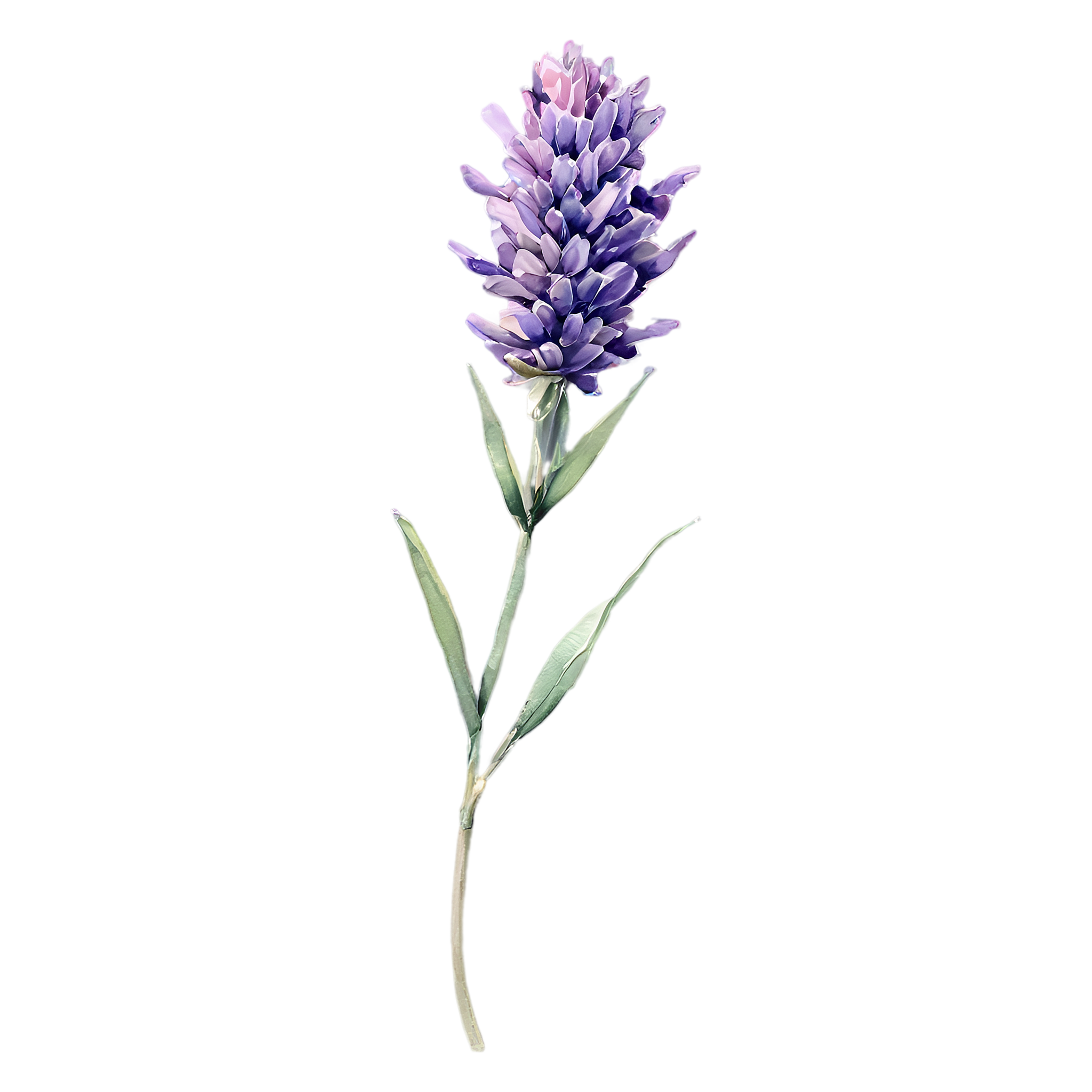
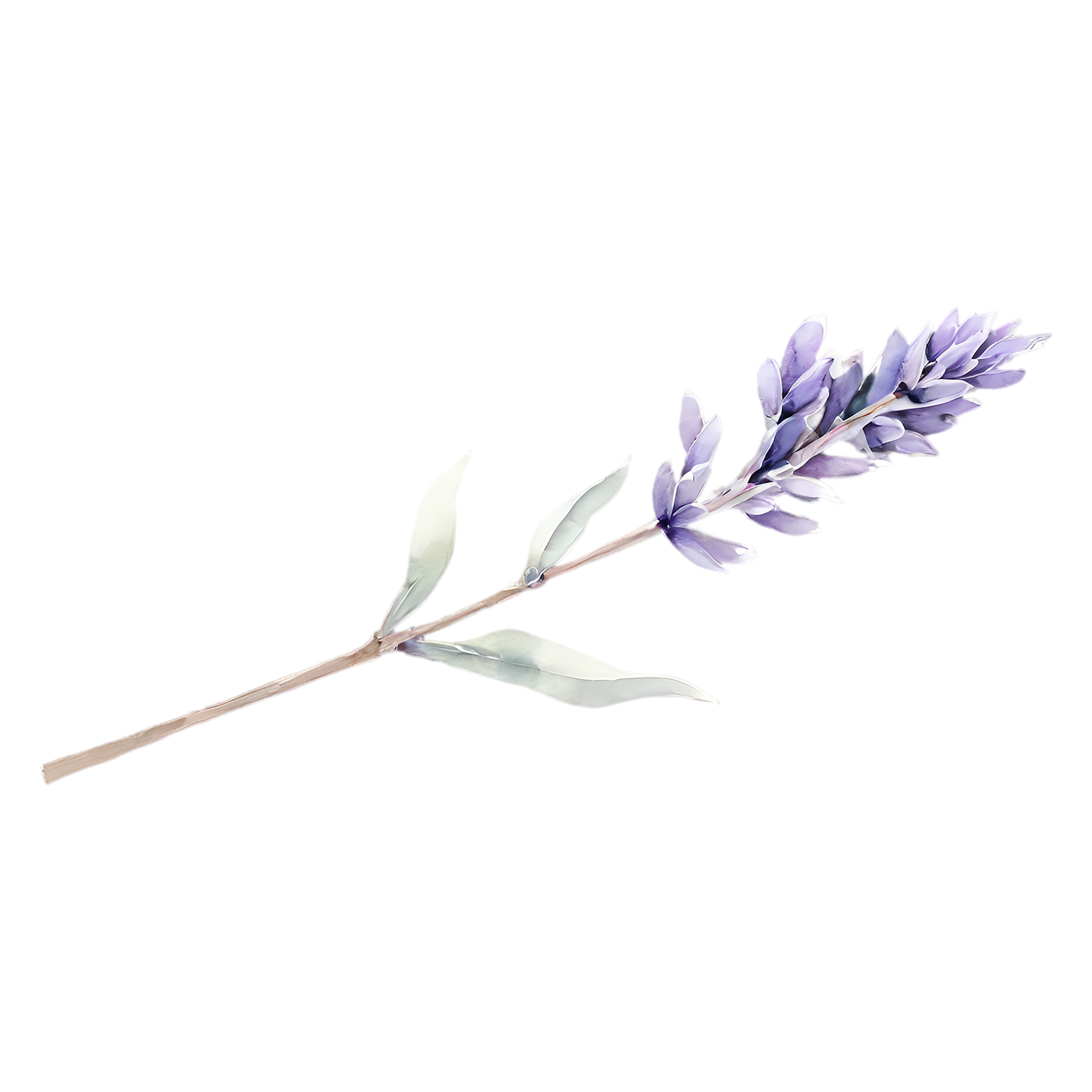
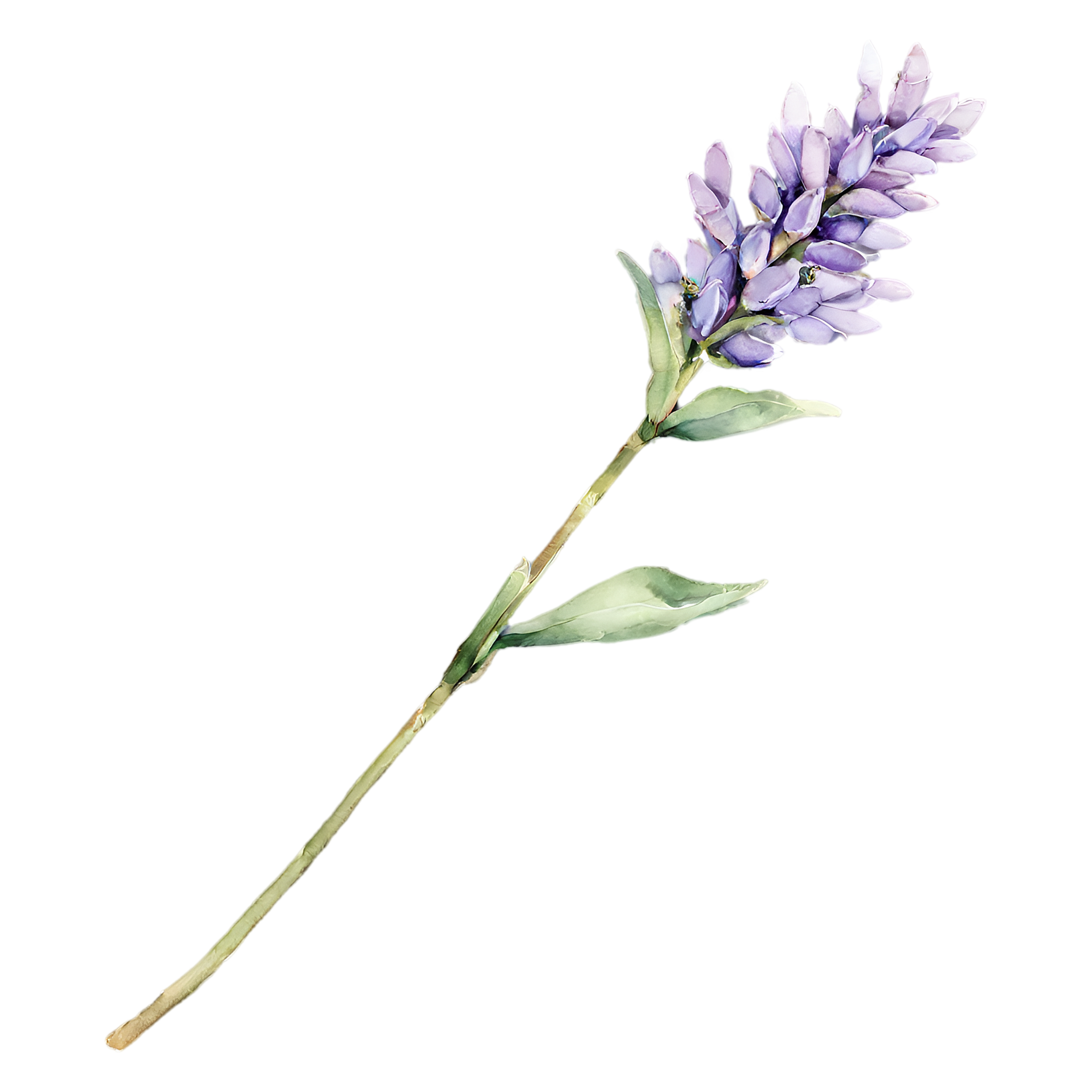
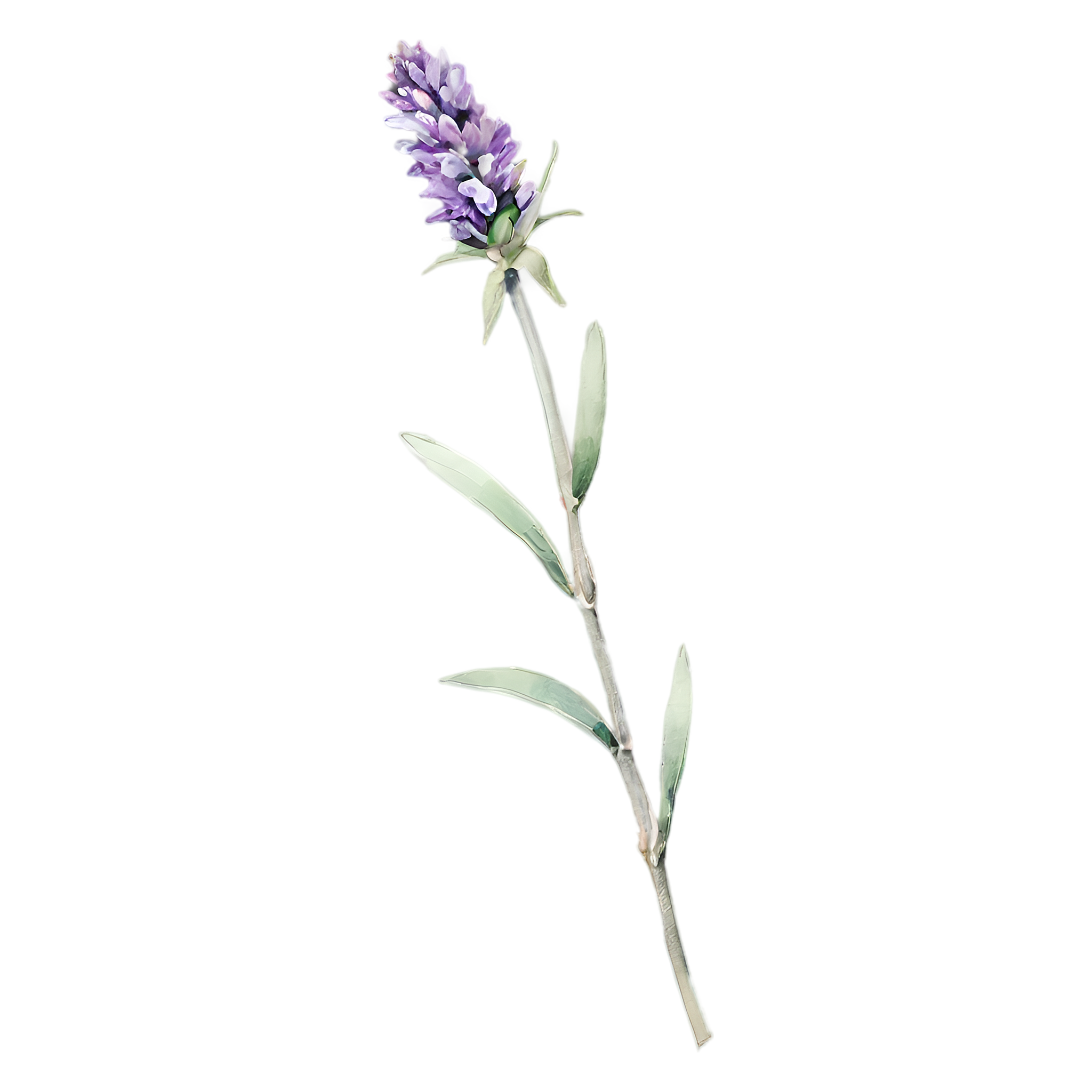
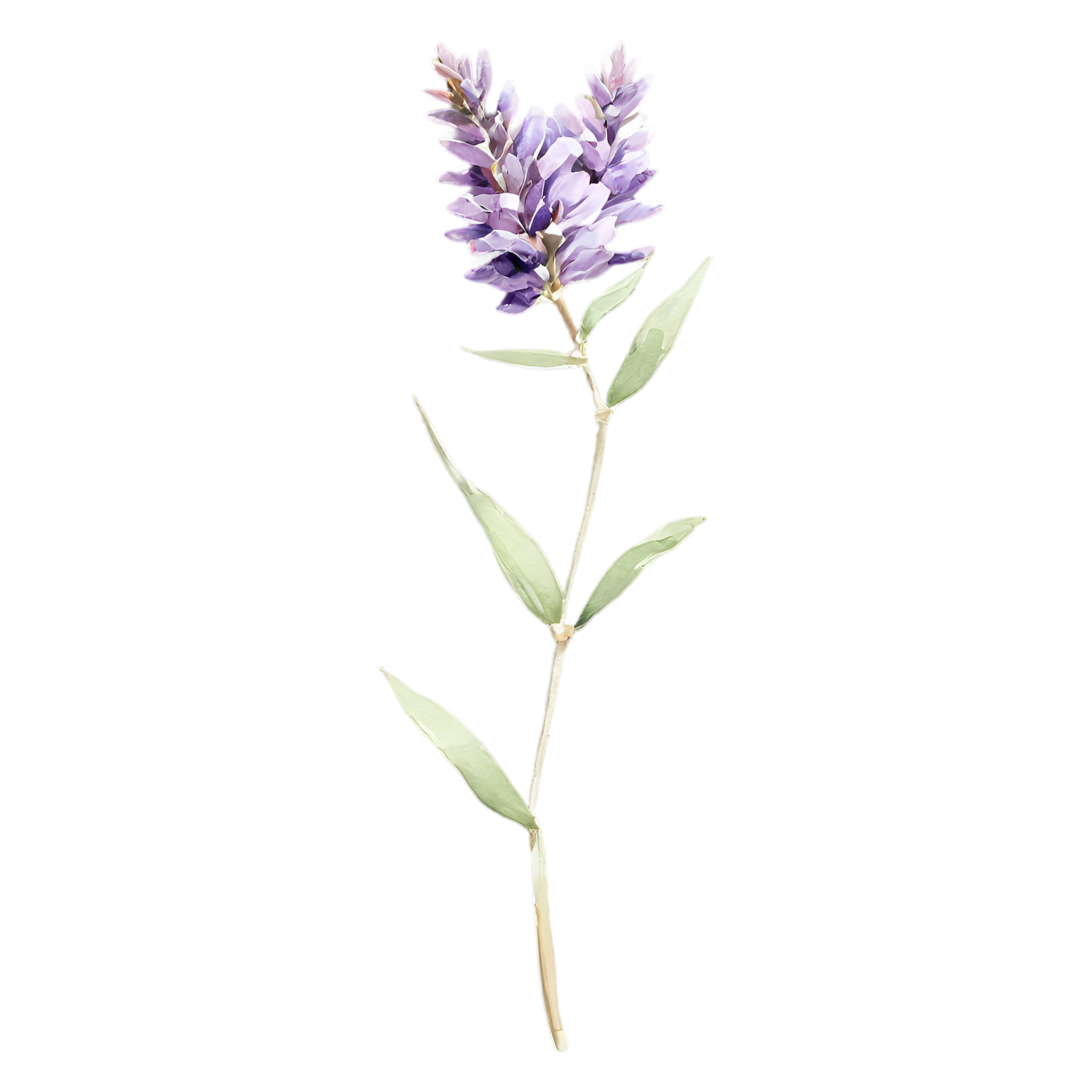
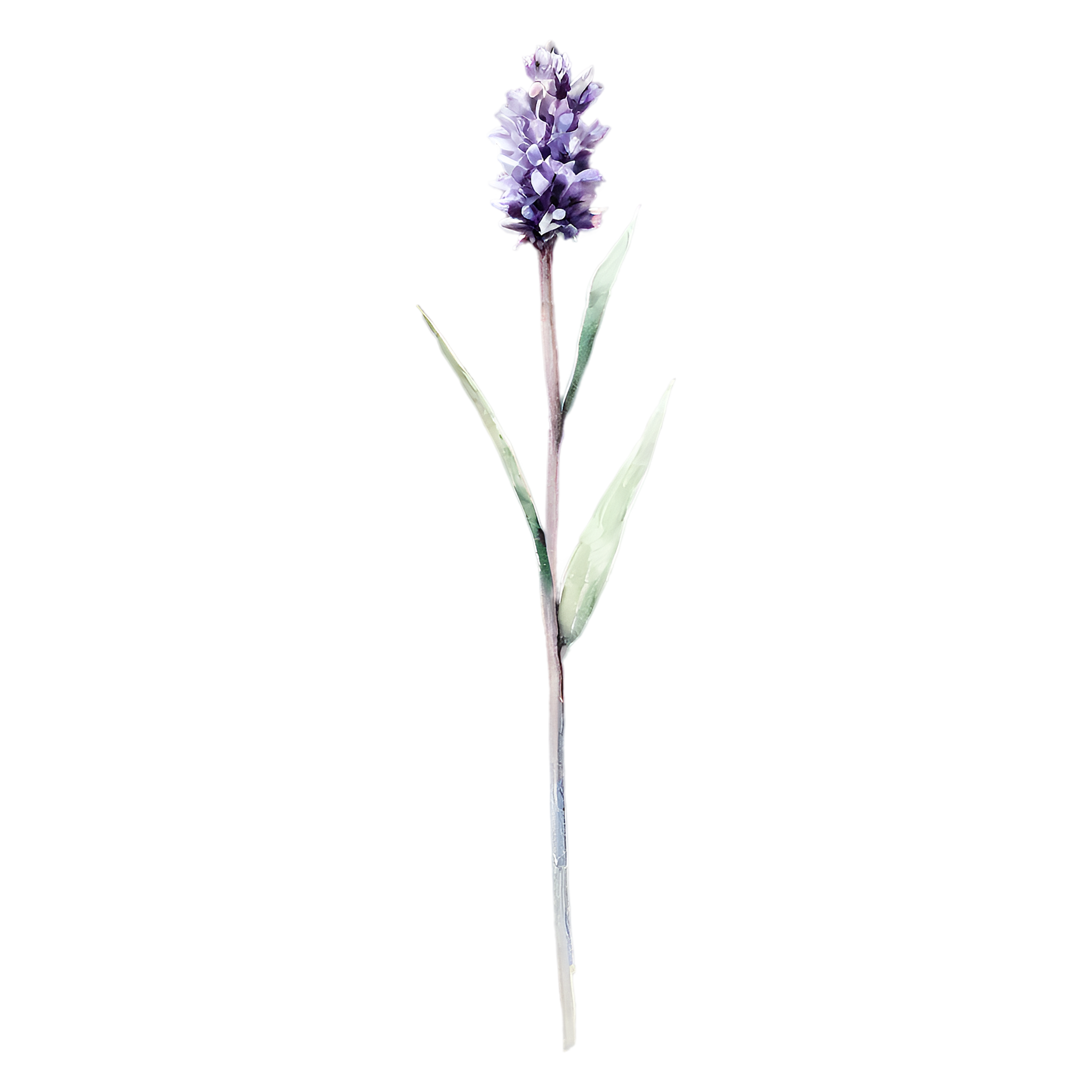
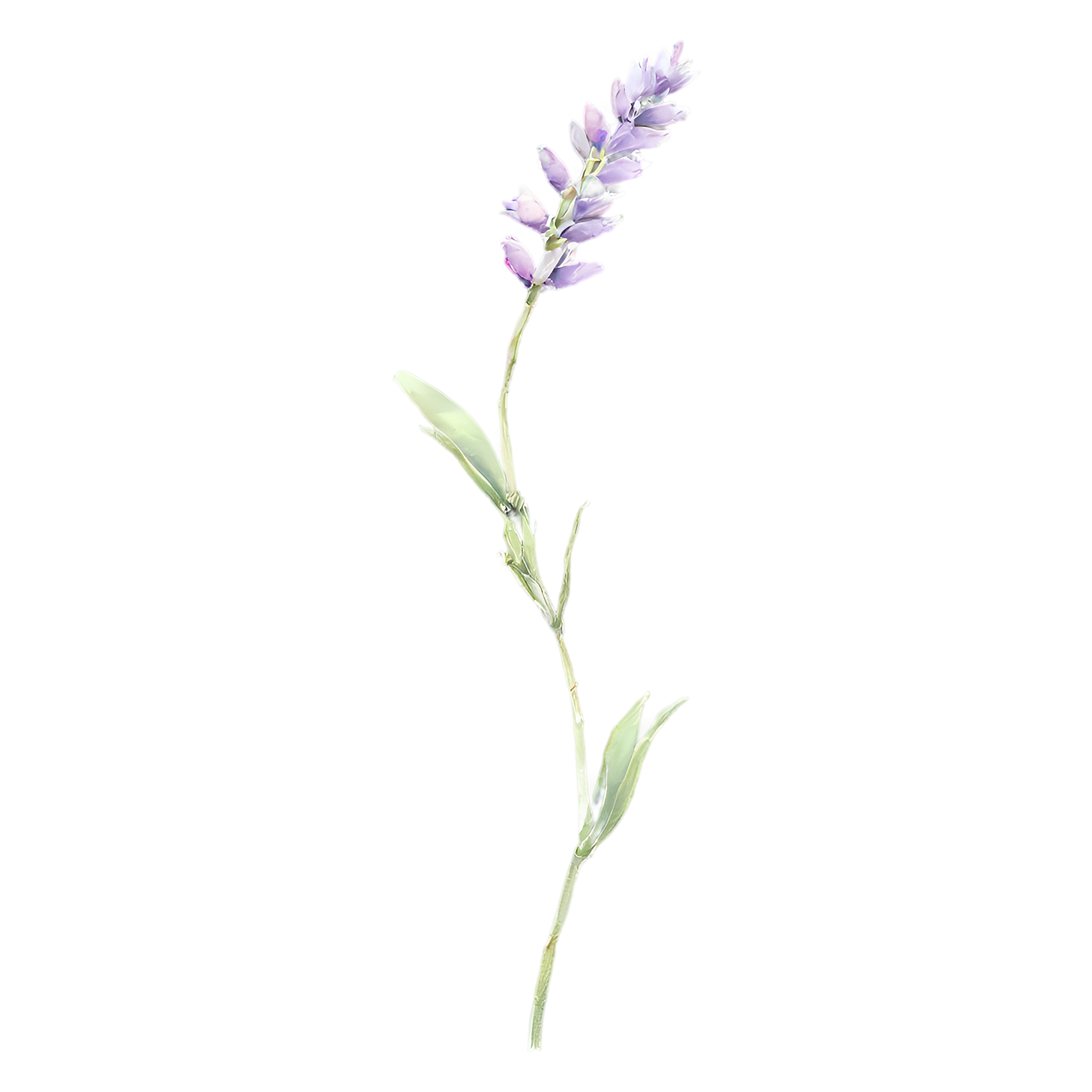
Every image is one stem, so you can use them alone or gather several into a bunch. They follow the bloom from start to finish: a pale purple spike just opening, a short spike with fine foliage, a tall slender spike of tiny flowers, and a full, dense spike in peak bloom. The color shifts from soft lilac with silvery leaves to a deep violet spike. Some stems stand straight up, one curves gently, and one arches under a long flower spike. A slender stem with narrow leaves shows the gray-green foliage clearly. All ten are the long, narrow spike of English lavender and lavandin rather than the tufted Spanish type.
Weddings, bath-and-body labels and lavender-farm flyers
Lavender and sage green is one of the steadiest wedding color pairs, so these stems fit invitation suites, menus, place cards and favor tags for late spring and summer weddings, especially where dried lavender is tossed instead of rice or petals. Bridal showers and Mother's Day cards in May use the same look. Soap makers, candle makers and bath-bomb sellers rely on lavender art for labels, since it is one of the best-known scents in the category, and the stems also suit sachet tags, linen-spray bottles and tea packaging. Lavender farms and u-pick fields need flyers, maps and gift-shop tags for their June and July bloom, and French bistros and Provence-themed parties use the stems on menus and table cards.
Lilac, violet and silvery green
The palette is quiet: lilac and violet spikes over pale gray-green stems, with a lot of soft off-white in the lighter washes. On the page the most frequent DMC matches include 211 Lavender Light for the flowers and 524 Fern Green Very Light and 3348 Yellow Green Light for the stems, plus 762 Pearl Gray Very Light; Copic BV00 Mauve Shadow and G82 Spring Dim Green cover markers. Lavender pairs naturally with blush peonies and garden roses for a wedding bouquet, with silver-green eucalyptus, and with velvety sage, a cousin in the mint family. For more wedding pieces, see the wedding hub.
Tip: bundles, bookmarks and soap bands
Each stem is a 2048 by 2048 pixel transparent PNG, about 6.8 inches square at 300 DPI, and because a single stem fills most of the height, it suits tall narrow formats. A bookmark of 2 by 6 inches or a soap band around a bar takes one stem at nearly full size with no loss of sharpness. For a bundle, overlap five to seven stems with their bases together and fan the tops out at slightly different angles, then mix pale and deep spikes so the bunch has depth. Add a ribbon or twine shape where the stems cross to hide the overlap.