Ten legs, two claws and a sideways walk
Crabs are decapods, which means ten legs: eight walking legs plus a front pair turned into claws, called chelipeds. The body sits under a hard shell called the carapace, and because that shell can't stretch, a crab grows by molting. It backs out of the old shell and pumps up a new, larger one, which stays soft for a short time before it hardens; a blue crab caught in that window is sold as a soft-shell crab. Most crabs walk sideways, since their leg joints bend most easily to the side. The red-orange color in this set is the one most people picture, though many live crabs are not red. The Atlantic blue crab is olive and blue in the water and turns orange-red only when cooked, as heat frees a red pigment called astaxanthin from the proteins that hide it.
Views from above, the side and the front
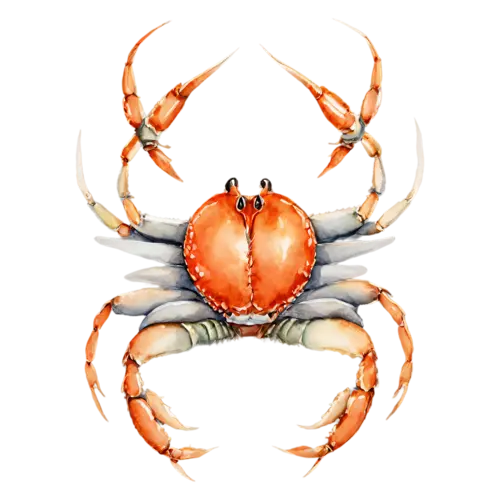
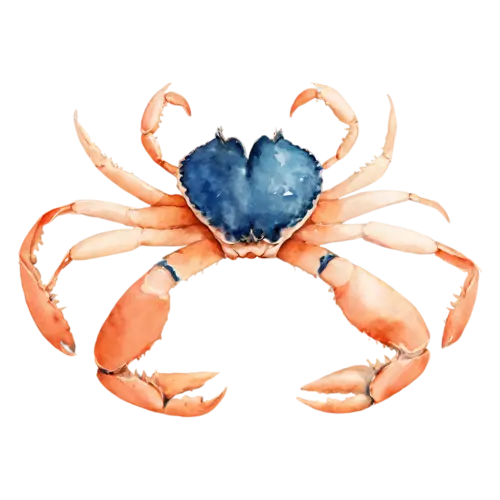
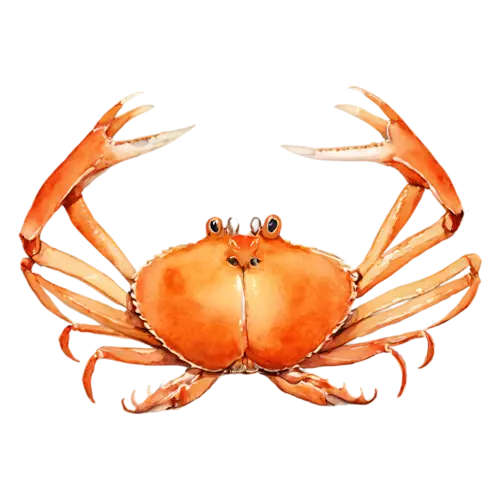
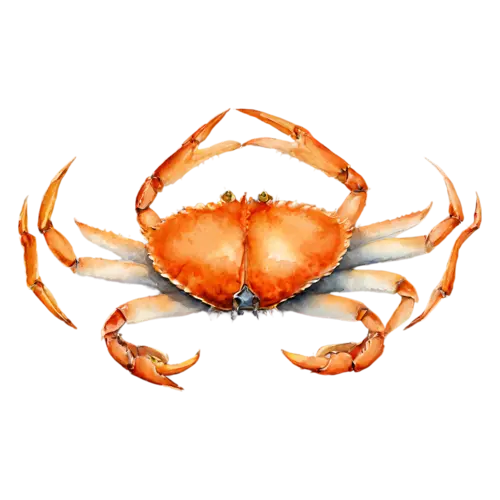
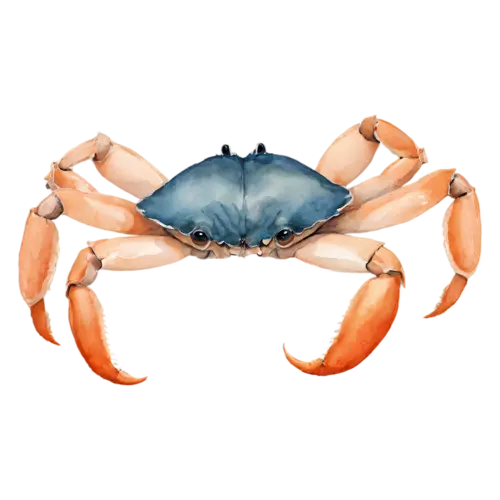
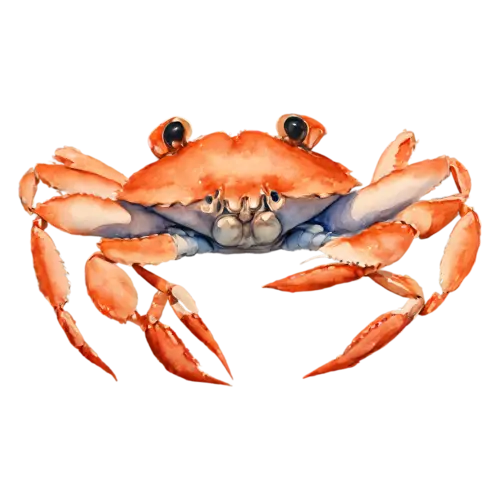
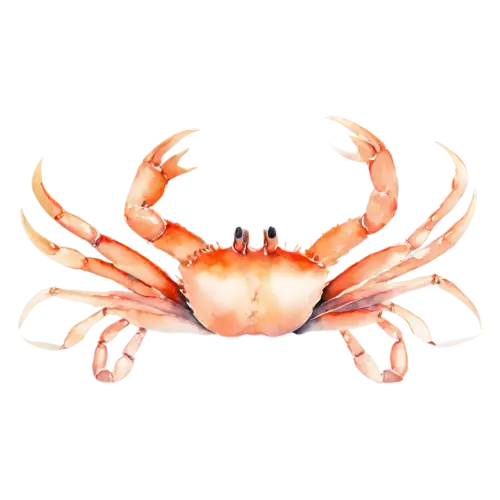
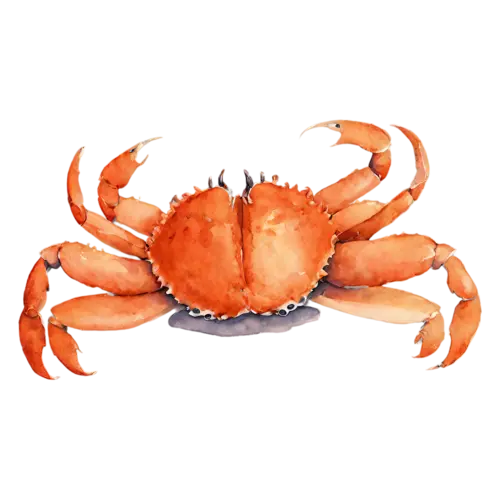
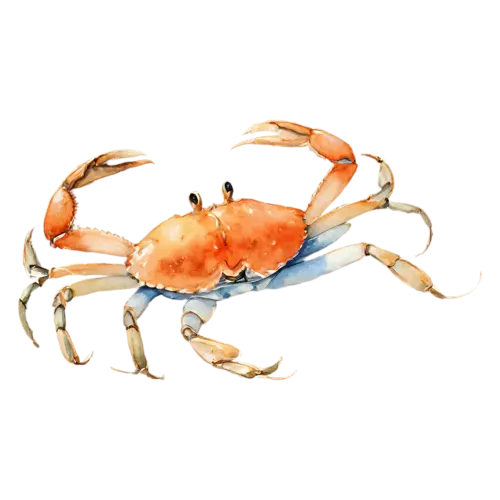
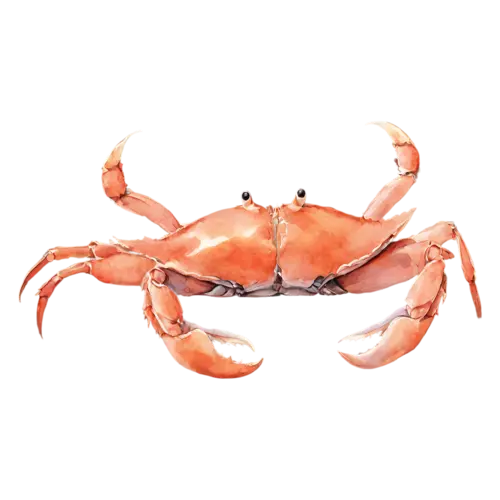
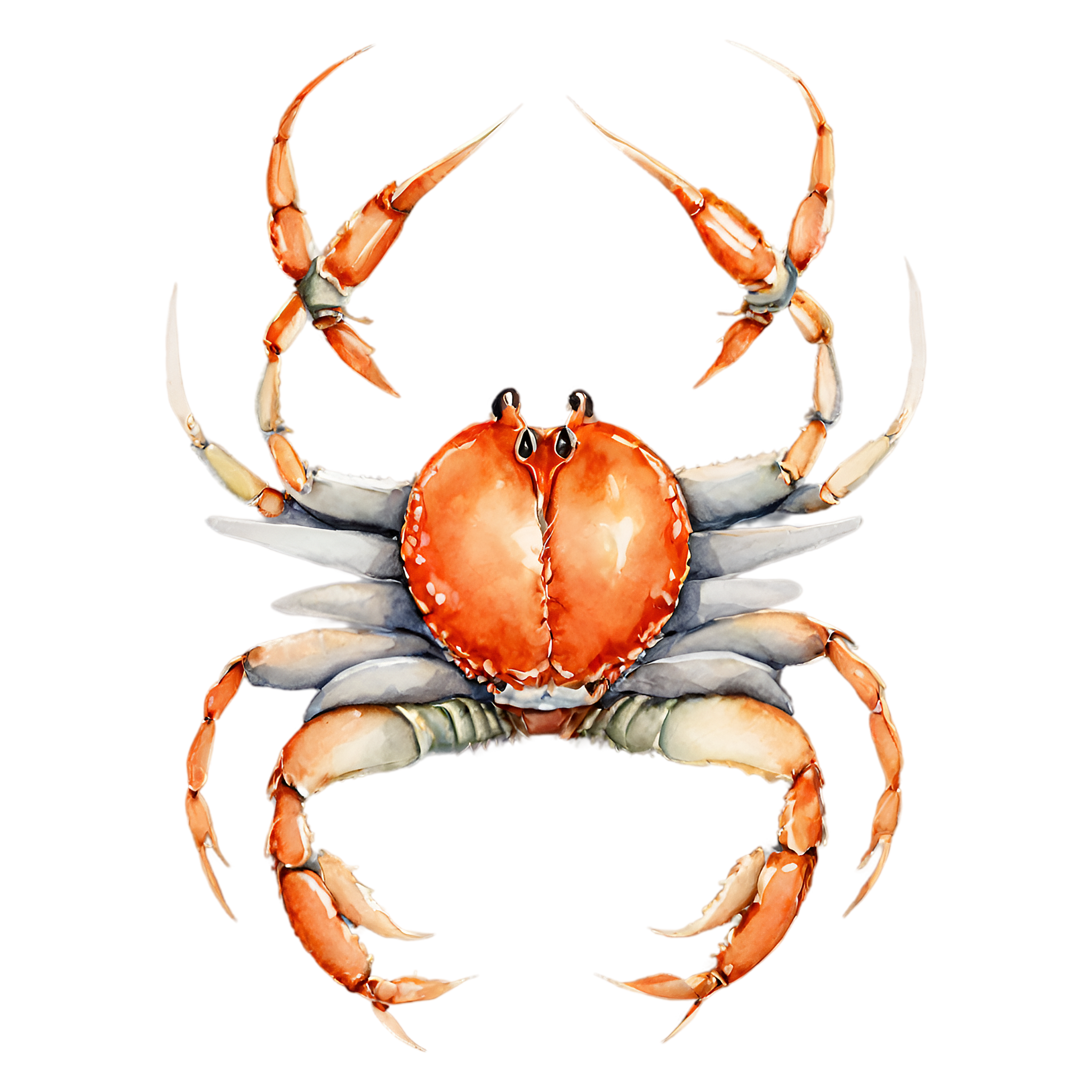
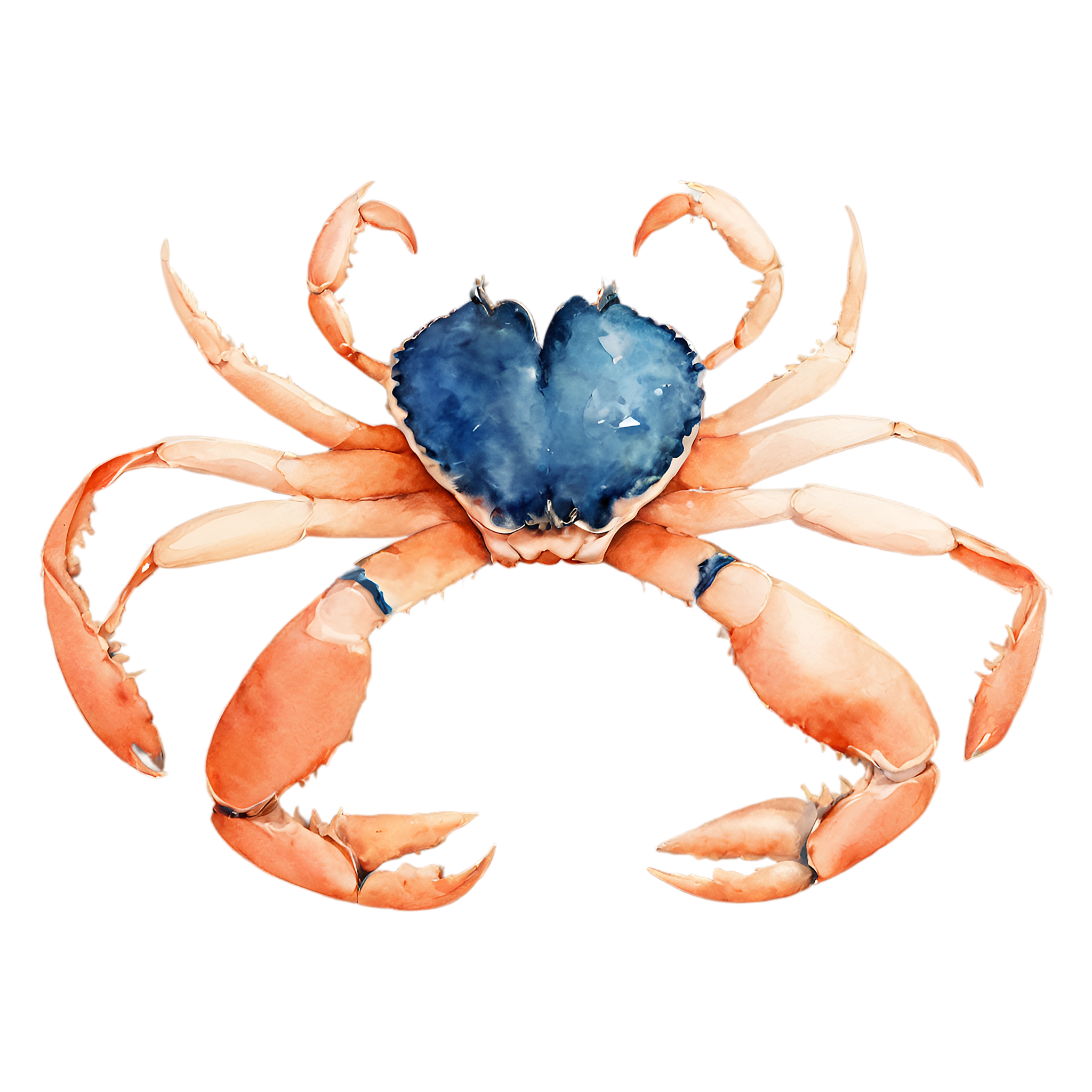
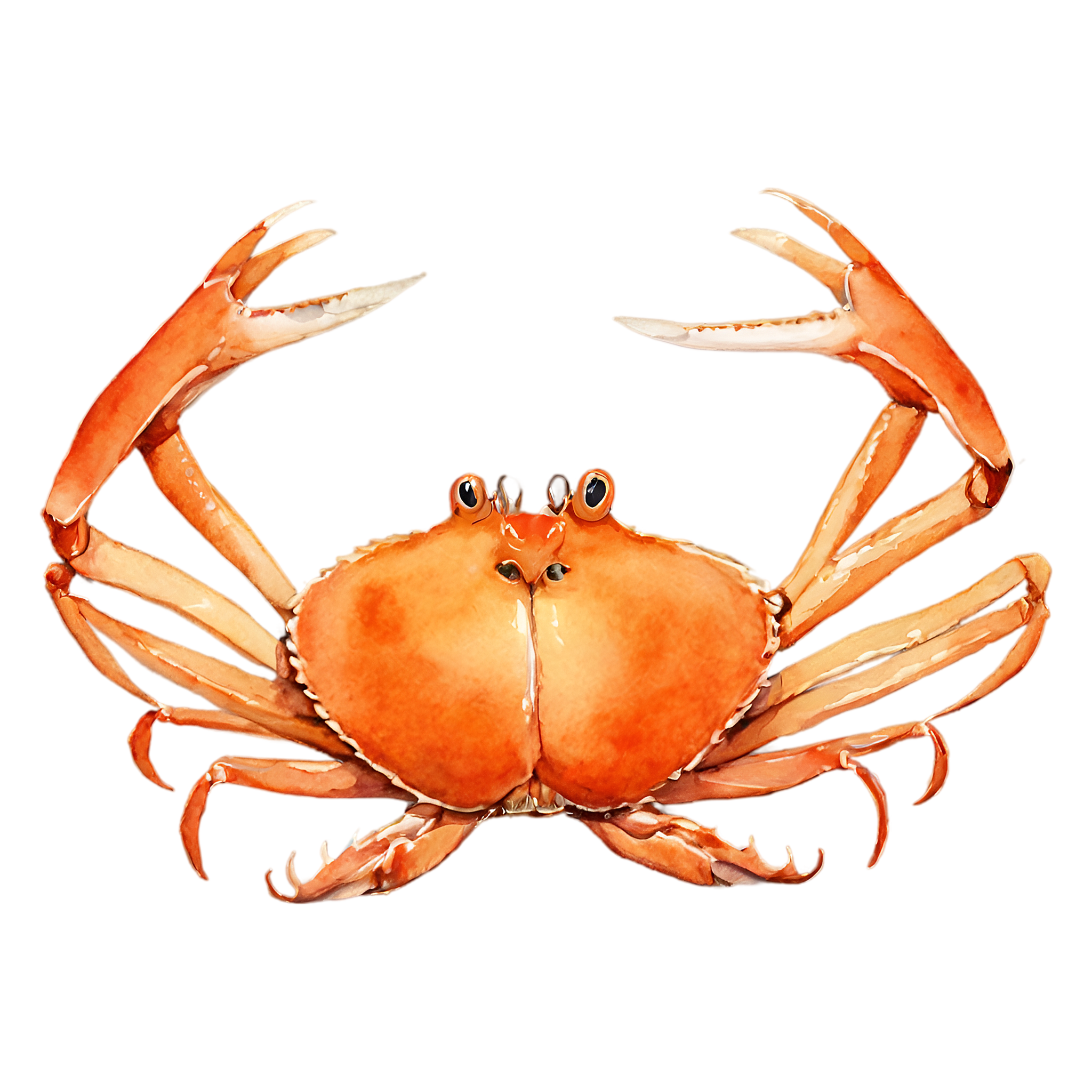
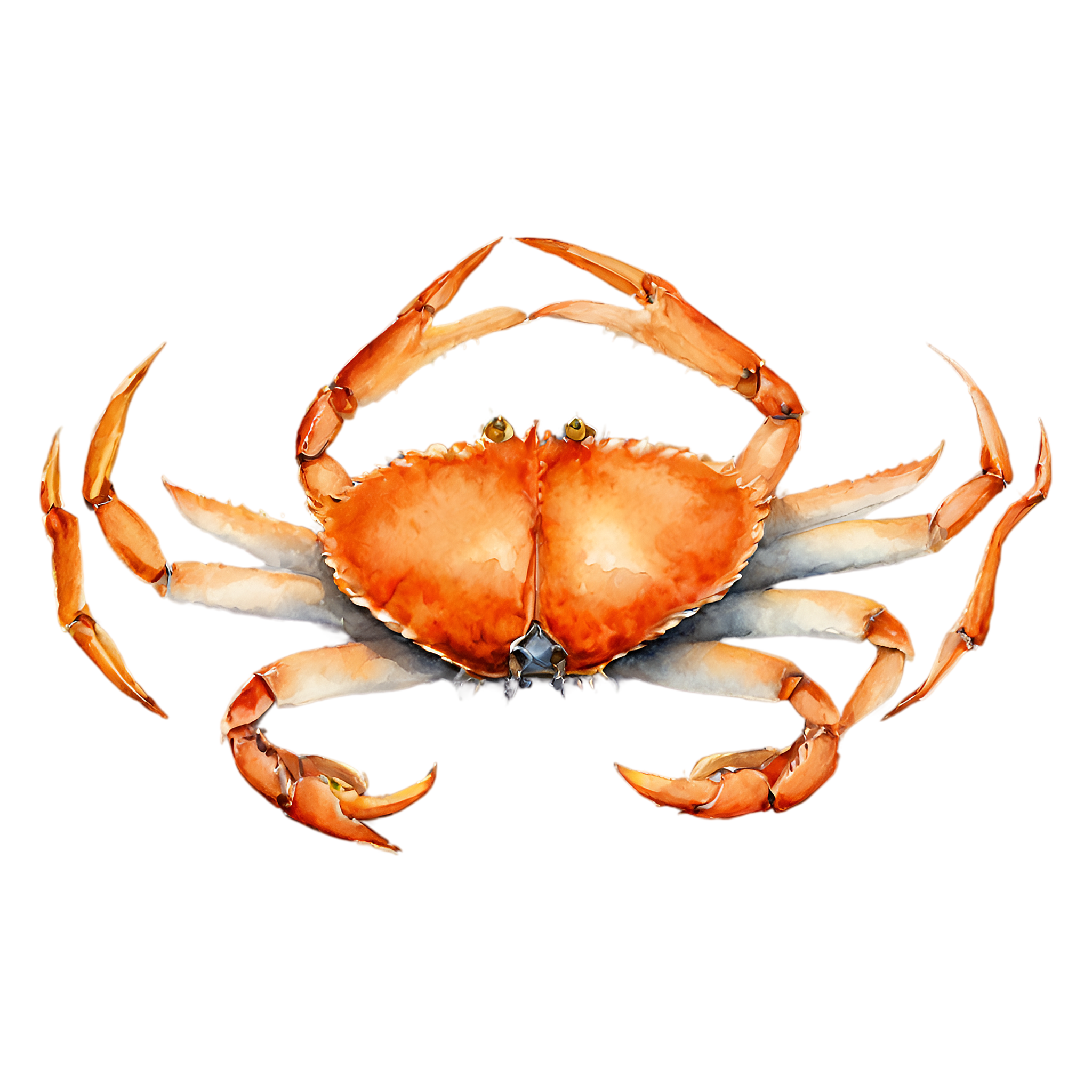
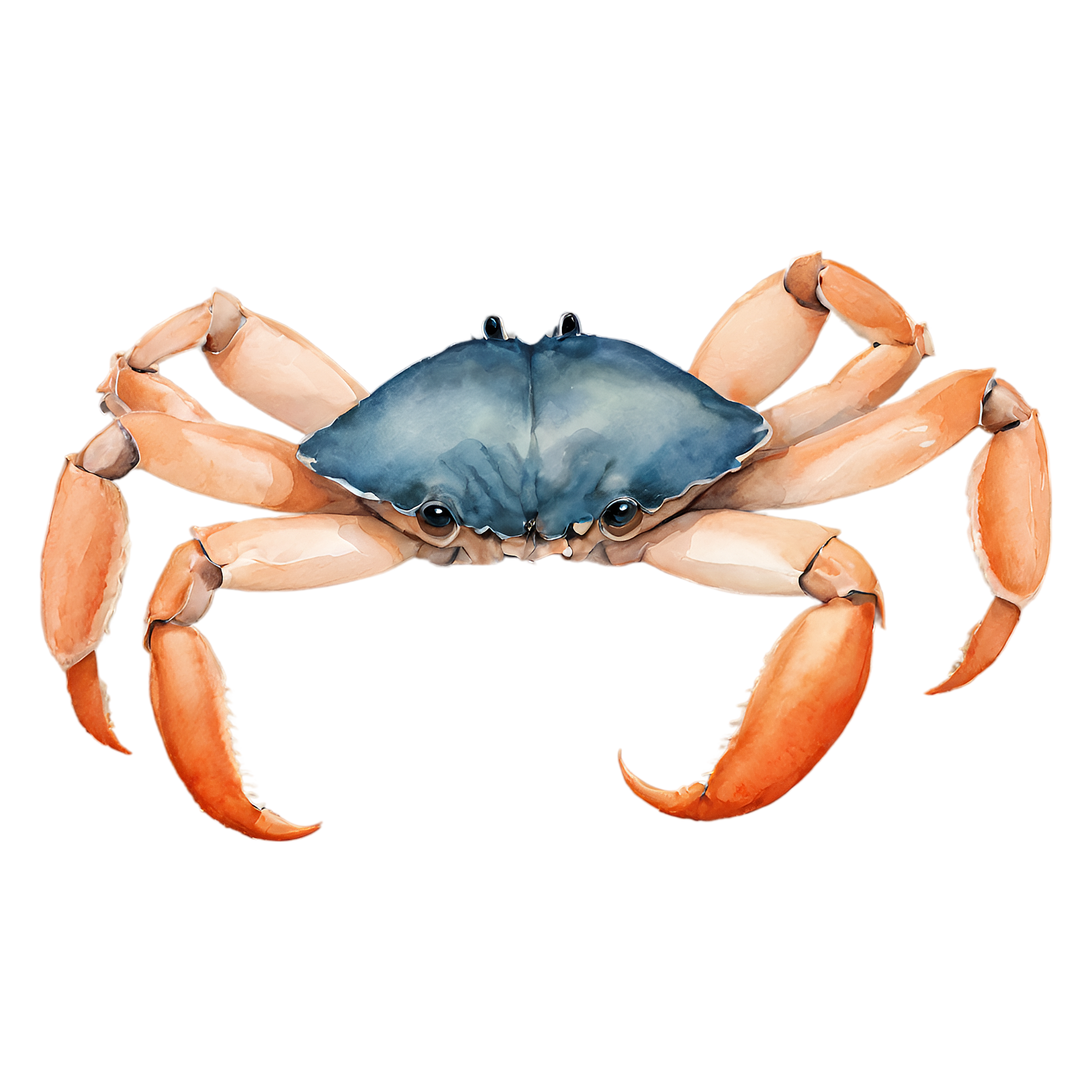
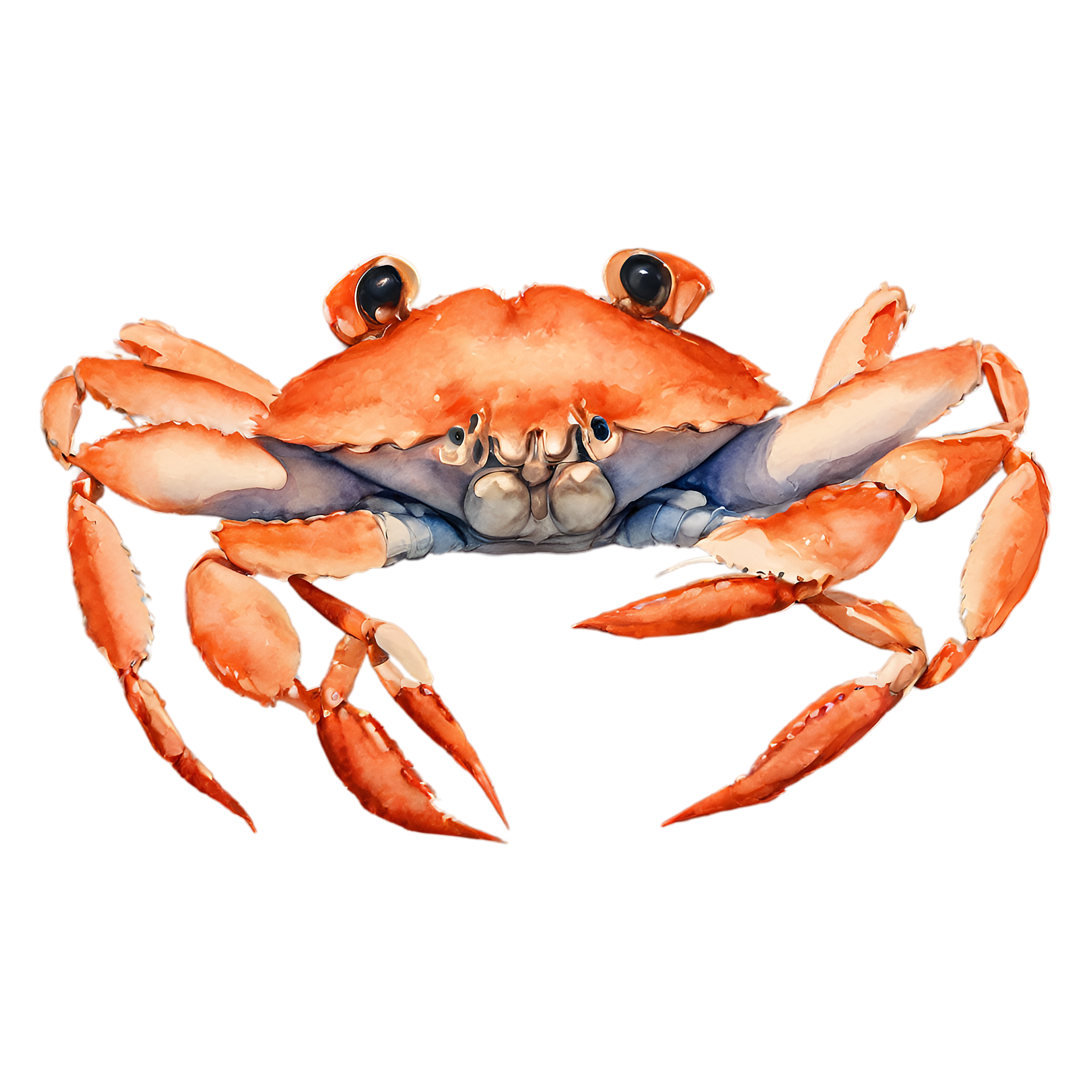
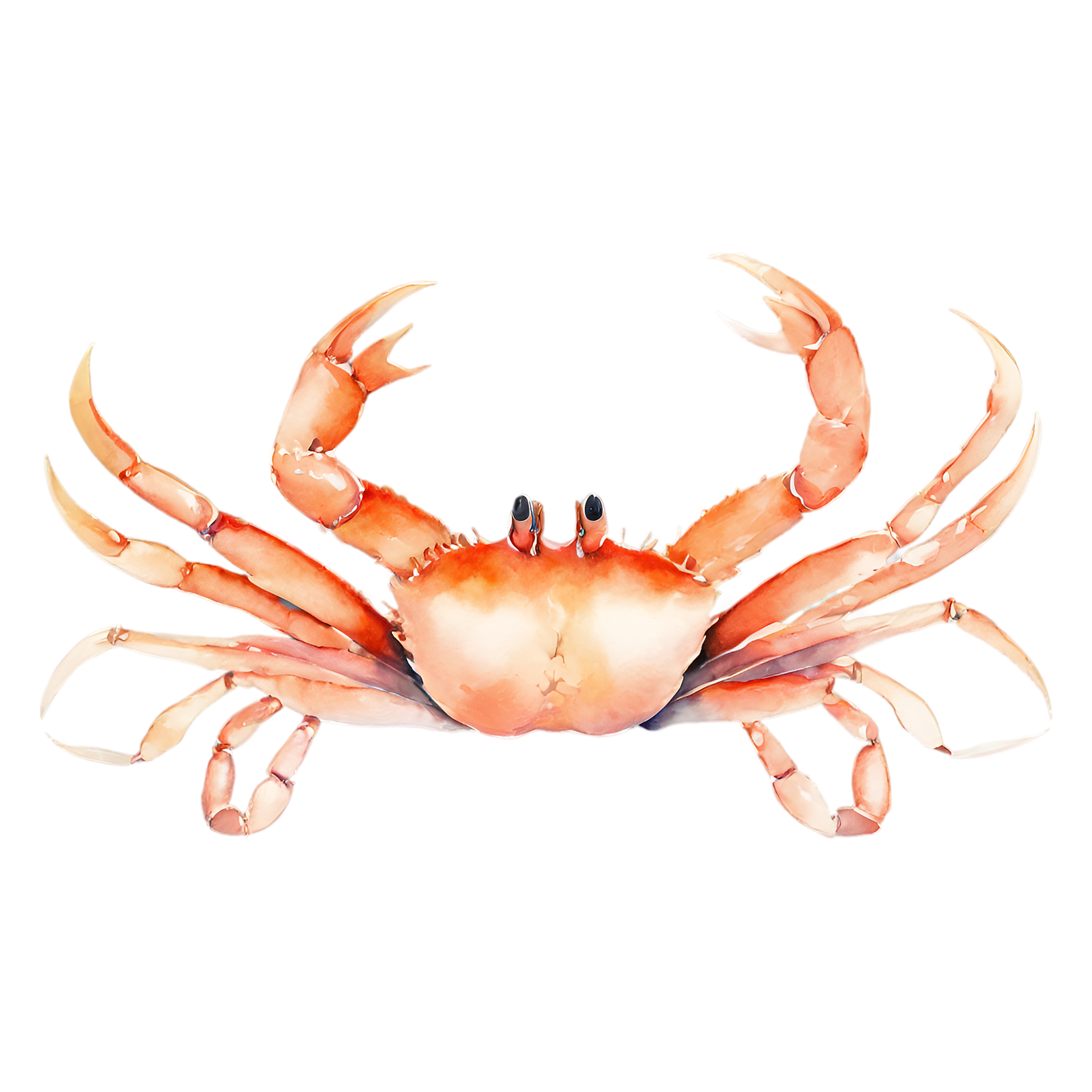
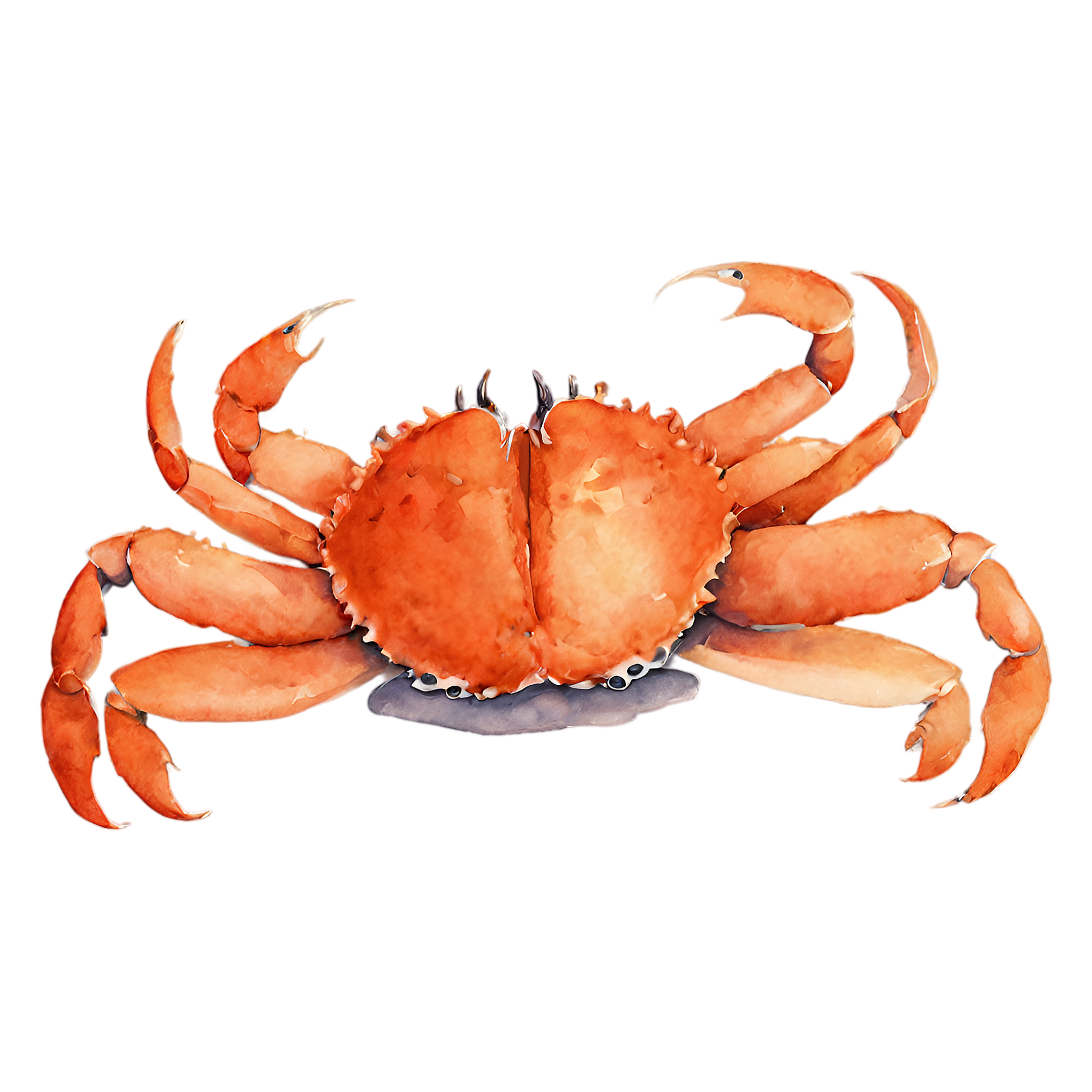
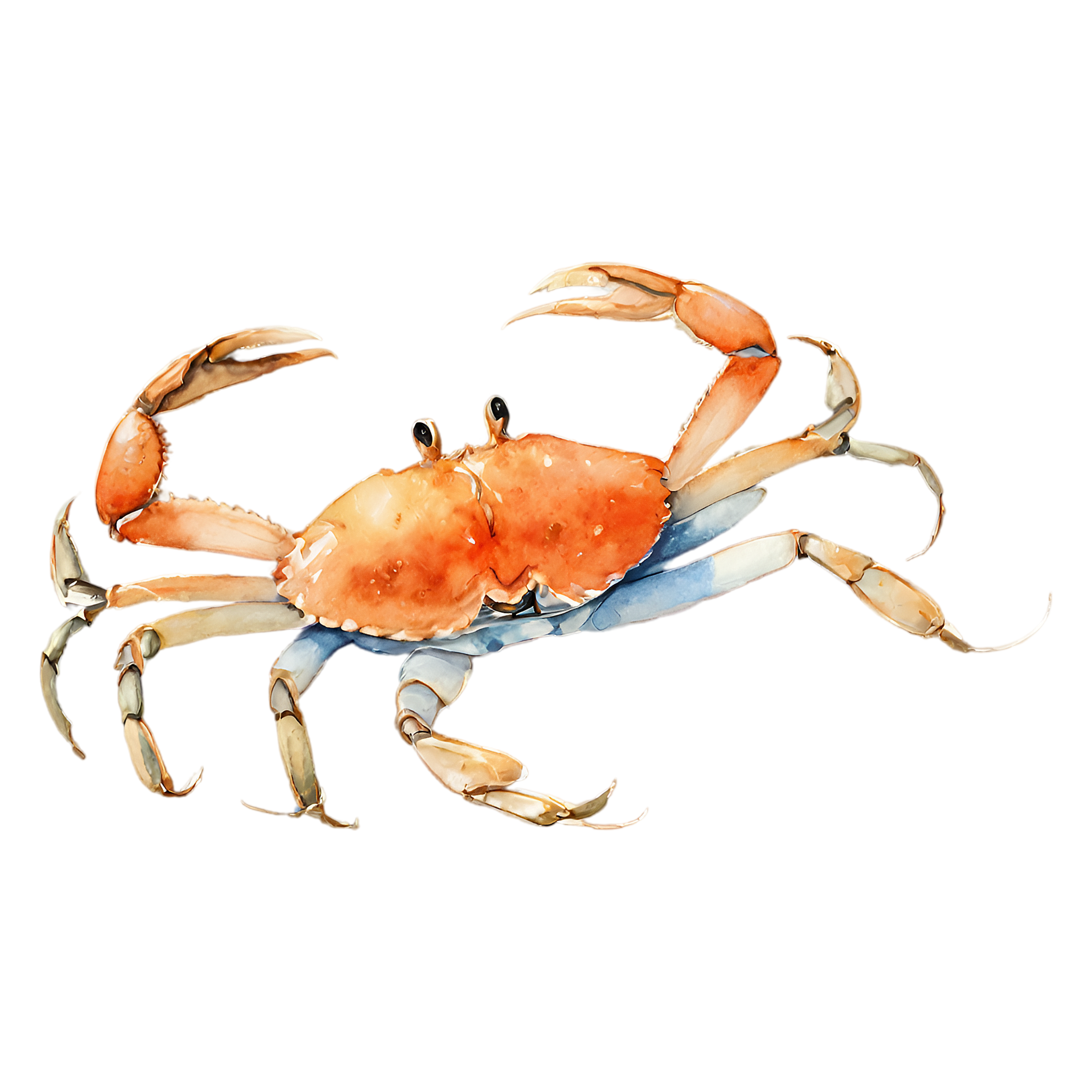
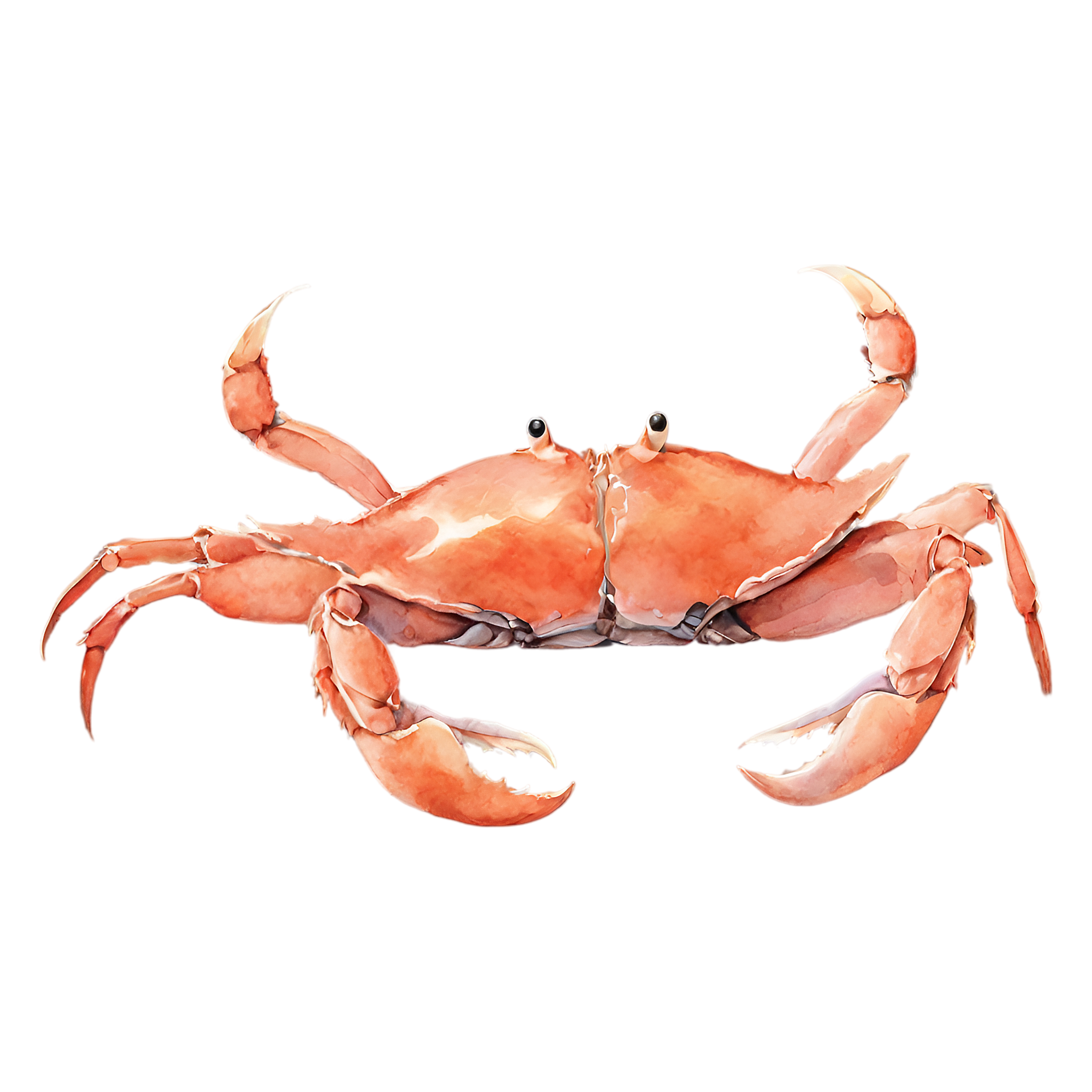
The ten crabs are drawn as one rounded-shell type in warm red-orange, posed for layout rather than for species identification. Two are seen from directly above, one with its legs spread wide, which makes them the easiest to tile into a pattern or drop onto a menu as a flat icon. One faces the viewer with claws raised, another spreads both claws wide, and one faces forward with claws lowered. There is a side profile, a three-quarter view, a crab caught mid-step walking sideways, one with its claws tucked in close, and a compact rounded pose that works as a small bullet or divider.
Crab feasts, seafood boils and Cancer birthdays
In Maryland and the rest of the Chesapeake Bay region, a summer crab feast means steamed crabs dumped on a paper-covered table, and the blue crab is Maryland's official state crustacean. That makes this set a natural fit for crab-feast invitations, fundraiser flyers, mallet-and-bib party printables and seafood-shack menus from Memorial Day through September. Along the Gulf Coast the same images suit seafood-boil invitations, and on the West Coast, Dungeness crab menus and fish-market signs. Outside food, the crab is the symbol of Cancer, the zodiac sign for birthdays from about June 21 to July 22, so it turns up on summer birthday cards and astrology prints. Beach-rental welcome books, aquarium gift shops and elementary ocean units round out the list.
Warm red-orange against sea blues
The palette is warm: red-orange shell, golden highlights and pale tawny undersides. The most frequent DMC matches on the page are 721 Orange Spice Medium, 722 Orange Spice Light, 3853 Autumn Gold Dark and 951 Tawny Light, with Copic YR68 and R05 Salmon Red for markers. Orange sits opposite blue on the color wheel, so the crab pops beside cool sea creatures such as the whale and seahorse, and over a band of kelp. For a full sea-life page, browse the ocean hub; for beach-house and seaside stationery, the coastal hub has more.
Tip: printing crabs on kraft paper and table runners
Each crab is a transparent PNG at 2048 by 2048 pixels, about 6.8 inches square at 300 DPI, so one file can fill a placemat corner or shrink to a menu icon. Crab feasts often use brown kraft paper as a tablecloth, but home inkjet printers have no white ink, so pale areas of the shell take on the brown of the paper and the reds darken. Test one sheet first, or print on white paper and cut the crabs out. For a repeating table-runner pattern, rotate the top-down crab to three or four angles and scatter it at about 3 inches across rather than lining copies up in a grid.